



by Emanuela Zanon 21/04/2026



Categories: Exhibition reviews / Disclaimer
In Venice, an exhibition at Ca' Pesaro traces 30 years of Jenny Saville's research: from the famous monumental figures to an increasingly free and material painting, in which the body becomes a field of forces and the pictorial material takes center stage. Emanuela Zanon's review.
Jenny Saville (Cambridge, 1970) is one of the few contemporary painters whom even the general public recognizes instinctively and without the need for captions. From the outset, her painting, unabashedly devoted to enormous bodies, treated as masses of flesh overflowing from the canvas and barely contained by delicate skin, analyzed at once with surgical precision and baroque sensuality, have intrigued insiders as well as nonspecialists for the disturbing involvement it manages to elicit. The monumentality of her female figures has become a cultural icon that has transcended the boundaries of the art system to conquer the collective imagination with all the subversive charge of her open rejection of all iconographic taboos. Portraying the distorted, the grotesque and the fleshy with an unapologetic gaze, the artist has focused her research on thepainterly exploration of our controversial experience of the body in relation to such divisive issues as gender binarism, obesity and pathological perceptions of the body versus imposed standards of beauty. Yet, identifying Saville with the catalog of colossal meats that made her famous from a very young age risks crystallizing her work into a static formula associated without appeal with her early production. In light of her early evidence (considered inescapable in most discourses on the artist) her later production, which is more linked to a reflection on painting as body and less marked by the unsettling mimetic realism of flesh, is also usually read. For what makes Saville’s work irreducible to any formula, including that, always relevant in its own normative way, of the claim of the “non-idealized female body,” is precisely its painterly quality: the ability to make matter the subject of the painting, transforming every inch of surface into a living fleshing out of its internal forces. The artist spreads, smears and scrapes colors by mixing different techniques. The brushstroke does not describe flesh: it is flesh. Or at least, it undermines the distance between the two with a radicality that, after metabolizing the legacy of painters such as Willem de Kooning (Rotterdam, 1904 - New York, 1997), Francis Bacon (Dublin, 1909 - Madrid, 1992) and Lucian Freud (Berlin, 1922 - London, 2011), she has gone further in a direction of her own, where art history is an equal interlocutor with whom to engage pragmatically in study.
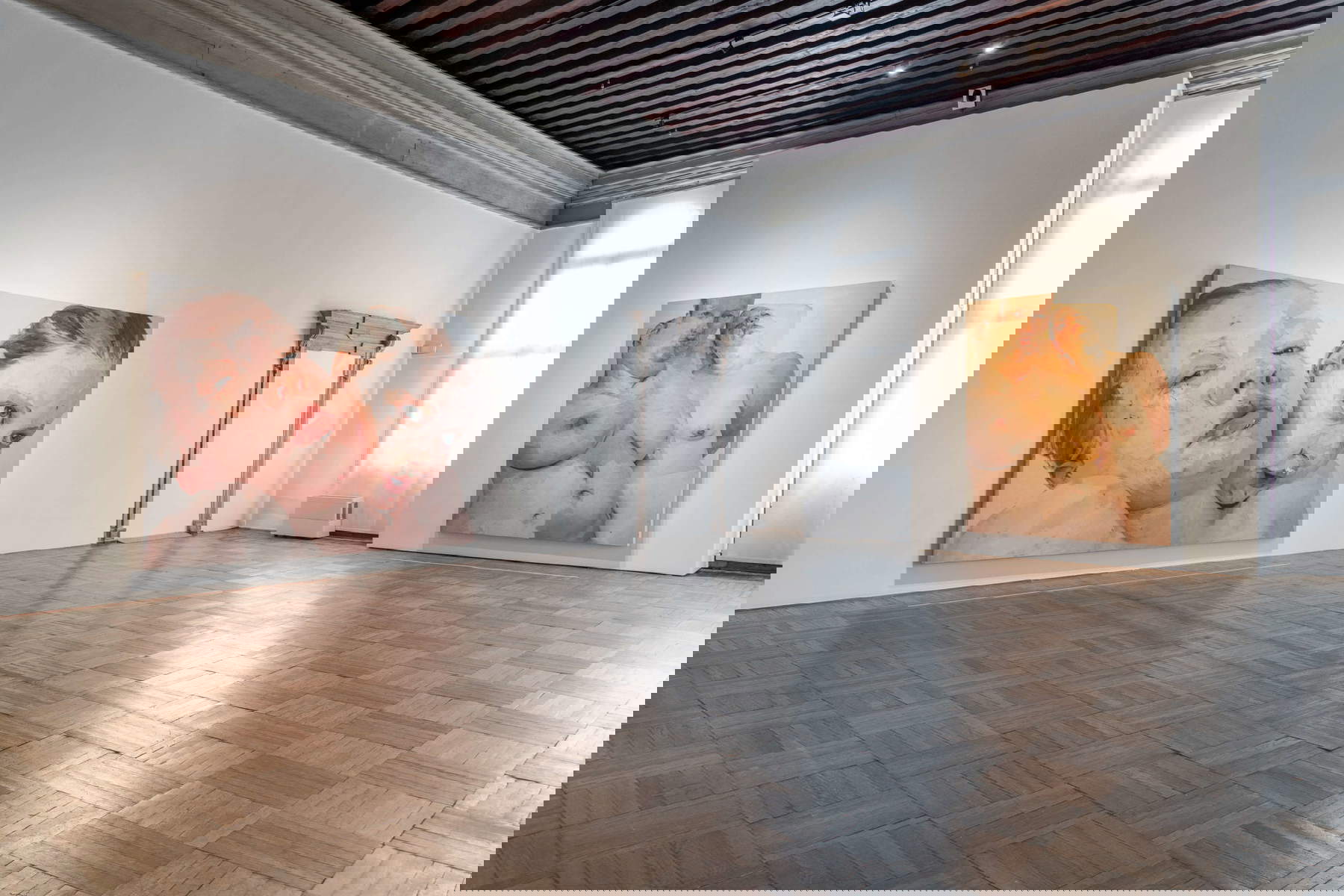
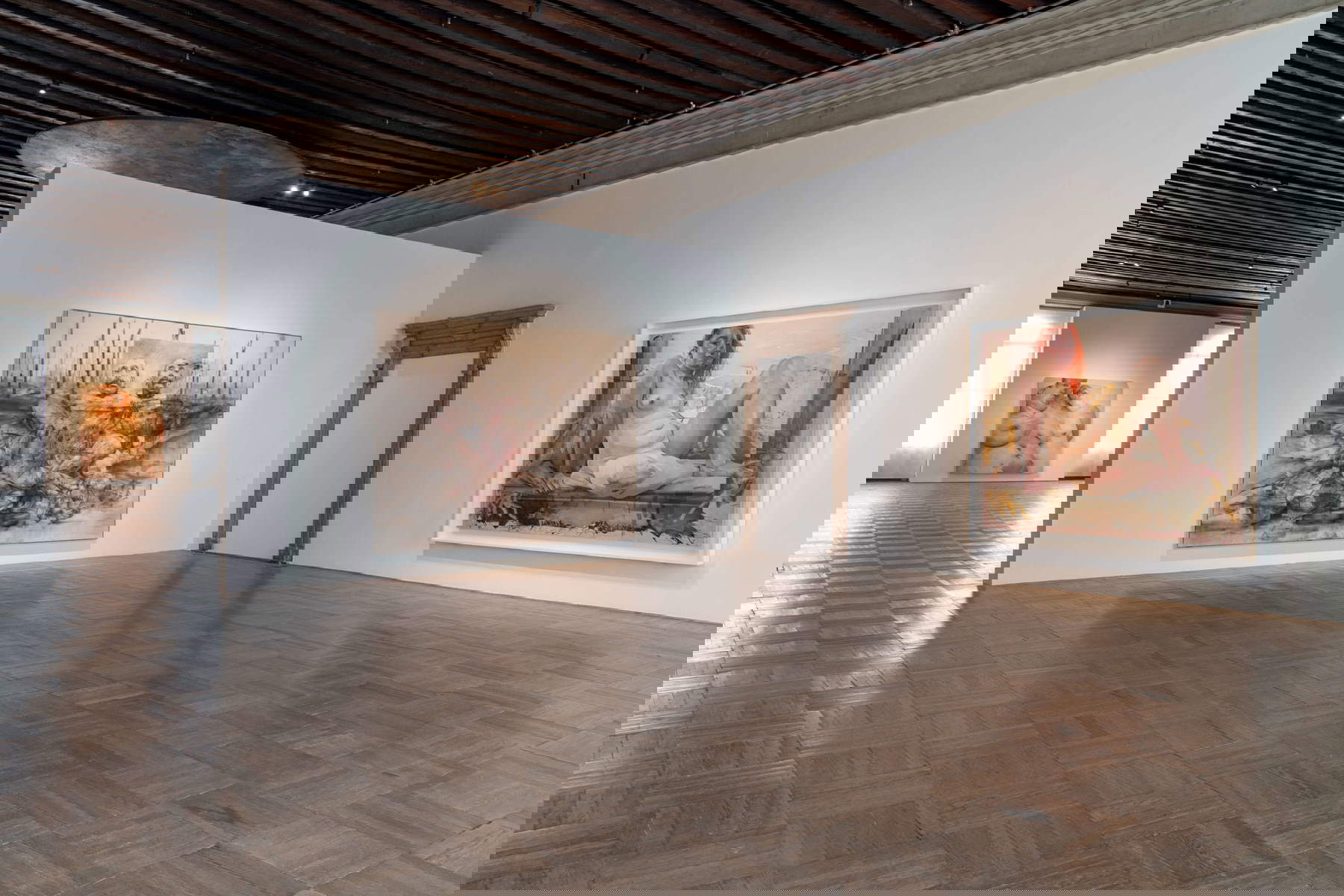
The opportunity to develop a more varied discourse on the artist is now the current exhibition in Venice at Ca’ Pesaro, curated by Elisabetta Barisoni with the support of Gagosian. Beyond the celebratory aspects, which are unavoidable, since this is one of the most quoted artists on the international scene, several times holder of auction records worldwide, the exhibition offers the opportunity for a reasoned review of thirty years of work through a focused selection of paintings representative of the main evolutionary phases of the pictorial language. In the bright halls of the Venetian palace, thirty paintings trace Saville’s career (the artist at the press conference declares that he rejects this word) from his beginnings in the 1990s to his most recent works, following a chronological and structural thread: each room shows a different articulation of the same transversal problem, the pictorial exploration of the body understood as a field of transforming forces. The one at Ca’ Pesaro is the first major exhibition dedicated to the artist in the touristic lagoon capital in anticipation of the people of the Biennale Arte, a city Saville has frequented since childhood and to which she returns regularly to maintain an active relationship with the masterpieces of the Venetian school to which she is devoted, such as Titian’sAssumption (1516-1518) of the Frari or the mosaics of the Basilica of Santa Maria Assunta in Torcello (11th - 12th century). And, we shall see, the reminiscence of the latter becomes preponderant in some of the recent works encountered toward the end of the visit, sealing an elective affinity that has refined and deepened over time.


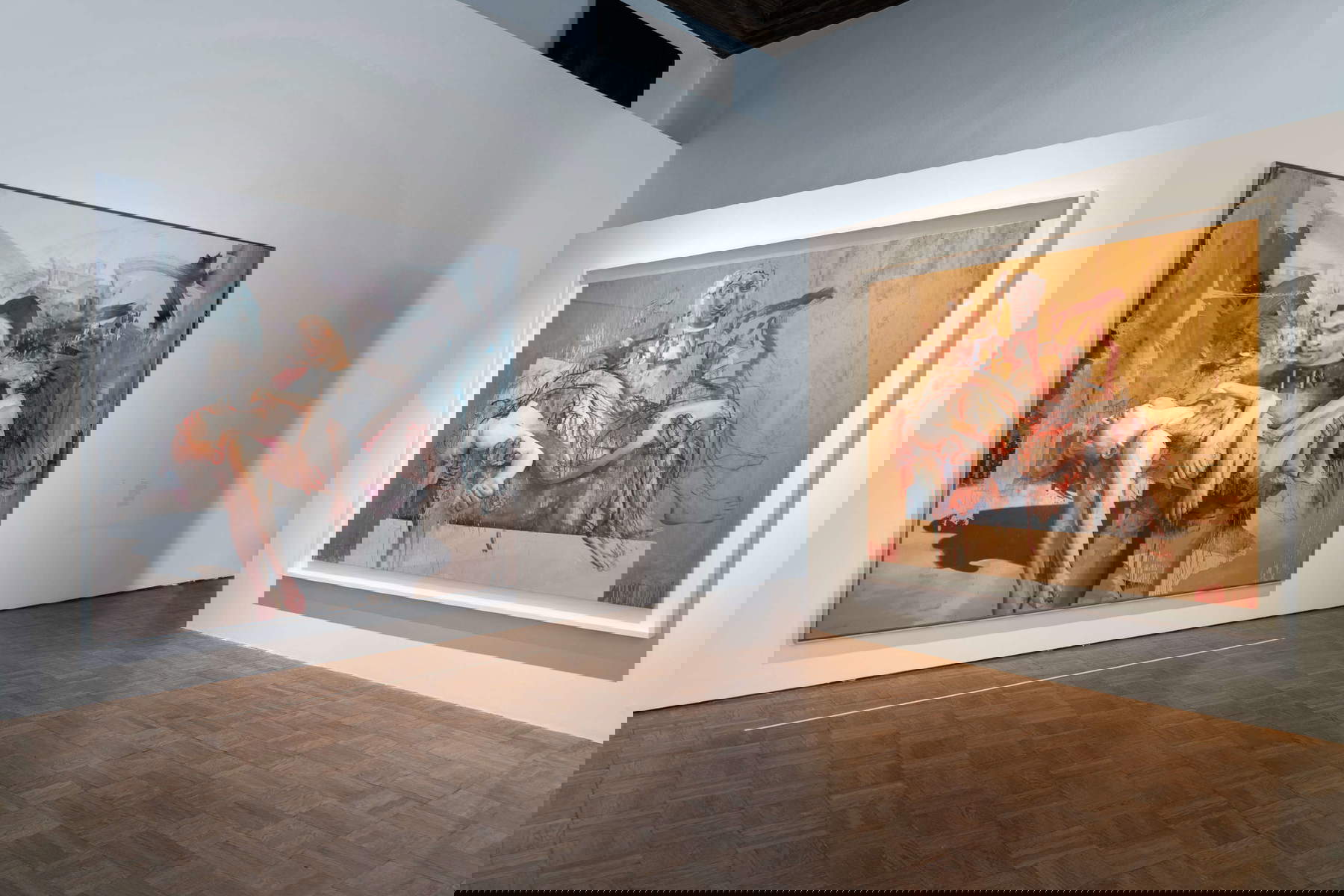
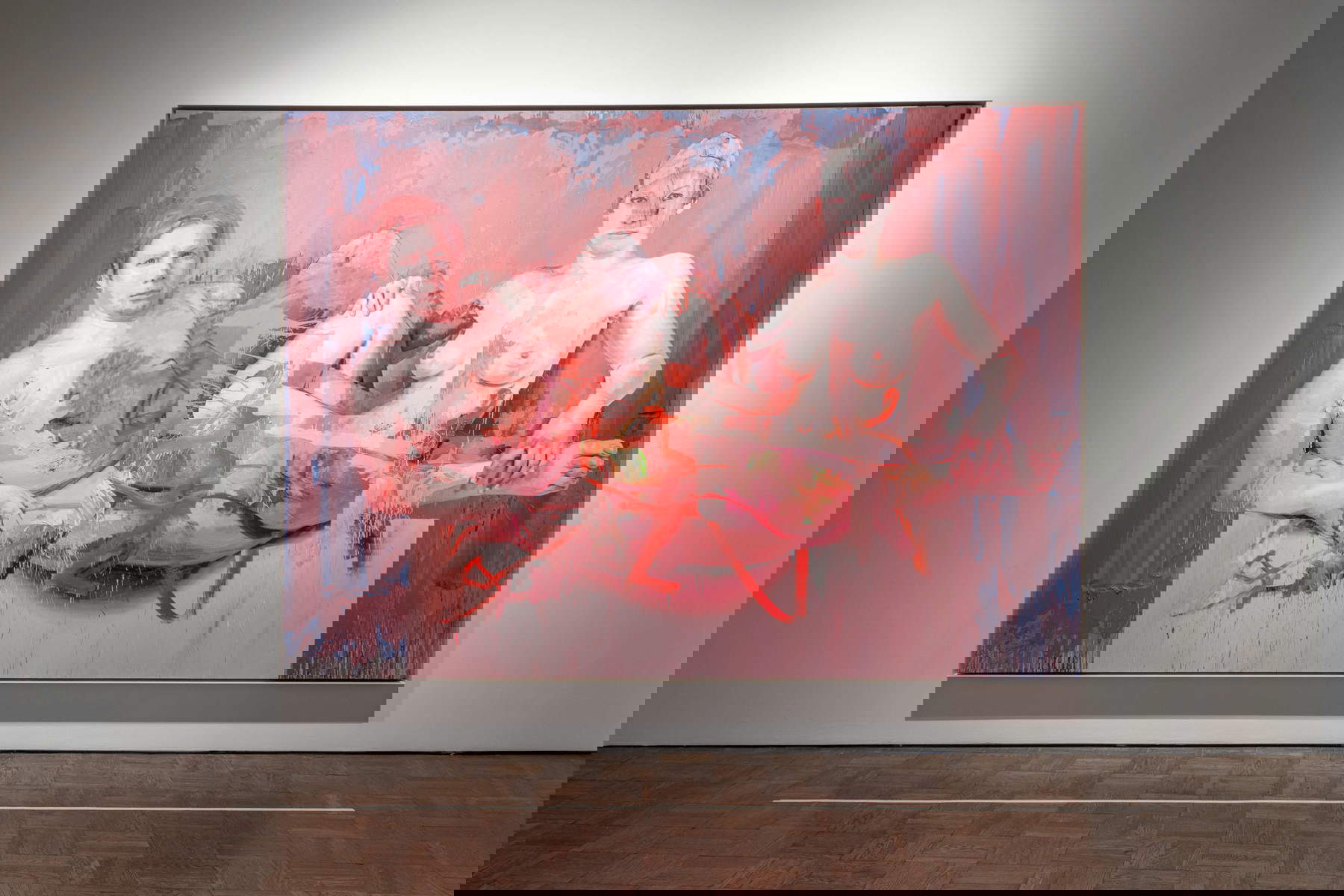
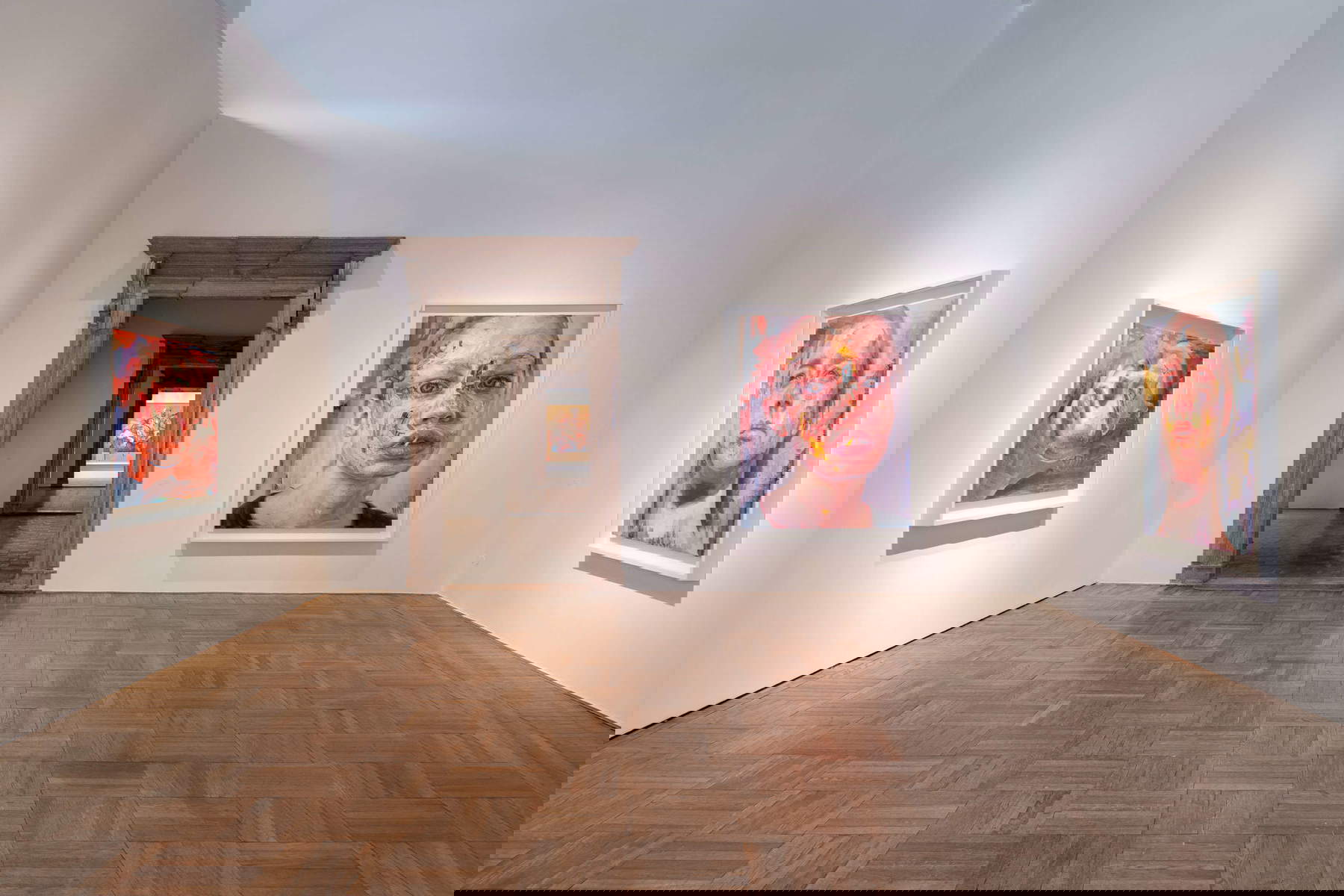
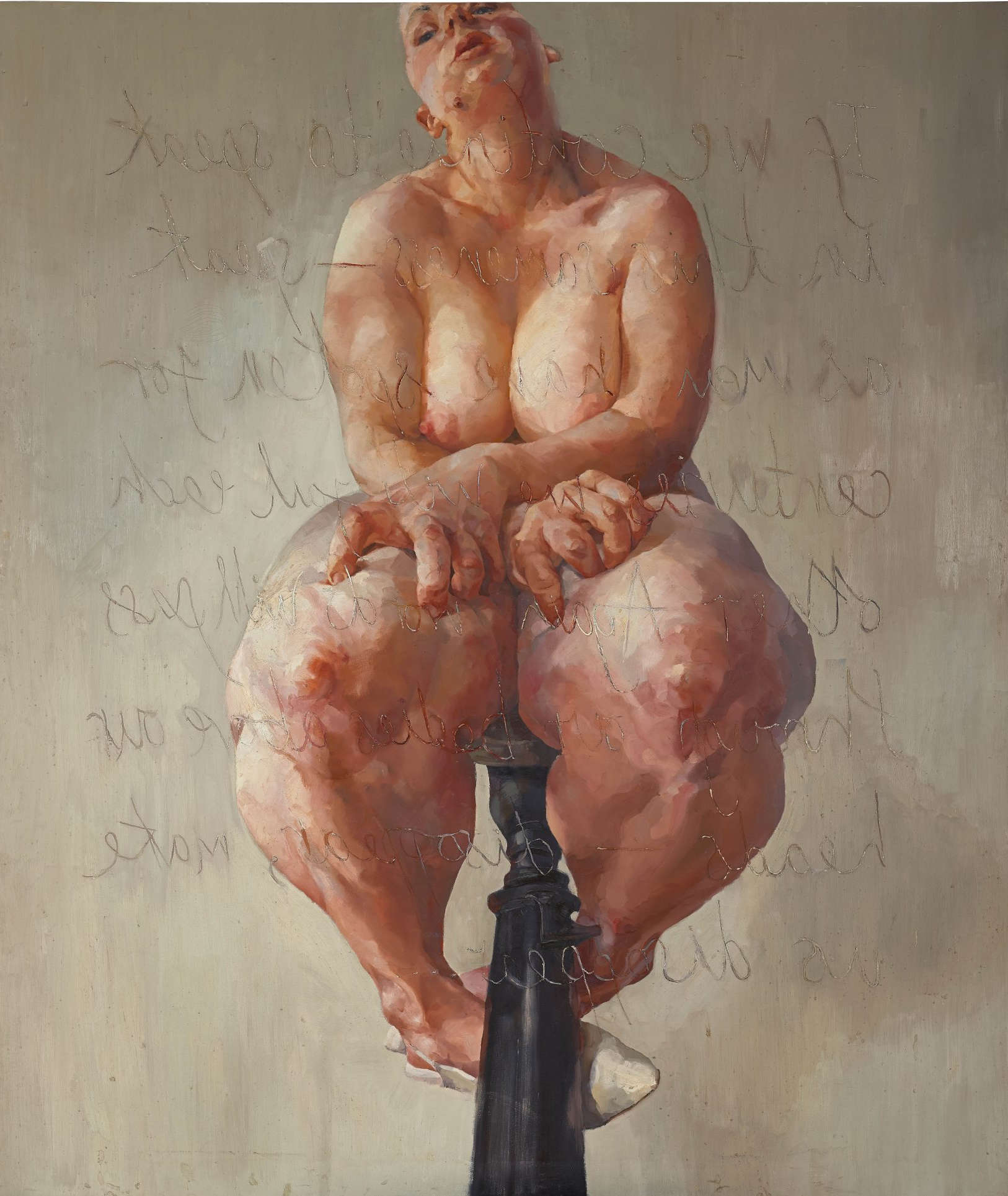
The exhibition, then, opens triumphantly with precisely what one hopes in the first instance to see by going to a Jenny Saville exhibition, a bit like when one is a longtime fan of a successful musical group and at the concert nothing thrills one more than the songs that first made us fall in love with the band. Opening the show is Propped (1992), the work with which the artist graduated from Glasgow School of Art, acquired by Charles Saatchi and exhibited in 1997 in the group show Sensation: Young British Artists from the Saatchi Collection at the Royal Academy of Arts in London, a deflagrating event for the international art scene that decided the fate of the likes of Damien Hirst, Tracey Emin, Sarah Lucas, Marcus Harvey, Chris Ofili, Rachel Whiteread, Mat Collishaw and, of course, Saville herself. At a juncture when painting appeared entirely outclassed by other creative forms, such as video art, assemblage, and three-dimensional settings, Jenny in her debut masterpiece offers a mammoth full-length nude self-portrait taken from a deforming angle from below. Engraved on those Rubensian flesh, already surprisingly palpitating with the most secret moods of art history, the words of philosopher Luce Irigaray (Blaton, Hainaut, 1932), a key figure in the critique of Western “phallogocentrism,” frame without possibility of misunderstanding this impactful idiom in a feminist perspective. The proud iconographic and political claim that animates the artist’s research from the outset is implemented, then, in the irreverent manner of the Young British Artists, in the conscious exasperation of art’s more traditional entrenchments, such as figurative painting and the female nude. Placed side by side (the two works had not met since Sensation) is another milestone: Hybrid (1997), an acephalous female half-bust in which the figure’s sense of completeness is challenged by the autonomous and seething narrative of the display of flesh, an inexhaustible palimpsest of shading, scars, haloes, flaps, thickenings, imperfections and blood vessels to restore which the artist deploys in an integrated manner an endless paraphernalia of finesse inferred from sensitive museum attendance.
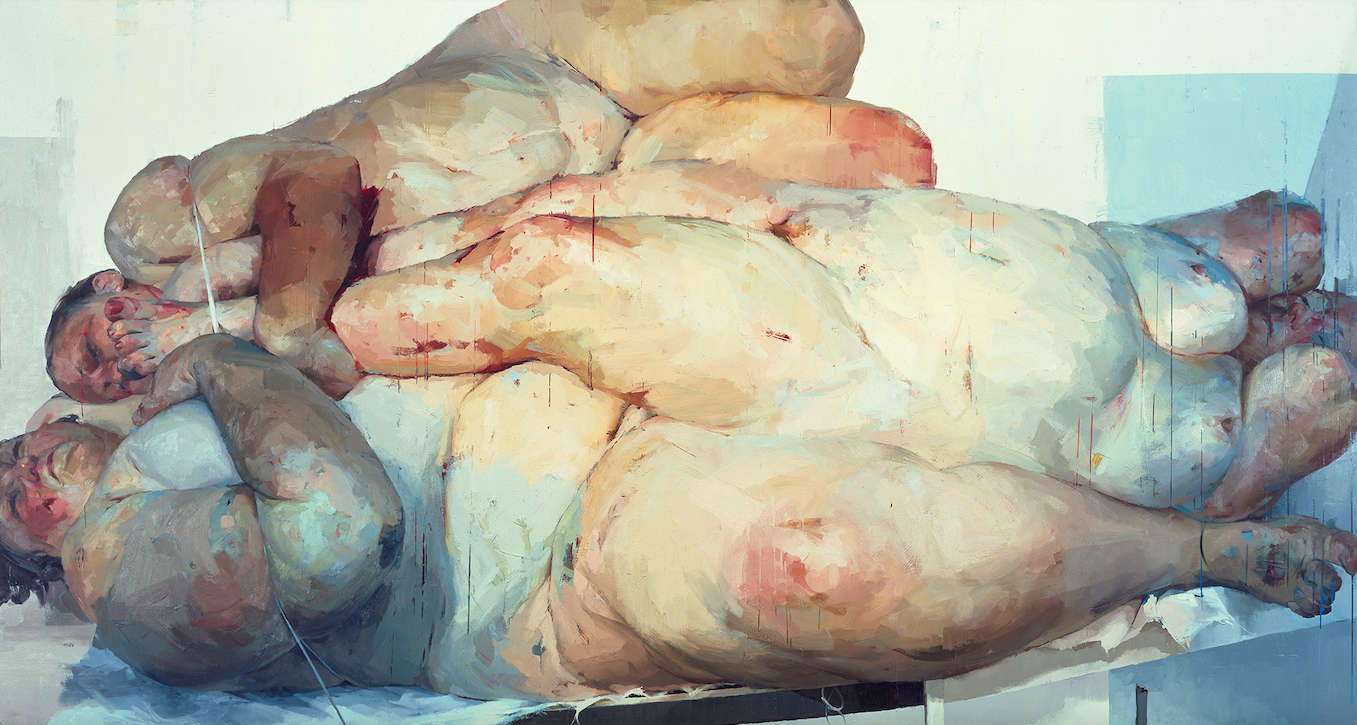
The artist’s aptitude for interpreting figurative painting as a tool for altering and constructing the body is accentuated during an apprenticeship in Connecticut in 1994, when he frequents the operating room of a plastic surgeon to document with his camera the various modes of alteration of the flesh contrived by medical science to repair traumatic events or to bring natural physicalities back to standards of identity and cultural conformity. In the works pertaining to this glorious phase, premonitions of genetic cloning and fascination with hybridization converge in bewitching entanglements of bodies, as seen, for example, in Fulcrum (1998-1999), in which a ubiquitous development of the subject on the Cubist matrix plane merges with an overabundant Baroque sensuality and a descriptive precision from autopsy documentation. This stark realism and anatomically impudent treatment of the human being is the source of the immediate public and critical interest that made the early fortune of the artist, to whom Charles Saatchi bought, in addition to Propped, all the works exhibited at his graduation show, then financed them outright for a year of production and finally ferried them to the powerful stable of Gagosian, still his principal gallery of choice. It is therefore a credit to the artist and to the authenticity (an ambiguous term, we are aware) of her research that she has not fossilized in a formula of certain success, which even today appears all but aged even if less shocking due to the fading of the contrary temperament and the disruptive effect of novelty.
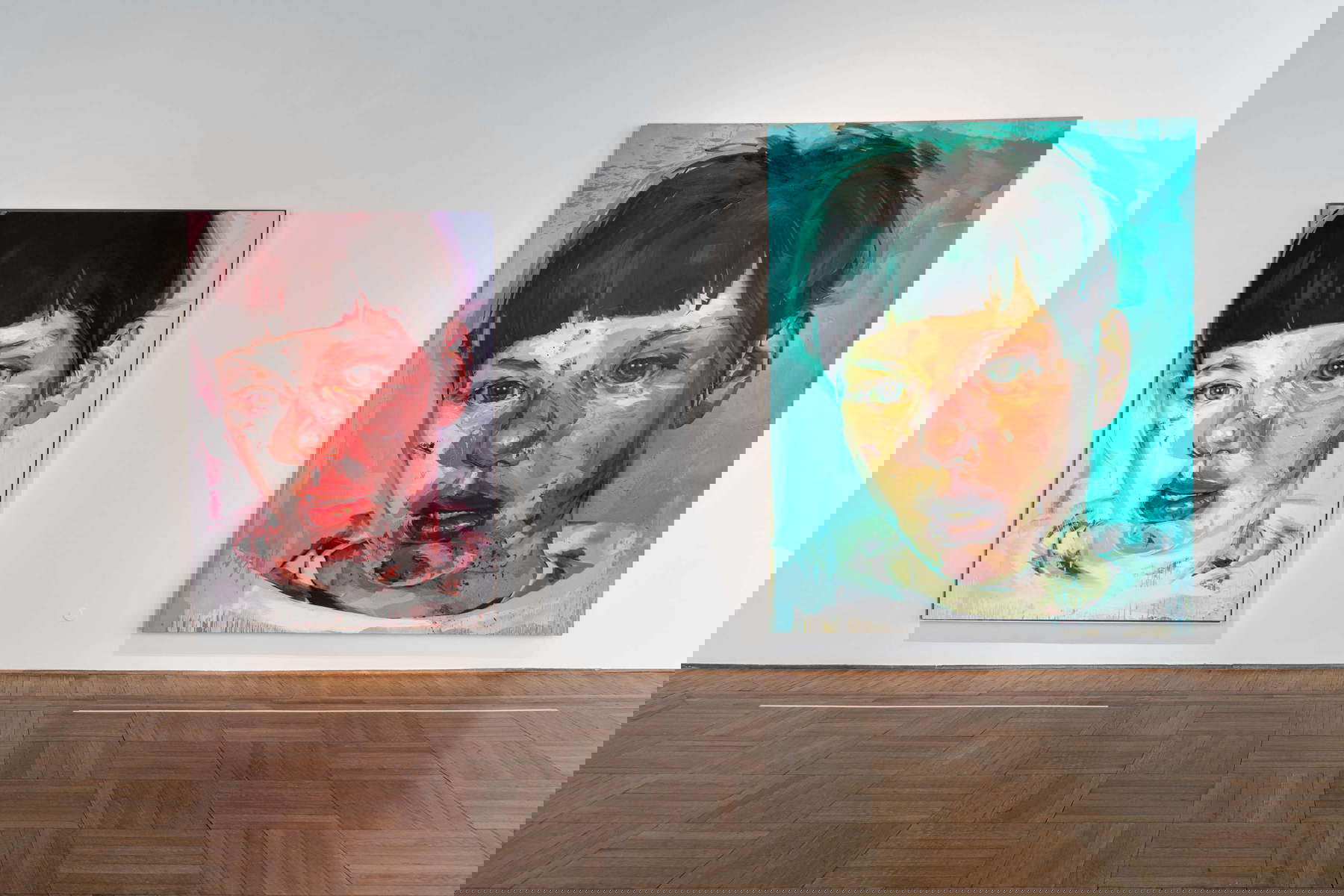
With a certain time lag, then, the exhibition then leads us to a room punctuated by large (not to mention) paintings, made over a period of time from 2006 to 2025, in which a significant change in the painterly process is evident. Compared to the meticulous topography of the epithelial surfaces at the origin of the ineffable sensation of attraction mixed with repulsion aroused by the works of the first period, here mimicry is progressively abandoned in favor of an expressionist-like execution with broad brushstrokes, in which the bloody constitution of the flesh appears more evoked through conceptual means than imitated in the verisimilitude of texture.
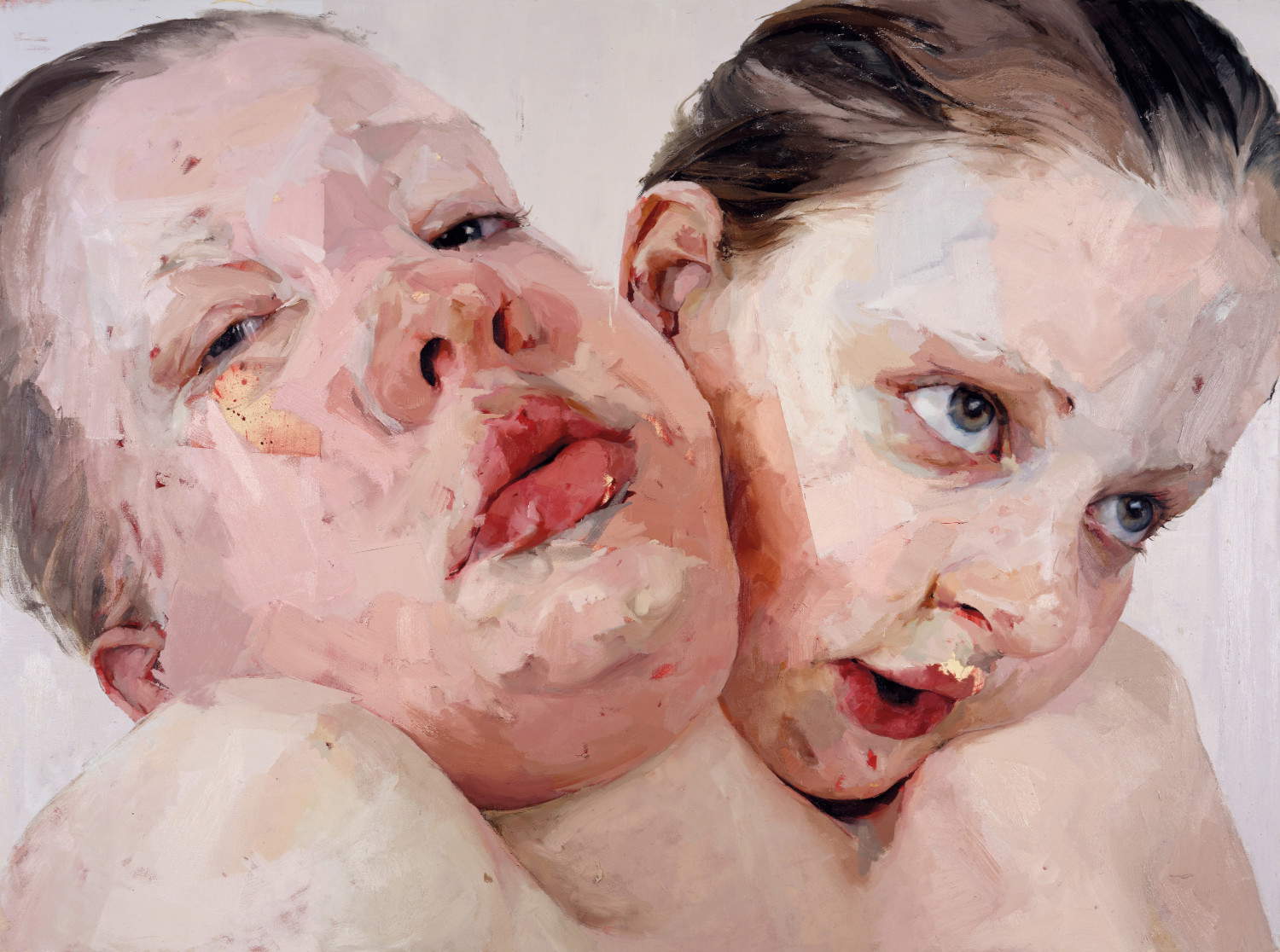
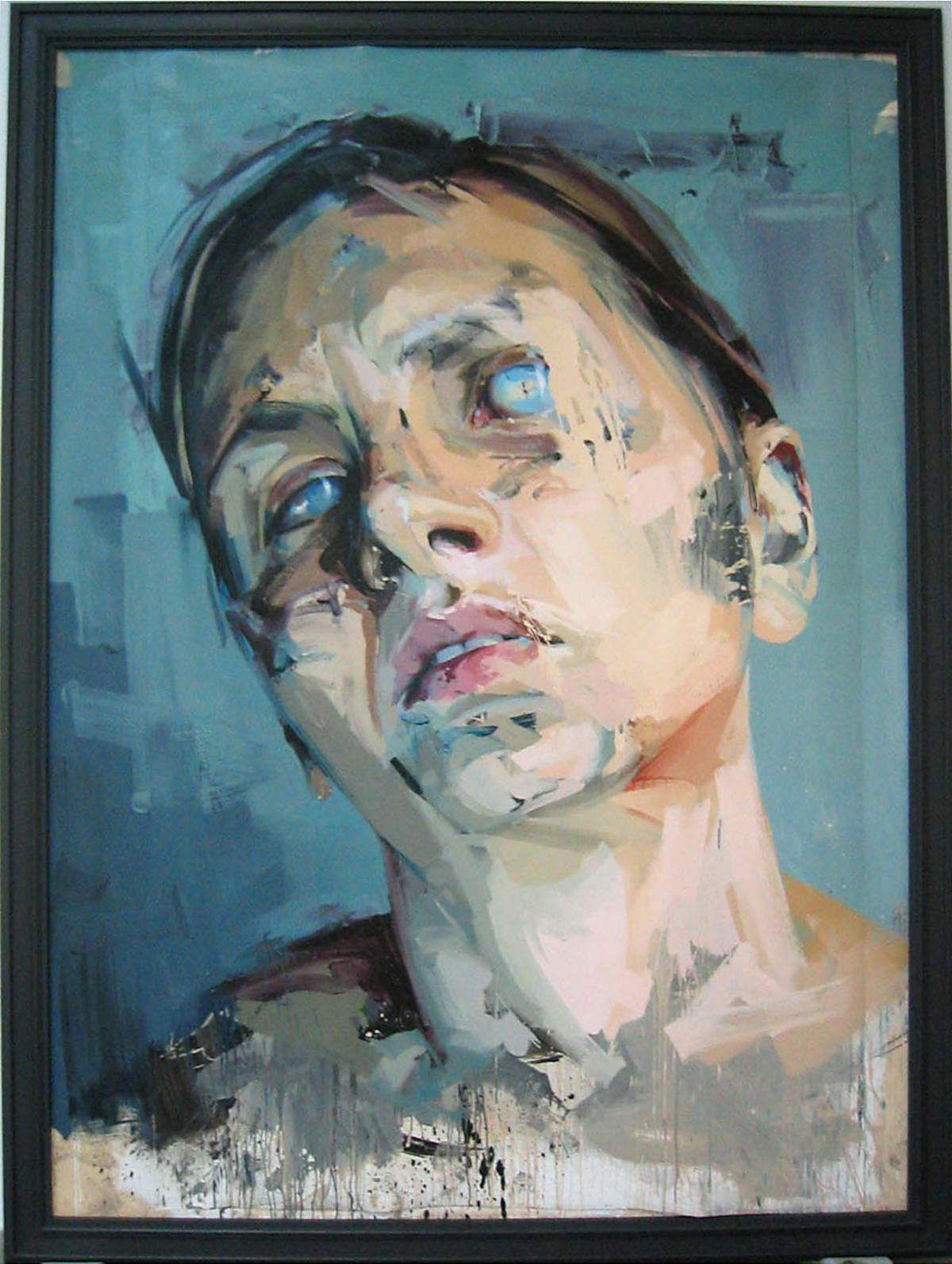
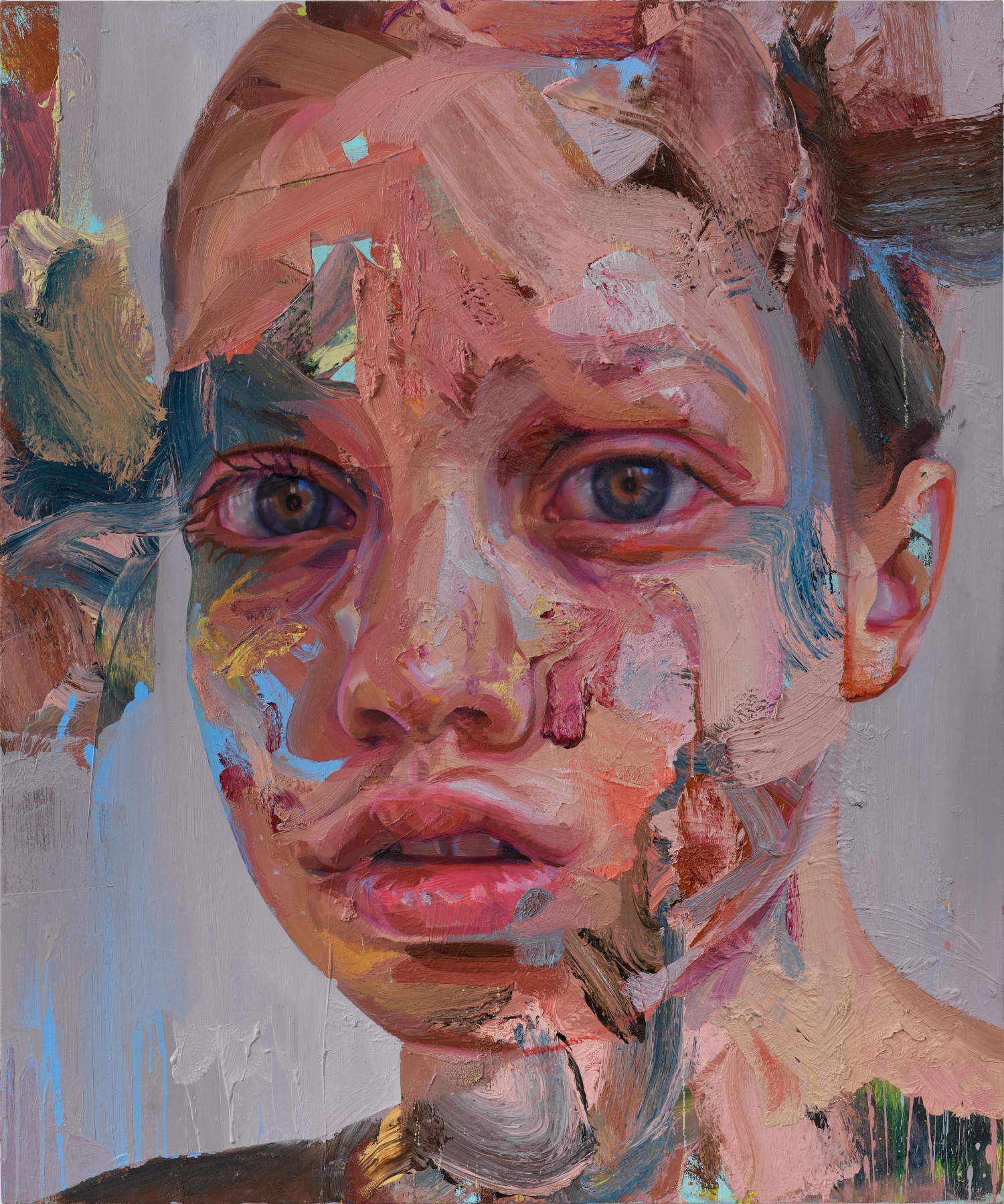
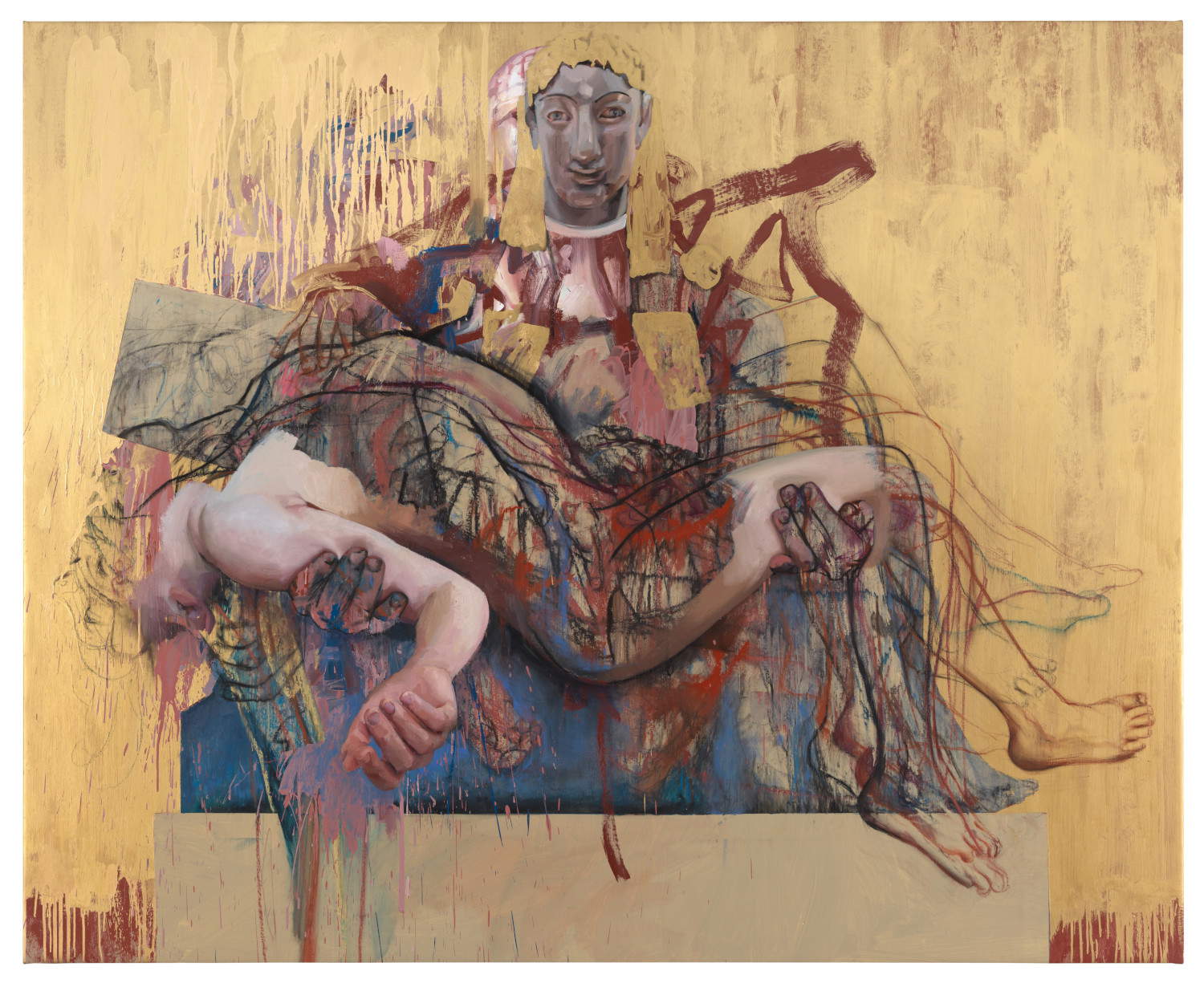
In this riot of free and violent color, at first glance evocative of the Color Parties that in recent years have laicized India’s Holi Festival, one would be tempted to think that the artist has opted for a less laborious approach, pursuing by way of expressive immediacy what was previously entrusted to the patient restitution of a capillary-anomalous visible. Indeed, this apparent ease, which in other times would have been called sprezzatura, conceals a more analytical reflection on the pictorial medium understood as pulsating substance, holding firm to the points of structural monumentality and feminine perspective. In paintings such as Stare (2004-2005) or Gaze (2021-2024), it is color applied in thick and fast layers that turns the innards of painting outward, no longer having to assimilate it to epithelial tissue in order to inspect it. It is no longer we, here, who morbidly insinuate our gaze into the folds of treacherous flesh, but it is the viscerality of seething painting that invades our attention, at first lured by the magnetic (and sometimes split undercut) gazes of the faces depicted. That his approach has become layered (rather than simplified) over the years is confirmed by the beautiful room devoted to pastel and charcoal drawings, in which the sculptural quality of the figuration appears to be innervated by a powerful graphic vitality, as reminiscent of Cy Twombly (Lexington, 1928 - Rome, 2011) as it is of Leonardo’s melee. The artist’s aptitude for knowledgeably incorporating a multiplicity of pictorial styles by amalgamating them into an arrangement capable of fusing them into a unified image, while keeping them distinct, finds its most virtuosic manifestation in the exhibition in Byzantium (2018). The work is a monumental Pieta on a dripping gold background in which millennia of art history collapse into one another to gather the pain of mothers of all ages and latitudes into a single stream that seamlessly leads to the violent tragedies of our warring world by transforming suffering into a universal image.
The exhibition itinerary as a whole is effective and generous: those who do not know the artist leave with a clear map of her trajectory, those who already know her find confirmation and a few surprises. The curatorship has the merit of not yielding to the hagiographic temptation, letting the works measure each other without excessive superstructure. Yet, coming out of the rooms of Ca’ Pesaro, it is difficult to escape the feeling that the works of the early period are still the ones that remain most strongly impressed. Not as cult pieces and not even because the later ones are less successful (the poetic maturity of Byzantium or the chromatic freedom of the great recent portraits are beyond question), but because Propped and Hybrid, thirty years later, continue to disturb as if one were seeing them for the first time, despite the fact that our gaze now accustomed by digital to the most extreme hybridizations no longer perceives them as scandalous.
Warning: the translation into English of the original Italian article was created using automatic tools. We undertake to review all articles, but we do not guarantee the total absence of inaccuracies in the translation due to the program. You can find the original by clicking on the ITA button. If you find any mistake,please contact us.