





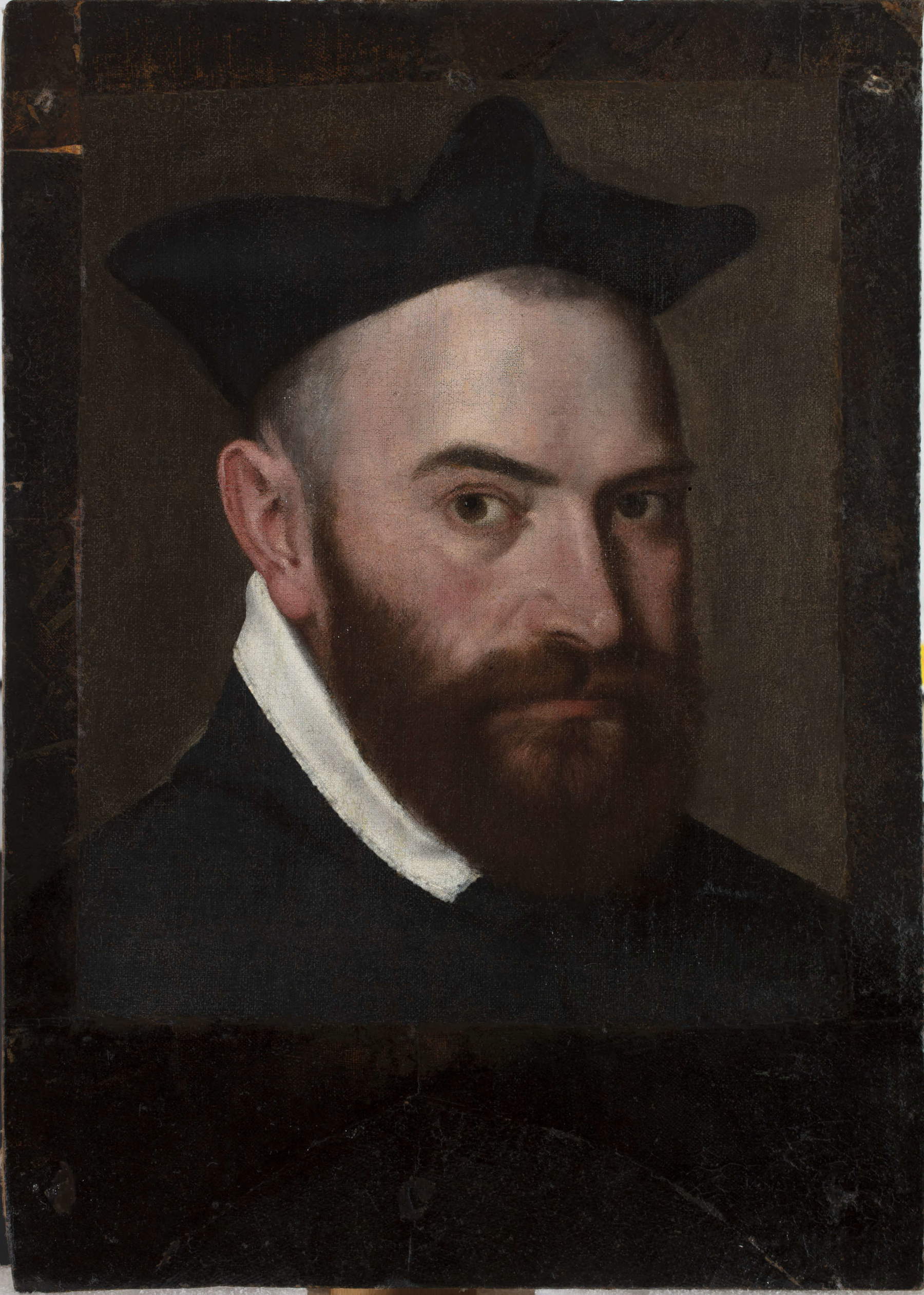
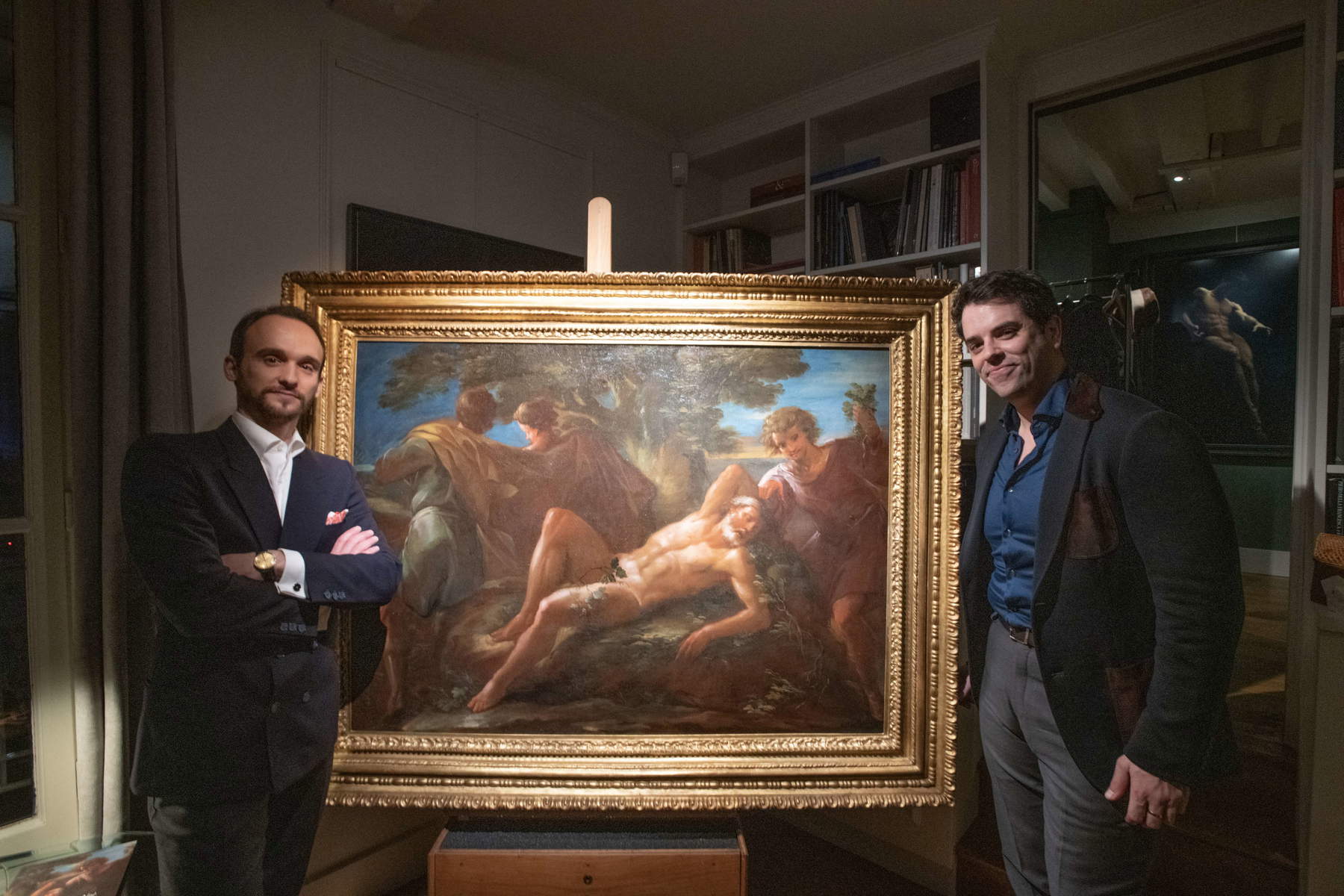
On Dec. 10, 2024, in the Capitolium auction room in Brescia, a painting was hammered out with an estimate of 2-3,000 euros and a generic attribution: “16th-century Lombard artist.” Nothing more. Yet Enrico Cavaliere, founder of Hippeus Art Dealership Ltd, and Guillermo Pinilla, founder of Galerie Pinilla in Paris, immediately recognize it for what it is: a work by Giovanni Battista Moroni (Albino, 1520 - Bergamo, 1578), the most famous 16th-century portrait painter from Bergamo, particularly known for his extraordinary ability to penetrate psychologically. The painting is dirty, covered with a layer of patina consolidated over the years, but the great master’s marks are unmistakable to trained eyes. A tight auction battle ensues, with other buyers on the trail of the same insight. In the end, awarded at 74,000 euros (93,240 including auction fees), the portrait leaves for Paris.
The subject is a middle-aged man: black suit, plain white shirt collar devoid of embroidery, black tricorn, an accessory reserved at the time for personalities holding important civil or ecclesiastical offices. The head is taken in three-quarter view, hair shaved, mustache and beard thick. The face expresses deep concentration, and the viewer is struck by a singular illusion: that of an imperceptible movement, generated by the orientation of the head and the turning of the eyes in the opposite direction. Not a pose, but a presence.
A painter from Albino born around 1520 and active until his death in 1578, Moroni had made portraiture his most recognized specialty, fine-tuning over the course of his career multiple compositional solutions suited to the different formats and functions, public or private, of the paintings commissioned from him. In the territory between Bergamo and Brescia, ecclesiastics, magistrates and notables turned to him to be immortalized, becoming patrons and protagonists of one of the most fertile seasons of Lombard portraiture in the 16th century.
In Paris, Cavaliere and Pinilla entrusted the painting toAtelier Arcanes, one of Europe’s most esteemed restoration workshops, and the work reveals a complex material history. The portrait was born larger: Moroni, for half-length subjects, usually used canvases whose height was between 52 and 58 centimeters. At an unspecified time it had been significantly reduced to the measurements of 36 by 29.2 centimeters; it had subsequently been glued on board and supplemented on the four sides with bands of canvas of different provenance, finally repainted in continuity with the colors of the background and the character’s black robe. The restoration restores the pictorial surface to its original quality: the masterful blending of the chromatic material, the refined control of the values of light and shadow, and the softness of the modeling emerge, all characteristics that, in Moroni’s work, allow us to orient the dating with precision. In the 1650s the painter was still using superficial touches of matter that detached from the background, to distinguish wrinkles, tufts of hair or locks of beard. Peculiarities that disappear almost entirely in the following decade, giving way to the fuller, more enveloping fusion that distinguishes the mature production.
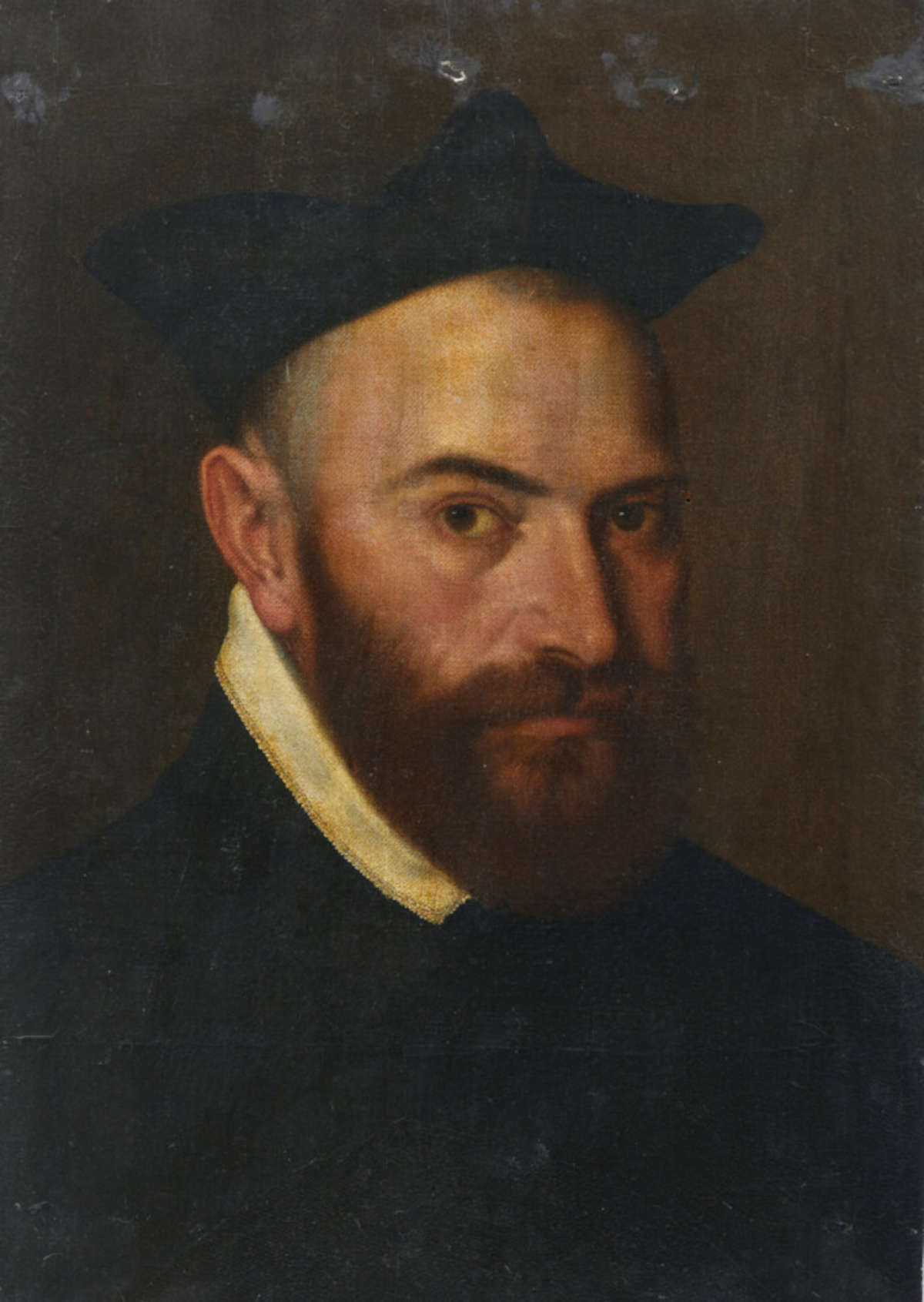
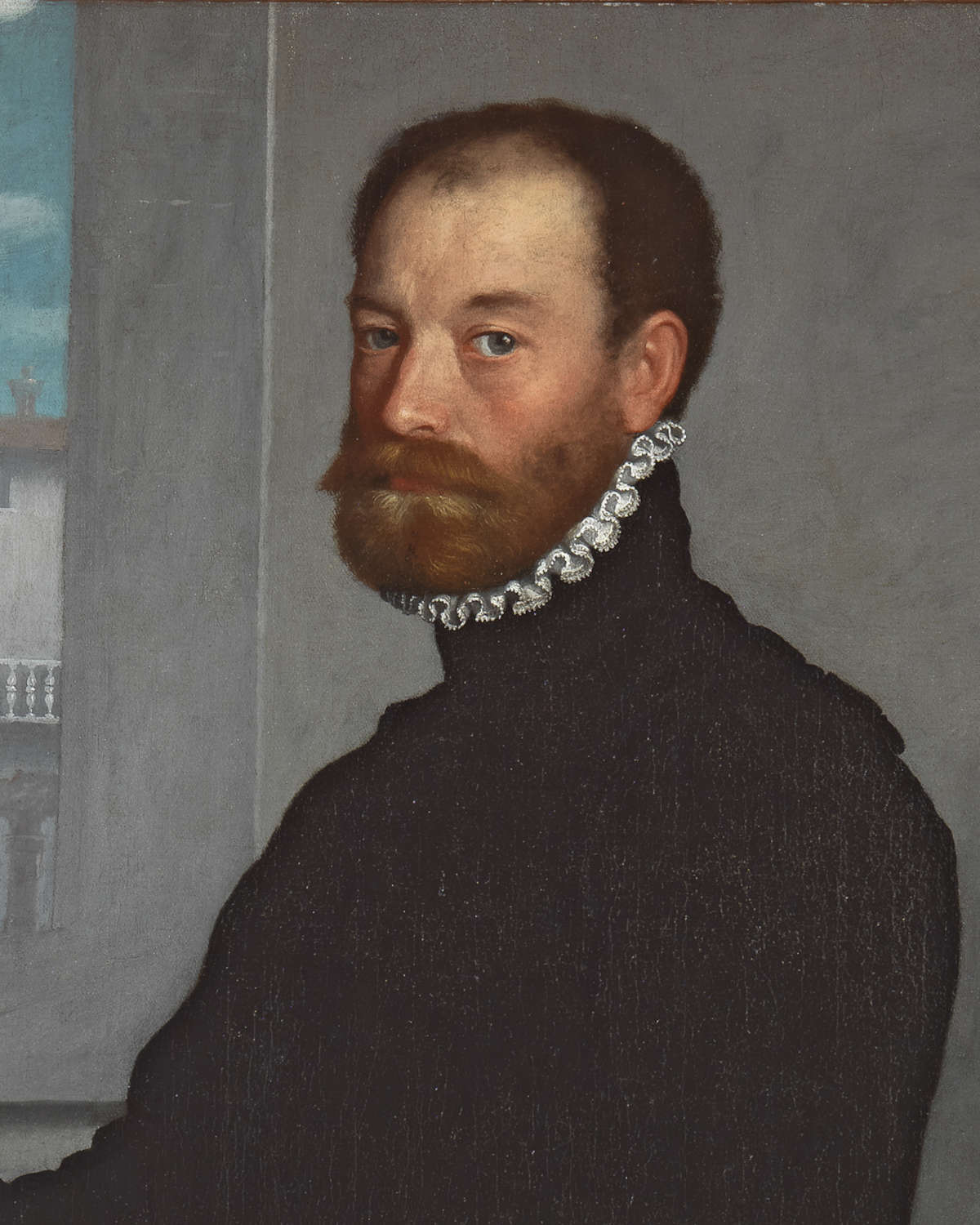
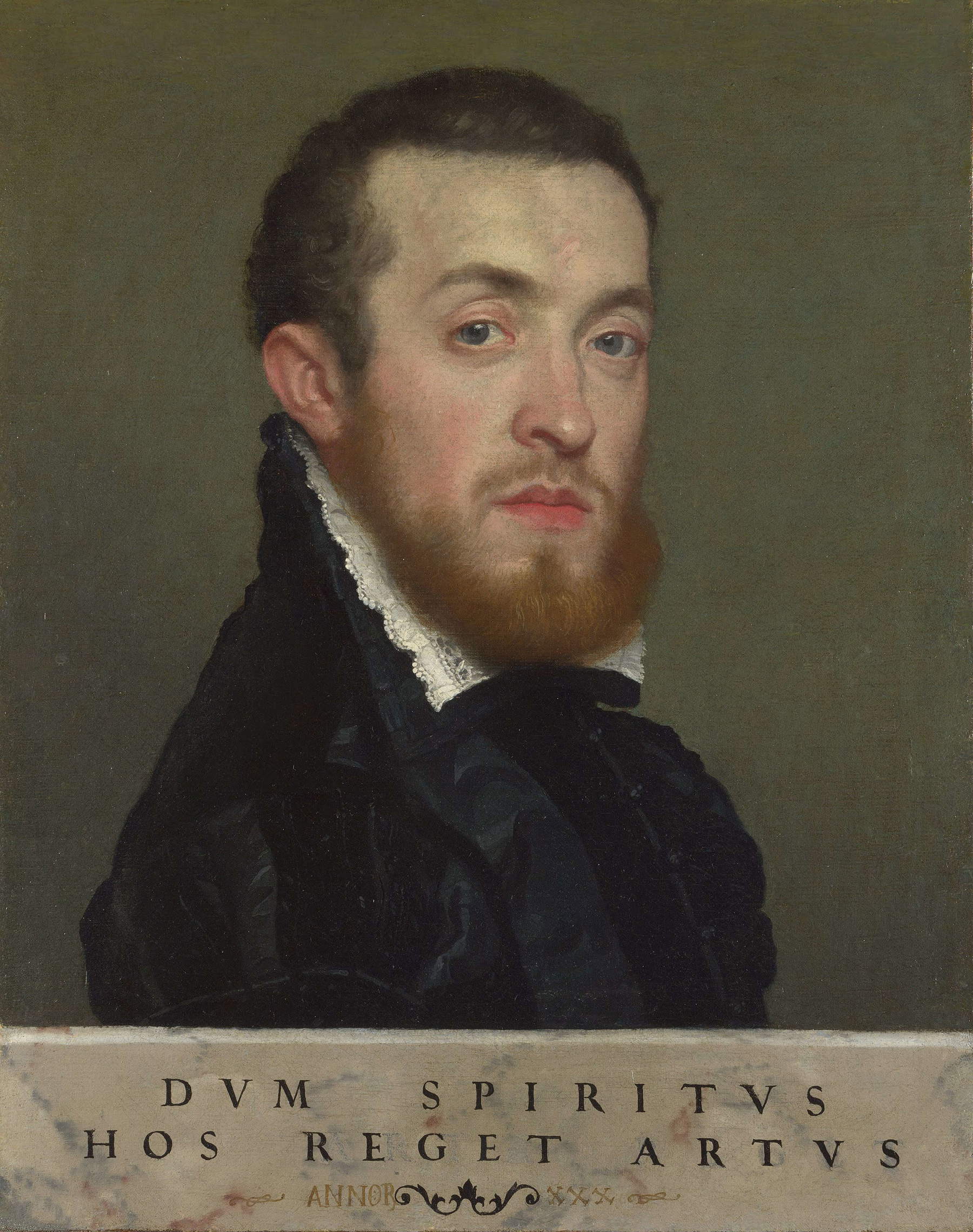
Once the restoration was completed, the painting was shown to Professor Simone Facchinetti, author of the complete catalog raisonné of Moroni’s work and the greatest living scholar of the painter, who, after viewing it in late 2025, immediately and unreservedly confirmed the full attribution to Giovan Battista Moroni. The expertise that followed places the portrait in the 1660s, identifying the most precise point of stylistic convergence in the Portrait of Pietro Secco Suardo in the Uffizi Gallery in Florence, dated 1563, a period that corresponds to one of the most intense and happy phases of the painter’s production, committed to an increasingly personal path of portraiture from nature. “If we try to align some of his proofs made between the 1950s and 1960s,” Facchinetti explains, “we ascertain that he adopted repeating patterns. This finding allows us to hypothesize the original format of our portrait. We can also do a reverse test, which is to cut out details from half-length portraits of figures from the ecclesiastical world wearing a black suit, white shirt and tricorn, to be almost absolutely certain that our character must have been part of this social category.”
The identity of the character portrayed remains unknown, despite the efforts made in the research. The combination of black suit, white shirt without ornaments and tricorn excludes with reasonable certainty the doctors and magistrates, who were also entitled to that accessory but wore more conspicuous civilian clothes. It is almost certainly an ecclesiastic, most likely one of those prelates from the Bergamo area who were among Moroni’s main patrons, both of portraits and of works with a religious subject, in the 1660s.
The painting was part of the collection of Duchess Maria Clotilde Coppola di Canzano, later Postiglione di Canzano, one of the most illustrious Neapolitan aristocratic families between the seventeenth and eighteenth centuries. The auction catalog referred, on the basis of undocumented family memories, to their supposed provenance from the collection of Duke Gaetano Coppola di Canzano (1654-1703). The same sale featured ten other paintings with the same provenance, including a large painted stone by Antonio Tempesta and a Portrait of Giorgione by Pietro della Vecchia.
The credit for recognizing this portrait, under the patina of years, amidst the lots of a public auction, with no name to guide the eye, belongs to those who knew what to look for and had the eyes to find it. The result is an authentic return to art history: one more Moroni, at the brightest moment of his career, coming to light after centuries of anonymity.


The author of this article: Federica Schneck
Federica Schneck, classe 1996, è una giornalista specializzata in arte contemporanea. Laureata in Storia dell'arte contemporanea presso l'Università di Pisa, il suo lavoro nasce da una profonda fascinazione per il modo in cui le pratiche artistiche operano all’interno, e in contrapposizione, alle strutture sociali e politiche del nostro tempo. Si occupa delle trasformazioni del sistema dell'arte contemporanea, del dialogo tra ricerche emergenti e patrimonio culturale, del mercato, delle istituzioni e delle fiere internazionali. Alla scrittura giornalistica affianca quella critica, con testi per artisti, gallerie e collezioni private.Warning: the translation into English of the original Italian article was created using automatic tools. We undertake to review all articles, but we do not guarantee the total absence of inaccuracies in the translation due to the program. You can find the original by clicking on the ITA button. If you find any mistake,please contact us.



























 IT
IT FR
FR DE
DE ES
ES CN
CN


