





From September 12 to December 6, 2026, the Paolo and Carolina Zani Foundation in Cellatica (Brescia) presents *Magnifica Eleganza*. Tiepolo, Longhi, and Guardi: Art and Fashion, an exhibition that offers an original interpretation of 18th-century Venetian painting through the dialogue between art and fashion. Conceived and curated by Massimiliano Capella, the exhibition, housed in the new Exhibition Hall of the House Museum, illustrates how, even as the Venetian Republic saw its political influence gradually wane, it continued to play a leading role in Europe thanks to its extraordinary cultural prestige and the refined taste and elegance that characterized its society.
The exhibition brings together thirty-six works —including paintings and drawings by Pietro Longhi, Giambattista Tiepolo, Francesco Guardi, and Pietro Antonio Rotari, alongside original 18th-century garments —on public display for the first time—and a selection of costumes created by Danilo Donati for Federico Fellini’s *Il Casanova* (1976), which won an Oscar the following year. The works come from major institutions and collections, including the Fondazione Musei Civici di Venezia—Gabinetto Stampe e Disegni and Ca’ Rezzonico, the Gallerie d’Italia – Vicenza of Intesa Sanpaolo, the private collection of Mara Bertoli, the Sartoria Farani archive, as well as the Paolo and Carolina Zani Foundation’s House Museum itself.
The exhibition aims to highlight how the great masters of Venetian painting were not only interpreters of life in the Serenissima, but also keen observers of the fashion and social codes of their time. In their paintings, every fabric, accessory, and detail of clothing accurately reflects the taste of the era, transforming the works into testimonies to the history of costume.
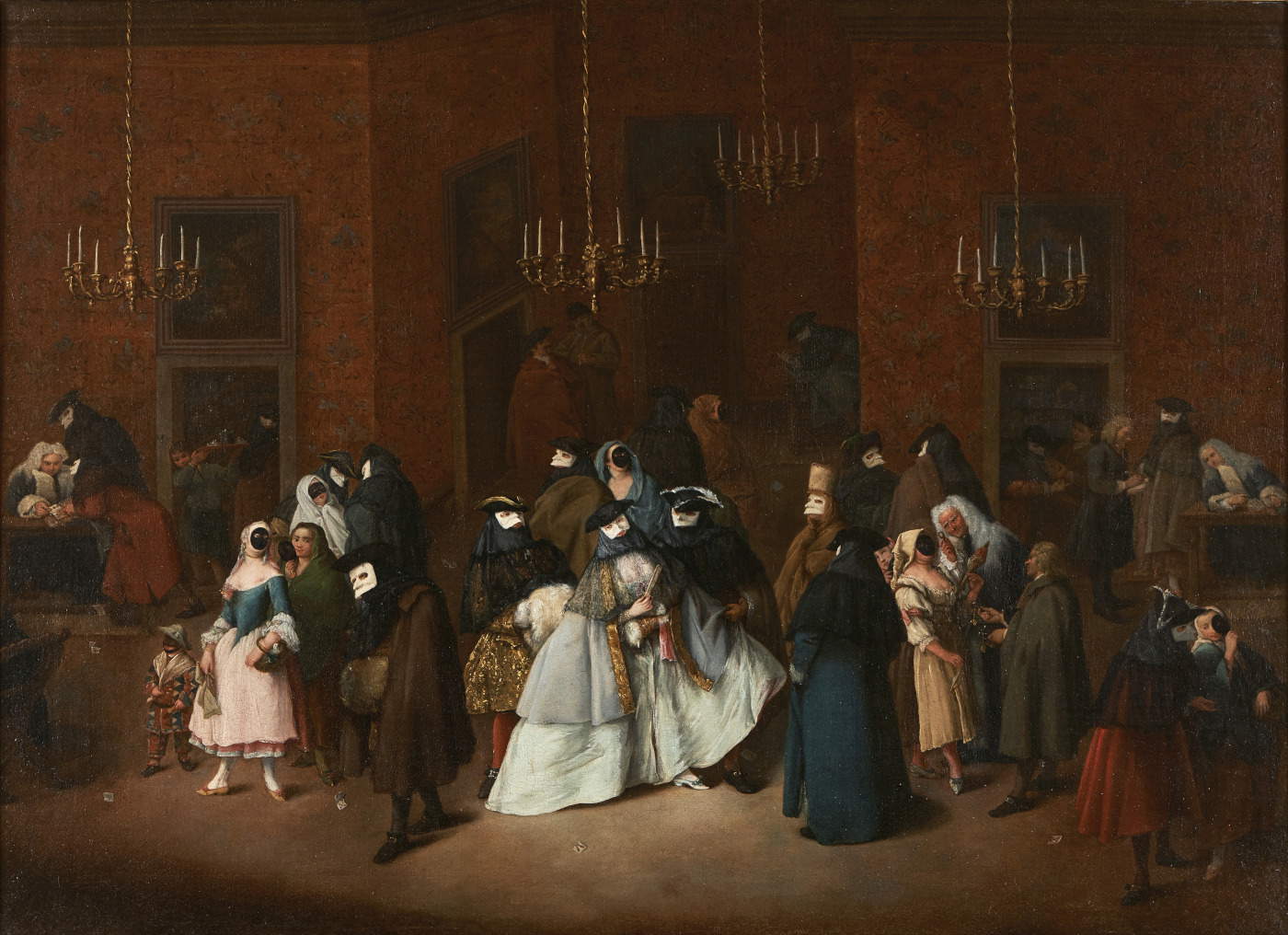
Among the masterpieces on display, Pietro Longhi’s *Il Ridotto in Venezia* stands out as a celebrated depiction of 18th-century Venetian society. More than just a scene of daily life, the painting serves as a veritable compendium of the Serenissima’s elegance: ladies draped in refined andrienne gowns supported by panniers, gentlemen in tricorn hats, cloaks, masks, and precious fabrics evoke the atmosphere of the Ridotti—iconic venues of the city’s social life where Carnival, games, and self-expression were central elements of social life.
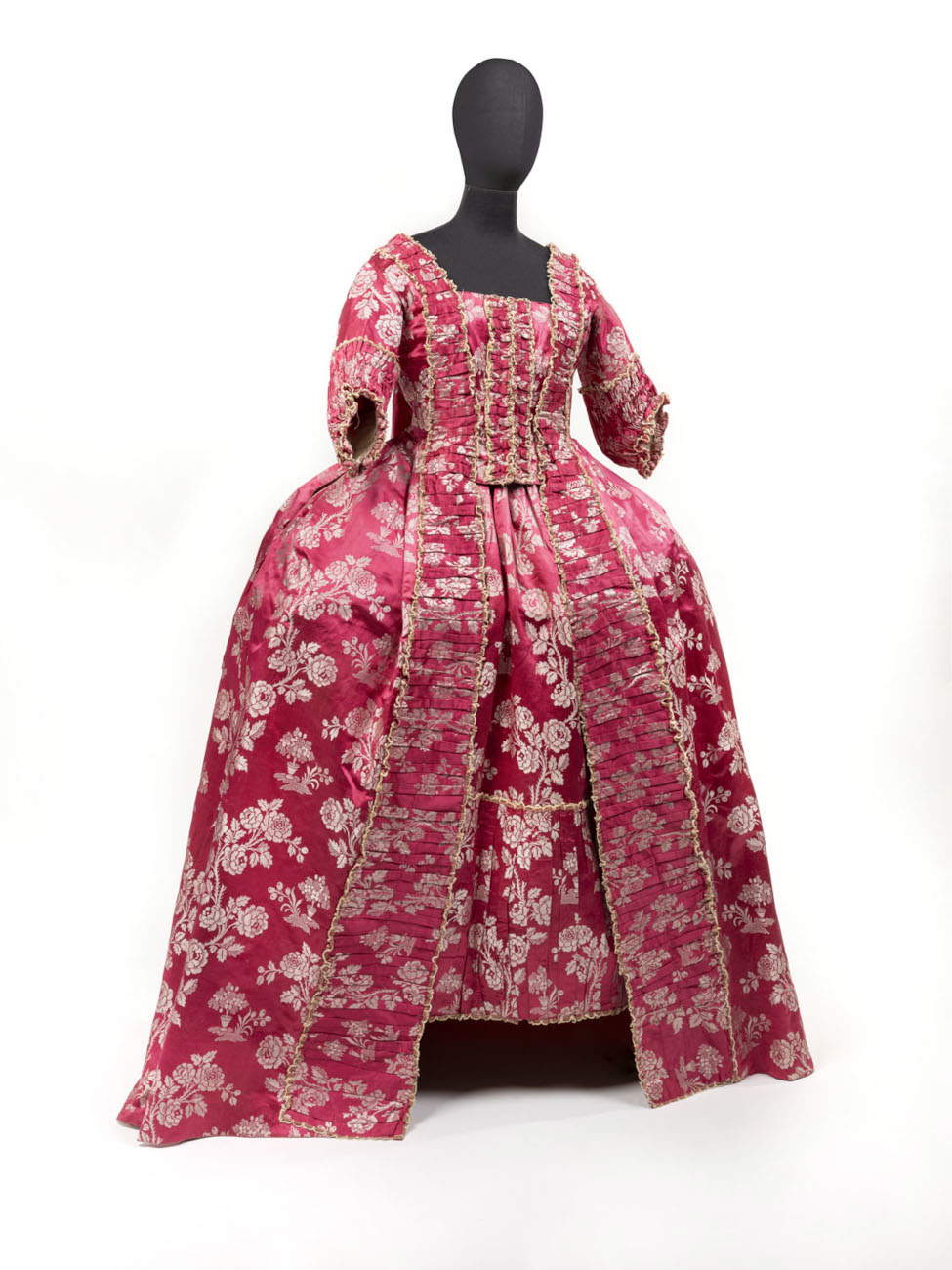
Also on display are original 18th-century garments, allowing visitors to directly compare the clothing depicted in the paintings with the actual garments worn at the time. The ample volume of the panier, the opulence of the damasks and velvets, the lightness of the silks, and the complexity of the tailoring allow visitors to appreciate the craftsmanship and luxury that characterized Venetian clothing.
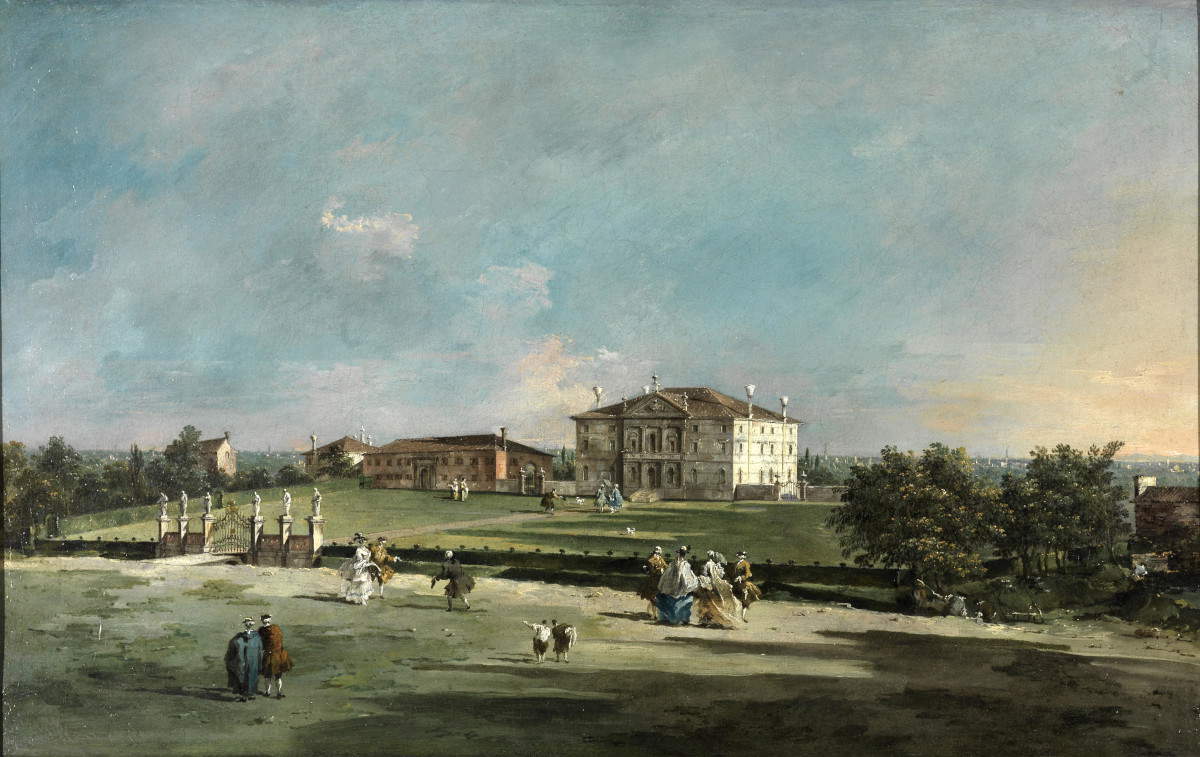
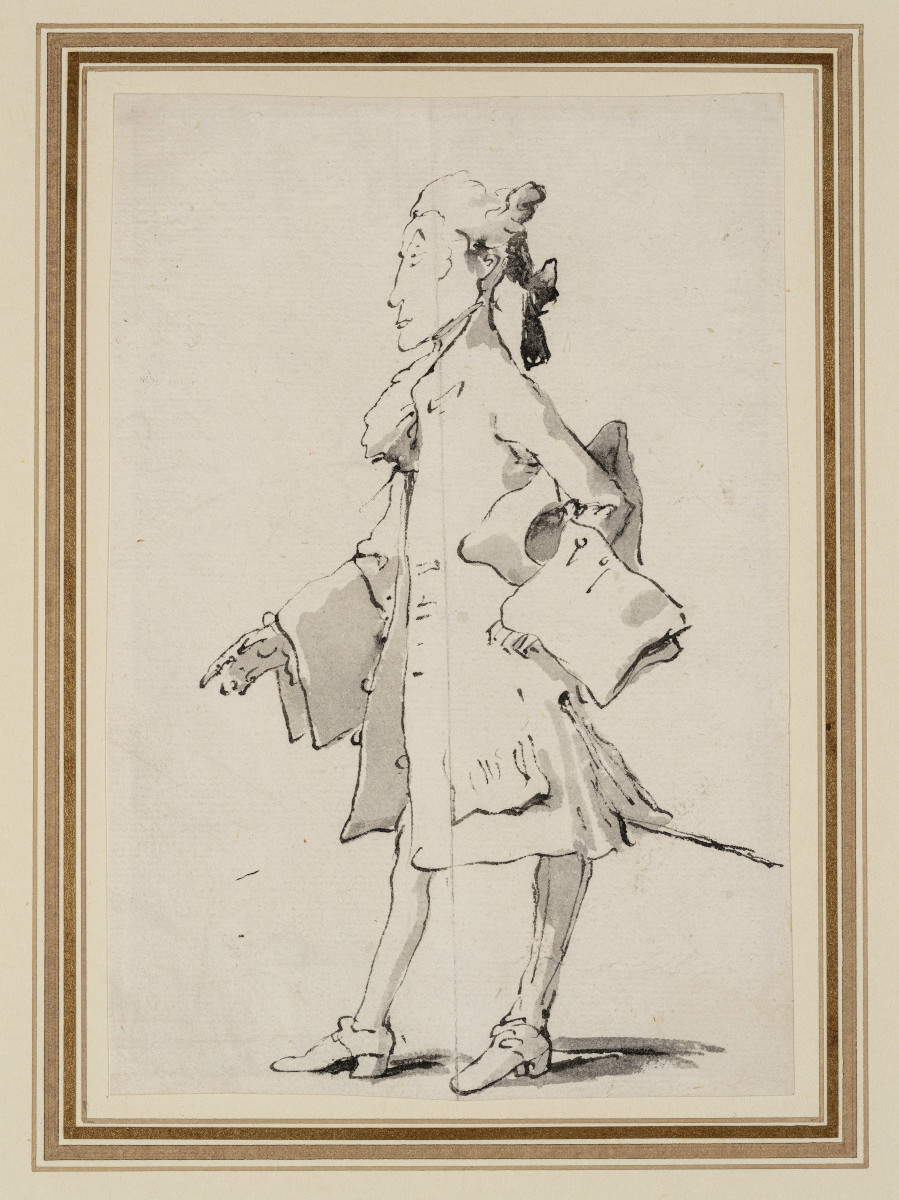
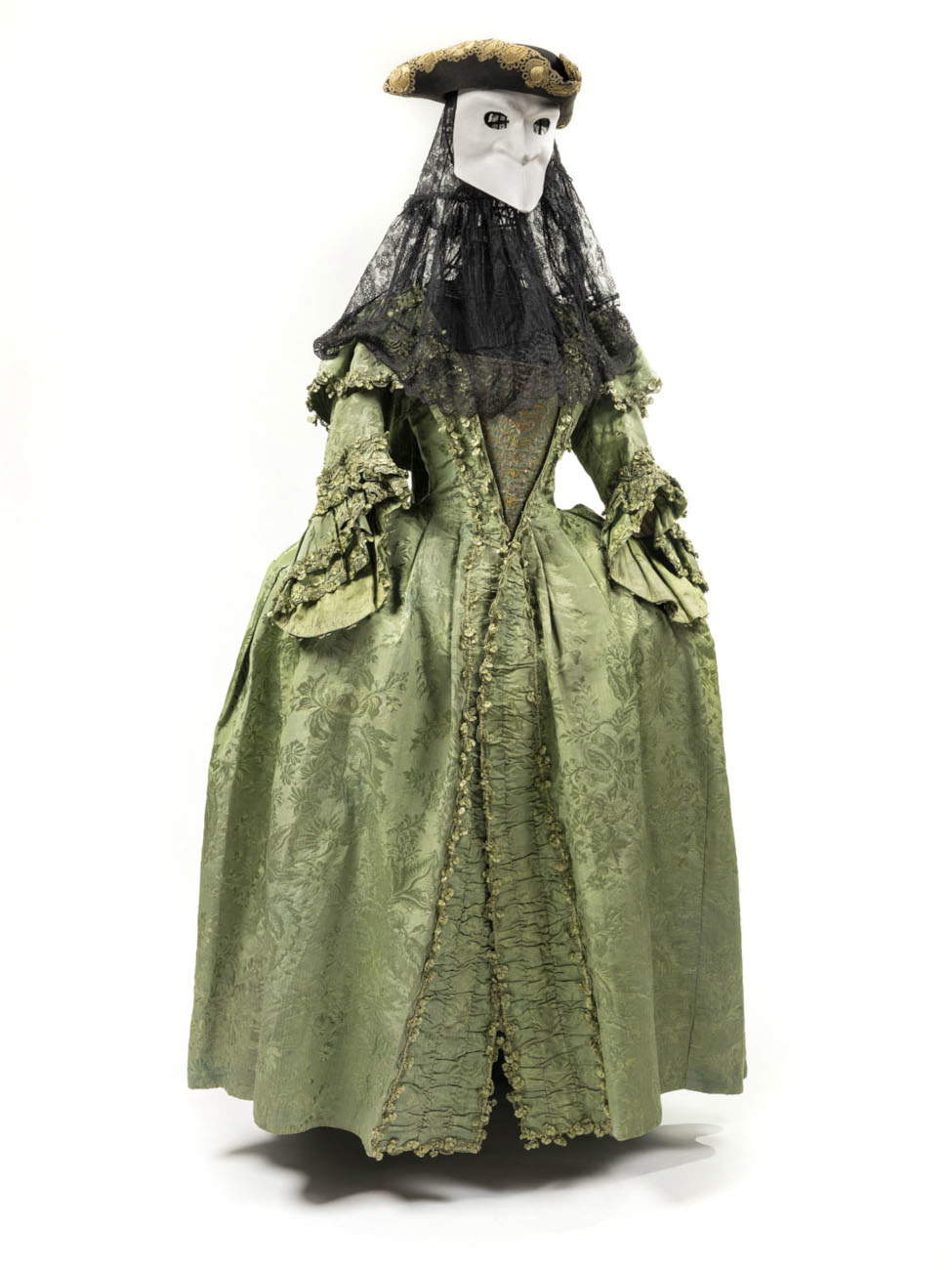
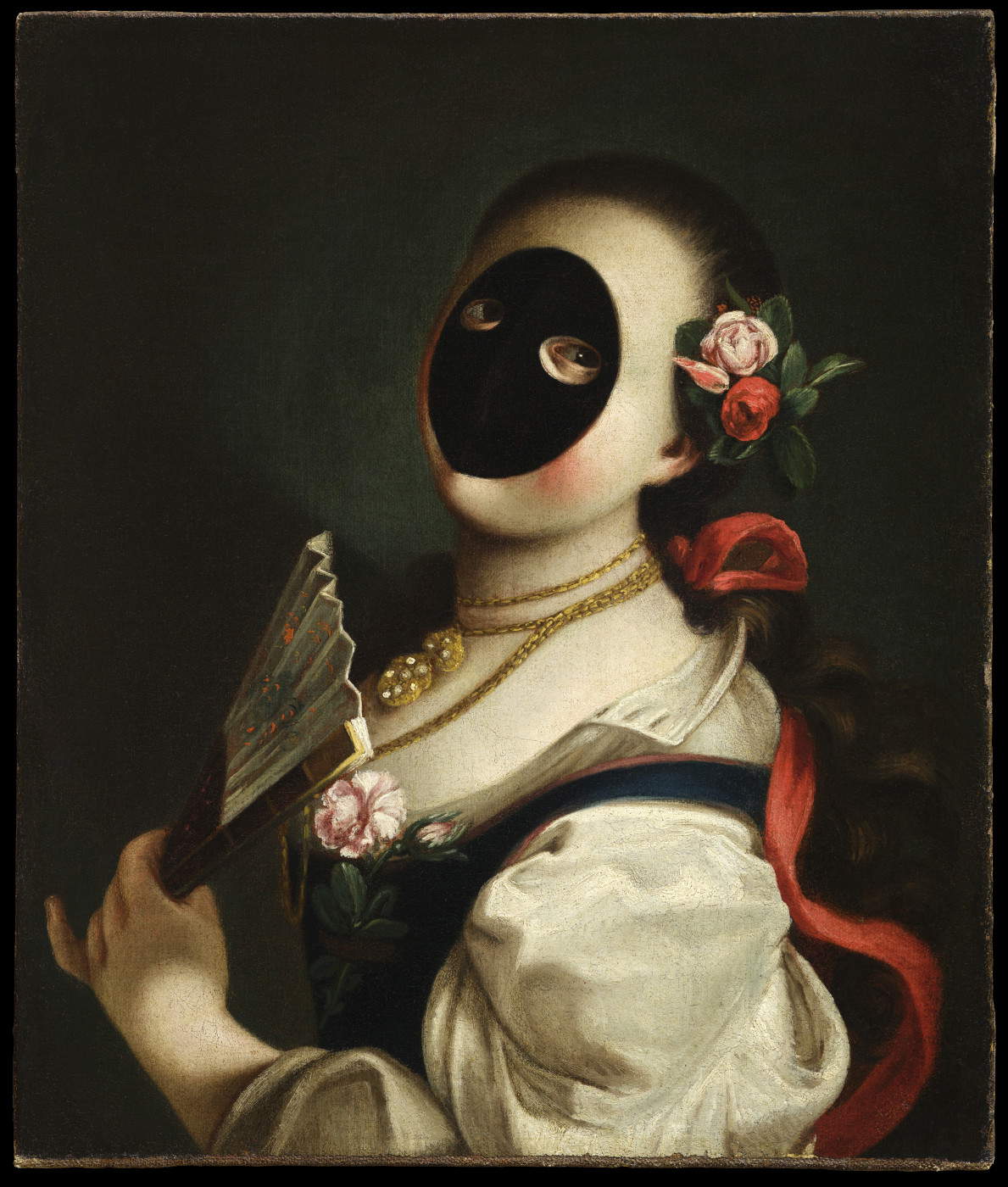
The dialogue between artworks and costumes continues throughout the exhibition. The elegant andriennes depicted in Pietro Longhi’s drawings are reflected in the historical garments on display, while the robe à la polonaise appears in the figures of Francesco Guardi’s famous View of Villa Loredan in Paese, one of the masterpieces of the Paolo and Carolina Zani Foundation, presented here with a new interpretive perspective. The refined robe à la française, embellished with the characteristic Watteau pleats, and the elegant habit à la française, on the other hand, appear in the drawings by Guardi and Giambattista Tiepolo, documenting the profound influence that French fashion exerted on Venetian society. Accessories also play a fundamental role in the exhibition’s narrative. Pietro Antonio Rotari’s previously unseen *Lady with a Moretta* captures the charm of the famous Venetian women’s mask, while the *bautta* and *larva* populate the scenes painted by Longhi, evoking that world suspended between reality and representation that helped make the Venice Carnival an international legend.
One of the exhibition’s most original sections consists of drawings from the Ca’ Rezzonico Print and Drawing Collection. More than mere preparatory studies, these sheets prove to be authentic “costume sketches” ahead of their time, in which Longhi, Tiepolo, and Guardi carefully observe garments, drapery, accessories, and postures, offering a valuable insight into 18th-century fashion culture.
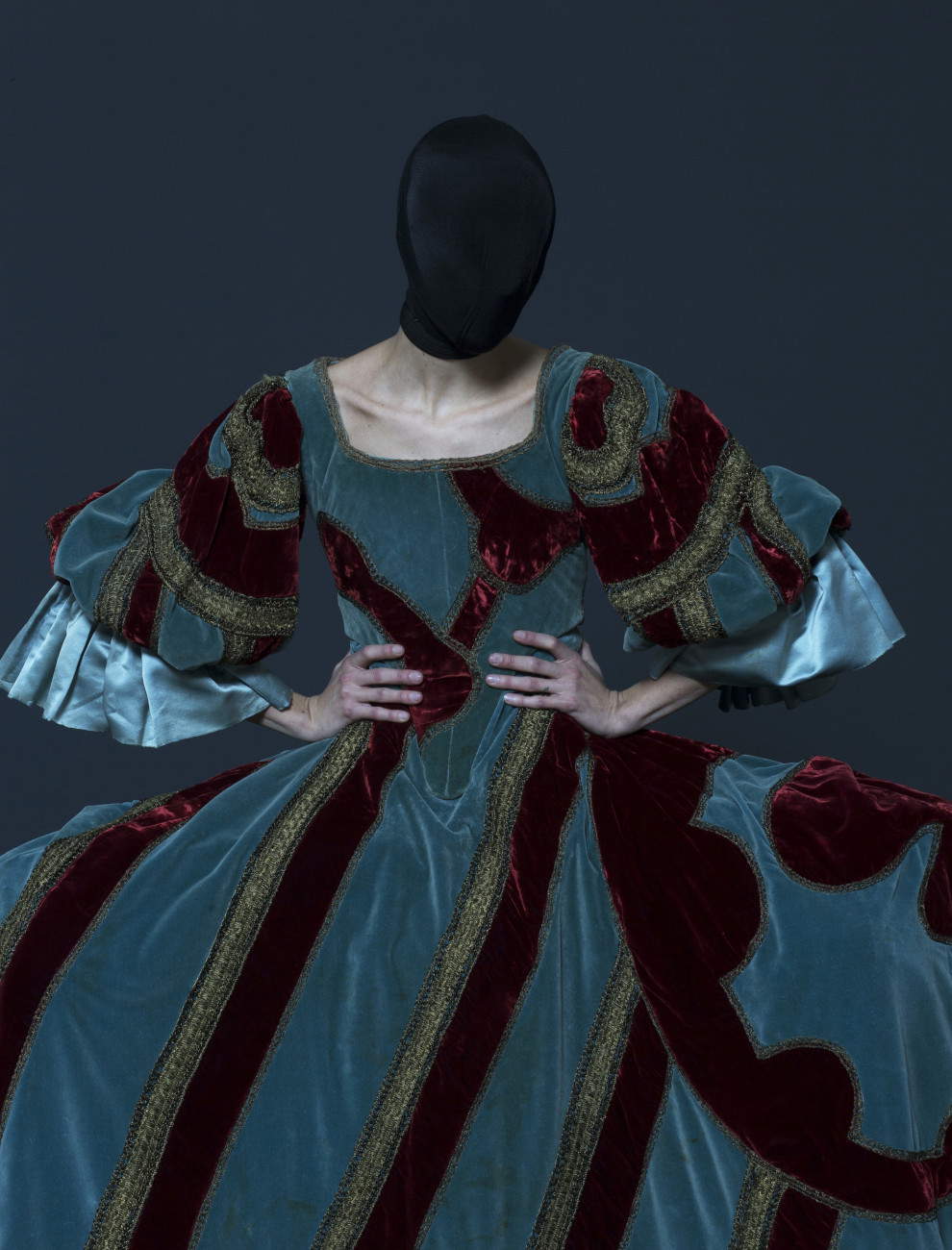
The exhibition concludes with seven costumes designed by Danilo Donati for Federico Fellini’s film *Il Casanova*, on loan from Sartoria Farani. From velvet tailcoats to sumptuous paniers, from iridescent silks to deliberately exaggerated silhouettes, these creations do not faithfully reproduce 18th-century garments but reinterpret their spirit through the sensibility of the great costume designer. A comparison with the works of Longhi, Guardi, and Tiepolo demonstrates how the imagery of 18th-century Venice continues to influence cinema, fashion, and contemporary visual culture to this day.
Hours: Tuesday through Friday from 9 a.m. to 1 p.m. Saturday and Sunday from 10 a.m. to 5 p.m. Single ticket for the garden and exhibition hall: 12 euros.
|
| An exhibition at the Zani Foundation exploring the relationship between art and fashion in 18th-century Venetian painting |

Warning: the translation into English of the original Italian article was created using automatic tools. We undertake to review all articles, but we do not guarantee the total absence of inaccuracies in the translation due to the program. You can find the original by clicking on the ITA button. If you find any mistake,please contact us.


























 IT
IT FR
FR DE
DE ES
ES CN
CN


