




by
Federico Giannini  @federicogiannini1
19/07/2026
@federicogiannini1
19/07/2026



Categories: Opinions / Disclaimer
The new layout of the National Gallery of Modern and Contemporary Art in Rome? It’s the most disjointed and chaotic yet: several galleries retain their previous layout, chronological sequences jump around constantly, and a focus on big names turns the museum into a disjointed sequence. An article by Federico Giannini.

There is little point in comparing the new exhibition layout at Rome’s National Gallery of Modern and Contemporary Art with the previous one: such a comparison presupposes the idea of a clear change—a sort of genetic mutation—or at the very least a radical overhaul of the framework that supported the earlier installation. Clearly, the hopes of those who thought that, once the “Time is out of joint” experiment had been shelved—Cristiana Collu’s exhibition design that was supposed to last only for the duration of a single exhibition (but which we ended up having to put up with for nearly ten years)— the National Gallery would return to doing what it’s supposed to do—namely, serving as a museum of modern and contemporary art (if we admit, as we should, that for some time now the Gallery has almost entirely ceased to be a center for exhibiting and collecting contemporary works). Our thoughts then inevitably turn to them—to all the commentators, all the critics, all the specialists who, exactly ten years ago, had to swallow an exhibition that transformed the museum into one long Instagram set and hoped, in vain, that with the change in leadership, the museum would return to a less overwhelming approach—a museum that could be explored like a living art history textbook. Or better yet: like an expanded art history textbook, where one realizes that history is not a sequence of events—as it must, through no fault of its own, be presented in books—but rather a web of coexistences and contradictions.
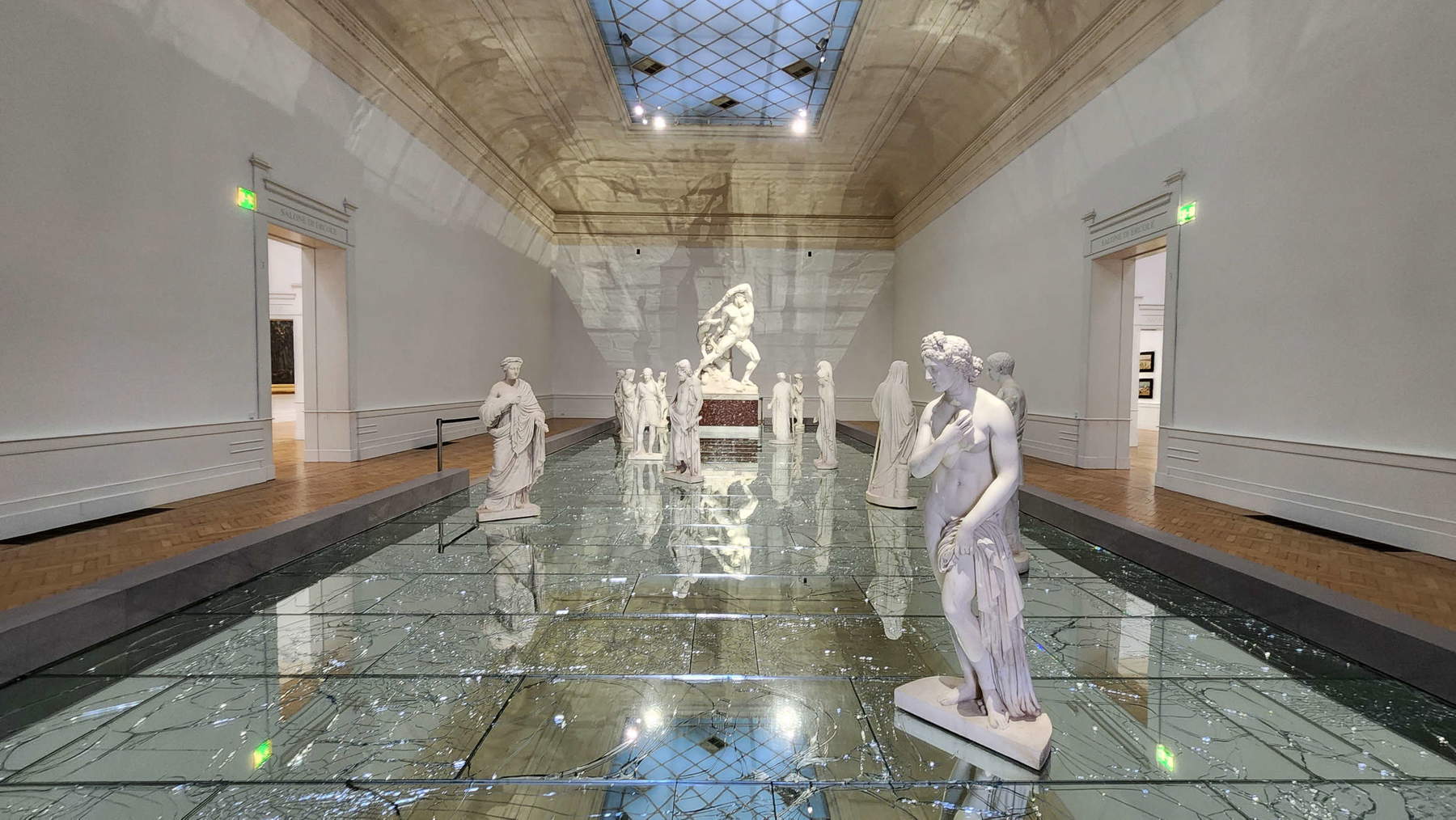
Of course, the ever-growing ranks of those seeking to dismantle museum structures will be seized by sudden and violent convulsions at the mere thought of a museum that could also be an art history textbook, but while it is true that selfie hunters can pursue their “hunt” even within a textbook and capture all the “prey” they want on their phones, it is equally true that the reverse is never the case—that is, the novice, the beginner, or the curious visitor will be unable to fully grasp and understand the issues, connections, relationships, derivations, deviations, developments, innovations, or breaks if the museum is conceived and run as a spectacular jumble, as the playground of a director who works as if he were a curator, as a place of imposed correspondences—which, moreover, are no less arbitrary (quite the contrary) than the juxtapositions that follow a historicist approach. In other words: the visitor is always free to interpret history, but will never be able to construct it on their own if the museum deliberately refrains from reconstructing it. At best, they will notice some recurring themes, some references, some whimsical juxtapositions—which often require instruction manuals far more substantial than those needed for a slightly less pretentious exhibition layout. An example: in the first room you encounter when beginning your tour of the National Gallery’s new layout—the one featuringCanova’s *Hercules and Lica* , which has been placed, along with a dozen other contemporary sculptures, above Alfredo Pirri’s *Passi* , a sort of floor of broken mirrors (which reflects lights and statues and, in turn, casts shadows and reflections onto the ceiling near the large skylight, making it feel as though you’re at Cocoricò rather than inside a museum), the installation required a one-page explanation, in which the visitor is thoroughly informed about the idea behind such a grand display of neoclassical statuary: to surround the frenzied scene of Canova-esque violence with “judgmental gazes—direct or indirect—from the deities […] as if within a dense forest,” gaze “filled with pain and shame at what is happening before their eyes and which, despite their divine role, they cannot (and perhaps do not wish to) stop.” Therefore, if the sculptures by Canova, Tenerani, Bienaimè, and all the others must, against their will, lend themselves to the whims, moods, and discretion of a museum administration that decides to transform them into extras in a work of contemporary art (whose meaning, incidentally, reflects a contemporary sensibility!), perhaps it would be more appropriate and logical to expect some Marinetti-style demand for the museum’s demolition: but if there is also a stated intent to “strengthen the bond between the gallery and the works,” “between the museum and the collection,” then it is legitimate to express some reservations.


Of course: one might argue that not all galleries have been entrusted to artists adequately supplied with nineteenth-century works to arrange as they please, and that the new layout—imposed on the museum by Director Renata Cristina Mazzantini in the wake of the disastrous Futurism exhibition— is based on a framework that seeks to preserve a more distinct and recognizable chronological order; yet this attempt at clarity—which has certainly succeeded in some galleries—does not appear to have undermined the fundamental premises of the previous exhibition design. When, in an interview about the new layout, Mazzantini (after reiterating that managing a museum requires “creative poiesis”—and thus, taking it literally, which is the only possible interpretation, the museum requires creative creativity) says that “exhibitions must become increasingly open to interpretation,” it’s as if we can hear Collu saying that the museum must offer “the possibility of an encounter with the artwork, even without necessarily predetermining what the visitor should see, how they should interpret it, or what they should think of it.” When Mazzantini says that in the new layout “the works engage in dialogue with one another, generating virtuous relationships,” it’s as if we can hear Collu saying that his exhibition design fostered the establishment of unprecedented “relationships at a distance.” When Mazzantini says that the viewer must be able to “personalize their own visit experience and feel like a protagonist,” it’s as if we can hear Collu saying that the public has “the right to approach a work even by stepping outside the prepackaged pedagogical frameworks of conventional schooling,” and should “have the opportunity to negotiate their own path to engaging with a work.” There is, therefore, a continuity between Collu’s approach and Mazzantini’s, confirmed beyond any reasonable doubt by the preservation of certain galleries from *Time is out of joint* ( and subsequent additions), which have been retained, virtually intact, in the new layout.
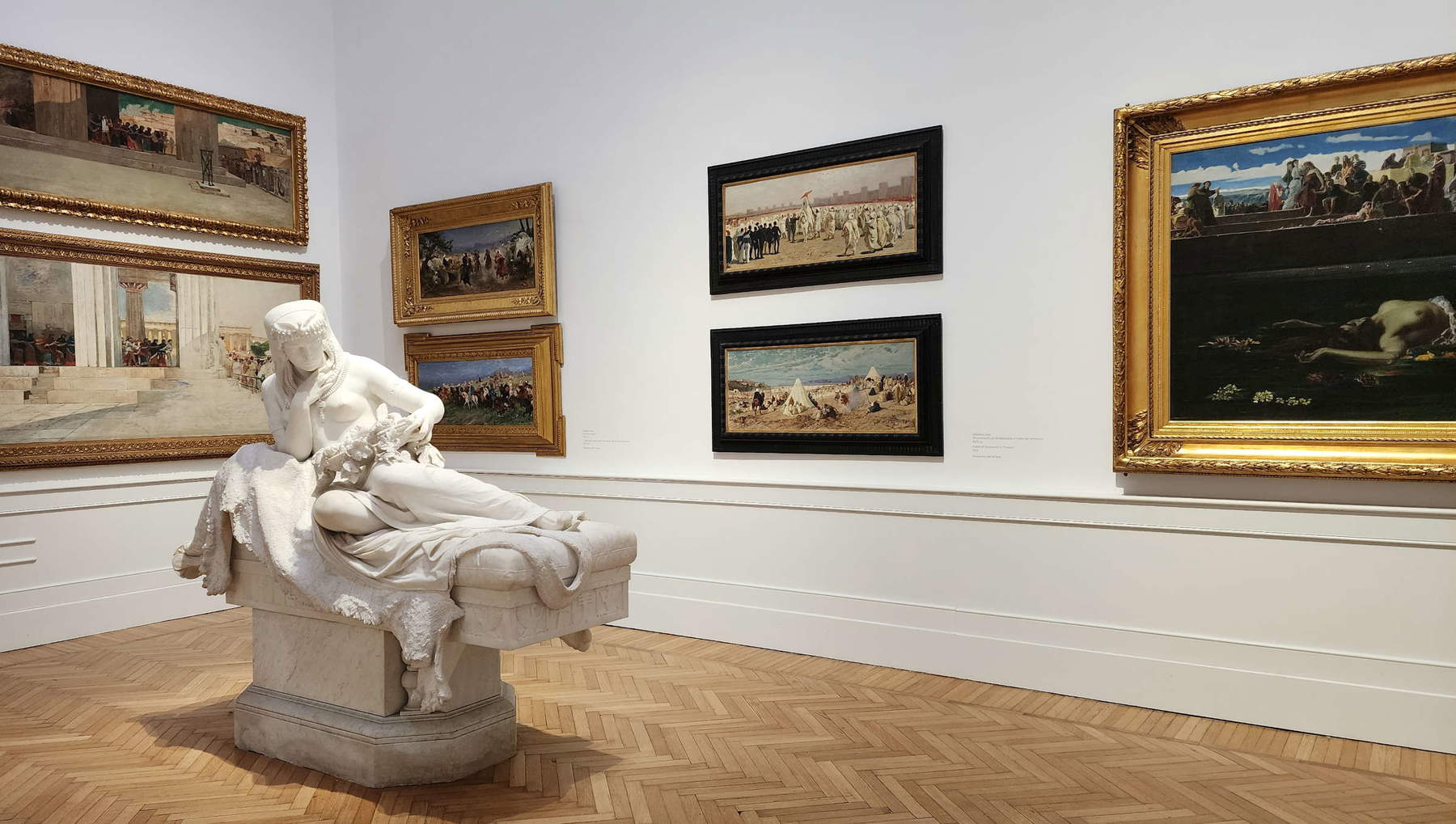
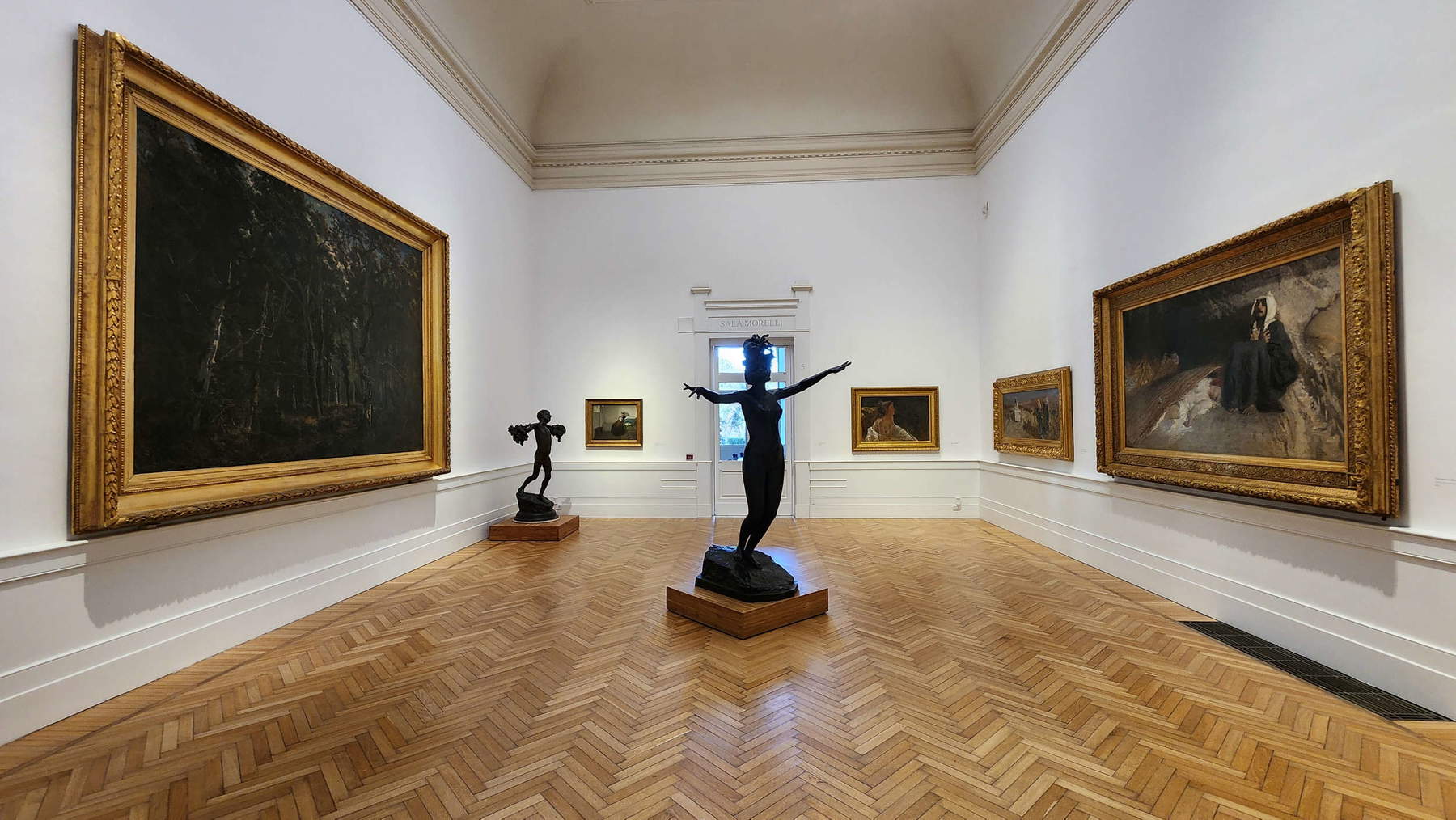
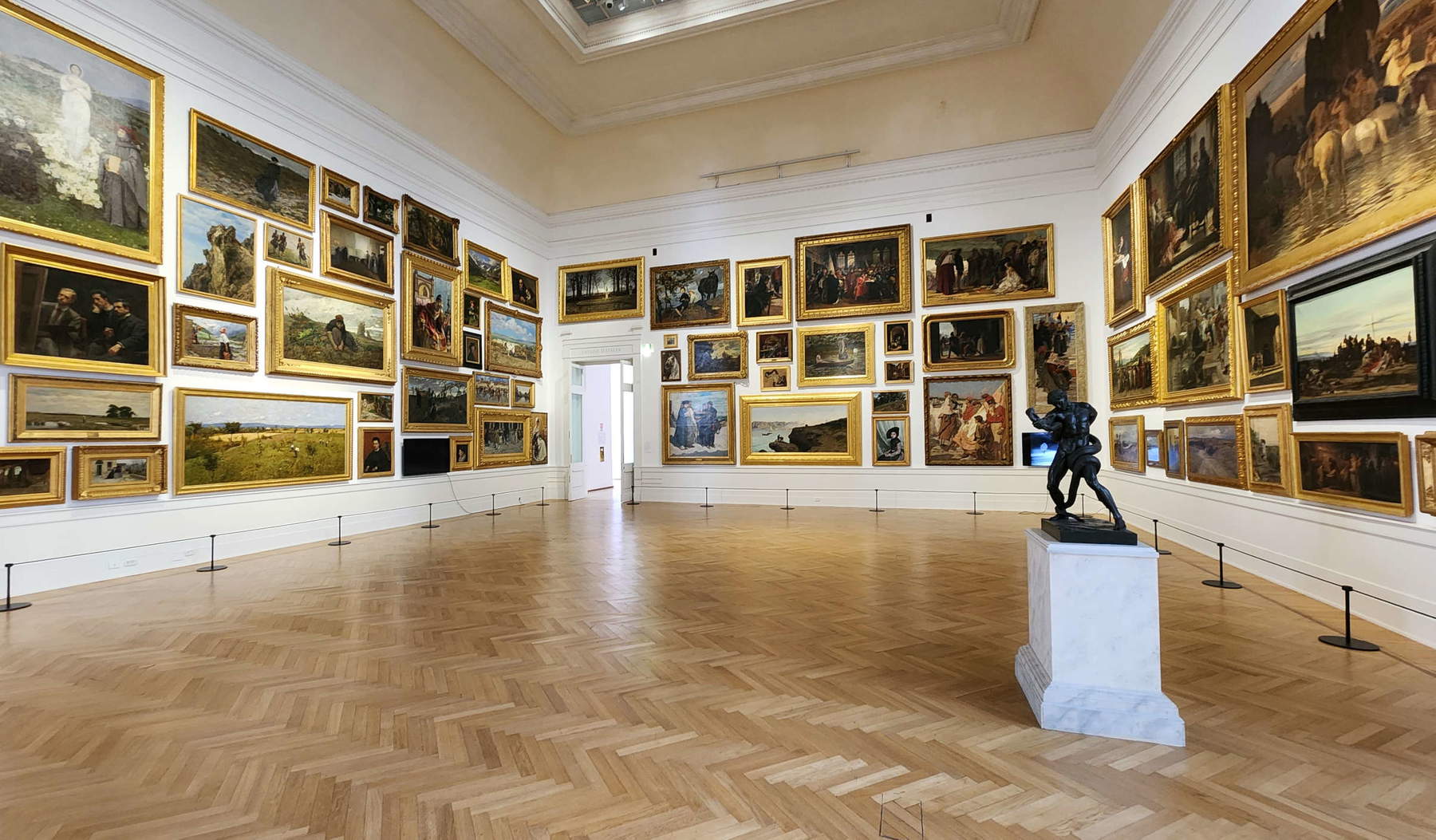
The first and most problematic remnant encountered in the new layout is the large 19th-century picture gallery inherited from the Collu administration and now pompously renamed the “Salone d’Italia”: it is nothing more than the survival, with a few modifications, of the “Panorama XIX” exhibition that was suddenly installed in the galleries of the National Gallery in mid-2023 and which, as has often happened in recent years, never left Valle Giulia, but has settled in to the point of complete integration; it ran through the Futurism exhibition, becoming a sort of introduction to it; it adapted to the new layout and has become a permanent fixture of the museum (and so, on second thought, perhaps the room’s new name is the most apt: there’s nothing more Italian than something intended to be temporary that ultimately becomes permanent). The problem is that this picture gallery, which was initially supposed to last eight months (but has now been here for exactly three years), includes some of the key works in the art history of the period: there is *Women Loading Wood at the Port of Anzio* by Nino Costa—the first modern landscape in Italian art—there is the *Landscape* by Serafino De Tivoli, a painter rarely seen in Italian museums, which marks the beginnings of Macchiaioli painting, there is *The Visit* by Silvestro Lega; there is one of Giovanni Fattori’s most important portraits (that of his wife Settimia Vannucci, who, moreover, isn’t even mentioned by name: the work is exhibited as *Portrait of His First Wife*); there are two cornerstones of Tranquillo Cremona’s oeuvre, there is *At the Fountain* by Antonio Fontanesi, which is his innovative reinterpretation of the English and French landscape of the mid-19th century; there are some of the most significant works by many of the Macchiaioli, the post-Macchiaioli, the painters of the Rivara School, and the Venetian painters of the late 19th century. In short, a large part of the National Gallery’s nineteenth-century collection is represented here, and allowing everything to be gathered in a picture gallery where one painting is as good as another completely undermines one of the pillars of Mazzantini’s philosophy: namely, “restoring maximum visibility and presence” to the works. Above all, it precludes the possibility of creating a coherent narrative—one capable of offering visitors the tools to truly understand what happened in Italy in the mid-19th century. Of course, at this point, those in favor of the project will argue that the intent of the gallery is to imitate the exhibition designs of the time, to reflect “the process of gradual accumulation that gave rise to the museum’s nineteenth-century collections,” as the introduction to *Panorama XIX* informed us, and to reveal “the variety and intermingling of genres in a century that ushered in modernity.” This is entirely legitimate, but it should be noted that Panorama XIX was a temporary exhibition and not a permanent installation. Furthermore, if much of the museum’s itinerary is organized according to a more traditional logic of the development of ideas, the succession of artistic movements, and the renewal of artistic practices, then the visitor will inevitably find some works missing.
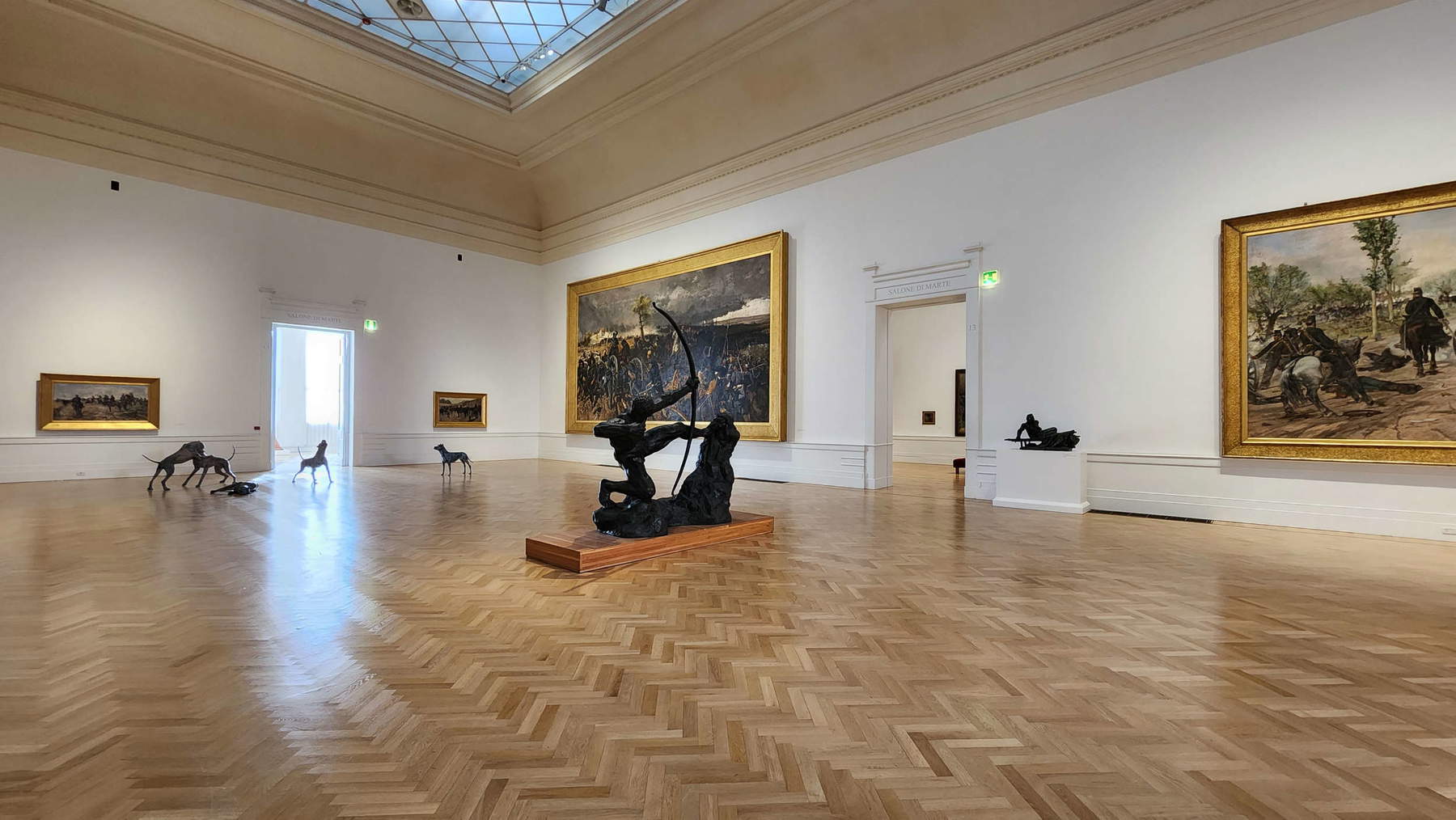
Another feature that remains is the “Sala di Marte”—one of the central halls of *Time is out of joint*—the large space dedicated to war, featuring the battle scenes by Giovanni Fattori and Michele Cammarano, Guttuso’s *Crucifixion* , and Liliana Moro’s dogs: it is difficult to understand why this room has been left virtually unchanged from the previous exhibition layout. Similarly, it is hard to understand why the questionable installation *Futurpioggia* by advertising executive Lorenzo Marini— conceived for the Futurism exhibition and inexplicably left there, months after the exhibition closed, occupying an entire room that could have been used to display something meaningful: We will therefore take advantage of this space to appeal to the National Gallery and request the removal of this remnant of the Futurism exhibition, especially since, according to the caption, it has not been acquired by the museum but still belongs to its creator.
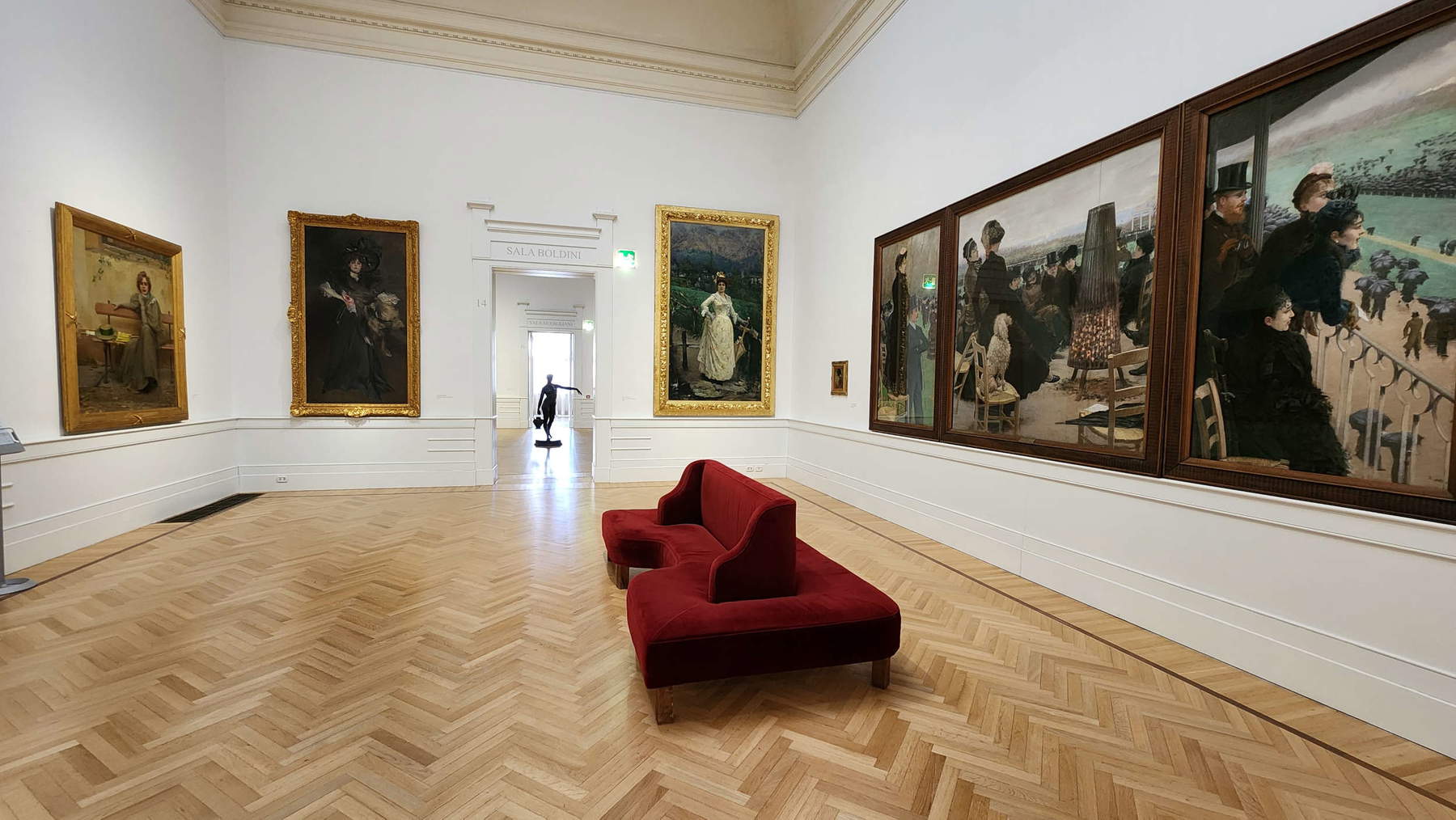
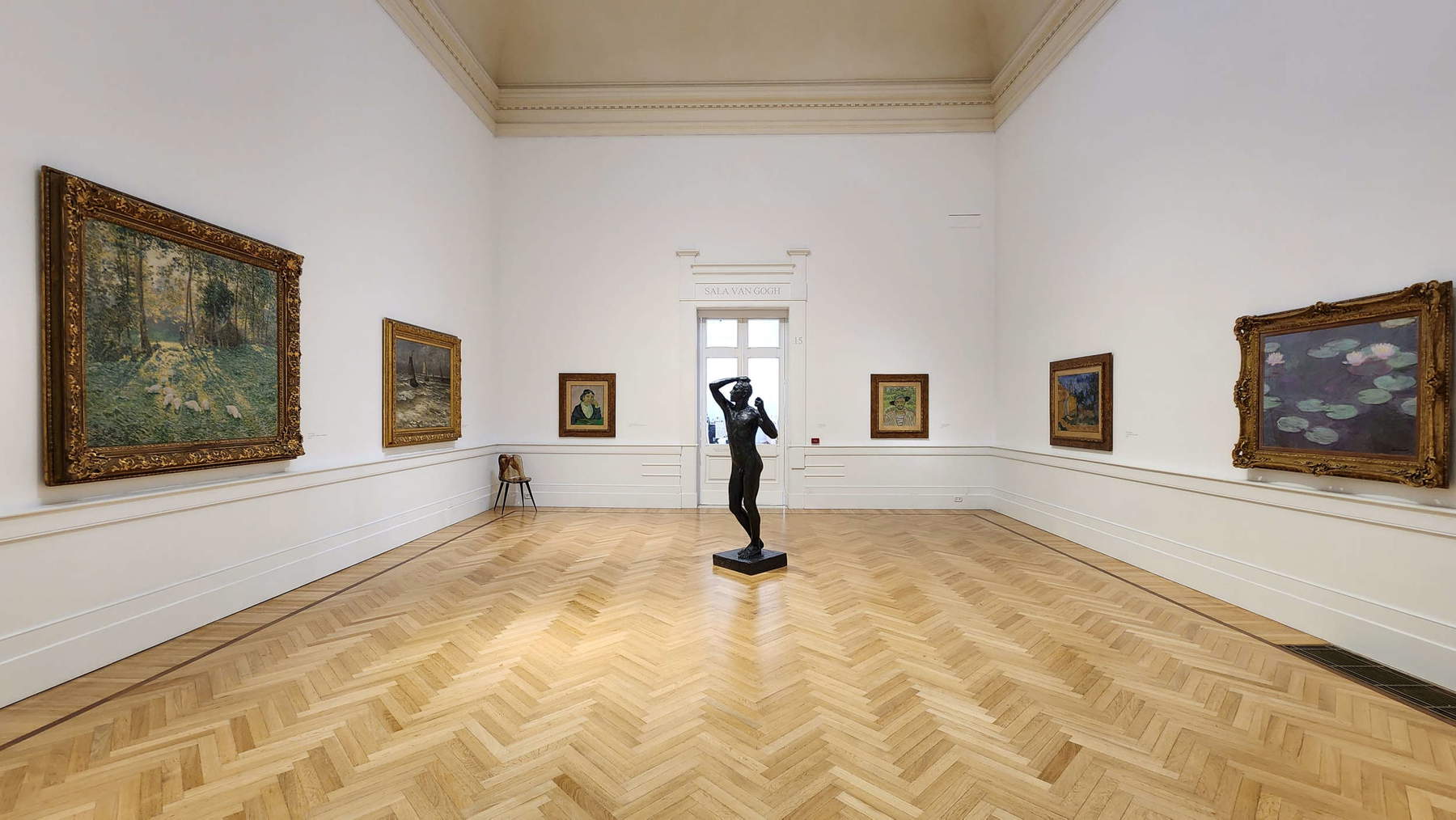
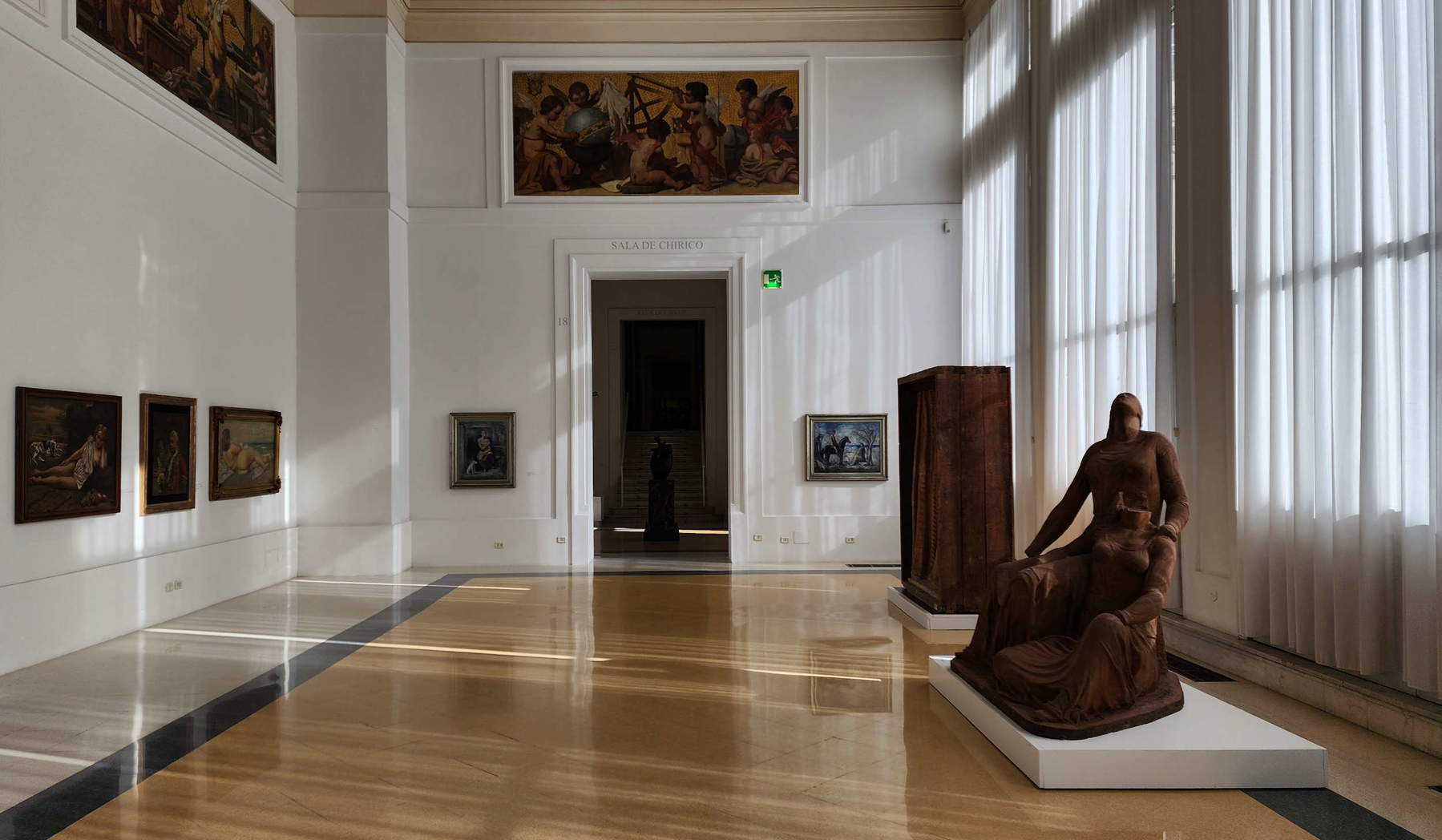
For the rest, the exhibition is organized into rooms dedicated to the most famous artists in the collection. Thus, one encounters a “Hayez Room,” a “Van Gogh Room,” a “Klimt Room,” a “Duchamp Room,” a “Boccioni Room,” a “Balla Room,” and so on, following a logic that clearly responds to what we might call the “highlight principle,” in line with Mazzantini’s statement: “In the new layout, the works engage in dialogue with one another, generating positive interactions. We want to focus on the highlights.” And further: “A museum thrives on its collections: icons and masterpieces define its identity.” It’s hard to think of a museum concept older than the idea of an institution defined by its masterpieces—which, of course, help make a collection recognizable, desirable, and famous; which, of course, form its backbone; but which, just as obviously, do not enjoy a privileged status compared to other elements that should define thea museum’s identity—assuming, of course, that identity is something fixed, immutable, and monolithic: its history, its cultural mission, its public role, its activities, its relationship with the community, the tone of its communication, and the exhibition design itself). If the idea that a museum is defined by its masterpieces ends up prevailing over other, more modern interpretations of the concept of a museum, the risk is that exhibitions like that of the National Gallery will result—which is, in fact, a more or less disjointed sequence of famous names. The exhibition begins, therefore, in the Hayez Room, with his *Vespri Siciliani* at the center, surrounded by paintings by Francesco Podesti, Andrea Gastaldi, Vincenzo Camuccini, and others who practiced history painting in the first half of the century: the result, however, is a display far more formulaic than one might wish, since fifty years of history separate Camuccini’s work from Gastaldi’s (*The Death of Caesar* and *The First Uprising of the Sicilian Vespers* date from 1804 and 1852, respectively), without any real understanding of what it meant to practice history painting during the Napoleonic era (Camuccini) and the Risorgimento era (Gastaldi), because this mishmash is not even adequately defined. With a leap of a few decades—bypassing, for the reasons mentioned above, the entire chapter on Macchiaioli painting, bypassing the birth of modern landscape painting, and bypassing the developments in realist painting— we move on to the next room, dedicated to Domenico Morelli, who already had his own room in Sandra Pinto’s exhibition layout (later further revised by Maria Vittoria Marini Clarelli), but which came after the rooms dedicated to the Tuscan artists and the schools of northern Italy: In Mazzantini’s arrangement, however, he appears out of the blue, introducing a curious “Balzico Room” dedicated, as the captions state, to the “fashion of Orientalism” (sic): it is surprising to find Odoardo Borrani’s *Camels on the San Rossore Estate* there, a painting that is anything but influenced by the East, since the camels in question are nothing more than the dromedaries that, since the 17th century, inhabited the countryside on the outskirts of Pisa and were used by locals as pack animals.
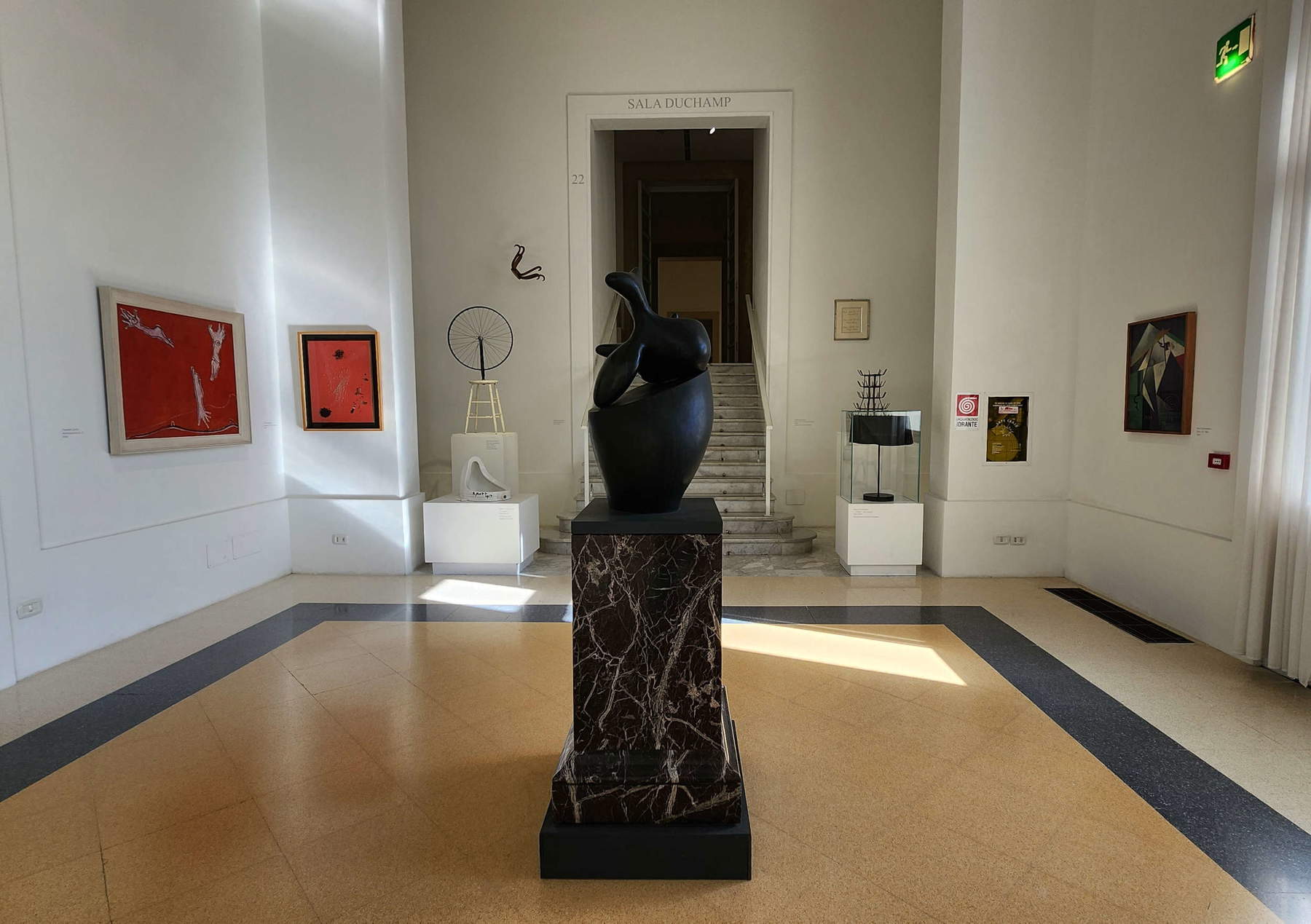
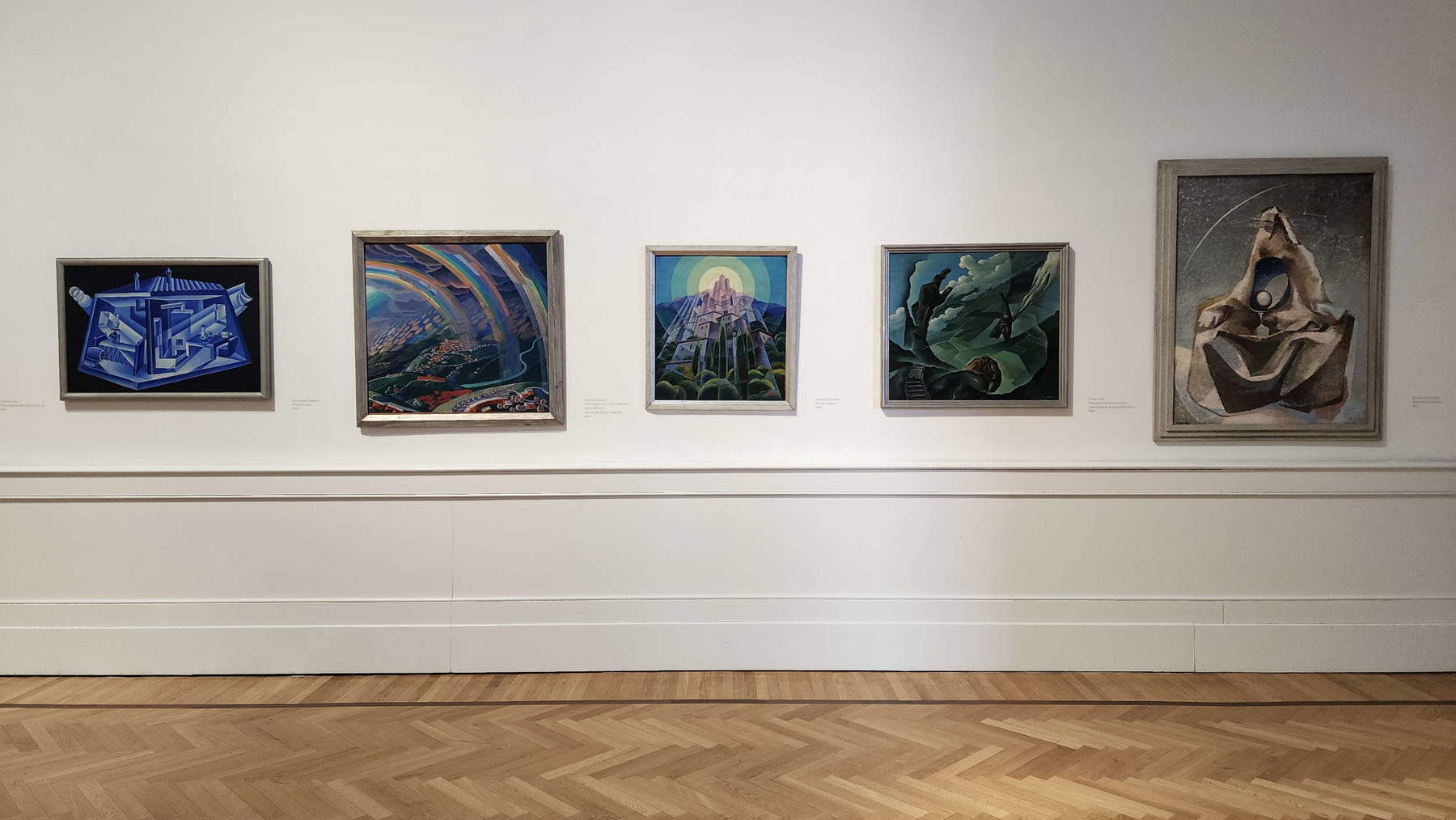
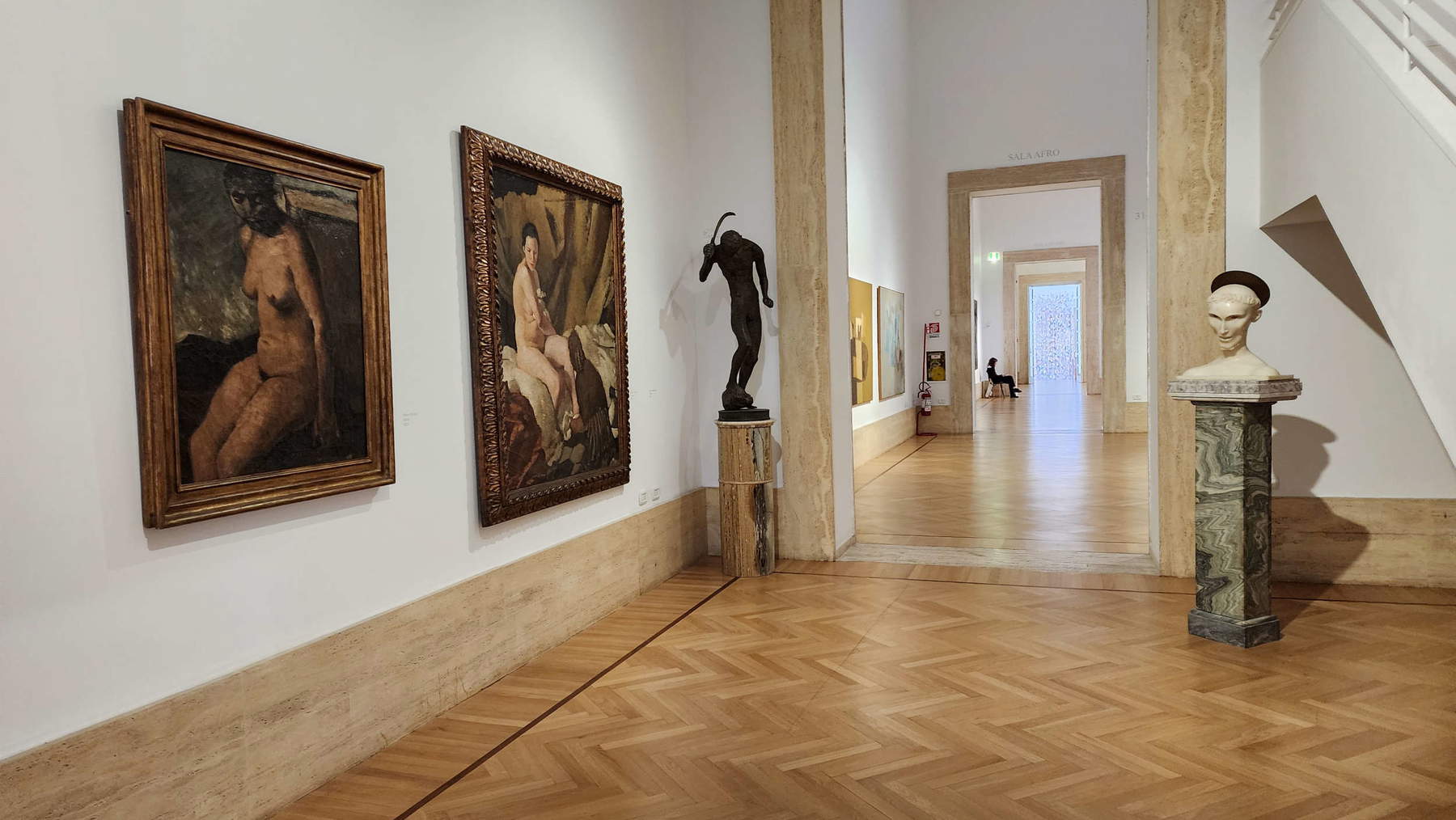
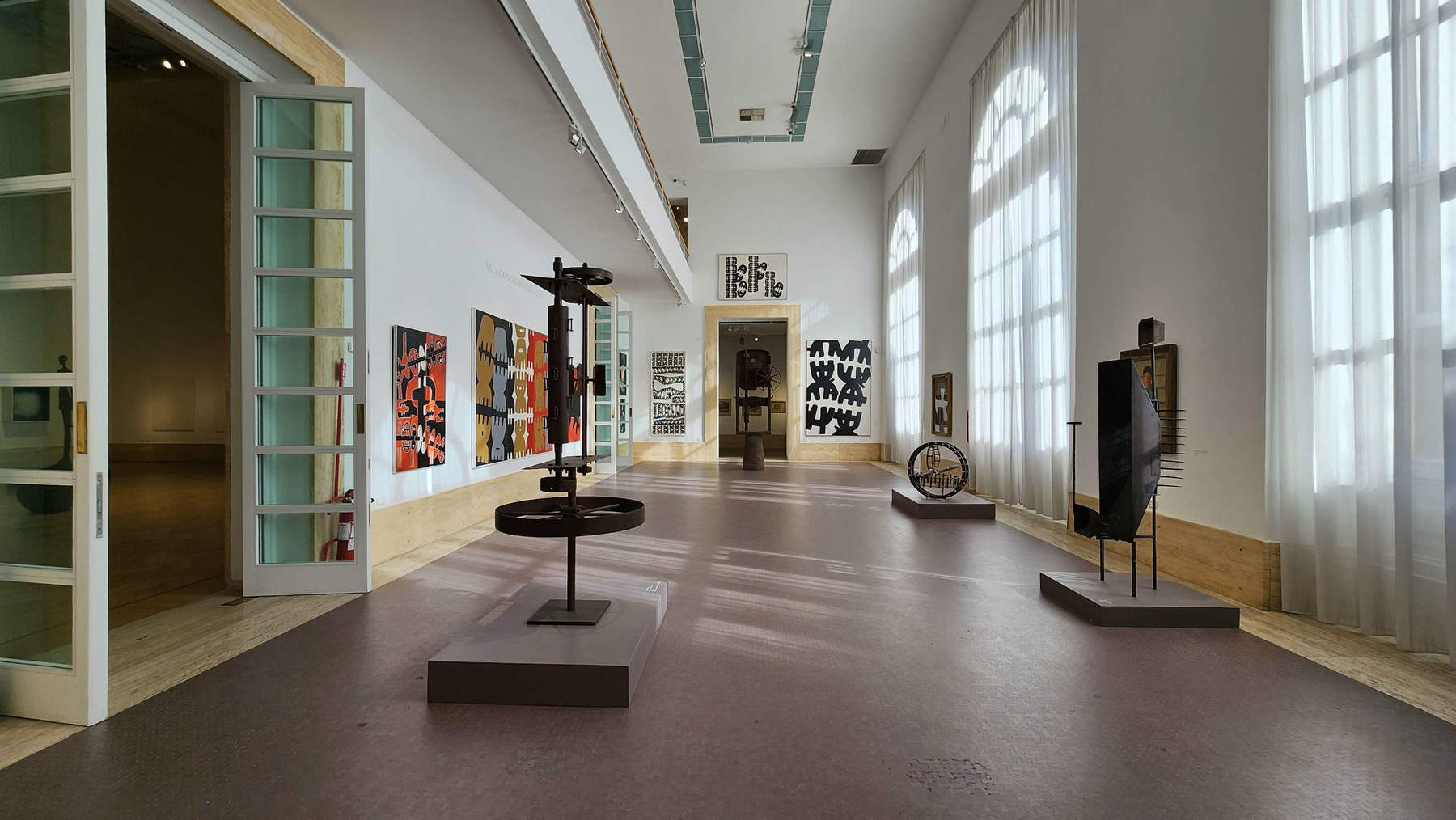
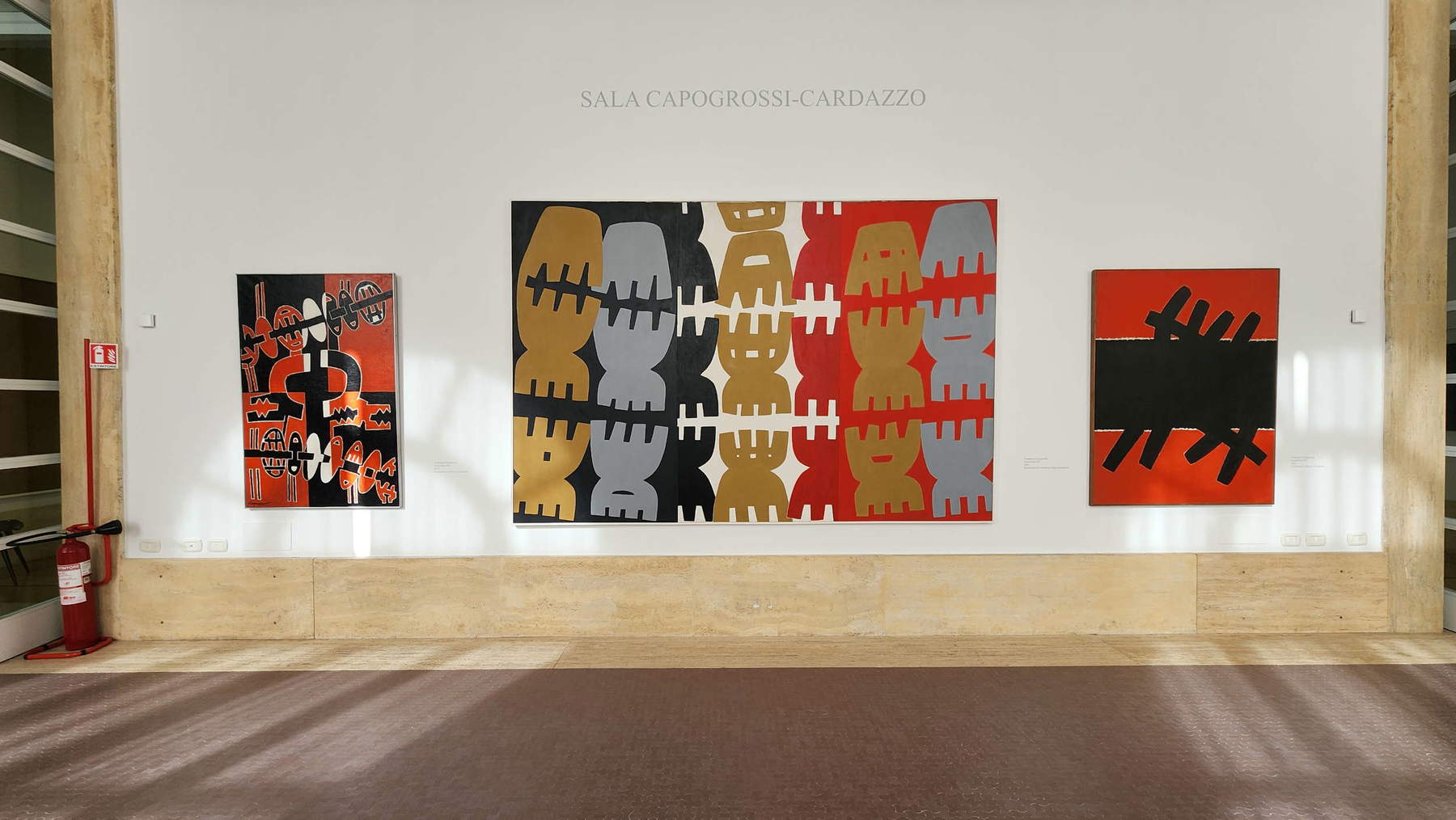
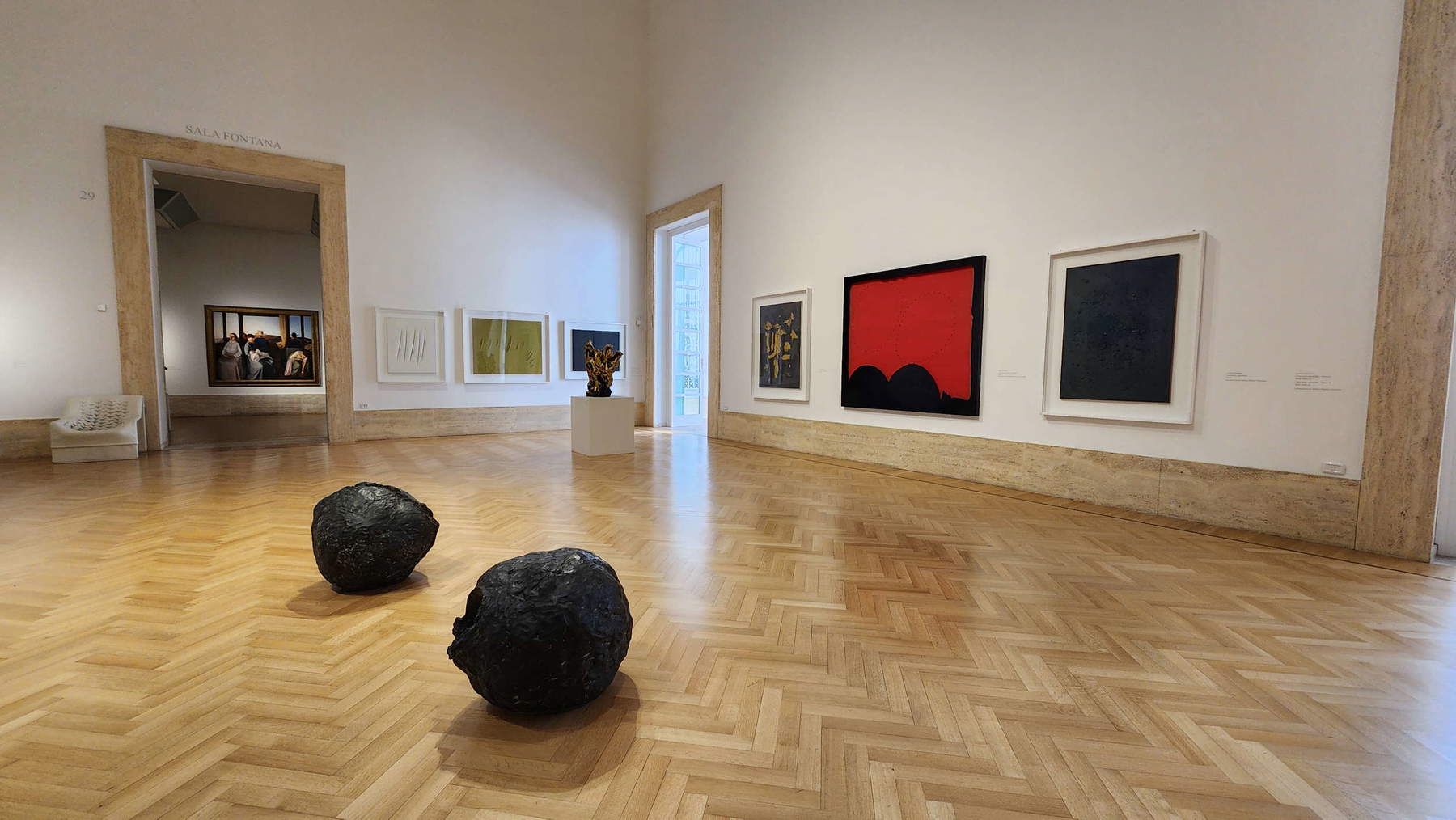
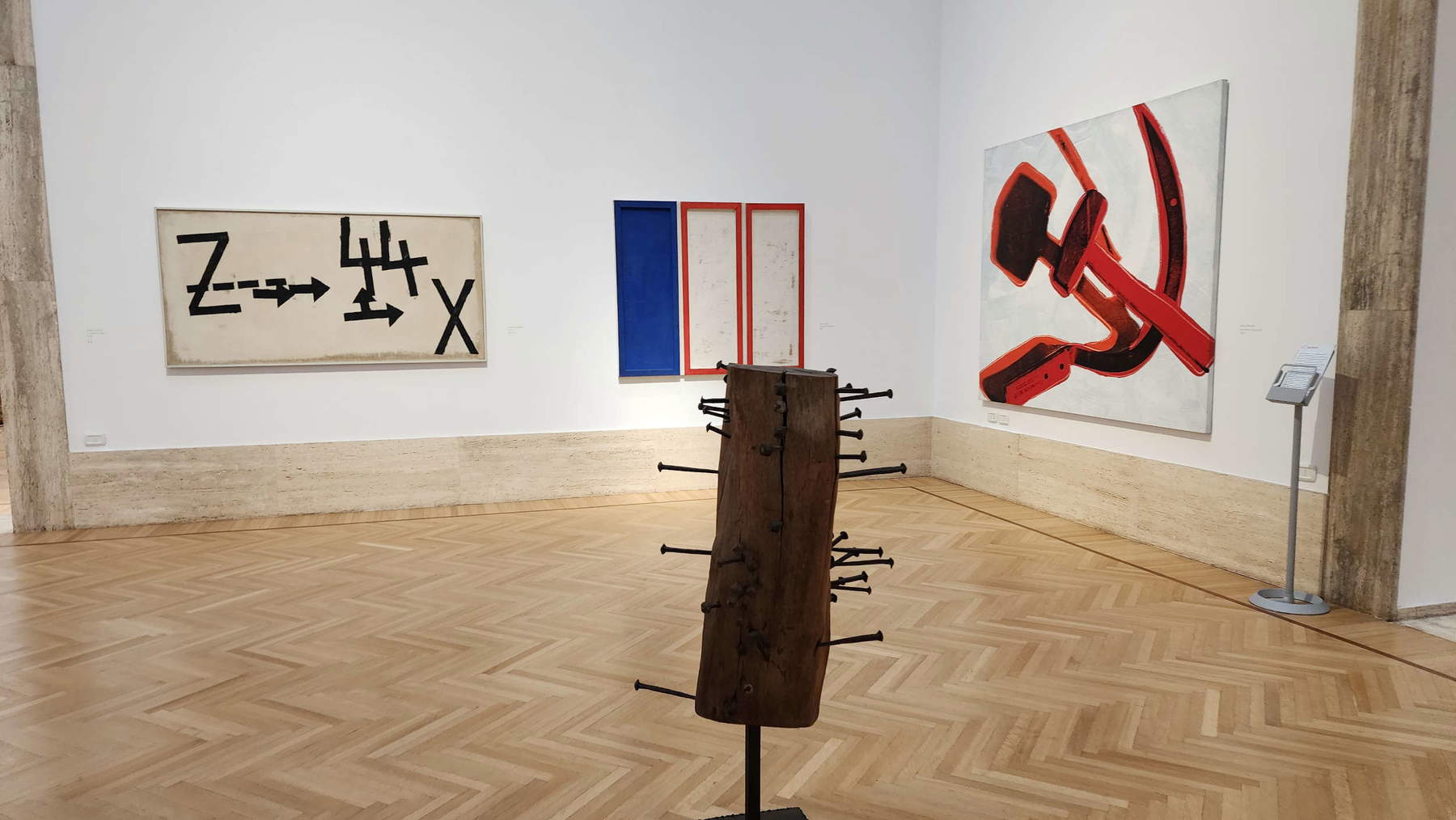
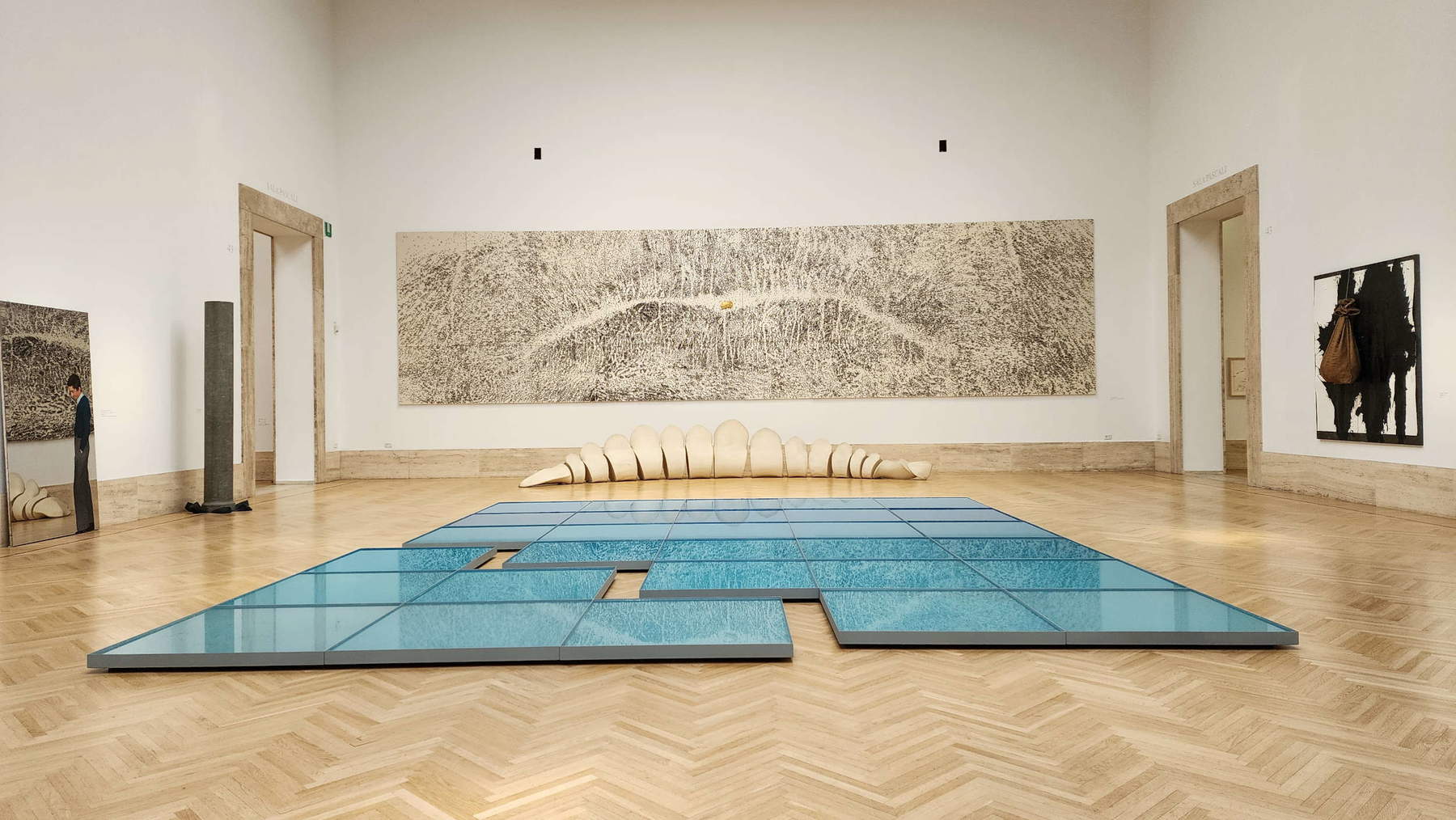
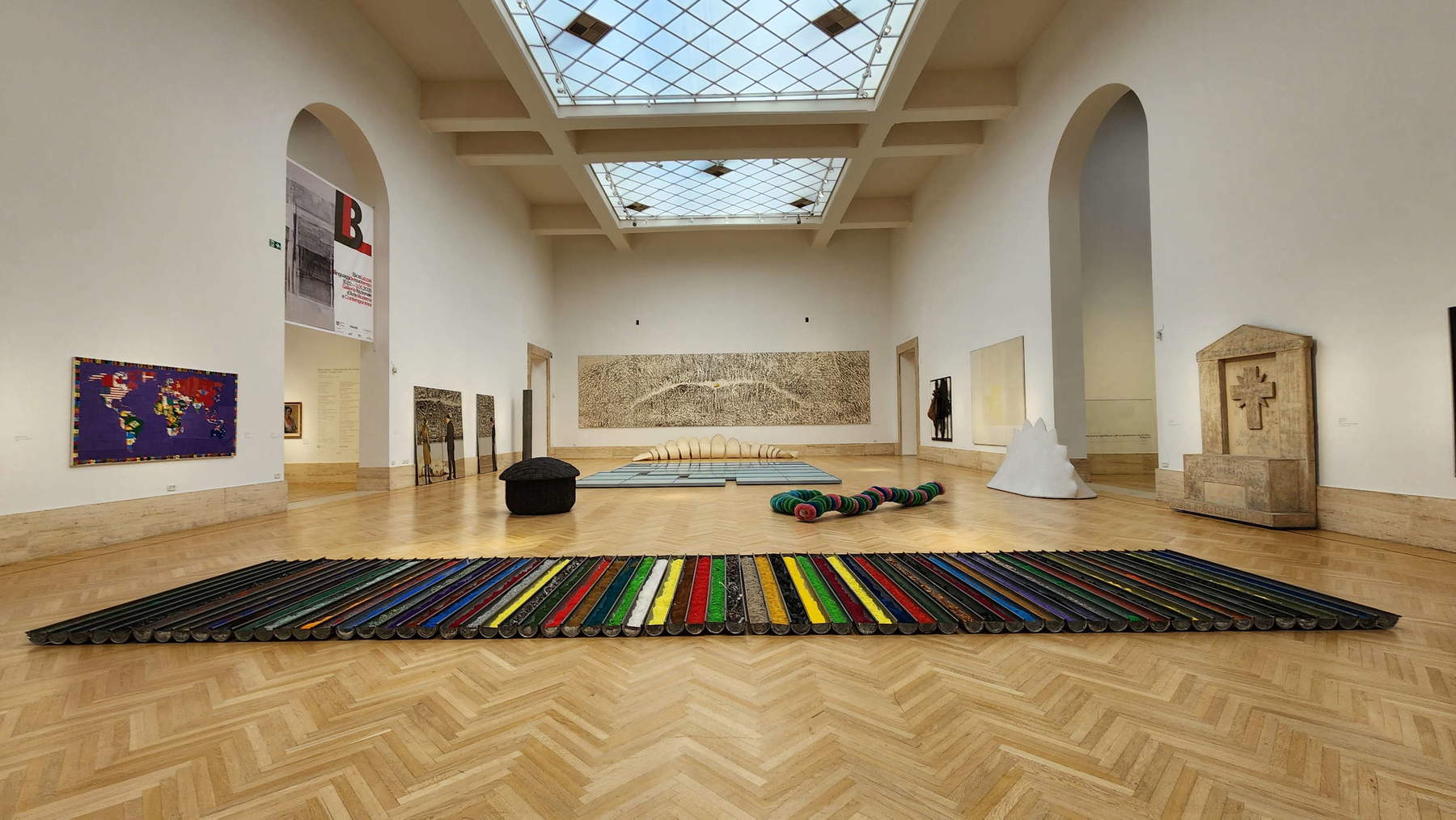
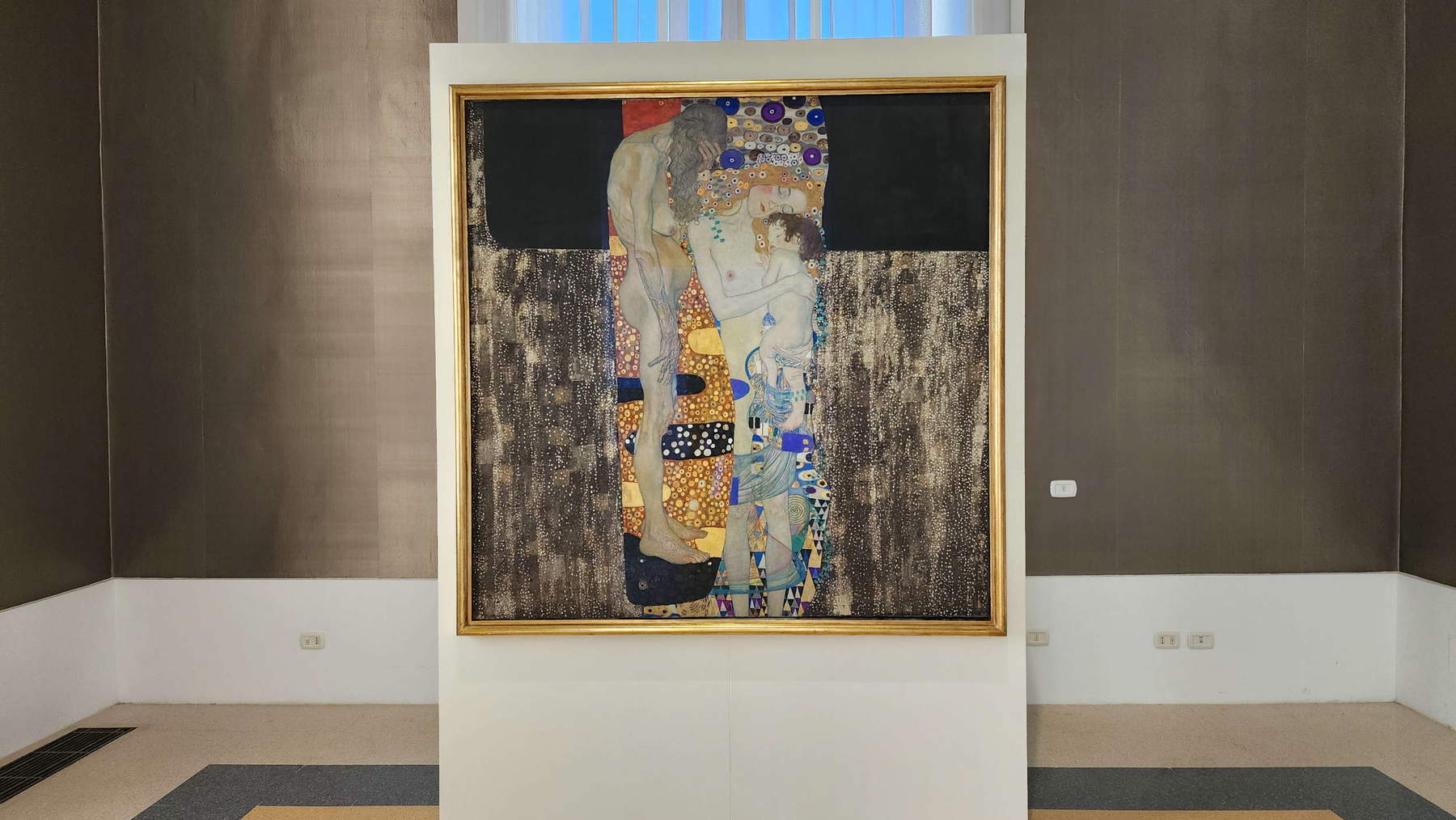
Similar observations could likely be made about all the galleries, whose sequence appears to follow a semblance of chronological order that is, however, often disregarded: after the “Salone di Marte,” for example, one first encounters Boldini, then Van Gogh, after which the sequence jumps to Modigliani (who, for some reason, shares the room with several Symbolists such as Von Stuck, Bargellini, and De Carolis, as well as some works by Picasso, Van Dongen, and De Chirico) and then on to Klimt, then there’s another jump to De Chirico, followed by a return to Previati, and the exhibition continues with Balla and Boccioni before reaching Duchamp—who, incidentally, is relegated to a space under the stairs, with his bicycle wheel almost disappearing behind the handrail that invites visitors to proceed toward the mezzanine. The “highlight” approach then leads to questionable choices, such as dedicating an entire room to Cy Twombly—evidently motivated by a recent donation of twelve works given to the museum by the American artist’s foundation—or naming a room after Warhol which, apart from his *Hammer and Sickle*, displays only works from the Piazza del Popolo School and a few pieces by some *Poveristi* artists; or the decision to set up a *Boccioni Room* with Futurist works dating as late as the 1940s; or the choice to isolate Klimt’s masterpiece, *The Three Ages of Woman* ( its only counterpart being Ivan Meštrović’s *Old Woman*: so, when Klimt’s work is on loan—and in recent years this has happened very frequently, with the result that perhaps *The Three Ages of Woman* has spent more time outside the Gallery than inside—even now: it is on loan to Palazzo Bonaparte—the room is diminished, practically empty), or the decision to exhibit Sironi almost on his own (he is flanked by a sculpture by Wildt, a painting by Carena, and one by Mirko Basaldella), far from other artists belonging to the same cultural milieu (such as Morandi, Casorati, Donghi, Cagnaccio di San Pietro), who reappear four or five rooms later—even after Capogrossi’s explorations of the line from the 1950s!
One gets the feeling of having been thrust into a hastily put-together, confusing, inconclusive, and perpetually indecisive exhibition, as if it were seeking novelty in every room— the coup de théâtre, the sudden twist, without, however, dispelling the fear of completely abandoning a more measured, more didactic, more traditional approach: the result of the National Gallery’s fourth redesign in fifteen years is thus a sort of chimera that, in the name of the “highlight” principle, sacrifices coherence to big names, without ever aspiring to be as subversive as Cristiana Collu’s exhibition had been. On the contrary: one could say that this new chapter in the National Gallery’s history has presented visitors with the laziest, most dated, timid, unresolved, and chaotic exhibition the museum has ever seen.
The National Gallery would have benefited from less “creative poiesis” and more openness, more thought, and a more international perspective. No one, of course, longs for museums organized according to rigid chronological sequences, nor does anyone believe that the only alternative to “curated” museums is collections conceived as substitutes for a textbook. It is, however, possible to maintain a strong historical and chronological structure while simultaneously creating cross-disciplinary dialogues, encouraging non-linear interpretations, highlighting co-presences, and even introducing contemporary art: an “integrated museum,” in short, as we had hoped for in these pages regarding the Turin Gallery of Modern Art, which has recently undergone an equally creative redesign. That is, a structured yet flexible museum that embraces diversity without losing its sense of historical continuity. If we cannot find our own path, let us copy others: let visitors to the National Gallery of Modern and Contemporary Art in Rome go see, for example, the Musée d’Orsay and consider what kind of exhibition design best conveys the story of French and European art between 1848 and 1914— that is, the period covered by its collections; imagine what would happen if what was done in Rome were done in Paris; and ask why it is considered acceptable at the National Gallery. Perhaps the most interesting approach was the one taken by Marini Clarelli, who—without altering the historical framework—structured his interpretation in a way that contrasted with Sandra Pinto’s more formalist approach (demonstrating that there is no single chronology and no single history, but a national museum should take on the responsibility of constructing one), based on the alternation of sections dedicated to artistic themes (the search for truth, the Impressionists, the avant-garde, the paths to abstraction) with others focused on historical themes (the survival of myth, social issues, humanitarian utopia, the superman, war), along with some in-depth explorations of the artists most prominently represented in the museum (Balla, De Chirico, Manzù, Pascali). The next director—who will undoubtedly revamp the exhibitions, as is now standard practice—will either want to outdo Collu and Mazzantini in creativity or, after more than a decade in which we’ve enjoyed the largest collection of modern art in Italy, consider the idea of offering the public a museum that is less fanciful but more useful?
Warning: the translation into English of the original Italian article was created using automatic tools. We undertake to review all articles, but we do not guarantee the total absence of inaccuracies in the translation due to the program. You can find the original by clicking on the ITA button. If you find any mistake,please contact us.