





In 1426 the political community of the Brescian Riviera of Lake Garda entered the orbit of the Republic of Venice, inaugurating a phase destined to last until 1797, the year of the fall of the Serenissima. Six hundred years after that entry into Venetian rule, the city of Salò, the ancient capital of the federation, is dedicating an exhibition and cultural project to the history of the Magnifica Patria, the peculiar political-administrative community that for centuries united the municipalities of the Garda Riviera together with some territories of the hinterland and surrounding valleys.
The initiative, entitled Magnifica Patria 1426 - 2026. Six hundred years of history between Garda and Venice, takes place in the spaces of the MuSa Museo di Salò until October 4, 2026, and offers an articulated itinerary that combines multimedia tools, documentary materials and a program of public meetings. The objective is to retrace the events of an administrative reality that represented a singular case in the political framework of the Republic of Venice and that for several centuries intertwined its destiny with that of the Serenissima. The project is the result of a collaborative effort between local institutions and realities of the cultural world brought together in a Promoting Committee, with the intention of pooling skills and resources. Coordination is entrusted to the Fondazione Opera Pia Carità Laicale and Istituto Lodroniano, flanked by the Municipality of Salò and numerous cultural, museum and academic institutions. Those involved include archives, universities and museum networks in the area, which are participating in the initiative with the aim of enhancing the historical research and cultural heritage of the Garda Riviera.
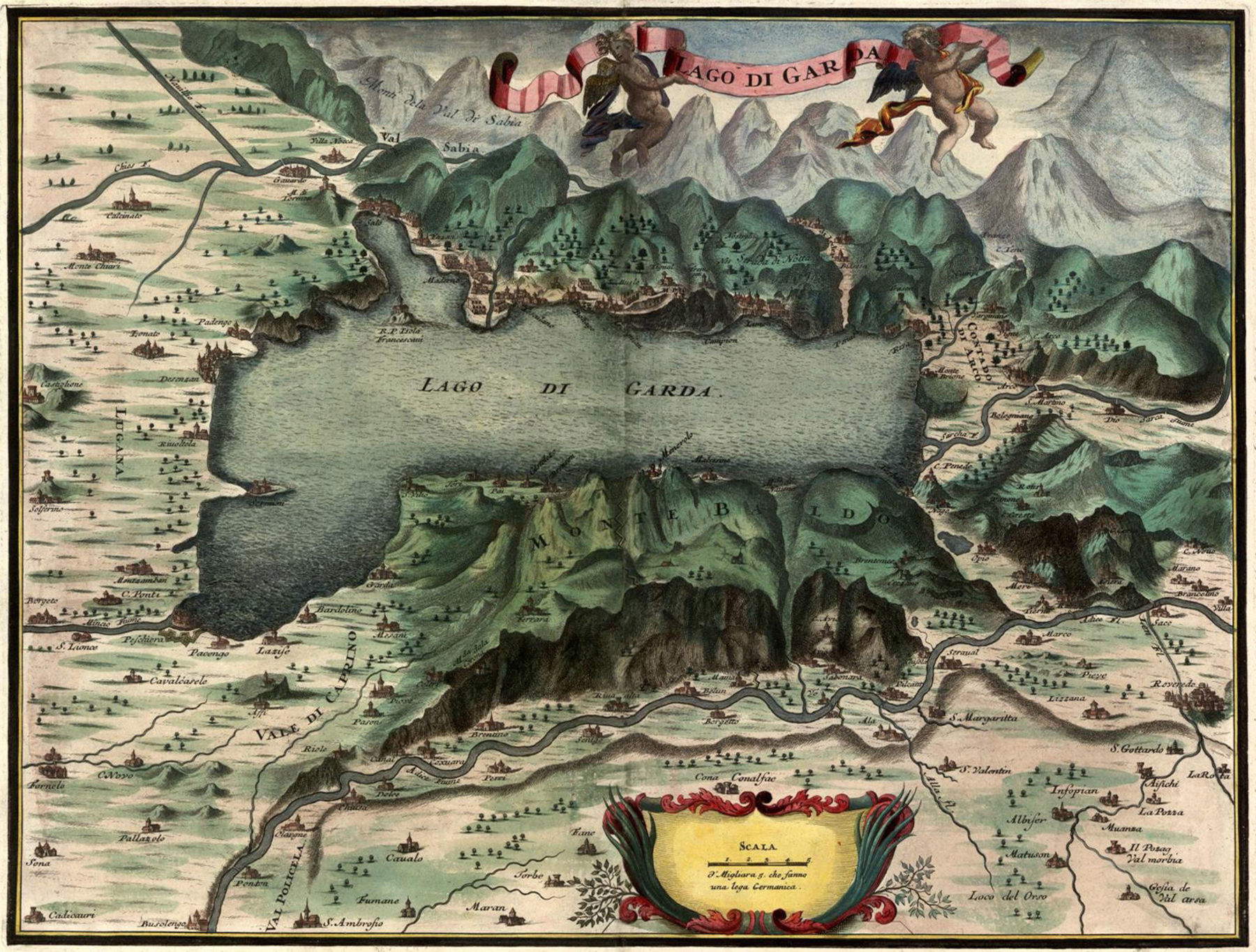
The heart of the project is the room set up in the MuSa exhibition spaces, which can be visited from March 29 to October 4, 2026. The audiovisual installation, lasting about fifteen minutes, is curated by Federica Bolpagni, curator of the museum, together with Enrico Valseriati of the University of Padua and Giovanni Pelizzari of the University of Salò. The tour offers a journey through the history of the city and the federation of municipalities that for centuries constituted an autonomous administrative system within the Republic of Venice.
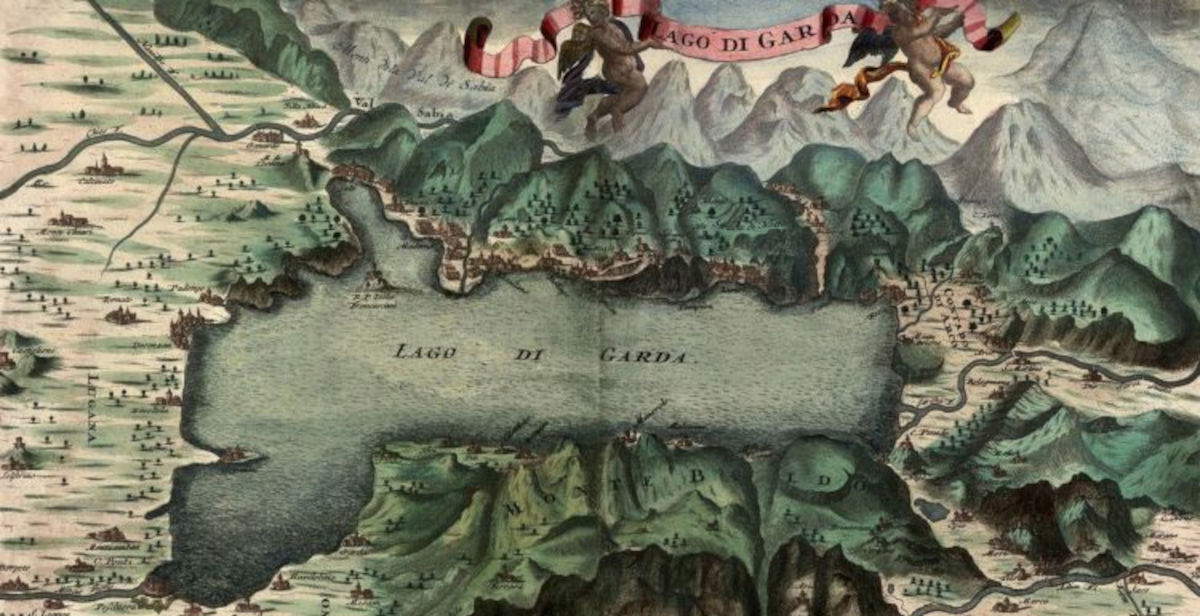
The narrative focuses mainly on the period of the community’s greatest development, between the 15th and 17th centuries. The narrative takes shape through a video narrative constructed from the words of Giovanni da Lezze, a Venetian official who between 1609 and 1610 compiled a detailed cadastic dedicated to the Brescian territory and its political, economic and social organization. Through the projection of historical maps, views of the lake, images of towns and villages, artwork and period documents, the room reconstructs various aspects of life in the Magnifica Patria di Riviera. The territory was organized into a federation of municipalities divided into six quadres, each represented in the Community Council that met in Salò.
One section of the itinerary is devoted to the economy and landscape of the Riviera gardesana. Commercial and productive activities developed in close relationship with the lake, which was an important traffic and trade route. The port and grain market of Desenzano represented central nodes for trade, while manufacturing activities such as the Toscolano paper mills were established along the Riviera. Alongside these productions, the local economy was also based on crops characteristic of the area, including citrus, vines and olives, elements that helped define the agrarian landscape and productive structure of the area. The itinerary concludes with an in-depth study devoted to the Riviera’s cultural vibrancy between the Renaissance and the early modern age, a period marked by the presence of academies, the spread of book production and the development of the figurative arts. The figure of Gasparo da Salò, a violin maker and musician considered among the inventors of the violin, whose activity contributed to the fame of Brescian instruments in Europe, emerges in the narrative.
Alongside the hall, the exhibition project includes a documentary exhibition set up in the museum spaces from March 29 to June 28, 2026. Curated by Federica Bolpagni together with Giuseppe Piotti, archivist ofthe ASAR - Historical and Artistic Association of the Riviera, the exhibition presents a selection of materials from the Historical Archives of Salò, whose heritage is the subject of preservation and study activities by the ASAR association.
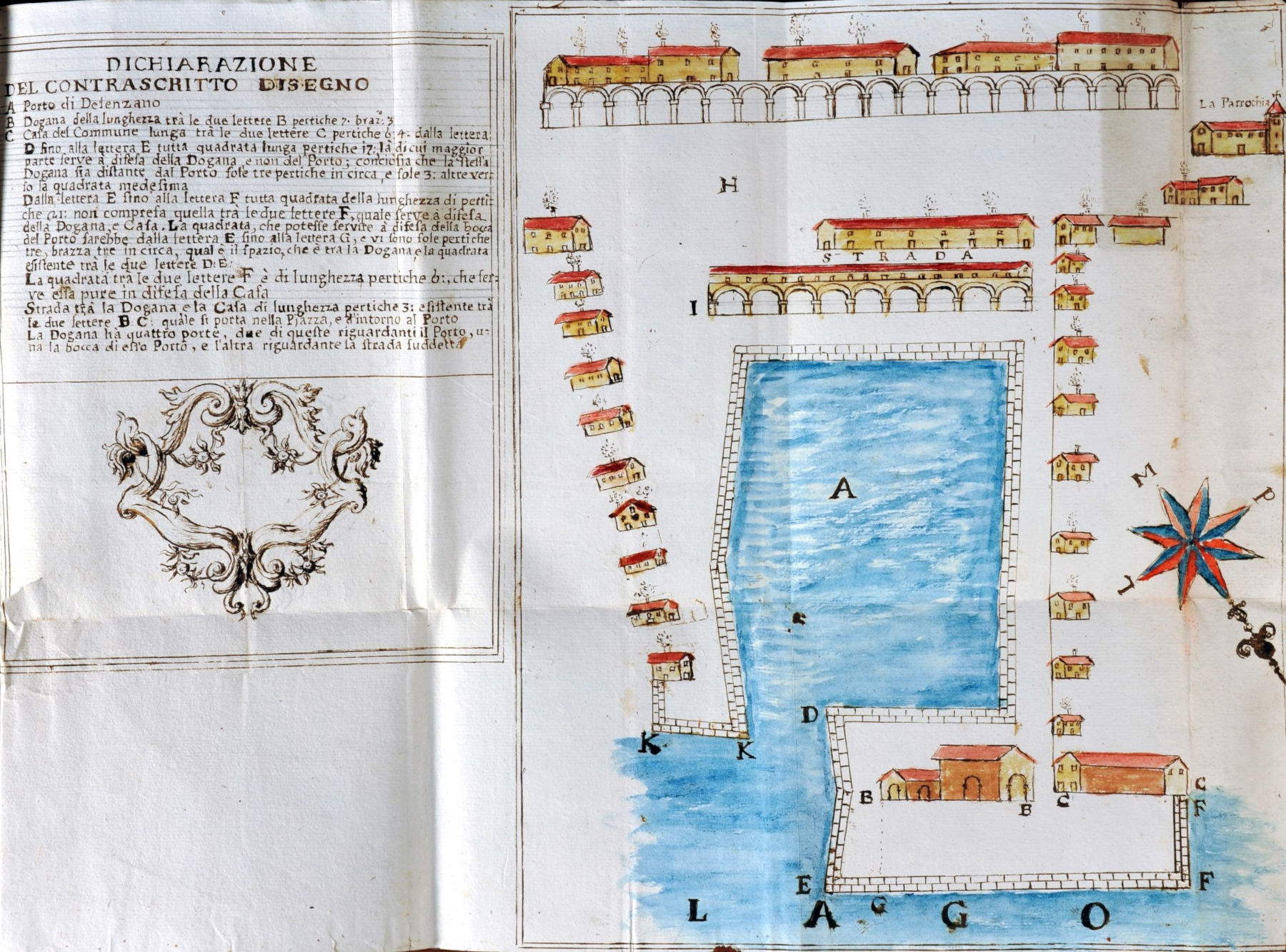
The exhibition brings together documents, maps, volumes and materials that illustrate the political, economic and cultural context in which the Magnifica Patria developed. Among the exhibits is the Watercolor Map of the Port of Desenzano, made around 1758, which represents one of the main weekly grain markets in northern Italy. Another important document is the Topographic Table of the Salò Riviera, engraved in 1694 in the studio of Abbot Vincenzo Coronelli, cartographer and cosmographer of the Republic of Venice. The etching depicts the Magnifica Patria with its main geographical and toponymic emergencies and graphically distinguishes the territory from the city of Brescia. The choice reflects the self-consciousness of the community and the desire to assert its own territorial identity, based on the recognition of Venetian authority but also on the defense of a specific administrative autonomy.
The protection of this autonomy represented one of the central elements in the history of the Garda community. The theme emerges in several documents on display in the exhibition, including the Ducale around a dispute between Brescia and Venice from 1644 and the file Iura seu processus Magnificae Communitatis cum Territorio Brixiae from 1623. The document is related to one of the many jurisdictional conflicts with the city of Brescia and testifies to the community’s desire to claim its own self-determination.
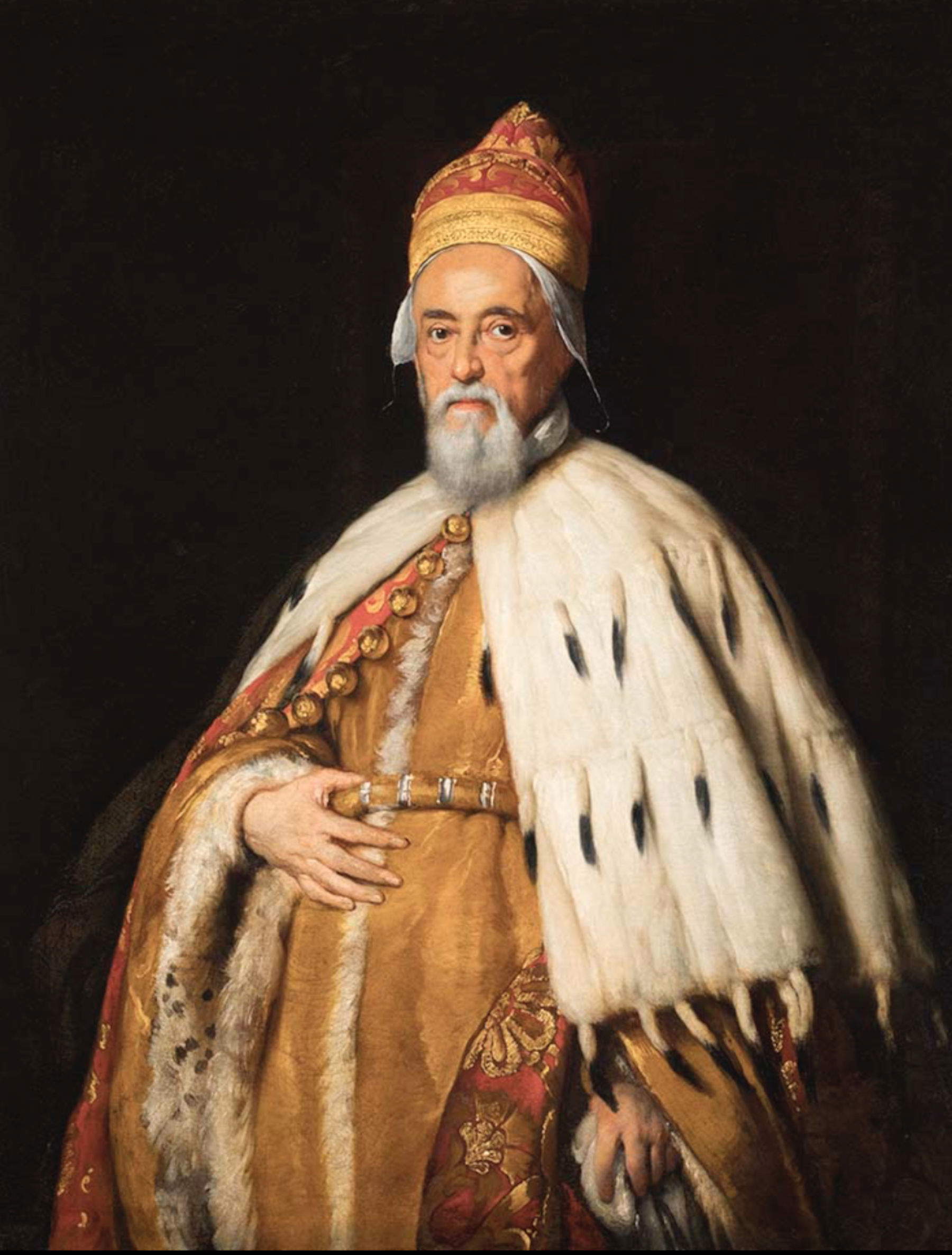
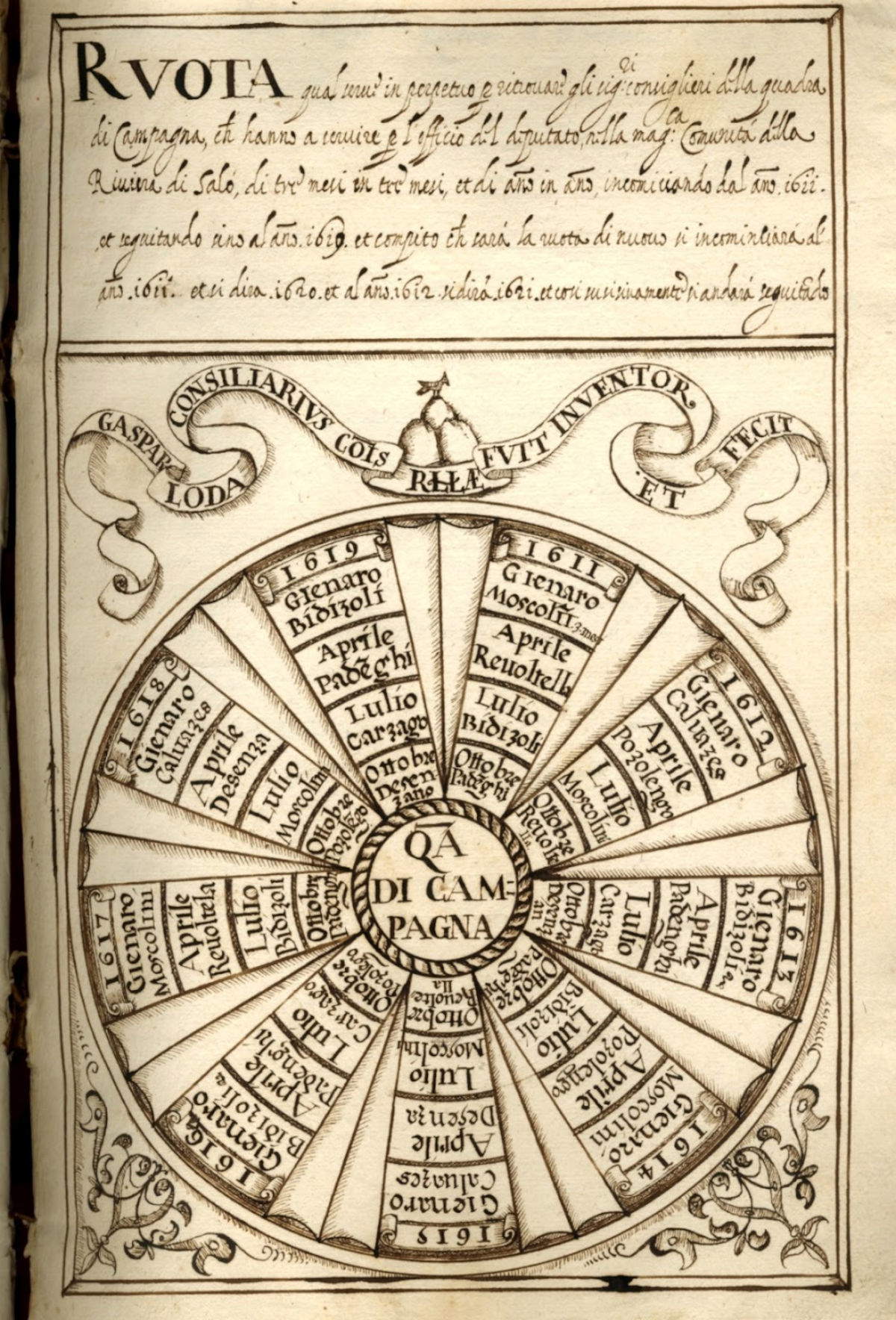
Among the figures associated with the administration of the territory appears the Venetian doge Francesco Erizzo, who held the position of provveditore and captain of the Magnifica Patria of the Garda Riviera between the sixteenth and seventeenth centuries. The exhibition presents an oil-on-canvas portrait of him from 1635, while historical documentation describes him as an administrator concerned with the protection of the territory. Over the centuries, community management was also based on a system of rotation of public offices involving the local ruling class. An example of this mechanism is illustrated in the Countryside Square Wheel, depicted in a volume dated between 1609 and 1611. The image summarizes the quarterly rotation system by which the Community Council elected six deputies, one from each quadra, who were called to form the executive body.
Another section of the exhibition addresses the topic of sanitary policies adopted during plague epidemics. Among the materials on display is the Planimetria del lazzaretto di Salò, datable to around 1630, a structure designed to shelter suspected cases and sanitize goods to ensure the continuity of commercial traffic. Also belonging to the sanitary documentation are the Proclama Sanità 1630-1680, which ordered the expulsion of foreign beggars considered potential carriers of contagion, and the records of a 1671 trial of three alleged anointers, a lapsed Piedmontese nobleman, a former Sloan Istrian soldier and a French woman, who were interrogated and tortured before being released for lack of evidence.
In order to move within the territory, documents called Fedi di sanità were also required, certifying the identity of the bearer, his condition of good health and that he came from a place unaffected by infection. Presented in the exhibition are some of the Fees issued by the Municipality of Manerba between 1630 and 1637, in which a summary description of somatic features allowed the traveler to be identified.
The project dedicated to the Magnifica Patria is completed with a series of lectures and public meetings that from March 21 until the end of 2026 address topics related to the history, art, and music of the Garda Riviera. The appointments feature scholars and popularizers including Fabio Bianchetti, Claudio Ciociola and Clemente Fedele, Fabrizio Pagnoni and Andrea Bersacchi, Liliana Aimo, Giampietro Brogiolo, Giacomo Girardi, and Katia Girardi. The calendar of events is updated on the official channels of the City of Salò and the city museum.
 |
| An exhibition in Salo traces the history of the Magnifica Patria under Venice |

Warning: the translation into English of the original Italian article was created using automatic tools. We undertake to review all articles, but we do not guarantee the total absence of inaccuracies in the translation due to the program. You can find the original by clicking on the ITA button. If you find any mistake,please contact us.
























 IT
IT FR
FR DE
DE ES
ES CN
CN


