



by Redazione 28/04/2026



Categories: Exhibitions / Disclaimer
The State Library of Santa Scolastica in Subiaco (Rome) is hosting from April 30 to June 2, 2026 an exhibition dedicated to Guido Strazza's artist books, curated by Simona Ciofetta and with scientific coordination by Stefano Petrocchi, as part of the initiatives related to Subiaco Capital of the Book 2025.
The State Library of the Santa Scolastica National Monument in Subiaco, in the province of Rome, is hosting from April 30 to June 2, 2026 the exhibition Libri d’artista. Guido Strazza for Subiaco, curated by Simona Ciofetta and with scientific coordination by Stefano Petrocchi. The opening is scheduled for Thursday, April 30 at 5:30 p.m., while a presentation with guided tour will be held on Saturday, May 9 at 11 a.m. The exhibition is part of the program of initiatives related to Subiaco Italian Book Capital 2025 and is an extension of the library’s permanent exhibition.

The exhibition project focuses on the artist’s book, understood as an autonomous form of artistic production in which text, image, paper support and color intervention are interwoven into a single expressive system. These are one-off or limited edition works in which the visual and textual components assume an equivalent role, to the point of constituting an inseparable whole.
The relationship between word and image is framed within a long tradition of experimentation, spanning the history of art and literature. A particular acceleration of this process occurs in the modern age, when the avant-garde movements of the early twentieth century, with particular reference to Futurism, contribute to redefining the boundaries between different expressive languages. In this context, the book is interpreted as a dynamic space, capable of accommodating non-linear formal and conceptual solutions, in which the artistic sign expands beyond the traditional structure of the page.




According to the approach taken by the exhibition, the artist’s book is configured as an autonomous work of art, in which the author takes control of the entire production process, from the design to the choice of materials to the definition of typographic aspects. In this perspective, aesthetic, philosophical, literary and conceptual values converge into a single operational dimension. The enjoyment of the work also requires a non-immediate observation time, as the structure of the book itself invites a sequential and physical reading of the medium.
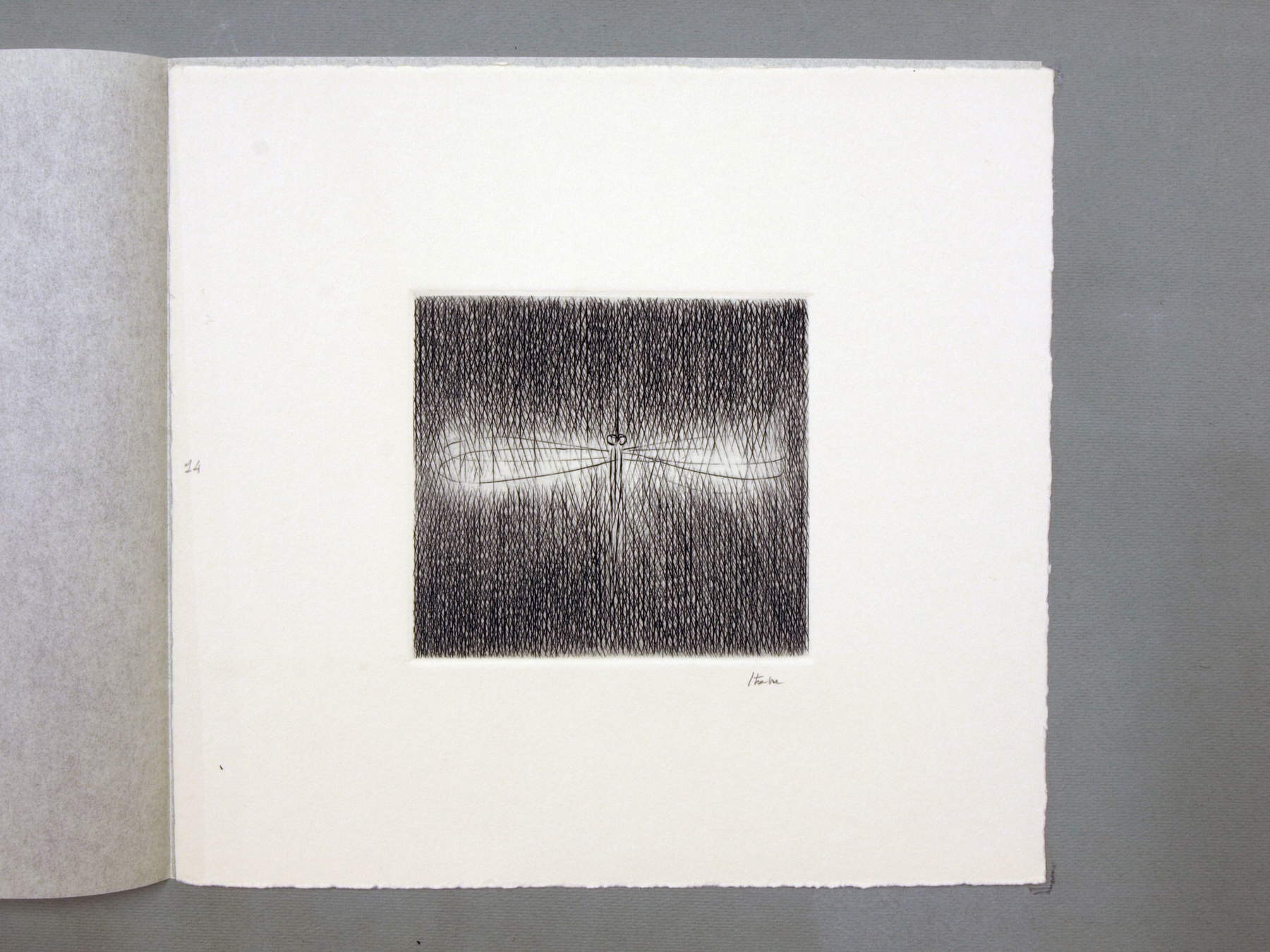
At the center of the exhibition is the figure of Guido Strazza, an artist active in the fields of painting, engraving and sculpture, as well as engaged on an institutional and educational level. Over the course of his career he has produced numerous artist’s books, working both as a single author and in collaboration with poets and other artists. Parallel to his visual production, Strazza has developed an intense theoretical and educational activity, with particular attention to graphic research and the processes of modern Italian printmaking. His contributions were also directed to the training of young artists, particularly within the framework of the National Calcografia Nazionale.
The exhibition is set within a particularly important institutional context. Indeed, the State Library of the Monastery of St. Scholastica preserves a book and documentary heritage of long historical stratification, in a place closely linked to the origins of the book and printing tradition in Italy. The choice of the theme of the artist’s book stands in direct relation to the very function of the exhibition space, strengthening the dialogue between contemporary works and historical context.
A section of the exhibition is dedicated to some of Strazza’s engravings, placed in relation to the artistic heritage of the monastic complex. The reference extends to the so-called Cosmatesque masters, active in the 13th century, including figures such as Jacopo the Elder, Cosma, Luca and Jacopo, authors of the decorations of the monastery cloister. Their works, characterized by geometries and modular sequences, constitute a visual system still legible in the marble surfaces of the complex.
Strazza’s engraving series dedicated to Signs of Rome and the Cosmati, in which the artist takes up and reworks the formal structures of the medieval Roman tradition, fit into this perspective. The confrontation between contemporary engraving and historical languages is not configured as a direct quotation, but as an investigation of sign systems and possible continuities between different eras.
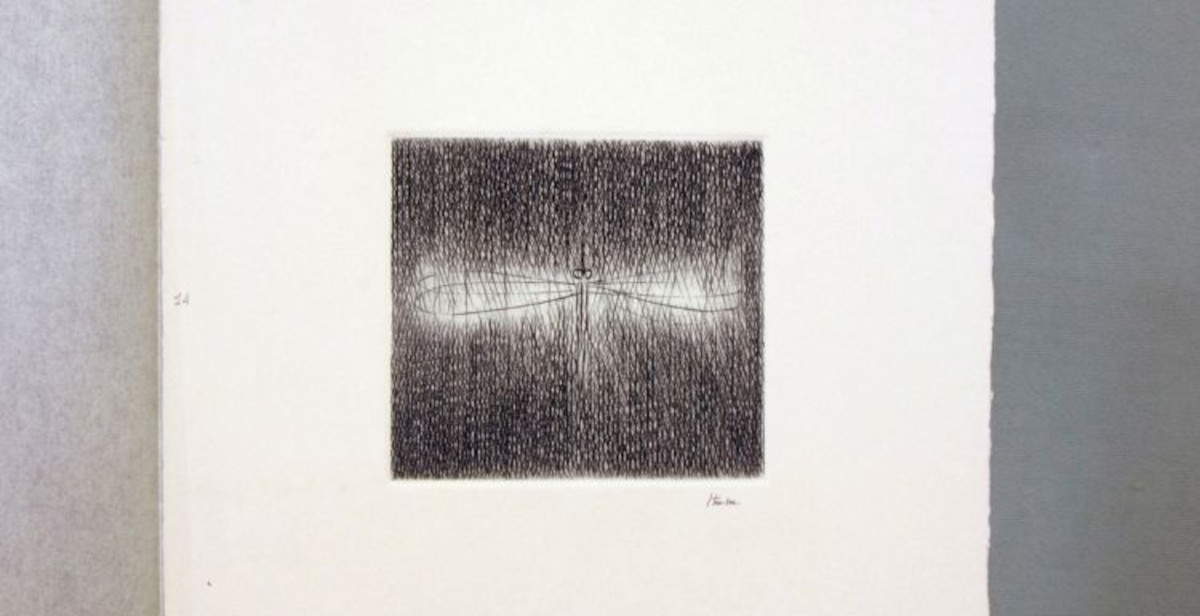 |
| Artist's books by Guido Strazza in Subiaco (Rome): the exhibition at Santa Scolastica |
Warning: the translation into English of the original Italian article was created using automatic tools. We undertake to review all articles, but we do not guarantee the total absence of inaccuracies in the translation due to the program. You can find the original by clicking on the ITA button. If you find any mistake,please contact us.