





GAM Galleria d’Arte Moderna in Milan is hosting, in the Parnassus Room, the site-specific installation Παρνασσός (Parnassus) by LETIA - Letizia Cariello. From April 14 to July 5, 2026, the space will be transformed into an immersive environment in which light and time become perceptual matter. This is the first presentation in a Milanese public museum institution of the work of the artist, who precisely in Milan lives and works since her formative years.
The intervention is configured as a large gilded aluminum structure, open and completely traversable by the eye, establishing a continuous dialogue with the architecture of the hall and the garden visible from the windows. The work takes shape in direct relation to the Sala del Parnaso, so named for the presence of the fresco created by Andrea Appiani in 1811 on the ceiling of the sumptuous former dining room of the Villa. Considered one of the most significant examples of Italian Neoclassicism, it depicts Apollo surrounded by the Muses on Mount Parnassus, reworking a classical theme related to the arts and knowledge.
LETIA - Letizia Cariello’s research develops around the concepts of energy, space and time, with the aim of making the latter perceptible. Her work investigates the boundary between physical and temporal dimensions, through practices involving the body, gesture and different expressive languages: from drawing to installations, up to video and sound. Central is the idea of a continuity between inner and outer space, conceived as a single dimension in constant relationship. Within this vision, architecture and music are approached as related disciplines, united by the principle of vibration. Every action, every form, can be read as a vibratory phenomenon. Music, in particular, is understood as generating inner spaces, mental environments in which time and space tend to coincide.
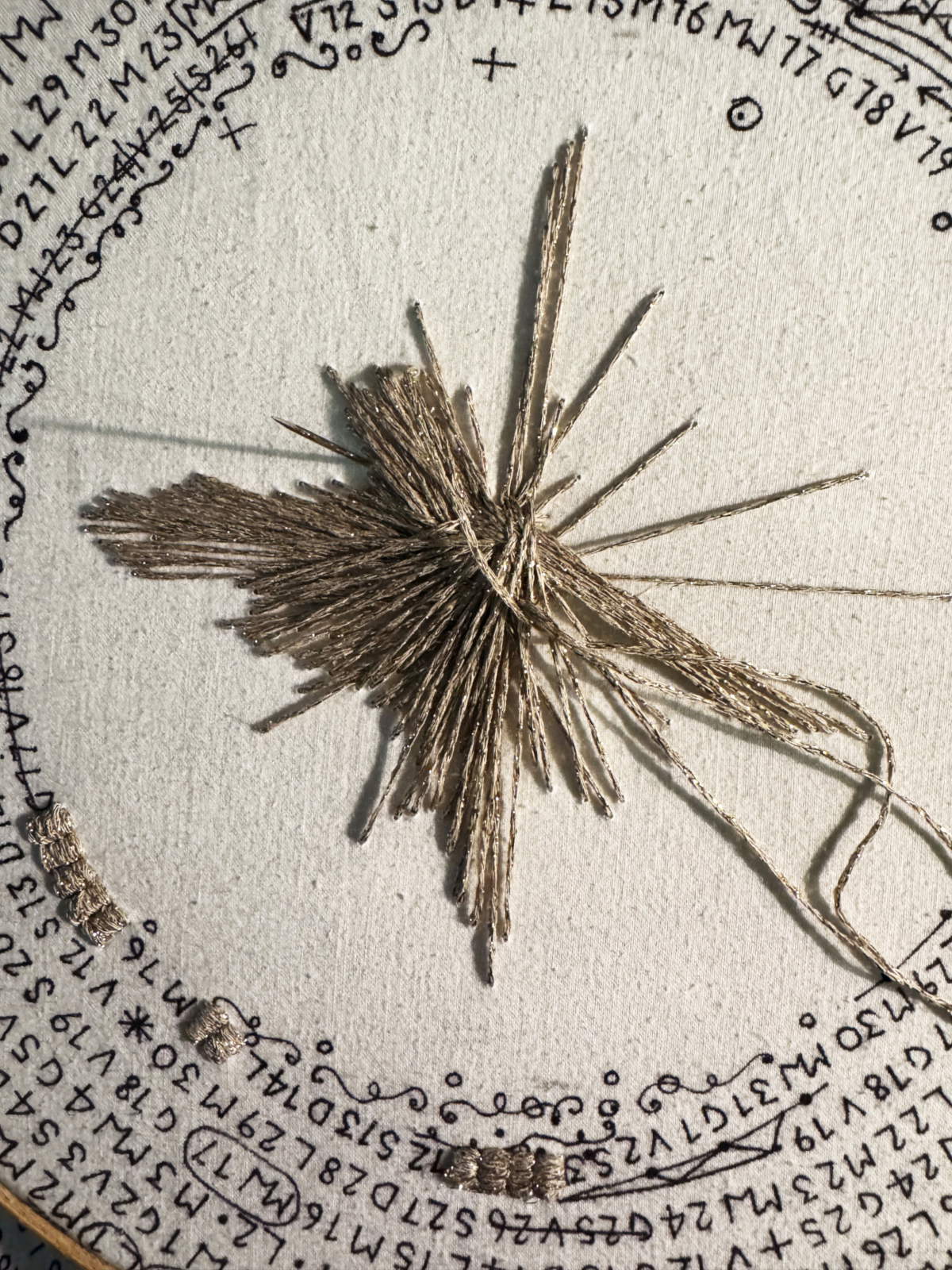
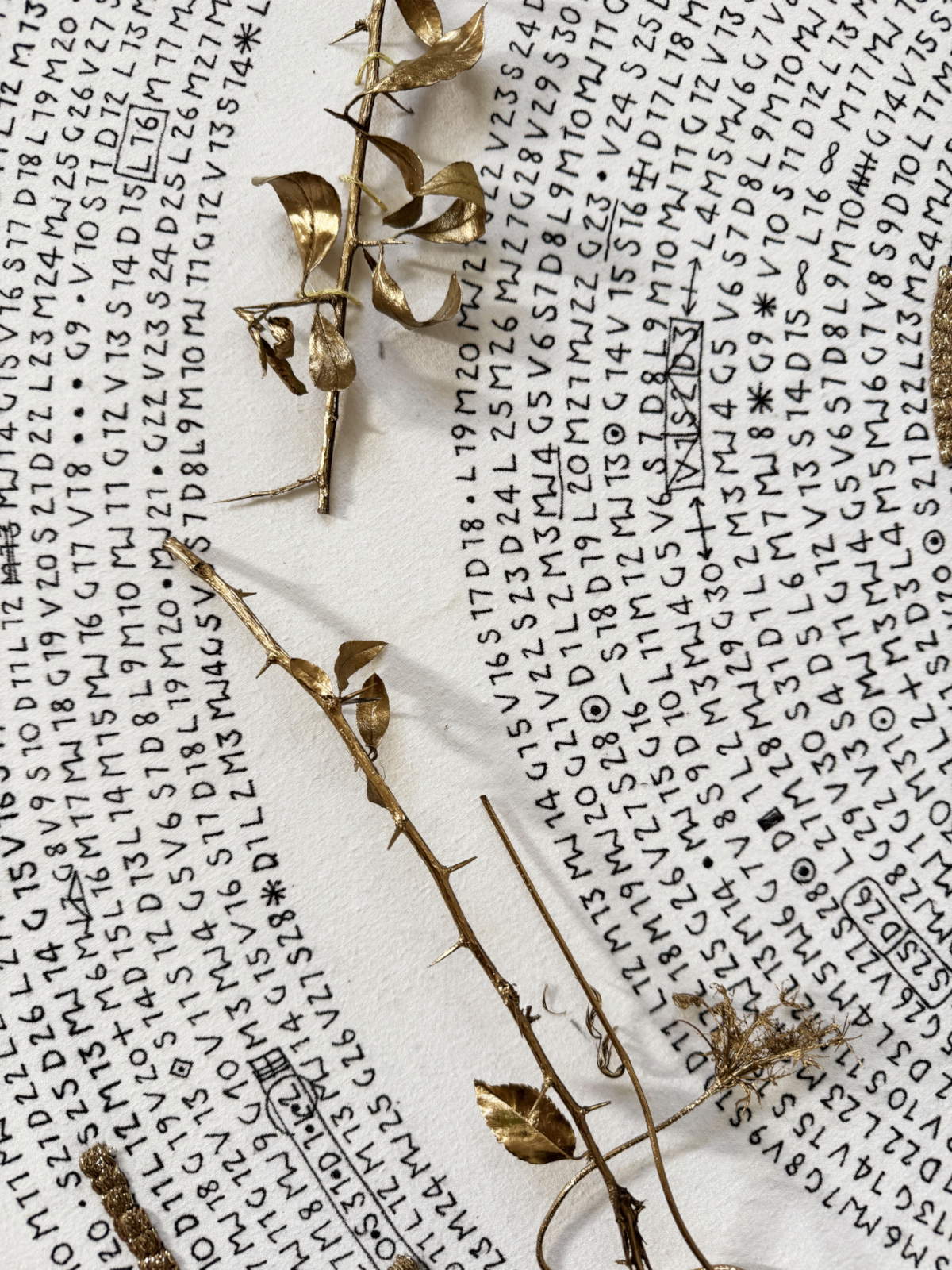
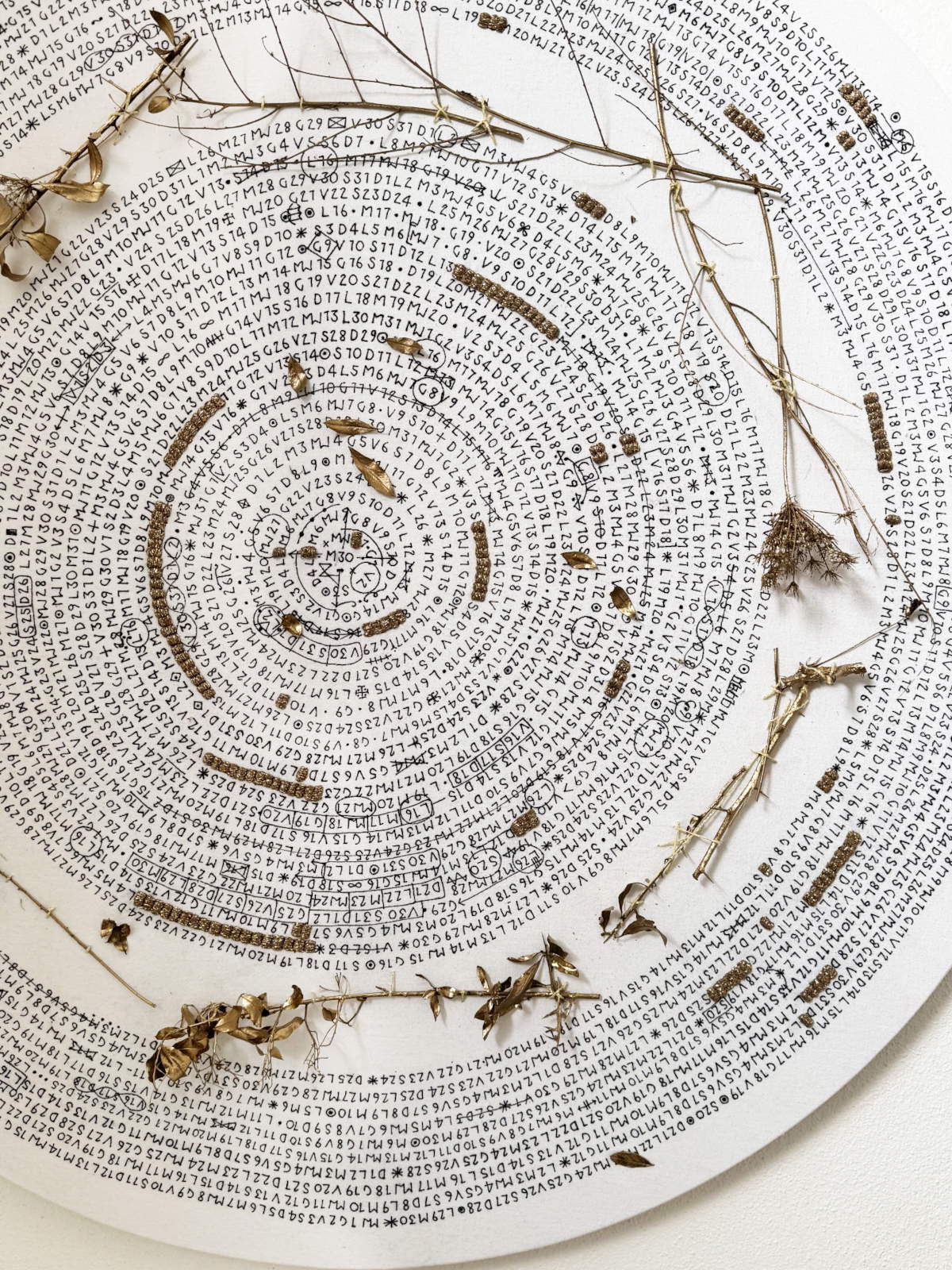
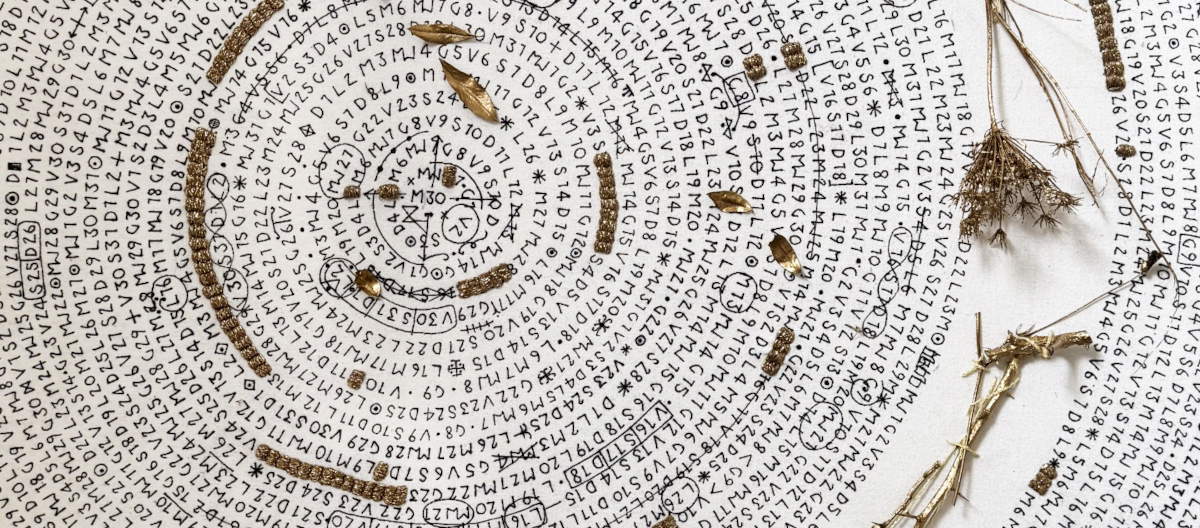
The installation Παρνασσός (Parnassus) also stems from an etymological reflection: the artist retrieves the Hittite term parna, which means “house” or “dwelling,” a term from which the Anatolian toponym Parnašša, akin to Mount Parnassus, is derived. In Greek tradition, this place was consecrated to Apollo and the Muses, described as a mountainous space in which there was a purifying spring that served as a passageway to the underworld.
Cariello reworks this idea by transforming it into a “crossing house,” an environment that is defined by its relationship with the surrounding space. The work dialogues not only with Appiani’s fresco, but also with the other elements of the room, from the chandeliers to the floors, and with the villa’s English garden.
The link with music is also evident in this spatial construction: rhythm and sound, as in classical culture, are closely related to the proportion of space and can be translated into visual form, almost like an architectural score.
The exhibition is accompanied by a catalog published by Silvana Editoriale, which brings together contributions by the artist, art critic Lea Vergine (Naples, 1936 - Milan, 2020), architect Sonia Calzoni, as well as texts by Gianfranco Maraniello and Paola Zatti Director of Museums of Modern and Contemporary Art of the City of Milan and Conservator in charge of GAM, accompanied by an interview with the artist.
 |
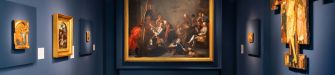
| At Milan's GAM, Letizia Cariello's site-specific installation for the Parnassus Room |

Warning: the translation into English of the original Italian article was created using automatic tools. We undertake to review all articles, but we do not guarantee the total absence of inaccuracies in the translation due to the program. You can find the original by clicking on the ITA button. If you find any mistake,please contact us.





















 IT
IT FR
FR DE
DE ES
ES CN
CN


