





Two hundred years after the birth of Giuseppe Zanardelli (Brescia, 1826 - Maderno, 1903), Brescia is dedicating an exhibition to the statesman hosted at Palazzo Tosio, home of the Ateneo di Brescia, Academy of Sciences Letters and Arts. The exhibition, scheduled from May 16 to Nov. 15, 2026 and titled GIUSEPPE ZANARDELLI (1826-1903) Statesman, jurist and man of culture, proposes a survey of the figure of the Brescian politician and jurist, with particular attention to the mechanisms of construction of his public image and the role he played in the formation of liberal Italy.
The exhibition project is curated by Roberta D’Adda and Valerio Terraroli and is promoted by the Ateneo di Scienze, Lettere e Arti di Brescia, the Municipality of Brescia, the Brescia Musei Foundation and the Ugo Da Como Foundation. The initiative is part of the bicentennial celebrations and aims to restore the complexity of a central figure in Italian political history between the nineteenth and early twentieth centuries, with particular reference to his contribution to the modernization of the legal system and the evolution of the country’s institutional structure.
The exhibition’s approach addresses the construction and transmission of his image, highlighting the relationship between the political dimension and the personal sphere. In this framework, Zanardelli emerges as a figure who interprets culture and heritage as instruments of civic education and formation of the collective consciousness, attributing to artistic and monumental expressions a symbolic and pedagogical function.
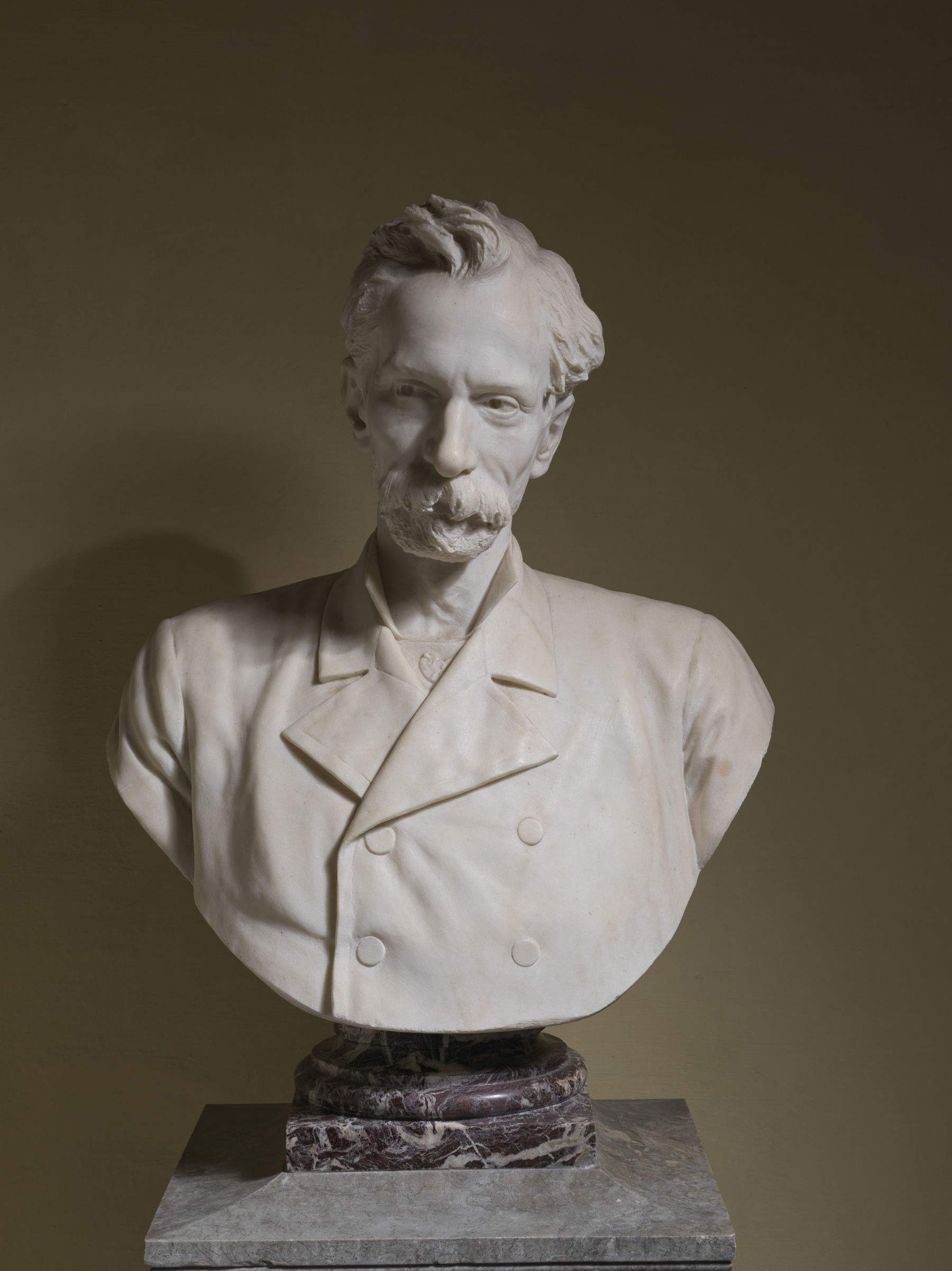
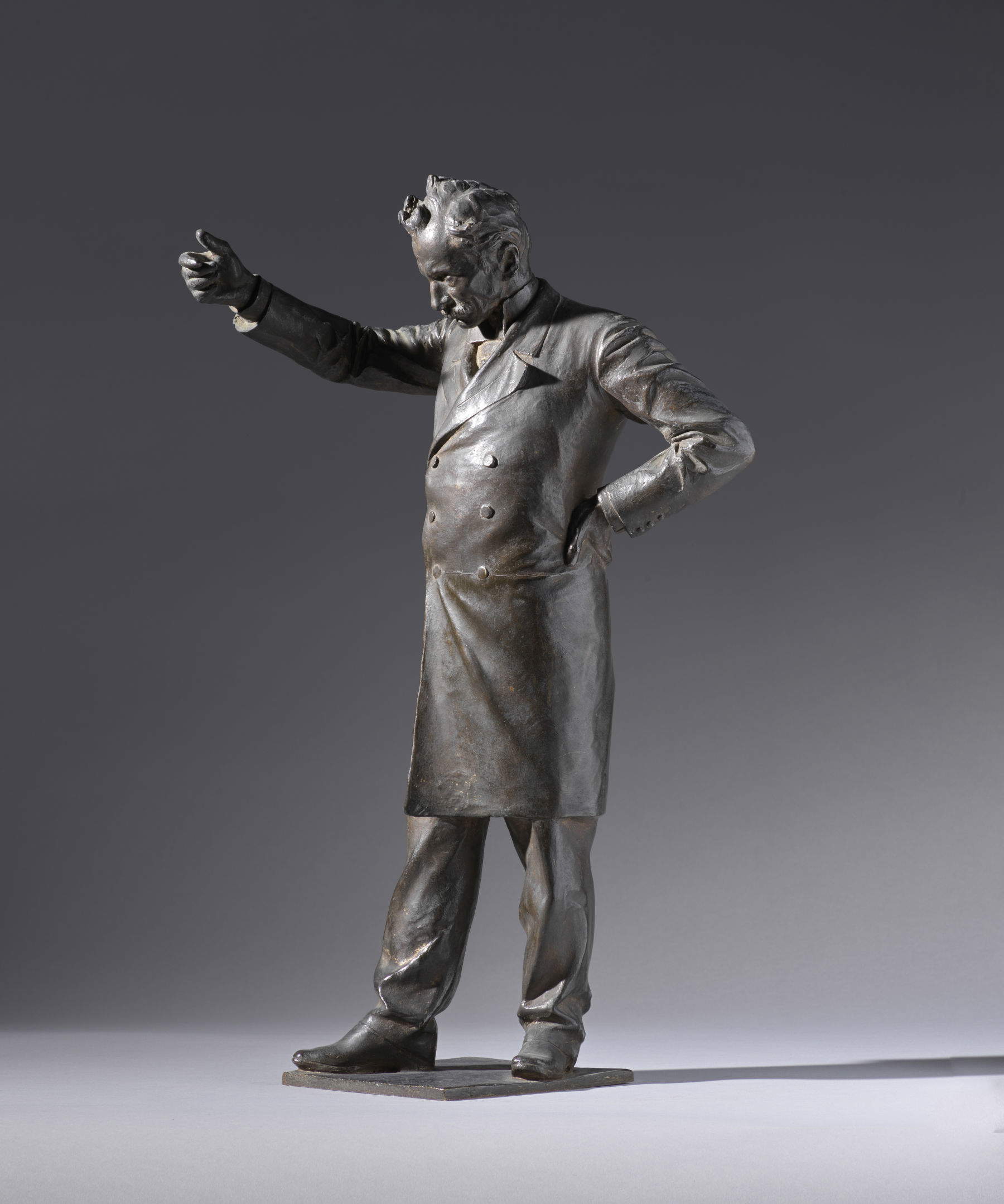
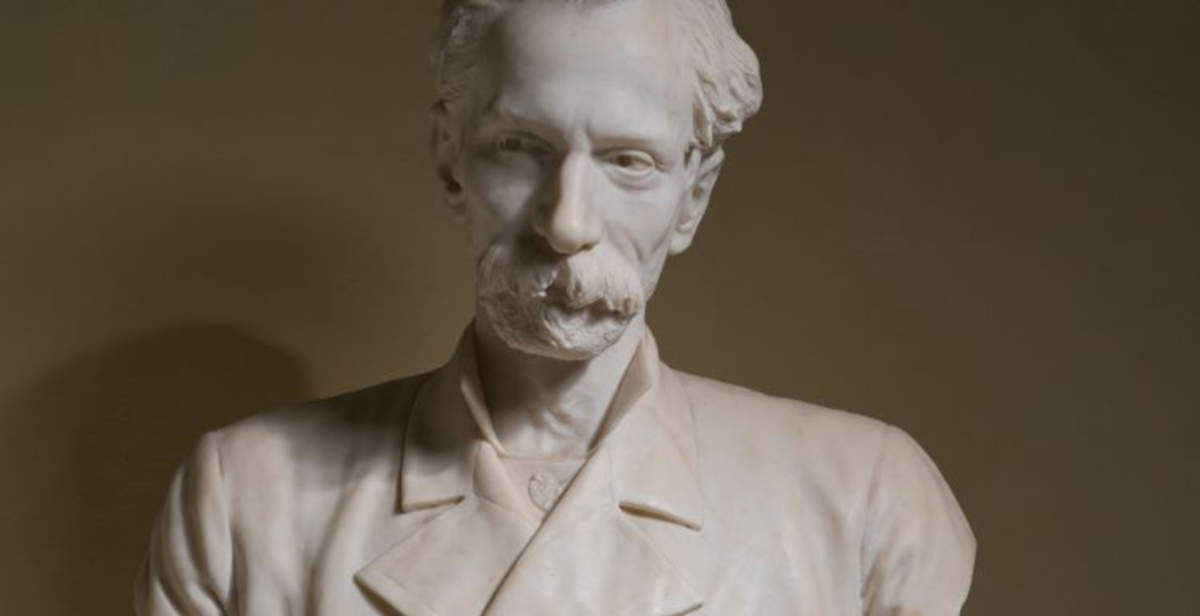
The exhibition opens with an in-depth look at the relationship between Giuseppe Zanardelli and sculptor Ettore Ximenes (1855-1926), a leading figure in the definition of his public image. The portraits made by Ximenes return a constructed and self-conscious representation of the statesman, in which gesture, posture and expressiveness contribute to the visual translation of his political and civic role. The relationship between the two, based on mutual esteem and friendship, goes beyond the celebratory dimension to take shape as a process of plastic interpretation of the ethical and civic values associated with the figure of Zanardelli.
A further core of the exhibition concerns the statesman’s role in defining national memory through the promotion of monumental interventions. During his institutional appointments, including presidency of the University of Brescia, Zanardelli supported the enhancement of Risorgimento values and symbolic figures of the city, as in the case of the monuments dedicated to Moretto and Arnaldo da Brescia, the latter taken as an emblem of freedom of thought. The dedicated section also documents, through graphic and photographic materials, the dissemination of monuments dedicated to Zanardelli himself, including Davide Calandra ’s design for the city center and Leonardo Bistolfi ’s for Maderno sul Garda.
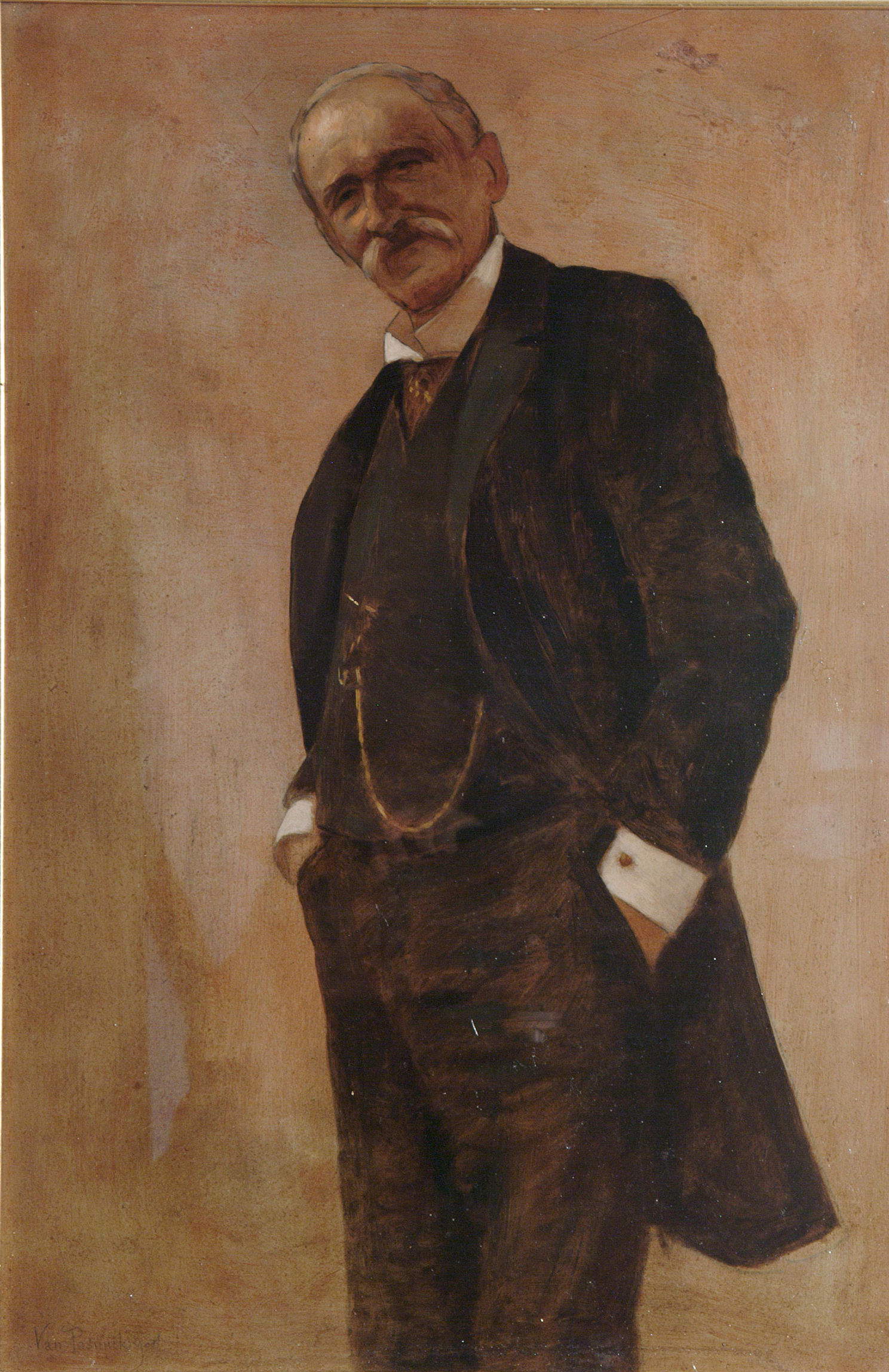
The construction of the statesman’s public image is also explored in depth through the press and period illustrations. Zanardelli turns out to be constantly present in the political and cultural debate of the time, often at the center of satirical depictions that help define his public profile. Casimiro Teja’s plates published in Il Pasquino depict him in an ironic vein in relation to relevant events in national history, including the assassination attempt on King Umberto I in Naples in 1878, which occurred during Zanardelli’s tenure as minister of the Interior. Further satirical portrayals appear in La Rana, with particular reference to the relationship with Francesco Crispi, while L’Asino intervenes on major political issues of the time, from the divorce debate to colonial enterprises in Africa to legislation on women’s and child labor. At the local level, Il Frustino criticizes some infrastructural and monumental choices promoted by the statesman, in a context marked by political tensions between secular orientations and conservative positions.
Another section of the exhibition itinerary is dedicated to Giuseppe Zanardelli’s book heritage, with particular reference to his personal library consisting of almost twenty thousand volumes. Among the materials on display is the volume Il nuovo Codice Penale Italiano illustrato colla bibliografia e colla giurisprudenza formati dal gennaio 1890 al luglio 1895 coordinated article by article, accompanied by Giovanni Luschi’s autograph dedication. The book corpus makes it possible to retrace the main institutional positions held by Zanardelli over some forty years of parliamentary activity, including minister of Public Works, minister of the Interior, minister of Grace, Justice and Religious Affairs, president of the Chamber of Deputies and president of the Council of Ministers.
The relationship between private and public dimensions finds further expression in Antonio Tagliaferri ’s architectural designs for Zanardelli’s residence at Maderno on Lake Garda. The plates on display document the genesis of the building, in which architecture, landscape and personal taste are organically intertwined, with contributions also from Ettore Ximenes and Cesare Bertolotti for the pictorial decoration of the rooms. The itinerary concludes with a section devoted to the statesman’s most intimate dimension through the display of objects from the Maderno villa, including a desk, armchair and inkwell, along with photographs, letters and memorabilia. Among the materials presented are autograph dedications by distinguished contemporaries, images of the trip to Basilicata, correspondence with Ximenes, and a portrait of Eleonora Duse by Franz von Lenbach.
The exhibition is accompanied by a catalog published by Skira, with contributions by Alessandro Bertoli, Stefania Cretella, Roberta D’Adda, Luciano Faverzani, Sergio Onger and Valerio Terraroli. The project also connects to urban space through the notebook Giuseppe Zanardelli. Itineraries, promoted by Fondazione Brescia Musei and edited by Alessandro Bertoli, which proposes an itinerary of fifteen stops in nineteenth-century Brescia and a reconnaissance of relevant places in the provincial territory.
“With this exhibition,” says Laura Castelletti, Mayor of Brescia, “Brescia pays tribute to its illustrious fellow citizen Giuseppe Zanardelli in the most authentic way: by restoring his human, political and cultural complexity. Two hundred years after his birth, Palazzo Tosio becomes the place where the city reflects on its civil roots and on the decisive contribution that one of its best-known sons made to the construction of liberal Italy. Zanardelli embodied a high idea of public service, founded on freedoms, justice and culture as tools for collective growth: values that continue to speak to the present and guide the future of our community.”
“On the bicentenary of the birth of Giuseppe Zanardelli, the greatest statesman that Brescia has had, the Athenaeum intended to promote a number of events to honor his memory, highlighting the decisive contribution that the Brescian statesman, a member of theAteneo since 1859, president from 1892 to 1895 and later honorary president, made to the development of liberal Italy,” says Sergio Onger, President Ateneo di Brescia and Fondazione Ugo da Como. “While he took a leading role in the monumental policy of Rome’s capital city desired by the historical Left and promoted the creation of sculptural works dedicated to heroes of secularism and the Risorgimento, Zanardelli did not neglect to leave memories of himself in his villa on Lake Garda, in scrupulously preserved archival papers, in books and in the most cherished objects donated to the City of Brescia, laying the groundwork for that post mortem celebration that finds its fulfillment in the numerous monuments dedicated to him.”
"With the exhibition Giuseppe Zanardelli. 1826-1903. Statesman, jurist and man of culture," says Francesca Bazoli, president of Fondazione Brescia Musei, “Fondazione Brescia Musei renews its commitment to the enhancement of the historical and civic memory of the city, contributing to the rediscovery of one of the most important figures expressed by Brescia in united Italy, who still represents a personality capable of speaking to the present because of the modernity of his thought and his idea of culture as a tool of civic education and collective progress. It is precisely in this perspective that the promotion of the notebook ”Giuseppe Zanardelli. Itineraries,“ edited by Alessandro Bertoli, designed to accompany the public in the discovery of Zanardelli’s places in the city and its territory. From the Brescia Castle and the Museum of the Risorgimento ”Lioness of Italy“ to Palazzo Loggia and the Museum of Santa Giulia, the figure of the statesman in fact continues to live on in the places of urban memory, still offering a valuable opportunity for dialogue between heritage, history and collective identity.”
 |
| Brescia celebrates Zanardelli: at Palazzo Tosio the construction of the statesman's image |

Warning: the translation into English of the original Italian article was created using automatic tools. We undertake to review all articles, but we do not guarantee the total absence of inaccuracies in the translation due to the program. You can find the original by clicking on the ITA button. If you find any mistake,please contact us.

























 IT
IT FR
FR DE
DE ES
ES CN
CN


