




From September 15, 2026, to February 14, 2027, Palazzo Bonaparte in Rome will host a major exhibition dedicated to Vassily Kandinsky. Produced and organized by Arthemisia in collaboration with the Centre Pompidou and curated by Angela Lampe, the exhibition brings together over seventy works from the Paris museum and major international institutions. The Centre Pompidou, in fact, houses the most extensive collection of the artist’s works, thanks to donations and the valuable bequest of his wife, Nina Kandinsky. The exhibition, titled “Kandinsky,” tracesthe painter’s entire life and artistic career, chronicling his journey: from his studies in law and political economy at the University of Moscow to his emergence as one of the leading figures of modern art. The journey spans the key moments of his life, including historical upheavals, relocations, encounters, and relationships that profoundly influenced his creative exploration.
Special attention is given to two women who played a pivotal role in Kandinsky’s journey. The first is Gabriele Münter, the artist’s partner for over ten years and a highly talented painter, whose significance has only been fully recognized in recent decades. Some of her works will be presented for the first time in this exhibition. The second is Nina Kandinsky, the artist’s wife and tireless guardian of his cultural legacy. Thanks to her generous bequest to the Centre Pompidou, it has been possible to preserve and showcase an artistic heritage of inestimable value, now on exceptional display in Rome.
The exhibition does not aim merely to recount the biography of one of the greatest artists of the twentieth century, but also seeks to trace the origins of abstract art. Kandinsky intuited that colors could be perceived as sounds and that lines and shapes were capable of communicating emotions, thereby developing a completely new language destined to influence generations of artists.
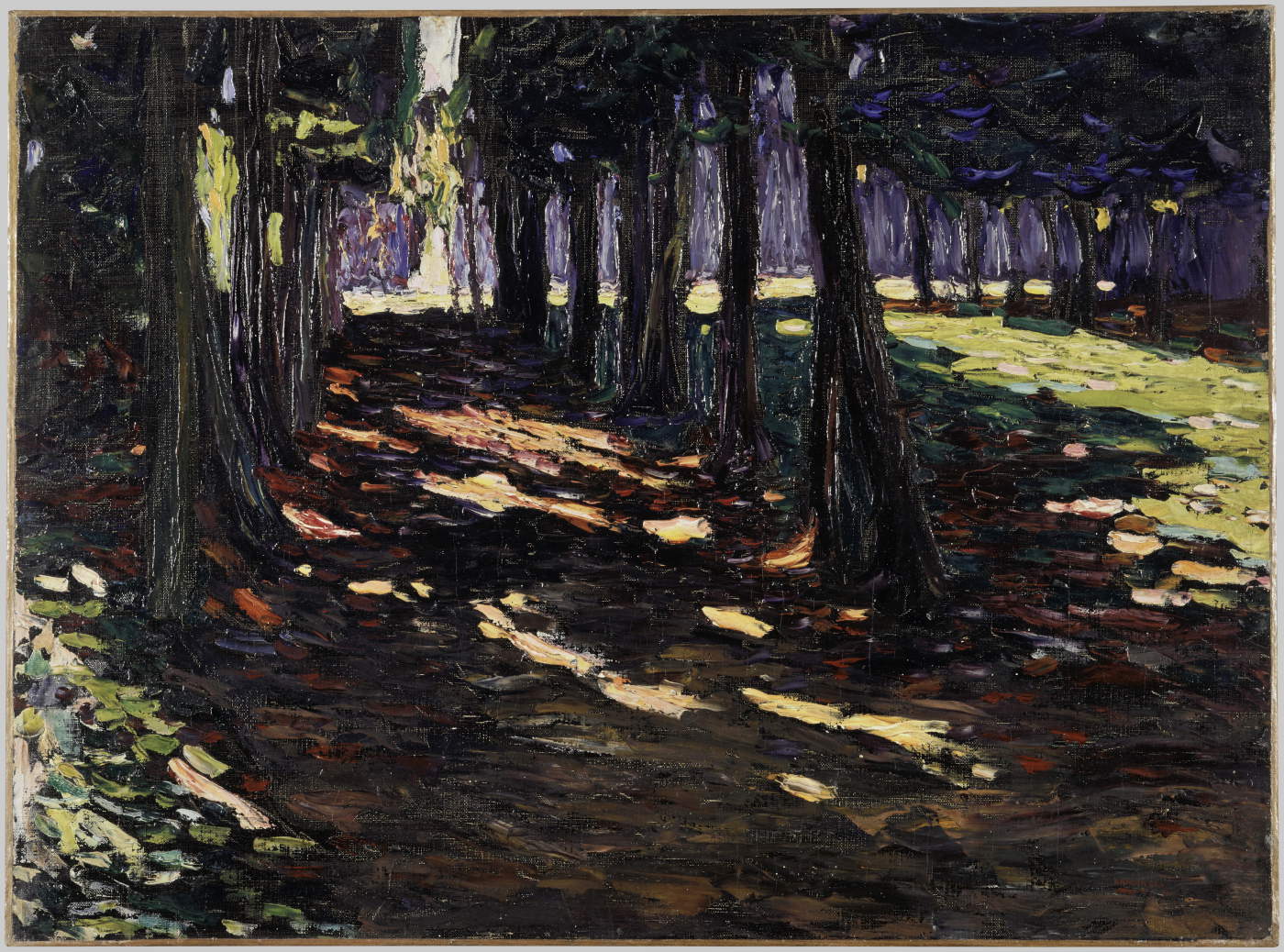
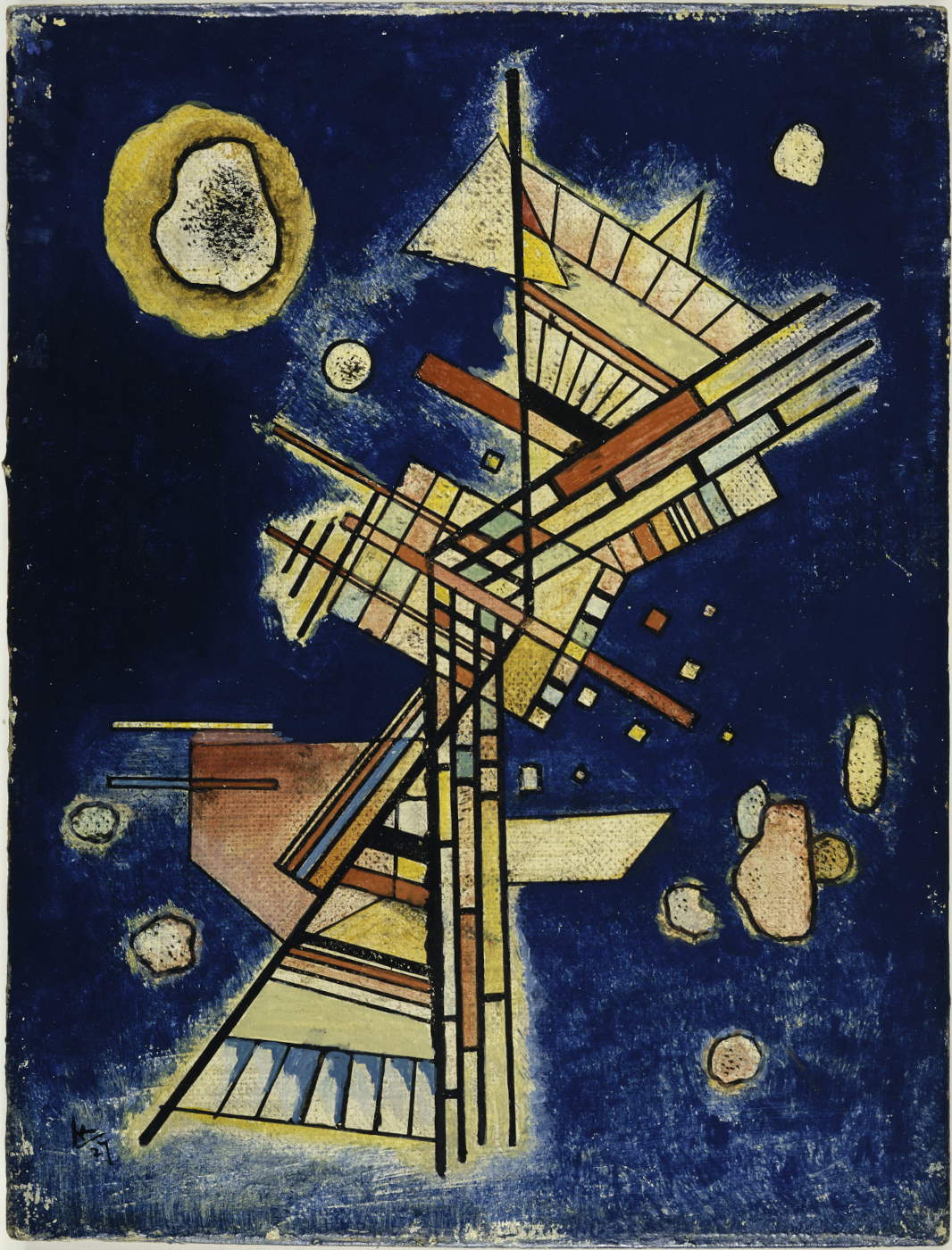
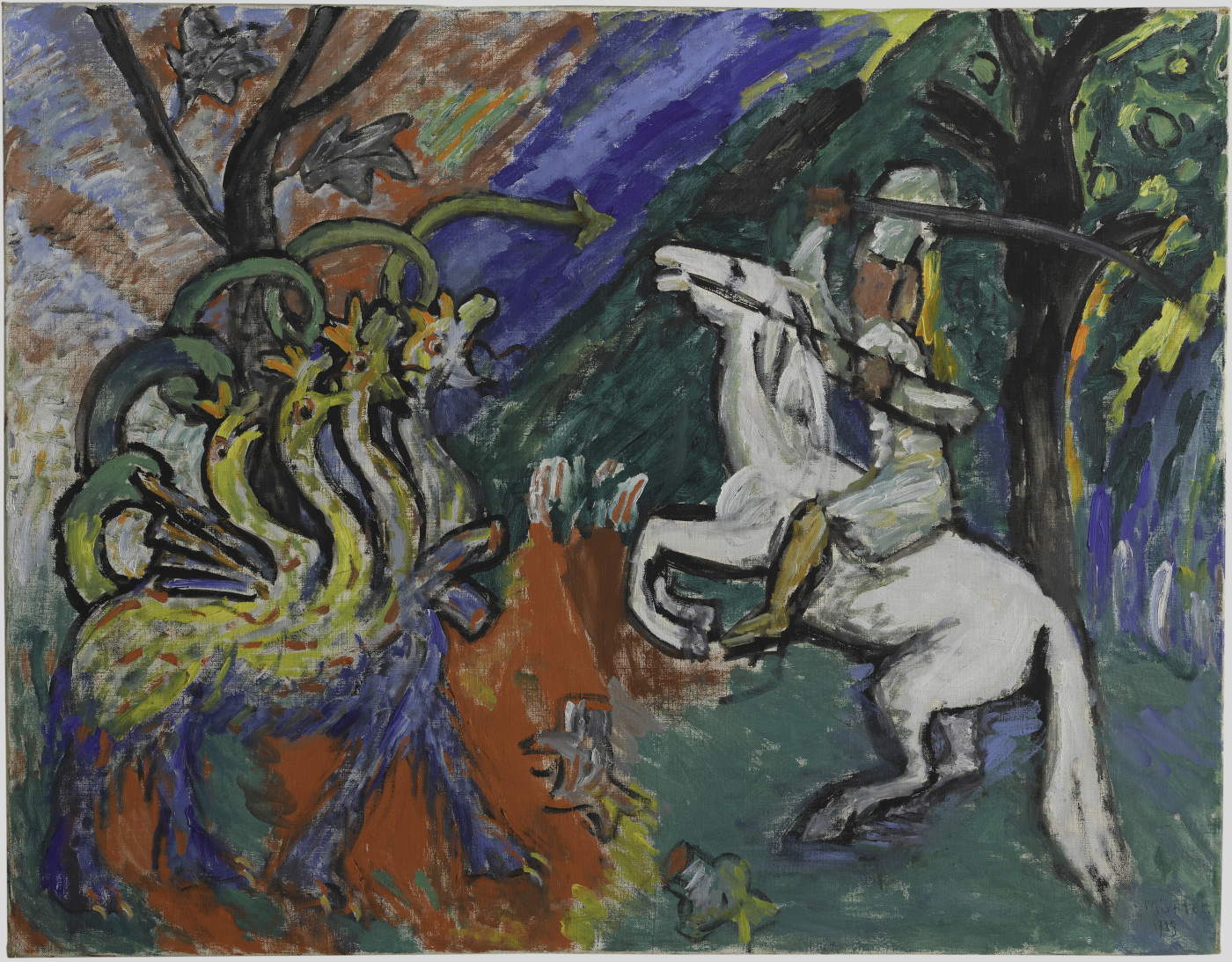
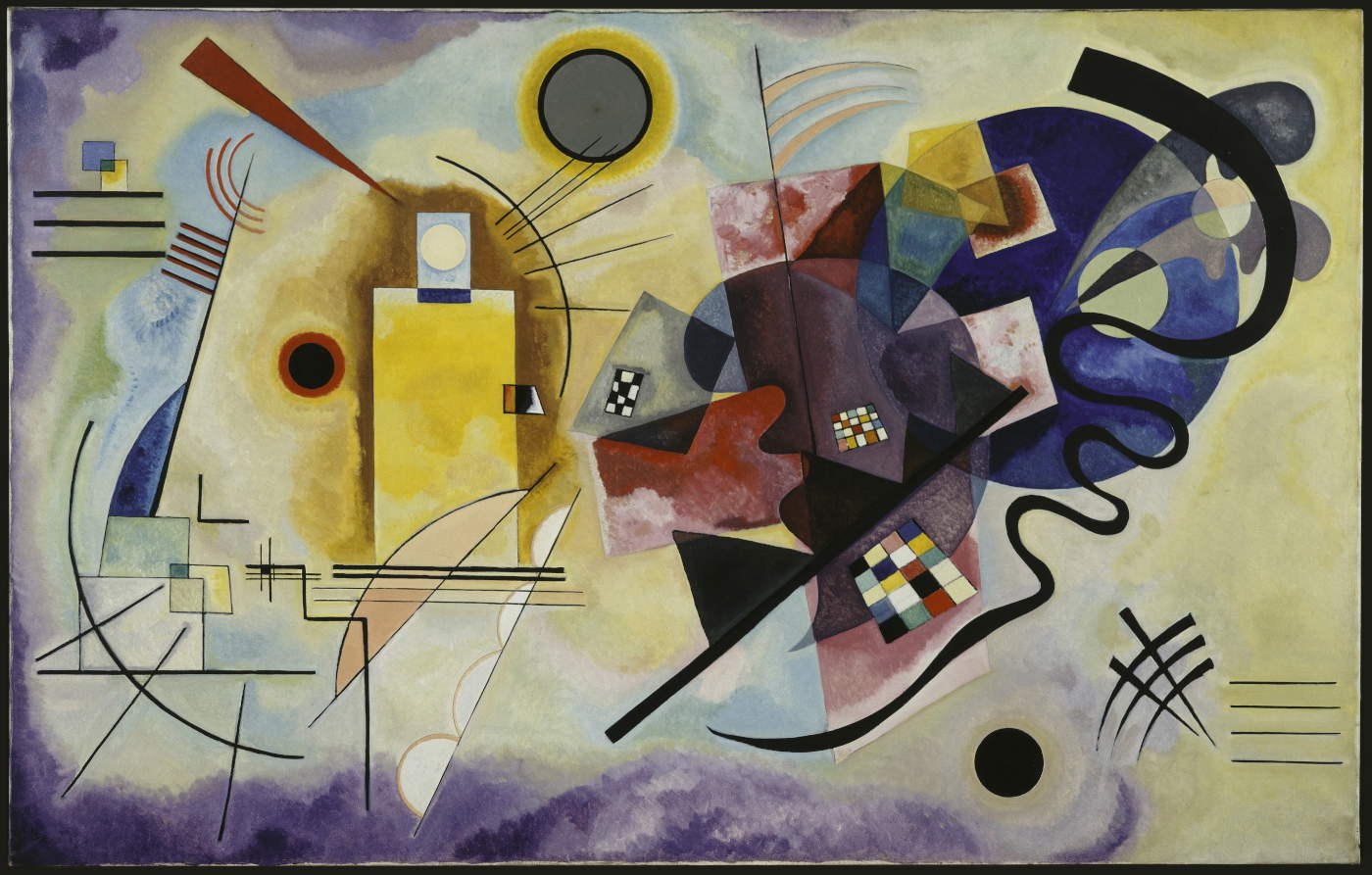
The exhibition is organized into five sections that trace the evolution of his artistic exploration, from his early figurative works through his years in Munich and with the Blaue Reiter, encompassing his time in revolutionary Russia, his experience at the Bauhaus, and his final years in Paris. Among the most representative works is *Gelb-Rot-Blau* (1925), one of the absolute masterpieces of his oeuvre. In this painting, geometric forms and colors interact in a balance that evokes the structure of a musical composition, offering an intense visual and sensory experience. Alongside the paintings, documents, photographs, personal items, and materials from the Bibliothèque Kandinsky will be on display, offering insight into even the most private aspects of the artist’s life. The exhibition will be enriched by in-depth sections dedicated to his theories on the relationship between color, form, and music—central elements of his artistic philosophy.
Rounding out the visit will be an immersive room created specifically for the exhibition, where visitors can immerse themselves in the geometries and chromatic harmonies that made Kandinsky’s artistic language unique. The exhibition is presented under the patronage of the French Embassy in Italy, the Lazio Region, and the City of Rome—Department of Culture and Coordination of Initiatives Related to Holocaust Remembrance Day. The exhibition is produced and organized by Arthemisia in collaboration with the Centre Pompidou in Paris, and curated by Angela Lampe, curator of the modern collections at the Musée national d’art moderne. Scientific and editorial consultation for the educational content is provided by Francesca Villanti. The main partner of the initiative is the Fondazione Terzo Pilastro – Internazionale, together with Fondazione Cultura e Arte and Poema.
|
| Kandinsky in Rome: A Major Exhibition at Palazzo Bonaparte Celebrates the Father of Abstract Art |

Warning: the translation into English of the original Italian article was created using automatic tools. We undertake to review all articles, but we do not guarantee the total absence of inaccuracies in the translation due to the program. You can find the original by clicking on the ITA button. If you find any mistake,please contact us.





















 IT
IT FR
FR DE
DE ES
ES CN
CN


