





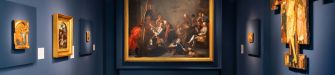
To highlight the heritage of the painted tombs of Tarquinia and Orvieto, exploring their artistic characteristics and reconstructing the ties that once united two of Etruria’s most important cities in antiquity. This is the goal of the exhibition *Journey into the Kingdom of Shadows*. Great Funerary Art from Tarquinia and Orvieto, scheduled from July 10 to November 15, 2026, at the National Archaeological Museum of Tarquinia. The exhibition is curated by Vincenzo Bellelli, director of the Cerveteri and Tarquinia Archaeological Park, and by Maria Cristina Tomasetti, restorer and conservator at PACT.
The project stems from the National Museums’ desire to strengthen collaboration among cultural institutions. During the renovation of the National Archaeological Museum of Orvieto, the famous Golini I and II tombs would have been moved to storage and thus temporarily removed from public view. Instead, this exhibition makes them visible once again, presenting them alongside the reconstructed Bruschi Tomb, which has been reassembled for the first time within the Tarquinia museum. Alongside the painted cycles, the exhibition also features artifacts of exceptional archaeological interest, including a complete set of grave goods discovered in a burial site near the Golini tombs, the famous Amphora of the Centaurs from Golini I, and a refined bronze head, likely part of the grave goods from the Bruschi Tomb. Among the most evocative images is that of a young woman gazing at her reflection in a mirror held by a handmaiden—a depiction unique in the context of Etruscan funerary painting.
The exhibition also represents an important research opportunity to continue studies on 4th-century B.C. funerary painting, which began with the international conference *The Tomb of the Reliefs and the Great Hellenistic Hypogea in the Mediterranean Context*, held in Cerveteri in May 2025. The goal is to explore aspects of Etruscan wall painting from the Late Classical and Hellenistic periods that are still poorly understood—a period characterized by the arrival and assimilation of myths, iconography, and artistic techniques from the Mediterranean world. These influences helped profoundly transform the figurative language of Etruria, fostering the emergence of the great artistic koine of central Italy during the Hellenistic era.
The exhibition also invites visitors to reflect on the meaning of the depicted subjects and their arrangement within the funerary spaces.
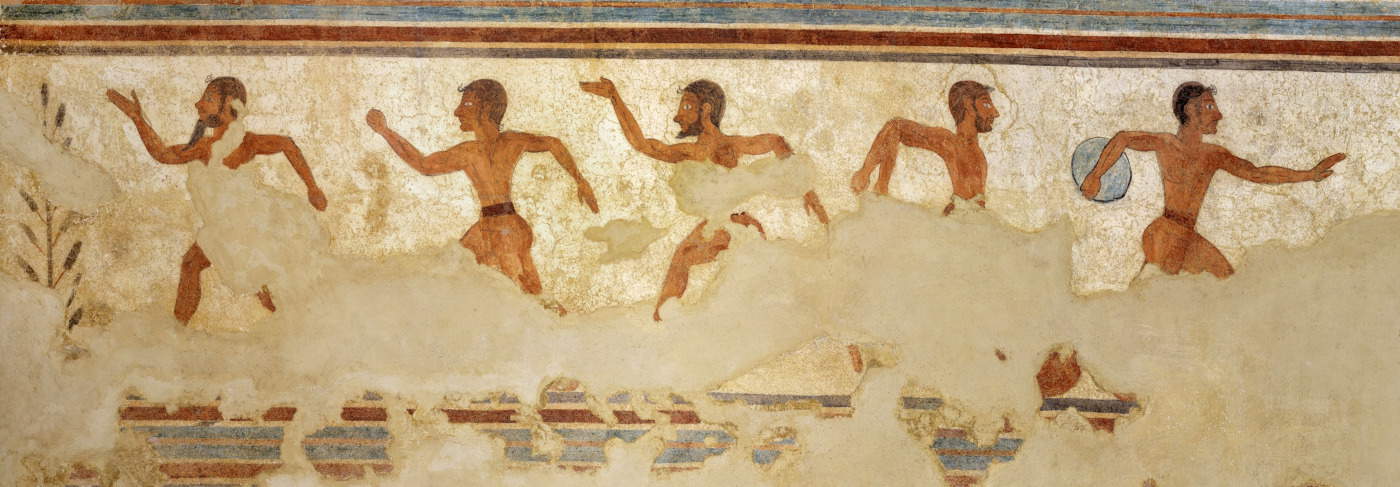
The exhibition’s opening coincides with the complete renovation of the Hall of the Painted Tombs at the National Archaeological Museum of Tarquinia. The new exhibition layout highlights four of the necropolis’s most famous tombs: the Triclinium Tomb, the Chariot Tomb, the Ship Tomb, and the Olympic Games Tomb, whose frescoes were removed and subsequently reassembled in their original configuration. The redesign introduces a new lighting system, improves accessibility to the spaces, and makes the hall fully accessible to people with mobility impairments. Among the main new features is a multimedia table that allows visitors to explore the history of Civita and the Necropolis, learn about the painting techniques used by Etruscan artists, delve into the main iconographic themes, and trace the complex conservation history of the tombs. The project was also made possible thanks to collaboration with the Central Institute for Restoration, which provided a prototype of the first expansion frame designed specifically for the restoration of the Tarquinia paintings.
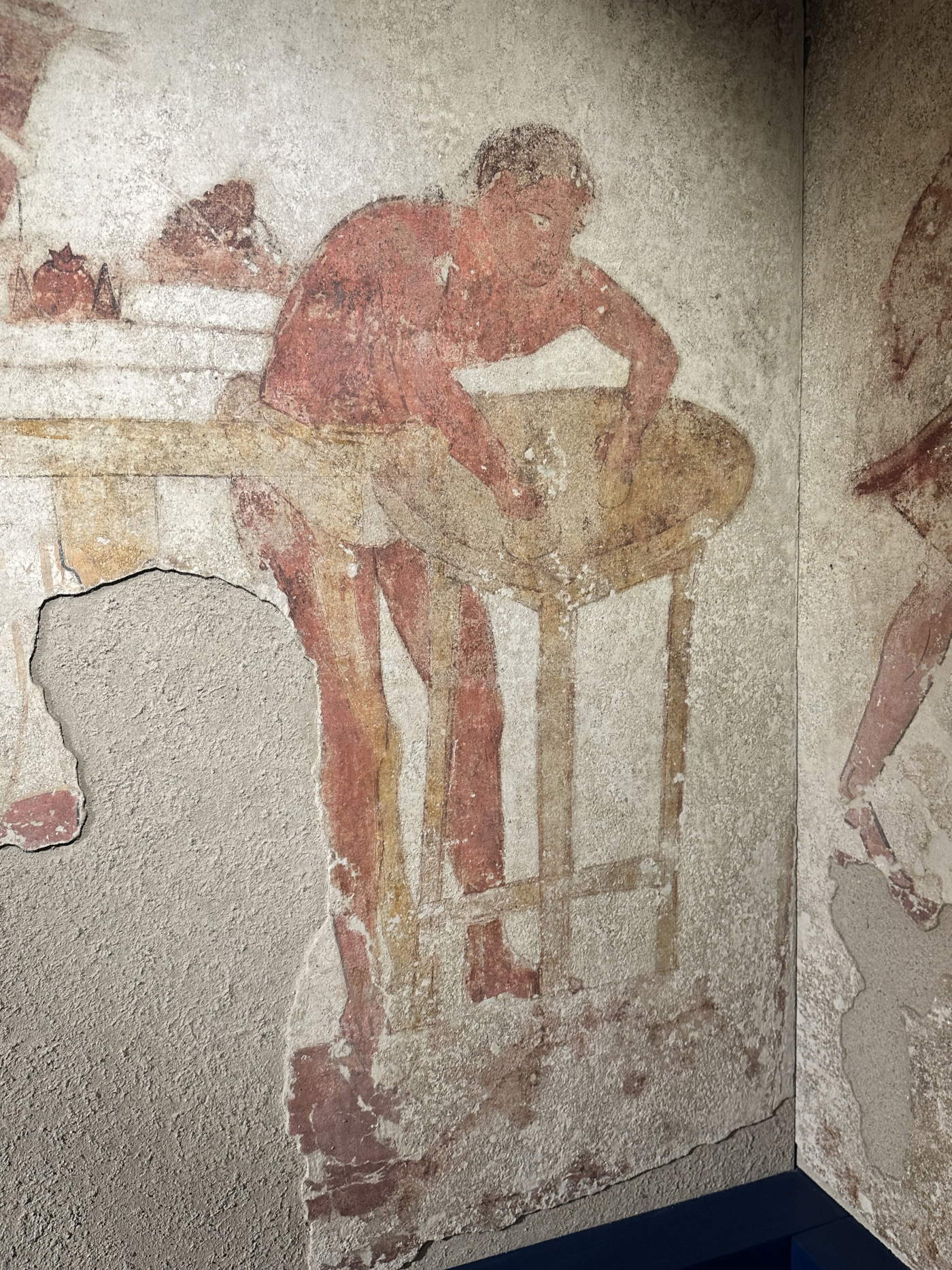
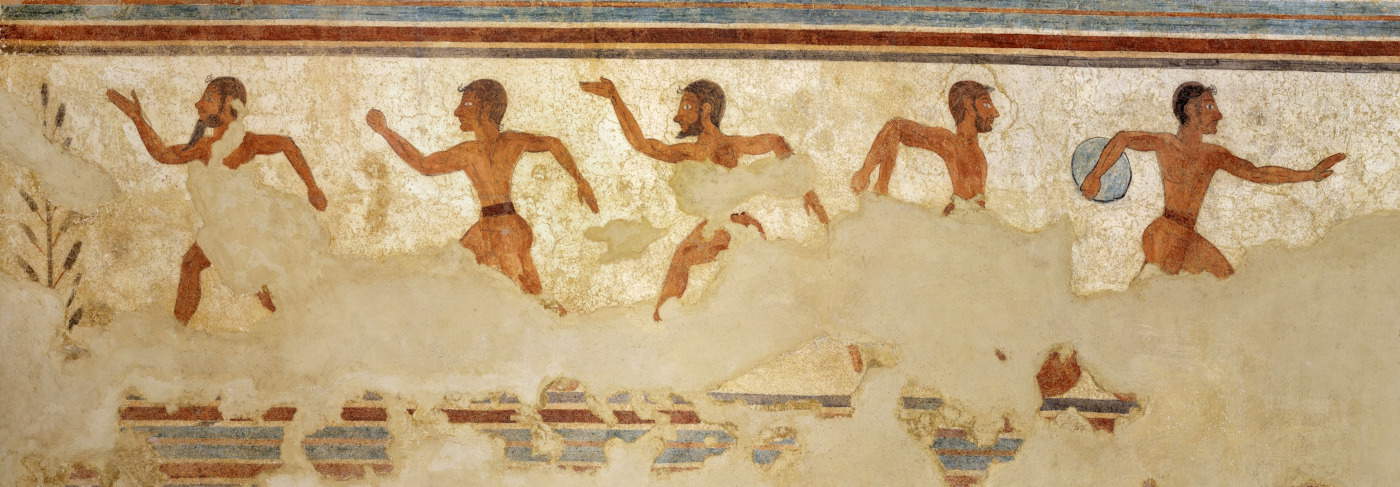
The seven tombs featured in the exhibition share a similar conservation history. Between the late 1940s and the early 1960s, the paintings were gradually detached from the walls of the underground chambers for conservation purposes. The first intervention, in 1949, involved the Tomb of the Chariots and the Tomb of the Triclinium; this was followed in the 1950s by the Golini I and II tombs, the Tomb of the Funeral Bed in 1953, the Tomb of the Ship and the Tomb of the Olympics in 1958, the Tomb of the Black Sow in 1961, and, finally, the Bruschi Tomb in 1964. This complex history of restorations and relocations attests to how difficult it has always been to ensure the preservation of the paintings in an underground environment. Today, the Etruscan tombs serve as a vital laboratory for understanding how the maintenance of the original microclimatic conditions—which have remained virtually unchanged for over two thousand years—is an indispensable prerequisite for preserving the extraordinary fragility of the wall decorations and ensuring their transmission to future generations.
 |
| Tarquinia showcases Etruscan funerary art with an exhibition dedicated to painted tombs |

Warning: the translation into English of the original Italian article was created using automatic tools. We undertake to review all articles, but we do not guarantee the total absence of inaccuracies in the translation due to the program. You can find the original by clicking on the ITA button. If you find any mistake,please contact us.
























 IT
IT FR
FR DE
DE ES
ES CN
CN


