




by Ilaria Baratta 08/07/2026


Categories: Works and artists / Disclaimer
It is one of the iconic works of Gustav Klimt’s golden age (Baumgarten, 1862 – Vienna, 1918): the Portrait of Adele Bloch-Bauer I is a masterpiece poised between sensuality and spirituality, in which the art of the past—that of Byzantine mosaics—is reinterpreted to express the allure of early 20th-century women. An article by Ilaria Baratta.
A profusion of gold floods Gustav Klimt’s *Portrait of Adele Bloch-Bauer I* , sweeping through the entire composition like a river of precious metal and immersing the viewer in a dazzling vision. Gold is the undisputed protagonist of the entire work; it is a pervasive presence that envelops every centimeter of the canvas and merges with the figure portrayed. A luminous explosion that erases three-dimensionality and blurs the boundaries between body and space. Gold is everywhere: it shimmers in the background, flows through the folds of the dress—where symbols and geometric shapes intertwine—and seeps into the finest details with a refinement reminiscent of Byzantine mosaics.
In this portrait, Klimt does not use gold merely for decoration: it is an element that transforms the painting into a visual experience, as the light of the gold emanates directly from the surface of the painting itself, and in this golden splendor, Adele, the woman portrayed, appears suspended between sensuality and spirituality, between decorative art and high art. Her gaze, enigmatic and intense, emerges from this golden river, almost like an apparition.


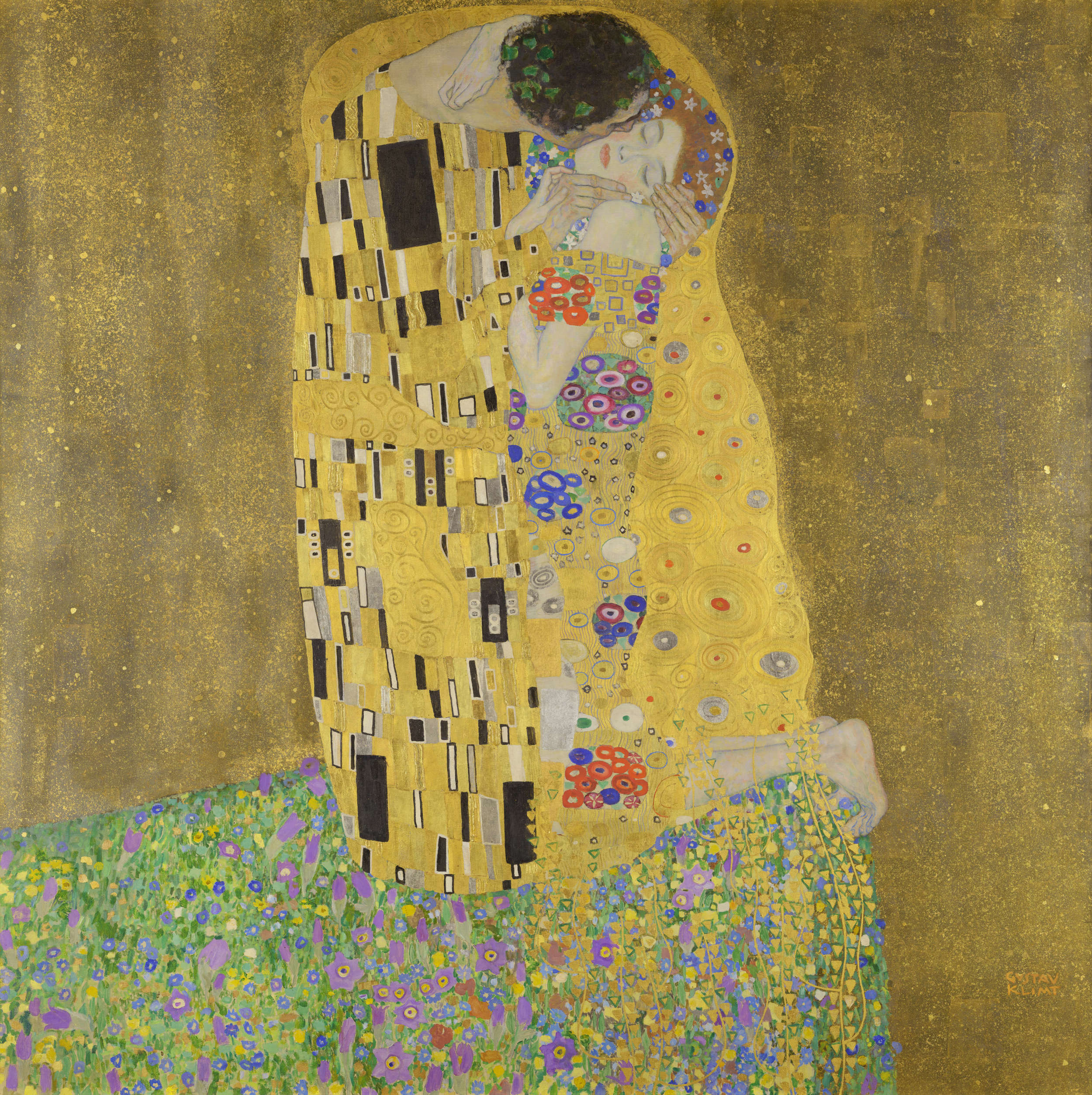
The Portrait of Adele Bloch-Bauer I is a masterpiece that enchants and hypnotizes through the gaze of the woman whom the painter elevates to one of the most magnetic figures in his oeuvre; at the same time, it symbolizes an era at the height of its refinement. Klimt, in fact, uses gold to reference the art of the past while actually moving toward modernity, where he is able to fully express feminine sensuality and the technical and formal experimentation of what is known as his “golden period,” so named for its intense use of gold and which includes masterpieces such as Judith I, The Kiss, The Tree of Life, and Judith II—the latter marking the end of that particular period.
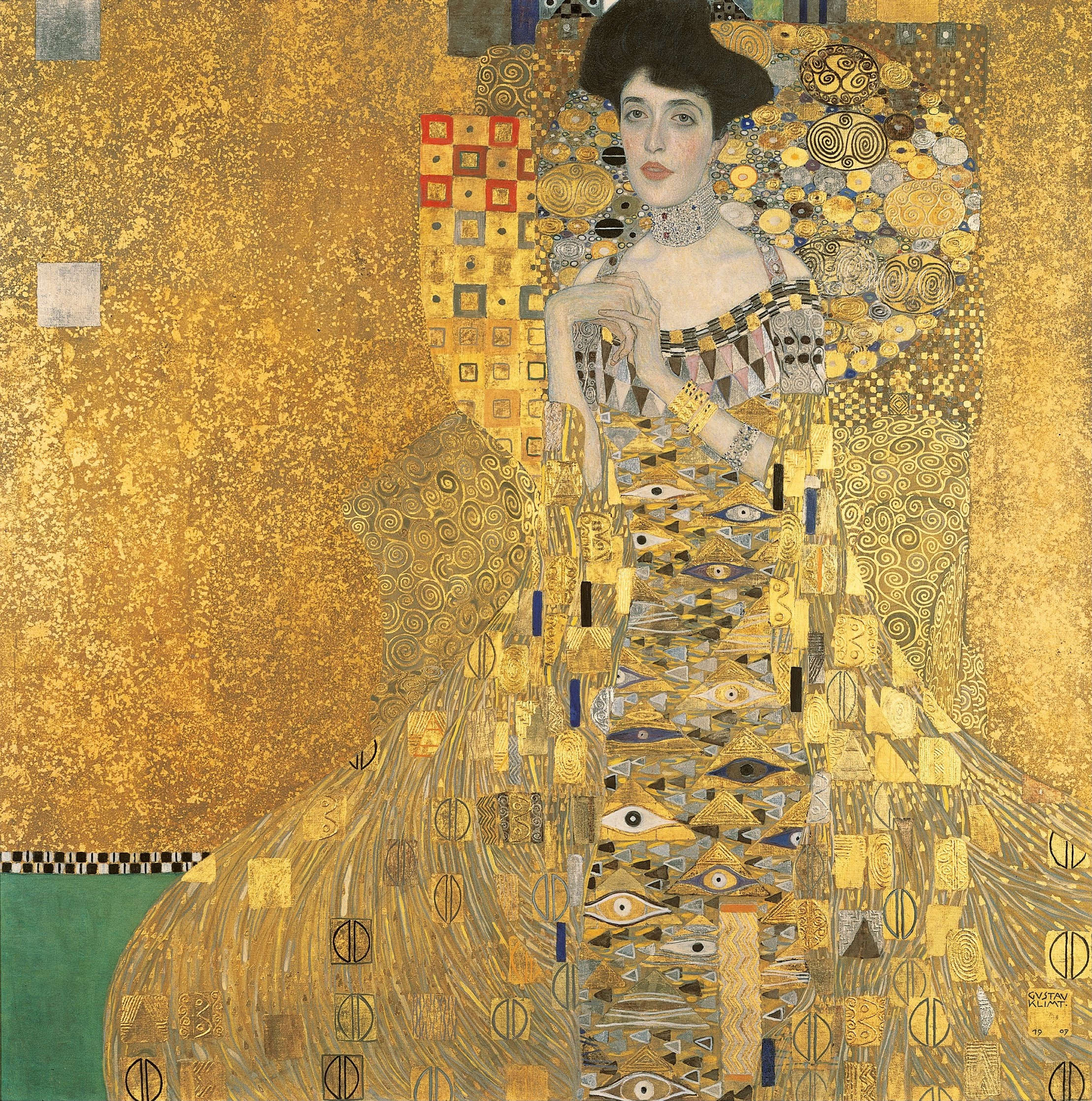
Known as the Woman in Gold, the Portrait of Adele Bloch-Bauer I is considered the quintessential work of the “golden period,” which spanned roughly from 1903 to 1909. Klimt completed it in 1907 but began working on it in 1903, the year in which the artist had the opportunity to stay in Ravenna and thus visit the city’s most famous monuments, becoming extraordinarily fascinated by the Byzantine mosaics he discovered there, particularly in the Basilica of San Vitale. In his travel accounts, Klimt recounts having seen “mosaics of unprecedented splendor” in Ravenna. Maximilian Lenz, who accompanied him on his trip to Italy, also wrote that the stay in Ravenna was a decisive moment for Klimt: “The gold-glittering mosaics of Ravenna’s churches made an incredible and decisive impression on him. Klimt was truly shaken. He didn’t show it, but it was clearly evident.” He was so deeply moved, both visually and emotionally, by that triumph of gold—which left in the mosaics a marvelous testament to Byzantine art—and by the mosaic technique itself, that this experience shaped his entire body of work for several years, until 1909: In fact, his “golden period” emerged from that stay, and he channeled his fascination with what had so deeply moved him into some of his most famous masterpieces, using a great quantity of gold and ornamental motifs whose colors and geometric patterns evoked mosaic tiles. In *Portrait of Adele Bloch-Bauer I*, these elements are clearly visible in the dress—characterized by small triangles and a distinctive motif reminiscent of almond-shaped eyes—and in the decorated background, an ornamental universe unto itself, consisting of sinuous lines, spirals, squares, ovals, and semicircles divided into sections as if they were jewels, gemstones, and precious fabrics, where the boundaries between the background and the dress blur. The woman’s initials, “AB,” also appear repeatedly, serving as signs of her identity and presence. It is unclear whether Adele is depicted standing—as if her body itself were immersed in the ornamental river surrounding her—or whether she is seated in an armchair. The only parts not incorporated into the design and therefore distinguishable are her face, hair, neckline, and hands. Her hypnotic gaze, slightly flushed cheeks, and half-open mouth with deep red lips convey a deliberate sensuality that contrasts with her almost monumental and solemn posture. Her hands, elegantly clasped but in an unnatural manner, draw attention: behind this pose lies a personal choice by the model, who wished to conceal a deformed finger—a sign of vulnerability that shatters the apparent perfection of the whole.
Around her neck, a refined diamond choker—a wedding gift from her husband—adds further radiance to the figure, while a series of gold bracelets adorn her left wrist. A detail also appears in the lower left corner of the painting: a black-and-white decoration that explicitly echoes the decorative elements of furniture in the style of the Wiener Werkstätte, the Vienna Workshops founded in 1903 by architect Josef Hoffmann, banker Fritz Wärndorfer, and painter Koloman Moser, modeled after the English and Scottish Arts and Crafts movements, with which Klimt collaborated. This connection between painting and design is characteristic of the visual culture of fin-de-siècle Vienna, in which art and craftsmanship merge into a total aesthetic vision—the Gesamtkunstwerk—that is, the integration into daily life of objects of high aesthetic and artistic value, such as furniture, porcelain, glassware, and jewelry.
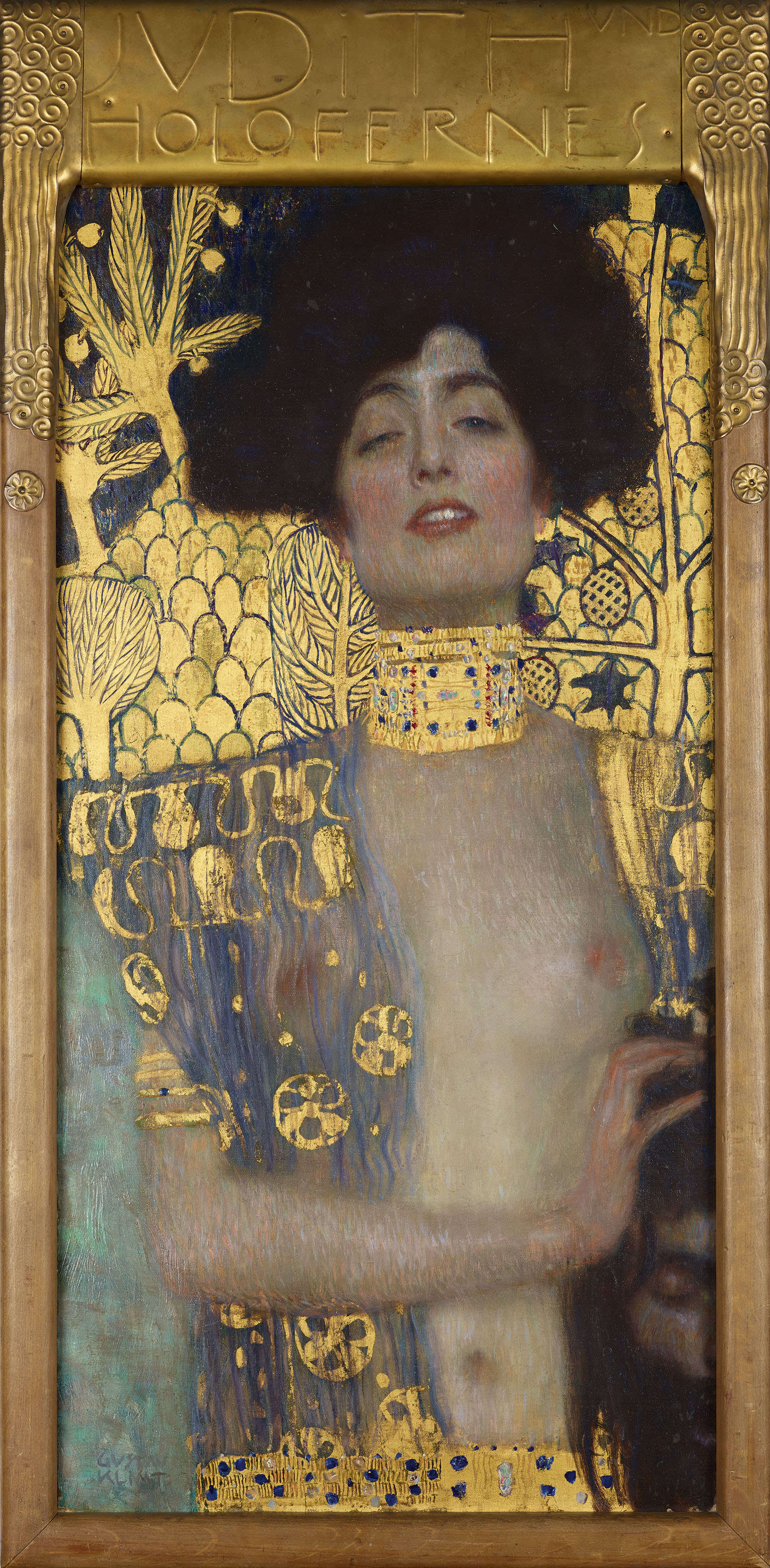
The daughter of businessman Maurice Bauer, Adele belonged to a wealthy Austrian family of Jewish origin. From her youth, she lived in a cultured, middle-class environment typical of late-19th-century Vienna. At the age of just eighteen, she married Ferdinand Bloch, a wealthy industrialist and the son of a baron who owned a thriving sugar refinery. The couple shared a strong passion for art and culture, which led them to become among the most influential patrons in Vienna at the time and to assemble one of the city’s most significant art collections in their private apartment. This collection included a remarkable selection of paintings by artists of the Viennese Biedermeier period, an important series of sculptures, decorative pieces, and fine porcelain from the famous Imperial Porcelain Manufactory in Vienna, as well as numerous paintings by Klimt, including several landscapes and the two portraits of Adele, which Ferdinand himself had commissioned from the artist. In fact, it was her husband who, in 1903, commissioned Gustav Klimt—considered at the time one of the most innovative painters on the Austrian scene—to create a beautiful portrait of Adele, with the intention of giving her parents a special gift on the occasion of their wedding anniversary. However, Klimt took much longer than expected to complete the work. The portrait took over three years to complete and was not finished until 1907. A few years later, in 1912, the painter created a second portrait of the same woman, making her the only person to have been portrayed by Klimt twice in full figure. It should also be noted that Adele Bloch-Bauer appears in another famous painting by the artist: she is, in fact, the model for the renowned *Judith I*, painted in 1901 and now housed at the Österreichische Galerie in Vienna. A masterpiece from his golden age, it depicts the famous biblical heroine holding the head of the Assyrian general Holofernes: a highly intense work brimming with sensuality, in which the woman becomes a symbol of dangerous eroticism, as evidenced by Judith’s gaze and the gesture of her hand—which, by ironically and mockingly caressing the hair of the general’s severed head, seems to highlight what she is capable of accomplishing on her own.
Since 2006, *Portrait of Adele Bloch-Bauer I* has been housed at the Neue Galerie in New York, but its history has been so tumultuous that it became the subject of a 2015 film: *Woman in Gold*, directed by Simon Curtis, with a cast that includes Helen Mirren, Ryan Reynolds, Daniel Brühl, and Katie Holmes.
In 1938, with the Anschluss and the annexation of Austria by Nazi Germany, the Bloch-Bauer family, of Jewish descent, fell victim to the regime’s severe discriminatory policies and systematic confiscations. Among the assets the Nazis seized from the family were five paintings by Klimt. Ferdinand Bloch-Bauer, aware of the imminent danger, was forced to flee Austria and found refuge in Switzerland. In the years that followed, despite numerous unsuccessful attempts to recover the confiscated property, Ferdinand was unable to obtain justice. Before his death, he therefore decided to draw up a final will, in which he clearly expressed his wish to leave his entire estate—including the five Klimt paintings—to his closest relatives: three grandchildren, including Maria Altmann, who would go on to become the central figure in one of the most famous legal battles for the restitution of artworks looted during the Nazi era.
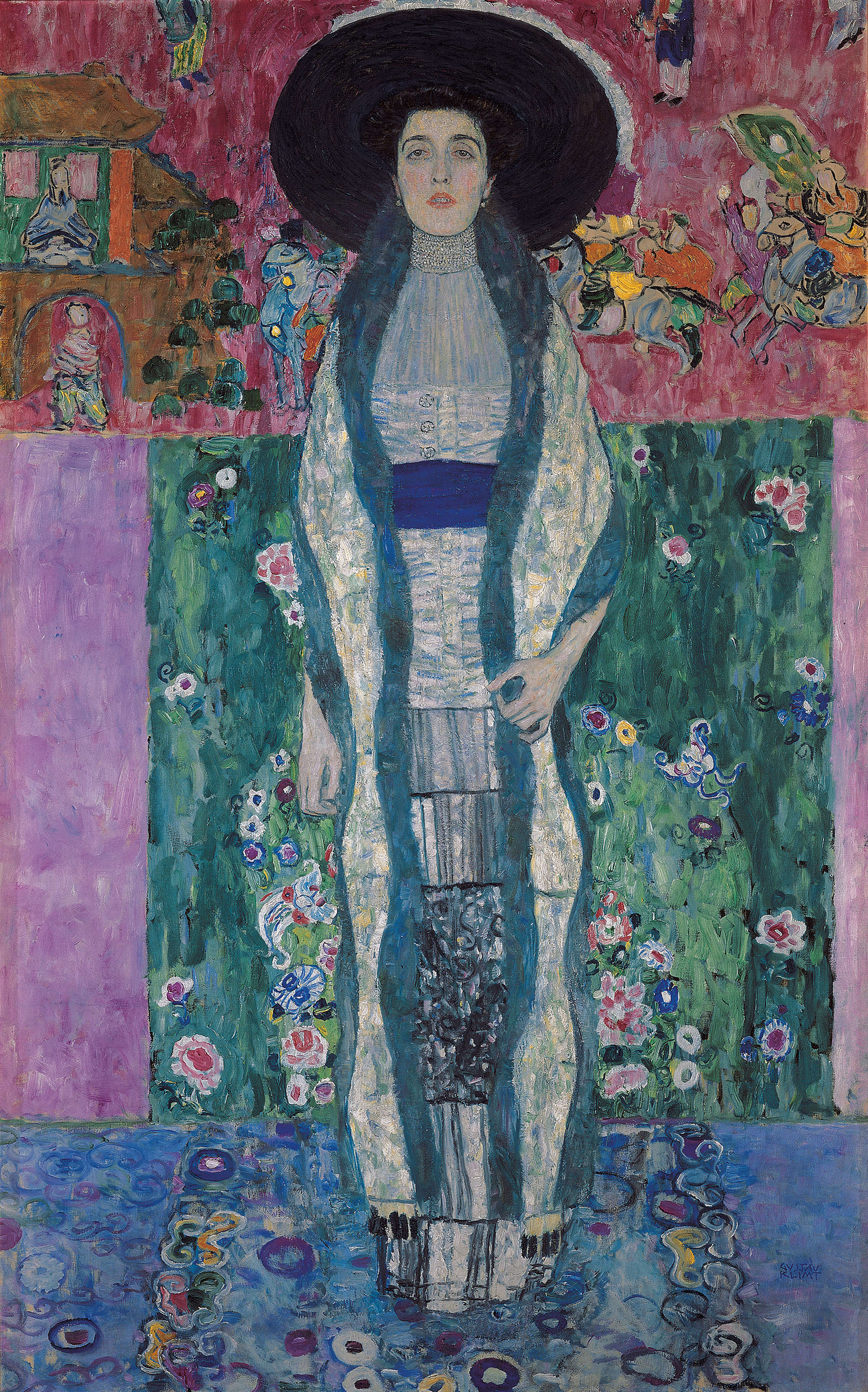
Maria, too, was forced to flee Austria in 1938, along with her husband, to escape anti-Semitic persecution. The couple managed to emigrate to the United States and settled in California, where Maria lived for over sixty years. During that long period, the possibility of recovering the family heirlooms seemed remote. However, in 1998, archival documents emerged that clearly demonstrated that Ferdinand Bloch-Bauer had never intended to leave the five Klimt paintings on loan to the Belvedere Museum in Vienna, where they were then on display. Armed with this evidence, Maria Altmann decided to take legal action, seeking the return of the works under the Art Restitution Act. The Austrian authorities rejected her request. Maria then filed a lawsuit in the United States, in the state of California. The legal case dragged on for several years and attracted international attention, eventually reaching the U.S. Supreme Court. An agreement was reached between the Austrian government and Maria Altmann, which provided for binding arbitration. Maria was legally assisted and represented by American attorney Randol Schoenberg. In 2005, it was determined that the five Klimt paintings had been illegally appropriated and were to be returned to their rightful heirs, including *Portrait of Adele Bloch-Bauer I*. Shortly thereafter, in 2006, this masterpiece was purchased by Ronald S. Lauder, an art collector, entrepreneur, and co-founder of the Neue Galerie in New York, for a record-breaking $135 million—at the time, the highest price ever paid for a painting. Since then, the Portrait of Adele Bloch-Bauer I has become the centerpiece of the Neue Galerie’s collection, a symbol of remembrance and restored justice.
In addition to being one of the iconic works of Klimt’s golden age, *Portrait of Adele Bloch-Bauer I* is also a powerful expression of the spirit of the Vienna Secession, of which the artist was one of the founders. The use of gold, which dominates this painting as it does his other masterpieces from the period, immediately evokes the famous golden dome of the Secession Building in Vienna, an architectural symbol of the movement founded in 1897, which houses the famous Beethoven Frieze created by Gustav Klimt as a tribute to the composer for the 14th Exhibition of the Association of Visual Artists of the Austrian Secession in 1902. That nearly spherical dome, composed of an interlacing of 2,500 gilded laurel leaves and 311 berries, embodies the same desire for renewal, aesthetic refinement, and a break with academicism found in the Portrait. In fact, both share an aesthetic that combines decorativism with symbolic depth: gold is not merely ornamentation but becomes an expression of a genuine cultural language that unites tradition and modernity; it is a precious material that nonetheless serves as a symbol of a break with academicism. In this sense, the Portrait of Adele Bloch-Bauer I can be interpreted as an expression of the values of the Secession: “To each age its art, to art its freedom,” as the movement’s motto reads, inscribed on the building high up beneath the dome, on a sort of entablature.
Gold. Gold on the canvases, in the decorative backgrounds, in the clothing of the figures portrayed, and in the architecture. It is more than a color or a material: it is the distinctive feature that makes Gustav Klimt’s art immediately recognizable. It is this golden splendor, so unmistakable, that makes his art a unique visual language, capable of uniting form and meaning in a perfect and inimitable balance.
Warning: the translation into English of the original Italian article was created using automatic tools. We undertake to review all articles, but we do not guarantee the total absence of inaccuracies in the translation due to the program. You can find the original by clicking on the ITA button. If you find any mistake,please contact us.