





The Capitular Library of Verona is inaugurating the temporary exhibition *Gazing Toward the Sky: Reading the Universe Through Manuscripts and the Stars*, an exhibition that aims to create a dialogue between precious ancient manuscripts and scientific instruments, offering a glimpseinto the evolution of astronomical thought. In particular, following a meticulous restoration, the terrestrial globe and celestial globe created in the 18th century by the German mathematician and cartographer Johann Gabriel Doppelmayr are once again on display. Made of papier-mâché and plaster, they underwent a delicate four-month conservation process carried out by conservator Francesca Telli, thanks to the support of the Veneto Region—as part of the “Salvaguardia Beni Mobili” (Preservation of Movable Cultural Heritage) grant program—and the German Australian Business Council (GABC).
The exhibition takes shape through a dialogue between medieval manuscripts, ancient books, and scholarly instruments preserved by the Capitolare, all of which bear witness to a body of knowledge that, over the centuries, has interwoven astronomy, mathematics, religion, and philosophy. Since ancient times, in fact, observing the sky has been essential for navigating space, measuring time, and understanding the order of the universe.
The exhibition begins with the cosmological view of the ancient and medieval world, dominated by the geocentric model developed by Greek philosophy and systematized by Ptolemy. In this conception, the Earth occupies the center of the universe, while the celestial bodies move along concentric spheres. This system was passed down for centuries through seminal works such as Giovanni Sacrobosco’s *Sphaera mundi*, illustrated with diagrams, celestial maps, astronomical tables, and computational tools. The exhibition then guides visitors through the major turning point introduced by Nicolaus Copernicus, who revolutionized the conception of the cosmos by placing the Sun at the center of the system and relegating the Earth to the role of a planet orbiting the Sun. From that moment on, a new era of scientific research began, characterized by increasingly accurate observations and a lively debate among various theories.
Subsequent discoveries by astronomers such as Tycho Brahe, Johannes Kepler, and Galileo Galilei bear witness to the evolution of this new way of observing the sky. The introduction of the telescope, the study of sunspots, new stars, and elliptical orbits all contributed to shaping an increasingly dynamic and complex picture of the universe.
This narrative includes Johann Gabriel Doppelmayr’s two famous globes, created in 1728 and 1730, respectively. An astronomer, cartographer, and engraver, Doppelmayr created instruments that enjoyed great success throughout Europe thanks to the accuracy of their geographical and astronomical information. In addition to their scientific value, the globes serve as a valuable testament to 18th-century geographical culture. The numerous annotations, the routes of the great explorations, and the depiction of territories still largely unknown paint a picture of a world in a state of constant discovery.
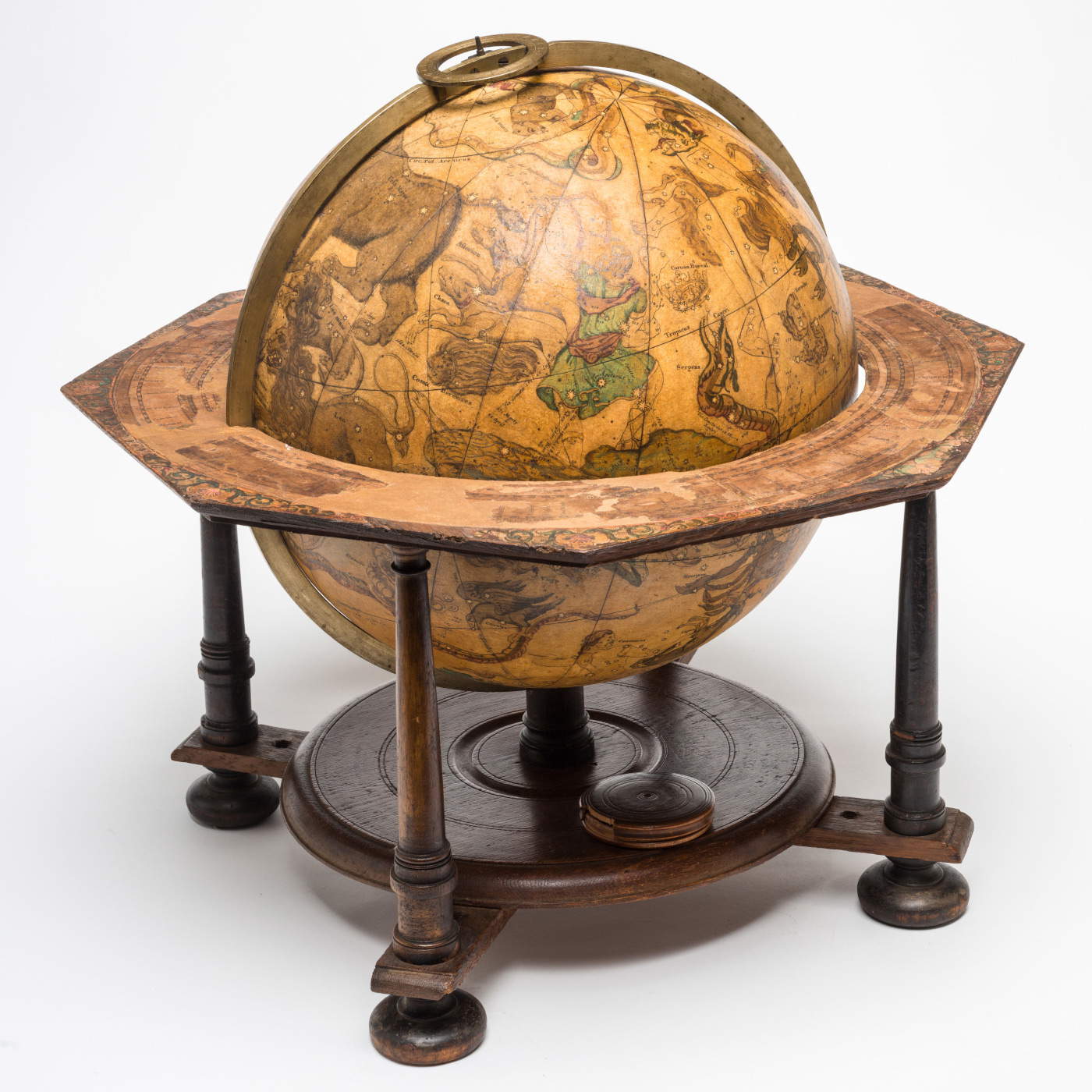
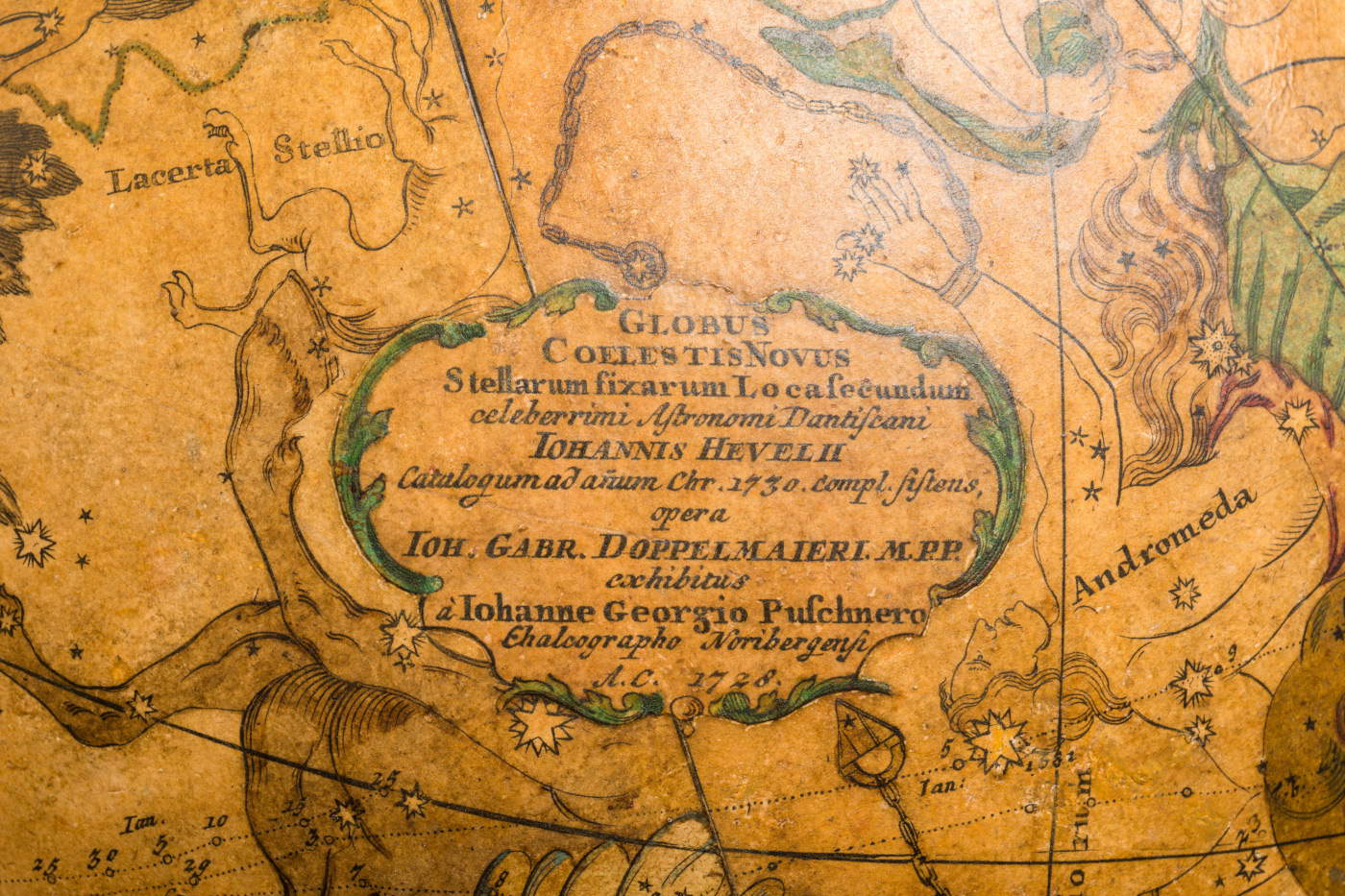
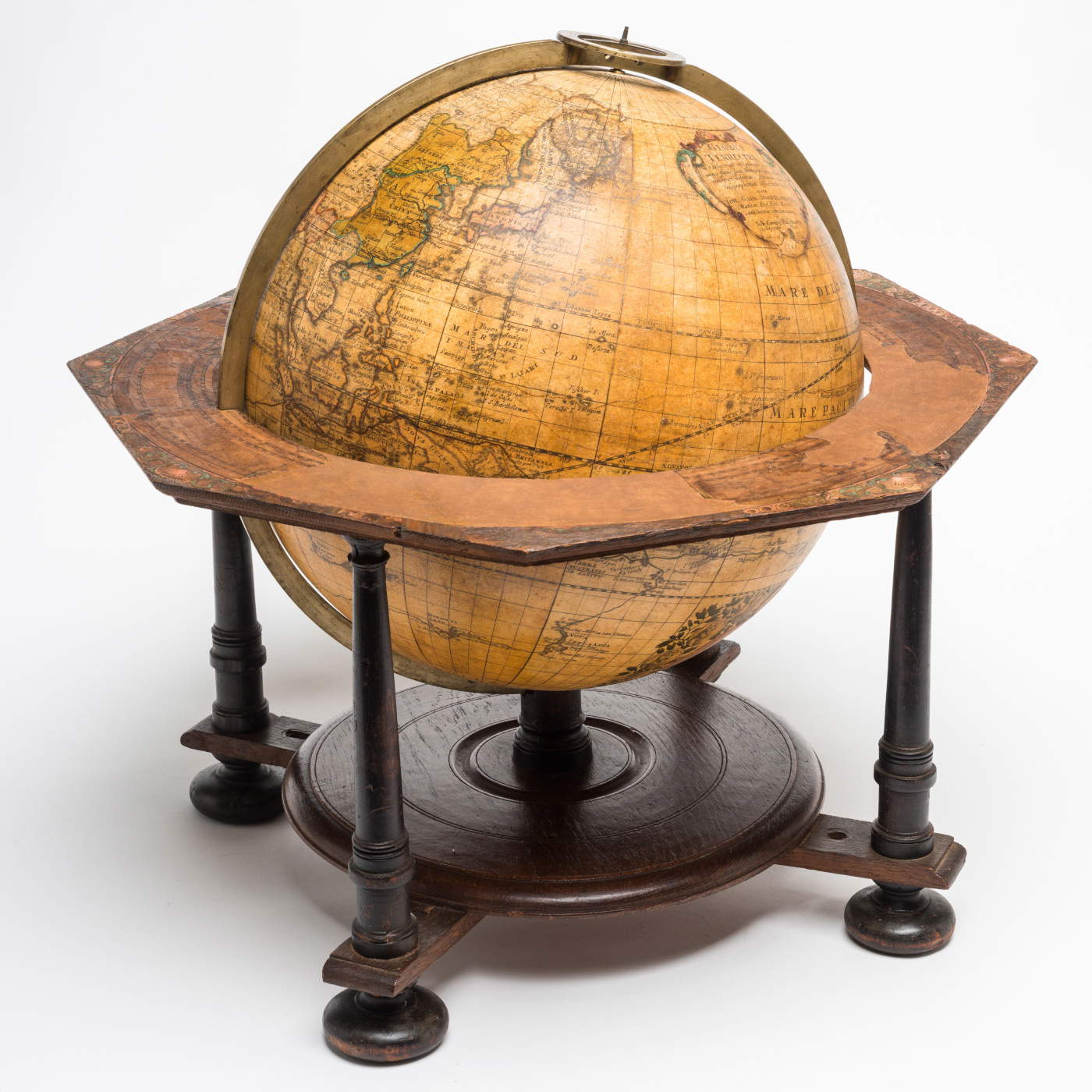
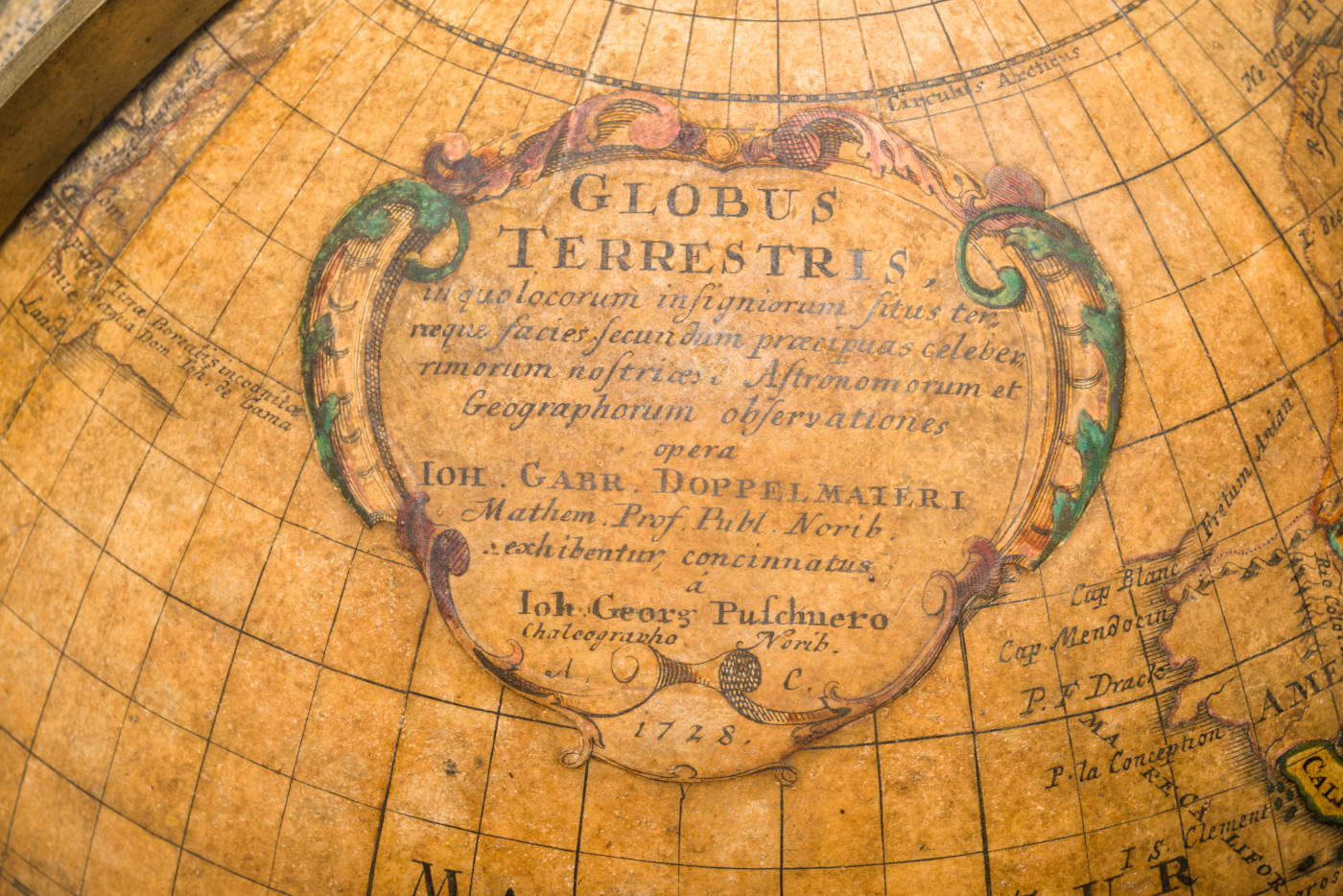
Among the most striking elements is the depiction of Terra Australis, the great southern continent that for centuries geographers and scholars believed was necessary to maintain the balance of landmasses between the northern and southern hemispheres. This hypothesis was eventually disproved by the expeditions of explorer James Cook, who in the 18th century helped redefine our geographical understanding of Australia and the Pacific Ocean.
The exhibition will be open until September 29 in the museum spaces of the Biblioteca Capitolare during regular opening hours, Friday through Tuesday, from 10 a.m. to 6 p.m. The exhibition will also be featured as part of guided tours, offering visitors the opportunity to delve deeper into the history of the works on display and humanity’s long journey toward understanding the universe.
For information and reservations, contact info@bibliotecacapitolare.it or call 3315946961.
|
| The restored Doppelmayr globes are on display at the Biblioteca Capitolare in Verona |

Warning: the translation into English of the original Italian article was created using automatic tools. We undertake to review all articles, but we do not guarantee the total absence of inaccuracies in the translation due to the program. You can find the original by clicking on the ITA button. If you find any mistake,please contact us.



















 IT
IT FR
FR DE
DE ES
ES CN
CN


