





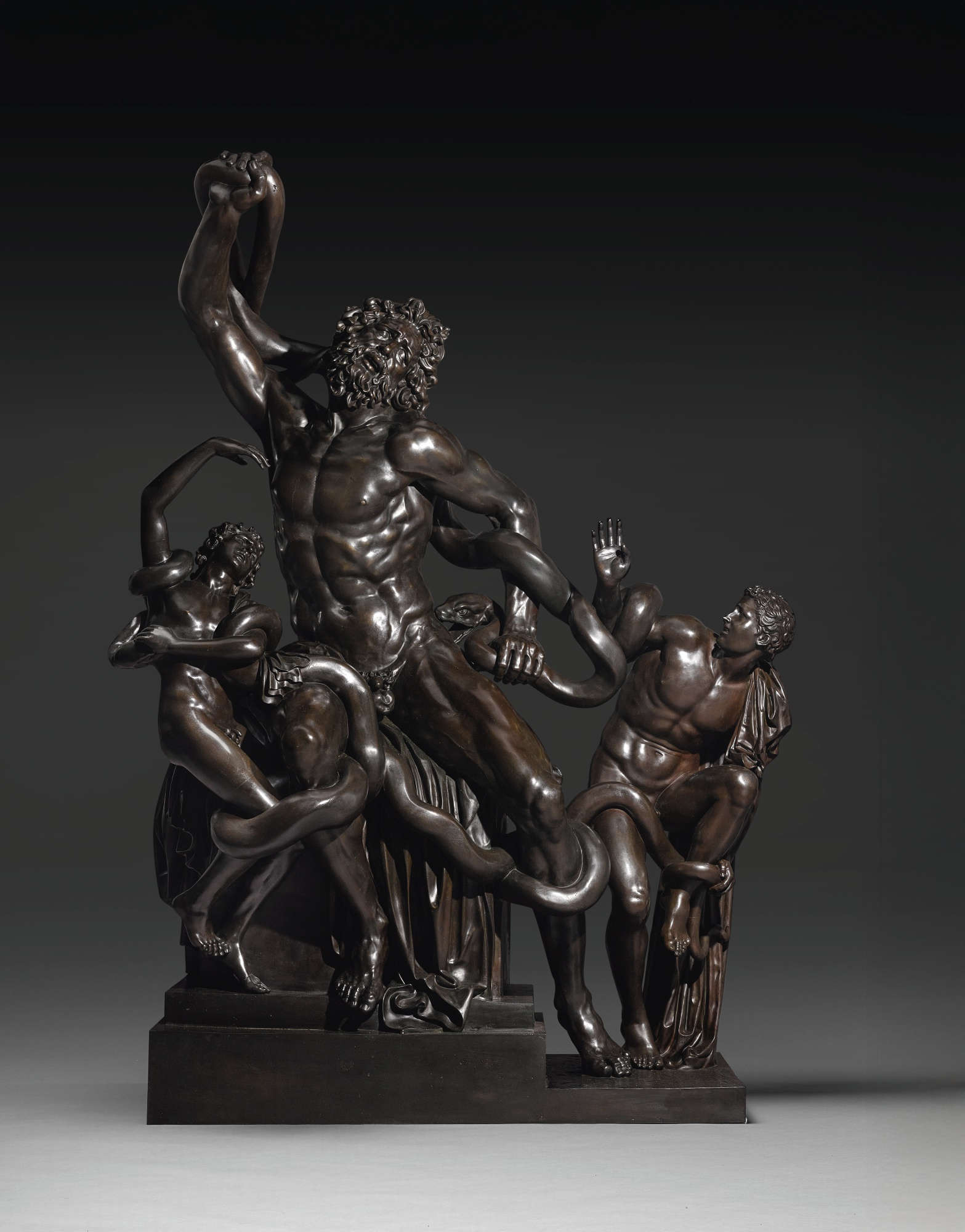
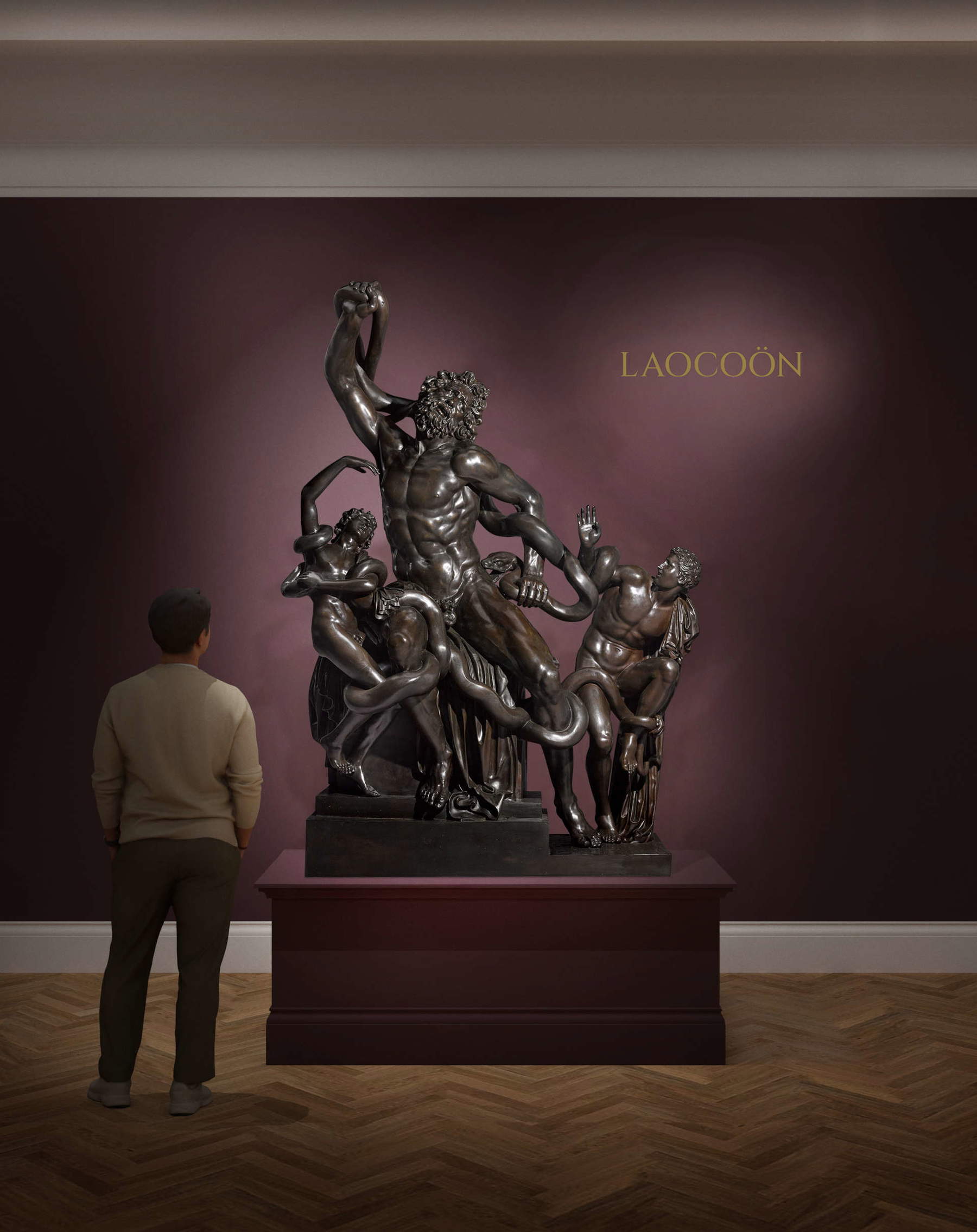
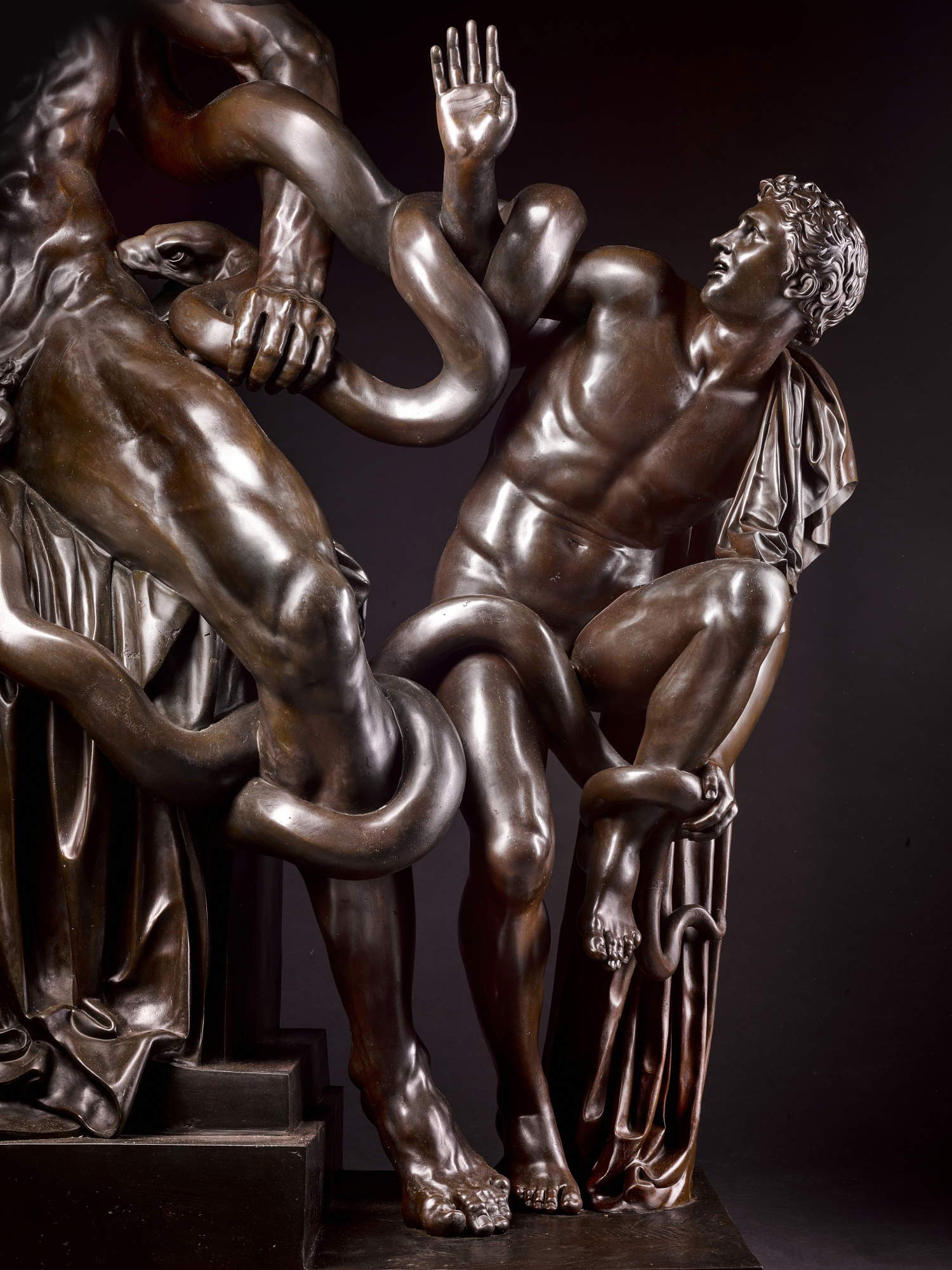
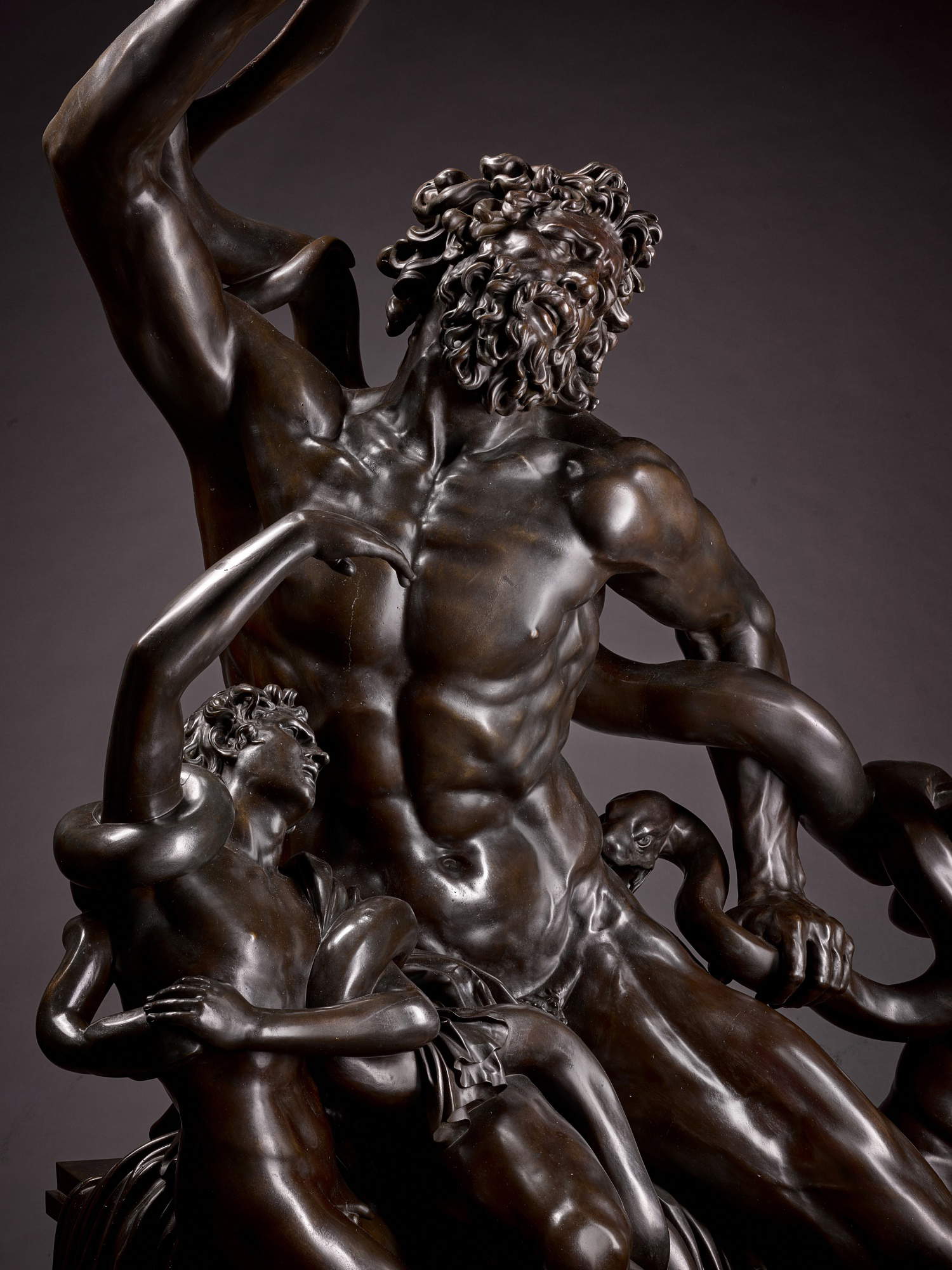
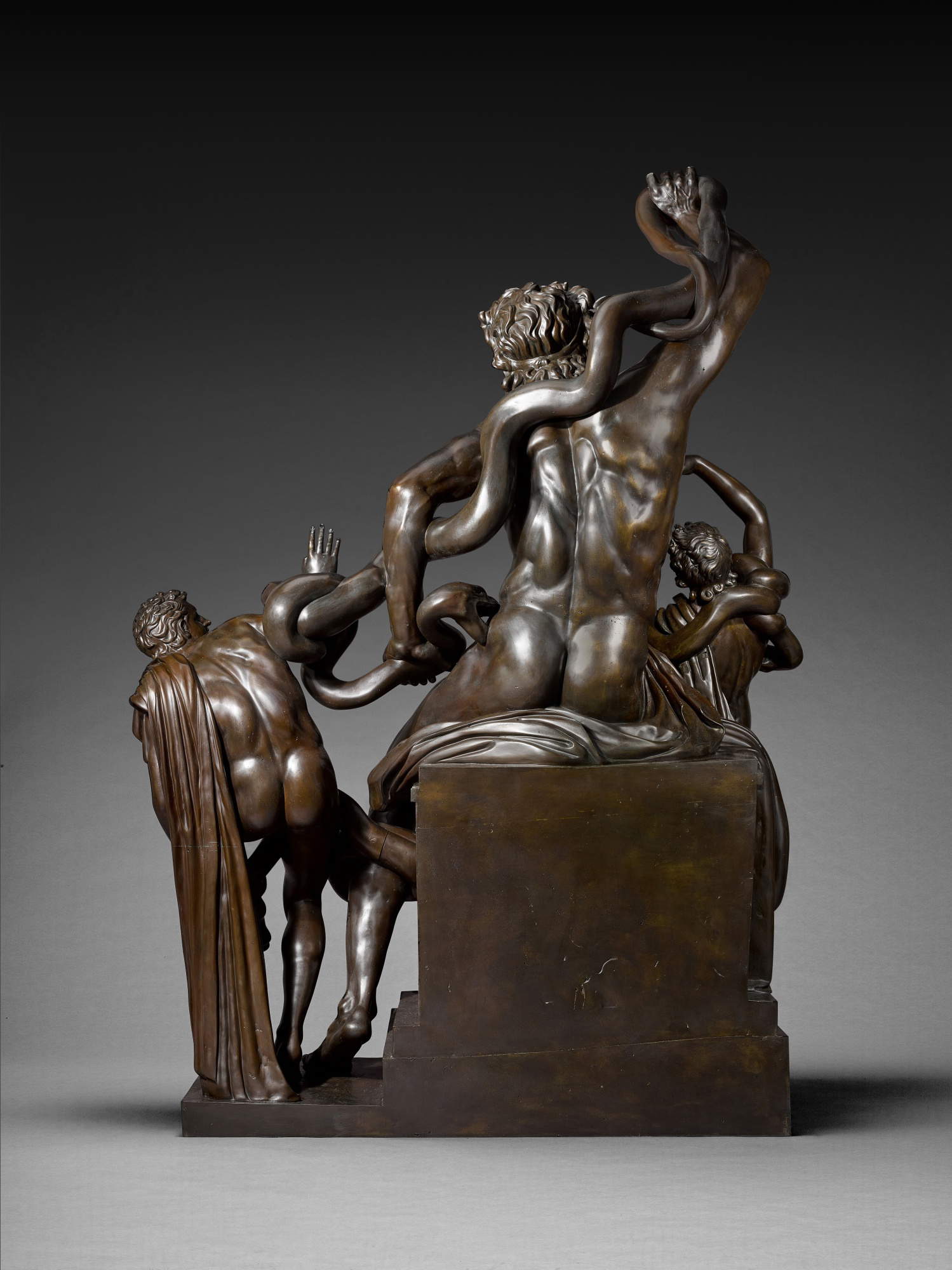
A new world record for neoclassical sculpture was set in London. Last night at Sotheby’s, the monumental *Laocoon Hamilton*, a life-size bronze by Auguste-Jean-Marie Carbonneaux (Paris, 1790–1843), was sold for 13.6 million pounds, equivalent to approximately 15.8 million euros, including auction fees. The result far exceeds the initial estimate, set between 2 and 3 million pounds (2.3–3.5 million euros), and represents the highest price ever achieved by a neoclassical sculpture on the market. Four bidders vied for the work, which stands nearly two and a half meters tall, until one collector prevailed over the other contenders.
The Hamilton Laocoön occupies a unique position in the history of European sculpture: it isthe only life-size neoclassical bronze version of the famous Laocoön group and one of only four monumental bronzes created up to that point that were directly inspired by the famous ancient original, now preserved in the Vatican Museums. The model on which it is based is one of the most famous works of classical antiquity. The marble group depicting the Trojan priest Laocoon and his two sons as they are being crushed by snakes sent by the gods was discovered in Rome in 1506 near Nero’s Domus Aurea. The work was immediately recognized as the one described by Pliny the Elder in the *Naturalis Historia* as “the most worthy of admiration among all works of painting and sculpture.” Pope Julius II quickly arranged for its acquisition for the Belvedere Courtyard at the Vatican.
The discovery of the Laocoön had an extraordinary impact on Western figurative art: some of the most important figures of the Italian Renaissance gathered around the site of the discovery, including Giuliano da Sangallo, Donato Bramante, Michelangelo Buonarroti, and Pope Julius II himself. The fame of the Laocoön gave rise, as early as the 16th century, to a long tradition of copies and reinterpretations. Bramante even organized a competition to create a replica of the sculpture, judged by Raphael and won by Jacopo Sansovino, though his bronze version has since been lost. In 1523, Baccio Bandinelli sculpted the first marble copy, originally intended as a gift from Pope Leo X to Francis I of France. According to tradition, the French monarch refused the work, hoping to receive the original instead. Bandinelli’s copy is now housed in the Uffizi. The first large-scale monumental bronze replica, however, was created in 1543 by Francesco Primaticcio for the Château de Fontainebleau.
The bronze sold by Sotheby’s thus represents an exceptional chapter in this long history of critical acclaim. When it appeared at the famous Fonthill Abbey auction in 1823, it was described as “one of the most magnificent examples of bronze in existence,” while in the catalog for the 1848 Stowe auction, it was called “one of the most important bronzes in the country.” The technical quality of the work is closely linked to the complexity of its creation. Casting a monumental bronze group composed of three intertwined figures was, in fact, one of the most difficult undertakings for a foundry of the time. Added to this is its exceptionally prestigious provenance, as the bronze passed through three of the most famous sales of major 19th-century British aristocratic collections: Fonthill Abbey, Stowe, and Hamilton Palace, from which it takes its name.
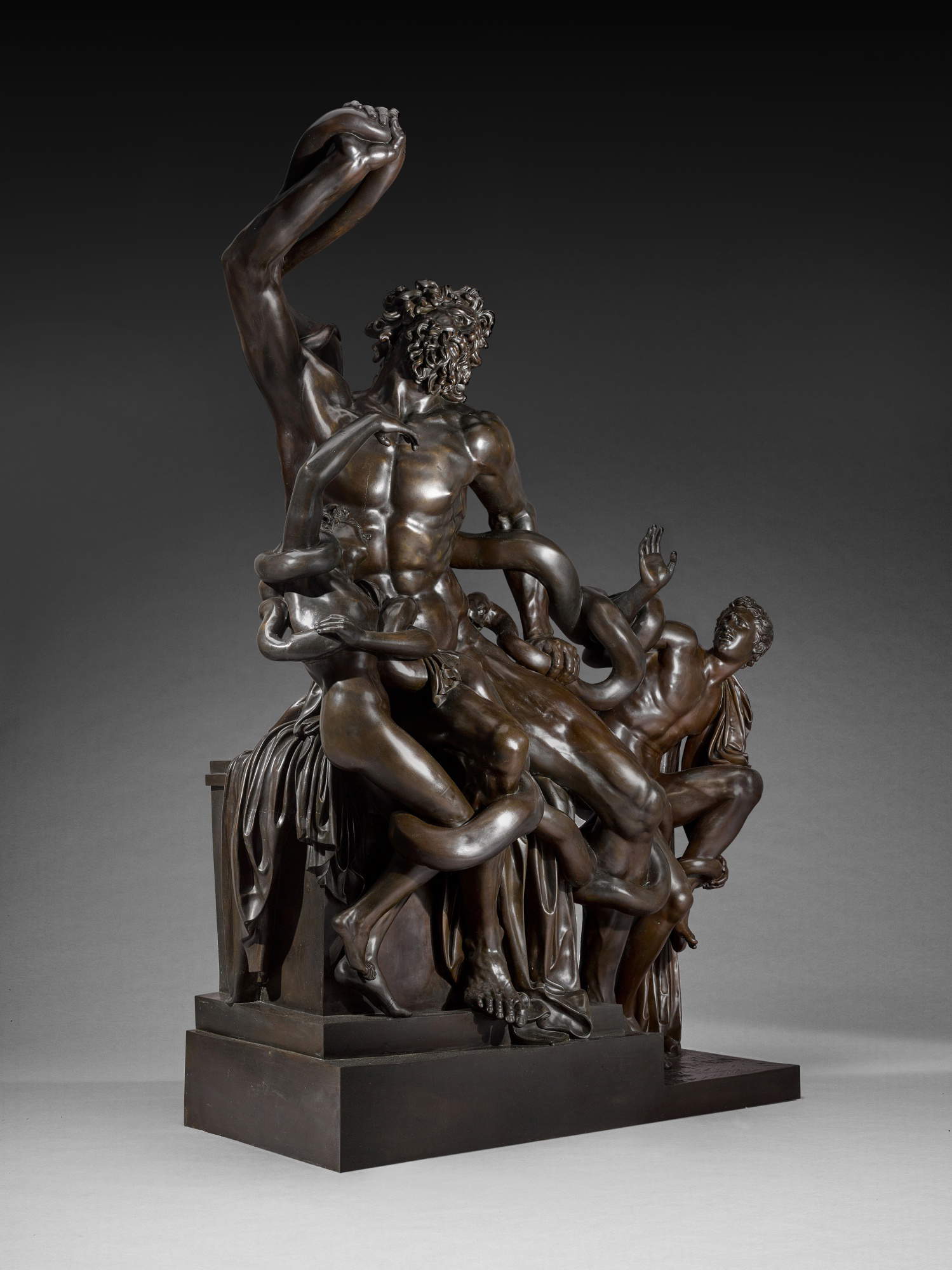
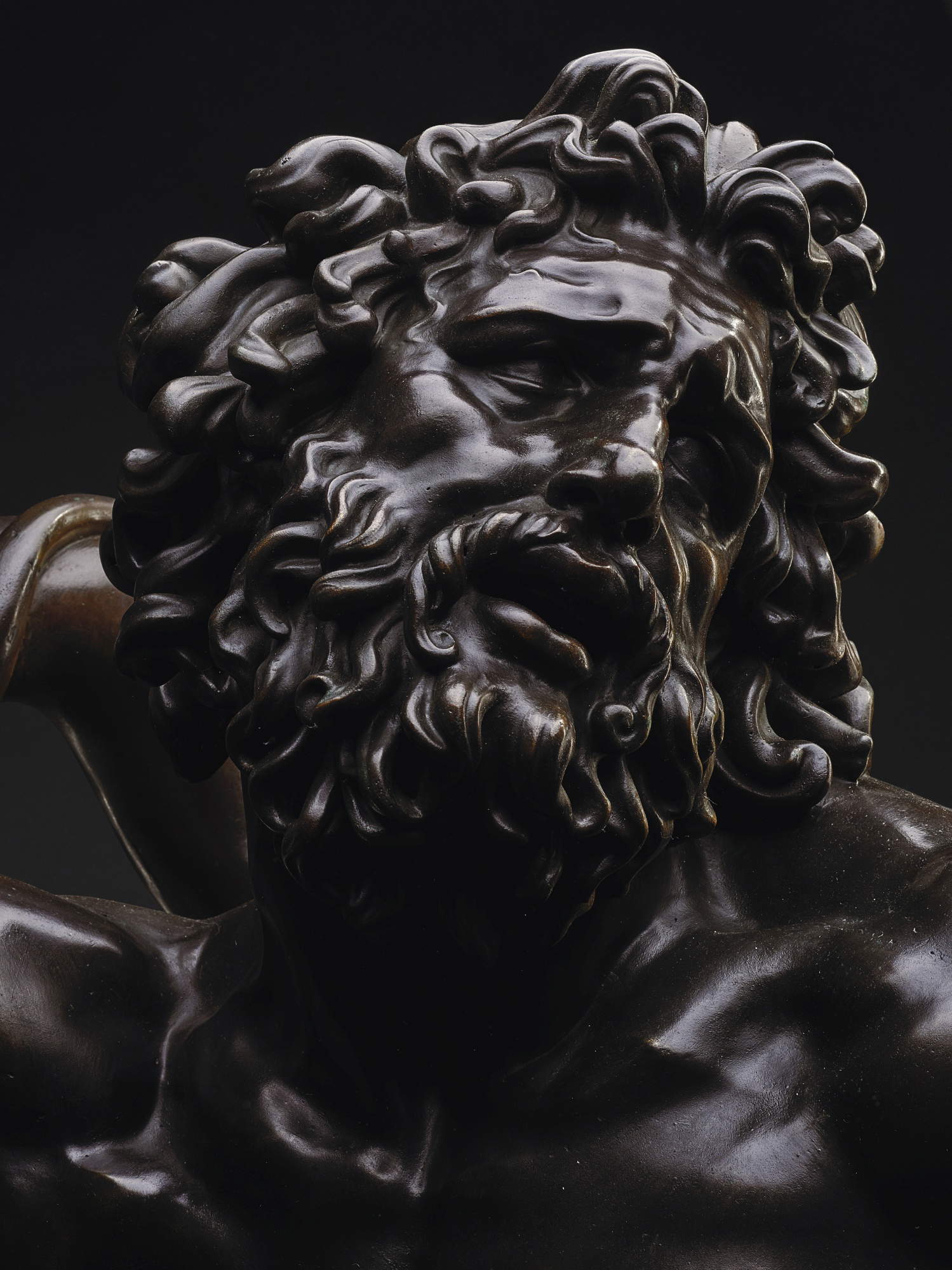
The artist who cast the work was Auguste-Jean-Marie Carbonneaux, one of the most important foundrymen active in Paris during the first half of the 19th century. The bronze bears a cold-stamped mark with his name, and contemporary sources confirm that the work was completed in 1817. This was the artist’s first documented major artistic undertaking, completed when he was just twenty-seven years old and destined to launch a brilliant career. Carbonneaux was, in fact, one of the pioneers in the use of sand casting for the creation of large monumental sculptures: compared to the traditional lost-wax technique, sand casting made it possible to tackle works of much greater size and with extremely complex compositional details. Together with Charles Crozatier, Carbonneaux helped transform the technology of French monumental casting.
The *Laocoon* marked a turning point in his professional career. According to the catalog of the 1823 Fonthill sale, it was thanks to this work that the foundryman was even awarded the Gold Medal of the Institut de France. In Parisian commercial directories from the 1820s, the *Laocoon* appears as the first work mentioned in his professional biography, preceding major public commissions such as the bronze statue of Charles XIII of Sweden in Stockholm, the design for the equestrian monument to Józef Poniatowski based on a model by Bertel Thorvaldsen, and the equestrian monument to Louis XIV sculpted by François-Joseph Bosio for the Place des Victoires in Paris. Carbonneaux also collaborated extensively with Bosio, casting some of his most famous works, including*Hercules Fighting Achelous Transformed into a Serpent*, now in the Louvre, and the bronze portrait of the young Henry IV, now in Versailles.
The casting of the bronze took place at a particularly significant moment in history. Between 1798 and 1815, the original Laocoön had in fact been transferred from Rome to Paris at the behest of Napoleon Bonaparte, along with other masterpieces of Italian art such as the Medici Venus and the Belvedere Apollo. The artistic requisitions ordered during the Napoleonic campaigns had transformed the Louvre into the Musée Napoléon, destined to become Europe’s most important museum. Historians and contemporaries described that institution as a place where one could admire, gathered in one location, some of the greatest masterpieces in the history of Western art. Thomas Lawrence called it “a place so central to Europe, where everything was open to the public with a generosity unknown elsewhere.” The emperor and Empress Josephine also visited the museum to view the Laocoön, immortalized in a famous watercolor by Benjamin Zix.
After Napoleon’s final defeat at Waterloo in 1815, the situation changed radically. Pope Pius VII commissioned Antonio Canova to travel to Paris to secure the return of the looted works. Despite opposition from Prince Talleyrand and museum director Dominique Vivant Denon, Louis XVIII was forced to authorize the return of the masterpieces to their respective countries of origin. The Laocoön returned to Rome in January 1816.
It was precisely during the brief period when the original was in Paris that Carbonneaux was likely able to create his own version. According to scholars, the bronze was cast using plaster casts taken directly from the ancient sculpture while it was on display at the Musée Napoléon. This is confirmed both by contemporary sources and by an analysis of the work’s formal characteristics. One of the most significant elements concerns the right arm of the priest Laocoon: when the ancient group was discovered in 1506, the arm was missing. Over the centuries, various reconstructions were proposed, and during the sculpture’s stay in Paris, a specific restoration was adopted based on a 17th-century cast attributed to the circle of François Girardon. The Carbonneaux bronze reproduces precisely that particular anatomical configuration, thus providing important evidence that the model was cast directly from the original between 1798 and 1816, before the group’s return to Rome. It was not until 1905 that the archaeologist Ludwig Pollak discovered the fragment of the original ancient arm, which was subsequently reattached to the Vatican marble in a position very different from that of modern reconstructions.
The collection history of the Hamilton Laocoön also adds to the work’s appeal. According to the catalog of the 1848 Stowe auction, the bronze was commissioned by the extremely wealthy English collector George Watson Taylor through the Franco-British art dealer Alexis Delahante for the considerable sum of 2,000 pounds, an extraordinary sum for the time (equivalent to about 150,000 pounds today, an extremely high price for a sculpture at that time). Although no documents definitively confirm this commission, Watson Taylor is known to have stayed in Paris in 1818, purchasing paintings by the Old Masters and Sèvres porcelain.
Delahante certainly played a key role in the work’s dissemination. The bronze was on display in his Parisian gallery, and it was likely he himself who arranged its 1821 sale in London at Harry Phillips’ auction house—perhaps after Watson Taylor, having fallen on hard times, had renounced the purchase.
Throughout the nineteenth century, the monumental group passed through some of the most renowned British aristocratic collections, establishing a provenance of extraordinary prestige that has certainly contributed to the price achieved on the market today. However, the catalog for the 1848 Stowe sale also contained an error that was bound to cause confusion in subsequent scholarship. The work was in fact attributed to Charles Crozatier rather than to Carbonneaux. This attribution was repeated in subsequent catalogs, including the Hamilton Palace sale. However, the presence of Carbonneaux’s original mark and published accounts from when the foundryman was still alive now allow us to confidently attribute the casting to Auguste-Jean-Marie Carbonneaux himself.
With the result achieved at Sotheby’s, the Hamilton Laocoön not only sets a new financial record but also draws attention back to one of the most important examples of the neoclassical revival of monumental sculpture, demonstrating once again how the Laocoön’s enduring popularity, more than five centuries after its rediscovery, to exert an extraordinary influence on art history and international collecting.
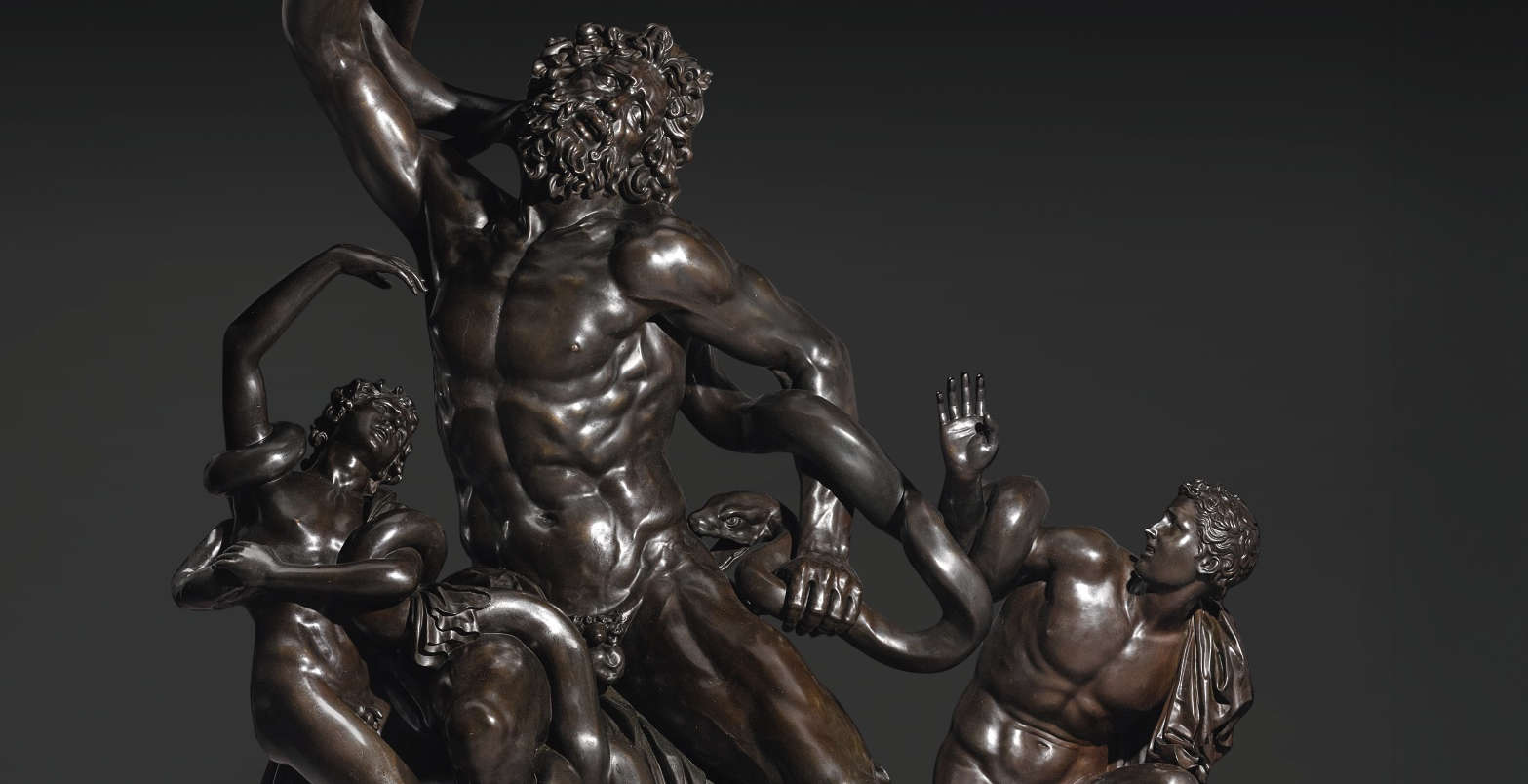 |
| Hamilton's record-breaking "Laocoön": It is the most expensive neoclassical sculpture ever sold at auction |

Warning: the translation into English of the original Italian article was created using automatic tools. We undertake to review all articles, but we do not guarantee the total absence of inaccuracies in the translation due to the program. You can find the original by clicking on the ITA button. If you find any mistake,please contact us.























 IT
IT FR
FR DE
DE ES
ES CN
CN


