





Three major sculptures by Robert Rauschenberg (Port Arthur, 1925 – Captiva Island, 2008) are joining the ARTIST ROOMS collection, a collection of modern and contemporary art established in 2008 and managed by the Tate in London and the National Galleries of Scotland in Edinburgh, , thanks to a donation from the Robert Rauschenberg Foundation. The announcement was made jointly by the Tate and the National Galleries of Scotland, which have shared management of the collection and the program dedicated to promoting contemporary art through free exhibitions hosted in museums and galleries across the United Kingdom since 2008. The works will be presented to the public for the first time starting September 20, 2026, at Tate Modern, as part of a new monographic exhibition dedicated to one of the leading figures in late 20th-century art. The exhibition is part of an international program of events organized to celebrate the centennial of the American artist’s birth and represents one of the main highlights of the commemorations.
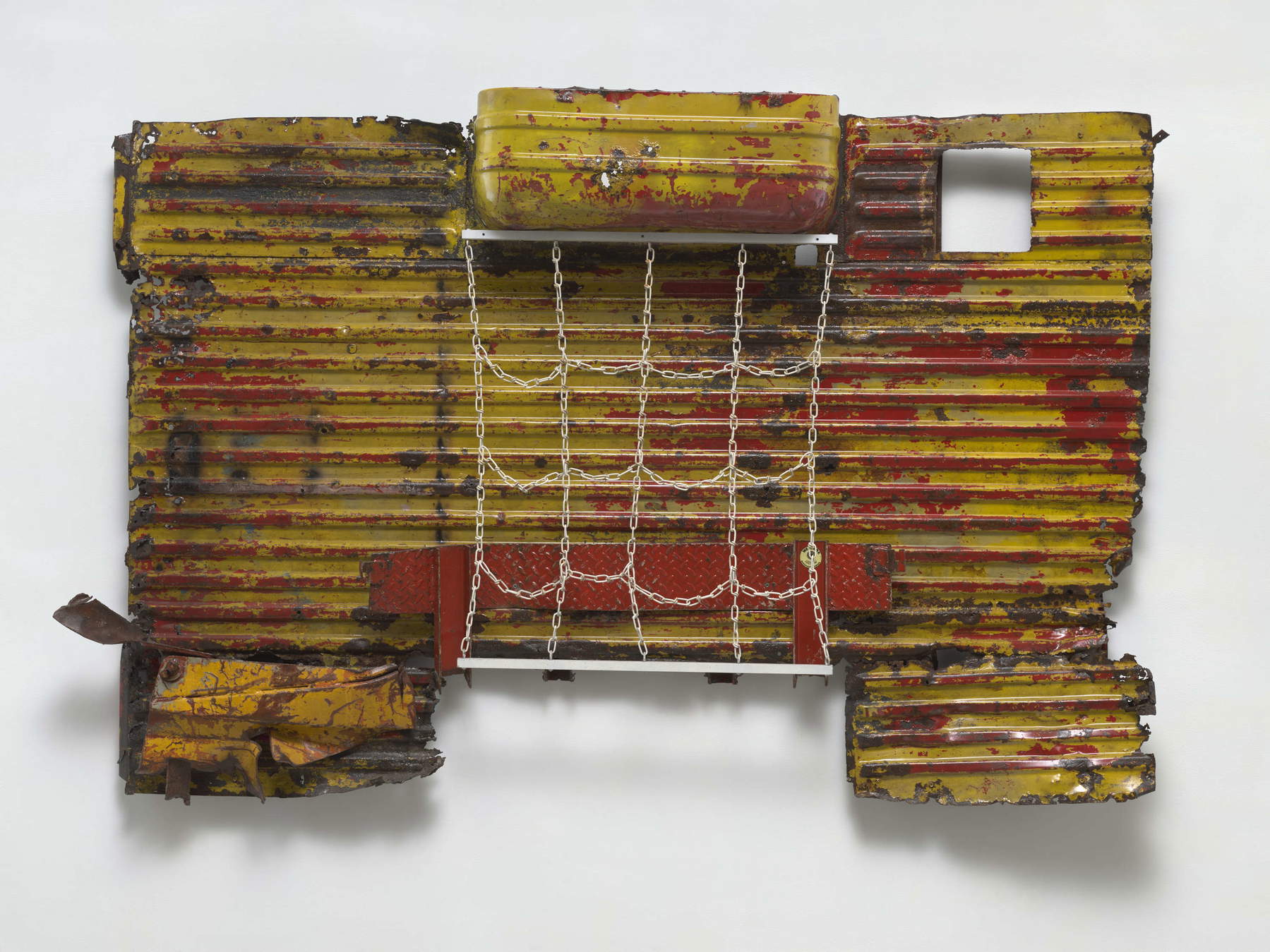
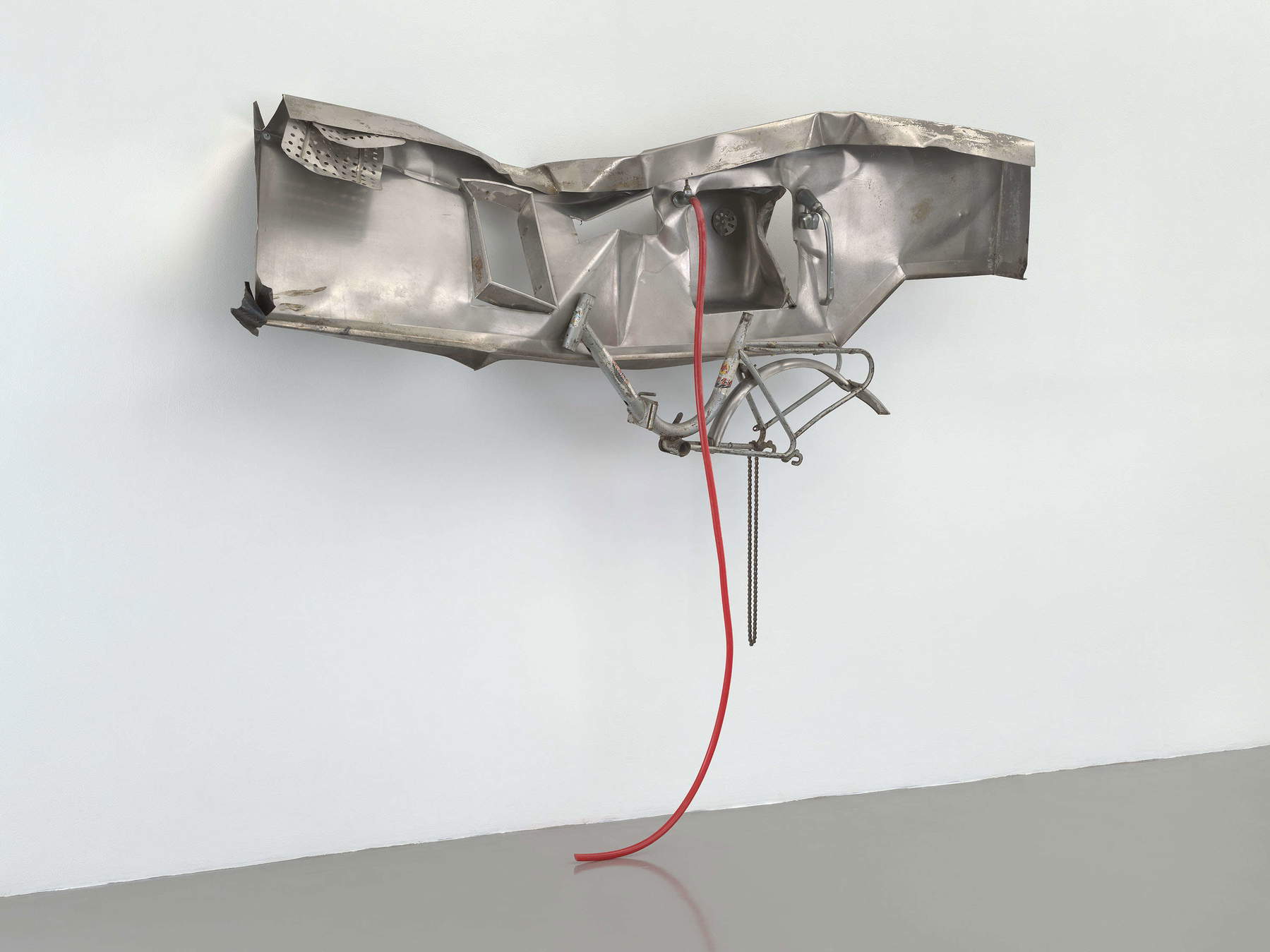
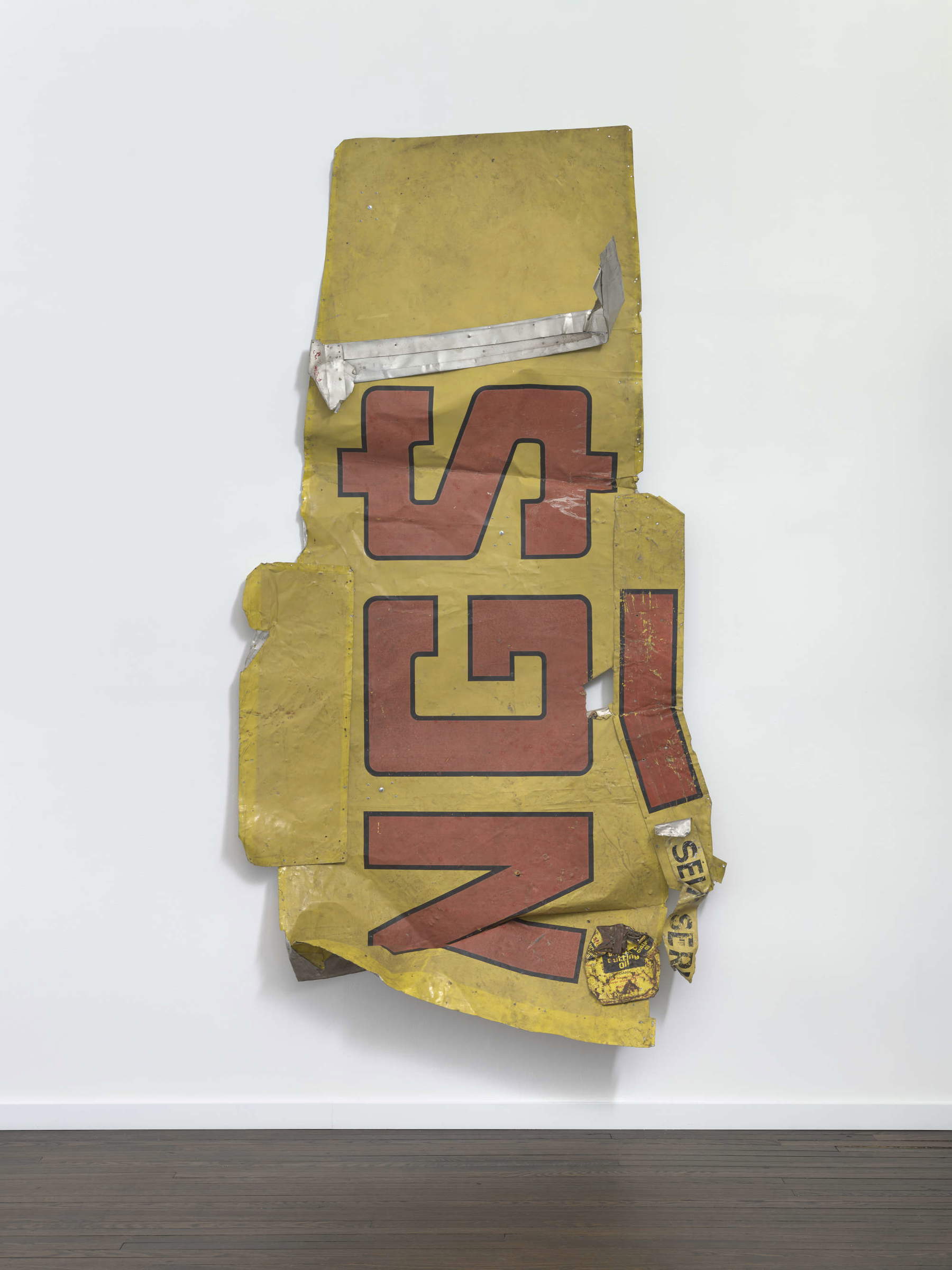
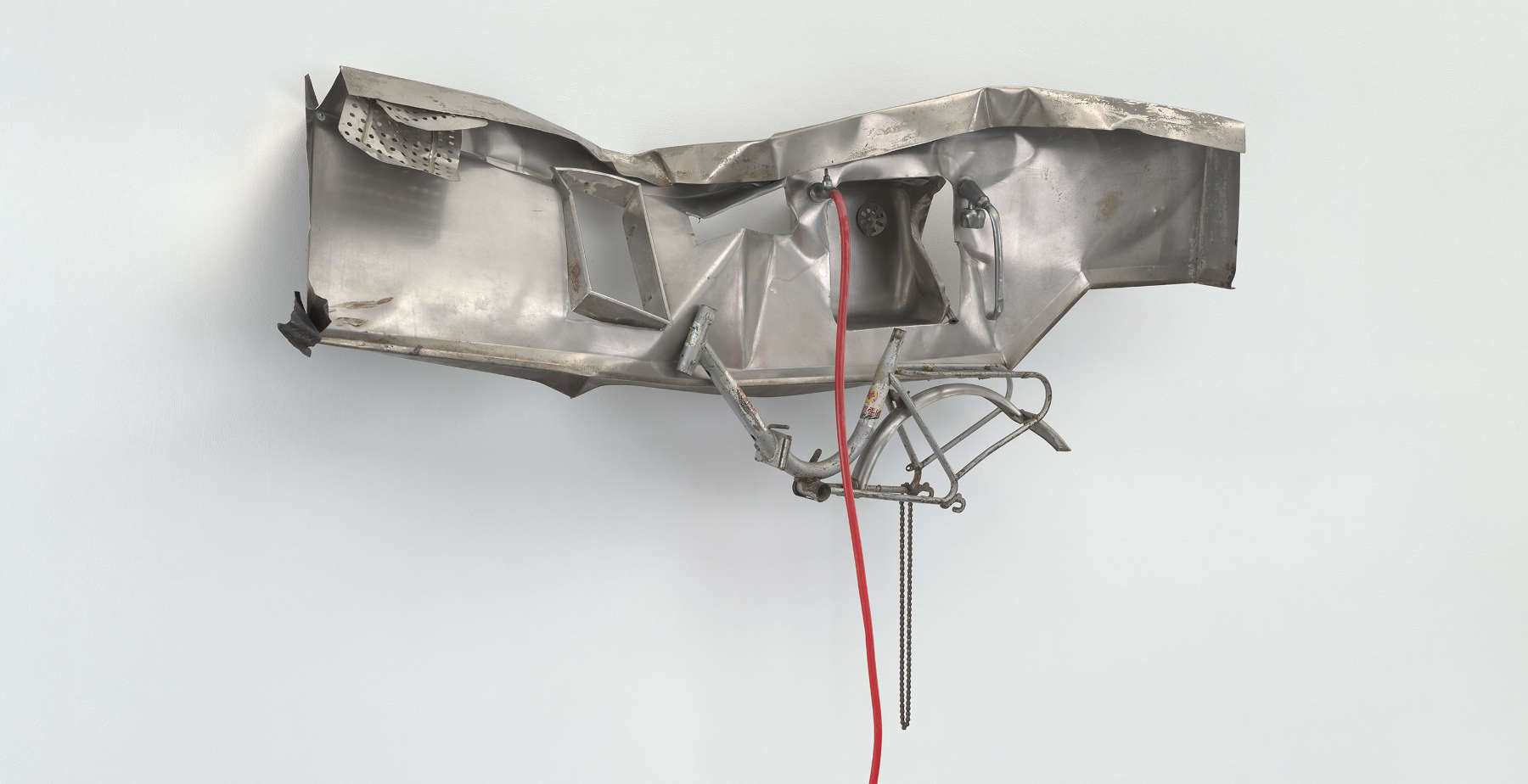
The three donated works belong to the famous “Gluts” series and are titled *G-I Glut* (1986), *Rasputin’s Revenge Early Winter Glut* ( 1987 ) , and *Mobile Cluster Glut (Neapolitan)* (also 1987). These works are considered among the most significant of Rauschenberg’s late period, in which the artist reflects on consumption, industry, and the economic and environmental consequences of contemporary society.
The Gluts series emerged in the second half of the 1980s, drawing inspiration from the Texas landscape, which at that time was marked by the crisis resultingfrom excess oil production. The glut of oil had, in fact, caused numerous businesses to go bankrupt, leaving the landscape littered with abandoned gas stations, unused cars, decommissioned industrial plants, and machinery that had outlived its purpose. It was precisely by observing these remnants of the American economy that Rauschenberg began collecting scrap metal and recycled materials, transforming them into works of art. Through these sculptures, the artist sought to expose the contradictions of consumerism and uncontrolled production, inviting the public to reflect on the relationship between economic growth, waste, and sustainability. Rauschenberg himself explained the meaning of the project with words that remain highly relevant today: “It is an age of excess. Greed is rampant. I am simply trying to highlight it, trying to awaken people.”
Considered one of the most influential American artists of the postwar period, Robert Rauschenberg made a decisive contribution to redefining the language of contemporary art, breaking down the traditional boundaries between art and everyday life. Throughout his career, he incorporated everyday objects and materials drawn from daily life into his work, transforming seemingly ordinary elements into tools for artistic exploration. Among the objects he used were Coca-Cola signs, ironing boards, newspaper clippings, industrial materials, and numerous other items salvaged from urban and domestic settings. This approach helped redefine the very concept of a work of art, profoundly influencing subsequent generations of artists.
The three sculptures will officially join the ARTIST ROOMS collection, a joint project by the Tate and the National Galleries of Scotland that makes works by leading contemporary artists available for free exhibitions organized throughout the United Kingdom. Before beginning their touring journey, they will be on view at Tate Modern in a major solo exhibition dedicated to Rauschenberg, open to the public free of charge from September 20, 2026, through the end of 2027. The exhibition will bring together over twenty-five works from different phases of the artist’s career, offering a broad overview of his artistic practice. The exhibition will feature paintings, sculptures, prints, kinetic works, and light-based works, drawing from both the Tate’s collections and loans from the Robert Rauschenberg Foundation.
The exhibition will also feature rarely screened footage of the artist’s performances and his collaborations with two key figures in contemporary dance, Merce Cunningham and Trisha Brown. Through film documentation, visitors will also be able to explore Rauschenberg’s interest in the dialogue between the visual arts, performance, and movement.
This new exhibition reaffirms the long-standing relationship between the Tate and the American artist. The collaboration dates back to 1969, when the museum acquired Rauschenberg’s first silkscreen painting, and has grown over time, culminating in the major retrospective organized in 2016.
Gregor Muir, Director of Collections at the Tate, welcomed the donation from the Robert Rauschenberg Foundation. “We are delighted that the Robert Rauschenberg Foundation has chosen to celebrate the artist’s centennial with this extraordinary gift of three sculptures of significant importance. The works in the ARTIST ROOMS collection are not only exhibited at Tate and the National Galleries of Scotland—as will be the case this fall at Tate Modern—but are also made available to arts organizations throughout the United Kingdom, reaching the widest possible audience in the years to come.”
Venda Pollock, Director of Collections and Research at the National Galleries of Scotland, also highlighted the value of the donation. According to Pollock, the works in the Gluts series “are powerful reflections on consumption, industry, and change, and continue to resonate with surprising relevance even today. We are deeply grateful to the Robert Rauschenberg Foundation for the gift of these three exceptional sculptures. These works will be featured in ARTIST ROOMS exhibitions across the country, ensuring that Rauschenberg’s bold and questioning spirit continues to inspire new generations. They will enrich the ARTIST ROOMS collection and our ability to share the work of one of the most renowned postwar artists.”
According to Courtney J. Martin, executive director of the Robert Rauschenberg Foundation, “This donation will enrich the collection of Rauschenberg’s works already held by the Tate, broadening our understanding of his artistic practice. These three works, forged from the remnants of a particular moment, invite us to reflect on what we value and what we discard. Collaboration and intentionality were central to the artist’s ethos. On the occasion of the centennial of his birth, we are honored to collaborate with the Tate and the National Galleries of Scotland through ARTIST ROOMS, sharing these ideals. In the coming months, we will further commit to reaching new audiences with whom to share his art and ideas around the world.”
The ARTIST ROOMS calendar for the rest of the year also includes an exhibition dedicated to Andy Warhol at the Wolverhampton Art Gallery, on view through October 4, 2026, and an exhibition on Gilbert & George at The Atkinson in Southport, opening on November 7. The program will continue in 2027 with an exhibition dedicated to Roy Lichtenstein at Hay Castle in Hay-on-Wye. The exhibition will celebrate the addition to the ARTIST ROOMS collection of a group of silkscreen prints donated by the Roy Lichtenstein Foundation in 2025, reaffirming the project’s commitment to continuing to expand its collection and making the heritage of contemporary art accessible free of charge to audiences across the United Kingdom.
 |
| Three sculptures by Robert Rauschenberg donated to the Tate and the National Galleries of Scotland |

Warning: the translation into English of the original Italian article was created using automatic tools. We undertake to review all articles, but we do not guarantee the total absence of inaccuracies in the translation due to the program. You can find the original by clicking on the ITA button. If you find any mistake,please contact us.




















 IT
IT FR
FR DE
DE ES
ES CN
CN


