





The National Archaeological Museum of Sarsina (Forlì-Cesena) will reopen to the public on June 23, 2026, following a renovation project that involved both the building and the museum’s exhibits. The reopening will take place in the presence of Minister of Culture Alessandro Giuli, Luigi Gallo, director of the National Museums of Bologna—Regional Directorate of National Museums of Emilia-Romagna, former director Costantino D’Orazio, and Enrico Cangini, mayor of Sarsina.
The overall project, valued at 1.5 million euros, focused on improving the building’s seismic resilience, renovating the exhibition spaces, introducing new accessible routes, and establishing a new visual identity, which complements the museum’s existing physical accessibility. The project is part of a process of gradual modernization launched in previous months, following an initial presentation of the Rufus Hall last August and a series of special openings between the end of 2025, which attracted approximately 400 visitors through guided tours and events.
The structural work covered approximately 1,600 square meters spread across three levels. The project for consolidation, restoration, and seismic retrofitting was overseen and directed by engineer Massimo Mariani. The work involved bracing the rooms with passive tie rods attached to the walls, designed to connect the complex’s various masonry structures and improve the building’s response to seismic forces.
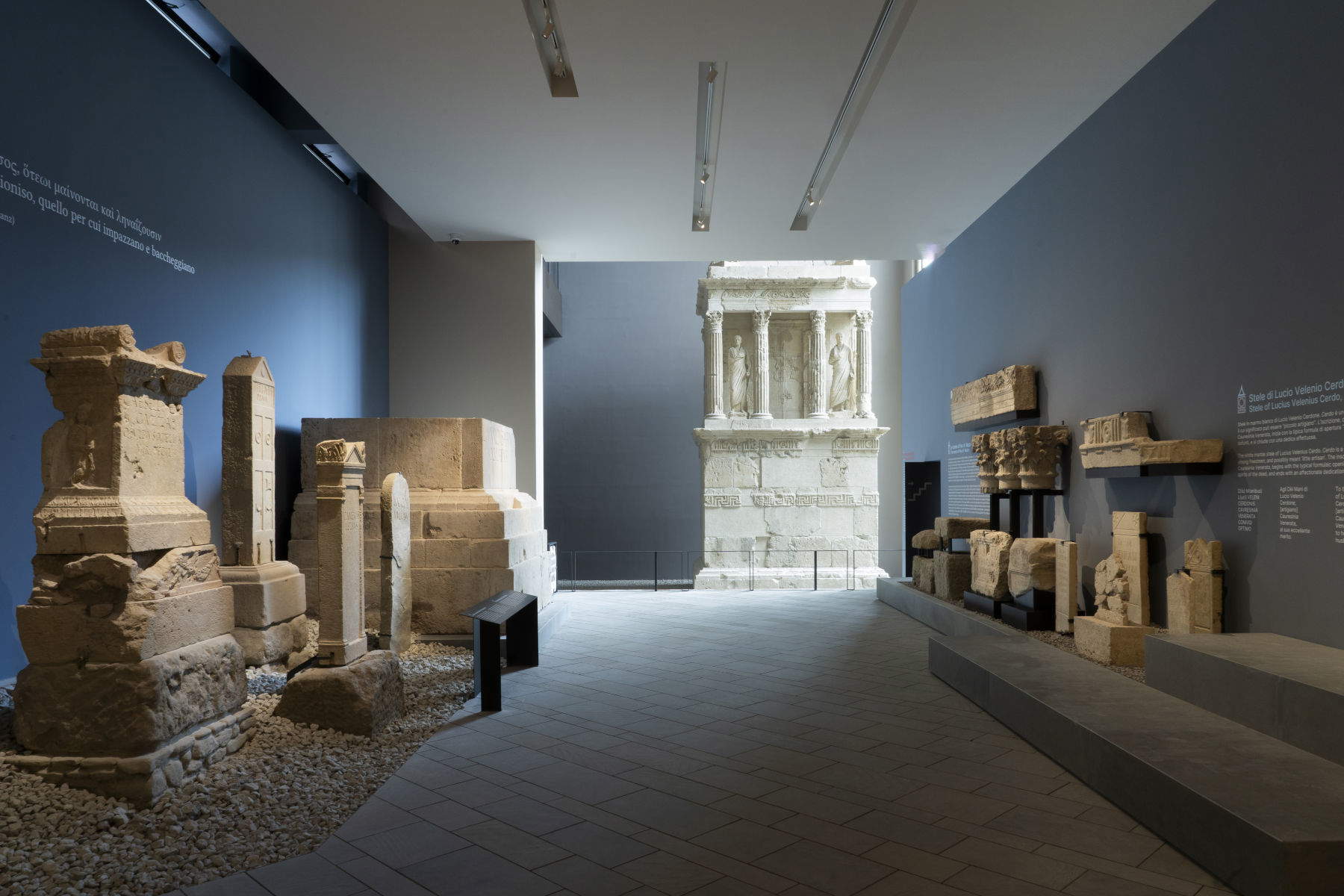
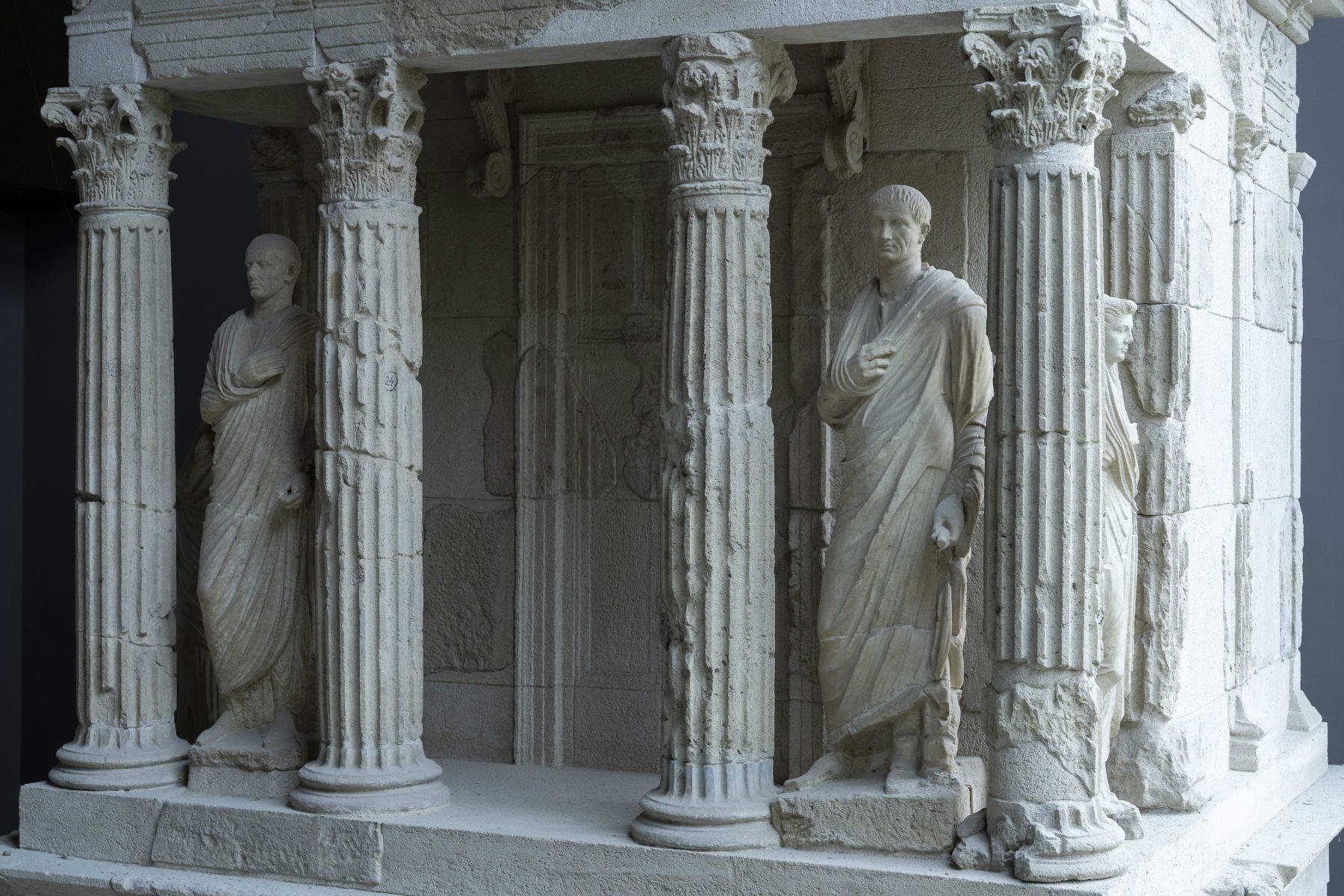
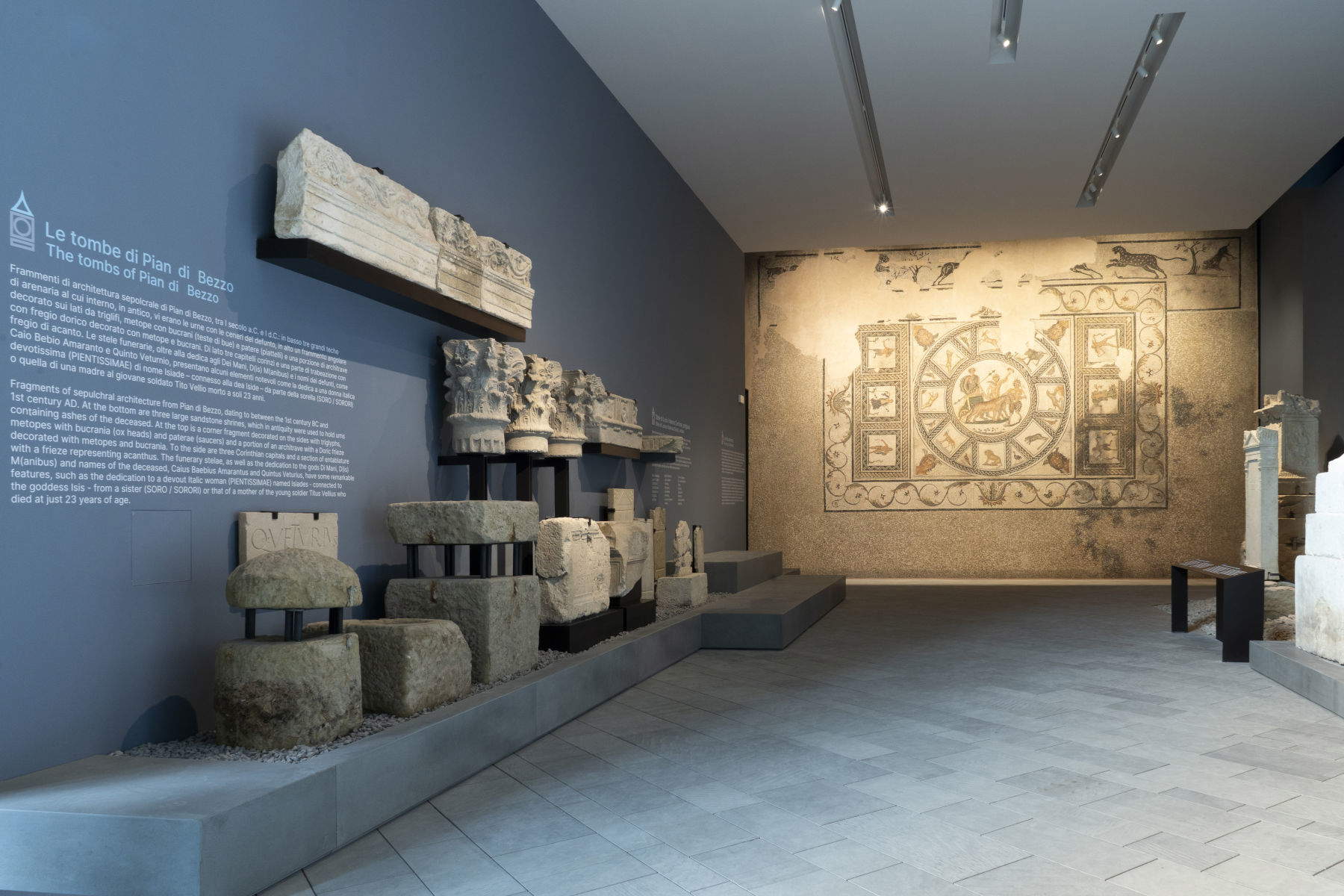
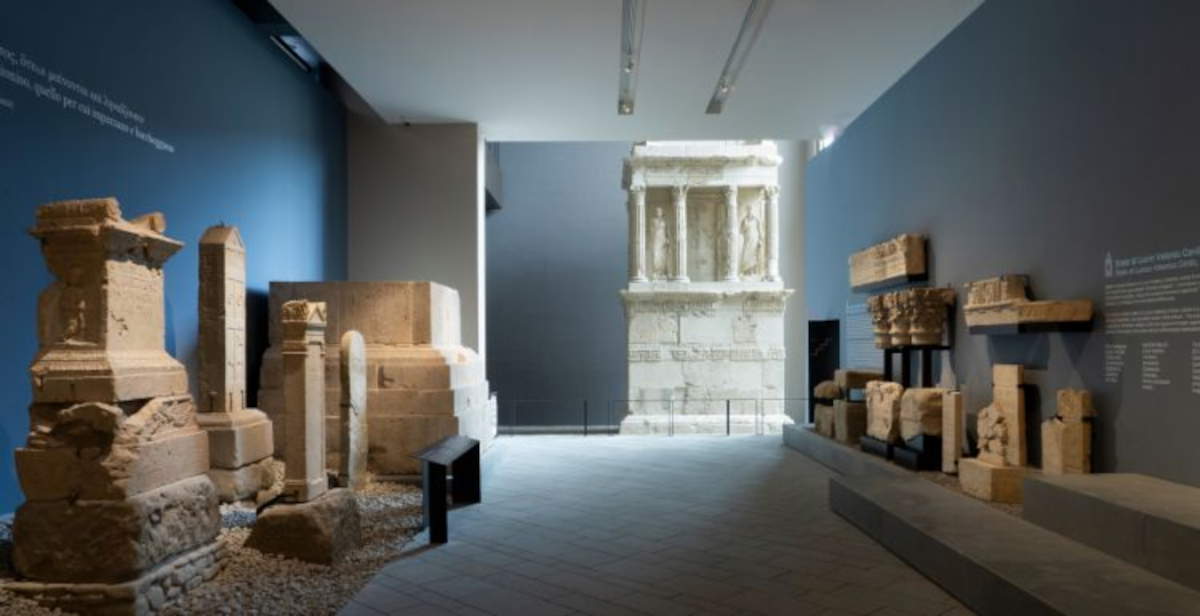
The new museum layout was designed by the architectural firm Balletti&Sabbatini. The exhibition itinerary is structured around a contemporary and understated aesthetic, with a strong focus on the clarity of the works and the visitor experience. The spaces feature a varied color palette: gray-blue on the ground floor and warmer tones on the upper levels—a choice designed to complement the materials of the artifacts and their sculptural presence. The lighting system helps define the visitor route, with solutions that aim for a balance between visibility and light control.
The lighting design was developed by architects Carolina De Camillis and Riccardo Fibbi according to criteria of energy efficiency, operational sustainability, and perceptual quality. The lighting was designed to be unobtrusive and functional for viewing the artifacts. Particular attention was paid to the Rufus Hall, where the large mausoleum is illuminated in a dramatic way and remains visible from the outside at night, serving as a connecting element between the museum and the urban fabric.
In terms of museum communication, a specific project was developed by FrameLAB – Multimedia & Digital Storytelling at the Alma Mater Studiorum University of Bologna. The new system of explanatory texts and visual identity is available in Italian and English and uses color codes to distinguish the different types of artifacts, with the aim of making the visit more intuitive and accessible.
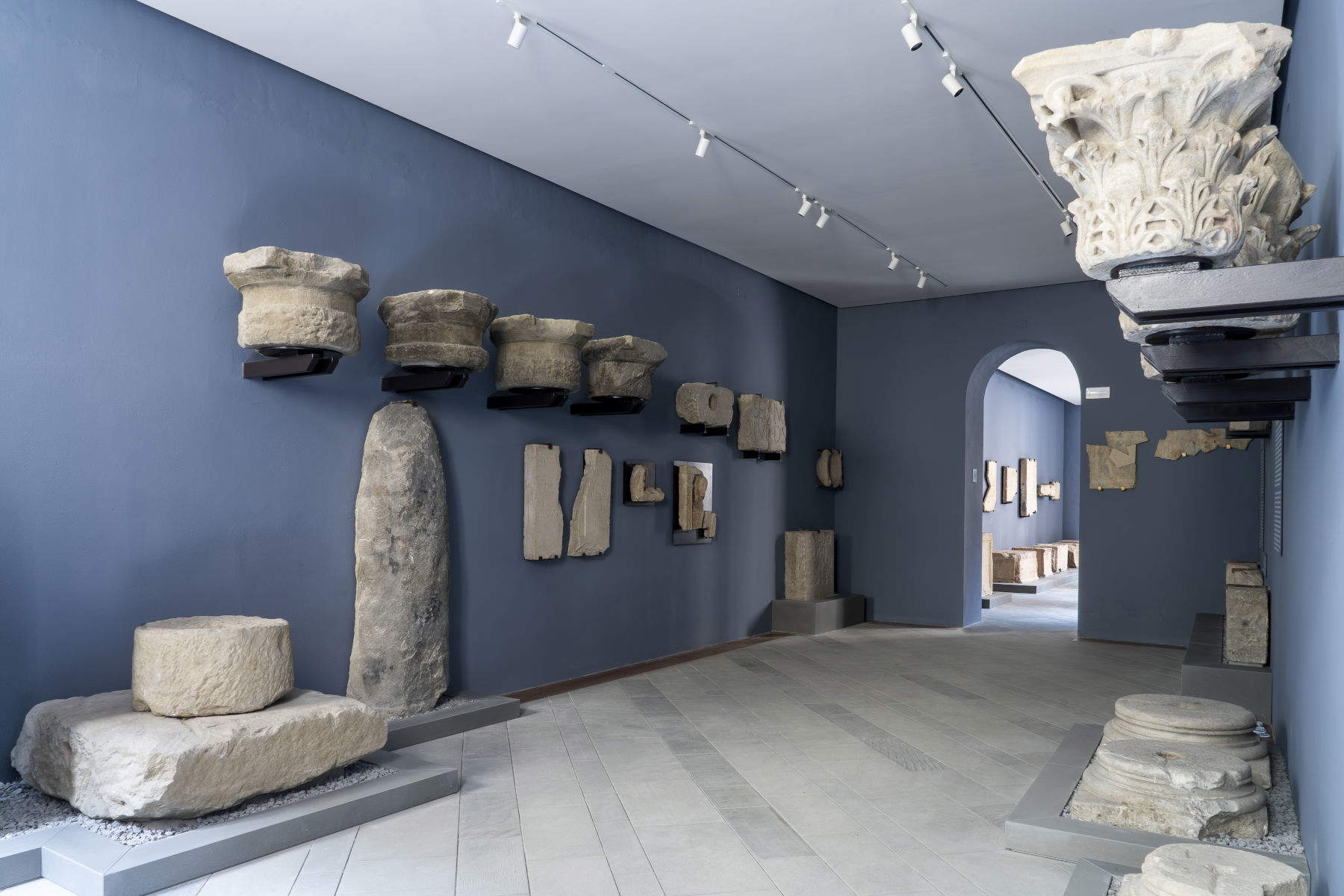
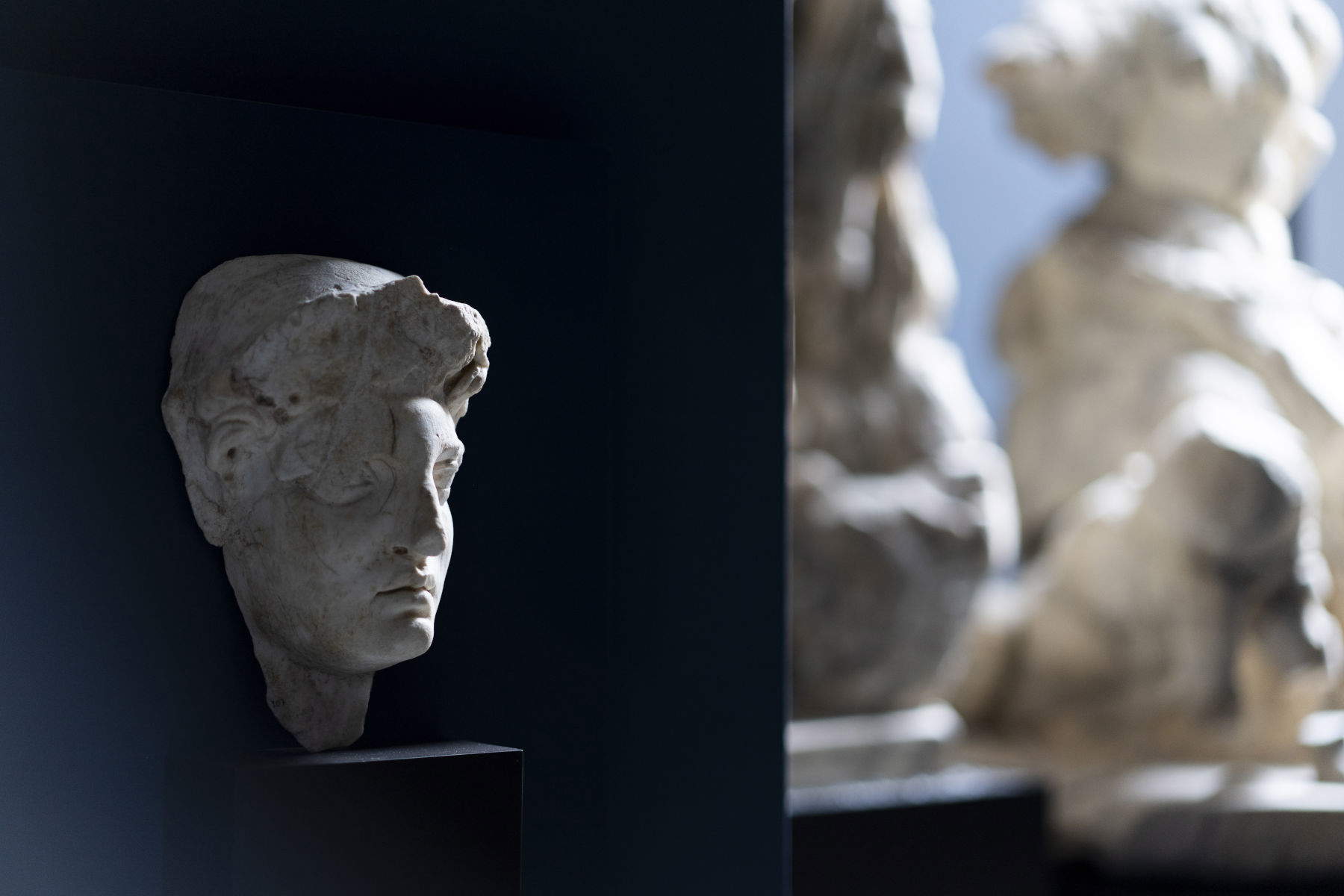
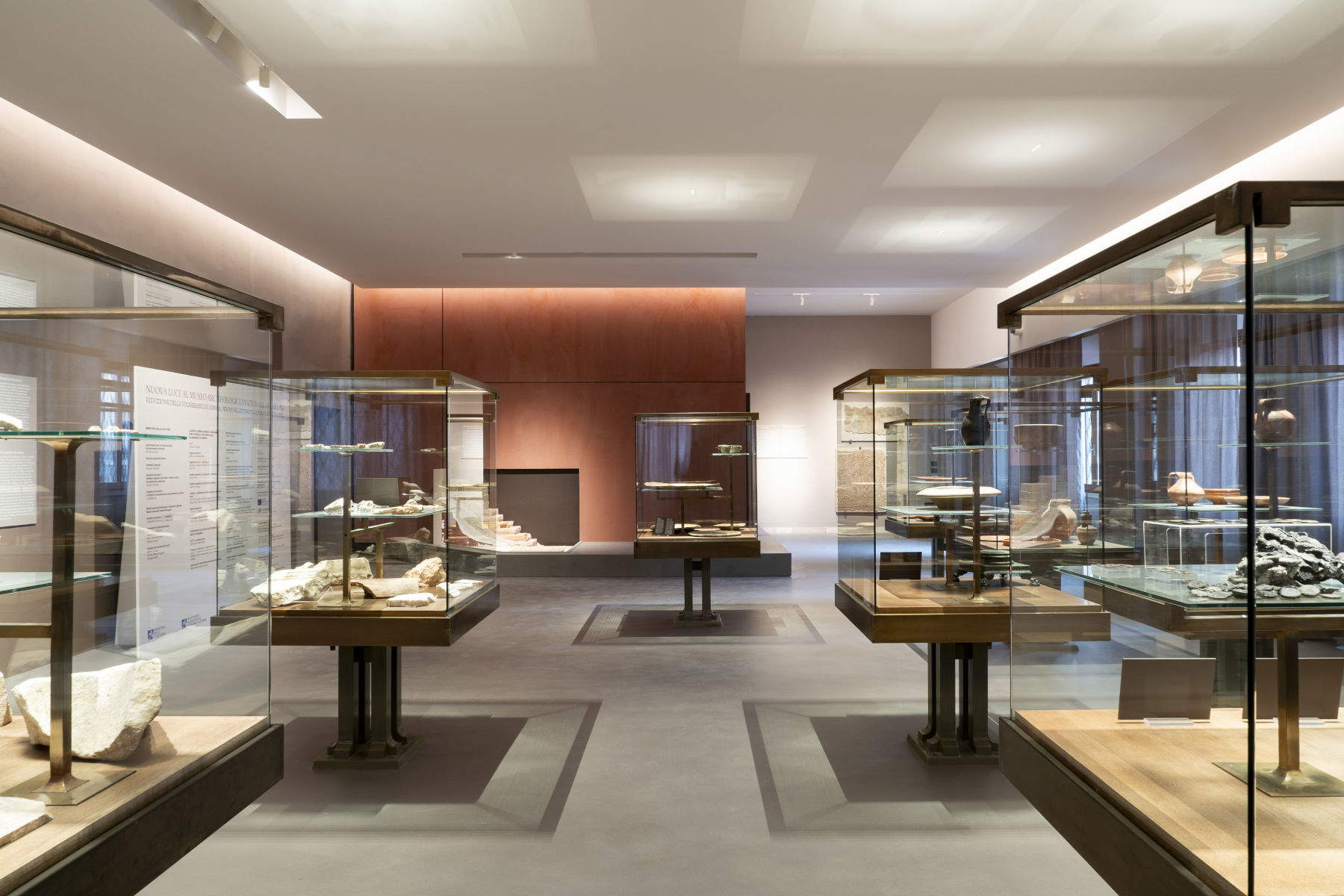
Thanks to PNRR funding and the design by architect Fabio Fornasari, additional accessibility improvements have been implemented. These include an introductory video about the museum also available in Italian Sign Language (LIS) and a tactile-visual path that guides visitors through the exhibition halls, expanding the ways in which the cultural heritage can be experienced. The museum itinerary has been updated through the work of a technical-scientific committee and in collaboration with the Superintendence of Archaeology, Fine Arts, and Landscape for the provinces of Ravenna, Forlì-Cesena, and Rimini. The update has incorporated the most recent archaeological findings, including the imposing Capitolium and evidence of the city’s subsequent phases up to the Middle Ages. The museum thus presents a narrative spanning a chronological arc from prehistory to late antiquity, with a particular focus on Roman Sarsina during its period of greatest development.
Starting June 24, promotional activities organized by the National Museums of Bologna—Emilia-Romagna Regional Directorate of National Museums—in collaboration with the Municipality of Sarsina will resume. The program includes guided tours, hands-on activities, musical events, workshops, and lectures; the schedule will be published shortly on the museum’s new website, available at the link National Archaeological Museum of Sarsina.
“The reopening of the National Archaeological Museum of Sarsina is an opportunity for a shared celebration that holds deep significance for institutions, for the community of Sarsina, and for anyone who wishes to fully understand the authentic cultural and civic character of Italy,” stated the Minister of Culture, Alessandro Giuli, “I believe it is our duty to work so that an ever-increasing number of citizens can appreciate Italy’s incomparable, layered, and invaluable cultural heritage—in this case, through exhibits that guide visitors in an accessible, welcoming, and engaging way across a chronological span ranging from prehistory to late antiquity. The works housed in this museum also symbolize what our relationship with our heritage should be: participation in a force, a wealth, a true ‘vital energy’ that embodies our sense of belonging and guides us—he concludes—toward the future.”
“The reopening of the National Archaeological Museum of Sarsina represents a moment of great significance not only culturally, but also for the life of the community,” says Luigi Gallo, Director of the National Museums of Bologna—Regional Directorate of National Museums of Emilia-Romagna. “This museum is not merely a place of preservation and study, but a space of shared identity, where the history of the region continues to be reflected and renewed through its relationship with the citizens. Reopening these completely renovated spaces today—thanks in part to the substantial financial investment by the General Directorate of Museums—means offering the community a more accessible, welcoming, and contemporary space, capable of engaging diverse audiences and connecting with new generations. At the same time, this project reinforces the museum’s role as an active cultural hub, capable of generating knowledge, participation, and a sense of belonging, thereby making a concrete contribution to the promotion of the region.”
“The National Archaeological Museum of Sarsina,” says Costantino D’Orazio, former Interim Director of the National Museums of Bologna—Regional Directorate of National Museums of Emilia-Romagna, “reopens in the spirit of sharing. The scientific knowledge of the archaeologists who worked there, the creative vision of the architects and professionals who designed the new exhibition layout, and the sense of identity shared with the community of Sarsina. We have placed storytelling at the heart of the project, with a focus on maximum accessibility.”
“This new exhibition design stems from the desire to offer the public a clearer, more engaging, and contemporary interpretation of Sarsina’s history,” says Federica Timossi, Director of the National Archaeological Museum of Sarsina. “The exhibition route guides visitors through the various phases of the ancient city while highlighting both the extraordinary quality of the artifacts and the deep connection between the museum and the local area. The goal is to offer an experience accessible to diverse audiences, one that combines scientific rigor with the art of storytelling.”
 |
| Sarsina: The National Archaeological Museum Reopens After Restoration and Seismic Retrofitting |

Warning: the translation into English of the original Italian article was created using automatic tools. We undertake to review all articles, but we do not guarantee the total absence of inaccuracies in the translation due to the program. You can find the original by clicking on the ITA button. If you find any mistake,please contact us.





















 IT
IT FR
FR DE
DE ES
ES CN
CN


