




by Redazione 04/07/2026



Categories: Museums / Disclaimer
The Musée d’Orsay is celebrating its first 40 years with a program that combines major restorations, new galleries, exhibitions dedicated to Renoir, Cassatt, and Monet, dialogues with contemporary artists such as Jenny Holzer and Richard Peduzzi, and a series of events culminating in a major December celebration curated by Thomas Jolly.

“Rêvons, c’est l’heure! ”— “Let’s dream, it’s time!”—a line taken from Paul Verlaine’s *L’heure exquise* —is the motto chosen by the Musée d’Orsay to celebrate its first forty years. This is not just an anniversary to be celebrated with a toast, but a full-fledged cultural program spanning the entire year of 2026, which through December will feature a mix of exhibitions, major restorations, new galleries, performances, and even a festive night inspired by the 1980s.
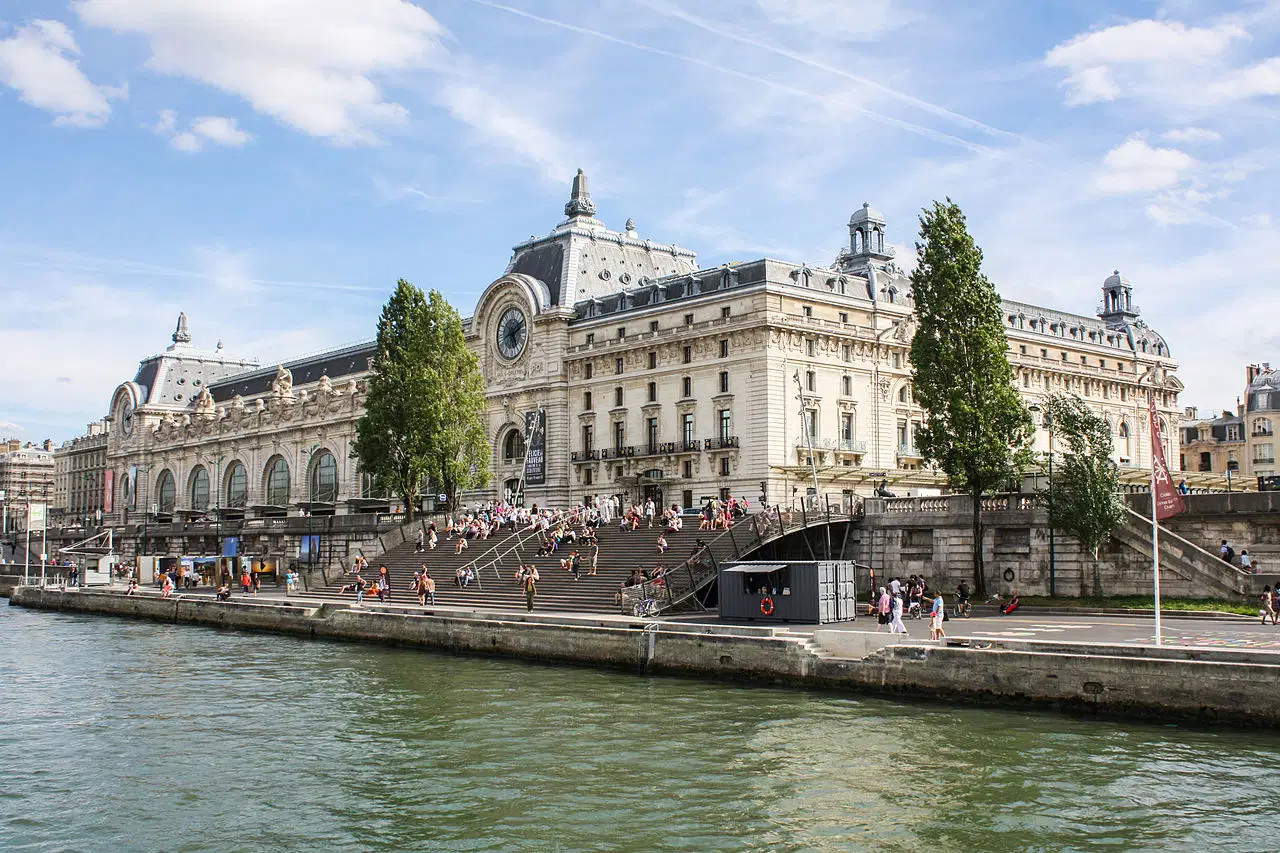
To understand the significance of this anniversary, we must go back in time, well before 1986. Where the museum stands today, the Palais d’Orsay once stood, destroyed by fire during the Paris Commune of 1871. On its ruins, architect Victor Laloux built a state-of-the-art railway station for the 1900 World’s Fair: elevators, freight elevators, electric traction, and an immense main hall 138 meters long and 32 meters high. As early as 1939, however, the station proved unsuitable for the increasingly longer trains. A period of decline followed, marked by a wide variety of uses—from a reception center for deportees and prisoners of war in 1945 to a film set for Orson Welles’ *The Trial* and an auction hall for auctioneers during the reconstruction of the Hôtel Drouot, right up to the threat of demolition in the 1970s. It was President Valéry Giscard d’Estaing, in 1977, who strongly advocated for the building’s transformation into a major museum dedicated to the second half of the 19th century. The renovation was entrusted to the firm A.C.T. Architecture (Pierre Colboc, Renaud Bardon, Jean-Paul Philippon), while the Italian architect Gae Aulenti designed the interiors. The museum opened its doors to the public on December 9, 1986, under the direction of its first chief curator, Françoise Cachin. Thus was born an institution that was, from the very beginning, “a new kind of museum”: a pioneer in integrating an auditorium into its cultural program, in fostering dialogue between painting, sculpture, photography, architecture, and the decorative arts, and in devoting itself entirely to the arts of the second half of the 19th century in all their forms.


Forty years later, the numbers speak for themselves: over 113 million visitors welcomed since 1986, nearly 167,000 works in the collection, 240 exhibitions organized, and more than 55,000 works added to enrich the museum’s holdings.
The beating heart of the 40th-anniversary program remains the permanent collection, which is being enriched this year with several major projects. The most eagerly anticipated is likely the opening, on December 4, 2026, of the new galleries dedicated to French decorative arts from 1850 to 1890, housed in the Nicole Dassault Gallery. After years of construction and restoration, furniture, bronzes, gold and silverware, enamels, ceramics, and glassworks once again bring to life the Second Empire and the early years of the Third Republic. No less significant was the opening, which took place in May 2026, of the permanent gallery “To Whom Do These Works Belong?”, dedicated to showcasing the so-called MNR — Musées Nationaux Récupération, that is, works recovered from Germany and Austria after World War II, often the result of anti-Semitic looting during the occupation. The museum still holds 225 of these works—out of the 15 returned over the past thirty years—and the gallery serves as a space for remembrance and active research into the provenance of the works, with the stated goal of continuing to identify their rightful owners.
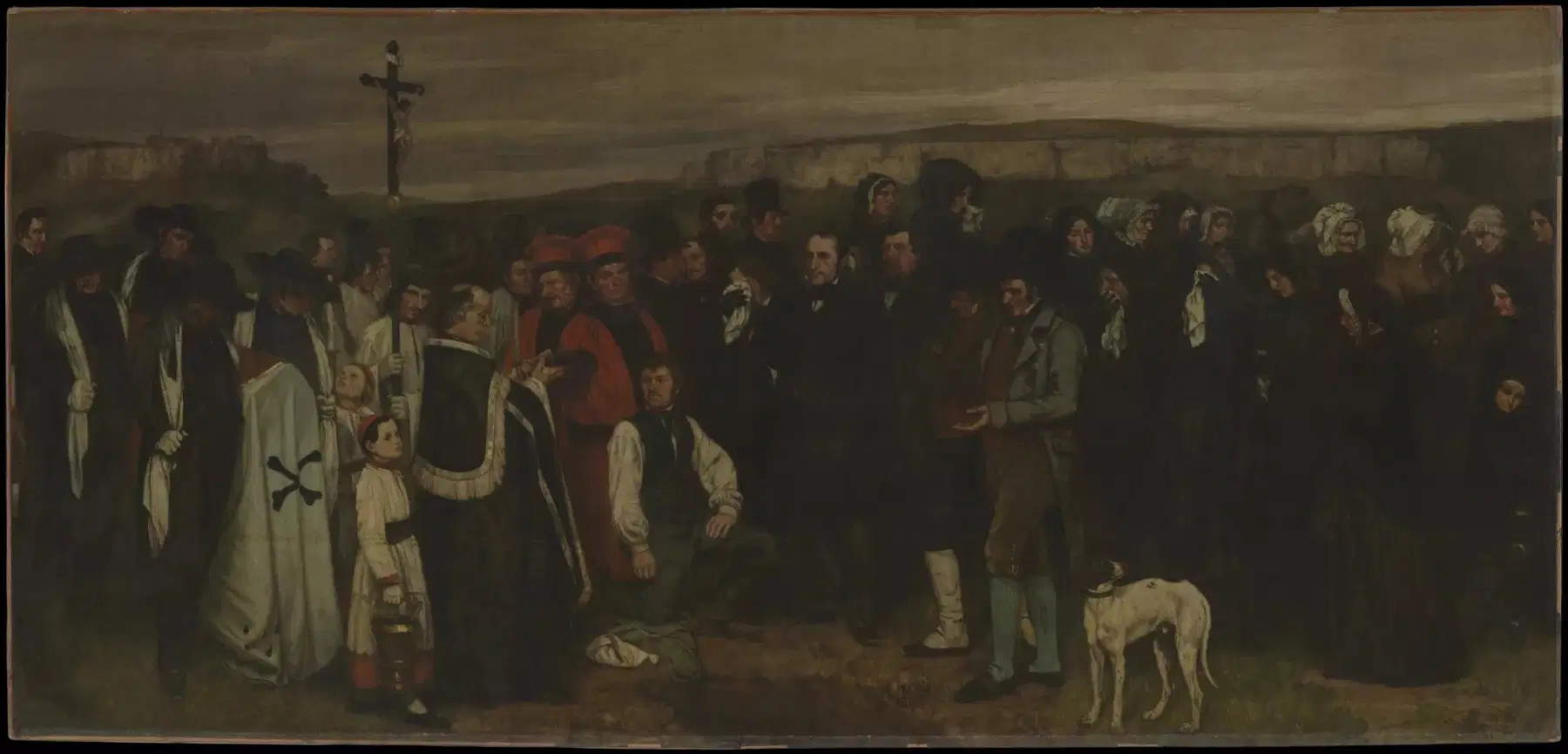
The most symbolic project of the year, however, remains the completion, on August 6, 2026, of the restoration of Gustave Courbet’s *Un enterrement à Ornans*: a project lasting approximately fifteen months on a monumental canvas measuring over three by seven meters, which had never undergone such a radical intervention since its creation in 1849–1850. The public was able to follow the stages of the restoration live, as it was conducted in collaboration with the Research and Restoration Center of the Museums of France (C2RMF): beneath layers of yellowed varnish, the original colors reemerged, along with several centimeters of paint along the edges that had been hidden by subsequent re-stretching of the canvas over the decades.
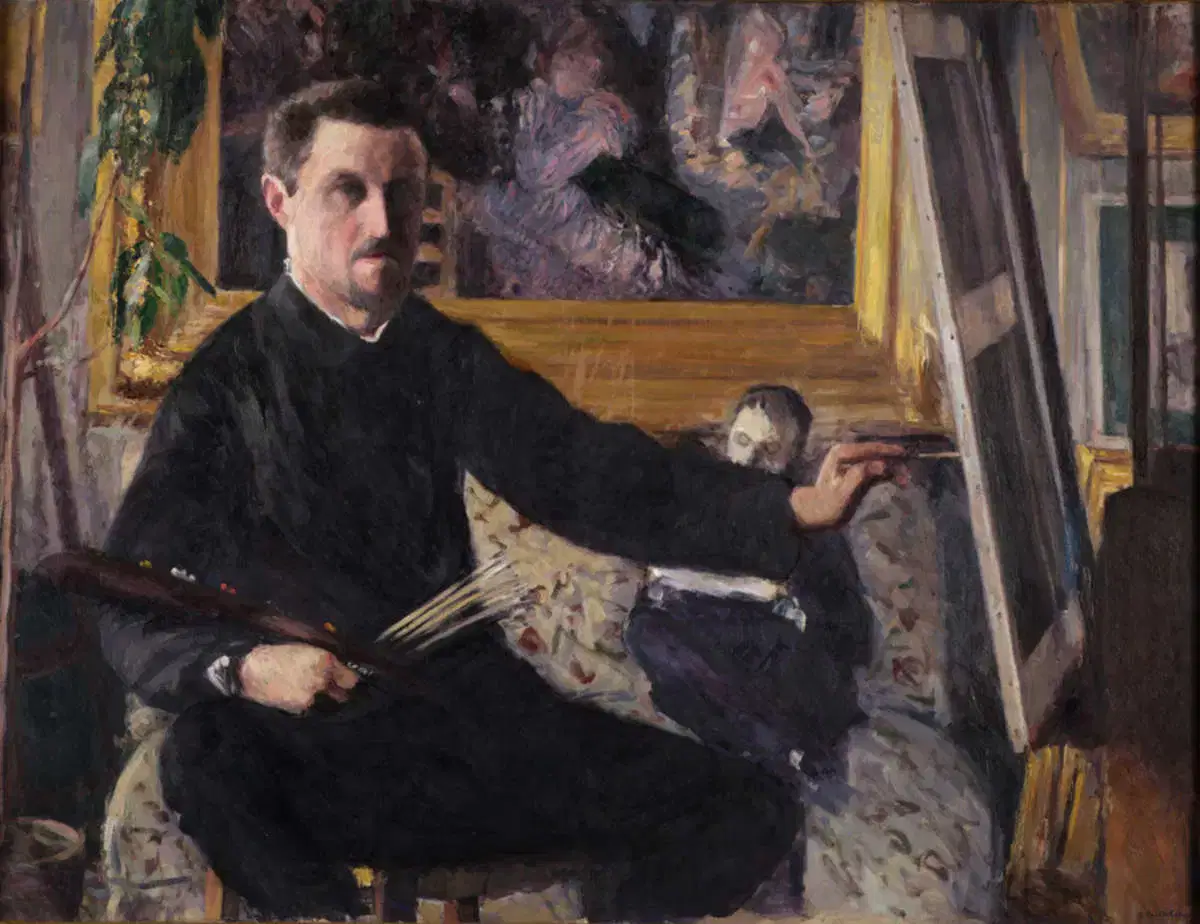
The acquisitions are equally noteworthy: among the works added to the collections in recent months are Gustave Caillebotte ’s*Self-Portrait at the Easel* (the only self-portrait by the artist exhibited during his lifetime, depicting him in his studio in front of Renoir’s famous *Dance at the Moulin de la Galette* ) and an extraordinary donation from the Kan family consisting of seventeen fans painted by great Impressionist and Post-Impressionist masters, including Degas, Toulouse-Lautrec, four by Gauguin, and seven by Pissarro.
2026 is also the Year of Impressionism. Through July, the museum is hosting two complementary exhibitions dedicated to Auguste Renoir: “Renoir and Love,” organized in collaboration with the National Gallery in London and the Museum of Fine Arts in Boston, which brings together—for the first time in forty years—fifty works from the early part of the artist’s career, and “Renoir the Draftsman,” co-organized with the Morgan Library & Museum in New York, dedicated to his work on paper—less well-known but crucial to the evolution of his art.
In the fall, the spotlight will turn to Mary Cassatt, with the exhibition *Mary Cassatt. The Independent (opening October 6, 2026), in collaboration with the National Portrait Gallery in London and the Museum of Fine Arts in Boston: a significant event, as no French national institution had ever dedicated an exhibition of this scale to this central figure of the Impressionist movement. The exhibition will feature nearly 80 works, including paintings, pastels, and prints, spanning the artist’s entire career. Drawing on previously unpublished letters and little-explored sources, the exhibition will offer a new perspective on her artistic journey and will include works from European public and private collections, as well as American paintings and pastels rarely exhibited outside the United States.
The year 2026 also marks the centennial of the death of Claude Monet, who passed away on December 5, 1926, in Giverny. Starting September 30, the Impressionist galleries on the fifth floor will host a new exhibition dedicated to the father of Impressionism, featuring 76 of his paintings and a scientific focus on five works recently studied using X-rays and infrared reflectography by the C2RMF, which reveal all the hesitations and second thoughts behind the apparent spontaneity of his painting.
Always multidisciplinary, the Musée d’Orsay has chosen to celebrate its 40th anniversary by inviting some of the most important contemporary artists to engage with its collections. American artist Jenny Holzer presents *J’ai vu* (starting October 20, 2026), a project that transforms the museum’s historic façade into a surface for light projections featuring fragments of letters by artists such as Van Gogh, Flaubert, or Zola, while inside, an LED installation will interact with the gold-leaf paintings on display in the rooms dedicated to Symbolism.
Set designer Richard Peduzzi, a longtime collaborator of Patrice Chéreau and the creator, in 1986, of the famous models of the Opéra Garnier housed at the museum, returns to the museum with the exhibition Vertigine. Richard Peduzzi at Orsay (starting October 6, 2026) offers a journey through his imaginary architectures and the sources of inspiration that shaped them. Five comic book artists, including Catherine Meurisse and Blutch, have also created original works inspired by the collections, while artists Sophie Calle and Catherine Meurisse will offer two personal and free-form interpretations of the museum in December through photography and drawing, respectively.
The anniversary also marks an opportunity to revitalize the museum’s scientific mission. In December, the major international conference “Orsay, 40 Years Later” will take place, while the historic journal 48/14—published between 1995 and 2011—will be revived; its first issue will trace the very origins of the institution. Finally, in 2027, the new Daniel Marchesseau Resource and Research Center will open, bringing together 55,000 volumes, 600 periodicals, and hundreds of linear meters of archives, open to scholars and enthusiasts without restrictions on age or educational background.
Another particularly original project is MuM’Orsay, a mobile museum created in partnership with the Art Explora Foundation: a truck converted into a traveling gallery that, starting in October 2026, will bring some twenty original works—on the theme of celebration, not coincidentally—to rural areas and outlying neighborhoods across France, often far from major museums.
The celebrations will culminate in a particularly busy December. On December 4, the new decorative arts galleries will open; on December 5 and 6, the museum will be open to everyone free of charge for a festive weekend, featuring concerts, readings, and meet-and-greets with the artists involved in the celebration program. The grand finale is set for December 12, when director and choreographer Thomas Jolly will transform the museum’s main hall into a dance floor for “Boum 1986,” an evening designed to evoke the collective energy and desire for cultural emancipation of the 1980s, the decade in which the museum was founded.
|
| The Musée d'Orsay Celebrates Its 40th Anniversary: A Restored Courbet, a Major Exhibition on Mary Cassatt, and the Traveling MuM'Orsay |
Warning: the translation into English of the original Italian article was created using automatic tools. We undertake to review all articles, but we do not guarantee the total absence of inaccuracies in the translation due to the program. You can find the original by clicking on the ITA button. If you find any mistake,please contact us.