



by Redazione 29/06/2026



Categories: News / Disclaimer
Italian artist Andrea Mastrovito has created *Gv 1,29*, a large installation made of glass, gold, and steel that will be installed in the Tower of Jesus Christ at the Sagrada Familia, completing one of the elements envisioned by Antoni Gaudí.
The artist Andrea Mastrovito (Bergamo, 1978) is the creator of Gv 1,29, the large installation depictingthe Agnus Dei, which will be placed inside the Cross atop theTower of Jesus Christ at the Sagrada Família in Barcelona—the basilica’s highest point at 172 meters. The work is the result of winning the international competition launched in 2023 by the Juncta Constructora, the organization tasked with completing Antoni Gaudí’s masterpiece.
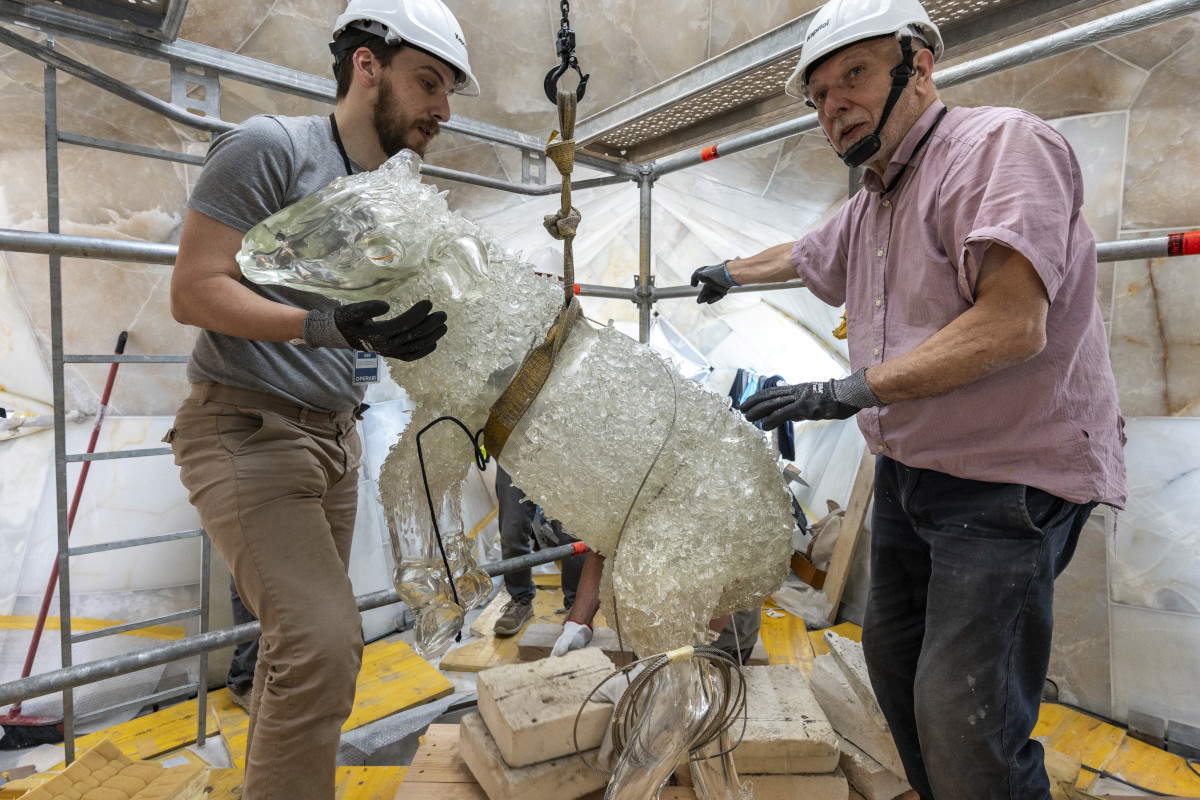
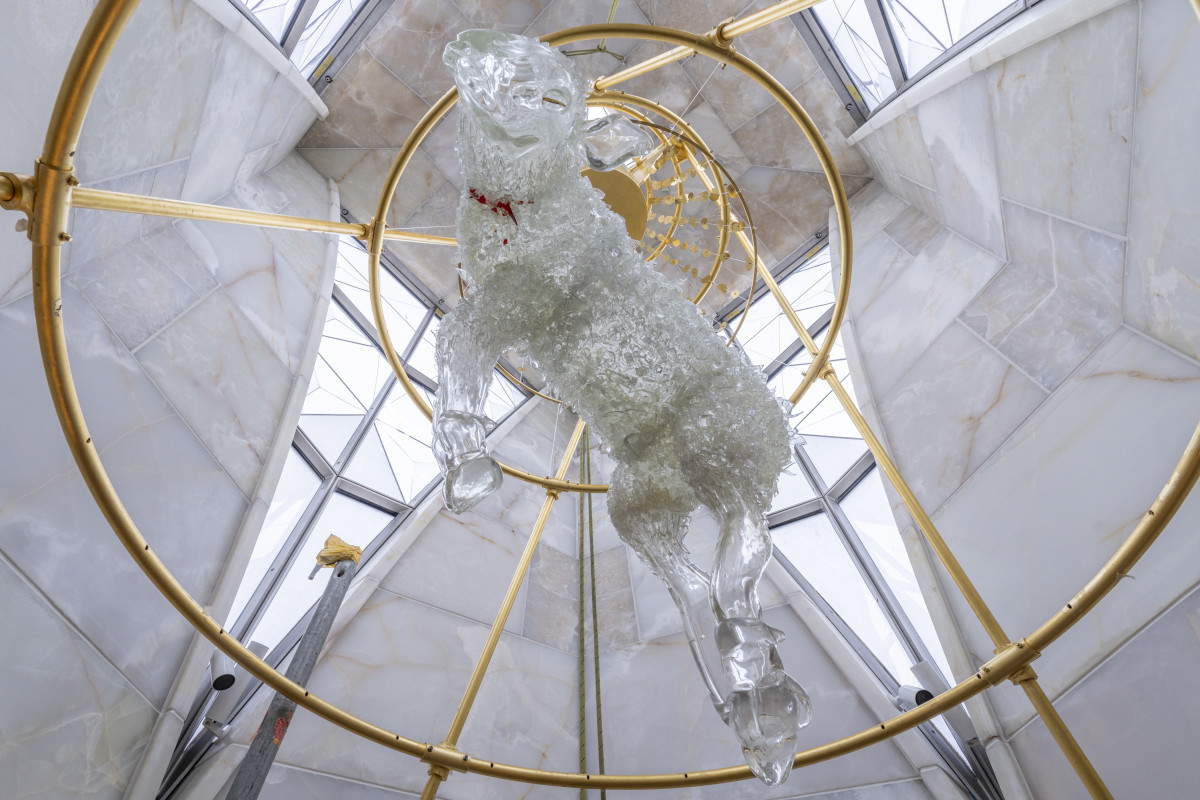
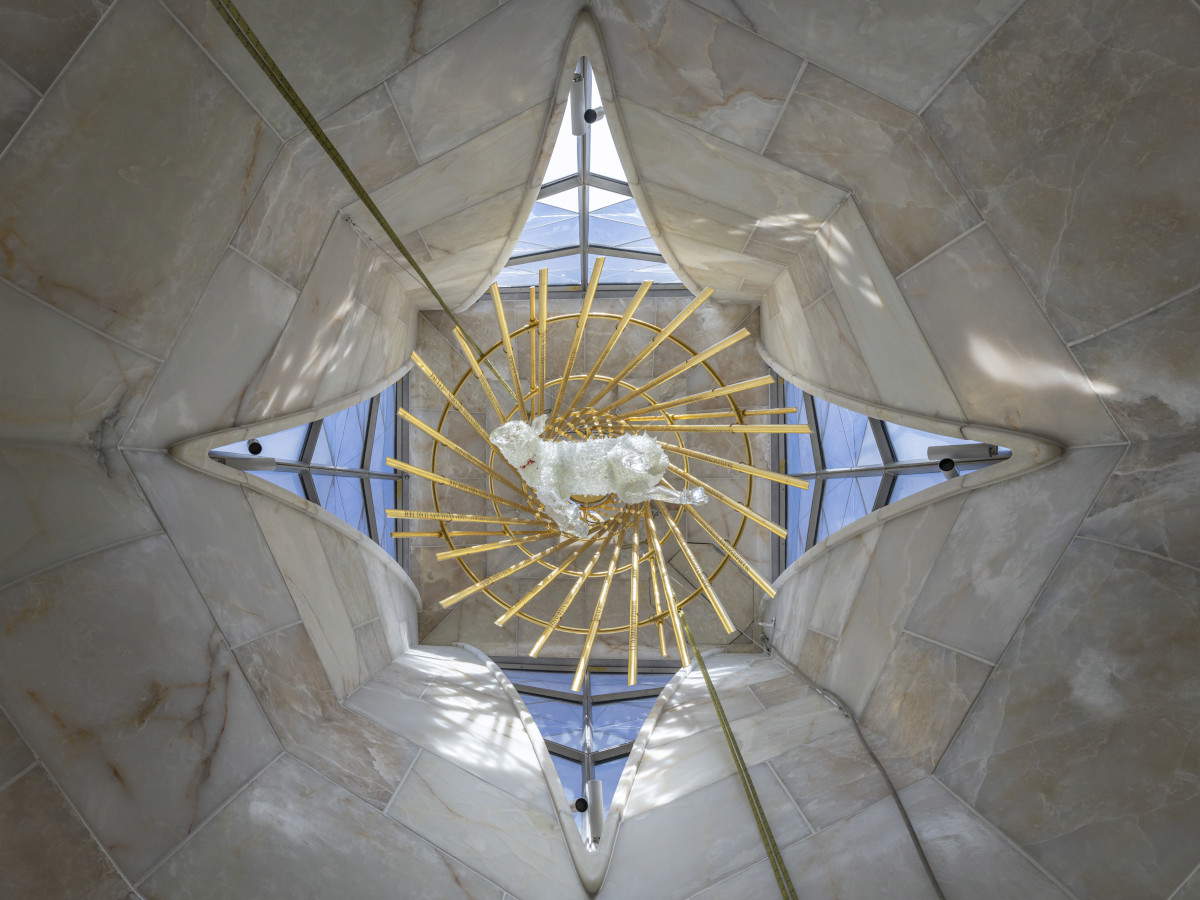
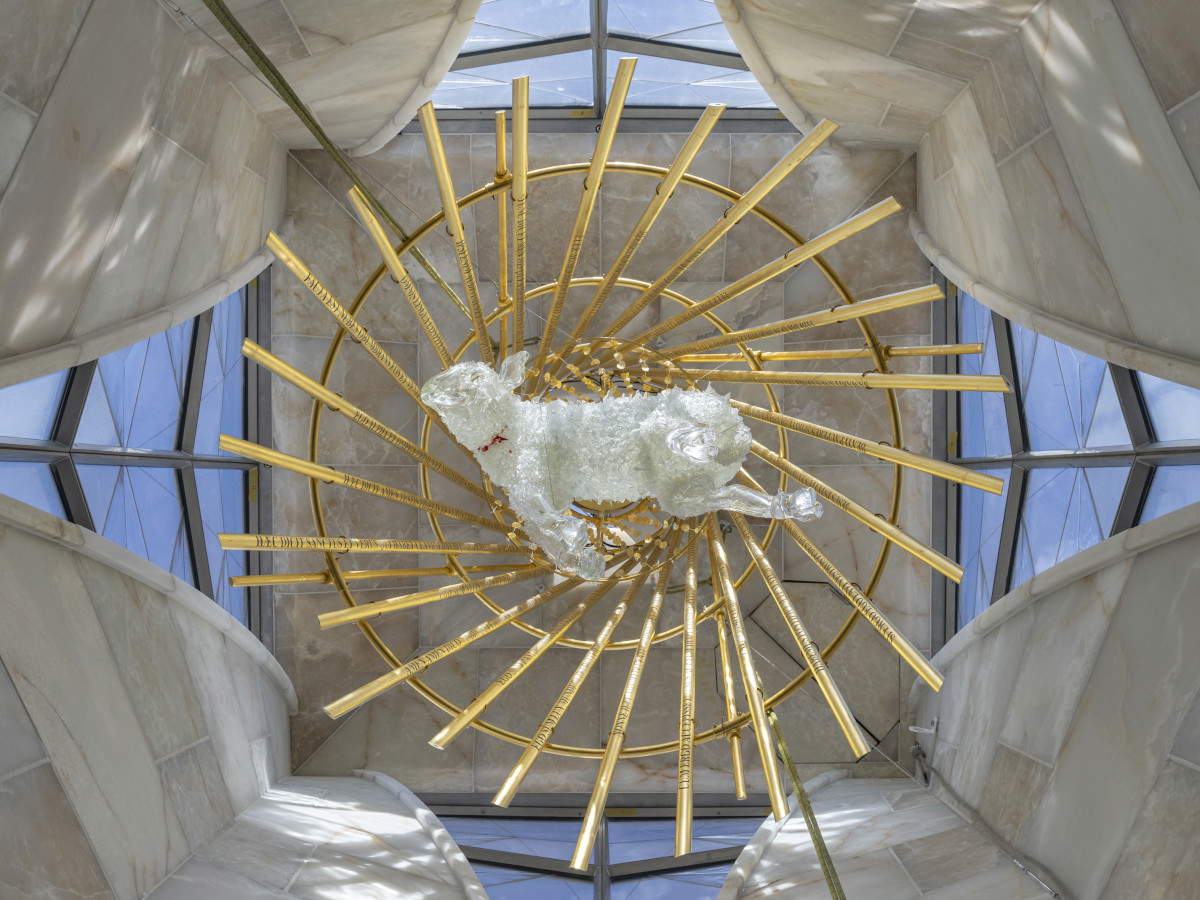
Crafted from glass, gold, and steel, the installation is one of the elements originally envisioned in Gaudí’s design. The Catalan architect had in fact indicated the presenceof the Lamb of God as the symbolic and spiritual culmination of the basilica, as documented in the Àlbums del Temple. Mastrovito’s proposal was chosen for its ability to combine transparency, luminosity, and strong symbolic value. At the center of the work is a blown-glass sculpture depicting the Lamb, entirely covered with thousands of crystal fragments. Surrounding it is a complex geometric structure composed of 24 gilded tubes, illuminated from within and inscribed with an equal number of passages from the New Testament dedicated to the Agnus Dei. Hundreds of gilded fragments, suspended by extremely fine threads, complete the composition, creating an effect of light and movement.


The work aims to represent the Gospel message of salvation through the sacrifice of Christ, identified as the origin and light of the world. For this reason, light plays a central role in the project: during the day, the glass reflects the natural light streaming in from the tower, while at night the installation is illuminated by a sophisticated LED system and an inscription made with phosphor on the lamb’s fleece, featuring the verse John 1:29 in ancient Greek. Illuminated by special light sources, the inscription transforms the sculpture into a true source of light.
The inspirations that guided Mastrovito range from Christian tradition to art history and scientific research. The golden rays enveloping the Lamb evoke those in Gian Lorenzo Bernini’s*The Ecstasy of Saint Teresa*, while the structure’s geometry draws inspiration from the hyperboloids used by Gaudí in the design of the Sagrada Familia to best diffuse natural light within the basilica. Further references stem from architectural elements already present in the church, such as the golden triangle representing God the Father in the apse skylight and the large canopy above the high altar, as well as the luminous lanterns designed by Gaudí himself for the Cathedral of Palma de Mallorca. Contemporary cosmology has also contributed to the development of the project. Studies by astrophysicist Marco Bersanelli, conducted in collaboration with architects Jordi Faulí and Mauricio Cortès, have highlighted a correspondence between the shape of the Tower of Jesus Christ and the Friedmann–Lemaître curve, a mathematical model describing the expansion of the universe. This dialogue between faith, art, and science has been integrated into the work’s conception.
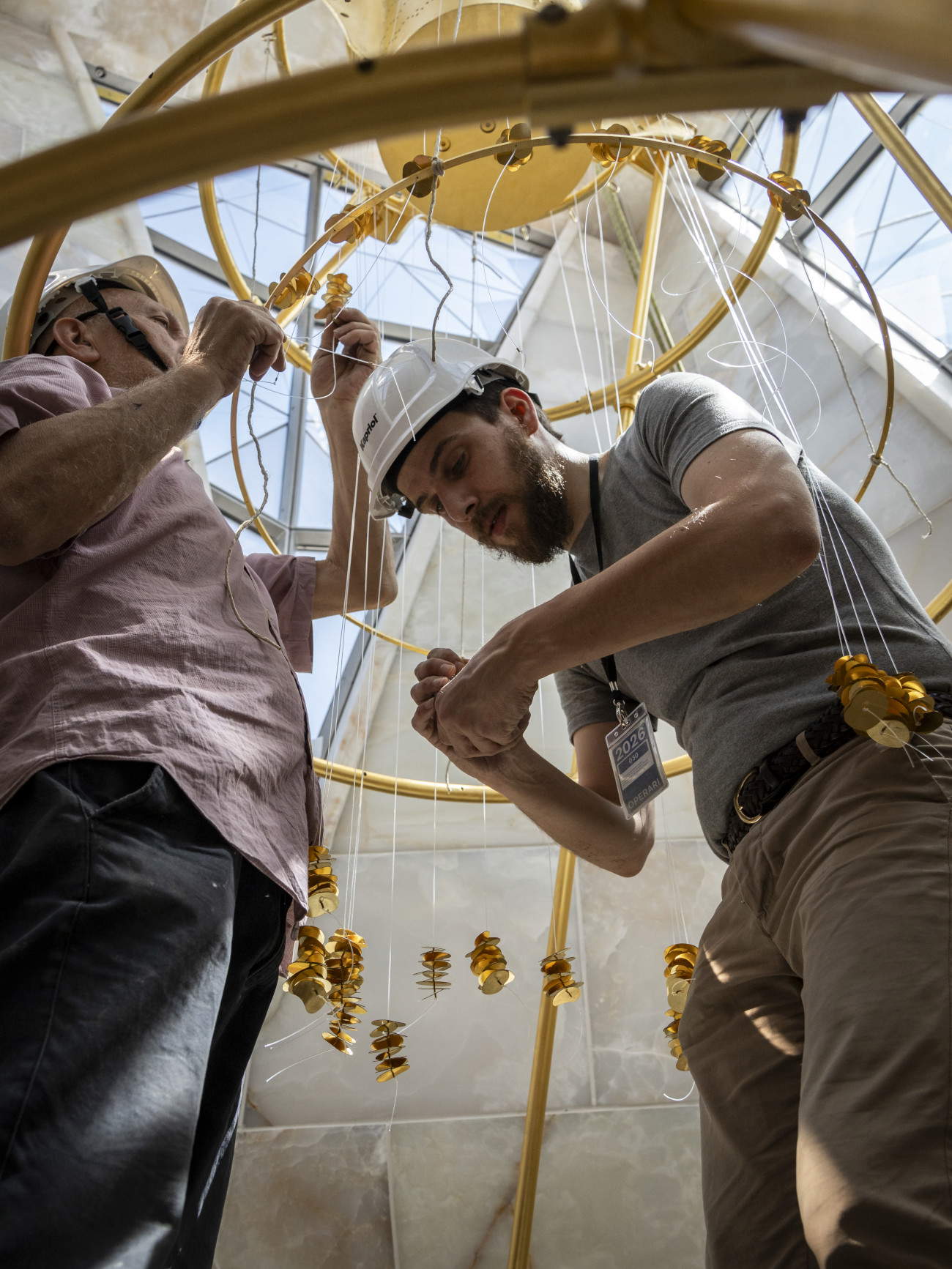
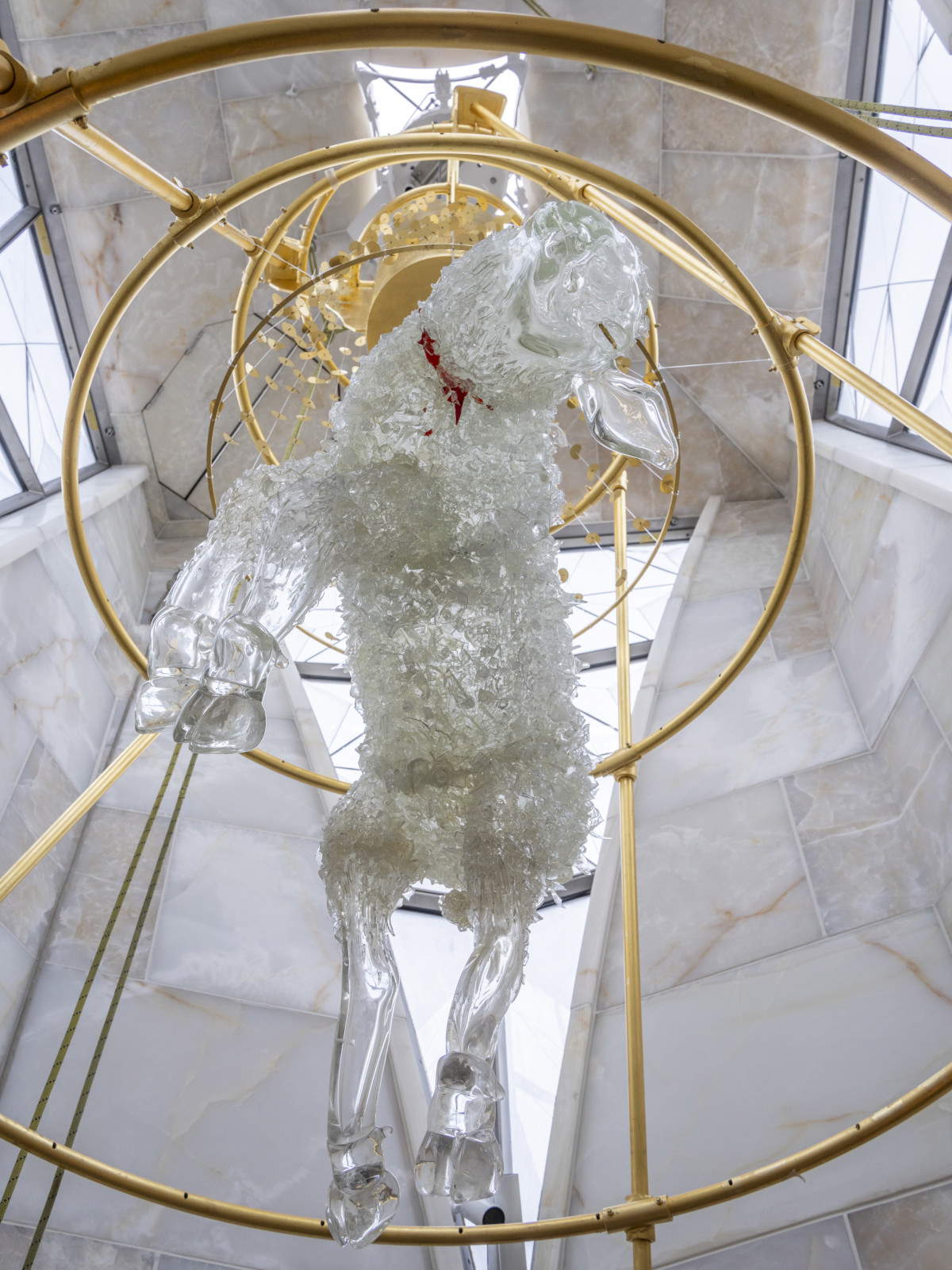
To enhance the luminous effect, Mastrovito worked with three different types of light: natural sunlight, artificial light provided by LED strips and phosphorescent materials, and the symbolic light of gold, which has always been associated with the divine in sacred art. The lighting design was developed by Studio Waldemeyer, while the gilding of the structures was carried out in collaboration with Studio Reduzzi, using 24-karat gold leaf both for the rays of the hyperboloid and for the approximately 500 suspended metal fragments surrounding the central sculpture.
From a technical standpoint, Gv 1.29 consists of four main elements: the 120-centimeter-tall blown-glass sculpture of the Lamb, the steel support structure, the 24 illuminated tubes made of gilded acrylic, and the suspended gilded brass fragments. Together, these elements create a work of powerful visual and spiritual impact that, by completing one of the final pieces of the Sagrada Familia, translates Antoni Gaudí’s original vision into a contemporary form.
“It is an honor for me to be part of this project,” said Mastrovito. “The Sagrada Familia is one of the symbols of our time, a sacred architectural masterpiece that grows year after year like a forest. The challenge in the months leading up to the deadline was to convey the divine message using a language that would be understandable to as many people as possible, without being didactic or trite. The moment I learned I had been chosen, my joy was immense, and I immediately shared it with a very small group of friends and collaborators: the project is ambitious, and from the very beginning I have worked with internationally renowned professionals who are in perfect harmony with the architects carrying on Gaudí’s project. I have also constantly engaged with Gaudí himself through his writings, texts on his work, and the direct study of his architecture, in order to remain faithful to his guidelines while maintaining my own artistic voice.”
|
| Andrea Mastrovito is the creator of the Agnus Dei at the Sagrada Familia: his work will illuminate the Tower of Jesus Christ |
Warning: the translation into English of the original Italian article was created using automatic tools. We undertake to review all articles, but we do not guarantee the total absence of inaccuracies in the translation due to the program. You can find the original by clicking on the ITA button. If you find any mistake,please contact us.