





Fabrizio Plessi, an artist who was among the pioneers of video art and video installations in Italy and a leading figure in experimentation with the possibilitiesof digital art, has passed away at the age of 86. Plessi passed away at the hospital in Dolo, in the province of Venice, the city where he lived, dividing his time between Spain and his hometown, Reggio Emilia.
Born in Reggio Emilia on April 3, 1940, after studying at the art high school and the Academy of Fine Arts in Venice, Plessi went on to teach painting at the same academy. Since the 1960s, his artistic practice had centered on the relationship between image, matter, technology, and environment, eventually becoming one of the most recognizable voices in Italian and international video art. In 1968, Plessi began to focus his work on the theme of water, exploring it through installations, films, videotapes, and performances. In the early 1970s, he began creating performance pieces documented through photographs and video footage and started collaborating with the Centro Attività Visive at Palazzo dei Diamanti in Ferrara, where, using equipment provided by the center, he produced his first videotapes. In 1978, he was invited for the first time to the Venice Biennale for photography, as part of the special exhibition *L’immagine provocata*.
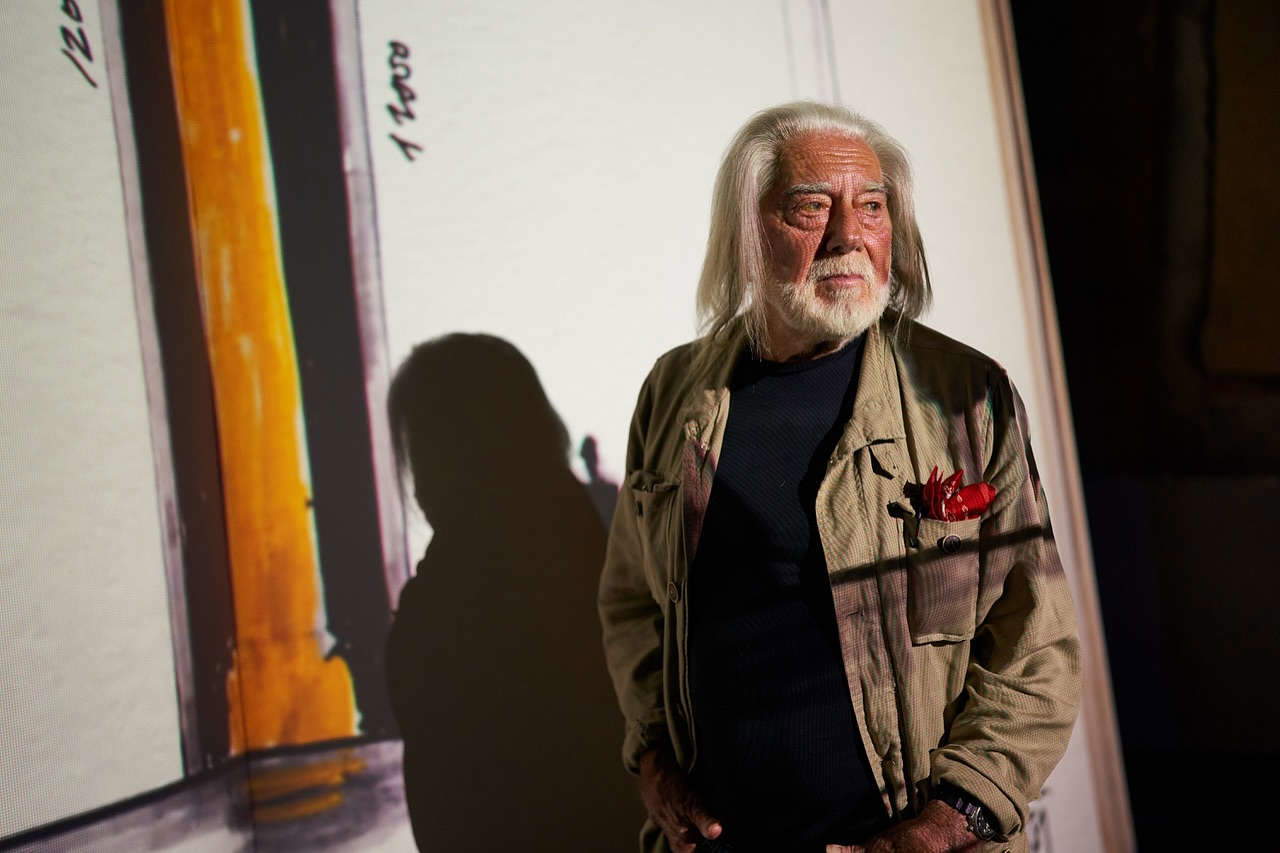
In 1980, he participated in the Venice Film Festival with *Liquid Movie*, winning the “Città di Milano” Award. The following year, he returned to the festival with *Underwater*, a French production, thereby helping to bring electronic media into an event dedicated to cinema. 1982 marked an international turning point: his complete body of video work was presented at the Centre Pompidou in Paris, and from that moment on, Plessi’s work focused increasingly on the environmental possibilities of video and its integration with three-dimensional structures. The illusionistic relationship between representation and reality of the liquid element was amplified through the possibilities of mechanical and electronic reproduction.
In 1984, he participated in the 41st Venice Biennale with a video installation and inaugurated the Musée d’Art Contemporain in Villeneuve d’Ascq, near Lille, with a major retrospective exhibition. In 1985, he presented his first major Italian retrospective, *Plessi-Video Going*, at the Rotonda della Besana in Milan; the exhibition, published by Electa, is considered the first exhibition of environmental video installations held in Italy. In 1986, he representedItaly at the 42nd Venice Biennale, where he presented *Bronx*, one of the most significant works of his career. His definitive international recognition came in 1987 with his participation in *documenta 8* in Kassel, where Plessi presented the monumental installation *Roma*.
His international career continued in 1989 with an invitation to the exhibition *Videoskulpturretrospektiv und aktuell 1963–1989* at the Kunstverein in Cologne, where he presented *Materia Prima*. That same year, he organized the major exhibition *Videosal* at the Palau Solleric in Palma de Mallorca and *Movimenti Catodici* at the Palazzo dei Diamanti in Ferrara. He also participated in the *Borealis* exhibition at the Louisiana Museum in Humlebaek, Denmark, and at Artek, the Nagoya Biennale, in Japan. Also in 1989, Plessi designed the sets and costumes for *The Fall of Icarus*, in collaboration with Frédéric Flamand and featuring original music by Michael Nyman, produced by the Opéra Nationale La Monnaie in Brussels. He also created the monumental electronic mill *Tempo Liquido*, commissioned by Prato Trade for the Pecci Center in Prato.
In 1990, on the occasion of his fiftieth birthday, Reggio Emilia dedicated a major retrospective to him in the spaces of the museum, the Foro Boario, and the Cavallerizza, where he presented the *Armadi* for the first time. In 1991, he created the large-scale installation *Roma II* for the Museum Moderner Kunst Stiftung Ludwig in Vienna and *Porfido* in Pergine, designed specifically for the castle. That same year, the Sa Nostra Foundation in Palma de Mallorca hosted a complex exhibition of photographs and large-scale projects dedicated to the island and its materials.
Following a trip to India, the video installation *Bombay-Bombay* was created in 1993 for the Museum Ludwig in Cologne. That same year, the Museum am Ostwall in Dortmund dedicated the major retrospective *Plessi – Retrospektive* to him, featuring twelve historic video installations. In Venice, during the Biennale, he presented *Cristalli Liquidi* at Caffè Florian. He created the electronic stage designs for Luciano Pavarotti’s concert in New York’s Central Park. In 1994, he resumed his collaboration with Frédéric Flamand on *Ex Machina*, creating electronic and virtual stage designs under Flamand’s direction with students from the Kunsthochschule für Medien in Cologne. He was invited to the International Special Exhibition of the São Paulo Biennial and presented an exhibition at the Neue Galerie in Linz featuring historical drawings and projects on paper created between 1976 and 1993. That same year, he created the electronic set designs for the program *Studio Moor* on the German television channel Premiere, featuring video installations that were updated every month. In 1995, *Ex Machina* was invited as a special event to the Venice Biennale’s Centennial edition.
The year 1996 was marked by some of her most complex and impressive installations: *The River of History* for the Landesmuseum in Mainz, an installation for the Mausoleum in Graz, *Electronic Aqueduct* for the Kunstverein in Heidelberg, and *Mysterium Wein* for the Historisches Museum der Pfalz in Speyer. In 1998,*The Ark of Art* was presented at the Kunsthistorisches Museum in Vienna, and in the same year, the Guggenheim Museum in New York dedicated a major retrospective to Plessi featuring his historic video installations. In 1999, he was honored at the 13th Rome Quadriennale and received the Kunstpreis der Nord/LB in Hanover, which named him Germany’s Artist of the Year. For the occasion, he staged a new exhibition on the theme of the forest, *Der Hängende Wald*, at the Kestner Gesellschaft in Hanover. In 2000, commissioned by the Italian government for the Hannover World Expo, he created *Mare Verticale*, a monumental 44-meter-tall technological sculpture consisting of a steel structure housing a gigantic LED screen that simulated a blue electrical wave in constant motion. Also in 2000, he represented Italy at the Gwangju Biennale in Korea and designed the theatrical sets for Aterballetto’s *A Midsummer Night’s Dream*, featuring original music by Elvis Costello. In Passau, he presented *Il fiume della storia* and an exhibition of recent works on the theme of fire at St. Anna Kapelle.
In 2005, he was invited to the 51st Venice Biennale as part of the Biennale’s special project organized in collaboration with the Ministry of Foreign Affairs. For the occasion, he presented a new version of *Mare Verticale* at the Giardini, which rose from the waters of the lagoon to a height of 44 meters. Inside the structure, a technological waterfall flowed, destined to become one of the symbols of that Biennale. In 2010, at La Maddalena in Sardinia, on the historic beachfront, he created one of his most important video installations for the Louis Vuitton Trophy: *Mari verticali*, consisting of twelve black steel boats tilted at a 45-degree angle, within which the twelve seas of the world flowed. The work, created with the support of Louis Vuitton, would later be exhibited in several major international museums.
In 2014, the Ludwig Museum in Budapest dedicated a retrospective exhibition to him, *Liquid Labyrinth*, which took its name from a previously unseen series of large-scale works on canvas he had just completed and traced Plessi’s entire artistic career. Later, in Venice, he was invited to inaugurate the new Fondaco dei Tedeschi space designed by Rem Koolhaas. For the occasion, he created *Underwater*, a spectacular installation of constantly moving digital gold mosaics on metal walls, accompanied by music by Michael Nyman. At the Fattoria di Celle, Giuliano Gori then invited him to create a special installation in eight rooms of the foundation, in dialogue with the works of Sol LeWitt. In 2018, Plessi was named an Academician of Merit at the Academy of Fine Arts in Perugia. Later, in 2020, he created the digital set designs for Alberta Ferretti’s fashion shows in Milan, which were subsequently used in her stores in Rome, London, and Paris. For the Tuscany Hall in Florence, he created *Energy*, a digital curtain featuring continuously moving LED lights and evocative sounds, described as the first and only digital curtain of its kind in the world. In 2023, his last major exhibition, *Plessi sposa Brixia*, took place—a sort of marriage between the artist and the city of Brescia.
With the passing of Fabrizio Plessi, we have lost one of the figures who contributed most to bringing video and electronic technologies to the forefront of contemporary Italian artistic practice. From his early experiments with water in the 1960s to the monumental digital installations created in museums, biennales, theaters, and public spaces around the world, his work forged a constant relationship between the material and the immaterial, memory and technology, nature and artifice, transforming the language of video art into an environmental and spectacular form capable of engaging with architecture and the history of places.
“I have lost a friend, and Venice has lost a pioneer—a visionary who always had the courage to pursue his own personal artistic language, without seeking easy applause,” said the mayor of Venice, Simone Venturini. “His works always brought light: a physical light and, at the same time, an idea of energy, the future, and rebirth. Fabrizio knew how to look at Venice without nostalgia, creating a dialogue between its history and the contemporary, to the point of presenting our city as ‘the grammar of his artistic work.’ On behalf of the city administration as well, I extend my deepest condolences to Fabrizio’s family and to all those whose paths crossed with him and his artistic vision. We will work to ensure that his message continues to resonate in the works and initiatives of many other artists who will create art following his example.”
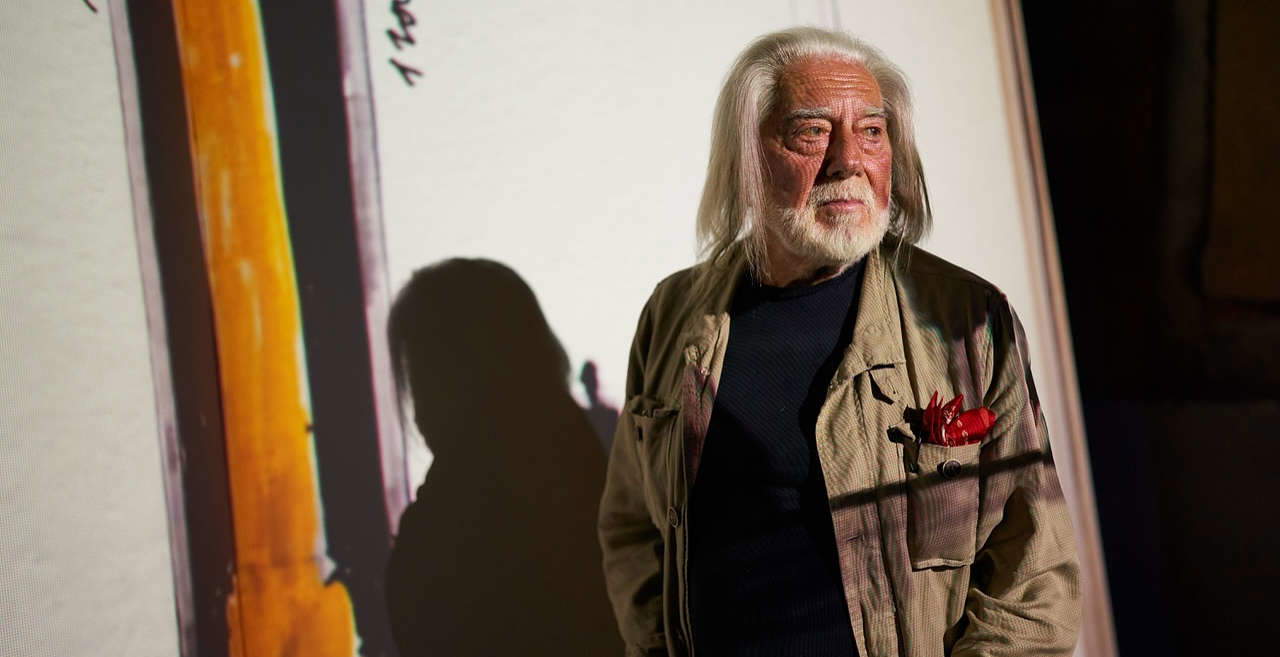 |
| Farewell to Fabrizio Plessi, a pioneer of video art and video installations |

Warning: the translation into English of the original Italian article was created using automatic tools. We undertake to review all articles, but we do not guarantee the total absence of inaccuracies in the translation due to the program. You can find the original by clicking on the ITA button. If you find any mistake,please contact us.


























 IT
IT FR
FR DE
DE ES
ES CN
CN


