





The City of Milan takes stock of its cultural sector: a budget of nearly 73 million euros, 30 million invested in infrastructure, over 2.7 million visitors to municipal museums and exhibition spaces, and more than 12,000 cultural events scheduled for 2025. These are the key figures from the Culture Department’sAnnual Report , the first document of its kind published by the administration, presented on June 24, 2026, in the Sala Fontana at the Museo del Novecento by Culture Councilor Tommaso Sacchi and Central Director of Culture Domenico Piraina. The report is not a technical report in the conventional sense of the term. As stated in the introduction, it is designed as a tool for public communication: one hundred pages composed of numbers, data, and images to convey the complexity of a system that, every day, brings to life museums, libraries, theaters, archives, exhibition spaces, neighborhood projects, educational activities, and relationships with the city’s creative community. A selective snapshot that highlights the most significant—and sometimes least visible—aspects of the Culture Department’s work over the course of the year.
The document is structured around three key themes:cultural “hardware,” or the physical network of venues; cultural “software,” or the activities that bring them to life; and cultural “soft power,” the system’s ability to build reputation, attract visitors, and foster national and international relationships. First, a section dedicated to resources explains who and what make all the rest possible.
In terms of human resources, the Culture Department had 910 employees as of December 31, 2025, accounting for 6.7% of the City of Milan’s total workforce: in practice, one in fifteen City employees works in the cultural sector. The composition of the workforce reflects a deliberate management choice: 381 people in libraries, 234 in museum visitor services, custodial duties, and security, and 209 in museums and exhibition spaces. The ratio of managers to total staff is approximately 1 to 83, indicating a structure focused on on-the-ground operations rather than a managerial bureaucracy. After years of staff reductions due to retirements, 2025 marks a recovery: new hires are strengthening both the operational side—with 19 custodial staff—and the scholarly side—with five highly specialized positions, including a mineralogist, a taxidermist, an alcohol-preservation technician, a collections digitization specialist, and a paleontology cataloger.
The financial picture shows significant growth. The Culture Department’s total budget rises from approximately 51 million in 2024 to nearly 73 million in 2025, an increase of 41.7%. This increase is driven primarily by capital expenditures, which have tripled in one year: from approximately 10.2 million to approximately 30 million euros. This surge does not stem primarily from an increase in the city’s own revenues—which nonetheless grow by 17.6%—but rather from a deliberate policy choice to invest in infrastructure, made possible in part by European and national funding, particularly that linked to the PNRR. Operating expenditures remain essentially stable at around 38 million euros, but their distribution reveals the priorities: the performing arts account for nearly two-thirds of unrestricted operating expenditures, with over 24.7 million euros allocated to the sector. About half of the capital expenditures go to libraries, primarily for the new Lorenteggio facility and the BEIC’s automated storage system; over 35% goes to the performing arts, with contributions to the Teatro alla Scala Foundation, the Scuole Civiche Foundation, and the Piccolo Teatro.
On the revenue side, museum proceeds are growing, exceeding 3 million euros, as are royalties from exhibitions, which rose from approximately 605,000 to over 805,000 euros. Councilor Sacchi commented on these signs with caution: not because the value of culture is limited to its ability to generate revenue, he clarified, but because these figures indicate a more effective economic utilization of cultural productions, and thus a greater capacity of the system to support new projects and investments.
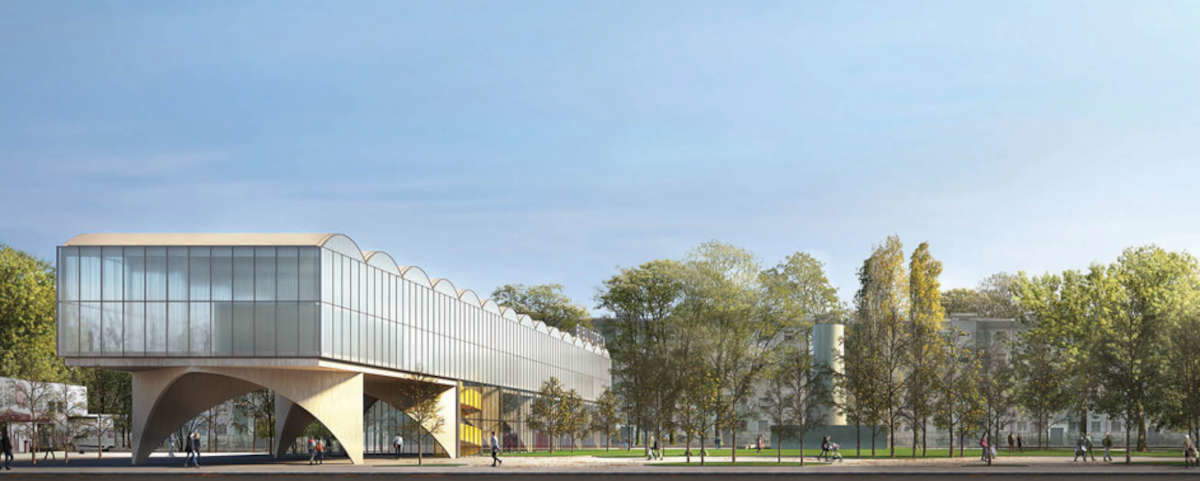
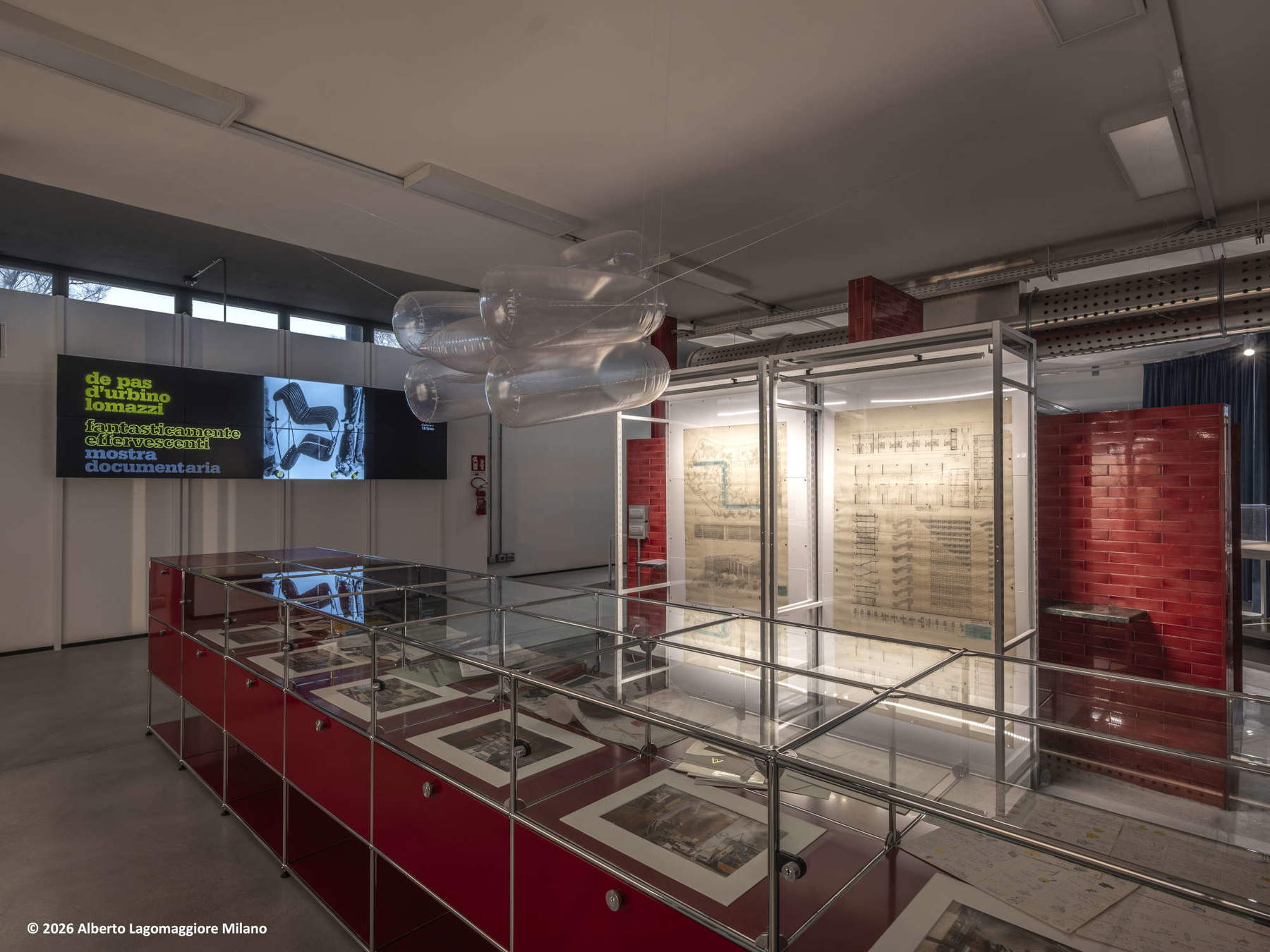
The cultural infrastructure, as mentioned earlier, is the first of the three dimensions described in the report. The Culture Department oversees, in various capacities, 303,000 square meters of space distributed among 29 libraries, 4 storage facilities, 32 museums and exhibition spaces, 22 theaters, and the ArtLine urban contemporary art park in the CityLife neighborhood. This network spans the city center and its neighborhoods, preserves cultural heritage, hosts activities, and contributes to the quality of public space. Among the most significant developments of the year is the opening of CASVA, the Center for Advanced Studies in the Visual Arts, inaugurated on September 30, 2025, in the redesigned spaces of the former QT8 covered market. The new center houses 44 professional and personal archives of architects, designers, graphic artists, and artists active in Milan and Lombardy during the 20th century, from Luciano Baldessari to Vittorio Gregotti. It features consultation spaces, exhibition areas, and a café designed as a social hub open beyond the Center’s regular hours. Marino Marini’s *Donnina di Milano* is also on permanent display here, having been restored in 2025 after years spent on nearby Monte Stella.
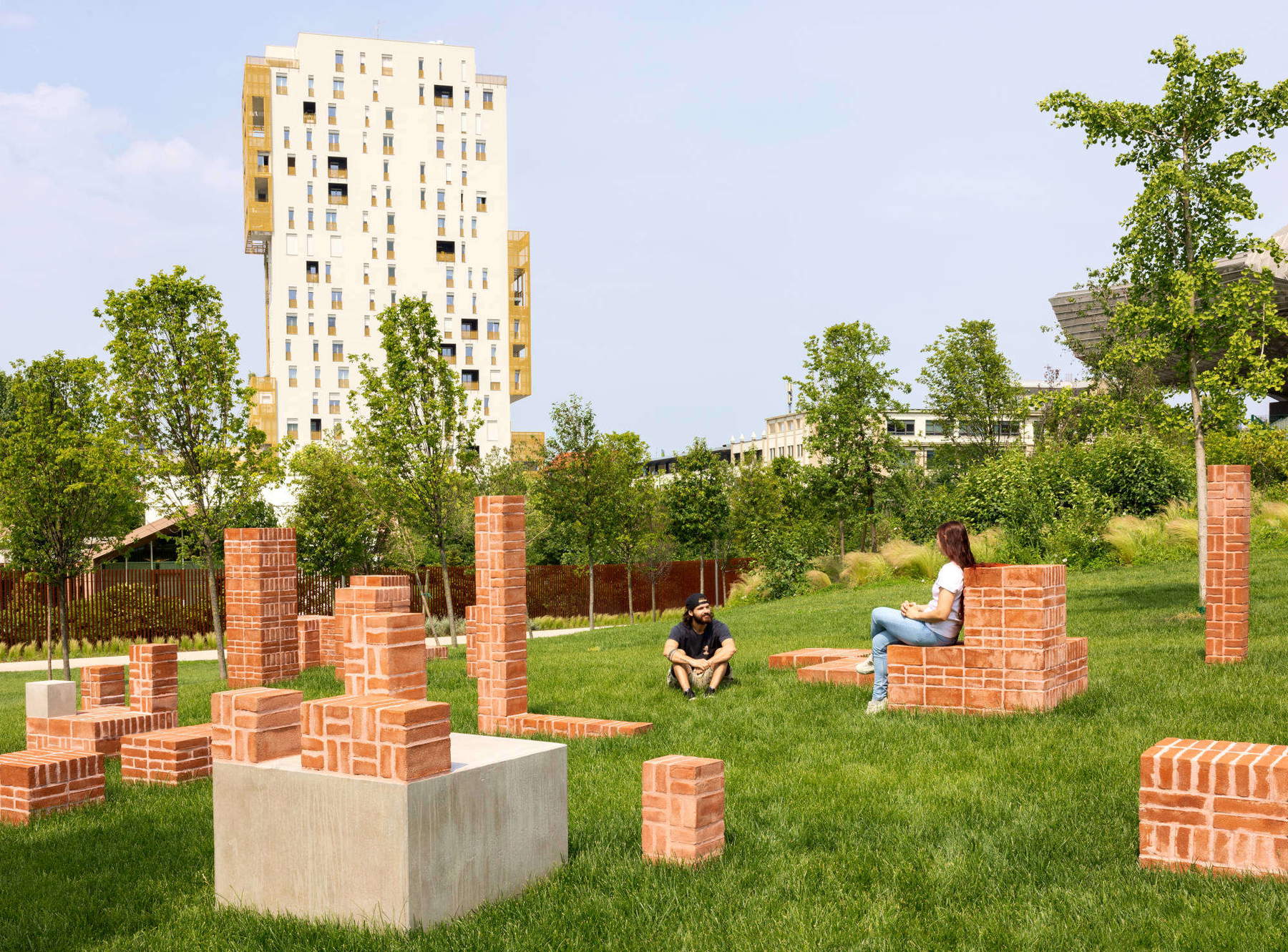
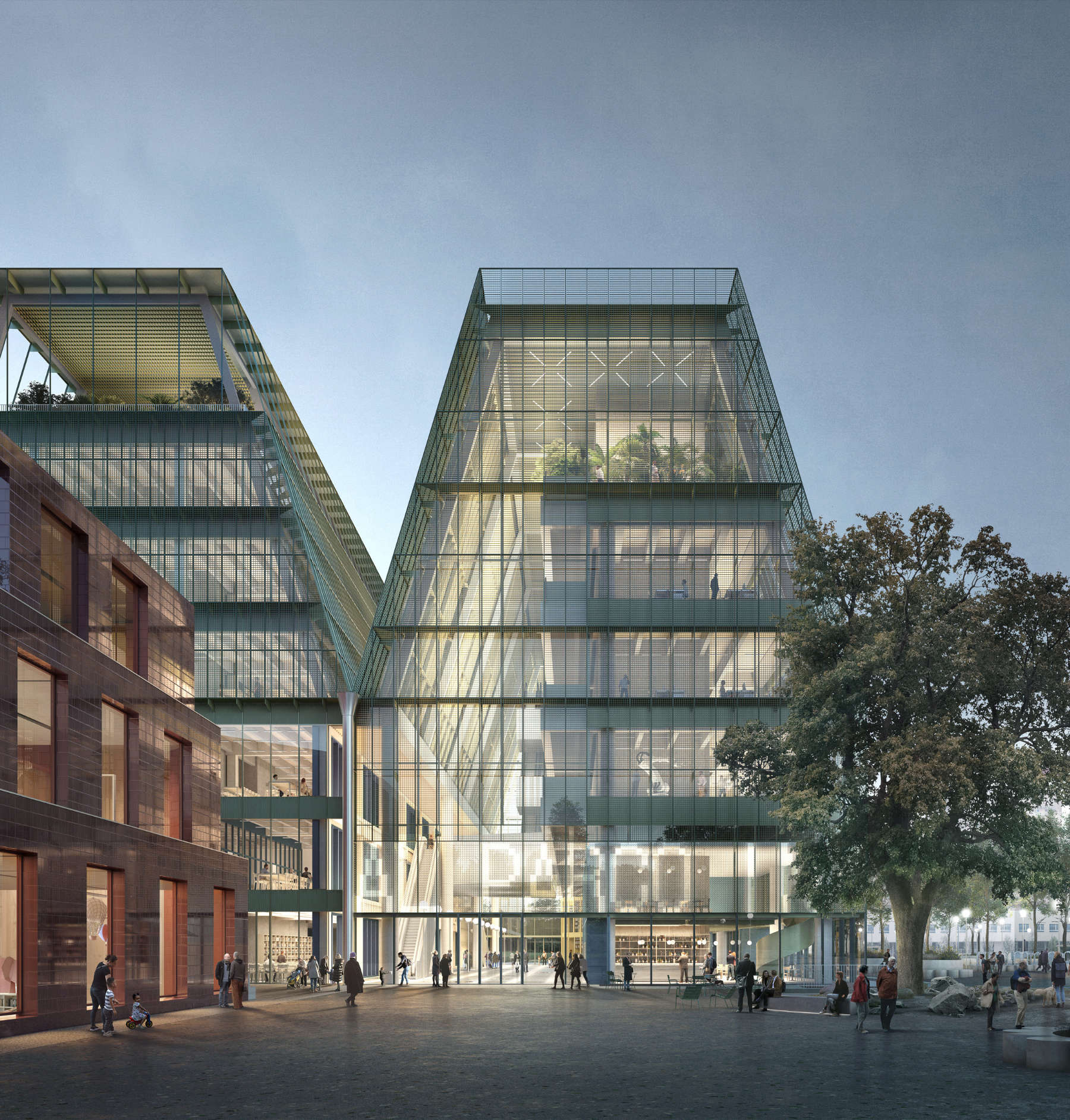
Numerous construction projects are underway in 2025. The BEIC (European Library of Information and Culture), with its 30,000 square meters and over 2.5 million volumes planned, has completed the design phase and begun preparations for the interior fit-out, with completion expected in December 2026. At the same time, work is proceeding on the new Lorenteggio Library, which will cover 2,000 square meters—compared to the current location’s 200—and is set to become a defining landmark of the neighborhood. At the Castello Sforzesco, construction began in October 2025 on the restoration of the Sala delle Asse, featuring decorations by Leonardo da Vinci; the reopening is scheduled for 2027. The Museo del Novecento is awaiting expansion into the second tower of the Arengario: the process, suspended in 2025 due to appeals to the Regional Administrative Court (TAR) and the Council of State, was unblocked by the final ruling in March 2026, with work scheduled to begin in June 2026.
The section on the museum’s collection reveals figures of significant scale: 6,680 works on display in the exhibition spaces, 115,885 in storage, 280,137 digitized, and 230 restored during the year. The year 2025 also brought significant additions to the collections: the Museo del Novecento received a donation of Enrico Baj’s *The Funeral of the Anarchist Pinelli*; MUDEC acquired *Portrait of Cardinal Giulio Rospigliosi* for 220,000 euros, created using the rare “amanteca” technique of feather mosaic. The library collection was enriched with approximately 38,000 new volumes.
The cultural programming—that is, the initiatives that bring the infrastructure to life—generated substantial figures in 2025. Civic venues hosted 72 temporary exhibitions, which welcomed 949,812 visitors. Adding these to the 1,774,510 visitors to the civic museums, the civic cultural system recorded a total of 2,724,322 visitors. The most-visited exhibition of the year was “Tim Burton’s Labyrinth” at the Fabbrica del Vapore, with 152,849 visitors; followed by “Casorati” at Palazzo Reale with 79,607 visitors, “Rauschenberg and the Novecento” at the Museo del Novecento with 75,322 visitors, and “Art Déco: The Triumph of Modernity” at Palazzo Reale with 73,984 visitors.
Educational activities included over 5,400 events for adults and families with 226,000 participants, and more than 7,500 initiatives for schools with 228,000 participants. In museums and exhibition spaces alone, there were 1,300 on-site initiatives, 92 off-site initiatives, 36 research projects, and 94 publications. During 2025, 9 artist residencies—both national and international—were launched at the Fabbrica del Vapore. In terms of accessibility, the Directorate established a dedicated internal working group and has identified over 30 accessible projects and itineraries in museums and libraries.
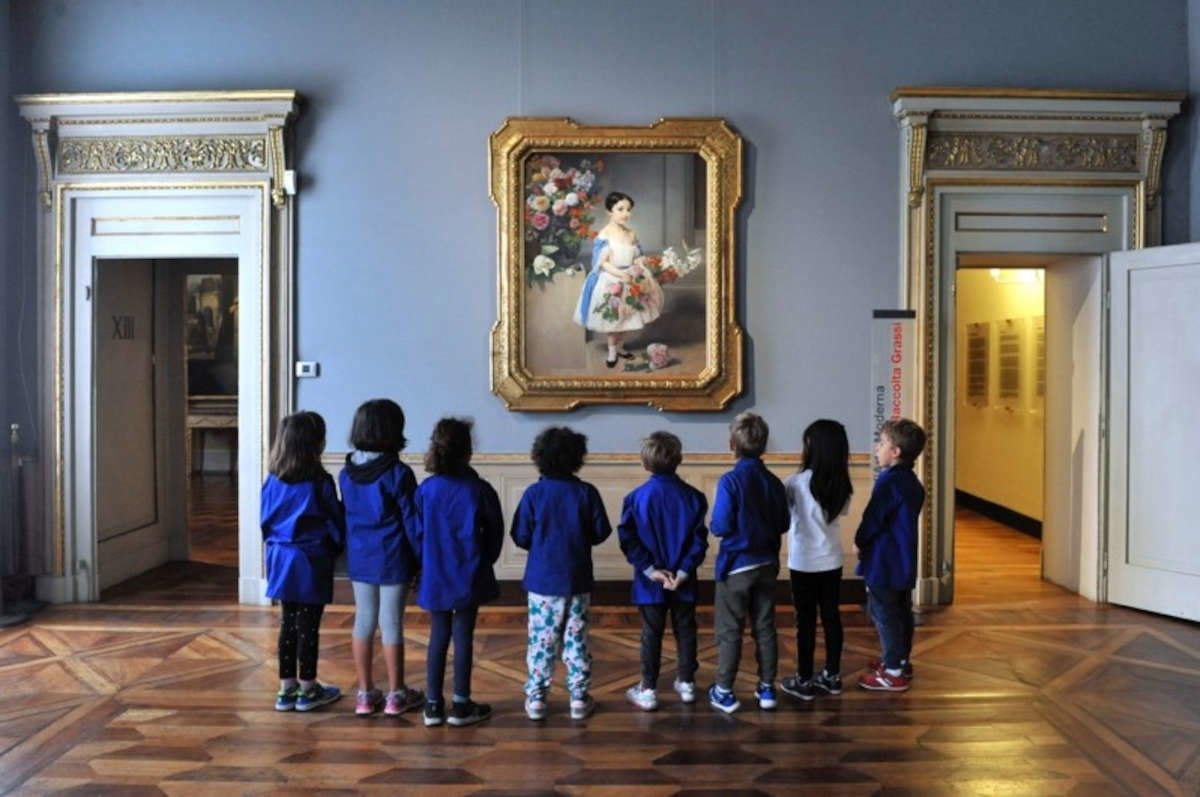
Significant resources are dedicated to supporting the performing arts. The City of Milan contributes over 27 million euros to its main affiliated foundations: 13.6 million to the Fondazione Milano Scuole Civiche, 7 million to the Fondazione Teatro alla Scala, and 5.1 million to the Piccolo Teatro. The Theater Agreement System, in place since 1989 and considered a national model of excellence in public policy for the theater, distributed approximately 2 million euros to 15 production theaters in 2025. Through public calls for proposals and notices, 28 performing arts projects were funded for 630,000 euros, 72 organizations with ongoing activities and festivals received over 2.1 million euros, and 33 projects under the “Milano è Viva nei Quartieri” program were funded for 1.15 million euros. The MITO Festival received a grant of 700,000 euros; BookCity and Piano City received 100,000 euros each.
On the soft power front, the report measures the system’s appeal through multiple indicators. Libraries have 92,683 active users, nearly 970,000 loans, and nearly 2 million in-person visits. International collaborations launched during the year exceeded 100, with partners such as the Musée du Louvre, the Musée d’Orsay, the Warburg Institute in London, the Network of European Royal Residences, and the UNESCO Creative Cities Network for Literature—a designation Milan has held since 2017. There were 521 incoming loans and 672 outgoing loans of artworks. The number of sponsorships secured in 2025 totaled 19, amounting to over 1 million euros.
In terms of European investments, seven projects were managed in 2025 for a total of 169.1 million euros under the PNRR, PNC, and the 2021–2027 National Metro Plus Program: from the BEIC to the Magnifica Fabbrica, from the Teatro alla Scala’s workshops and storage facilities to the expansion of the Museo del Novecento. Expenditures on venue security exceeded 1.5 million euros, including the replacement of sensors and cameras and the maintenance of security systems. Requests for film shooting permits increased by 17.65% compared to 2024, rising from 34 to 40 authorized productions: among these was *The Devil Wears Prada 2*.
The Directorate’s communications system comprises 18 websites, 70 social media profiles across museums and libraries—with over 680,000 followers on Instagram and 540,000 on Facebook—13 newsletters with an average open rate exceeding 50%, and a total of over 410,000 subscribers. In 2025, 204 press releases were issued. The report concludes with data from the 2025 Culture Forum, which brought together approximately 500 representatives from cultural institutions, organizations, and associations across more than 50 thematic roundtables held at CASVA. This was an opportunity for listening and collaborative planning which, in the words of Director Piraina, reflects the public function of the document itself: not a tool for industry insiders, but an act of transparency toward the entire community. Behind every exhibition, every open library, every performance, and every neighborhood festival, he noted, there is a collective effort built on expertise, responsibility, and passion. To tell this story, he concluded, means recognizing the role of culture as a public service.
“The Annual Report conveys the true scope of the Culture Department,” states Culture Councilor Tommaso Sacchi. “We’re talking about a complex structure, made up of very diverse venues, services, processes, and professional expertise, which every day make the functioning of the city’s cultural system possible. This document helps us see the big picture, understand the connections, and highlight the often-invisible work that supports the city’s cultural offerings.”
“This report is not intended solely for industry professionals, but as a tool for transparency aimed at the entire community,” concludes Central Director of Culture Domenico Piraina. “Behind every exhibition, every open library, every performance, and every neighborhood festival lies a collective effort built on expertise, responsibility, and passion. Sharing this story means recognizing the role of culture as a public service.”
 |
| Milan: Here Is the First Culture Report: A Budget of 73 Million and Over 2.7 Million Visitors |

Warning: the translation into English of the original Italian article was created using automatic tools. We undertake to review all articles, but we do not guarantee the total absence of inaccuracies in the translation due to the program. You can find the original by clicking on the ITA button. If you find any mistake,please contact us.




















 IT
IT FR
FR DE
DE ES
ES CN
CN


