




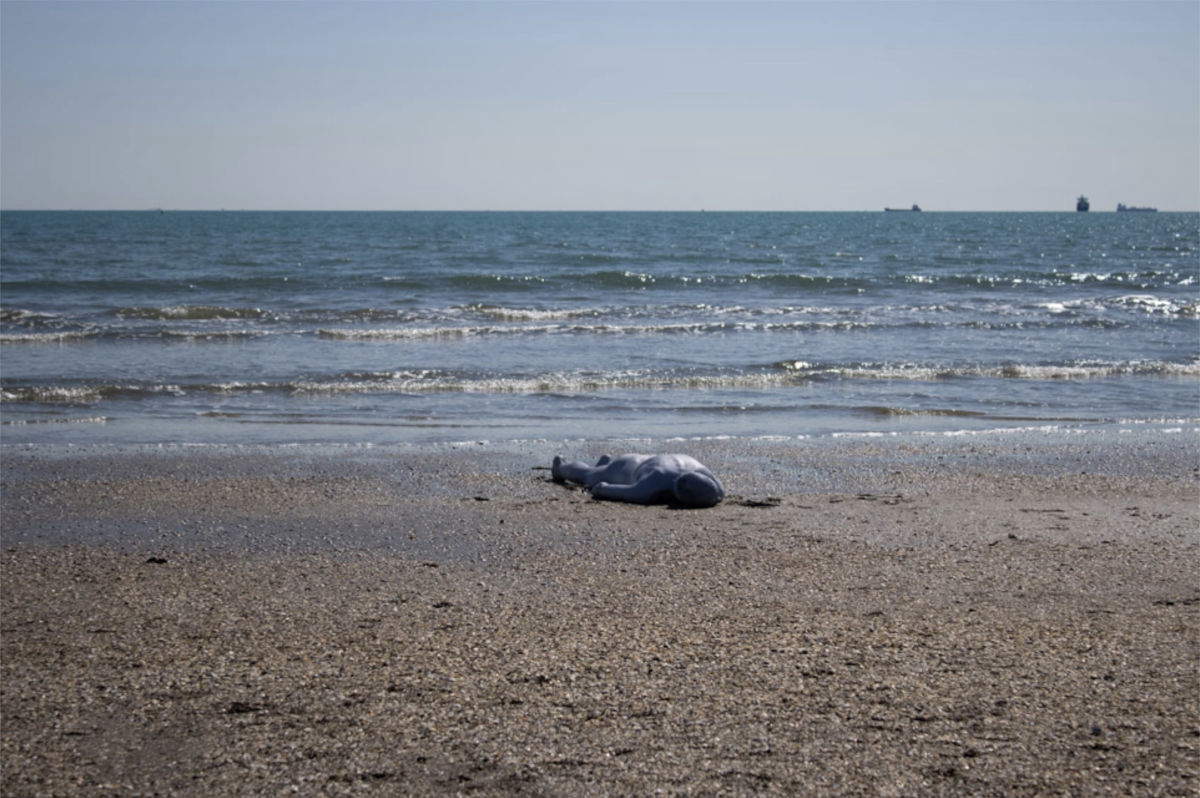
It gained some resonance last March 28, an unusual incident that occurred on the Venice Lido: some passersby swam by a man, naked, white, lying on the beach and inert. Thinking of a dead body, they alerted law enforcement and medical aid, but the man then got up and started walking. It was, it has been explained in recent hours, an intervention by the artist Nicolo. The action took place as part of the cultural day organized by the Syncretika collective, dedicated to experimentation between contemporary artistic languages. The artist, naked and covered in white paint, had been lying on his stomach between the shoreline and the sea. The adopted posture was an integral part of the gesture and consciously maintained.
According to what the artist and the collective specified, theaction was conceived as a human act, developed with full awareness and with the presence of two figures in charge of media support. The latter were in charge of clarifying to passersby the voluntariness of the gesture and the normal state of health of the artist. Despite this, some present interpreted the situation as critical, calling for the intervention of the authorities. The artist was then taken to police headquarters for investigation.
No behavior qualifying as obscene acts occurred during the action. The condition of body exposure became publicly visible in an upright position only after law enforcement asked the artist to stand up. On that occasion, he was moved into the public space in a state of nudity without receiving immediate coverage. The issue raised by Nicolò and the Syncretika collective concerns the perception of art in public space. If the same action had taken place within an institutional space, it would have been recognized as an artistic practice; transposed into the public sphere, devoid of frames and prior statements, it is read as an anomaly or threat.
“I wanted to generate a reaction, an emotion,” afferma the artist. “No one approached me to ask if I was okay: the police were called directly. This is indicative. Mine was not meant to be an obscene gesture. Why are we so affected by the idea of a body on the beach when our society is already permeated with images of death? This was not a performance in the spectacular sense of the word, but a human act.”
The episode, organizers point out, highlights the distance between direct experience and the capacity for interpretation: what does not fit into known patterns tends to be rejected or reported. The gesture, moreover, showed how media narratives can isolate and recontextualize complex events, contributing to returning a partial or distorted reading of them. Indeed, Nicolò’s action aimed to stimulate a reflection on the relationship between unconventional art practices and public context.
The artist defines his presence on the shoreline as “like a stumbling stone, a presence capable of interrupting indifference and activating a reaction,” in order to challenge indifference. Following the incident, Nicolo invites us to also consider the conditions that made it possible. The journalistic narrative of some newspapers, according to the artist, contributed to a biased reading, in which the act was isolated and traced back to a simplified story, without grasping the complexity of its intention.
The event also highlighted the difficulty of transmitting and receiving complex content in contemporary public space. Media and social networks tend to simplify, while digital technologies compress the distance between real and representation, reducing the possibility of direct confrontation with unmediated experiences. In this sense, the action highlighted a collective limitation: the inability to confront a completely real experience, free of filters or devices that mitigate its impact.
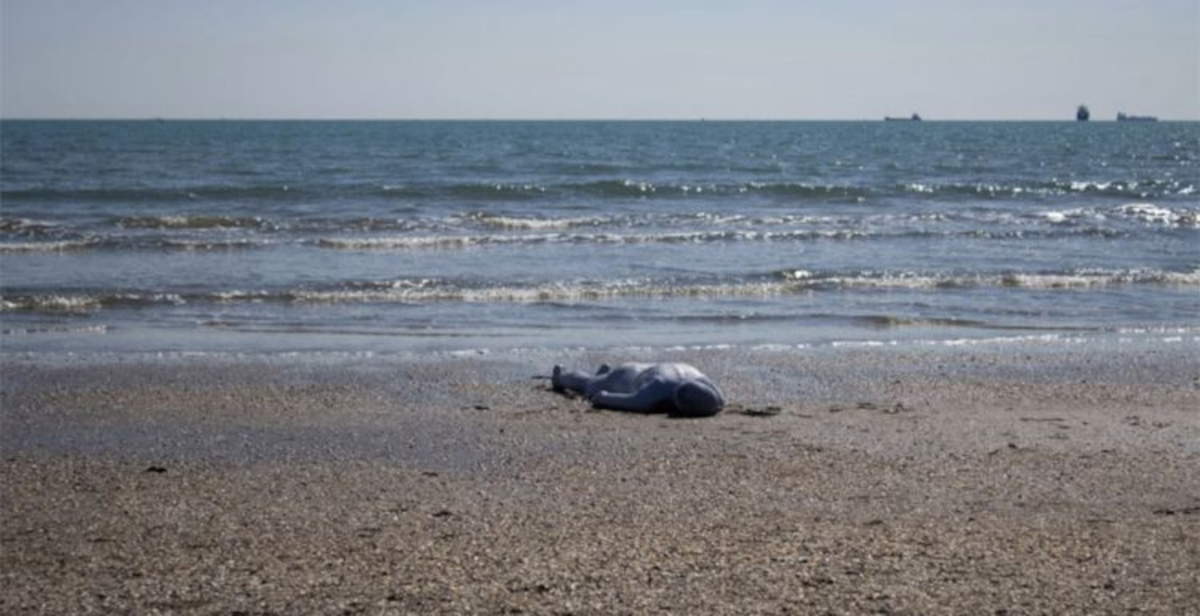 |
| Naked and lying on the beach at Venice Lido: they thought he was a corpse, he was an artist |

Warning: the translation into English of the original Italian article was created using automatic tools. We undertake to review all articles, but we do not guarantee the total absence of inaccuracies in the translation due to the program. You can find the original by clicking on the ITA button. If you find any mistake,please contact us.















 IT
IT FR
FR DE
DE ES
ES CN
CN