





In Rome, restoration and enhancement work on Colle Oppio Park, carried out by the Capitoline Superintendence for Cultural Heritage as part of the Caput Mundi PNRR program, has been completed. The project focused on some of the park’s main monumental features, where important archaeological remains coexist with a significant 20th-century landscape design created between 1928 and 1936 by Raffaele de Vico and Antonio Muñoz.
With an investment of approximately 1.5 million euros, the two park entrances on Via delle Terme di Traiano and Via Nicola Salvi were restored, as well as the Ninfeo Fountain, the Amphora Fountain, andthe entire original water supply system that feeds the park’s fountains.
The work involved the structural reinforcement of the buildings, the restoration of stone, brick, and cement-aggregate surfaces, the reconstruction of the most deteriorated sections, and the restoration of the full functionality of the basins and systems. Among the most significant achievements is the restoration of the hydraulic system designed by Raffaele de Vico, which had been inactive for many years and is now operational once again. The system was upgraded with devices for water recirculation and recovery, combining respect for the historic system with criteria of environmental sustainability. In this way, the park has regained one of the most distinctive elements of the original design: the scenic role of water, an integral part of the landscape composition.
The project was carried out thanks to a collaboration between the Capitoline Superintendence for Cultural Heritage, the Department of Infrastructure and Public Works, and the Department of Environmental Protection of Roma Capitale, with technical support from Acea Ato 2 and Areti, which contributed to the upgrading of the systems and the functional restoration of the entire complex.
“With this restoration and redevelopment project, Colle Oppio Park is being returned to the city, highlighting its unique characteristics, in which landscape architecture, archaeology, and the water system come together as a unified whole of extraordinary artistic and cultural interest,” stated Mayor Roberto Gualtieri. “The project was not limited to the conservation of individual structures, but made it possible to restore the functionality of a complex system designed nearly a century ago, restoring clarity, harmony, and the quality of the visitor experience to one of the city’s most beloved gardens.”
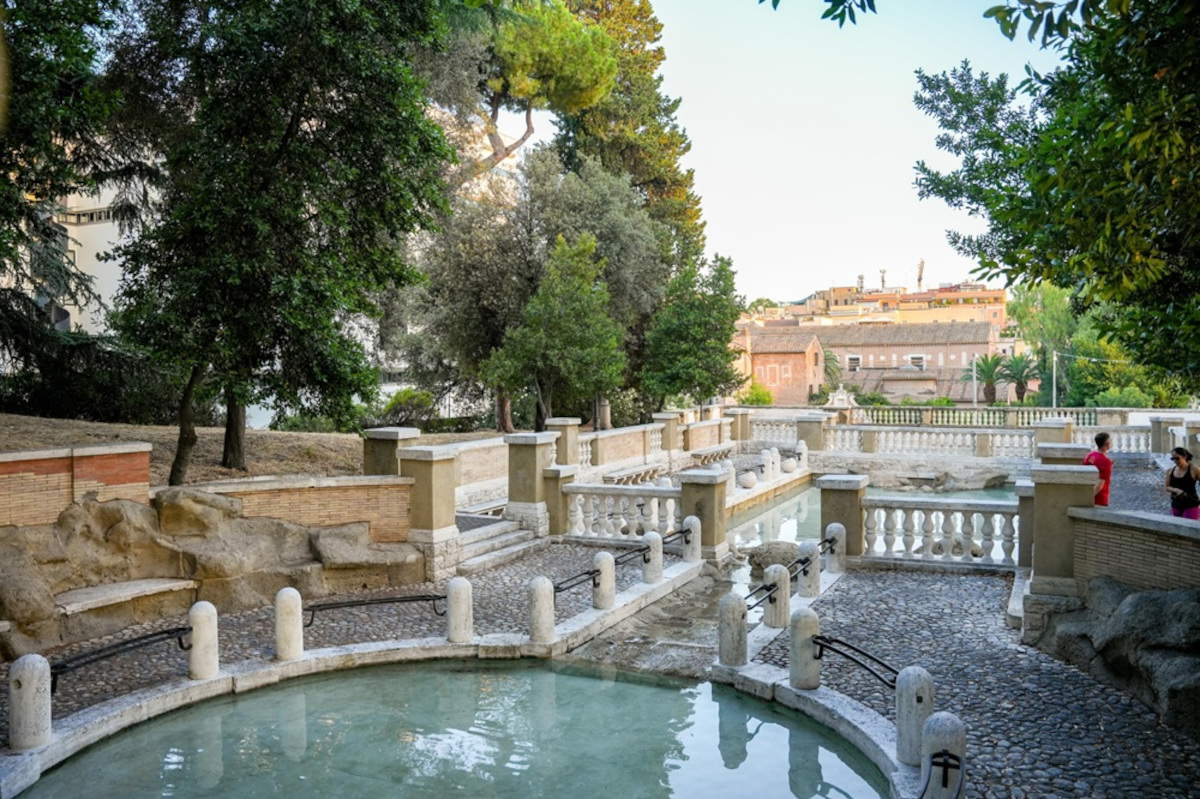
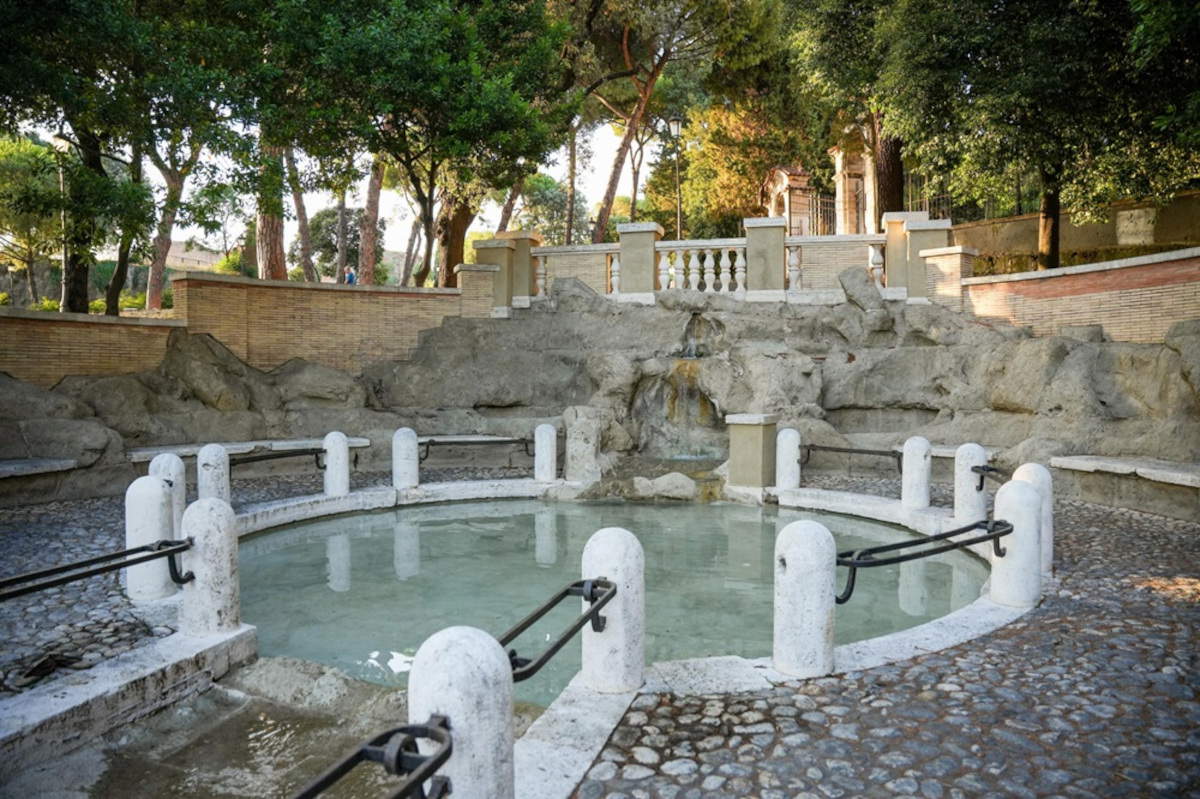
The history of Colle Oppio Park dates back to 1871, when the area was designated as a public garden as part of Rome’s new urban planning initiatives and included in the preservation plan for the so-called “reserved monumental zone.” The park’s current appearance, however, is the result of interventions carried out during the governor’s term, characterized by a particular focus on both the enhancement of the ruins of ancient Rome and the creation of large urban green spaces.
Between 1928 and 1932, architect Raffaele de Vico designed the garden’s initial core in the area of the substructures of the large southern exedra of the Baths of Trajan and along Via Labicana, organizing the landscape around the remains of the Domus Aurea through two main thoroughfares, Viale Mizzi and Viale della Domus Aurea, enhanced by monumental entrances and a complex system of fountains that took advantage of the hill’s natural slope. In 1935–1936, Antonio Muñoz, then Director of Antiquities and Fine Arts for the Governorate of Rome, completed the landscaping of the upper part of the hill, transforming it into an archaeological park designed to highlight the monumental remains of the Baths of Trajan and offer new panoramic views of the city, in accordance with an urban planning concept that still today characterizes one of the capital’s most important historic green spaces.
|
| Rome: Restoration of Colle Oppio Park Completed—Fountains, Entrances, and Historic Plumbing System Restored |

Warning: the translation into English of the original Italian article was created using automatic tools. We undertake to review all articles, but we do not guarantee the total absence of inaccuracies in the translation due to the program. You can find the original by clicking on the ITA button. If you find any mistake,please contact us.




























 IT
IT FR
FR DE
DE ES
ES CN
CN


