





The Hermitage Museum in St. Petersburg has decided to suspend all archaeological expeditions to Russian-occupied Crimea, postponing fieldwork until further notice. The decision comes at a time of high tension on the peninsula, which was unilaterally annexed by Moscow in 2014, while the Kremlin has declared a state of emergency due to a severe fuel shortage caused by Ukraine’s attacks on Russian refineries, infrastructure, and strategic targets.
The postponement of the archaeological campaigns was confirmed by archaeologist Alexander Butyagin, head of the Hermitage expedition at the Myrmekion site, who explained in a statement released to the Russian news agency TASS that all missions have been postponed until the situation allows for normal operations to resume. “The expeditions,” he said, “are being postponed until the situation improves. The reasons, I believe, speak for themselves. At the moment, it is difficult to organize the work normally.”
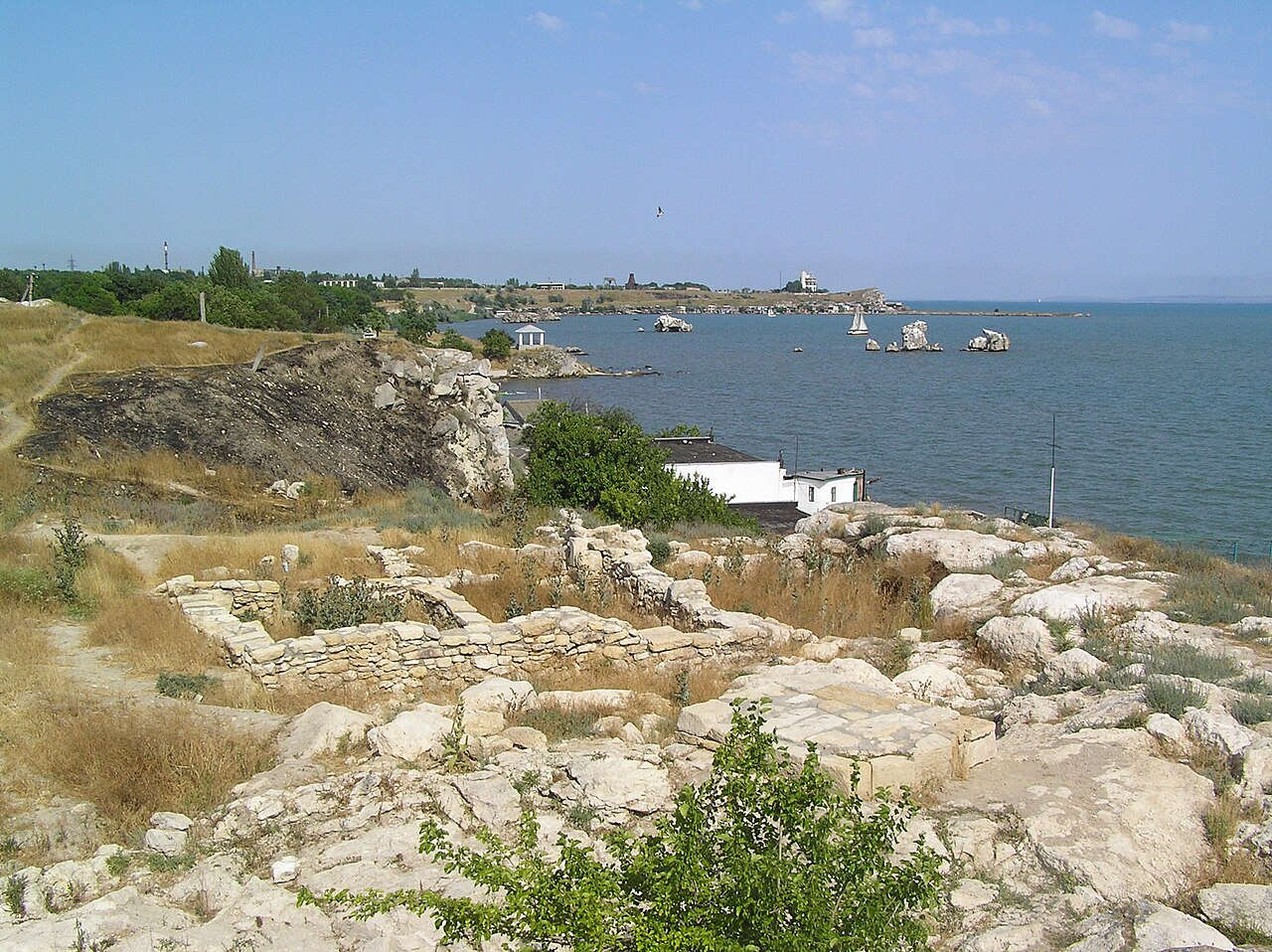
The suspension comes amid a particularly sensitive context, both politically and legally. Butyagin himself is, in fact, a particularly controversial figure: Ukrainian authorities accuse him of conducting excavations at the Myrmekion archaeological site without the authorizations required by Kyiv’s legislation following the Russian Federation’s annexation of Crimea, so much so that in 2025, Ukrainian prosecutors formally charged him, alleging that the archaeological activities had been carried out in violation of Ukraine’s sovereignty over the peninsula. In December of that same year, the archaeologist was arrested in Poland based on an extradition request filed by Ukraine. However, in March of this year, a district court in Warsaw ruled that the extradition request was legally admissible, and the proceedings were suspended following an appeal filed by the defense, with the case being transferred to higher courts within the Polish judicial system. In any case, before the legal proceedings were concluded, Butyagin was released as part of a prisoner exchange between Belarus and Russia mediated by the United States, a development that allowed him to return to Russian territory.
But this is not merely a personal matter for the archaeologist: the controversy surrounding Russia’s research activities in the occupied territories of Crimea is much broader. Crimea is an integral part of Ukraine’s territory, and, like the international community, Ukraine does not recognize Russia’s 2014 annexation. Consequently, according to Kyiv, any archaeological work carried out in the area requires authorization from Ukrainian authorities. The issue of the legitimacy of archaeological activities in Crimea obviously involves not only the legal aspects of territorial sovereignty but also the protection of cultural heritage and the management of archaeological sites.
In Myrmekion specifically, according to the authorities in Kyiv, thirty gold coins—twenty-six of which bear the name of Alexander the Great—were reportedly removed, and damage was allegedly caused to a protected archaeological site. For these reasons as well, in February 2025, Ukrainian military intelligence added Butyagin to the government registry listing individuals accused of violating Ukrainian law in territories occupied by Russia, which, for its part, denies all charges, dismissing the Ukrainian allegations as baseless.
Furthermore, Ukrainian cultural authorities have long accused Russian forces of illegally transferring museum collections from the occupied territories. According to Kyiv, numerous works of art stolen from Ukrainian museums have subsequently reappeared in cultural institutions in Russian-controlled Crimea. Among the most recent incidents is one reported by the Kherson Regional Art Museum: as early as 2024, museum staff stated that they had identified 100 works belonging to their collections that were believed to have been stolen during the Russian occupation of the city.
At the same time, international monitoring of activities affecting cultural heritage in the occupied territories continues. The website “The Ancient City of Tauric Chersonese and its Chora,” managed by the Crimean Institute for Strategic Studies, tracks developments at the UNESCO site of Tauric Chersonese. Another digital archive, called “War Sanctions,” collects information on excavations deemed illegal, museum thefts, and the destruction of cultural property in various areas of Ukraine.
The Crimean Institute for Strategic Studies has also developed an interactive map documenting destruction, looting, and archaeological activities considered unlawful. Several academic studies in recent years have analyzed Russia’s management of cultural heritage, with a particular focus on Crimea. Ukrainian authorities claim that numerous Russian archaeologists have participated in excavation campaigns in violation of both national legislation and international law. According to Kyiv, many of these operations were linked to major infrastructure projects, such as the construction of the highway connecting the Crimean Bridge, near Kerch, to Sevastopol.
The construction work is said to have resulted in the destruction of numerous archaeological sites, although, according to some scholars, the preventive archaeological surveys conducted before work began did allow for the documentation of some of the historical evidence, adhering to the discipline’s methodological standards despite significant operational pressures.
The debate also remains open on ethical and professional grounds. Some scholars believe that legal action against archaeologists involved in activities in the occupied territories is justified, while others urge a distinction between individual responsibilities and the political context in which many Russian researchers operate.
 |
| The Hermitage Suspends Archaeological Expeditions in Russian-Occupied Crimea |

Warning: the translation into English of the original Italian article was created using automatic tools. We undertake to review all articles, but we do not guarantee the total absence of inaccuracies in the translation due to the program. You can find the original by clicking on the ITA button. If you find any mistake,please contact us.
























 IT
IT FR
FR DE
DE ES
ES CN
CN


