



by Redazione 26/07/2026



Categories: News / Disclaimer
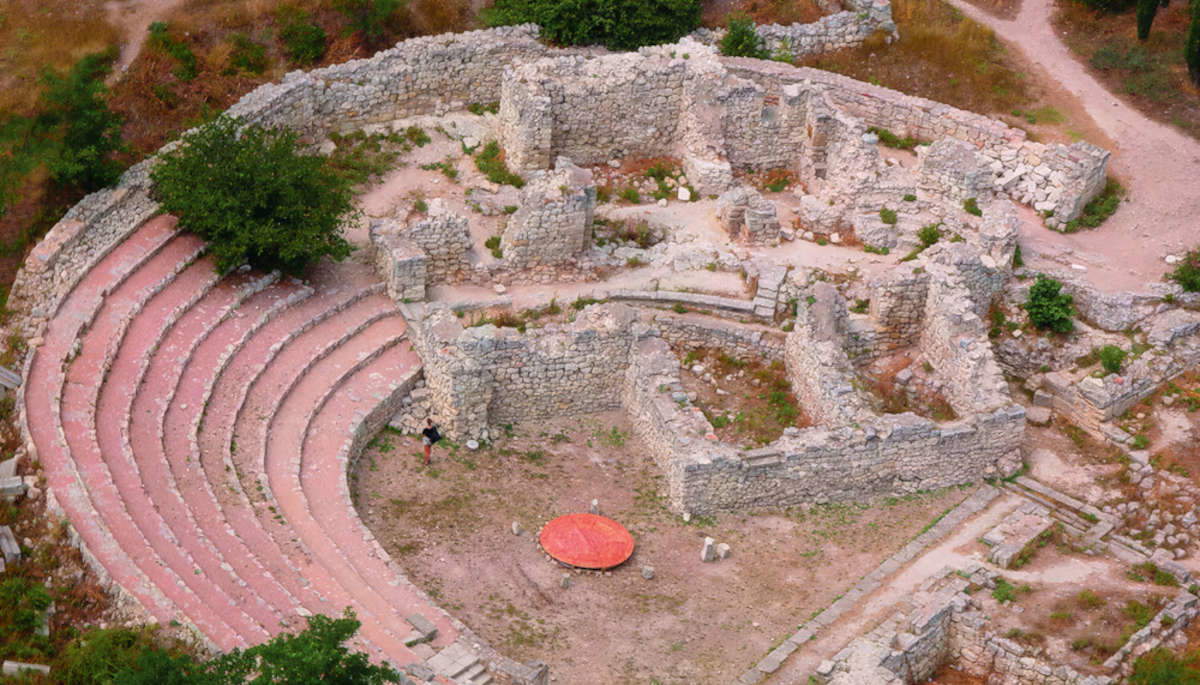
The UNESCO World Heritage Committee has inscribed the ancient city of Chersonesos Taurica—an archaeological site located in Ukraine, in Crimea, which is occupied by the Russian Federation—on the List of World Heritage in Danger. The decision highlights the risks associated with illegal excavations, new construction projects, and damage to the archaeological site.

The ancient city of Chersonesos Taurica and its chora ( i.e., the agricultural areas surrounding the settlement), located on the Crimean Peninsula inRussian-occupied Ukraine , have been inscribed on UNESCO’s List of World Heritage in Danger. The decision was adopted by the World Heritage Committee during its 48th session, held in Busan, South Korea, and marks the first time a cultural property located in a territory of Ukraine occupied by the Russian Federation has been granted this specific status of international protection.

The measure was approved in accordance with Article 11, paragraph 4, of the Convention Concerning the Protection of the World Cultural and Natural Heritage and paragraphs 177–179 of the Operational Guidelines for the Implementation of the Convention. According to the Committee, the site is currently exposed to serious and specific threats that endanger its outstanding universal value, a condition that justifies its inclusion on the List of World Heritage in Danger. In explaining its decision, the Committee identified a number of factors that compromise the conservation of the archaeological complex. These include illegal archaeological excavations and the removal of cultural property, as well as large-scale construction projects within the site and its buffer zone.


Since the beginning of the occupation of Crimea, the Russian Federation has progressively integrated Chersonesos Taurica into its legal and administrative system, extending the application of Russian legislation to the site. At the same time, over one hundred incidents of illegal archaeological excavations within the protected area have reportedly been documented. Among the factors that most contributed to the Committee’s assessment was the implementation of the so-called “New Chersonesos” project, a vast construction project covering an area of more than 140,000 square meters. According to documentation reviewed by UNESCO, the work reportedly involved the disturbance of approximately 85,000 square meters of archaeological deposits and the removal of millions of artifacts.


In light of these circumstances, the World Heritage Committee recognized the presence of two of the risk categories outlined in UNESCO’s Operational Guidelines. The first concerns the so-called “established danger,” identified as the significant loss of the property’s historical authenticity resulting from the transformations carried out at the archaeological site. The second is “potential danger,” linked to the armed conflict, the change in the territory’s legal status, and the negative effects resulting from large-scale urban and infrastructure projects.
The Committee also calls for refraining from any action that could cause further damage to the ancient city of Chersonesos Taurica, its buffer zone, and the broader historical context in which the site is situated. This appeal is also extended to other cultural properties located in the temporarily occupied Crimea and included on UNESCO’s Tentative List of World Heritage Sites. These include the Genoese fortifications in the Mediterranean and Black Seas, which also encompass the Sudak fortress complex; the “Cultural Landscape of the Rock-Cut Cities of Crimean Gothia,” the monumental complex of the Palace of the Khans in Bakhchysarai, and the site dedicated to the “Astronomical Observatories of Ukraine,” with regard to the Crimean Astrophysical Observatory, as well as other properties on the “Tentative List”—that is, the list of sites nominated for inclusion on the World Heritage List.
The decision also includes a call to the international community to strengthen cooperation to prevent the illicit trafficking of cultural property, a phenomenon considered one of the main threats to heritage sites located in conflict-affected areas.
According to Ukrainian authorities, the inscription of Chersonesos Taurica on the List of World Heritage in Danger represents a particularly significant step at the international level. The decision officially records with UNESCO the consequences of the temporary occupation of Crimea on a site already inscribed on the World Heritage List, introduces additional international monitoring mechanisms, and strengthens the international legal framework for its protection.
Ukraine’s Minister of Culture, Tetyana Berezhna, called the measure “an extremely important international decision,” stating that it officially confirms the threats facing the monument due to Russia’s temporary occupation of Crimea. In a post on Facebook, Berezhna identified illegal excavations, new construction projects, the destruction of the archaeological context, and the removal of cultural property as the main risk factors.
|
| Ukraine: Ancient Chersonesos Taurica Added to UNESCO's List of World Heritage in Danger |
Warning: the translation into English of the original Italian article was created using automatic tools. We undertake to review all articles, but we do not guarantee the total absence of inaccuracies in the translation due to the program. You can find the original by clicking on the ITA button. If you find any mistake,please contact us.