





*Susanna and the Elders* is not simply a painting; it is more of an omen. Artemisia Gentileschi painted it for the first time in 1610, without knowing that shortly thereafter, at just 17 years old, she would be raped. On May 6, 1611, she was, in fact, raped within the walls of her own home by Agostino Tassi, a colleague of her father Orazio’s, whom he had specifically commissioned to teach her perspective. Needless to say, the outcome of the trial was predictable: the sentence was exile, but Tassi served only a small portion of it.
When Artemisia took up her brush, she transformed the biblical episode, portraying all the shame that Susanna felt despite her completely blameless beauty. This is why the painting—and, ultimately, its iconography—has become, in part due to the painter’s well-known biographical story, almost an allegory of male violence. A metaphor that, spanning the centuries, still draws a common thread today between the past and the dynamics of possession and control that fuel, in our times, the scourge of “femicide”—a term already designated, as early as 2023, by the Treccani encyclopedia as its word of the year. Women, in fact, like the defenseless and animals, have always been the primary “target” upon which all male violence is unleashed. In recent years, however, the number of women killed has been rising, painting a dramatic picture that only a barbaric government would fail to treat as a genuine emergency.
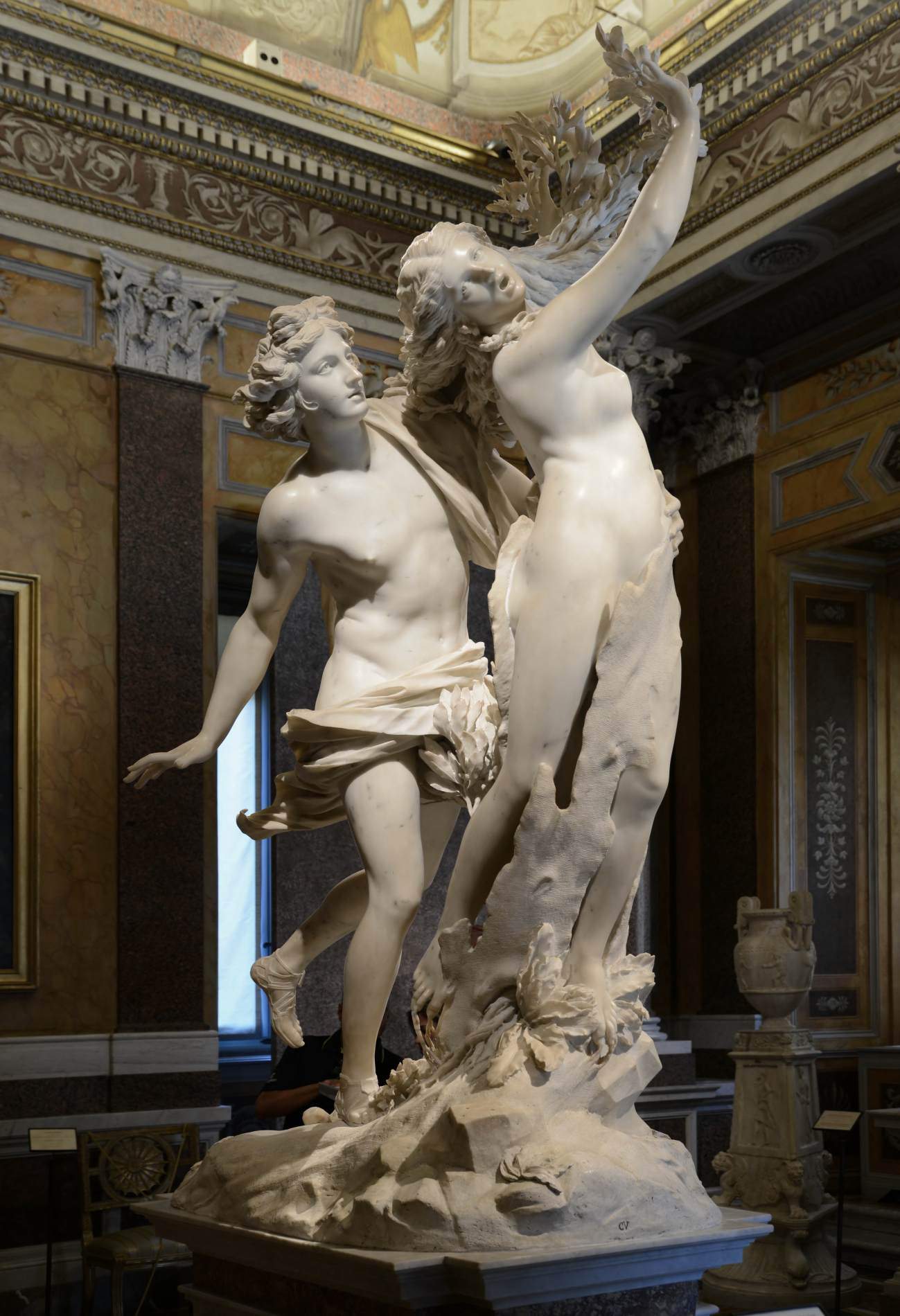
From the brutal deaths of women murdered today to the stories of female artists, such as Artemisia, our history bears the indelible mark of the abuses suffered by women. Even in mythology, the splendid Daphne—sculpted by Bernini and housed in Rome’s Galleria Borghese—tried to escape by shedding her skin: a desperate flight similar to that attempted, in vain, by many of the dozens of women killed each year at the hands of a man. But where do the roots of this evil lie? Why does it continue to recur in increasingly disturbing ways? Is it ever possible to try to uproot this malignant and poisonous plant?
Reversing course—turning the situation around to stop this “war”—seems a truly daunting task. To date, all that remains are paintings or sculptures. All that remains are red balloons and white coffins, red shoes and flowers. All that remains are the handprints that prehistoric women, by torchlight, traced on cave walls.
Before proposing an article on this topic to Federico Giannini, I spent a long time wondering whether I should do so. I needed to figure out if I really had the courage to write about it. What stirs within me, as a woman, when I speak of this sensitive and dramatic subject? Even though I’ve written a painful and uncomfortable article, I ask myself: what will truly change in women’s lives? Perhaps this piece will be among the most-read of the month, but then what?
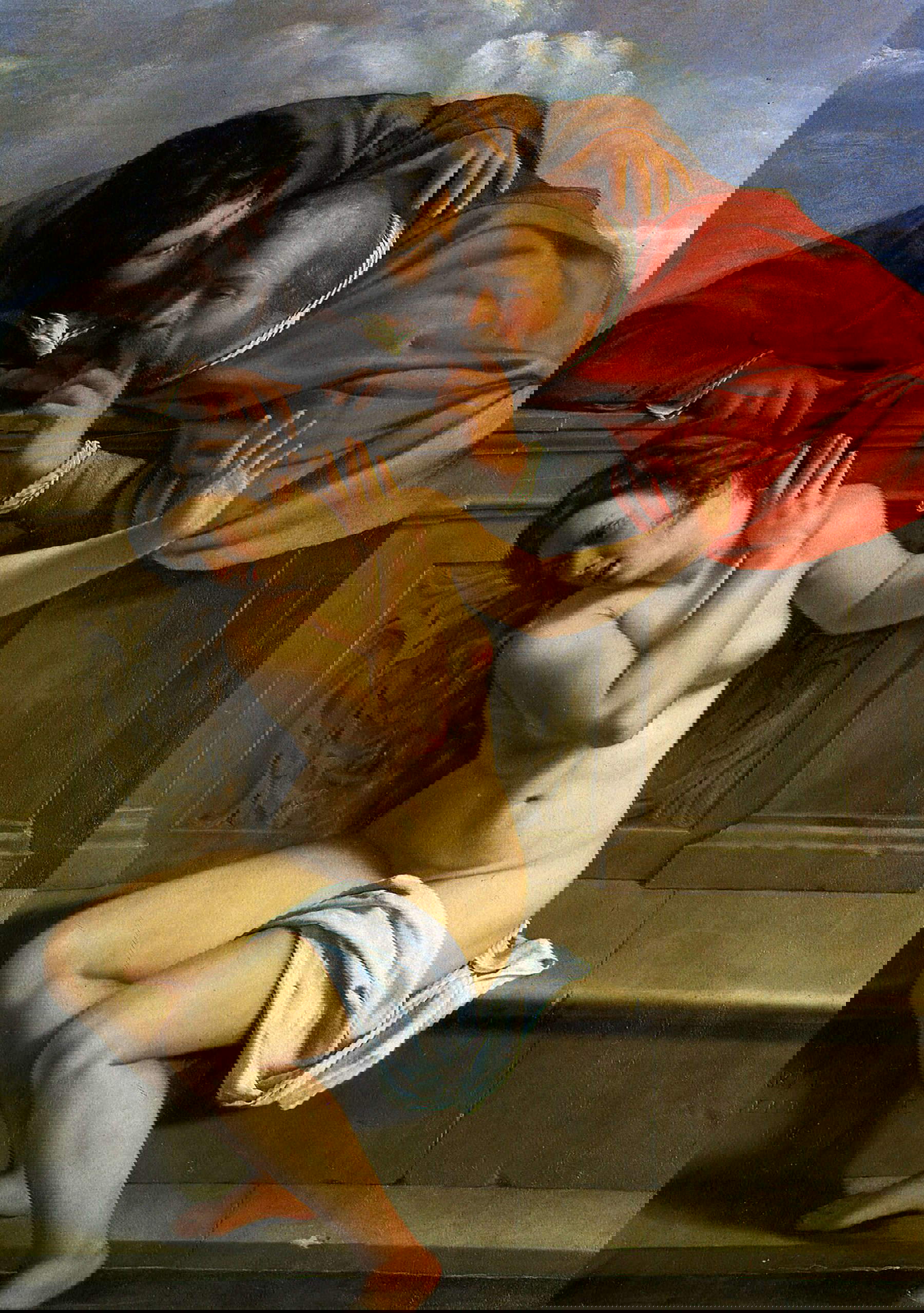
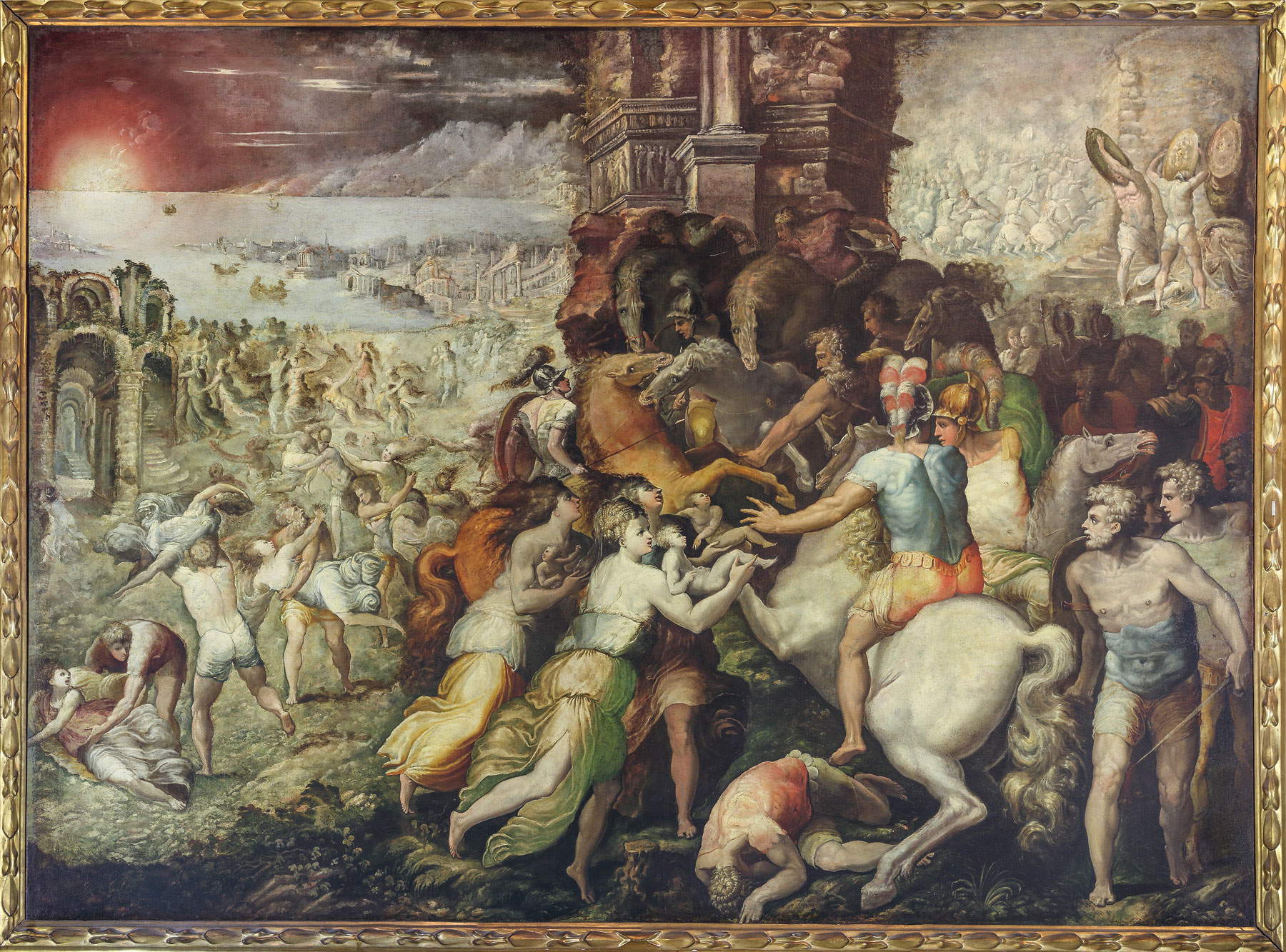
Moreover, ISTAT—which analyzes the phenomenon according to international standards and UN indicators, drawing on the database of the Central Directorate of Criminal Police—continues to record staggering figures. Over 80% of femicides in Italy occur within the home or at the hands of those who claim to love the victim. Tens of thousands of calls are made to the emergency number 1522 every year; reports are multiplying but are not always treated as emergencies. To try to explain this abyss into which we are sinking, we must start from the beginning: from those female handprints indelibly etched on cave walls. For too long, patriarchal culture has legitimized itself by portraying prehistory as an era of natural and inevitable female subordination. It was only at a certain point onward that this myth—thanks in part to the work of paleontologist Marylène Patou-Mathis—began to be dismantled piece by piece. The picture that emerges remains frightening, however, and we must strive to understand why.
Bioarchaeological analysis of Paleolithic cave walls—where it appears that 75% of the handprints made with pigments belong to women—in fact paints a picture of the female figure as the sacred center of the community. But this balance soon crumbled during the Neolithic period: the invention of agriculture and the emergence of private property simultaneously led to war and rape. As the scholar notes, it is from this moment onward that rape became historically structured as the counterpart to war of conquest. If war is aggression aimed at controlling the territory of others, the female body ceases to belong to the woman and becomes the first “territory” to be fenced off, conquered, or erased. “The desire to possess another’s body without their consent is found in numerous myths, in which women are raped after being abducted. Just like the culture of war, the culture of rape became part of depictions very early on. Is this perhaps the reason why violence against women has been tolerated for centuries?” (Marylène Patou-Mathis, Prehistory Is Female: An Invisible History of Women, Allary Edition, 2020, pp. 20–21). According to Patou-Mathis, this is a dynamic that Western art history seems to have normalized, aestheticizing abduction and abuse over the centuries under the guise of classical myth, as illustrated by the famous metamorphosis of Daphne.
Attempting to deconstruct this centuries-old “narrative” requires a profound effort to rewrite history and educational approaches. This endeavor can bring to light the real presence of women beyond gender stereotypes, discrimination, and the oppression they endure. Many educational initiatives are moving in this direction, using a “re-education” of the gaze to analyze women’s condition, cultural production, and figurative representation. I have long studied the visual representation of women, from Roman antiquity (with historical figures such as Livia, Messalina, or the Vestal Virgins) to the contemporary era. If I were to summarize the findings—especially regarding antiquity—they show how official historiography has all too often attempted, and succeeded, in “taming” or demonizing the female figure.
Re-examining women’s history through historical sources, literature, and visual works—combining theory with field research and fostering a dialogue between past and present within various collectives of contemporary women artists—means, at the very least, attempting to break the invisibility to which patriarchal culture had relegated them. Art historiography would thus cease to be merely a “catalog” of works and a sterile list of female figures, becoming, more appropriately, an instrument of critical awareness and cultural policy. Over time, however, there has been a reversal of this cultural trend. In the 1970s, a breaking point occurred that allowed for a transformation: there was a shift from a certain traditional aesthetic “complicity” to a reconfiguration of the female body, which became a political and narrative “subject,” ceasing to be a passive “object” of art. In this crucial transition, the theoretical reflections of art historians and feminists such as Carla Lonzi become fundamental. The Florentine scholar demonstrated how the traditional art institution was steeped in a patriarchal structure that reduced women to inert muses or models of consumption. And this is precisely what is dismantled—artistically—in Body Art, even in its most radical forms.
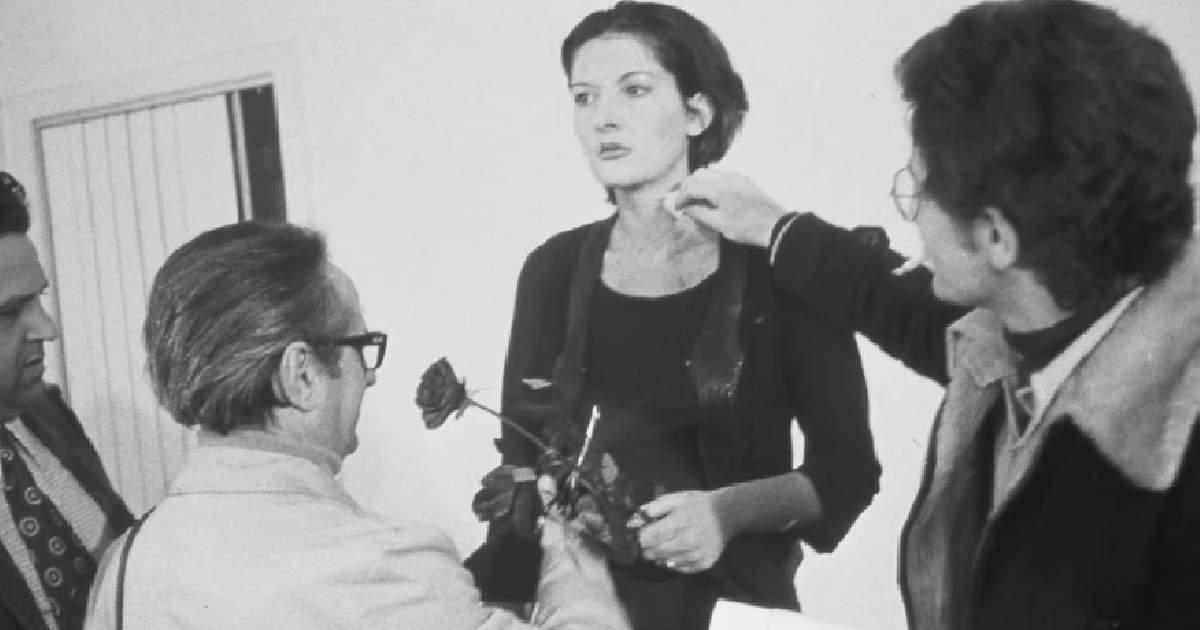
To give just a few examples, Gina Pane, with her *Azione Sentimentale* (1973), shatters social and patriarchal numbness, transforming physical laceration into an act of pure empathy and visual ethics. Valie Export, by forcing men to maintain direct eye contact while touching her chest—protected by a box—dismantles voyeurism and the objectification of the female body in public space. Marina Abramović, too, in her famous 1974 performance *Rhythm 0*, places her motionless body at the disposal of the audience for six hours alongside 72 objects—including a knife and a loaded gun—revealing the terrifying speed with which the female figure is stripped of her humanity and subjected to violence. And Ana Mendieta, in response to the rape and murder of a female student, uses blood, earth, and her own body imprint to depict the annihilation and physical erasure of the victims of femicide.
Art historian and critic Angela Vettese has long studied the phenomenon of Body Art and the discourse on the body in contemporary art (including in her latest publication, *La rivolta del corpo: The Artists Who Have Used It, Pushed to the Limit, Liberated, Laterza, 2024), arguing that the use of the body and the wound in contemporary art is never mere exhibitionism or a quest for scandal, but, if anything, a cognitive and ethical device. In her view, Body Art and performative practices serve as a tool for exploring the limits of human vulnerability, “compelling” the viewer to become directly involved. Art exposes pain and breaks down the safe distance of the gaze; it does not allow one to look away or divert one’s attention elsewhere, transforming the observer from a passive spectator into a participatory and responsible witness.
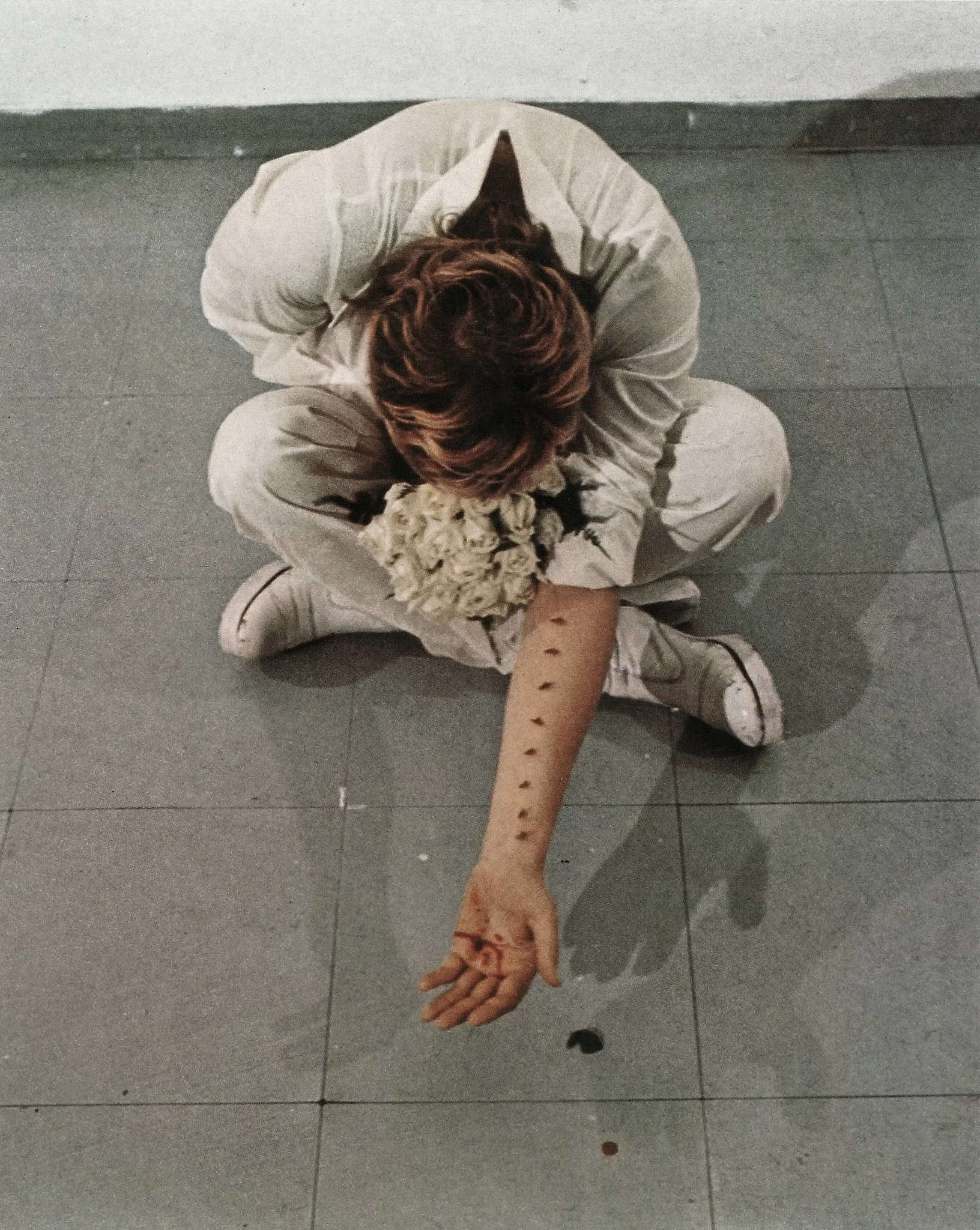


However, physical violence against women demands a cross-cutting discourse because it is fueled, prepared, and justified even in everyday language. As early as the 1980s, the linguist Alma Sabatini, in her *Recommendations for a Non-Sexist Use of the Italian Language*, demonstrated how language does not merely reflect reality but constructs and shapes it. Moreover, how can we forget Rosa Luxemburg’s words on the matter? “The first revolutionary act is to call things by their proper names”: a sexist use of words conveys, once again, a message of submission.
No aspect should be overlooked, however: religion, the world of work. To what extent has the Catholic religion influenced this culture of female submission? And how much weight does economic inequality carry? How often do women refrain from reporting their abusers due to a lack of professional opportunities? Today, these questions—straddling the realms of the body, language, the economy, morality, and the public sphere—give rise to diverse initiatives, including mass mobilization. When Elina Chauvet arranges her *Zapatos Rojos* in Ciudad Juárez, she evokes the haunting presence of the murdered woman through a participatory installation. The red shoes are not meant to celebrate death or martyrdom, but to trace the path of a collective responsibility that cannot be ignored. It is the same impulse that has driven movements such as “If Not Now, When?” and that resonates in the reflections of essayist Pauline Harmange. In her controversial book *I Hate Men* (Garzanti, 2020), what is actually laid bare is that anger and distrust toward the culture of possession are not expressions of blind hatred toward men, but rather the first form of self-defense—a repulsion toward the complicity of silence.
While art, women’s history, and linguistics allow us to understand the “reasons” behind femicide, the answer to the questions we began with can only come through an educational and political act. We cannot limit ourselves to outrage in the face of yet another white coffin or another red ribbon. It doesn’t accomplish much. The real challenge, perhaps, lies in our ability to bring this awareness into the educational system. Emotional education for both men and women, ongoing training on the meaning of consent, education on gender history, and respect for language are not optional: they are perhaps the only construction site, the sole open and viable laboratory of ideas, capable of dismantling the logic of possession and control before it turns into physical oppression.
It’s obvious that an unpretentious article like this won’t stop the trail of blood shed by women; nevertheless, continuing to write, name, and analyze may be one way to avoid becoming complicit in the silence. Knowing that patriarchy is not a state of nature, but a historical construct born of property and fueled by cultural, linguistic, historiographical—and even artistic, in some cases—complicity, limits it to a human construct, which, as such, can and must be dismantled. As soon as possible.
In the meantime, however, the press chases after news stories and tells us about brutal femicides. Where are we headed? Where? I ask myself. Art—its power of imagination—what good is it, then? How can it save a woman? Art can do so, perhaps, only over time—if and only if we do not regard it, like all culture, as a fleeting form of entertainment. It is not a display of knowledge, but at its best, it is an act of civilization, and it can and must awaken our consciences. It is an extraordinary mechanism for cultural salvation that, by unmasking the banal narrative of possession, restores the truth to us, demolishes the consolatory myth of a natural predisposition to violence, and forces us to face head-on a dramatic aspect of the reality we are living through. Even the harshest reality. It allows us to truly dream of a society that is more just toward women—a society that is simply more humane. In this way, and only in this way, will there one day be no more red benches; only in this way will no one ever again weep for a murdered woman.


The author of this article: Anna de Fazio Siciliano
Anna De Fazio Siciliano è una scrittrice, storica e critica d’arte, docente e redattrice specializzata nella comunicazione e nella divulgazione dell’arte. Nel corso della sua attività didattica ha insegnato Storia dell’arte antica e contemporanea, Estetica e Mercato dell’arte presso istituzioni accademiche. I suoi interessi comprendono la ricerca storico-artistica, la critica d’arte, la progettazione curatoriale e lo studio dei linguaggi dell’arte moderna e contemporanea. Durante il periodo di formazione presso la Galleria Borghese di Roma ha approfondito la diffusione del gusto egizio nell’arte italiana, a partire dalla decorazione della Sala Egizia del museo. A questo ambito di ricerca ha dedicato il volume Il gusto egizio, pubblicato da Pellegrini Editore. È autrice di saggi dedicati all’arte contemporanea e ai suoi protagonisti. La sua produzione comprende inoltre articoli, recensioni, interviste e testi critici per cataloghi e progetti espositivi. Recentemente il Direttore di Palazzo Madama di Torino, il Professore Giovanni Carlo Federico Villa ha presentato al Salone Internazionale del Libro di Torino il suo volume dedicato alla tutela del patrimonio, Diario di bordo Scoppa, Frammenti di un patrimonio perduto, edito da Gangemi International e impreziosito in quarta di copertina da un commento di Salvatore Settis. Ha collaborato sia con contributi online che su cartaceo con riviste specializzate quali «Exibart», «Art e Dossier», «Finestre sull’Arte», affrontando temi legati all’arte antica, moderna e contemporanea, alla tutela del patrimonio culturale e alla presenza femminile nella storia dell’arte. Nel 2015 ha fondato Artpressagency, realtà attiva nei settori dell’ufficio stampa, della comunicazione culturale, della critica d’arte e dell’editing. Attraverso questa attività ha collaborato con musei, fondazioni, archivi, istituzioni culturali, curatori e organizzazioni impegnate nella produzione e nella promozione di mostre ed eventi artistici. È stata inoltre membro del Comitato tecnico-scientifico degli Archives Legales Amedeo Modigliani, del FATA Museum e del GAL delle Terre Locridee dedicando la propria attività alla ricerca, alla comunicazione e alla valorizzazione della figura di Amedeo Modigliani e del patrimonio storico-artistico italiano.Warning: the translation into English of the original Italian article was created using automatic tools. We undertake to review all articles, but we do not guarantee the total absence of inaccuracies in the translation due to the program. You can find the original by clicking on the ITA button. If you find any mistake,please contact us.




























 IT
IT FR
FR DE
DE ES
ES CN
CN


