





“Although largely overlooked by critics for a time, Giovanni Bartolena has recently been ‘rediscovered’ by several scholars who have rightly highlighted his solid artistic talents.” So wrote journalist Mario Lepore in 1966, reviewing a retrospective dedicated to Giovanni Bartolena on the centennial of his birth, and noting a process of critical reevaluation that was gaining momentum precisely during those years. Yet, sixty years later, that reevaluation seems not to have been completed—perhaps it has even regressed—and Bartolena continues to occupy a marginal position in the landscape of 20th-century Italian painting. Contributing to this lack of understanding, for Bartolena as for other leading figures in Tuscan art—a misunderstanding that diminishes his experimental scope—has been the traditional classification within that category encompassing artists who grew up in the shadow of the Macchia movement and in dialogue with the principal architects of that realist revolution, yet who would each go on to forge their own independent and original paths. Bartolena belongs to the same generation as Nomellini, the Tommasi brothers, and Mario Puccini: all creators of important chapters in Italian art, with experiences that were in fact very different from one another, yet too often lumped together under the label of “post-Macchiaioli,” which nullifies their innovative energy by reducing them to mere updates of nineteenth-century tradition.
To dispel any doubt about the quality of the artistic exploration pursued by Bartolena throughout a life of sacrifice, and about his full belonging to the cultural climate of the twentieth century—if not as an avant-gardist, certainly not as a belated offshoot of the previous century, one need only recall the attention paid to him by some of the leading figures of that era. Carlo Carrà, reviewing one of his Milanese exhibitions in 1927, described him as an artist capable of seeing “on his own terms and not by reflection,” recognizing in his painting a fidelity to Fattori’s moral lesson but also a substantial expressive autonomy. It is no minor detail that Carrà himself owned a work by the Livorno-born artist—reportedly the only one he kept in his home, aside from his own.
No less significant is the case of Arturo Tosi, who, on the occasion of an exhibition in Livorno in 1930, acknowledged the influence Bartolena’s still lifes had exerted on his own painting. It is, in fact, precisely in the still lifes that Bartolena’s most original and recognizable contribution to his artistic exploration is found. His art shunned affectation and rejected any intellectual pretense, moving and finding its conclusion within the very limits of painting itself. A style of painting that was free in composition and often imbued with lyrical flashes, which nevertheless manifested themselves exclusively through color and line, without seeking validation beyond these cornerstones: it did not resort to symbolism, did not require intellectual constructs or narrative superstructures, but relied solely on the painter’s eye and instinct.
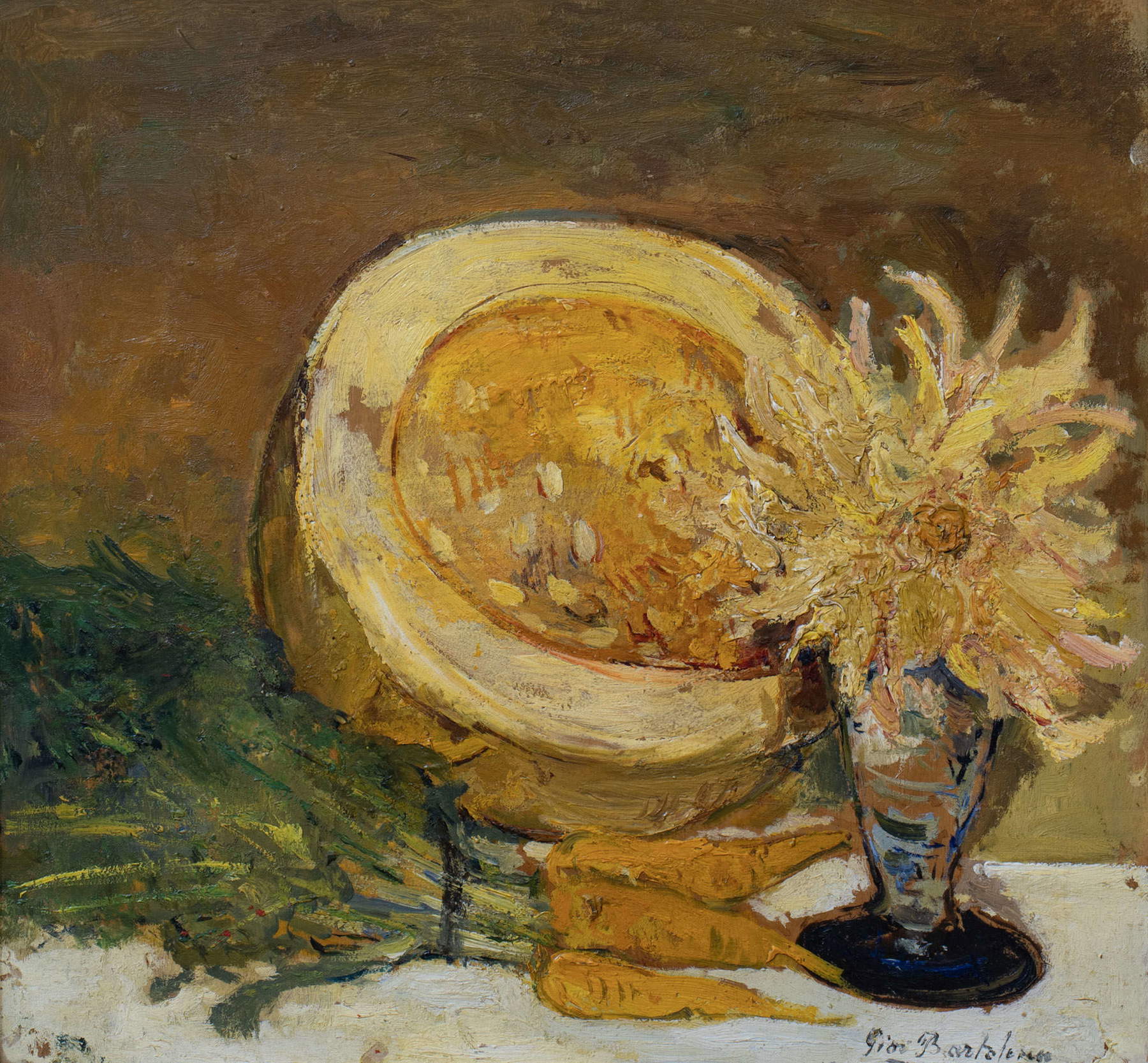
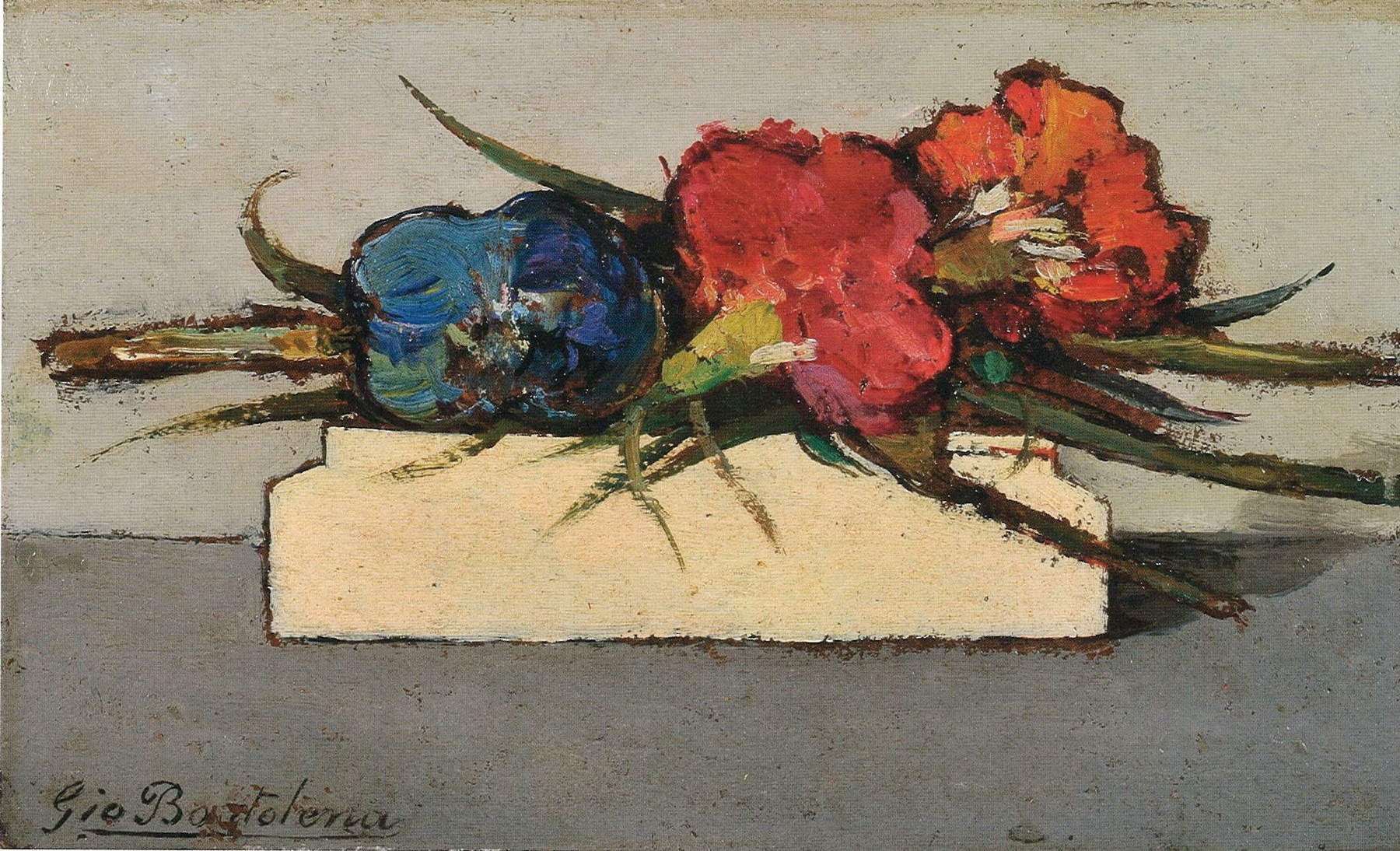
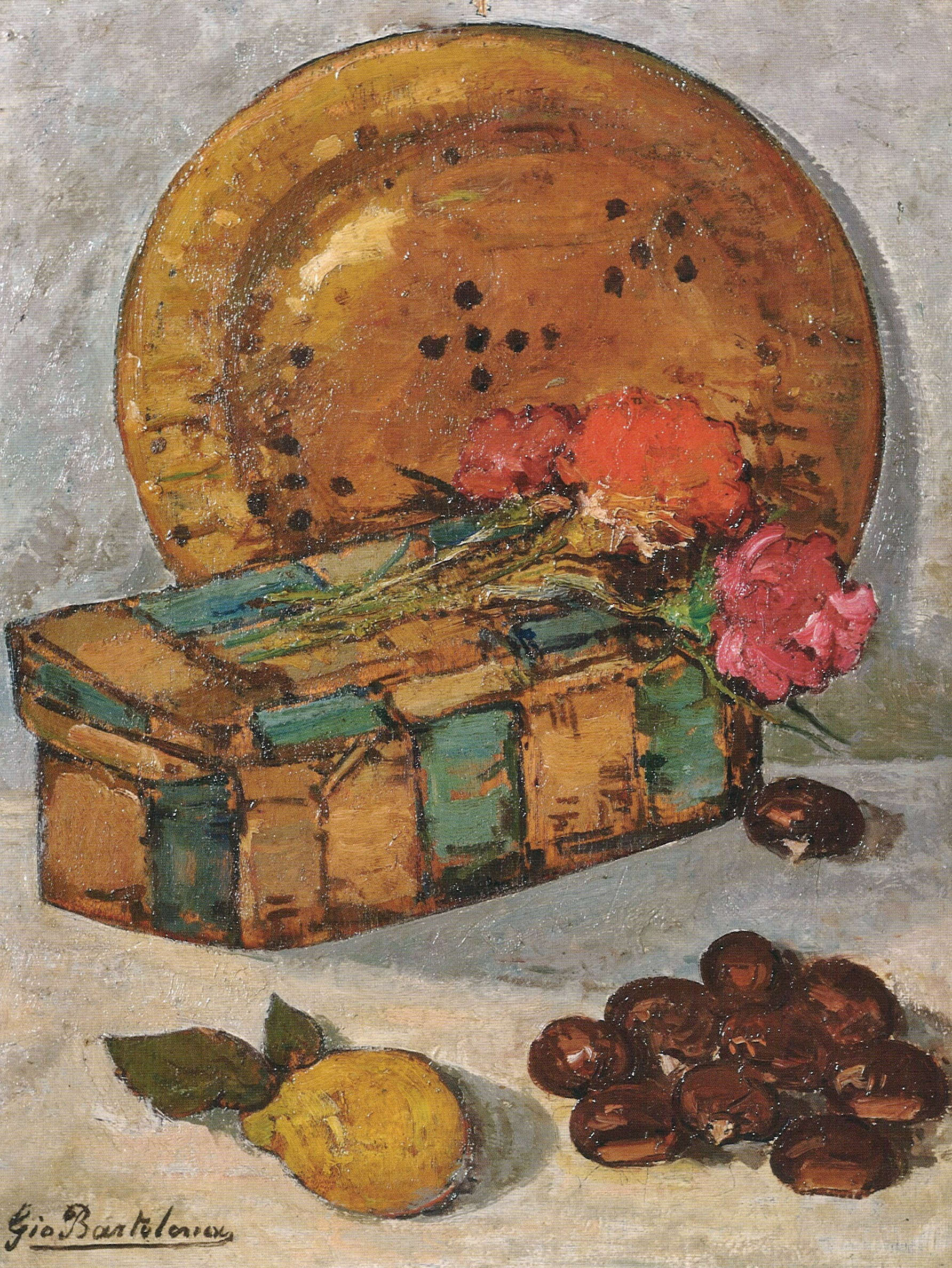
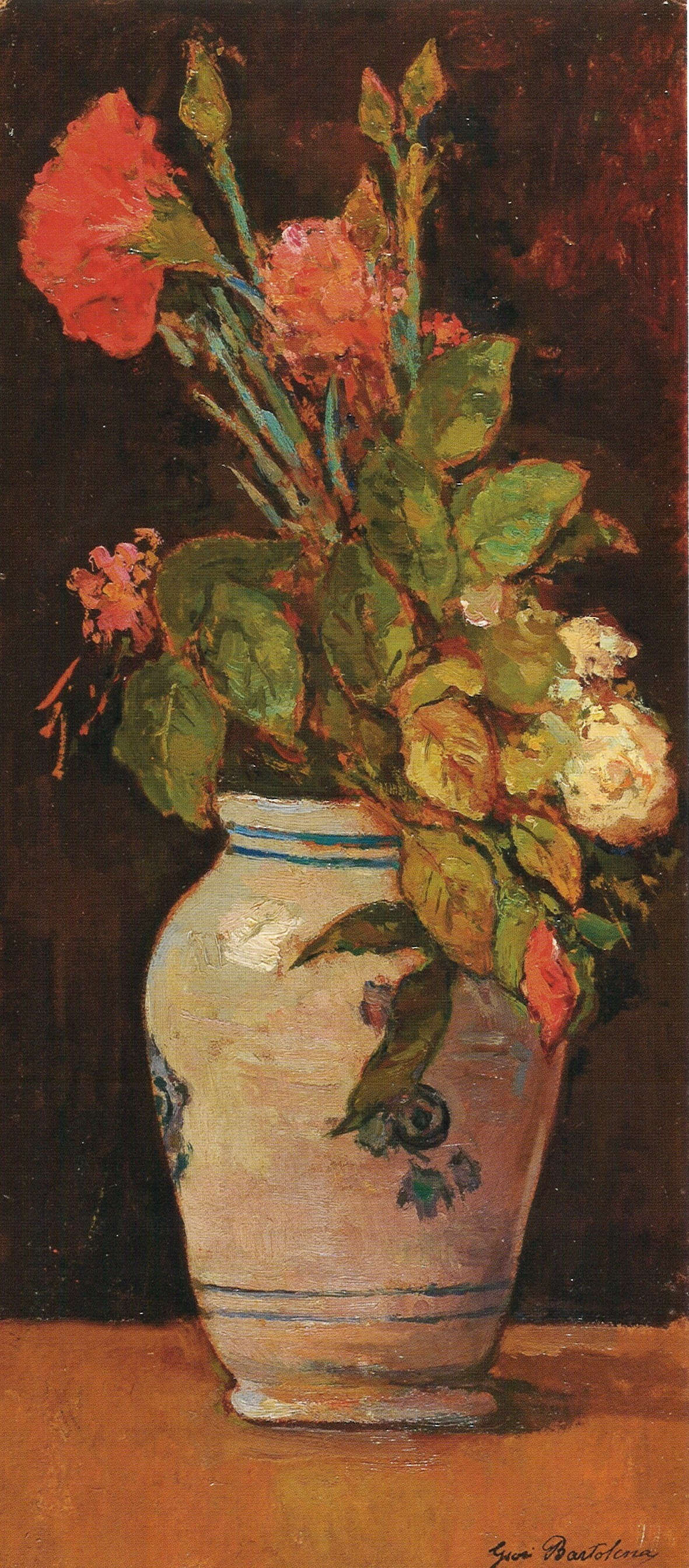
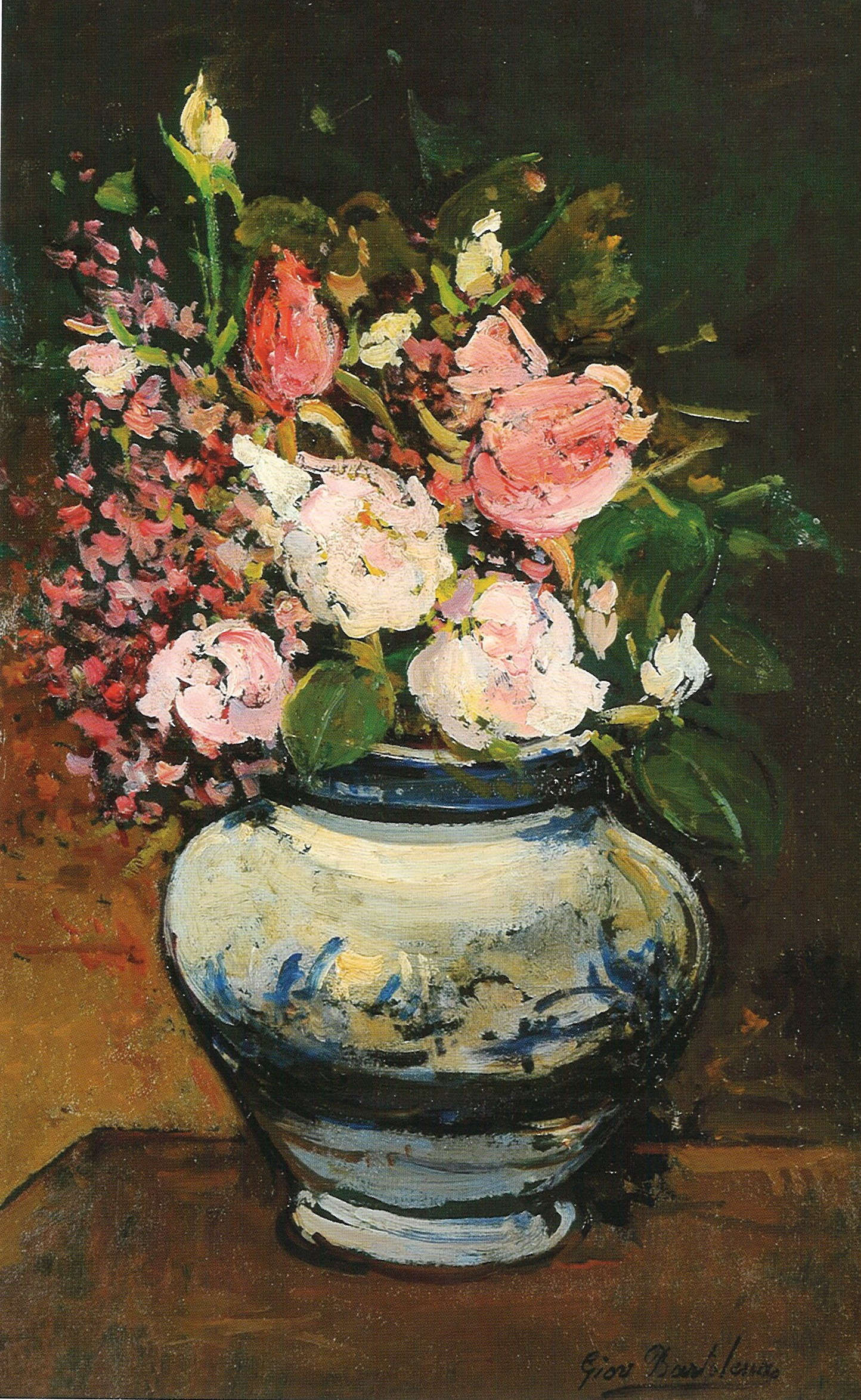
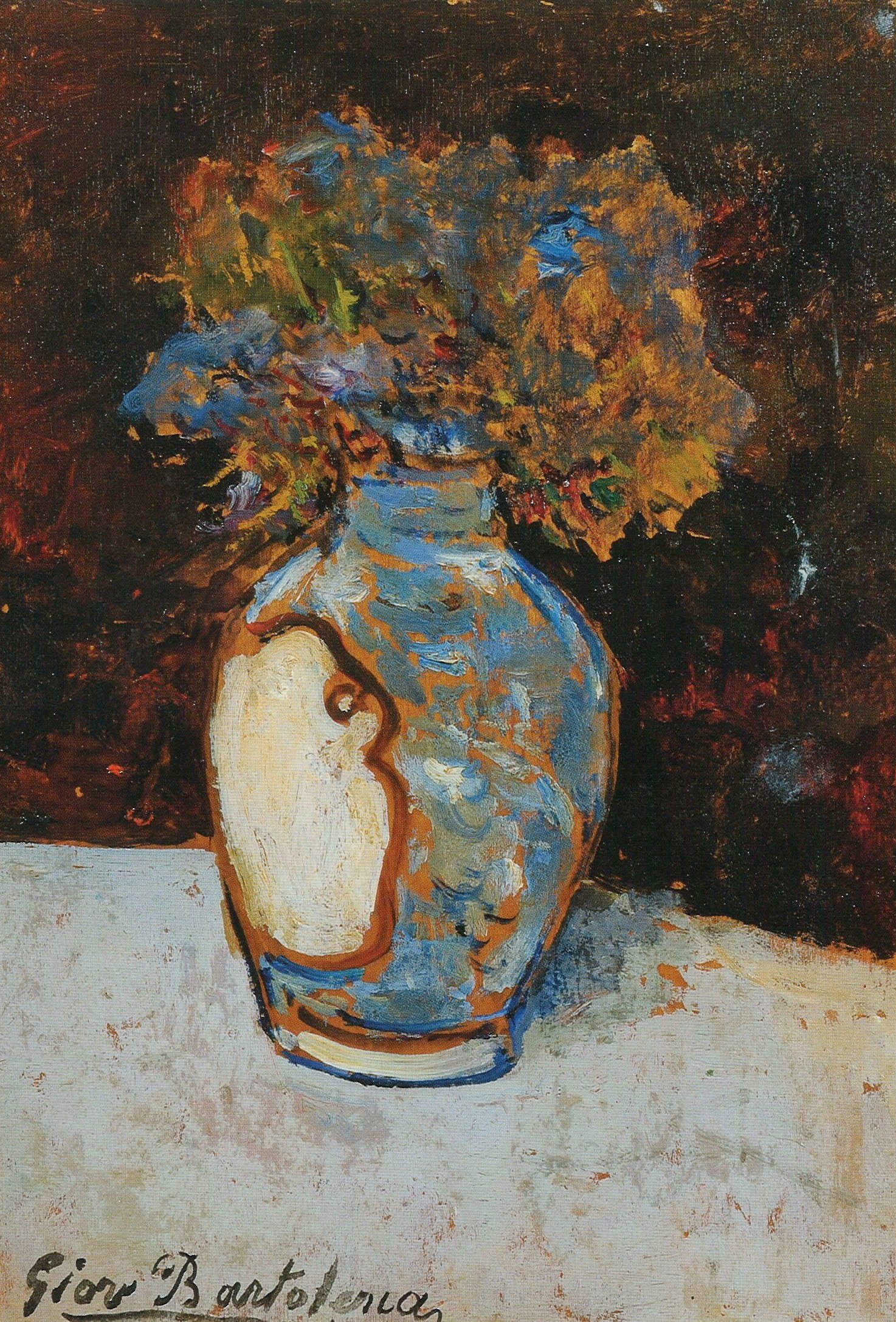
The finest part of Bartolena’s body of work—developed over the course of a long career that also forced him to make inevitable compromises to make a living, and which includes less successful or more repetitive pieces—gains extraordinary power precisely when those characteristics emerge that were destined to become his most authentic signature: a style defined by textured painting, rich colors, formal synthesis, and intense luminous density. But before delving fully into the subject of this article, it is worth providing some biographical background on the artist.
Giovanni Bartolena was born in Livorno in 1866 into a family that had produced talented painters: a namesake of ours had been a painter of religious altarpieces in the Romantic style, while his uncle Cesare—a masterpiece by whom is preserved at the Fattori Museum—guided him toward the Academy of Fine Arts in Florence. There he studied under Giovanni Fattori, whose influence was decisive, even though Bartolena initially approached his studies with little enthusiasm, risking expulsion. From his teacher, he absorbed above all an ethic of painting: direct engagement with reality, a distrust of all academic self-indulgence, and the encouragement to follow his own path without yielding to fads. His journey was anything but straightforward. Financial difficulties led him to Marseille in 1898, where he worked as a stable boy and painted in the evenings. Upon returning to Italy, he lived between Lucca, Florence, and Livorno; he frequented the Caffè Bardi, took part in the activities of the Gruppo Labronico, and found support from collectors and art dealers such as Luciano Cassuto, who in 1925 helped establish his reputation in Milan at Enrico Somaré’s “L’Esame” Gallery. He later participated in the 1930 Venice Biennale and the 1931 Rome Quadriennale, though he never truly emerged from a reclusive existence. He died in Livorno in 1942, leaving behind a body of work in which still life gradually became one of the most intense focal points of his artistic exploration.
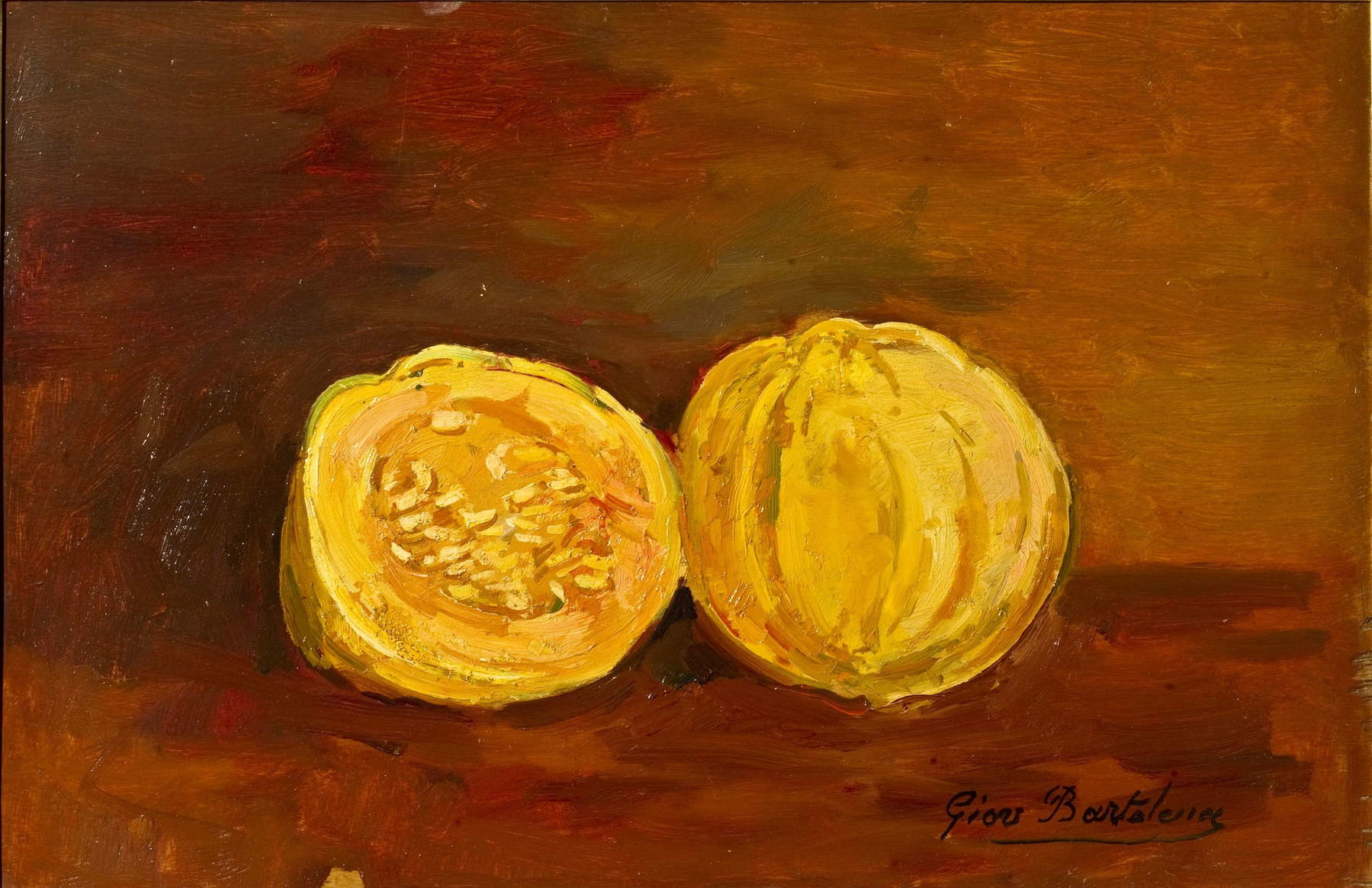
While his landscapes of the Tuscan countryside continued to engage with the Macchiaioli tradition and the legacy of Giovanni Fattori, it was in his depictions of flowers, fruits, shells, and simple household objects that the Livorno-born painter developed a visual language capable of anticipating some of the major artistic trends of the Italian twentieth century. He found a sort of communion with these humble subjects, which could, on the one hand, be filtered through that sense of the knowability of the external world that every student of Fattori developed according to a personal and individual approach, and then be mediated by his own sensibility. Beginning in 1918, the painter explored the theme with vigor: Bartolena’s brush brought synthetic compositions to life, simplifying descriptive embellishments and restoring full dignity to the most genuine and earthy aspects of reality. This approach leads some still lifes to be assembled with great harmony and balance, stripped of all excess; at other times, however, Bartolena seems to transcend the theme as a mere optical motif, in which the still life is no longer just an observed subject, but a vibrant, sometimes fleshy matter that breathes, retains humors and juices, drips with density and chromatic flashes, and caresses and chisels the volumes. Without forcing impossible genealogies, one might almost glimpse, in this physical engagement with the natural element, a distant resonance with certain works by Morlotti, where nature becomes a pictorial body, an organism, a living substance.
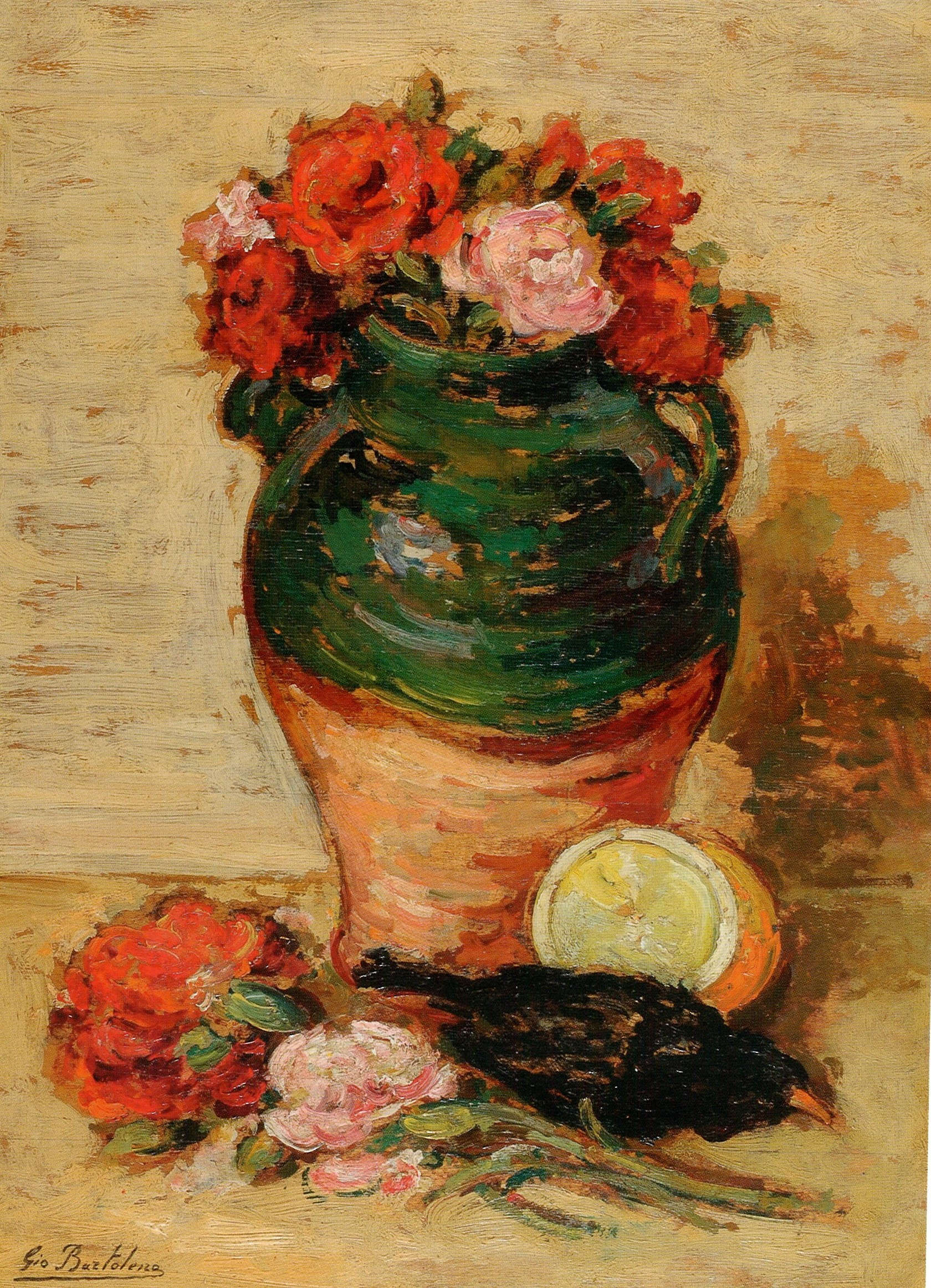
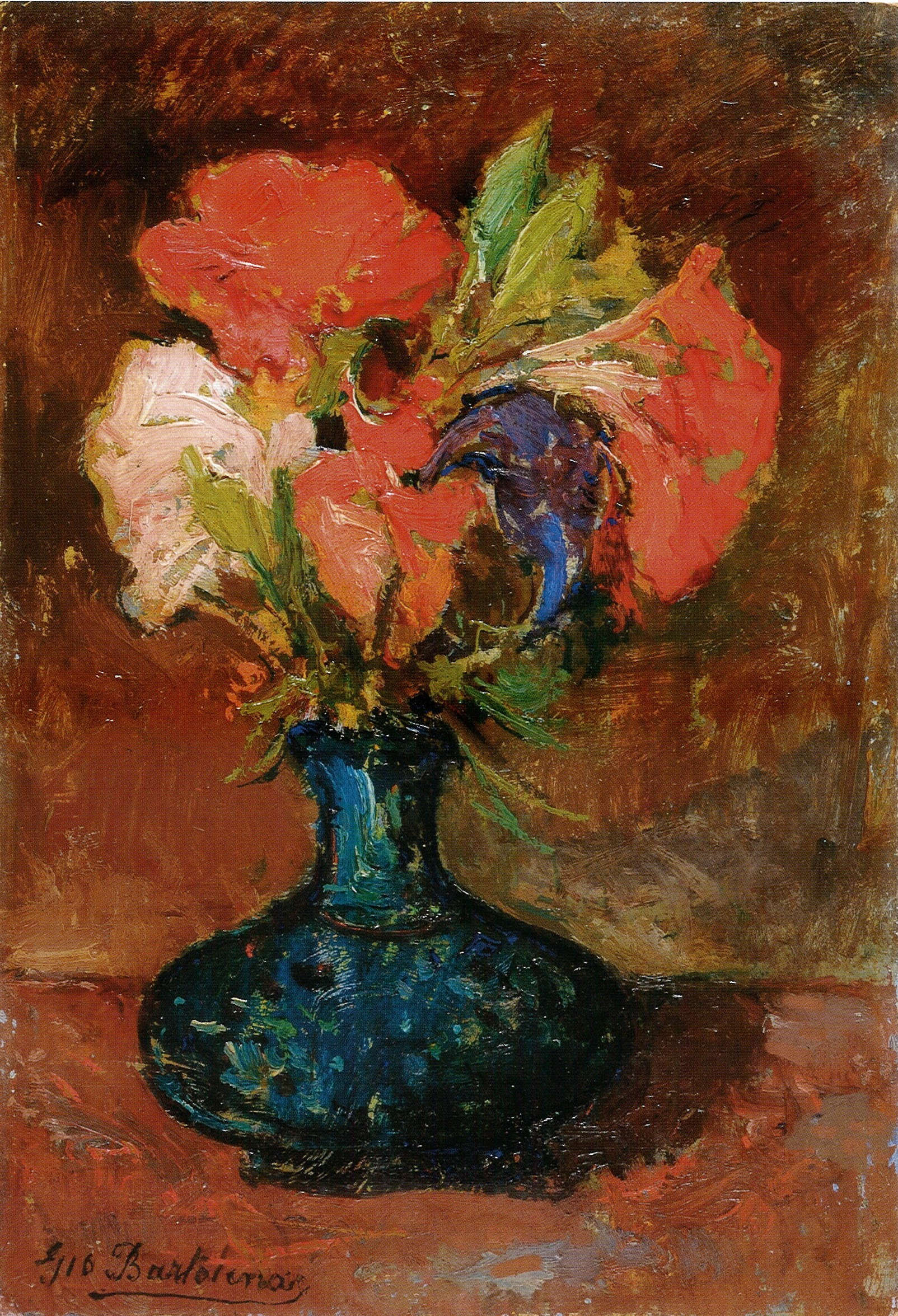
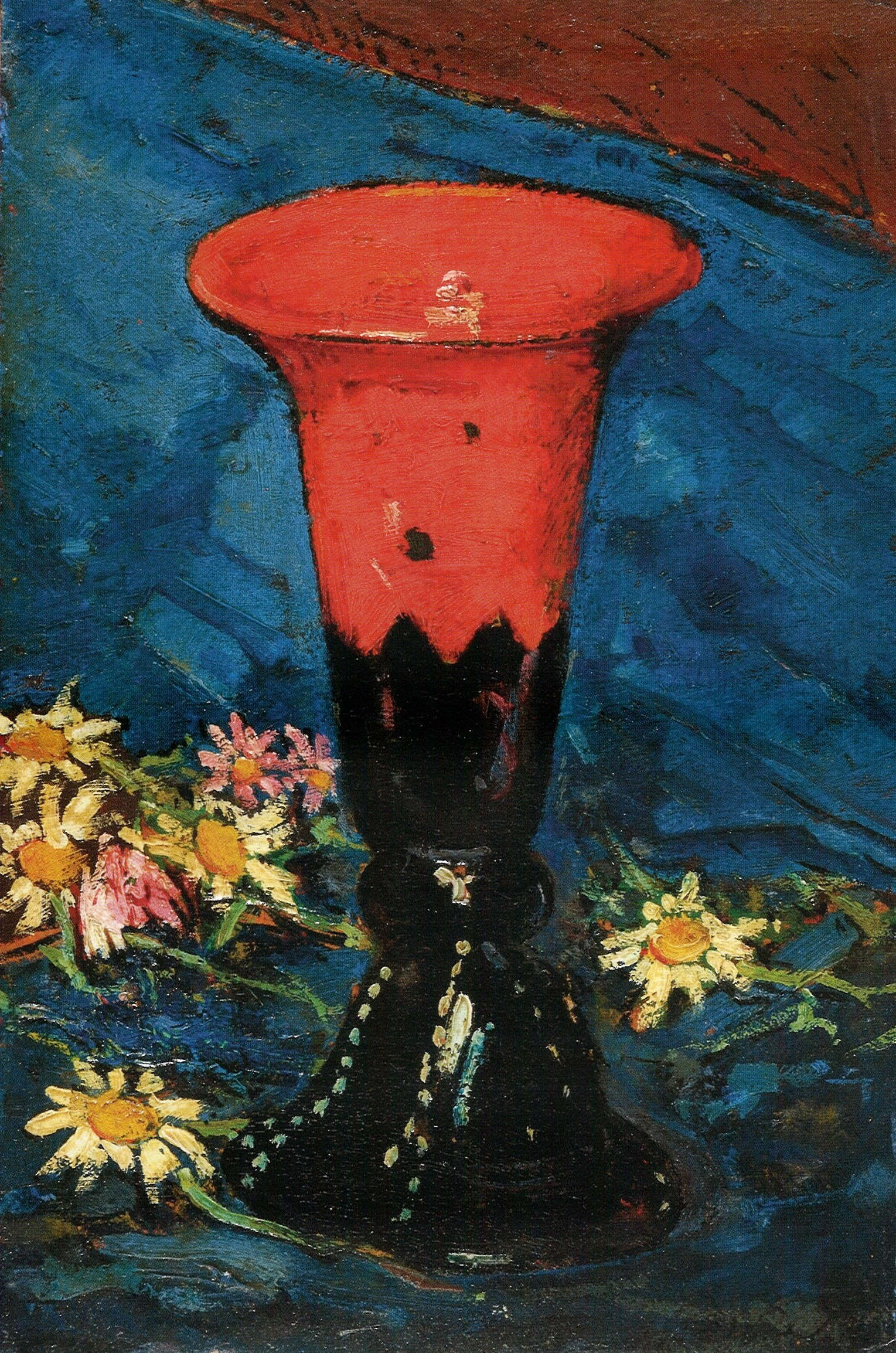
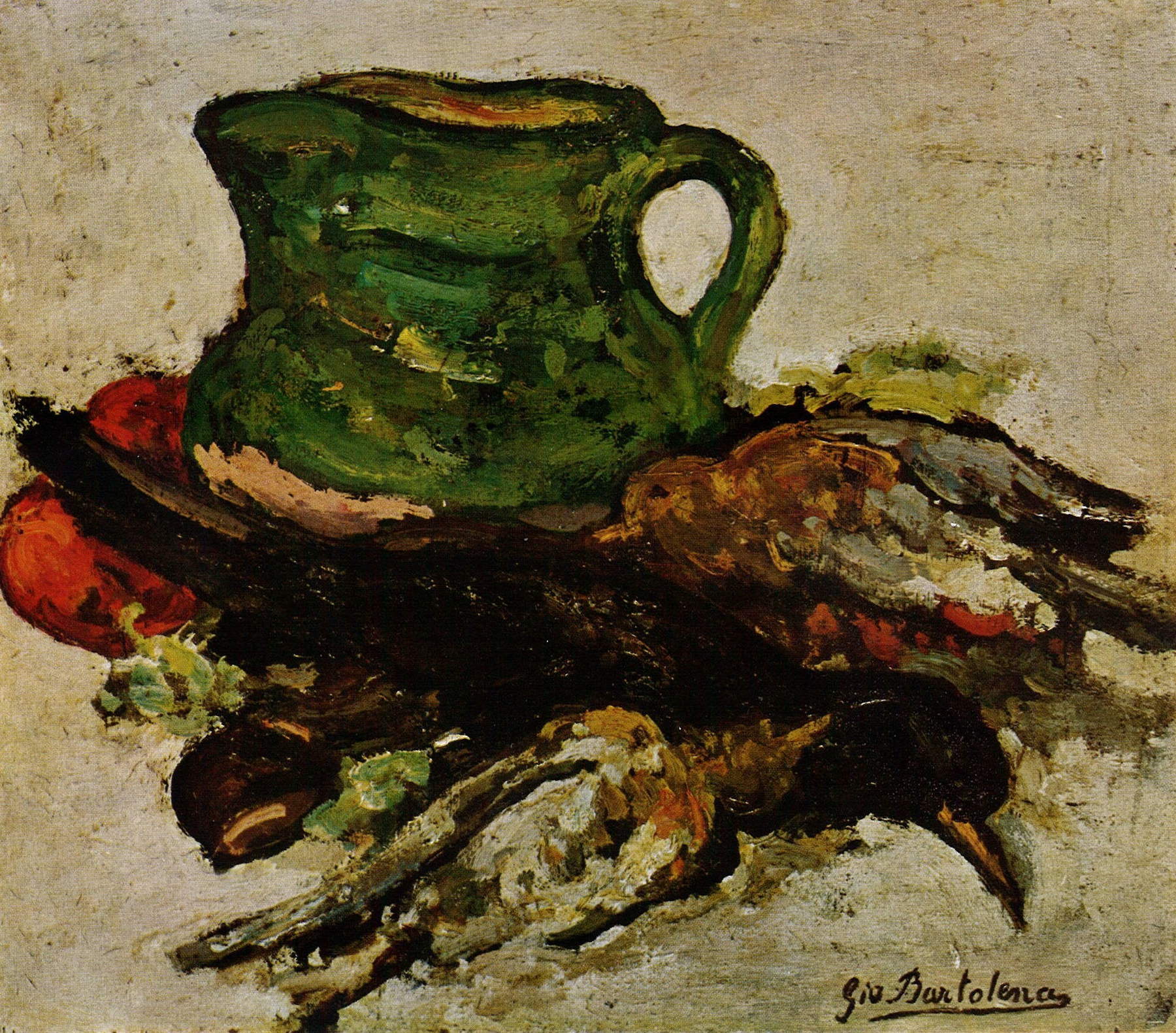
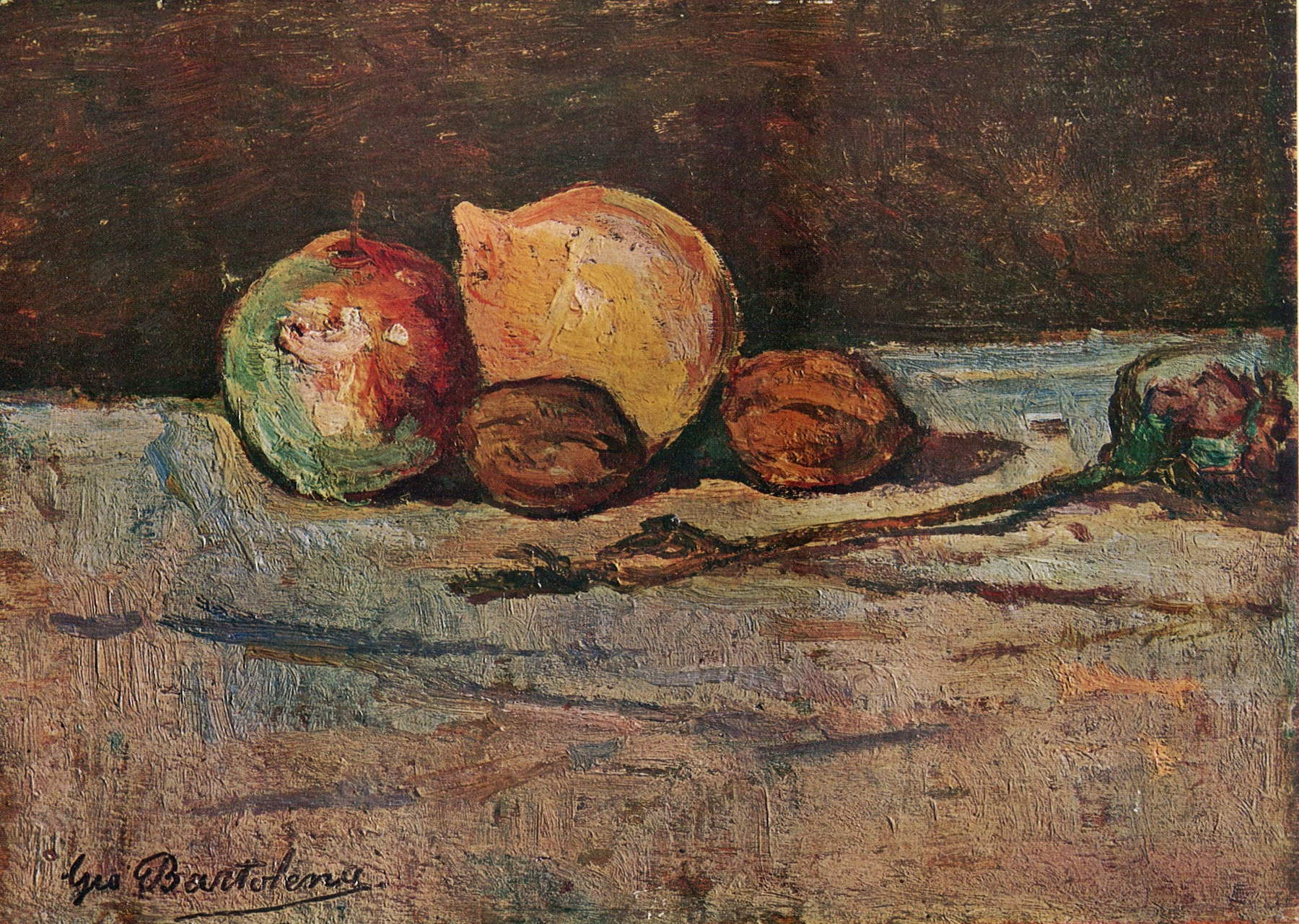
Bartolena seems to listen to the voice of nature, his close friend, and allow it to express itself in the most fitting ways. He knows how to draw from it, as Mario Borgiotti noted, “ever-new sensations of color.” Yet there is no grandiloquence here, for Bartolena does not act as a medium for nature’s generative and terrifying power—unlike his friend Plinio Nomellini, who, with his pan-inspired approach, had become nature’s bard. Rather, he seems to stand alongside nature, establishing a sort of solidarity, revealing the ways in which nature wishes to appear to us, through the use of a chromatic richness capable of shaping volumes, of becoming living, pulsating flesh—sometimes cold, at other times warm, always splendid but, in certain cases, also painful or agonizing to experience.
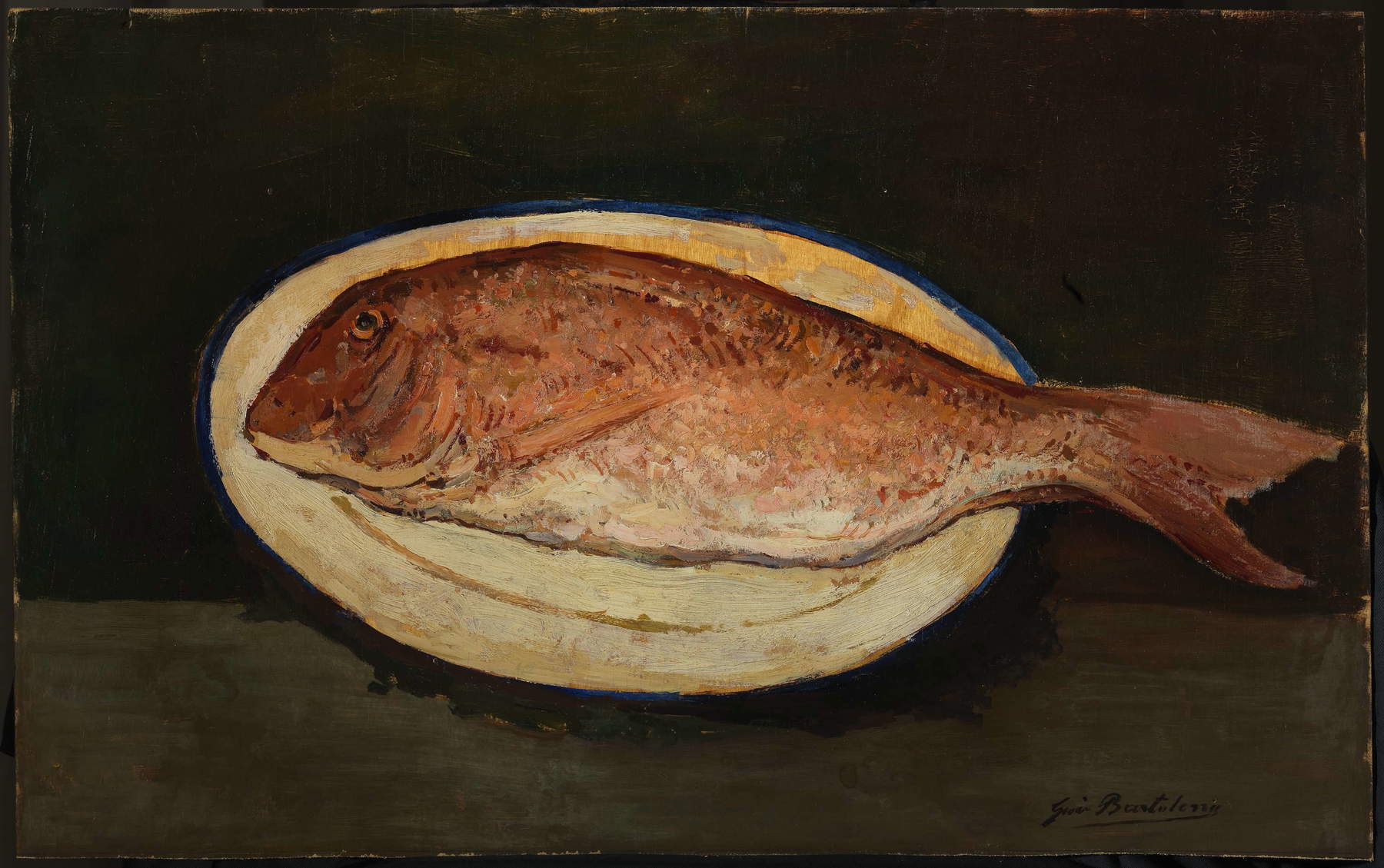
The fruits—whether from the land or the sea—the hearty chestnuts, the juicy cherries, the elegant and fragrant flowers, the dripping fish, the lobsters laden with salt—are a minuscule portion of the world that connects back to the totality of the universe. Nature can appear chaotic or harmonious, but even in the latter case, it always ends up overshadowing the human presence, reduced to a faint glimmer, perhaps merely a reflection. It seems that its principal collector, Luciano Cassuto, advised his friend to embellish the vases of his floral still lifes with sumptuous decorations, modeled after Sèvres porcelain, with the specific aim of increasing their marketability and enticing buyers. Bartolena accepted that compromise reluctantly, and only for a brief period.
Each of Bartolena’s still lifes possesses its own autonomous composition; in fact, the space in which the objects are arranged is calmed and ordered within a structure that the artist seems to geometrize instinctively. Color is never mere embellishment or a coating for the design, but rather the structure of the image, the explosive force of the composition. Through a skillful calibration and balancing of often dissonant tones, Bartolena endows inanimate elements with a life of their own, with an intrinsic beauty. The precious glazes become the very substance of the material, smoothed and arranged by the master’s brush, or more often rendered with impasto-like, dusty brushstrokes—almost never with a crystalline or lenticular finish—varying in density depending on the context and the individual element.
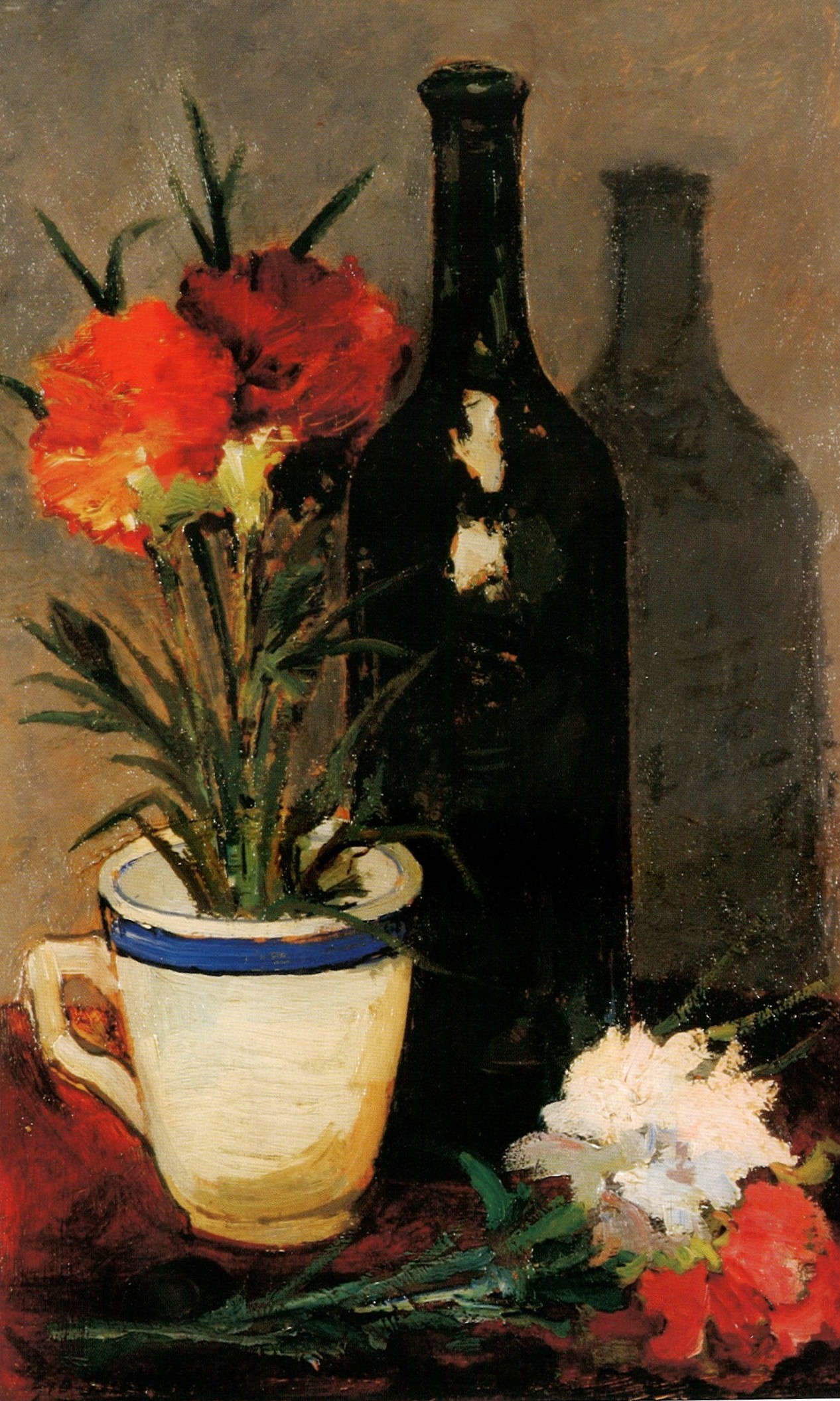
Thus, autonomous works emerge—often original and individual—sometimes still echoing a late-19th-century descriptive painterly style that depicts reality with care, albeit mediated by a sensibility shaped by the synthesis of the Macchia movement and the principles of the Novecento movement. At other times, however, Bartolena brings to life images or compositions that are first and foremost mental constructs. Consider *Composizione* (1926), which bears an inscription by Borgiotti himself on the reverse: “This painting from his middle period foreshadows and anticipates much of modern painting and is among the most beautiful works by Giovanni Bartolena that I know.”
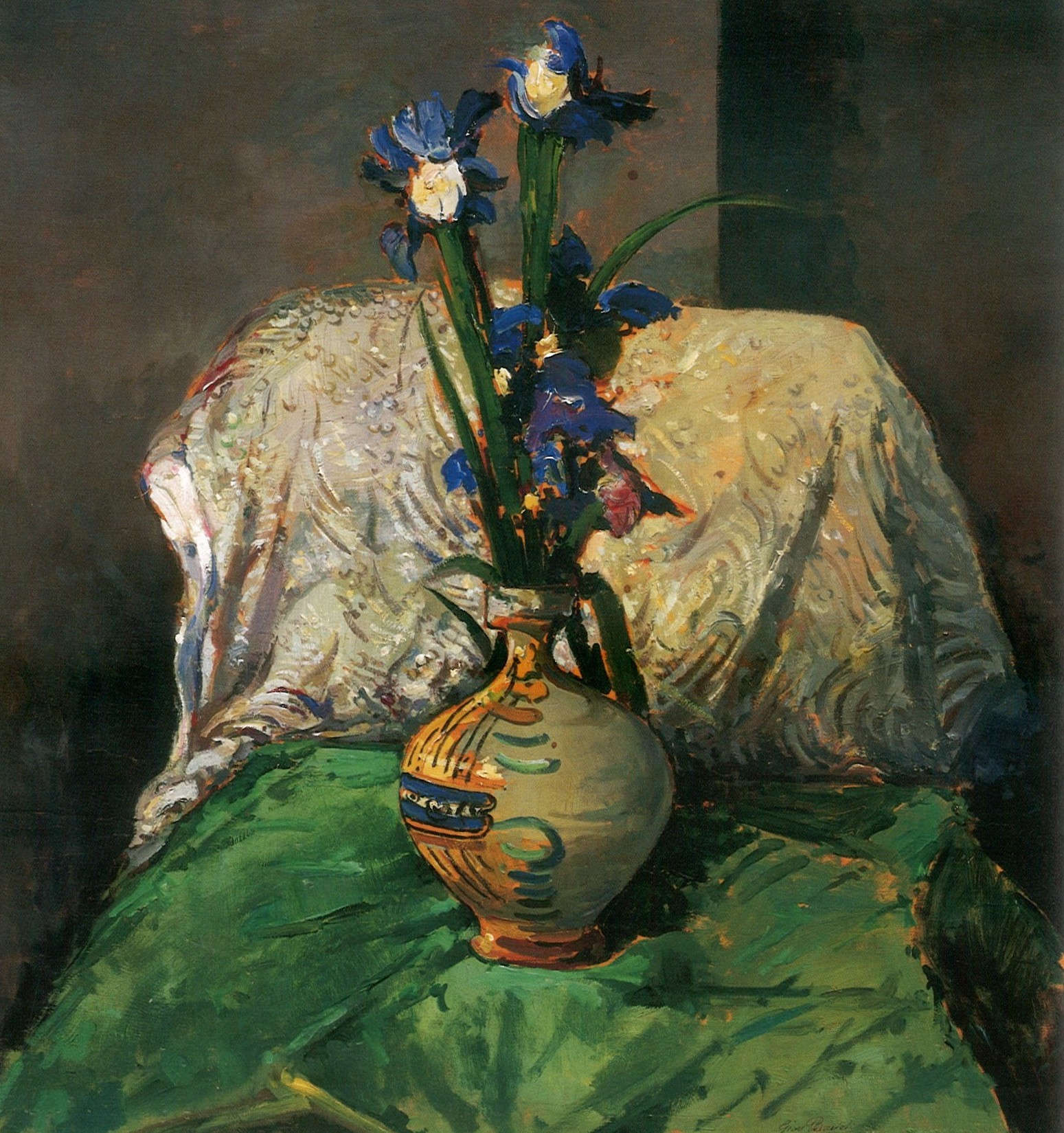
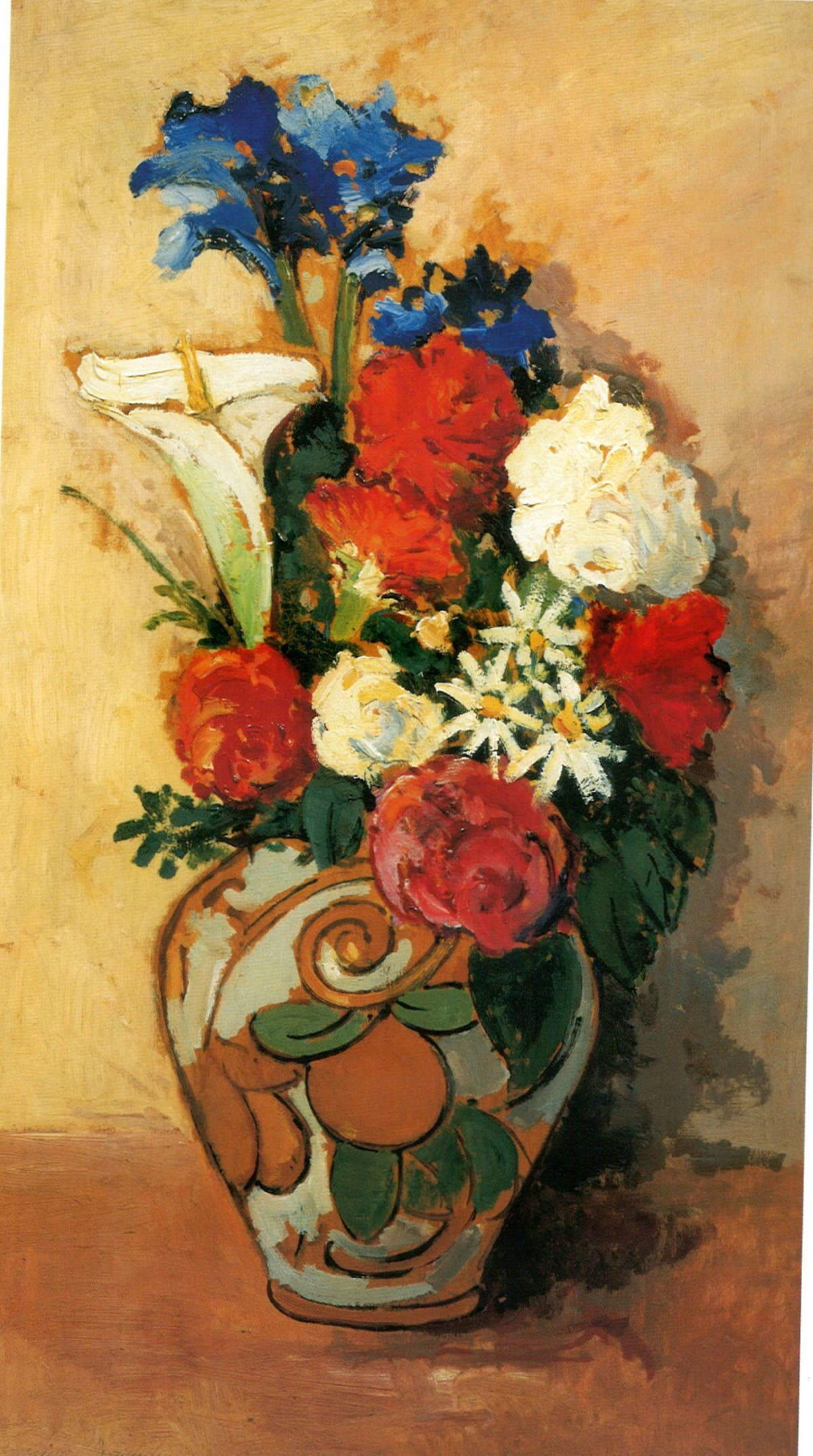
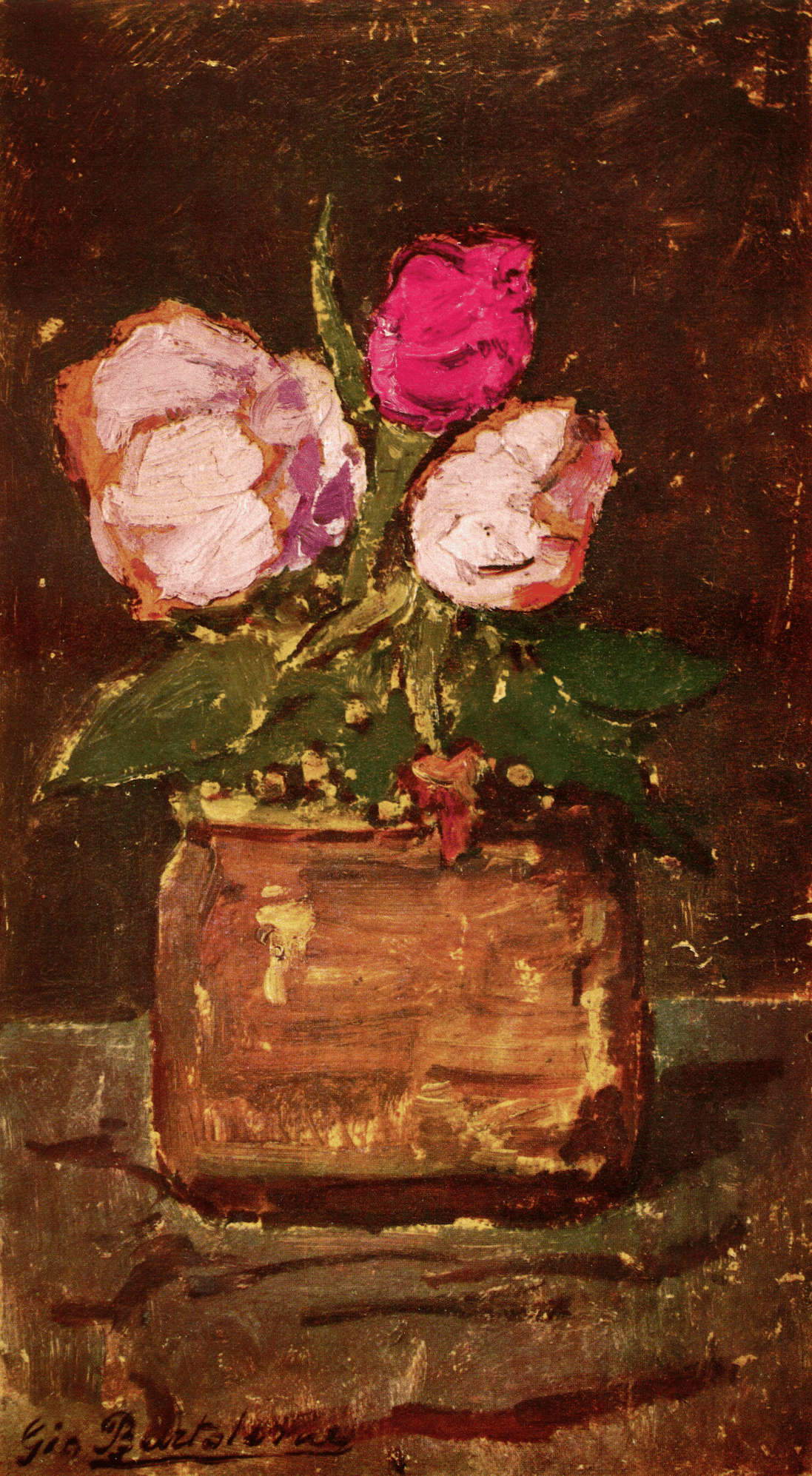
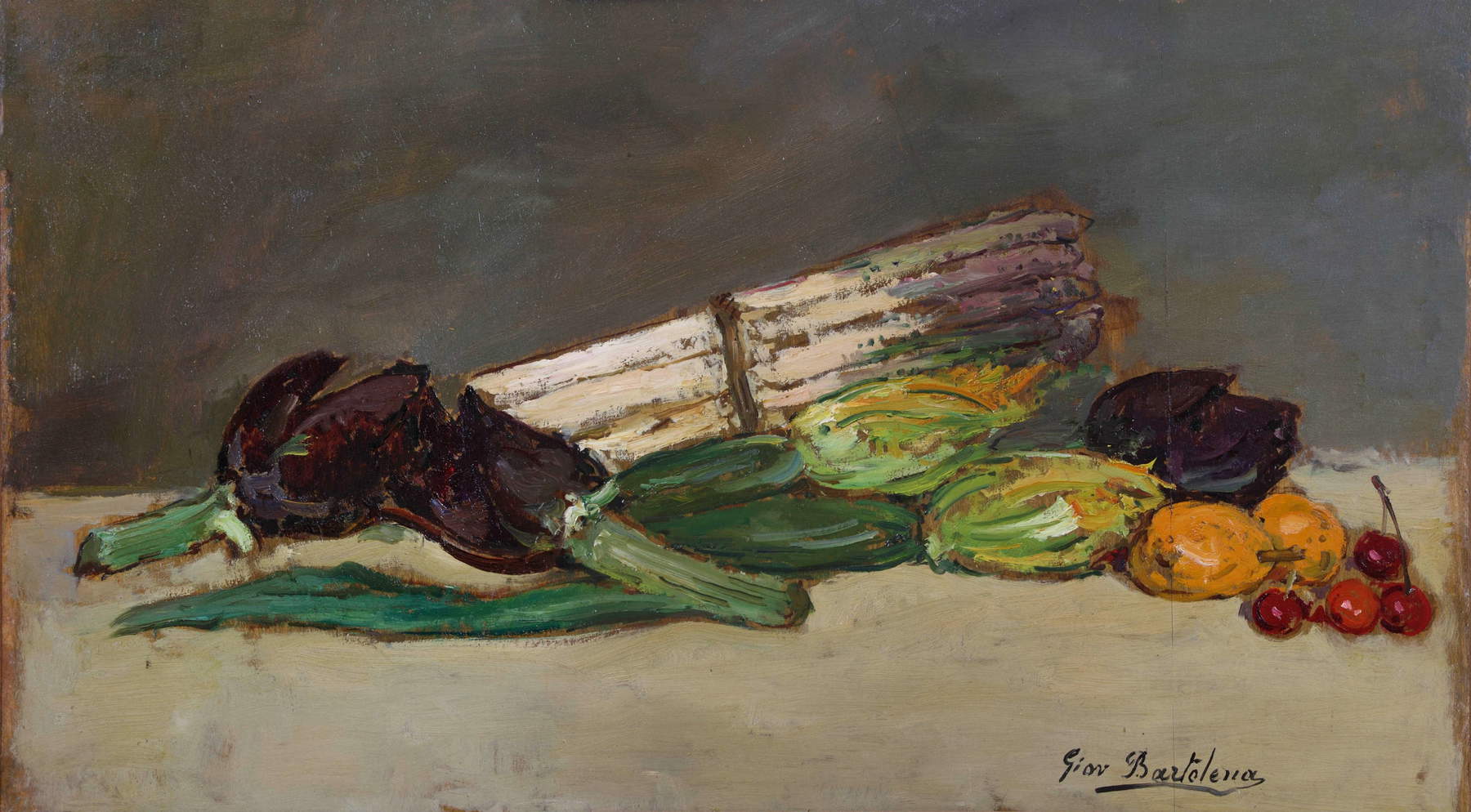
In this work, where the background is composed of large, almost architectural swaths of gray and ochre that further isolate the subject, the still life stands out, reduced to an almost abstract parallelepiped—a self-contained geometric form devoid of any ornamentation. Contrasting with it are the flowers, rendered with a vibrant painterly texture composed of reds, blues, greens, and yellows that seem to expand beyond their outlines. Rather than simply depicting flowers, Bartolena seems intent on creating a tension between two distinct ways of existing in painting: the stability of form and the energy of color.
The vase becomes an essential presence, almost silent and austere, while the bouquet is a living organism, pulsing with color, thickening, breaking the compositional rigor of the structure, and transcending the object’s boundaries. The result is a subtle dialectic between the fixity of artifice and the energy of nature, where the vessel does not dominate the contents but supports them, allowing the latter to take over the entire surface. It is striking that the challenge is no longer to depict a vase with flowers, but to orchestrate relationships between chromatic and volumetric masses. The still life thus becomes a matter of balance between surfaces, color, and rhythm, far more than a matter of representation.
The very variety of the results confirms the richness of this exploration. At times, Bartolena’s still lifes appear as precious chromatic tapestries, capable of striking the viewer almost like a punch due to the intensity of the colors, the powerful and dissonant harmonies, and the material that thickens and invades the surface. At other times, however, they are more subdued and melodious, playing on a limited palette and more restrained balances. This is the case with the Still Life at the “Giovanni Fattori” Civic Museum in Livorno, where formal concentration and control of tone prevail over lyrical intensity, creating a symphony of warm tones. Elsewhere still, they are energetic, full-bodied, almost aggressive; or melancholic, austere, restrained, bathed in a cooler, more silent light.
Within a single genre, therefore, Bartolena managed to explore many of painting’s expressive possibilities: composition, rhythm, texture, tone, and the tension between order and impulse, between object and life. It is perhaps here, more than anywhere else, that his work still demands to be viewed without the reductive filter of post-Macchiaiolism—not as the final chapter of a concluded era, but as an autonomous, irregular, and thoroughly modern experience. In his still lifes, the minute world of objects becomes the setting for an absolute form of painting—not narrative, not ornament, not a genre exercise, but the living substance of color.

The author of this article: Jacopo Suggi
Nato a Livorno nel 1989, dopo gli studi in storia dell'arte prima a Pisa e poi a Bologna ho avuto svariate esperienze in musei e mostre, dall'arte contemporanea alle grandi tele di Fattori, passando per le stampe giapponesi e toccando fossili e minerali, cercando sempre la maniera migliore di comunicare il nostro straordinario patrimonio. Cresciuto giornalisticamente dentro Finestre sull'Arte, nel 2025 ha vinto il Premio Margutta54 come miglior giornalista d'arte under 40 in Italia.Warning: the translation into English of the original Italian article was created using automatic tools. We undertake to review all articles, but we do not guarantee the total absence of inaccuracies in the translation due to the program. You can find the original by clicking on the ITA button. If you find any mistake,please contact us.



















 IT
IT FR
FR DE
DE ES
ES CN
CN


