





In the center of Lucca and many other cities in Tuscany, as summer gives way to fall and the days begin to cool and the sun sets early, a scent rises from the small braziers placed at street intersections—a scent that everyone by now recognizes, a mixture of sweet and burnt, a scent that accompanies the street vendors as they call out to passersby to sell them roasted chestnuts—made from the chestnuts that abound in the woods of the Apuan Alps and Garfagnana, the fruit most closely associated with these lands. More precisely, we should refer to them as “mondine”: that is what roasted chestnuts are called in the dialects of northern Tuscany, from Lucca to Carrara. They are the product of a centuries-old chestnut-growing tradition that for centuries has been one of the staple foods in the villages of Garfagnana, the Apuan Alps, and Monte Pisano—in the mountains, but also on the Lucca plain and down toward the sea. Yet, to discover what is perhaps the most intense, stark, and luminous image of this folk world, there’s no need to venture into the woods or linger along the sidewalks of the historic center: simply step through the threshold of an austere building on Via Galli Tassi, a short distance from the walls of Lucca. Here, in the rooms set aside for the private apartments of the National Museum of Palazzo Mansi, two paintings have hung since 2000—purchased that year by the government—paintings that may subvert the visitor’s expectations, or at the very least surprise them: we are referring to *Il Mondinaro* and *Il Pollarolo* by Pietro Paolini (Lucca, 1603–1681).
In this residence, which visitors usually come to see for its illusionistic frescoes, the stunning gilded alcove, the Flemish tapestries depicting the *Stories of Zenobia*, or the rich art gallery—one of the most valuable in Tuscany— the brush of one of the most extravagant masters of the Italian Seventeenth Century brings to life the earthly reality of humble trades. No affected allegory, no pastoral idealization, no deities: only flesh, smoke, embers, and the rugged features of the lowest classes. A jarring yet fascinating contrast that offers the deepest insight into Paolini’s genre painting: on the one hand, the aristocratic grandeur of an opulent noble palace; on the other, the vivid theatricality of the street and the common kitchen.
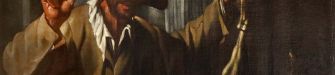
In *Mondinaro*—a painting also known to scholars as *Venditore di caldarroste* (*Roasted Chestnut Vendor*) and which remained unpublished until 1987, when it was published by the scholar Patrizia Giusti Massari, an art historian and authoritative monographer on Paolini— the scene unfolds in the dimly lit darkness of a kitchen, where the only source of light comes from the faint glow of an oil lamp and the bright red embers on which the chestnuts are roasting. Emerging from the darkness of the background is a half-length portrait of a man with coarse, pronounced features: his prominent nose appears reddened, a physiognomic detail that betrays his constant exposure to the heat of the fire or, more likely, his consumption of cheap wine. The man stares directly at the viewer with an intense, sly, perhaps even amused gaze, almost sketching an ambiguous grin.
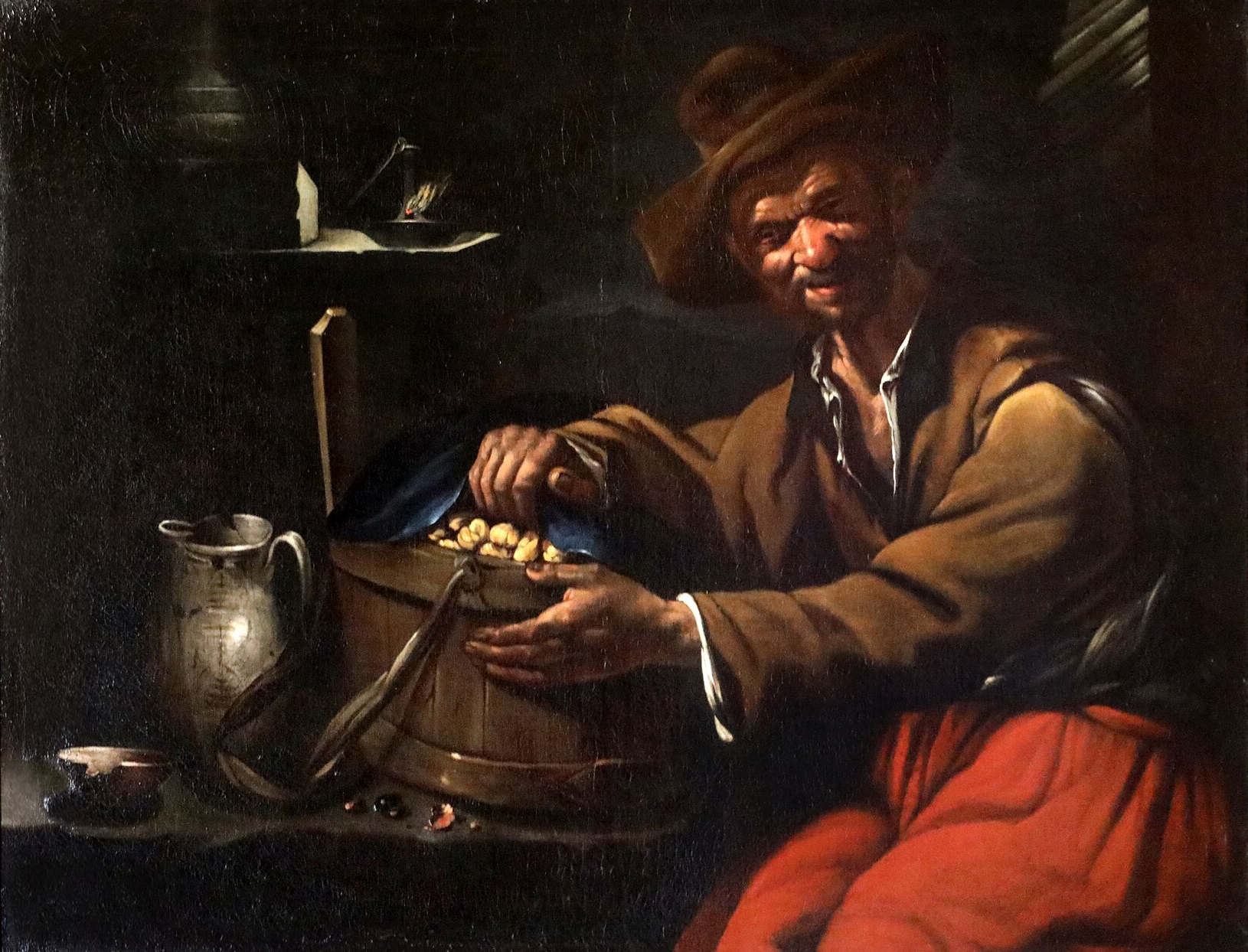
As Giusti Maccari herself pointed out, “the painting’s high quality, in contrast to its deliberately folksy tone, and the skill with which the vendor’s facial features are rendered, confirm its traditional attribution.” The scholar has also succeeded in reconstructing the painting’s complex provenance, identifying it with the *Mondinaro* mentioned by the historian Nicolao Cerù in his *Belle Arti in Lucca dal 753 al presente*(Fine Arts in Lucca from 753 to the Present), a treatise from 1753: Cerù stated that the work was part of the Cittadella family’s collection, where it appeared alongside a Pollaiolo. Some of the Cittadella family’s possessions were later incorporated into the estate of the ancestors of the two paintings’ last private owners following a marriage that took place in the late nineteenth century—the very period in which Cerù was writing: This circumstance therefore helps to confirm the attribution to Paolini—an attribution about which, in any case, there seems to be no doubt today.
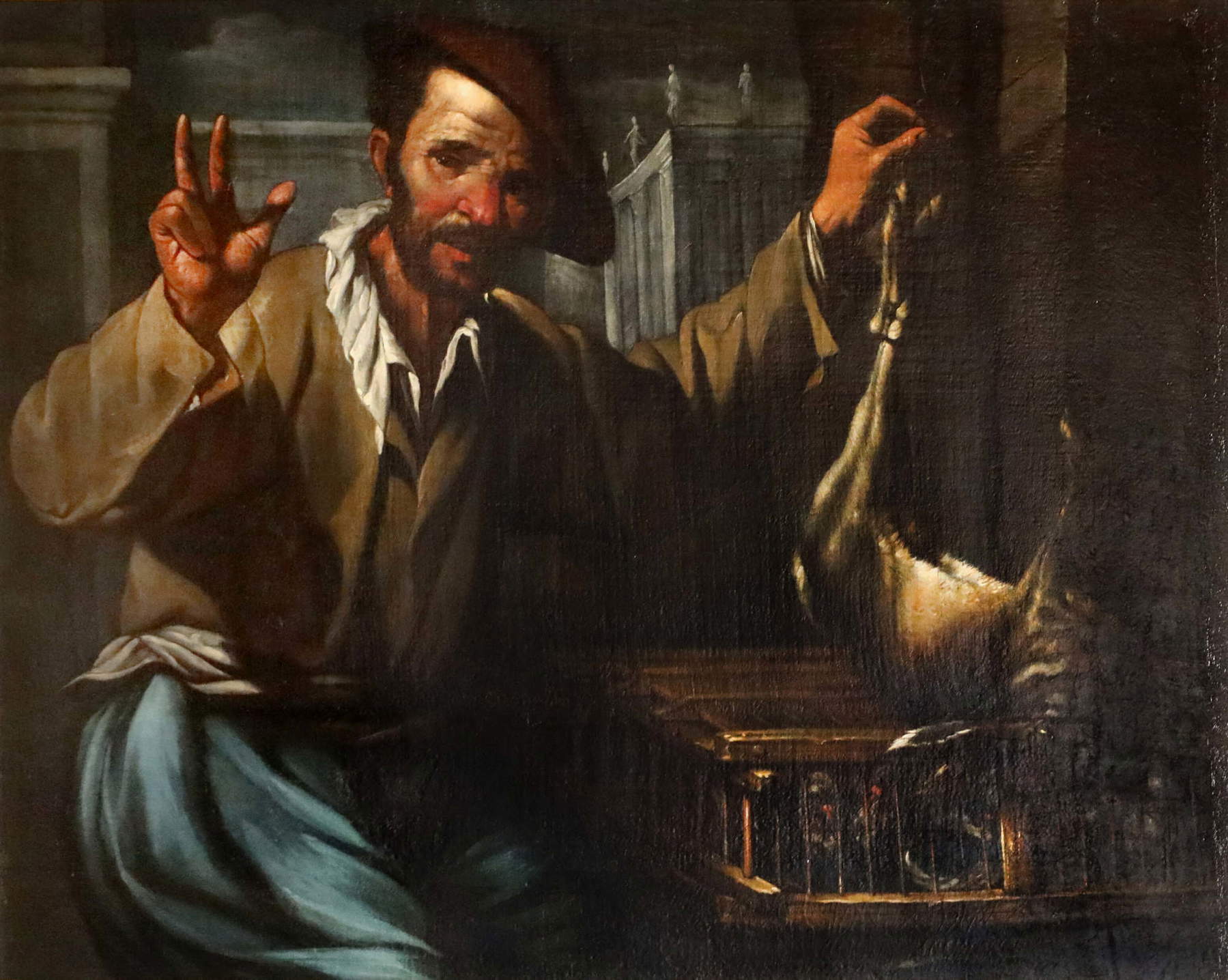
Alongside the *Mondinaro*, the Palazzo Mansi collection preserves its natural counterpart, the *Pollarolo*. In the painting, the poultry seller, dressed in heavy trousers (apparently made of fustian, a fabric similar to today’s denim, already in use at the time), a white shirt, and a rumpled jacket in earthy tones, shows a hare—or perhaps a rabbit—to the viewer and, with his right hand, makes the sign for three with his thumb, index finger, and middle finger (indicating the animal’s price). Like the vendor, he, too, has a ruddy complexion, though his gaze is more melancholic. He does, however, have a more well-groomed beard and wears a red cap of better quality than the chestnut roaster’s wide-brimmed hat. Beneath the hare, one can see a cage with a few chickens, and against the somber background, the silhouette of a classical building crowned with statues is visible—a stark contrast to the humility of the subject in the foreground. According to Giusti Maccari, this painting—perhaps “because it is more colorful and airy, being set during the day—seems to us superior to its counterpart.” Together with the chestnut roaster, *The Chicken Seller* represents another of the finest achievements in Pietro Paolini’s genre painting—a thematic vein in which the Lucca-born painter was extraordinarily active throughout his life, often collaborating with still-life specialists, such as his pupil Simone del Tintore. However, while in other compositions—such as the *Egg Buyers* (from a private collection)—Paolini entrusted Tintore with the execution of the still-life elements, reserving for himself the direction of the figures, in *The Corn Seller* and *The Chicken Seller* the figurative content is entirely sustained by his powerful narrative and chiaroscuro invention.
To understand how a 17th-century artist from Lucca came to paint such popular subjects with such uninhibited realism, it is necessary to retrace—albeit in broad strokes—some key points of his biographical and artistic journey. Born in Lucca, Pietro Paolini received his foundational training in Rome in the years immediately following Caravaggio’s death, entering the workshop of Angelo Caroselli. In what was then the capital of the Papal States, the young man from Lucca had the opportunity to immerse himself in the extraordinary era of international Caravaggism: he eagerly studied the approaches of the most innovative masters (the tight composition and full volumes of Valentin de Boulogne, the artist to whom Paolini is most closely aligned stylistically and conceptually), the tavern scenes of the Manfrediana Methodus invented by Bartolomeo Manfredi, the refinements of Orazio Riminaldi and Giovanni Francesco Guerrieri, right up to the nocturnal effects and the play of artificial light by Northern masters such as Trophime Bigot, or the neo-Venetian chromatic influences of the young Pieter Paul Rubens), and brought back to Lucca a wealth of diverse experiences that Paolini reworked with remarkable figurative autonomy. Paolini immediately demonstrated his ability to blend grand altarpiece compositions with the raw naturalism he had learned in Rome: even in his early works, the painter orchestrated contrasts of light and shadow with intense emotional force, filling his canvases with screaming faces, convulsive gestures, and sudden glimpses that directly evoke the works of Caravaggio.
The great Florentine art historian Filippo Baldinucci described Paolini as a “painter of great eccentricity and noble ingenuity,” and noted his diligence in painting “with great patience and study.” This characterization has recently been taken up by art critics, who—through scholars such as Nikita de Vernejoul—have hailed him as the “bizarre Caravaggist” par excellence. Despite being mentioned in Abbot Luigi Lanzi’s *Storia pittorica d’Italia* and his constant presence in the scholarly guides to Lucca from the 18th and 19th centuries, Paolini nevertheless suffered for a long time from a peculiar lack of recognition in art history: art historians such as Bernard Berenson, Roberto Longhi, and Hermann Voss failed to recognize his true stature, and helped confine his fame within the city walls, preventing him from becoming as famous as other, now better-known, Caravaggist painters.
The true era of critical rediscovery would not begin until the second half of the 20th century, although Paolini is still not as famous as other contemporary painters who worked in the Caravaggio tradition. Following the landmark reopening of the National Museum of Villa Guinigi in 1968—during which Silvia Meloni Trkulja highlighted his stature, which far exceeded a provincial scope—studies by Anna Ottani Cavina, Alessandro Marabottini, and above all Elisabetta Giffi’s 1986 essay on *Prospettiva* and Patrizia Giusti Maccari’s decisive 1987 monograph. This journey of discovery continued with the 1994–1995 exhibition on 17th-century Lucca, curated by Maria Teresa Filieri, and culminated in late 2021 with the major exhibition *I pittori della luce* (though the title suggested otherwise, it was effectively the first monographic exhibition on Paolini), curated by Vittorio Sgarbi at the Cavallerizza in Lucca. For several months, this exhibition succeeded in reintroducing Paolini to the general national public, showcasing the richness of his legacy on local followers such as Girolamo Scaglia, Pietro Ricchi, and Giovanni Domenico Lombardi.
While Paolini’s work is rooted in Caravaggesque genre painting, the subject of *Il Mondinaro* is particularly interesting not only because of its curious subject matter but also because it is inextricably linked to the social and anthropological history of the Lucca region. Until a few decades ago, chestnuts were an absolutely indispensable food source for the mountain communities of the Lucca region: after all, they were a fruit rich in nutrients and highly digestible, and their artisanal processing represented a central moment of cohesion and sharing for all the villages in the valleys. The chestnut flour production process required a kind of communal ritual that began in early fall, with the first cold snaps, with the harvest in the woods, and continued with the storage of the chestnuts in the “metati”—a term referring to small rural stone buildings, common on the slopes of the Garfagnana and the Middle Serchio Valley, structured on two levels, serving as drying rooms for the chestnuts. On the upper level, resting on wooden beams, there is a movable grate (also called a “caniccio”) where the chestnuts are spread out; on the ground floor, in the center of the room, a wood fire is built that must burn continuously for weeks until the chestnuts are completely dried, after which they are ground into flour. Much of the village’s social life revolved around the fire in the metato: on autumn evenings, the villagers would gather on benches placed against the stone walls to warm themselves and pass the time telling anecdotes, recounting the day’s events, and sharing spine-chilling folk legends. A rich and dense folkloric heritage.
This is the cultural and symbolic backdrop from which Paolini’s figure of the Mondinaro emerges; he can almost be considered a symbol of local identity that transcends mere folklore to become great art, a mirror of a hardworking and profound Lucchesia that stretched from the village festivals in the mountain hamlets all the way to the city markets. Today, now on display in the halls of Palazzo Mansi, the Mondinaro, together with his companion, the Pollarolo, finds itself set within one of the most fascinating and complex museum contexts in all of Tuscany: the two canvases not only represent two undisputed masterpieces of Pietro Paolini’s genre painting but also serve as a sort of counterpoint to a tour of the Mansi apartments and the other artistic wonders scattered throughout the city. This includes works by Pietro Paolini himself: at the National Museum of Villa Guinigi, for example, visitors can admire the monumental altarpiece depicting The Banquet of Pope St. Gregory, the early work *Madonna of the Rosary*, and the two tragic *Martyrdoms of St. Bartholomew* and *St. Pontian*. The church of San Michele in Foro houses another masterpiece, the altarpiece depicting the “Martyrdom of Saint Andrew,” while nearby, in the Basilica of San Frediano, one can discover the solemn “Deposition,” which in the 18th century was even mistaken for an authentic work by Caravaggio. And on this journey through seventeenth-century painting—perhaps a somewhat unusual one given Paolini’s relative obscurity—the Mondinaro and the Pollarolo continue to bear witness, with quiet yet powerful truth, to this artist’s eccentric genius: his ability to capture the folk spirit of the Lucca region and to enshrine it forever in the annals of art history.

The author of this article: Federico Giannini e Ilaria Baratta
Federico Giannini. Giornalista, co-fondatore di Finestre sull'Arte, direttore responsabile della testata. Nato a Massa nel 1986, si è laureato nel 2010 in Informatica Umanistica all’Università di Pisa. Nel 2025 ha scritto il libro Vero, Falso, Fake. Credenze, errori e falsità nel mondo dell'arte (Giunti editore). Per la tv è stato autore del documentario Le mani dell’arte (Rai 5) ed è stato tra i presentatori del programma Dorian – L’arte non invecchia (Rai 5).
Ilaria Baratta. Giornalista, co-fondatrice di Finestre sull'Arte, caporedattrice della testata. È nata a Carrara nel 1987 e si è laureata a Pisa in Lingue e Letterature Straniere.
Warning: the translation into English of the original Italian article was created using automatic tools. We undertake to review all articles, but we do not guarantee the total absence of inaccuracies in the translation due to the program. You can find the original by clicking on the ITA button. If you find any mistake,please contact us.





















 IT
IT FR
FR DE
DE ES
ES CN
CN


