




by Redazione 26/05/2026



Categories: Archaeology / Disclaimer
The find, a portion of a funerary monument from the first century AD, had been spotted in a house in the Venetian region. Investigations by the Carabinieri Tutela Patrimonio Culturale reconstructed an affair linked to clandestine excavations, receiving stolen property and failure to report it.


Carabinieri from the Venice Cultural Heritage Protection Unit have returned to the state a portion of an early-imperial Roman funerary monument, recovered at the end of an investigation coordinated by the Venice Public Prosecutor’s Office. The find, delivered on May 26, 2026, to the Soprintendenza Archeologia, Belle Arti e Paesaggio for the metropolitan city of Venice, had been identified inside a private home in Campagna Lupia, in the Venetian region.


The investigation had begun in July 2024 and allowed the military specialized in the protection of cultural heritage to reconstruct the provenance of the stele, which was found to be connected to clandestine excavations or fortuitous discoveries that were never reported, presumably occurring in the mid-20th century. According to the findings, the artifact was later reportedly the subject of fencing. In the absence of a valid title from the holder, TPC Carabinieri proceeded to seize the item.
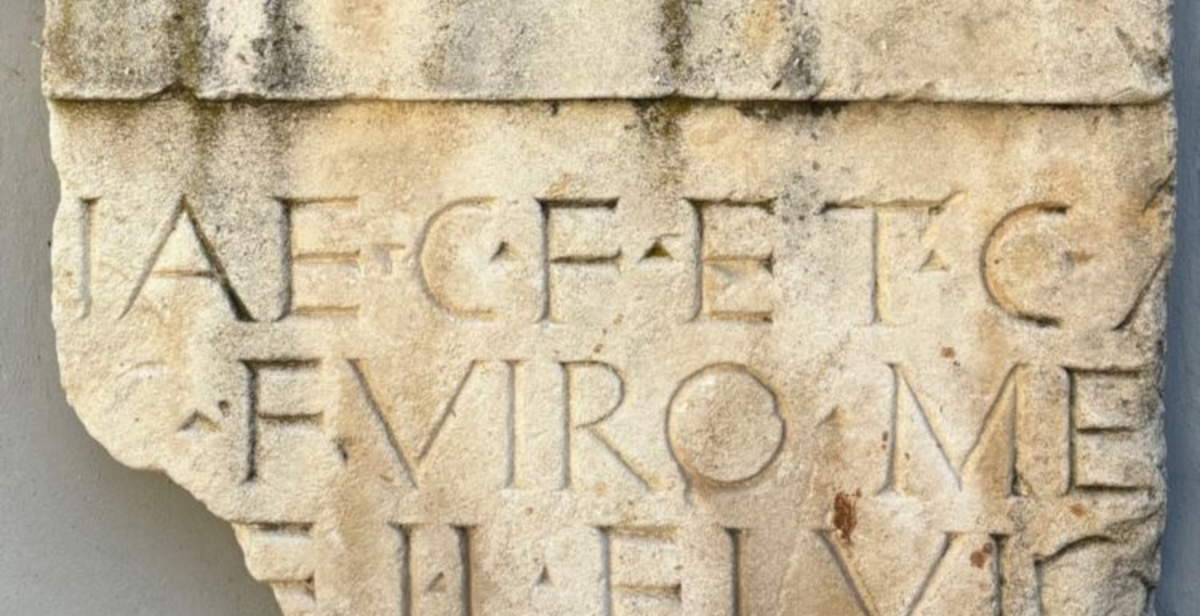
The artifact consists of a parallelepiped slab of beige-yellowish limestone, worked and inscribed on one side only. The dimensions are 90 by 87 centimeters, with a thickness of 14 centimeters. Archaeological and stylistic analysis has identified the slab as part of a medium to large funerary monument developed in height. Scholars consider it likely that it belonged to the frontal balustrade of a funerary enclosure, a type attested in the necropolis of the Roman Cisalpine and, in particular, in the area of ancient Venice.


The inscription preserved on the find features elegant capital letters and a carefully worked epigraphic field. Punctuation marks are correctly placed at mid-height of the letters. The legible text contains fragments of names and family relations:
"[---]iae C(aii) f(iliae) et C(aio) A[---]
C(aii) f(ilio) viro me[---]
[---] and I L(ucio) Elvio [---]."
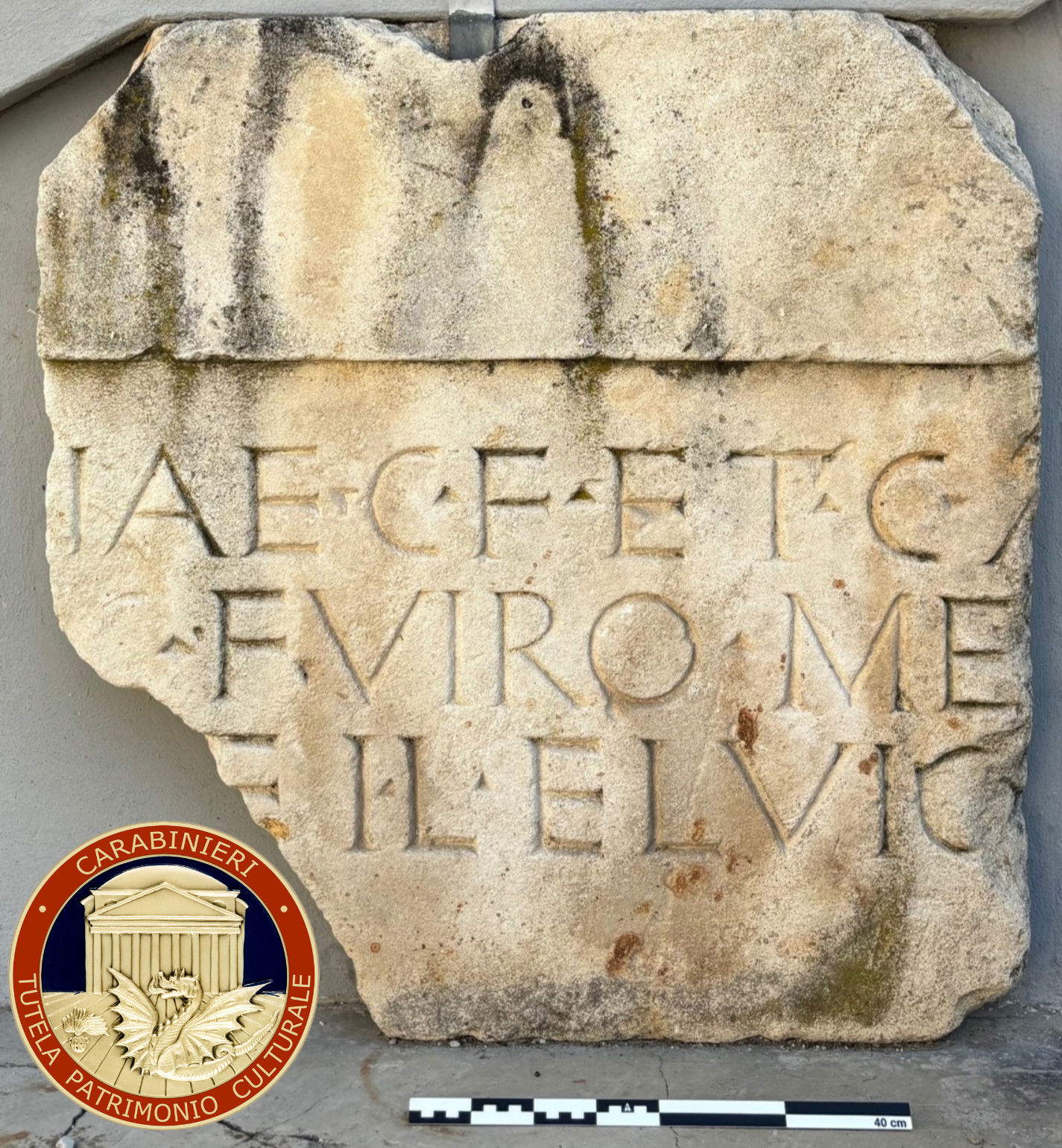
According to experts, the text mentions at least three people. The first identifiable figure is a woman without a surname, an element that, together with the absence of a cognomen for the man mentioned later as well, allows the epigraph to be placed in the first half of the first century AD. The family name of the man mentioned after the deceased remains unknown, of whom only the initial “A” is preserved. Of particular interest is the word “viro,” used to indicate the relationship with the woman’s life partner. After the word appears the sequence “me,” followed by a gap: scholars speculate on additions such as “meo” or “merenti.” The last legible name on the inscription is that of Lucius Elvius.
In the course of the investigative activity, the Carabinieri of the Venice TPC Nucleus availed themselves of the technical analyses carried out by the Soprintendenza Archeologia, Belle Arti e Paesaggio for the metropolitan city of Venice, a structure with which the department collaborates on a permanent basis, as well as the operational support of the territorial Arma. At the end of the investigation, in May 2025, the Venice Public Prosecutor’s Office ordered the release of the artifact and its return to the state, identified in the Venetian Superintendency. Subsequently, the General Directorate of Archaeology, Fine Arts and Landscape of the Ministry of Culture assigned the artifact to the Municipality of Campagna Lupia, where it will be placed and enhanced inside the Town Hall.
The communiqué released by the Carabinieri TPC also recalls how Italian law establishes a presumption of belonging to the cultural domain for archaeological goods from the national territory. Those who claim private ownership of archaeological finds must in fact prove that they were assigned by the state as a reward for a fortuitous find, given as compensation for occupation of real estate, or held before the entry into force of Law 364 of June 20, 1909. The Cultural Heritage and Landscape Code also establishes the nullity of acts of alienation or agreements made in violation of the rules on the protection and circulation of archaeological property.
The recovery of artifacts belonging to the cultural property constitutes one of the main investigative directions of the Carabinieri Tutela Patrimonio Culturale Unit in Venice, which carries out periodic checks at commercial establishments in the sector and collects reports from scholars and enthusiasts, in cooperation with the offices of the Ministry of Culture and the Superintendencies of Bolzano and Trento.
 |
| A Roman funerary stele recovered by the Carabinieri TPC returns to the Italian state |
Warning: the translation into English of the original Italian article was created using automatic tools. We undertake to review all articles, but we do not guarantee the total absence of inaccuracies in the translation due to the program. You can find the original by clicking on the ITA button. If you find any mistake,please contact us.