





One of the most important archaeological discoveries of recent years in Campania has come to light in the heart of Gragnano, inside the Garofalo pasta factory. During expansion work on the historic production facility on Via dei Pastai, an Archaic-period necropolis was discovered which, due to its state of preservation, richness of the grave goods, and scientific value, represents an absolutely exceptional find for our understanding of pre-Roman Campania and the trade networks that spanned the Mediterranean in the 6th century B.C. The discovery was officially presented yesterday afternoon at the Garofalo pasta factory itself, in the presence of representatives from the Ministry of Culture, the Superintendence of Archaeology, Fine Arts, and Landscape for the Naples Metropolitan Area, the scientific directors of the excavations, and the company’s top management.
The archaeological investigations were initiated as part of the preventive archaeology procedures associated with the expansion of the production facility. The excavation was conducted on-site by Geomed S.r.l. under the scientific direction of the ABAP Superintendency for the Metropolitan Area of Naples, allowing for the unearthing of a site that scholars describe as being of exceptional significance.
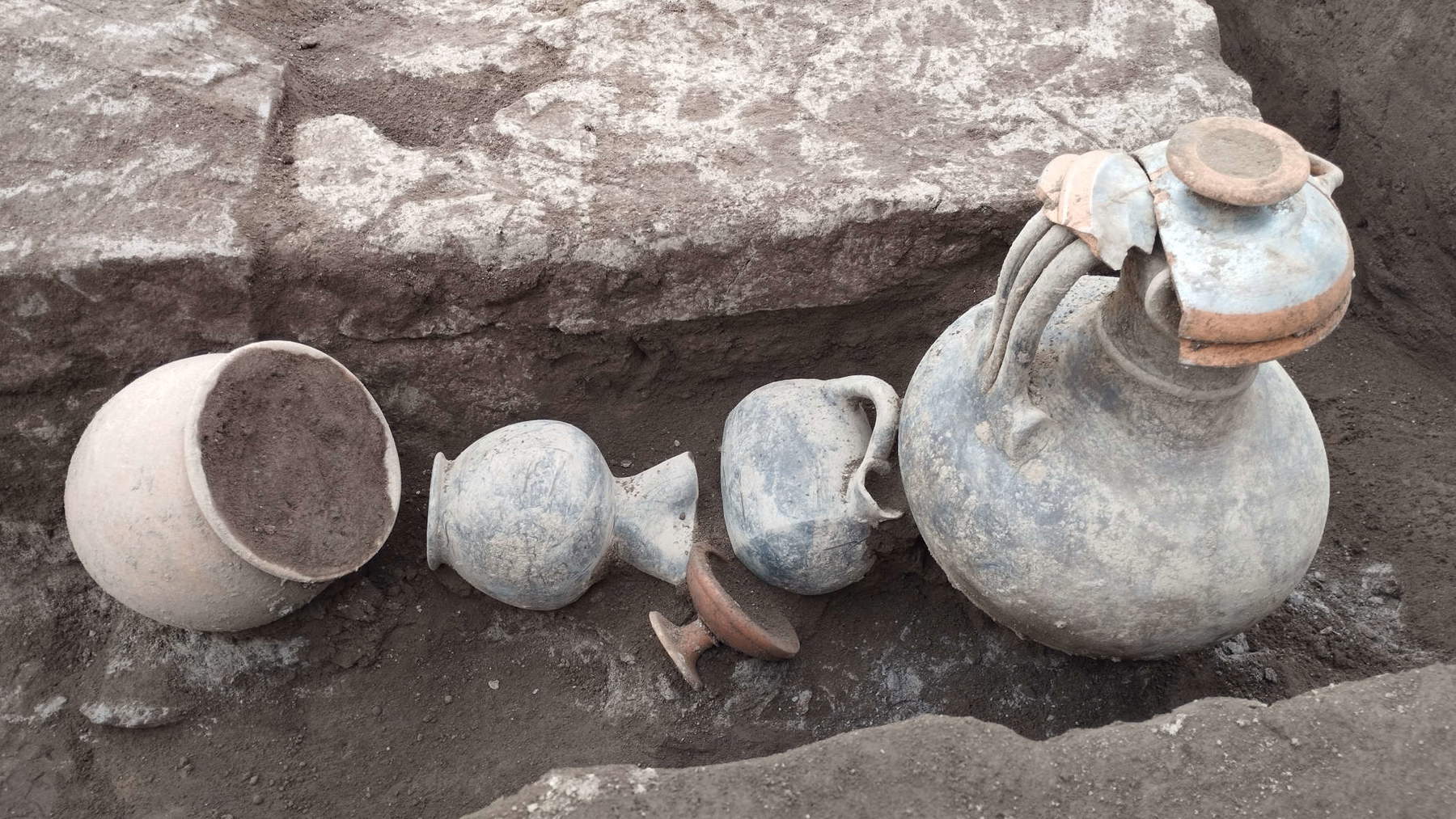
The necropolis has yielded entirely new information on the social composition and economic dynamics of ancient Ager Stabianus, the territory that in the Archaic period encompassed the area of present-day Gragnano and nearby Stabia. According to archaeologists, the tombs belonged to an elite of the highest rank, capable of expressing—through their grave goods—a precise strategy of self-representation of their social prestige. However, what makes this discovery unique in the Italian archaeological landscape is the exceptional state of preservation of certain burials carried out inside tuff burial chambers. The specific environmental conditions have, in fact, allowed organic materials—which would normally have disappeared over the centuries—to survive.
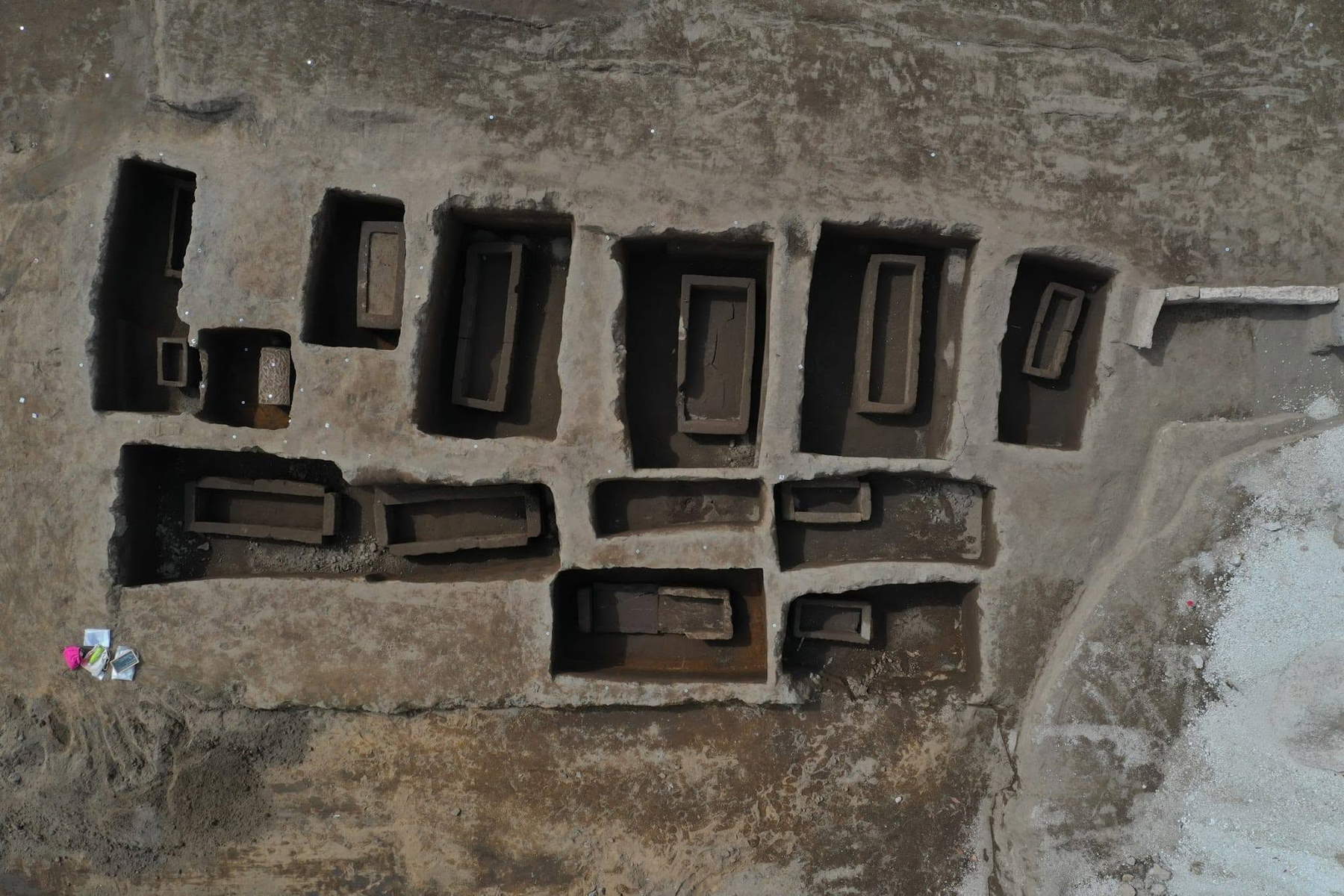
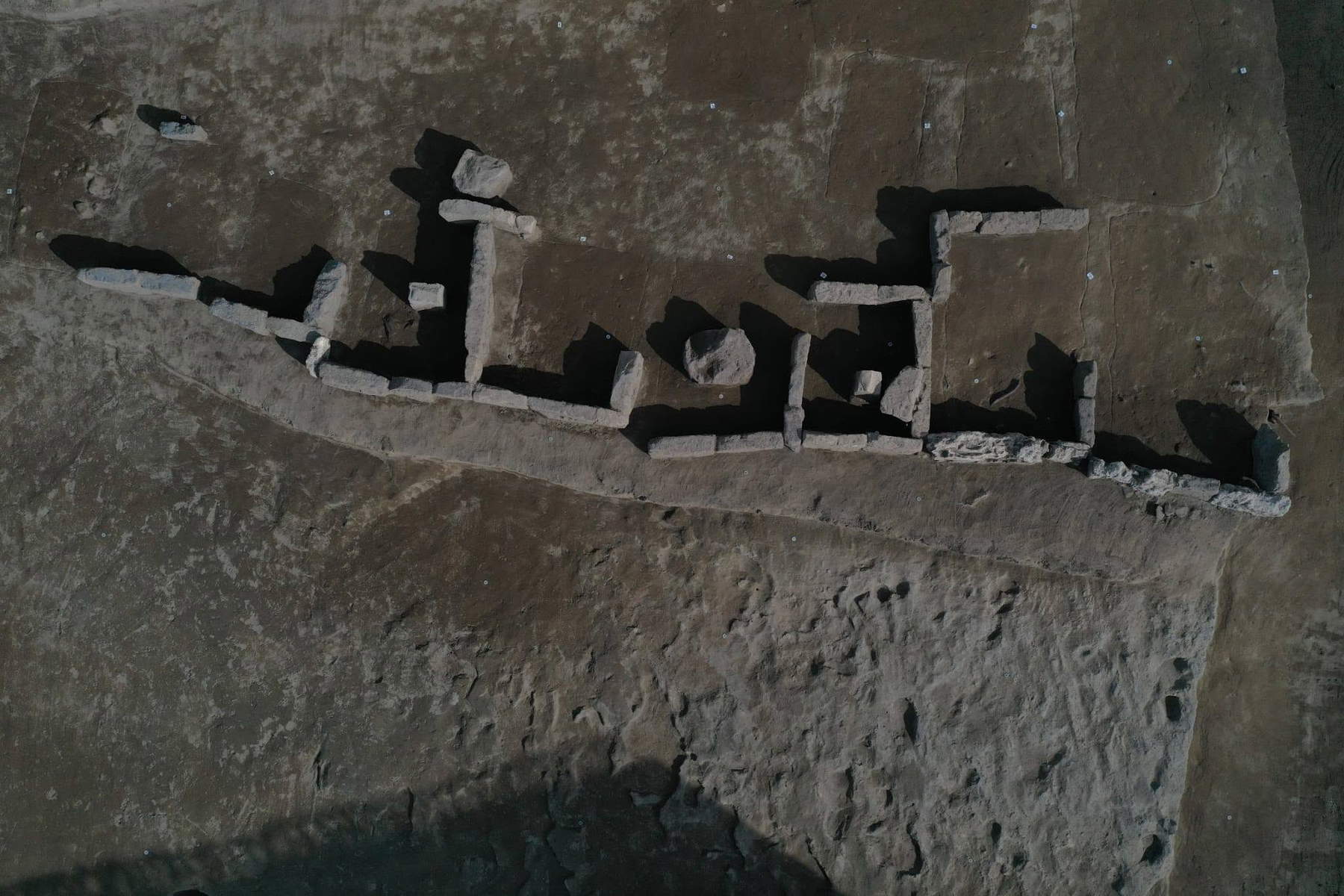
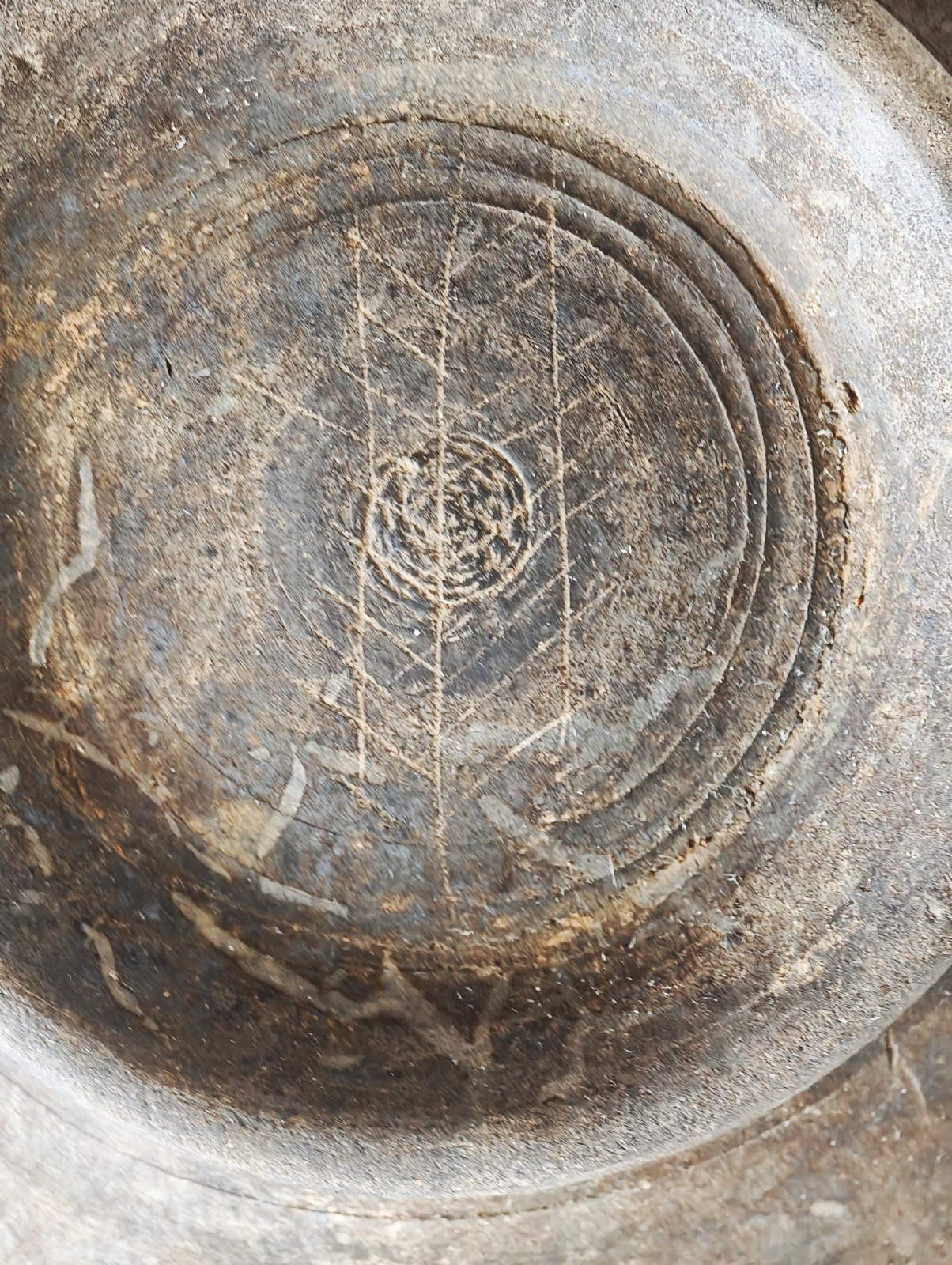
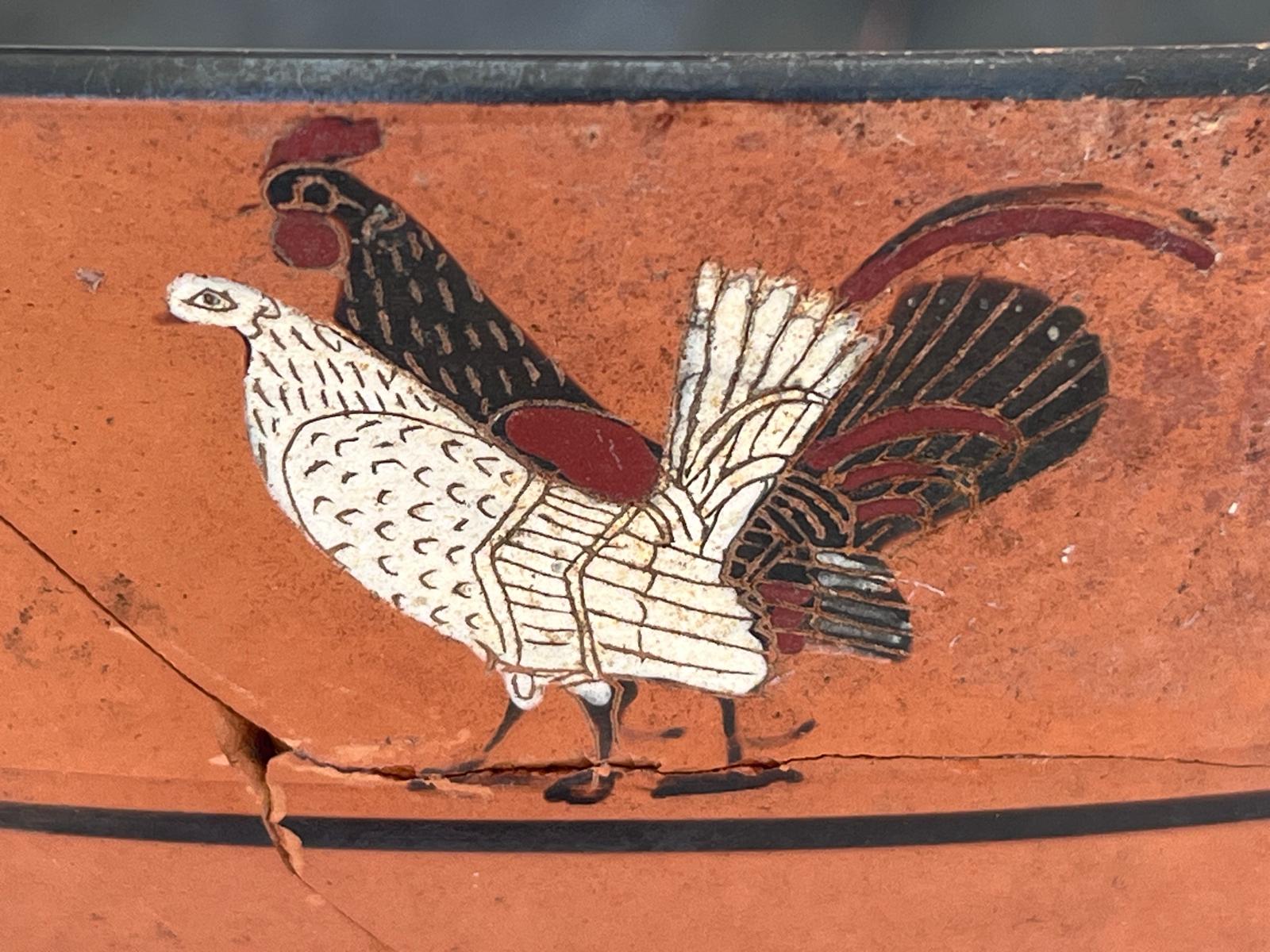
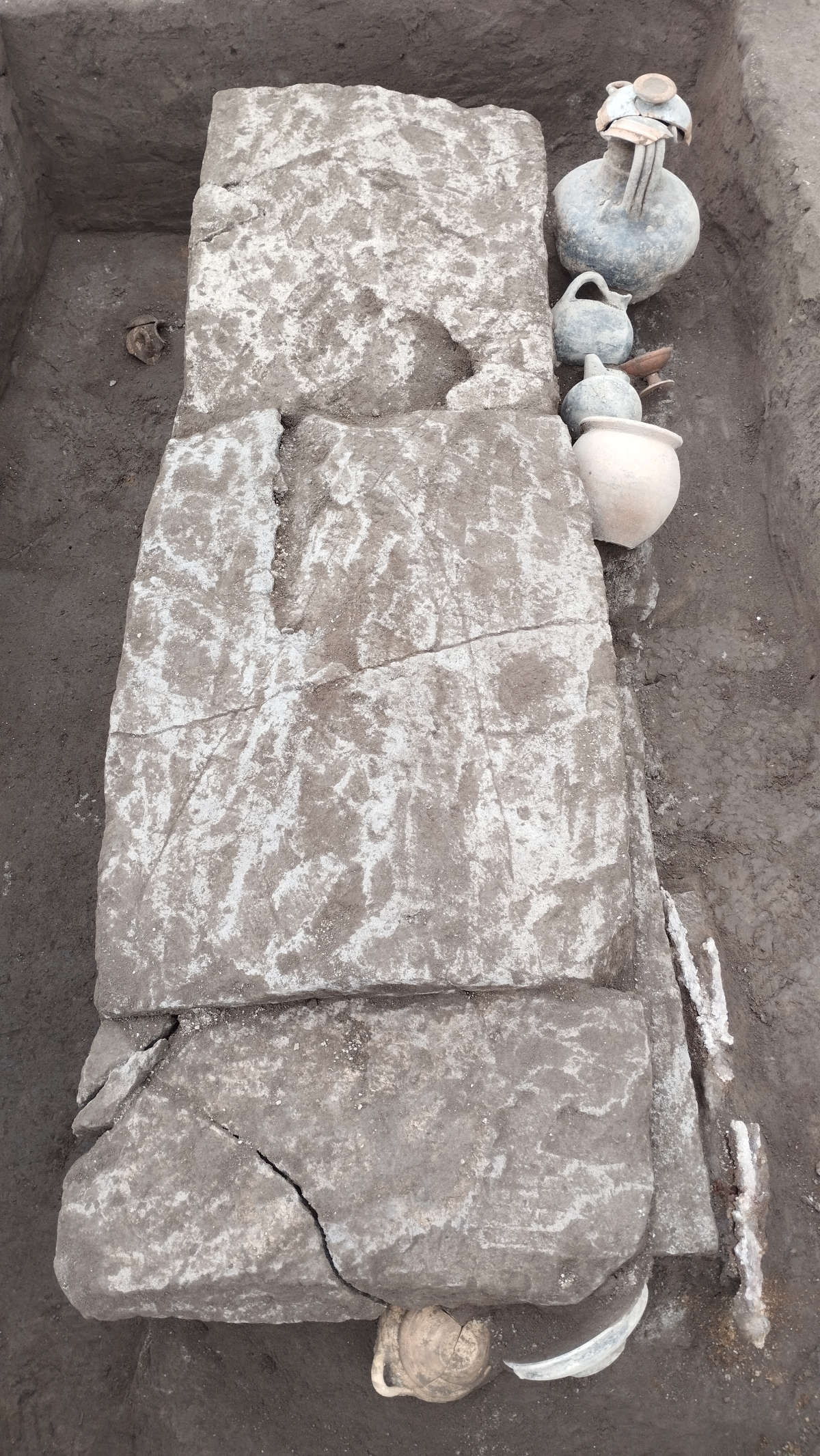
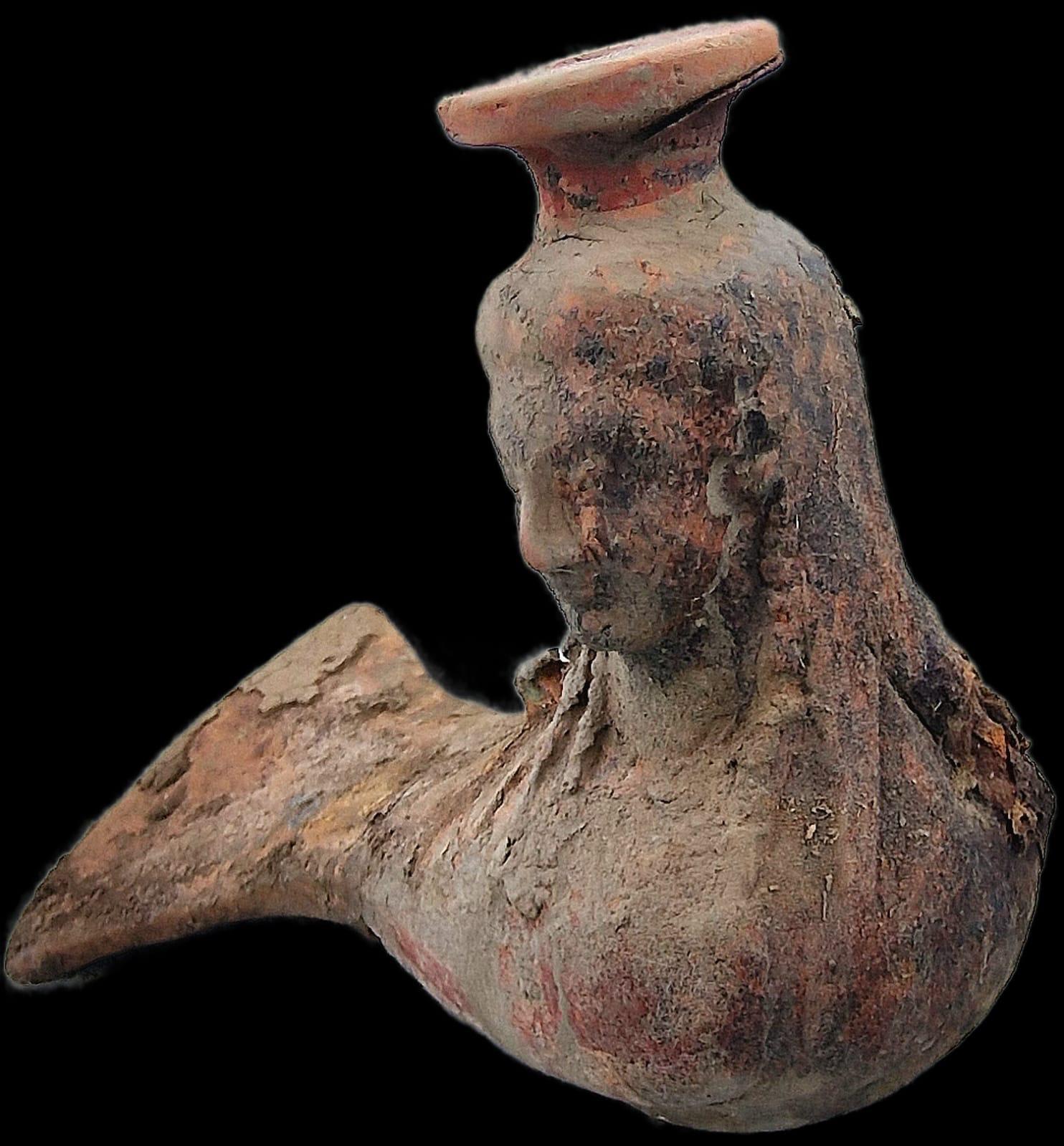
Archaeologists have recovered textiles, wooden objects, and baskets made of woven fibers—finds that are extremely rare for this chronological period and considered absolutely unique by scholars. The preservation of perishable materials offers the opportunity to gain deeper insight into aspects of daily life, craft techniques, and funerary practices that, in most cases, remain unknown precisely because of the natural decomposition of these artifacts.
Alongside the organic materials, burial goods of extraordinary value have been uncovered, attesting to the central role played by this community in the major Mediterranean trade routes during the first half of the 6th century B.C. Among the recovered objects are Egyptian scarabs from Naukratis, the ancient Greek colony founded in the Nile Delta; amber pieces carved into zoomorphic forms; refined silver artifacts; and precious bronze objects of Etruscan origin. Taken together, the finds document the existence of intense commercial relations between the Gragnano area, the Greek world, Egypt, and the eastern Mediterranean.
The quality and provenance of the materials confirm that the ancient settlement was fully integrated into the international economic and cultural networks of the time, and offer a new perspective on the role of the Ager Stabianus in the centuries preceding the founding and development of the major centers of ancient Campania.
Prior to the press conference, the scientific delegation toured the most significant artifacts uncovered during the excavations. The presentation of the artifacts was led by Francesca Mermati, the archaeologist in charge of the excavations, who guided the guests through an interpretation of the key findings that emerged during the research.
The meeting was attended by Luigi La Rocca, head of the Department for the Protection of Cultural Heritage at the Ministry of Culture; Teresa Elena Cinquantaquattro, delegate of Fabrizio Magani, Director General of Archaeology, Fine Arts, and Landscape at the Ministry of Culture; and the director of Service II – Excavations and Protection of Archaeological Heritage; Paola Ricciardi, Superintendent of Archaeology, Fine Arts, and Landscape for the Naples Metropolitan Area; and Francesca Mermati herself.
The presentation also provided an opportunity to take stock of the progress of the research, which does not end with the conclusion of the excavation but continues through a comprehensive program of interdisciplinary studies.
Currently, a team composed of specialists from various disciplines is engaged in the archaeological, bioarchaeological, and archaeometric analysis of the artifacts and contexts uncovered. The goal is to reconstruct, as completely as possible, the history of the community that used the necropolis and to understand its role within the Campania region during the Archaic period.
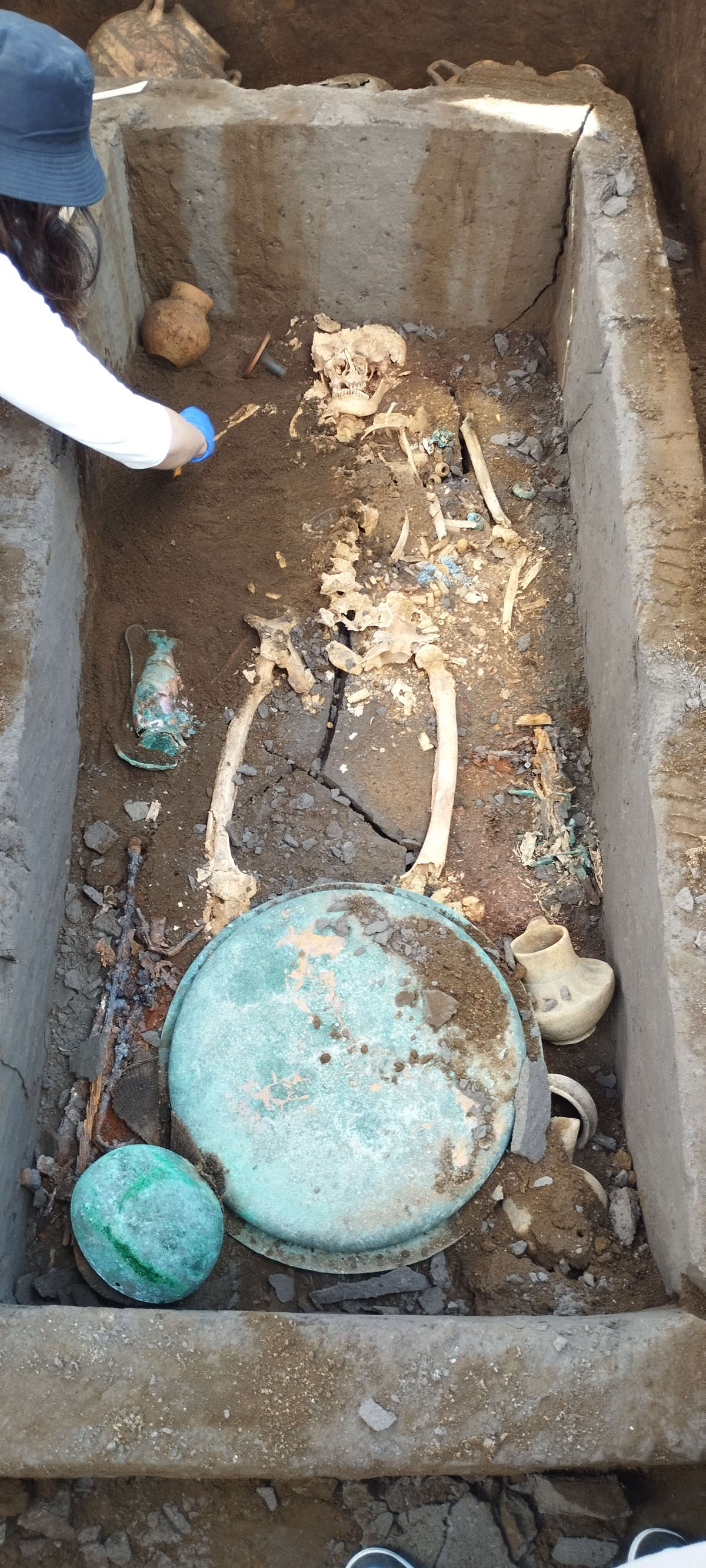
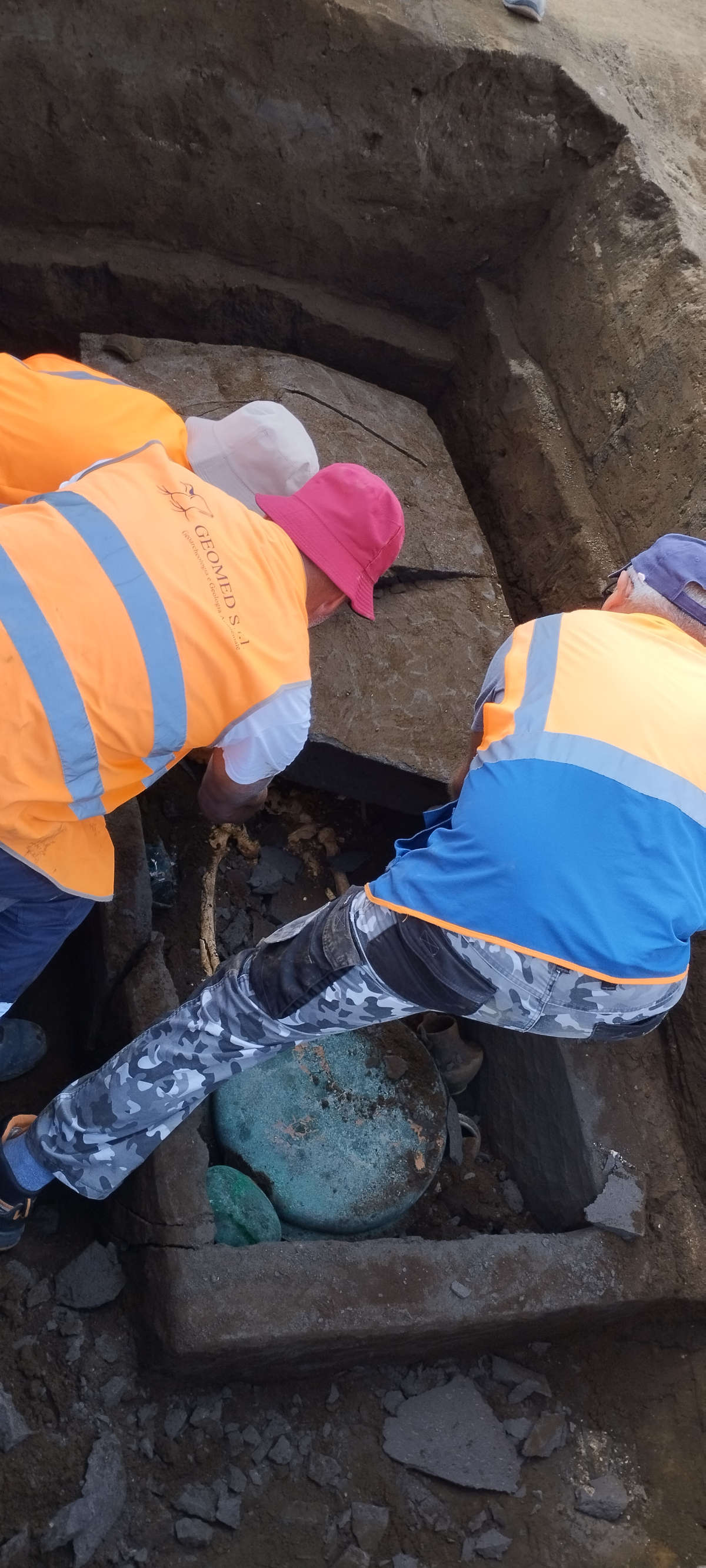
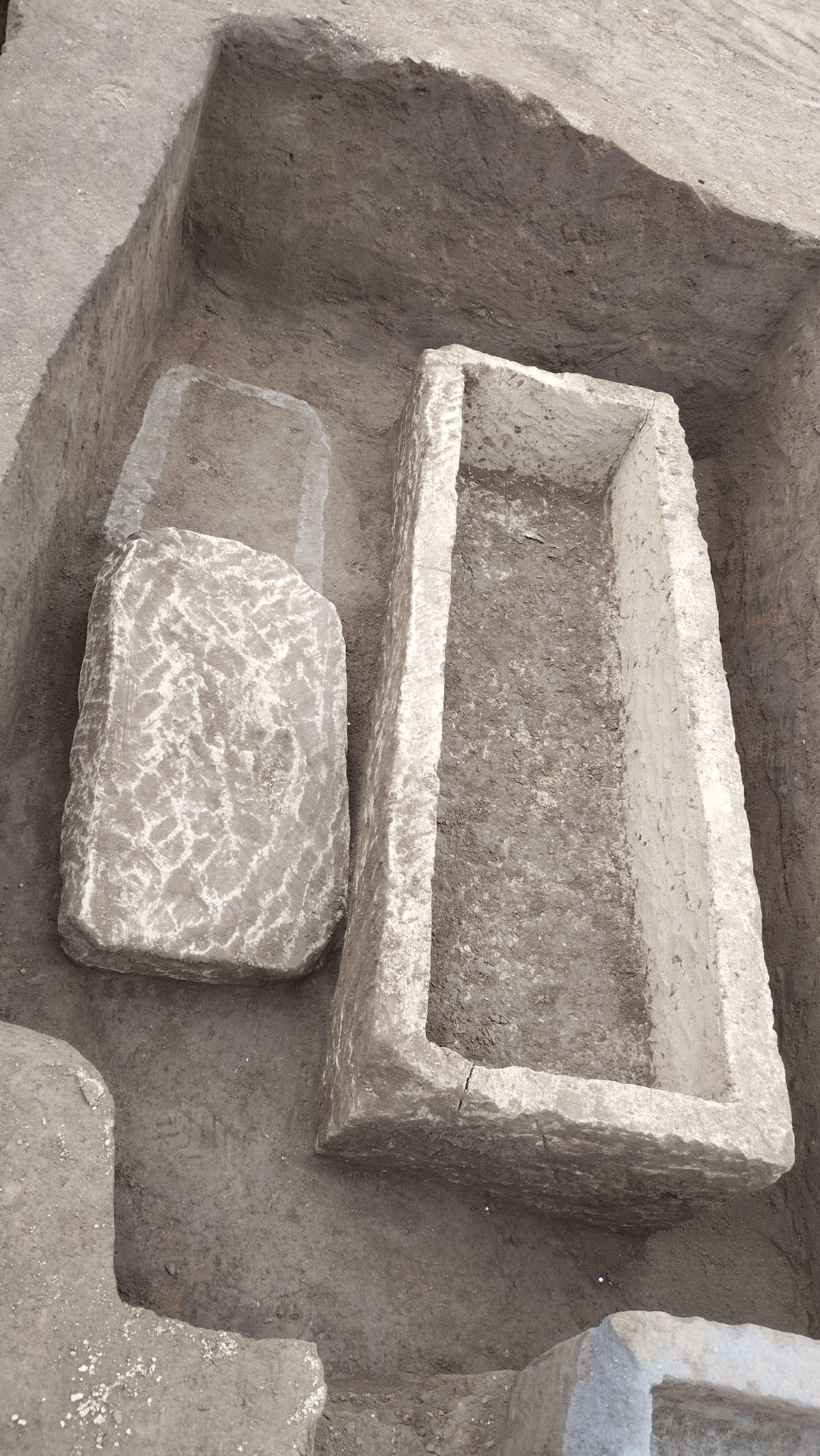
Particular attention is being paid to the analysis of the skeletal remains recovered during the excavations. Anthropological and bioarchaeological analyses will, in fact, provide deeper insights into aspects related to diet, population mobility, and the living conditions of the communities that inhabited the area in the 6th century B.C. These studies will help paint an increasingly detailed picture of the social organization, economic relations, and cultural dynamics of the region, offering new tools for understanding the history of pre-Roman Campania.
During the presentation, Luigi La Rocca emphasized that the discovery also represents a model of successful collaboration between public institutions and the private sector: “The discovery of the necropolis on Via dei Pastai in Gragnano is the result of a successful collaboration between the public and private sectors, demonstrating that efforts to preserve cultural heritage not only does not hinder private initiative but, when supported by rigorous scientific research, enriches a region already rich in history and culture with new value. Furthermore, the results of the excavations—extraordinary for the quality of the artifacts uncovered and the state of preservation of even the organic materials—provide new insights into the development of settlements between the Sorrento Peninsula and the Sarno Valley during the Archaic period, that is, at the dawn of the founding of the major Etruscan-influenced centers of Pompeii and Nuceria, shedding light on the history of pre-Roman Campania.”
Director Teresa Elena Cinquantaquattro also emphasized the methodological value of the project: “The discovery of the necropolis on Via dei Pastai represents an example of best practice within the field of preventive archaeology. It adds a new, important piece to our understanding of the settlement of the Sarno Valley and the surrounding territory, providing a valuable contribution to the reconstruction of the trade networks and traffic that involved the Gulf of Naples during the Archaic period.”
For Superintendent Paola Ricciardi, however, the discovery demonstrates the importance of preventive archaeology as a tool for the protection and understanding of the territory: “The necropolis on Via dei Pastai attests to the value of preventive archaeology as a tool for knowledge and protection. When scientific research accompanies processes of territorial transformation, it becomes an opportunity to restore an important part of the community’s history to the public.”
The role played by Pastificio Garofalo was highlighted by CEO Massimo Menna, who described the discovery as a source of pride and responsibility for a company deeply rooted in the history of Gragnano: “Welcoming a discovery of this magnitude within Pastificio Garofalo is a source of great pride and a deep sense of responsibility for us. Our history is inextricably linked to the Gragnano area, and we believe that doing business also means contributing to the preservation and promotion of the cultural heritage that makes it unique. Our collaboration with the Superintendency has demonstrated how industrial development and scientific research can go hand in hand, transforming an expansion project into an extraordinary opportunity for learning. We are delighted to have been able to support this initiative, which restores an important chapter of the community’s history and further strengthens the bond between Pastificio Garofalo and the region where it has operated for over two centuries.”
The collaboration established between the Superintendency and Pastificio Garofalo has made it possible to develop a comprehensive multidisciplinary research program, enabling scientific investigations that would have been difficult to carry out within the scope of a standard excavation. According to the Ministry of Culture, the project also serves as a starting point for reflecting on future prospects for the enhancement of the archaeological site. The heritage uncovered during the investigations is, in fact, considered a fundamental element of the region’s historical identity, destined to engage with the productive reality that still characterizes Gragnano today.
|
| An Exceptional Discovery: An Archaic Necropolis Found in Gragnano Beneath the Garofalo Pasta Factory |

Warning: the translation into English of the original Italian article was created using automatic tools. We undertake to review all articles, but we do not guarantee the total absence of inaccuracies in the translation due to the program. You can find the original by clicking on the ITA button. If you find any mistake,please contact us.






















 IT
IT FR
FR DE
DE ES
ES CN
CN


