





A submerged wreck dating from between the fifth and fourth centuries B.C., preserved with a cargo of more than three hundred amphorae, could offer important new information on ancient Mediterranean trade and the economic networks that connected the colonies of Magna Graecia with the rest of the Mediterranean world. The find, identified in 2023 off the coast of Monasterace, in the province of Reggio Calabria, was presented on May 29 as part of the 8th National Conference on Underwater Archaeology, hosted at the Campi Flegrei Archaeological Park. The discovery represents, according to experts, one of the most significant underwater archaeological finds in recent years in the Mediterranean and has already given rise to an articulated program of study, protection and recovery promoted by the Ministry of Culture through the Soprintendenza Archeologia, Belle Arti e Paesaggio for the Metropolitan City of Reggio Calabria and the province of Vibo Valentia.
According to initial scientific assessments, the archaeological context could make a significant contribution to the reconstruction of the maritime routes that crossed the Mediterranean in the period between the fifth and fourth centuries BC. In fact, the amphorae preserved inside the wreck appear to be traceable to productions developed in different centers of Magna Graecia and Sicily, an element that could allow us to identify more precisely the places where the containers were manufactured and the routes along which the products transported were distributed.
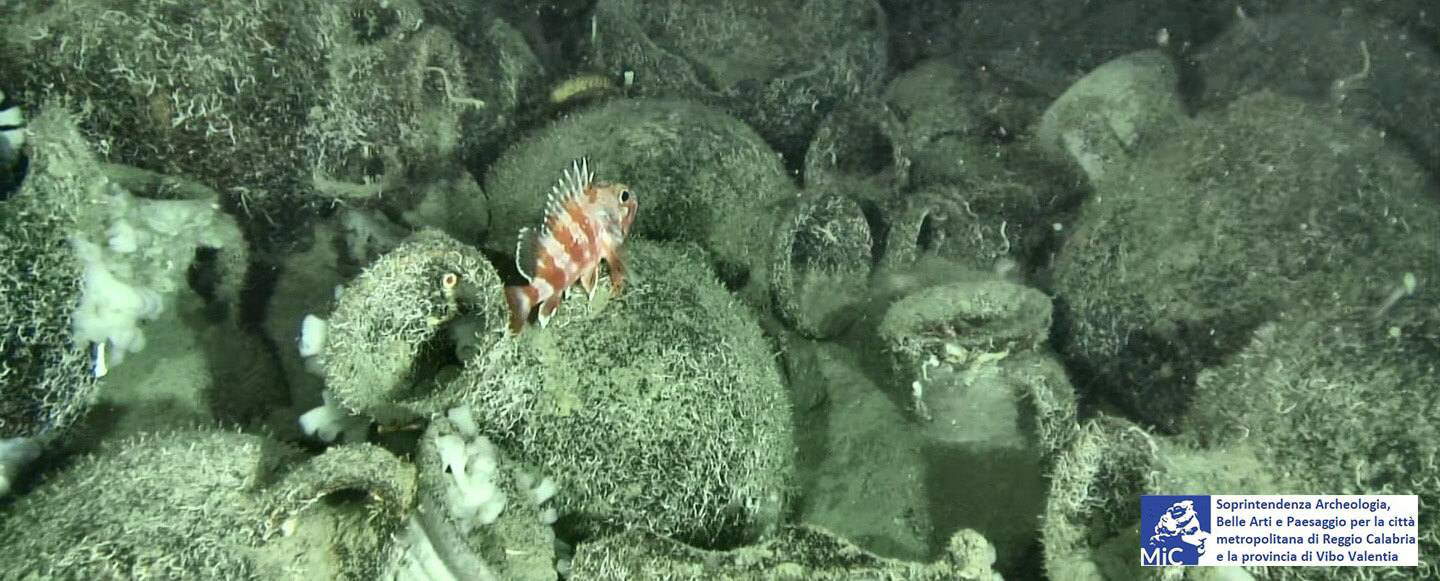
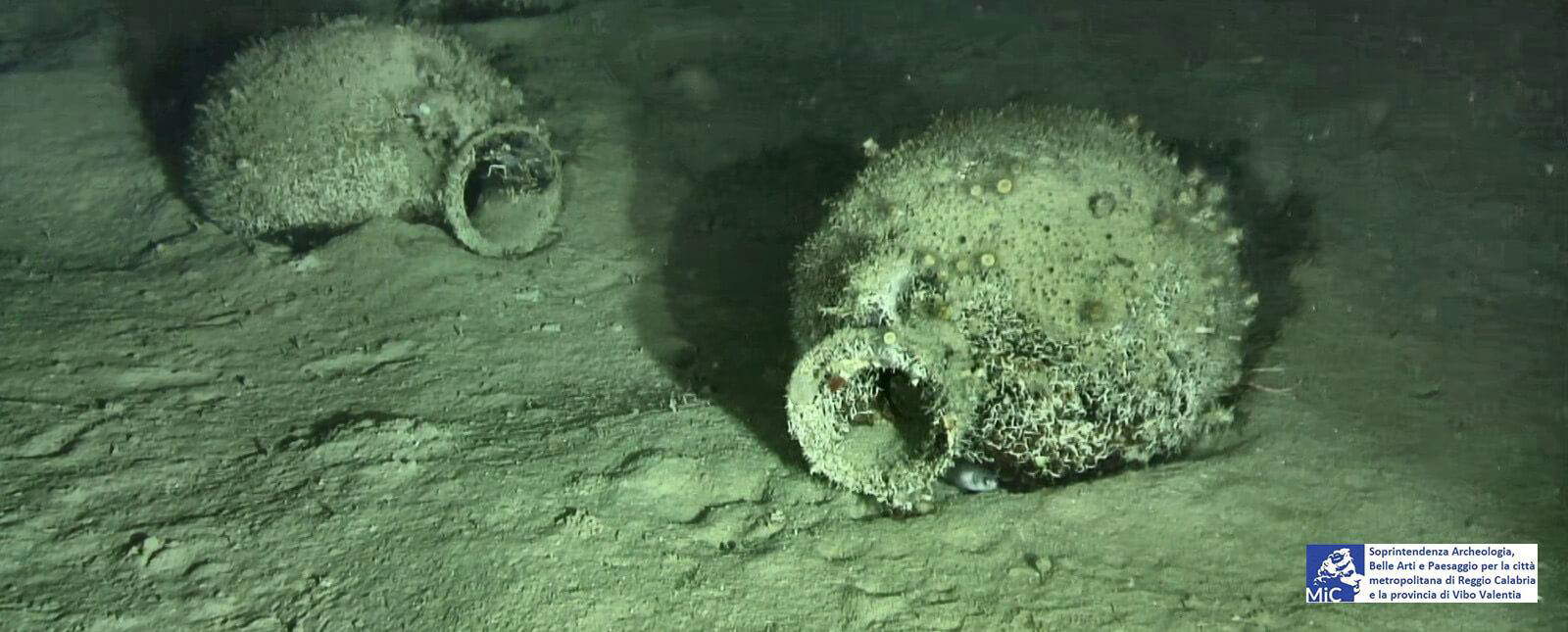
Of particular interest is the possibility of deepening knowledge about the production and marketing of wine from the Ionian coast of Magna Graecia. Indeed, the study of the amphorae, their morphological characteristics and the residues possibly preserved inside them could provide valuable data on the economic and commercial dynamics that characterized the Greek colonies of southern Italy and their relations with other Mediterranean ports.
The discovery occurred in 2023 as part of preventive archaeology activities related to feasibility studies for the construction of an offshore wind farm. The investigations, carried out prior to the start of the infrastructure project, identified the presence of the wreck through the use of advanced technologies for prospecting and morphological characterization of the seabed. The discovery was the result of the work of a multidisciplinary team consisting of marine archaeologists, geologists, physicists, chemists and marine biologists, who collaborated in the analysis of the area covered by the preliminary studies. The survey activities made it possible to recognize the presence of the wreck and to document its main features, leading to the preparation of a detailed technical report that was later forwarded to the relevant Superintendency.
Upon receipt of the documentation, the Soprintendenza Archeologia, Belle Arti e Paesaggio for the Metropolitan City of Reggio Calabria and the province of Vibo Valentia immediately activated the protection procedures provided for by current regulations. At the same time, the Carabinieri Nucleus for the Protection of Cultural Heritage competent for the territory was informed, thus initiating a process of protection and enhancement of the archaeological site.
From this activity was born the project called “Underwater cultural heritage on the high seabed. Protection-recovery-preservation and enhancement,” a program fully funded by the Ministry of Culture that aims to ensure not only the preservation of the finds, but also their study, restoration and future public enjoyment. The initiative makes use of an in-house working group within the ministry administration, responsible for planning, recovery, conservation and enhancement activities. Coordination is entrusted to architect Roberta Filocamo, who is in charge of the single procedure, while the design and direction of the work has been assigned to Alessandra Ghelli, an underwater archaeology officer of the Superintendency.
A number of external specialists work alongside the in-house professionals. These include marine archaeologists Laura Sanna and Francesco Tiboni of ASPS Archaeological Services, who are involved in research and documentation activities at the site. Also participating in the project are restorers and experts in the conservation of archaeological materials recovered from the sea, who are called upon to define the best intervention strategies to ensure the preservation of the finds once they are brought back to the surface.
Among the figures involved in conservation activities is Francesco Lia, a restoration officer in charge of aspects related to the technological systems of the facility and the management of the finds during the delicate phases of restoration and exhibition. The group also includes Mauro La Russa, director of the Department of Biology, Ecology and Earth Sciences at the University of Calabria, whose scientific contribution is fundamental to the analysis of the materials and the understanding of the degradation processes affecting the submerged finds. Also crucial is the support provided by the specialized departments of the Carabinieri Corps. In fact, the Carabinieri Scuba Diving Unit of Messina and the Cultural Heritage Protection Unit of Cosenza are participating in the operations, engaged in both site protection activities and operational operations related to underwater investigations.
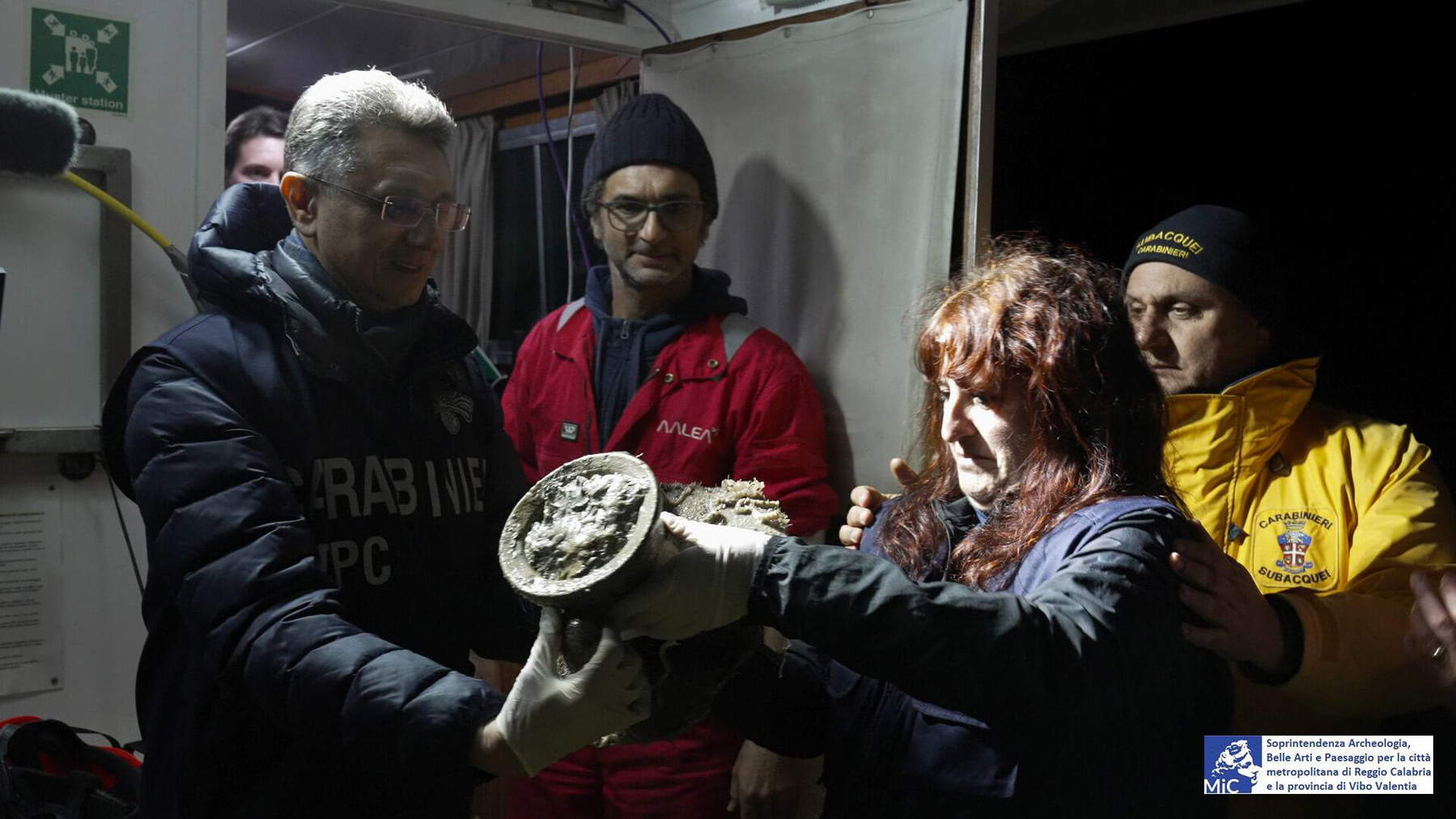
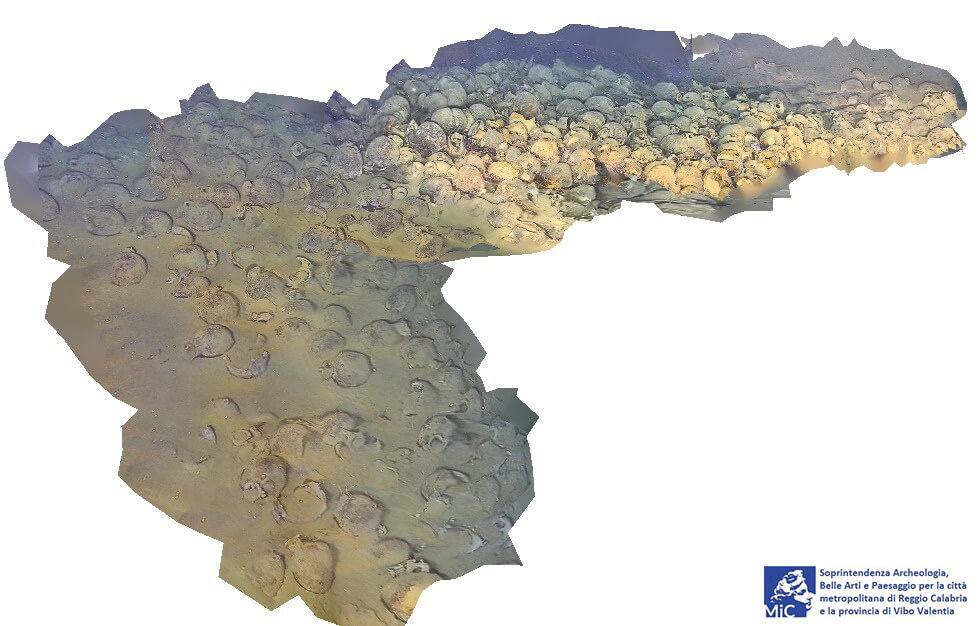
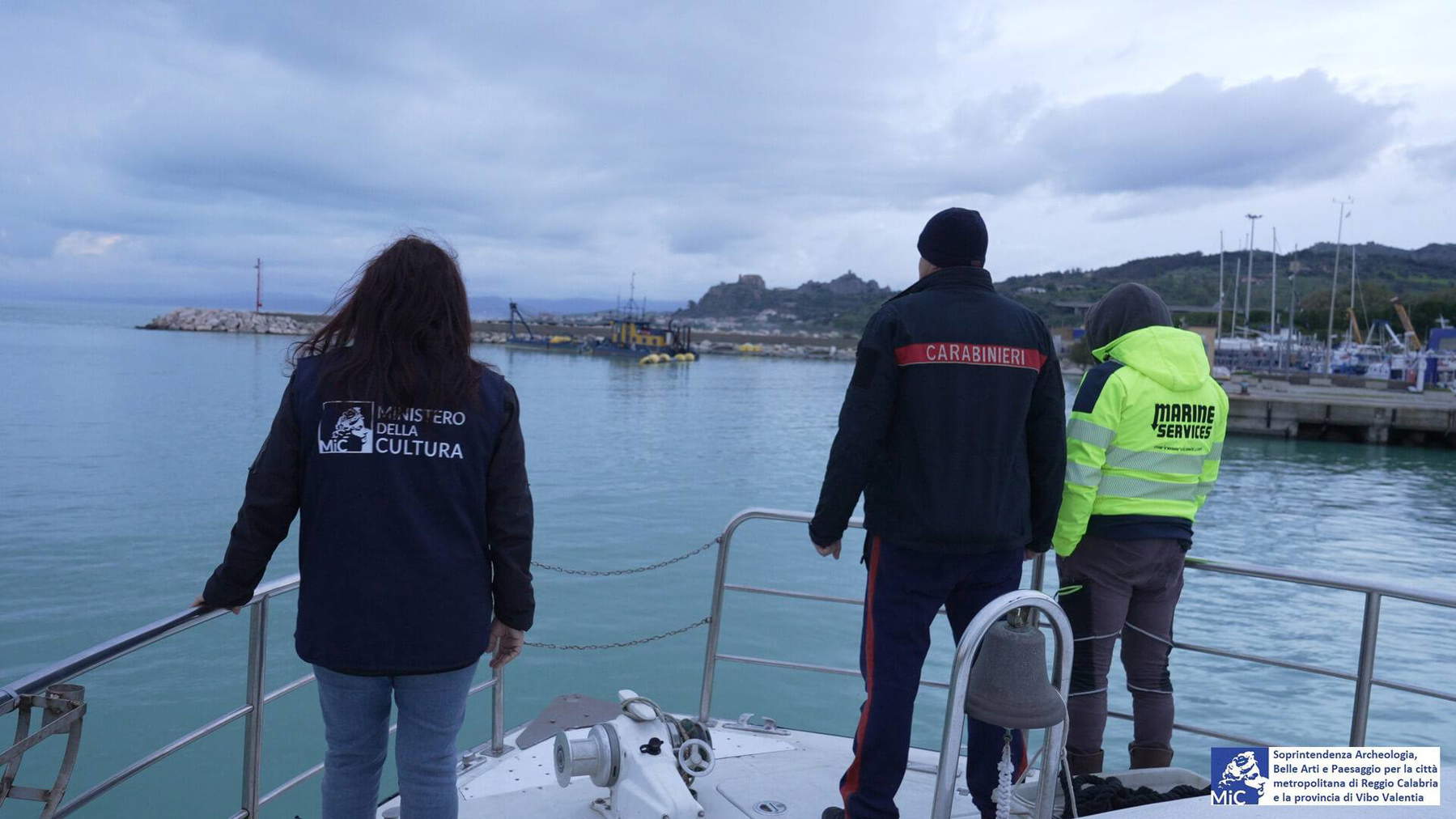
Documentation and study activities entered a new phase in 2025, when photogrammetric survey campaigns and expanded scientific documentation were initiated. These interventions were necessary to understand more precisely the extent of the wreck and the distribution of the cargo preserved on the seabed.
The results obtained confirmed the presence of two distinct amphora cores separated from each other by a distance of about ten meters. This finding reinforced the hypothesis that the dispersal of the cargo did not originally occur during the shipwreck, but rather was the result of subsequent anthropogenic activities. According to scholars, the most likely cause of the separation of the two cores would in fact be attributable to trawling activities that over the decades would have progressively altered the original arrangement of the finds on the seabed. This circumstance assumed decisive weight in the definition of the protection strategies adopted for the site.
In fact, the 2001 UNESCO Convention on the Protection of Underwater Cultural Heritage identifies in situ conservation as the generally preferable solution for the protection of underwater artifacts. Keeping the objects in their original context normally allows preserving their archaeological integrity and limiting the risks associated with recovery. In the case of the Monasterace wreck, however, the particular configuration of the site and the real danger of further damage led experts to choose a different solution. In fact, in order to ensure the preservation of the cargo and prevent the amphorae from sustaining new damage, the project provides for the complete recovery of the archaeological materials. The decision was made with the aim of ensuring maximum protection of the heritage and at the same time enabling its future enhancement through public display. Once the recovery and restoration operations are completed, the finds can in fact be returned to the community and become the subject of exhibition routes and in-depth scientific study.
Currently, field activities are focused on thepunctual survey of the archaeological site, conducting high-definition photogrammetric surveys, detailed load analysis and recovery of selected samples destined for subsequent laboratory analysis. The materials taken will undergo scientific, archaeometric and conservation studies aimed at understanding the state of degradation of the amphorae and identifying the most appropriate intervention protocols. The information obtained will form the basis for planning the next operational steps and defining how to proceed with the systematic recovery of the entire cargo.
The importance of the wreck lies not only in the exceptional number of amphorae preserved, but also in the information potential it holds. Indeed, the study of the context will be able to contribute to expanding knowledge about the ceramic productions of Magna Graecia and Sicily, the commercial distribution networks of wine and other agricultural products, and the economic dynamics that characterized the Mediterranean between the end of the Classical period and the beginning of the Hellenistic period. For archaeologists, this is a rare opportunity to analyze a submerged context that is still largely intact, capable of returning valuable information about maritime activities more than two thousand four hundred years ago.
|
| Calabria, wreck discovered with more than 300 amphorae from Magna Graecia |

Warning: the translation into English of the original Italian article was created using automatic tools. We undertake to review all articles, but we do not guarantee the total absence of inaccuracies in the translation due to the program. You can find the original by clicking on the ITA button. If you find any mistake,please contact us.


























 IT
IT FR
FR DE
DE ES
ES CN
CN


