





There are works before which the gaze slows down, almost without realizing it. Not because of their obvious complexity, nor because of the richness of the details, but because of a more subtle feeling that is difficult to name: something seems to be missing. A figure remains suspended, a surface is not fully worked, an outline dissolves instead of closing. Yet right there, in that apparent lack, a particular density is felt. The work comes across as finished, but also as restrained, as if it were still in a state of transformation.
The "unfinished " is one of the most fascinating and ambiguous categories inart history. For a long time it was interpreted as a limitation, an interruption, an unfulfilled promise, and today it appears instead as a precise choice, a conscious language, a form of resistance to the idea of perfection. Imperfection moves from being a defect to be corrected to a space to be inhabited.
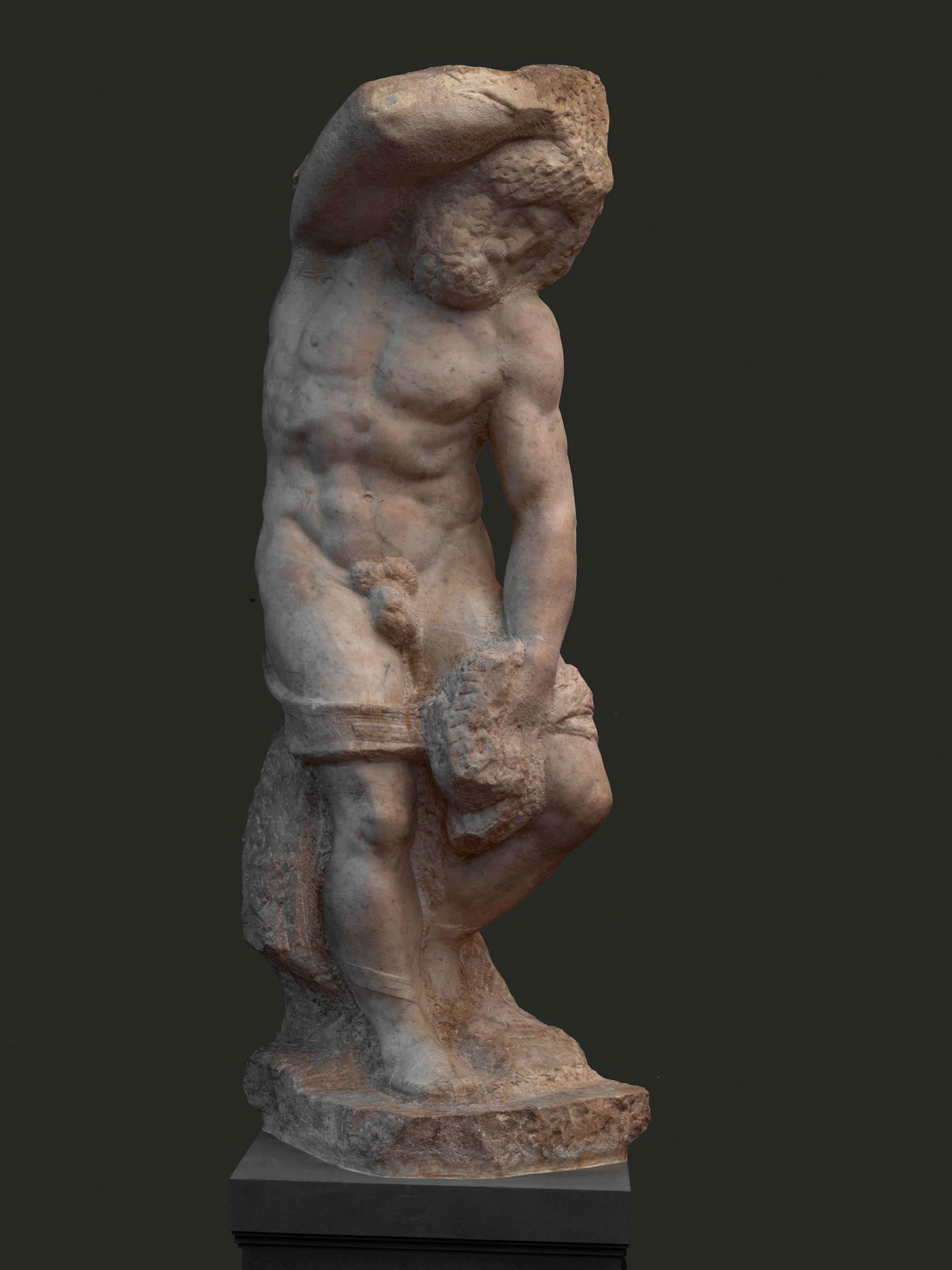
One of the founding moments of this aesthetic can be found in Michelangelo Buonarroti’s unfinished sculptures, particularly in the famous Prigioni, sculptures preserved in both the Louvre in Paris and the Galleria dell’Accademia in Florence. Here the figures seem to emerge from the stone without being able to break free of it completely. The bodies are trapped, compressed, as if the marble were still alive, resistant, active. These are not works left half-finished for lack of time or will: it is as if Michelangelo chose to stop at the most intense moment, the moment when the form is coming into being. In these sculptures the unfinished becomes a condition: the creative process remains visible, the gesture is not erased in the result, the marble is not completely dominated and retains its own autonomy. The viewer is thus confronted with something that is neither pure matter nor completed form, but a tension between the two. It is precisely in this tension that meaning is generated.
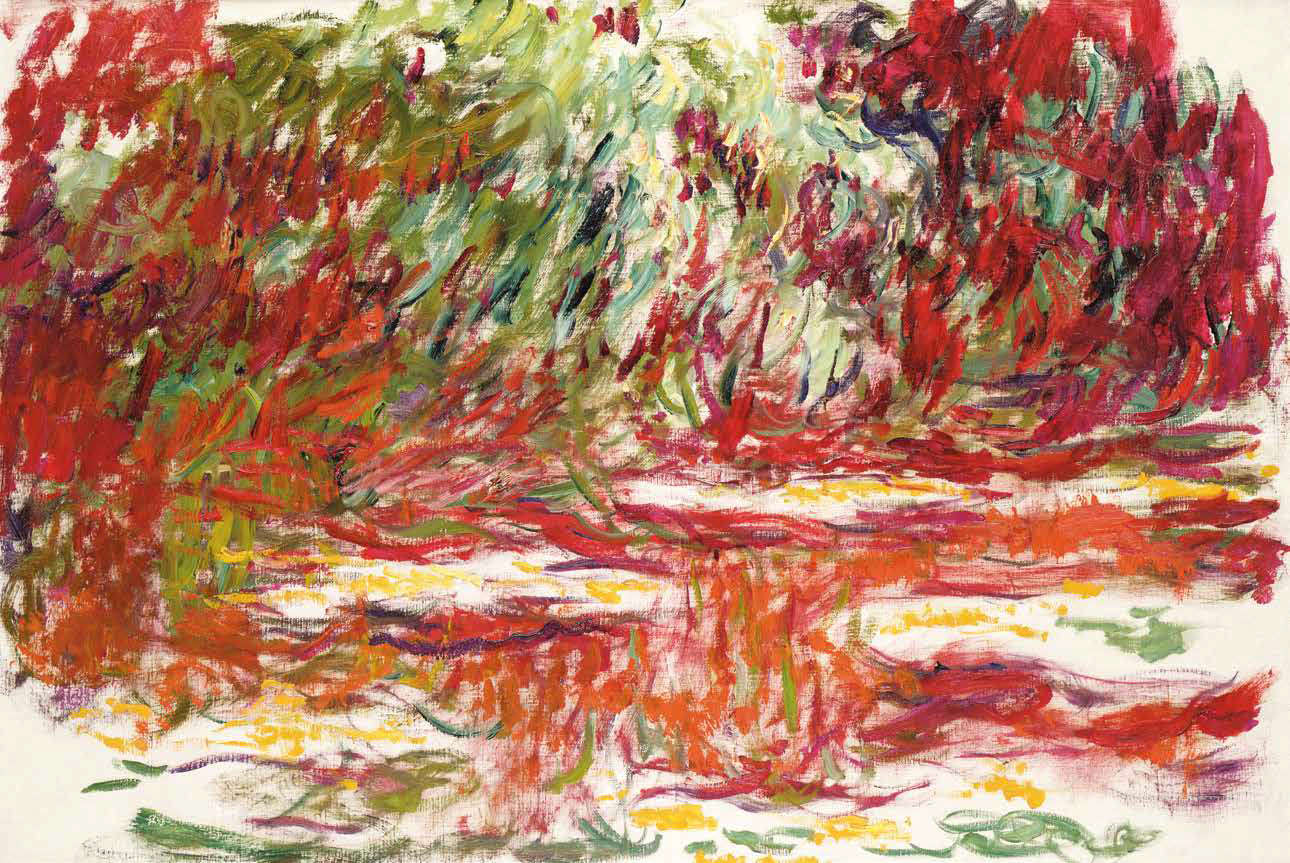
As the centuries passed, this idea transformed and spread. In Claude Monet’s painting, especially in late works such as the Water Lilies, the dissolution of form becomes a central element. The brushstrokes no longer construct stable outlines, but vibrant, unstable surfaces. The painting never closes completely but offers itself to the gaze as something that keeps changing, and the image does not impose itself, it allows itself to be traversed. This openness profoundly alters the relationship between work and viewer, as it is as if the latter is asked to pause within a visual experience. The unfinished, in this case, coincides with a form of freedom: the work makes meaning possible, it does not impose it.
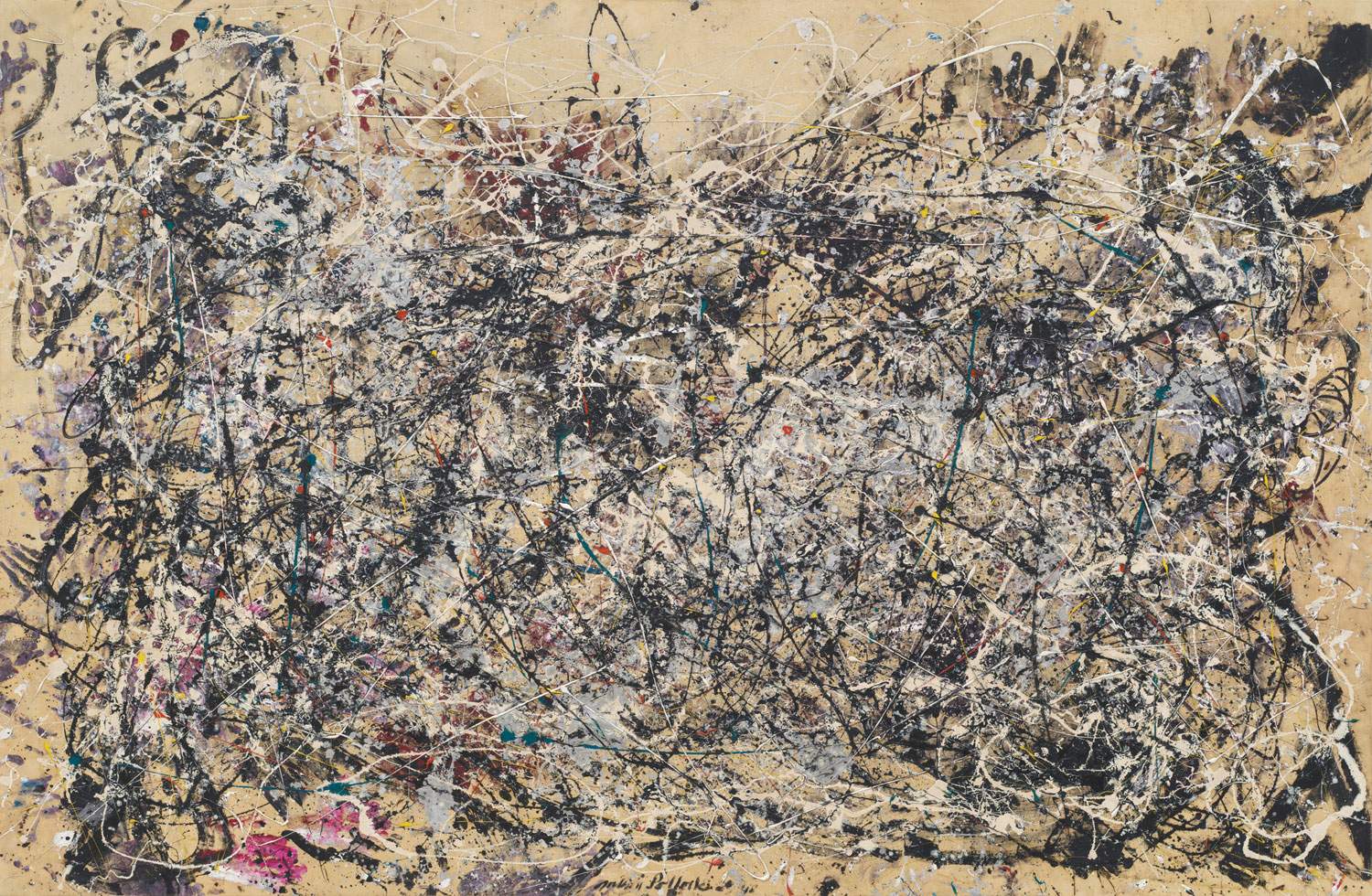
Over the course of the twentieth century, this logic is further radicalized. In Jackson Pollock’s paintings, for example, the very idea of completion is challenged. His canvases have no center, no hierarchy, no obvious end point. They are surfaces in which gesture accumulates, intertwines, expands. When is a Pollock painting finished? There is no single answer. The artist stops intervening, but the work continues to vibrate, to generate relationships, to escape any definitive closure. Here the unfinished becomes a temporal question. The work coincides with a duration, it exists in time, and each glance activates a new possibility.
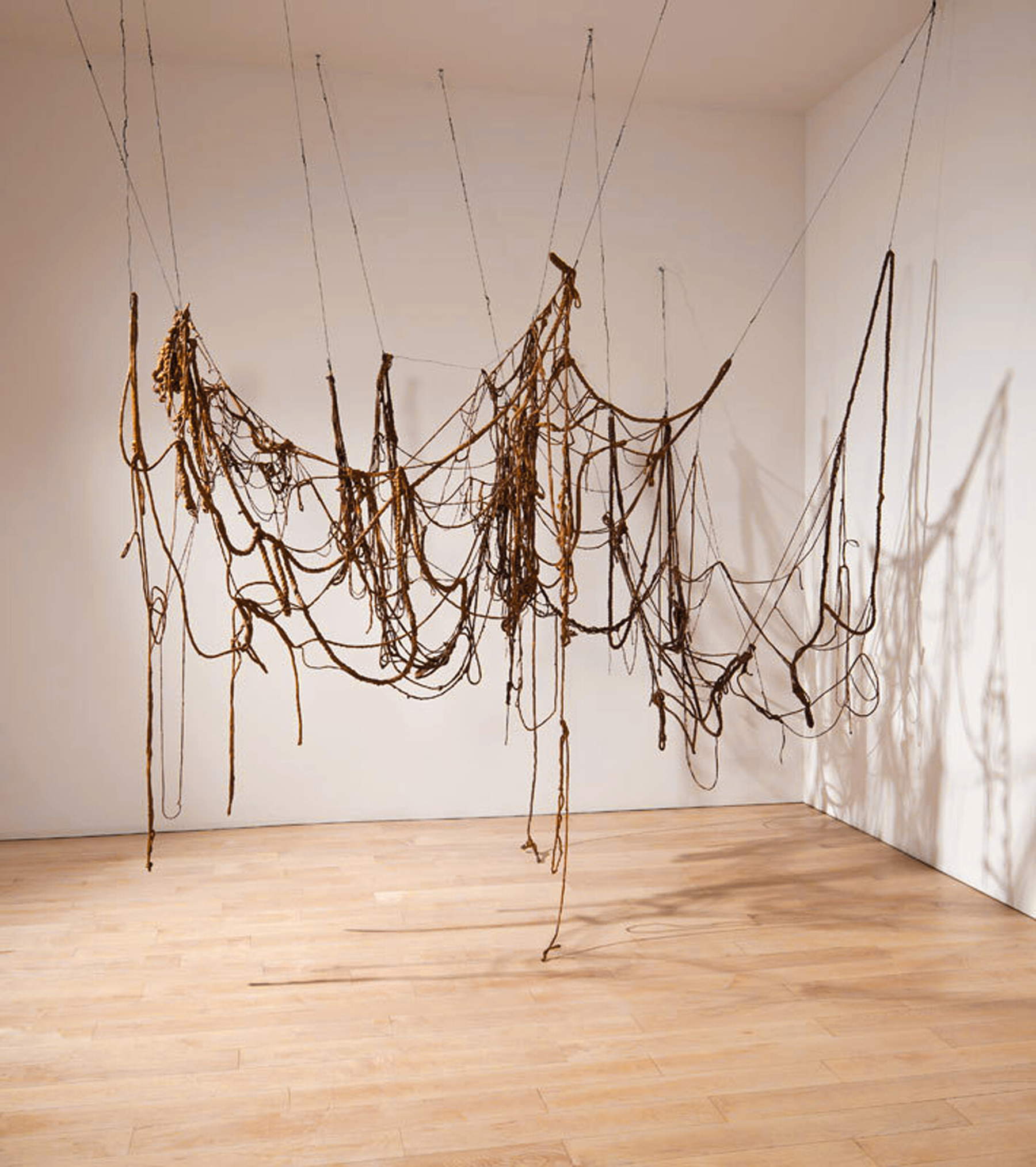
This perspective is further expanded in contemporary art, where the unfinished is intertwined with the fragility, transformation, and precariousness of materials. Eva Hesse’s works, made from latex, ropes and perishable materials, seem destined to change over time, to deteriorate, to lose shape. Here the unfinished no longer concerns only the creative act, but the very life of thework. There is no final version, but a series of transitory states.
This condition introduces a new dimension: thework is no longer stable, no longer guaranteed in its permanence, it is exposed to time, to change, to the possibility of disappearing. Imperfection then becomes a form of truth, a way of accepting the finiteness of things. At the same time, the unfinished profoundly alters our way of looking: we are used to looking for balance, clarity, completeness, and when faced with an unfinished work, the gaze must adapt. It can no longer merely recognize; it must participate. It must bridge, imagine, remain open. In this sense, the unfinished activates a more intense form of involvement because where everything is defined, the viewer observes. Where something is missing, the viewer intervenes with his own perception. The work becomes a shared space, a place where meaning is constructed in the time of experience.
There is also a broader cultural dimension: these days theidea of perfection is constantly challenged, images are fast, provisional, continually updated, and processes remain visible, often more important than results. And in this context the unfinished shows itself not as an anomaly but as a widespread condition.
Yet its strength does not depend only on contemporaneity. The unfinished has always held a special fascination because it leaves space. It does not close, it does not completely define, it does not exhaust meaning. It is a form that resists conclusion, that keeps possibility open.
Looking at an unfinished work means accepting this openness, it means giving up the idea of a definitive meaning and inhabiting a zone of uncertainty to experience a different mode of experience. The unfinished, then, is not simply an aesthetic of imperfection. It is a deep reflection on art making, on time, on perception. It is the place where the work ceases to be a closed object and becomes a visible process, a still active tension, something that continues to exist precisely because it is never completely finished.


The author of this article: Federica Schneck
Federica Schneck, classe 1996, è una giornalista specializzata in arte contemporanea. Laureata in Storia dell'arte contemporanea presso l'Università di Pisa, il suo lavoro nasce da una profonda fascinazione per il modo in cui le pratiche artistiche operano all’interno, e in contrapposizione, alle strutture sociali e politiche del nostro tempo. Si occupa delle trasformazioni del sistema dell'arte contemporanea, del dialogo tra ricerche emergenti e patrimonio culturale, del mercato, delle istituzioni e delle fiere internazionali. Alla scrittura giornalistica affianca quella critica, con testi per artisti, gallerie e collezioni private.Warning: the translation into English of the original Italian article was created using automatic tools. We undertake to review all articles, but we do not guarantee the total absence of inaccuracies in the translation due to the program. You can find the original by clicking on the ITA button. If you find any mistake,please contact us.















 IT
IT FR
FR DE
DE ES
ES CN
CN


