





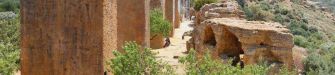
Herculaneum is once again opening one of the most significant sites of the ancient Roman city to visitors. Following a major restoration, consolidation, and enhancement project, the Calcidico is once again open to the public, offering a new opportunity to understand the urban, political, and religious organization of Herculaneum prior to the eruption of 79 AD. Overlooking the Decumanus Maximus, the Calcidico served as the monumental porticoed vestibule of one of the city’s main public buildings. Bordered by two large four-sided arches and adorned with marble decorations and refined stucco reliefs, this space served not only as a passageway but also as a ceremonial threshold through which citizens and officials entered a building dedicated to the celebration of imperial power.
The most recent archaeological research has made it possible to identify the complex as the Augusteum, a site closely linked to the cult of the emperors and the activities of the College of the Augustals. The study of inscriptions, artifacts, and decorative elements uncovered during the Bourbon excavations has helped clarify the central role of this building in the public life of ancient Herculaneum.
The recently completed work focused on both the architectural structures and the decorative elements preserved in the area. The interventions included the consolidation of the masonry and pillars, as well as a series of conservation treatments focused on the plasterwork, marble cladding, and painted surfaces, carried out with the aim of preserving the authenticity of the original materials and ensuring their long-term conservation. This result was made possible thanks to the collaboration among various professionals at the Herculaneum Archaeological Park. Archaeologists, conservators, and architects worked in close collaboration, supported by specialized contractors involved in the various operational phases—from the maintenance of the spaces to the safety and cleaning measures necessary to ensure the area’s proper use.
The Calcidico area also holds a prominent place in the history of archaeological discoveries at Herculaneum. It was precisely in this sector that important sculptures were unearthed—now housed at the National Archaeological Museum of Naples—belonging to one of the most famous statuary complexes unearthed during the excavations of the ancient city.
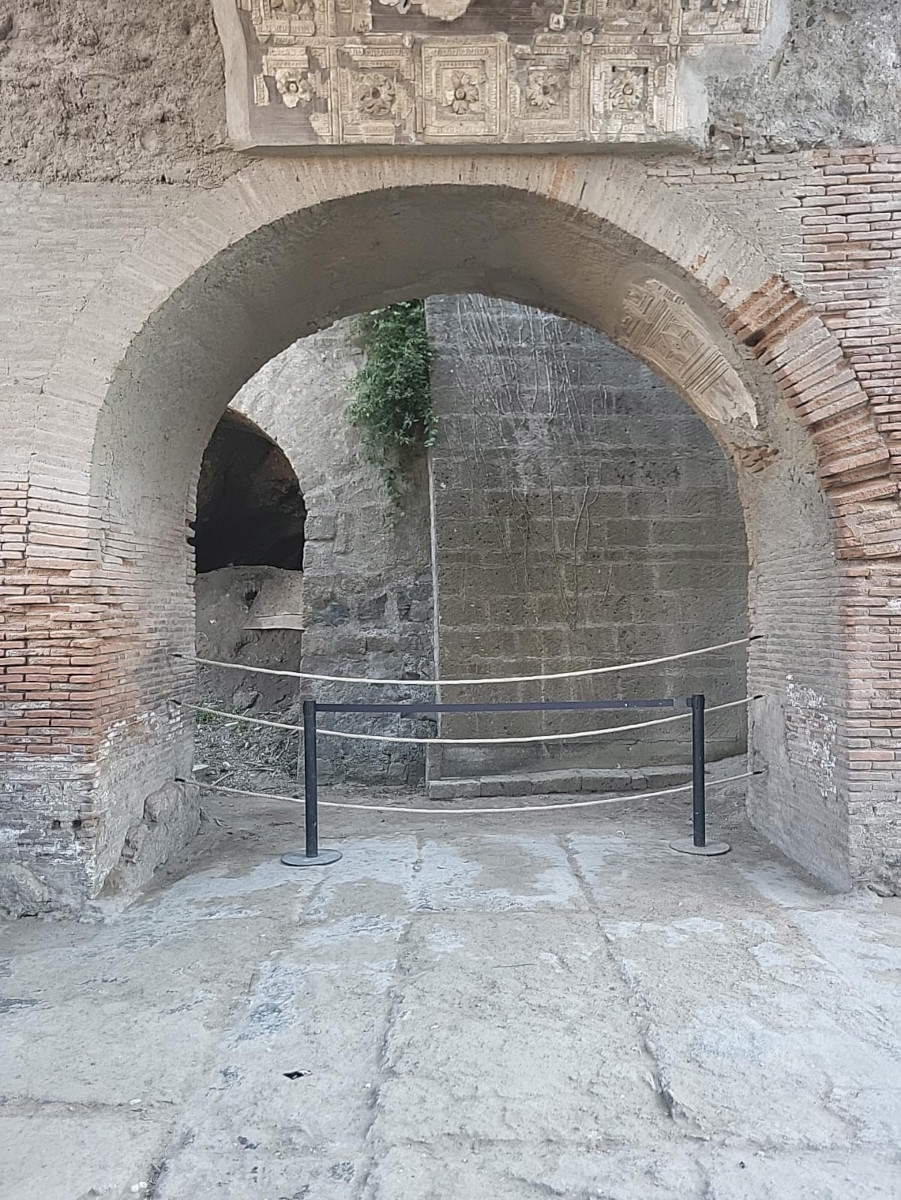
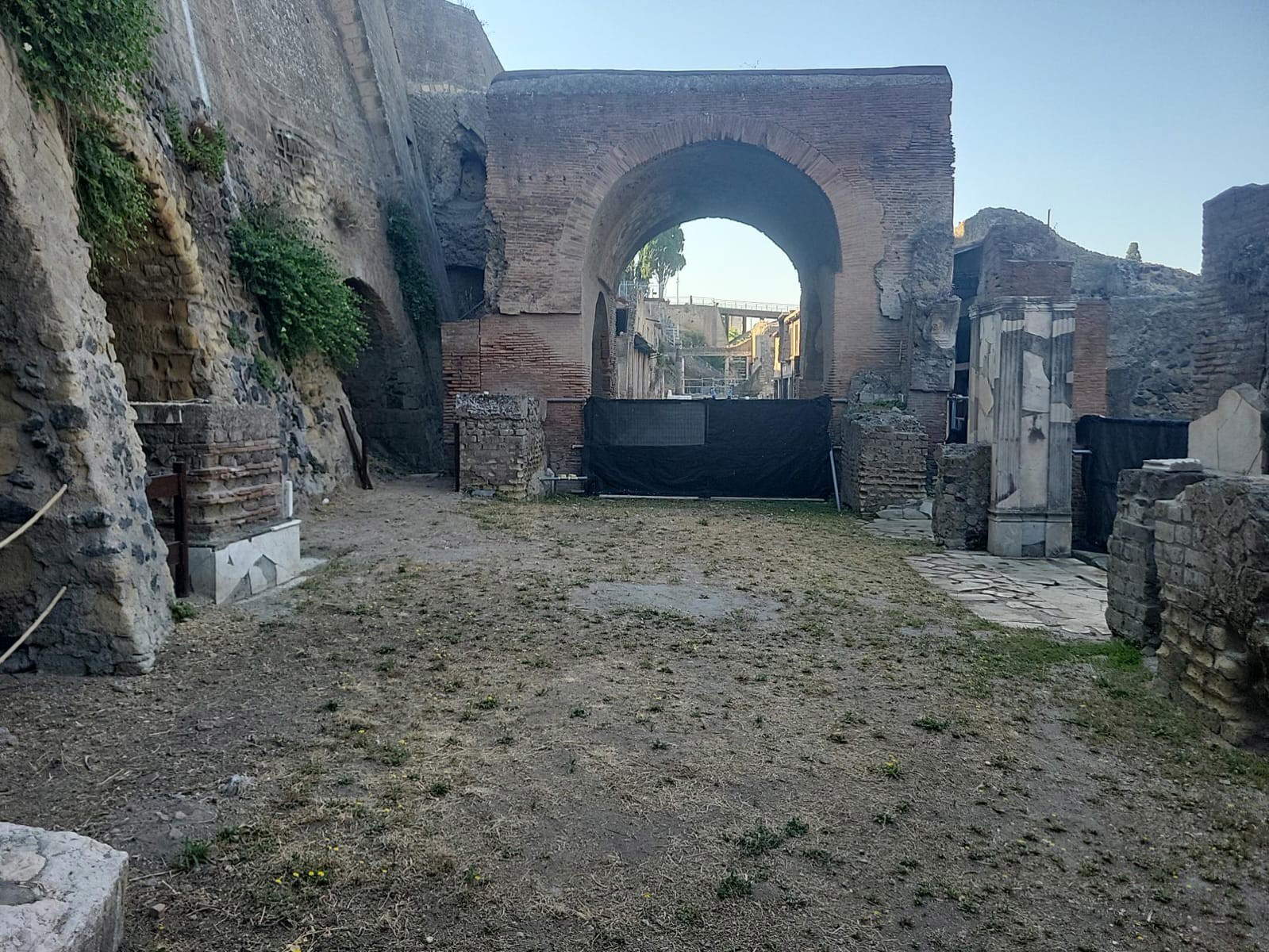
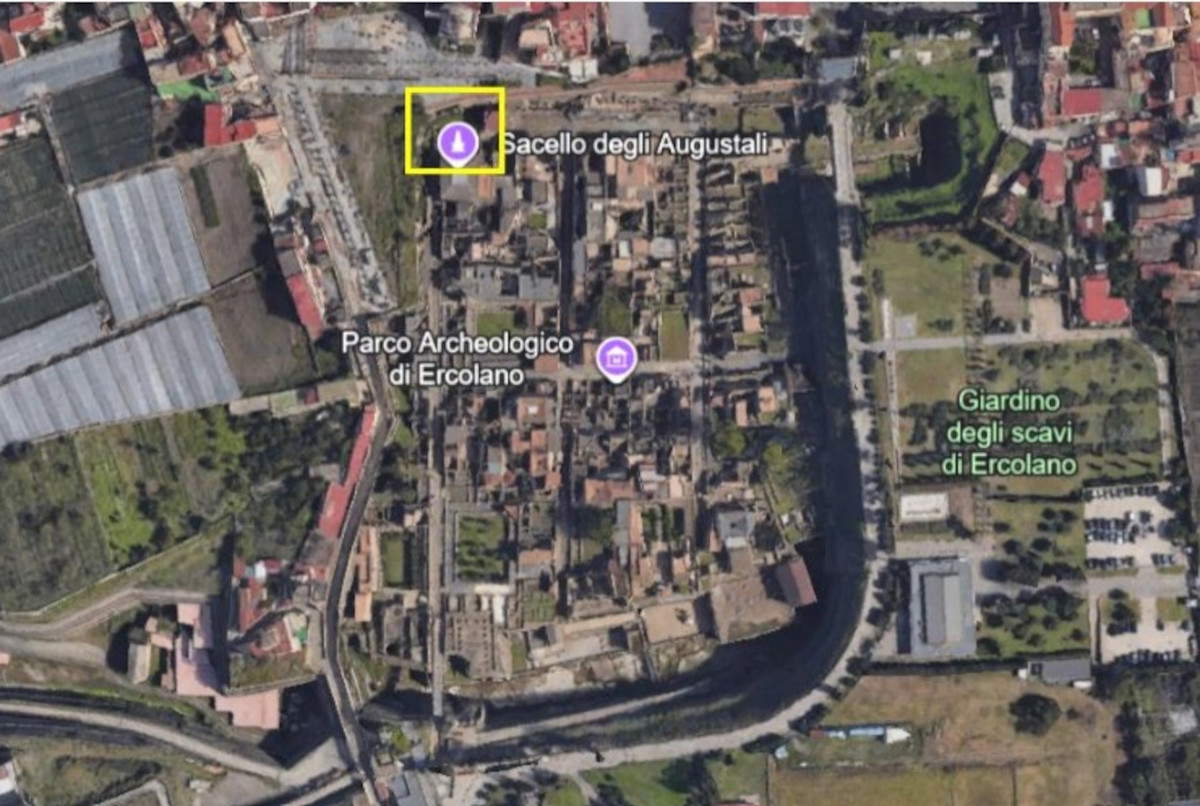
The reopening now allows visitors to walk directly through a space that, until now, could only be viewed from above via the observation walkway. The new route provides a more immediate sense of the complex’s scale and monumentality, fostering a deeper understanding of its role within the ancient urban fabric. One of the most striking aspects of the experience concerns the relationship between the Roman city and the modern settlement that now lies above it. Visitors can, in fact, more clearly appreciate the remarkable depth at which the ancient buildings are preserved—one of the most fascinating features of the archaeological site. Along the route, traces left by both the excavation work and the eruption of Vesuvius also come to light. These physical marks allow visitors to interpret the dramatic event that destroyed Herculaneum as a sort of snapshot frozen in time—preserved for nearly two thousand years and now revealed to the contemporary eye.
The reopening of the Calcidico represents another step forward in the restoration and enhancement program carried out by the Herculaneum Archaeological Park, which in recent years has invested significantly in the protection and public access to areas that are fundamental to understanding the ancient city. The goal is to make the archaeological heritage increasingly accessible and understandable, offering visitors useful tools to grasp the site’s historical complexity and the ongoing research, maintenance, and conservation efforts that ensure its preservation. Each restored space not only expands the visitor route but also helps enrich our understanding of one of the most extraordinary testaments to the Roman world.
The Chalcidice will be open to the public free of charge starting Sunday, July 5, as part of “Museum Sunday,” which offers free admission to state-run cultural sites. No advance reservation is required to enter the park: free tickets can be picked up directly at the ticket office on the day of the visit.
“Returning the Calcidico to visitors after nearly twenty years is an achievement of which we are deeply proud: it is concrete proof of how a collaborative effort, carried out with expertise and dedication, can turn what once seemed distant into reality. This area holds one of Herculaneum’s most powerful memories—it was here, during previous excavations, that the statues that now grace the halls of the National Archaeological Museum of Naples—and today we can finally offer visitors the chance to walk through it, to examine it up close, and to feel the weight of its history,” said the park’s director, Federica Colaiacomo. “It’s an important step toward our vision of a park that is increasingly accessible, vibrant, and capable of stirring the emotions: we will continue on this path, because Herculaneum deserves to be experienced in all its extraordinary depth.”
|
| Herculaneum Reopens the Calcidico, the Augusteum’s Monumental Porticoed Vestibule, After Twenty Years |

Warning: the translation into English of the original Italian article was created using automatic tools. We undertake to review all articles, but we do not guarantee the total absence of inaccuracies in the translation due to the program. You can find the original by clicking on the ITA button. If you find any mistake,please contact us.

























 IT
IT FR
FR DE
DE ES
ES CN
CN


