





A team ofEnglish Heritage volunteers is completing at Stonehenge the reconstruction of a Neolithic building from about 4,500 years ago. It is Kusuma Neolithic Hall and has been reconstructed based on the archaeological remains of a large prehistoric structure discovered two miles from the famous stone circle. The reconstruction was carried out using traditional techniques and locally sourced materials while respecting historical accuracy. The project, worth a total of £1 million and funded by the Kusuma Trust, is now nearing completion: it is scheduled to open to the public in the summer, while from September the structure will be used for educational activities and experiential history tours aimed at schools. During this summer, therefore, visitors will be able to explore this imposing seven-meter-tall structure.
This initiative represents the first phase of a larger program promoted by English Heritage to increase the educational and interdisciplinary opportunities offered at Stonehenge. The construction of Kusuma Neolithic Hall took nine months of work and the involvement of more than 100 volunteers. Coordinated by award-winning experimental archaeologist Luke Winter, the volunteers used tools and materials consistent with those of the Neolithic era, including straw, coppiced hazel wood, and limestone clay, in order to faithfully recreate prehistoric building techniques and better understand the time and labor required to build such structures.
English Heritage designed it as a learning environment that can accommodate up to thirty students at once, to provide them with an immersive experience in Neolithic daily life. Around the central hearth, visitors will be able to use replicas of ancient tools, experience craft and culinary activities, and discover how communities lived 4,500 years ago. However, the original function of the historic building, identified near the prehistoric settlement of Durrington Walls, about three kilometers northeast of Stonehenge, remains uncertain. Excavations in the area have yielded thousands of animal bones and numerous fragments of Grooved Ware pottery, evidence of large winter banquets. Because of this, archaeologists speculate that the structure may have been used as a place for collective gatherings, ritual celebrations or burial practices.
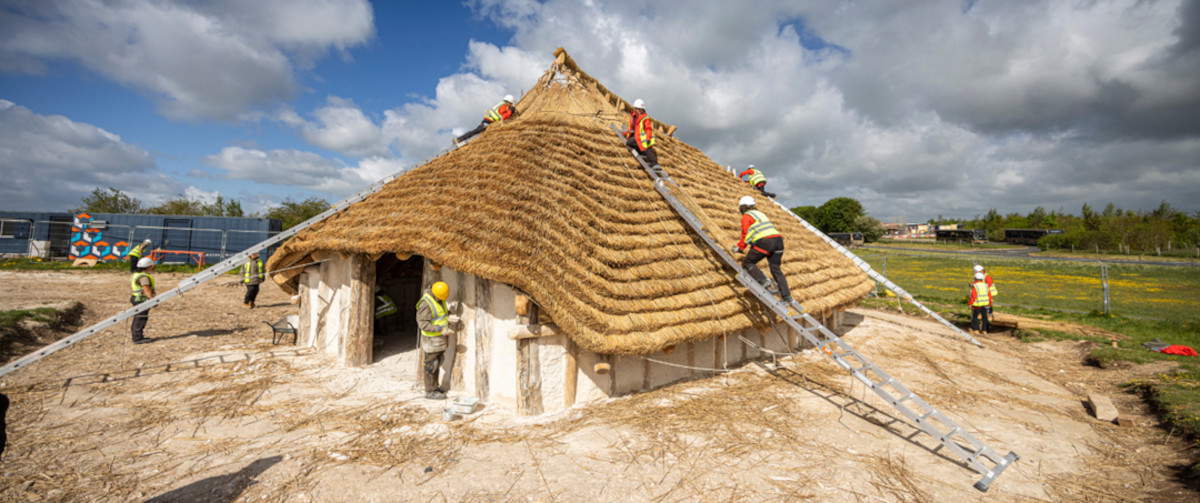
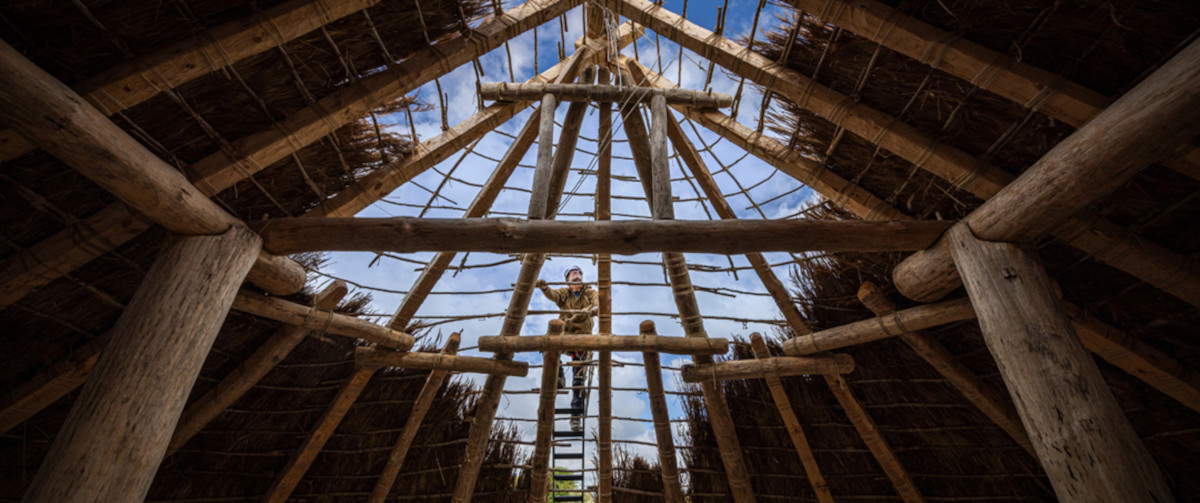
“The Kusuma Neolithic Hall is a truly exciting project for the charity and we are enormously grateful to the Kusuma Trust for the generous donation that made it possible,” said Matt Thompson, English Heritage’s Director of Conservation, Curatorship and Education. “Kusuma Neolithic Hall is not only a wonderful addition to the Stonehenge experience for visitors and students alike, but through the use of historically accurate techniques and materials in its construction, we have also been able to develop a much deeper understanding of the daily lives of the Neolithic peoples who came to Stonehenge and settled in the area.”
“As a charity, one of our main goals is to provide memorable learning experiences for everyone, and Kusuma Neolithic Hall will transform our ability to do that. With its fiery hearth, artifacts and Neolithic culinary activities, it is a living history model, capable of instantly transporting you back 4,500 years,” he added. This summer, visitors to Stonehenge will also have the opportunity to tour the structure and talk to some of our volunteers who built it, before it is opened to school groups for the new school year."
|
| Stonehenge, a large 4,500-year-old Neolithic building reconstructed with archaeological accuracy |

Warning: the translation into English of the original Italian article was created using automatic tools. We undertake to review all articles, but we do not guarantee the total absence of inaccuracies in the translation due to the program. You can find the original by clicking on the ITA button. If you find any mistake,please contact us.




























 IT
IT FR
FR DE
DE ES
ES CN
CN


