




by Redazione 16/04/2026



Categories: Books / Disclaimer
Presented the fourth edition of the research "Collectors and the Value of Art in Italy 2026": changing global market, selective growth and greater focus on historicized works, while the profile of Italian collectors changes.

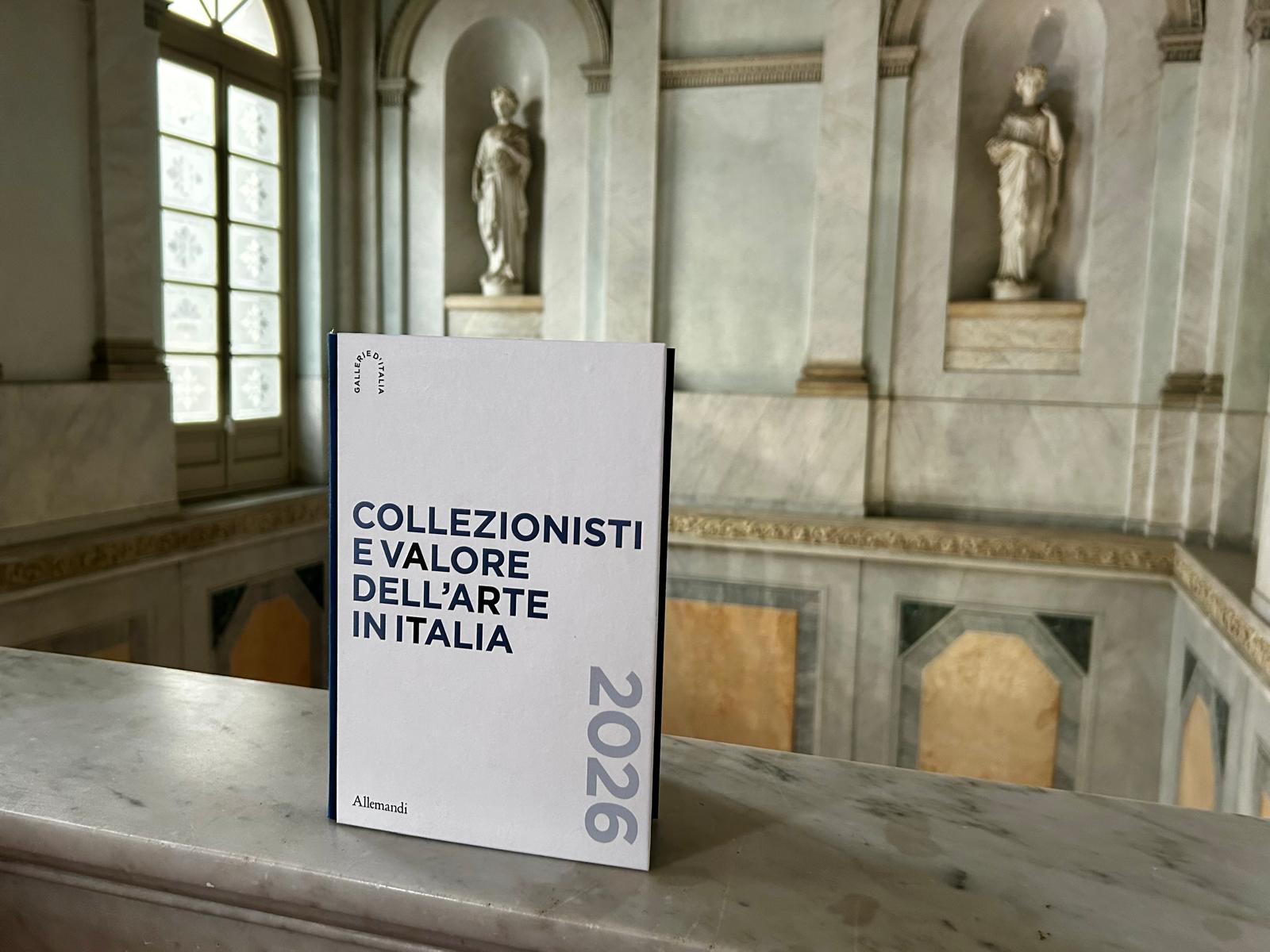
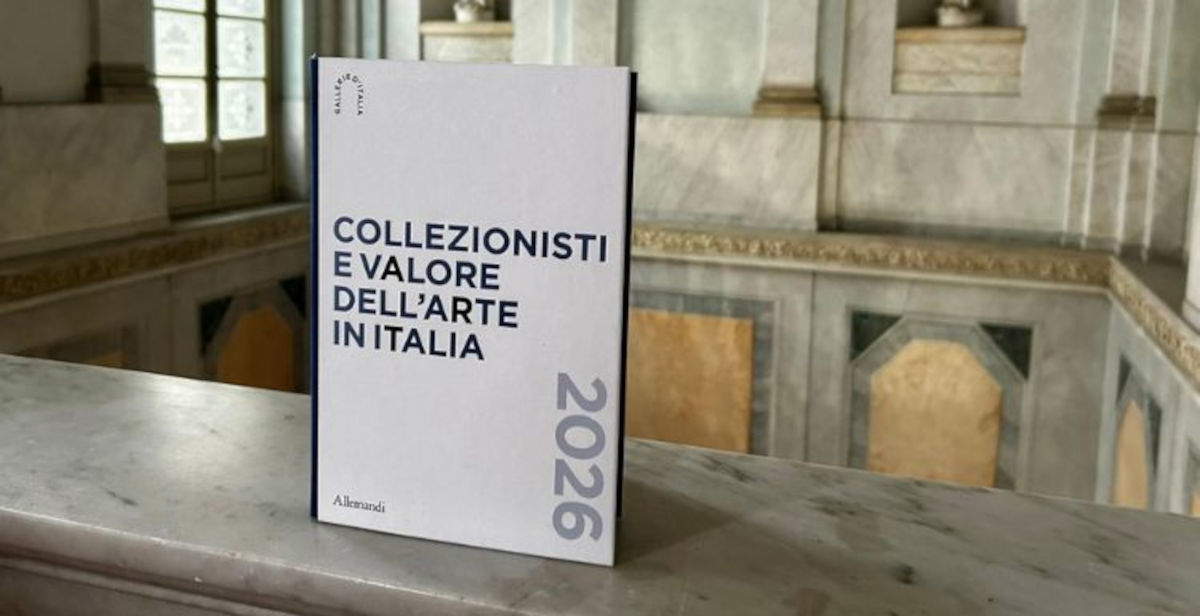
The fourth report Collectors and the Value of Art in Italy 2026, produced by Intesa Sanpaolo Private Banking in collaboration with the group’s Art, Culture and Historical Heritage Department and Research Department, and published by Allemandi, was presented in Milan on April 15. The observatory confirms itself as a tool for ongoing analysis of Italian collecting and art market dynamics, with the stated aim of offering an updated reading of a sector in which economic, cultural and patrimonial values are intertwined.

The report analyzes the evolution of the international and Italian market over the last two years, highlighting a changing context. In 2025, global art sales grew by 4 percent compared to 2024, while remaining below 2023 levels. The figure is interpreted as a sign of a structural change in consumption patterns and the relationship between art and the market, with increasingly blurred boundaries compared to the luxury sector. In a scenario marked by geopolitical tensions, inflation and financial uncertainties, international collectors have shown an increasing preference for historicized, museum-quality works characterized by rarity, considered more stable than speculative dynamics.


The recovery in global trade, concentrated mainly in the second half of 2025, has been supported by the presence of high-profile collections on the market, including Leonard Lauder ’s for modern art and Mr. and Mrs. Sanders ’ for old paintings. However, the recovery has not been uniform. The ultra-contemporary segment recorded a 39 percent decline, while contemporary marked -12.3 percent and postwar -17.7 percent. Bucking the trend are modern art, up 19.4 percent, and the Impressionist segment, which is up 80.4 percent, driven in part by major sales of works by Gustav Klimt, including the Portrait of Elisabeth Lederer, which set a new record. Old Masters grew 68.7 percent to $282.5 million, close to 2015 levels. According to the research, the phenomenon is also linked to a generational shift in buyers, with a significant presence of millennials.


The market is now more selective, with an increasing focus on the quality of works, provenance and their ability to maintain a dialogue with the present. At the same time, there is a sharp contraction in the NFT sector, which has lost about 90 percent of its value in the past five years, marking a redefinition of speculative expectations in digital.
On the Italian collecting front, the study conducted by Intesa Sanpaolo in collaboration with Artissima, on a sample of 303 collectors, outlines a mature and aware profile. Interest focuses mainly on contemporary art, particularly on artists born after 1945, while maintaining openings to modern and postwar art Collections appear structured and developed over time, with an approach that privileges study, continuity and selection. A strong focus on domestic production is also evident, with a prevalence of Italian artists in the collections.
From an economic point of view, the report shows a medium to high spending capacity. Thirty percent of collectors said they had at least once exceeded 500,000 euros for a single work, while 18 percent exceeded one million. The total value of collections was between 100,000 and 1,000,000 euros in 55 percent of cases, while 18 percent exceeded one million. Along with economic value, the research emphasizes the weight of intangible elements such as symbolic meaning, affective bonding, and the identity dimension of collections.
A relevant element concerns the broadening of the very concept of collecting. Indeed, there is growing interest in categories related to works of art, such as design, books, jewelry, watches, antiques, but also segments such as wine, spirits, vintage cars and motorcycles, sports memorabilia and fashion. Collecting thus takes on a cross-dimensional dimension, in which aesthetics, rarity and narrative value converge.
The report also devotes attention to the issue of diversity. While highlighting a still limited presence of female artists and non-Western artists in collections, signs of change emerge. Indeed, a portion of collectors declare an increase in acquisitions of female works in the last decade, signaling a progressive evolution of market sensibilities and choices.
A further chapter concerns private heritage and historic houses, interpreted as instruments of transmission of cultural value and as identity and territorial elements. The generational transition is indicated as one of the most delicate moments in the management of collections, in which continuity, conservation and divestment are intertwined, and in which collecting is also defined as a balance between affective dimension and patrimonial responsibility. Finally, the research devotes space to Intesa Sanpaolo’s collections and the Gallerie d’Italia, considered a model of integration between business, culture and social responsibility. The role of Intesa Sanpaolo Private Banking’s Art Advisory, which supports clients in the enhancement and transmission of collections, with an approach that combines artistic and patrimonial expertise, is also explored.
 |
| Intesa Sanpaolo: growing art market toward quality, rarities and new collectors |
Warning: the translation into English of the original Italian article was created using automatic tools. We undertake to review all articles, but we do not guarantee the total absence of inaccuracies in the translation due to the program. You can find the original by clicking on the ITA button. If you find any mistake,please contact us.