





Gustave Doré: a name that conjures up grandiose, surreal, and fantastical images. Doré does not merely illustrate or paint; he has visions, and he shapes these visions into tangible form through the skillful use of his art. In 2022, Alix Paré, an art historian who graduated from the École du Louvre and a public educator specializing in Western painting from the 17th to the 20th centuries, and Valérie Sueur-Hermel, a curator at the Bibliothèque nationale de France, decided to curate and compile an unprecedented retrospective of Doré’s major works into a 480-page volume. Thus was born the illustrated edition *Fantastico*, published by L’Ippocampo (2022, ISBN 9788867227068), which aims to analyze the artist’s major works, selected from a corpus of over 10,000 prints and paintings. I can say in all sincerity that the two curators’ retrospective is not the typical volume crammed full of paintings with captions and nothing more. *Fantastico* is a work of considerable historical and artistic value, both for art enthusiasts and for scholars of the history of literature and illustration.
What do we know about Doré? He was, for example, recognized as one of the greatest artists of the 19th century, renowned above all for his incredible ability to illustrate literary texts. We also know that he was able to transform print into an art form that has influenced countless fields: cinema, animation, and even comics. Here are a few examples: his depictions of wild forests, such as those in *Atala*, have influenced numerous versions of *King Kong*, from the original 1933 film to Peter Jackson’s 2005 adaptation (who, a few years earlier, had drawn inspiration from those same illustrations for the creation of *The Lord of the Rings*, 2001–2003). His legacy also extends to the Harry Potter series, while in the world of animation, his influence reaches both Walt Disney and the creators of the character Puss in Boots from *Shrek* (2004). I would also mention the illustrations created for Charles Perrault’s Tales, which influenced Jean Cocteau’s work on *Beauty and the Beast*(1945) and the character of Chewbacca in *Star Wars*, conceived in 1977 by George Lucas.
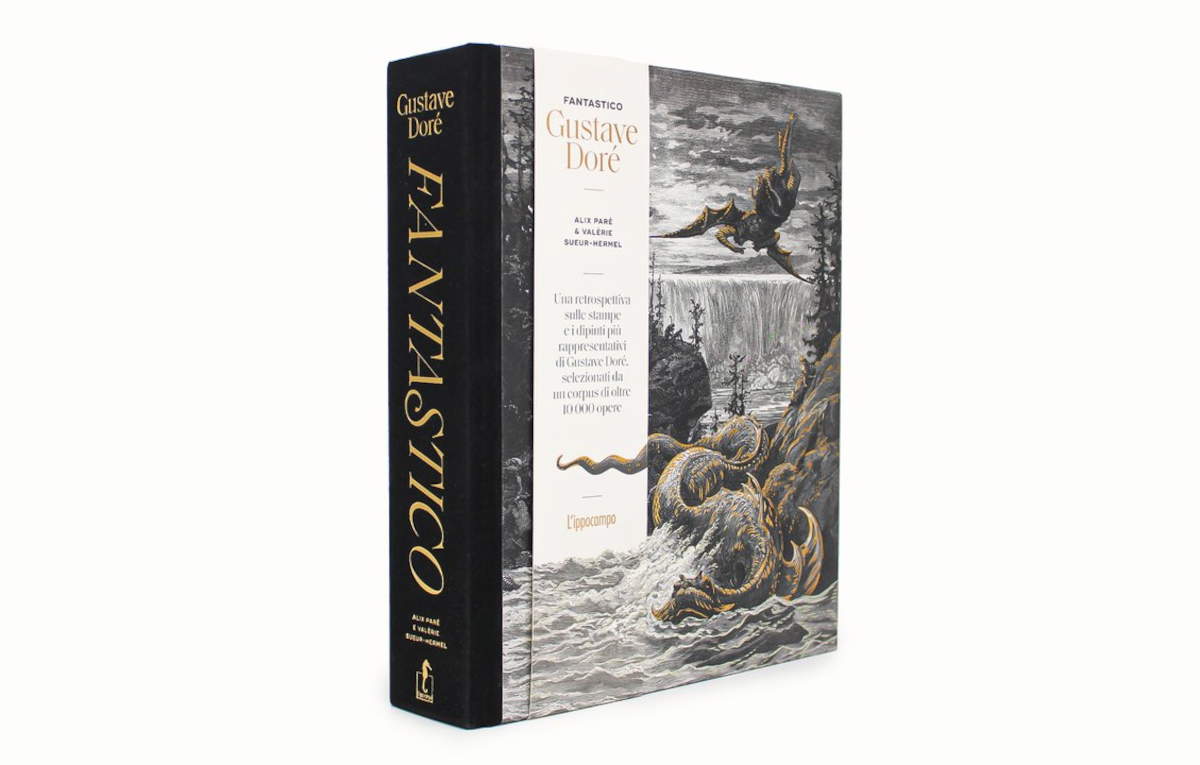
The volume of Gustave Doré’s works is impressive. At thirty-three, he ironically declared that he had “produced only one hundred thousand drawings,” and by the time of his death at fifty-one, his body of work had reached colossal proportions, with approximately eleven thousand works recorded. As mentioned, *Fantastico* is unlike any other illustrated edition dedicated to the author. Let’s set aside volumes such as *The Doré Illustrations for Dante’s Divine Comedy* (2012), published by Dover Publications (135 pages), or *Doré’s Illustrations for “Paradise Lost”* (1993, 50 pages), also published by Dover. The choices made by the authors are guided by a careful selection that takes into account the visual impact, aesthetic value, and thematic significance of the artist’s illustrations. “Fantastico” is a collection that highlights the abundance and multifaceted nature of his body of work: it is not a mere volume of works cataloged in chronological order.
Gustave Doré was never afraid to explore new artistic directions. His career spanned a variety of genres: from caricatures and war scenes to fairy tales, poetry, and even the epic grandeur of landscapes, castles, and fantastical creatures. In fact, Doré always possessed the ability to blend reality and fantasy—the very same ability that allowed him to create works that remain etched in the viewer’s memory. The book is divided into four main chapters, each dedicated to a different aspect of his body of work. The first chapter, “Gustave Doré and Printmaking,” examines the three engraving techniques for which he is best known: lithography,etching, and woodcut. The second chapter, “Gustave Doré—The Illustrator,” delves into his career as an illustrator, focusing on 26 literary works, including novels, poems, fables, and fairy tales, as well as short stories and reports on war and travel. The third chapter, “Gustave Doré—The Caricaturist,” presents his three albums of caricatures, featuring illustrations published in the French magazine *Le journal pour rire*. The final chapter, “Gustave Doré—The Painter,” is dedicated to the artist’s paintings. Here, the focus is on 22 paintings and watercolors, including mountain and forest landscapes, historical settings, and fairy-tale scenes.
When Henri Leblanc completed his *Catalogue de l’Oeuvre complet de Gustave Doré* in 1931, he indulged in a mathematical digression to “satisfy the curiosity of connoisseurs.” He counted a total of 11,013 works: that’s about 290 creations per year—or one per day, excluding holidays and Sundays, as Leblanc notes. Of these, as many as 10,026 are prints, over 90% of the total produced between 1845 and 1879 using all three main techniques: relief engraving (woodcut), intaglio (etching), and planographic (lithography). Although he enjoyed some success, Doré actually excelled more as an illustrator than as an engraver or lithographer. From 1854, with *The Works of the Humanist François Rabelais*, through to*Orlando Furioso* in 1879, Doré created at least 9,850 drawings for books and magazines, which were then entrusted to over 160 engravers. Working closely with engravers (artists who use a burin to engrave and decorate metal and wood) to breathe new life into the technique, his contribution to woodcut printing was revolutionary: recognized as the designer of the projects (and not as the executor), Doré was regarded as a pioneer in the field of printmaking.
Doré’s art, however, never merely accompanied the narrative: it amplified the text and made it even more powerful. During his career as an illustrator, he illustrated Dante’s *Divine Comedy*, Alfred Tennyson’s *Idylls of the King *, Cervantes’ *Don Quixote*, Edgar Allan Poe’s *The Raven*, John Milton’s *Paradise Lost*, and the Holy Bible. The result of these works? A level of depth and intensity that complements the writers’ texts through a highly detailed style and an unparalleled dramatic sensibility. The illustrations thus evoke atmospheres that blend the sublime and the macabre, as well as hope and despair.
His body of work also includes war narratives: whether depicting the wars of his own time or the Crusades of the past, Doré intertwines heroism with tragedy and gives new form to a war-themed imagery steeped in an extremely romantic vision. Among his most significant works are *Épisodes de la guerre d’Orient*, *La Guerre d’Italie*, and *Histoire des Croisades* by Jean-François Michaud.
I will now examine *The Divine Comedy*, one of the most ambitious works of his career. Very young and deeply drawn to the narrative written by Dante between 1303 and 1321, Doré decided to take on the illustrations for*Inferno*. In reality, at that time no publisher was willing to support a project deemed too risky, thus forcing him to finance the publication himself. The work was published in 1861 by Hachette and achieved unexpected success, definitively establishing his talent. It was not until 1868 that he completed the work with engravings dedicated to *Purgatorio* and *Paradiso*. Doré sought to make the horror of eternal punishment visible, and he succeeded. The scenes of Hell convey the torment of the damned, depicted in desperate and suffering poses, immersed in gloomy landscapes. The circles of Hell, the demons, and the penitent souls are rendered with dramatic and theatrical precision. How, then, might we define his work on Dante’s narrative? An artistic triumph, a visual reinterpretation that profoundly influenced the collective imagination associated with the Divine Comedy, becoming a point of reference for generations of artists who followed him. A few names: William-Adolphe Bouguereau, Auguste Rodin, Gustave Courtois, Donn Philip Crane.
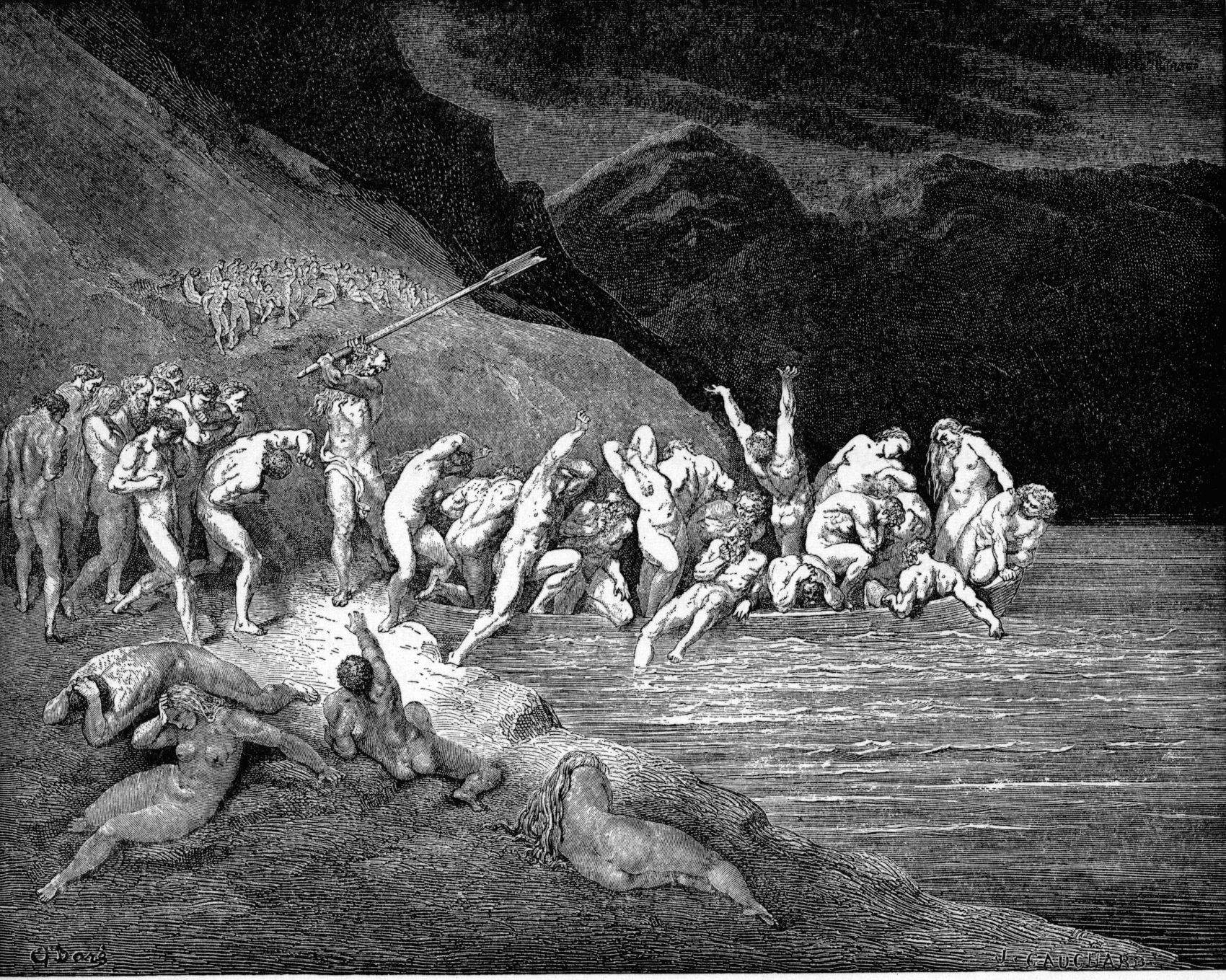
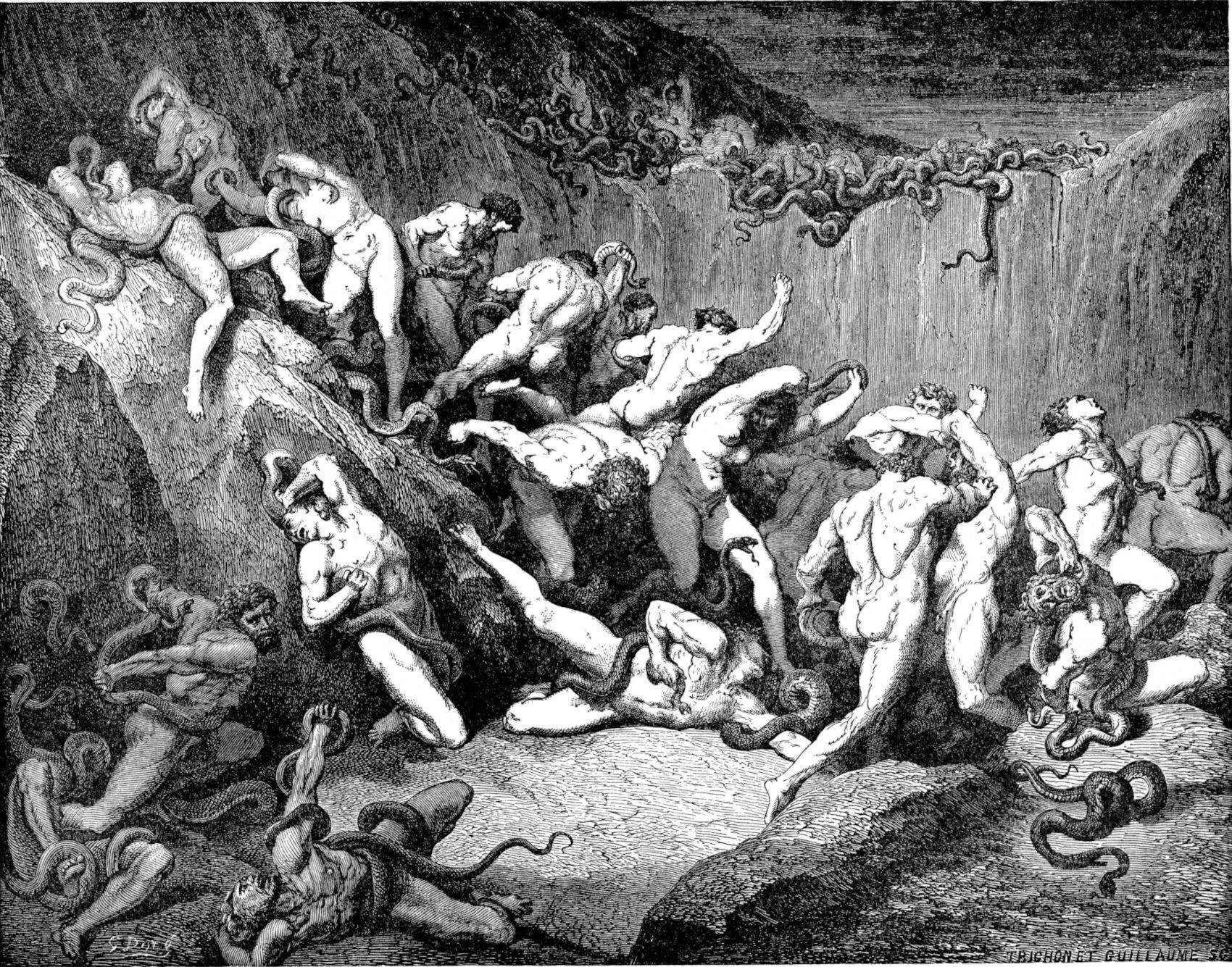
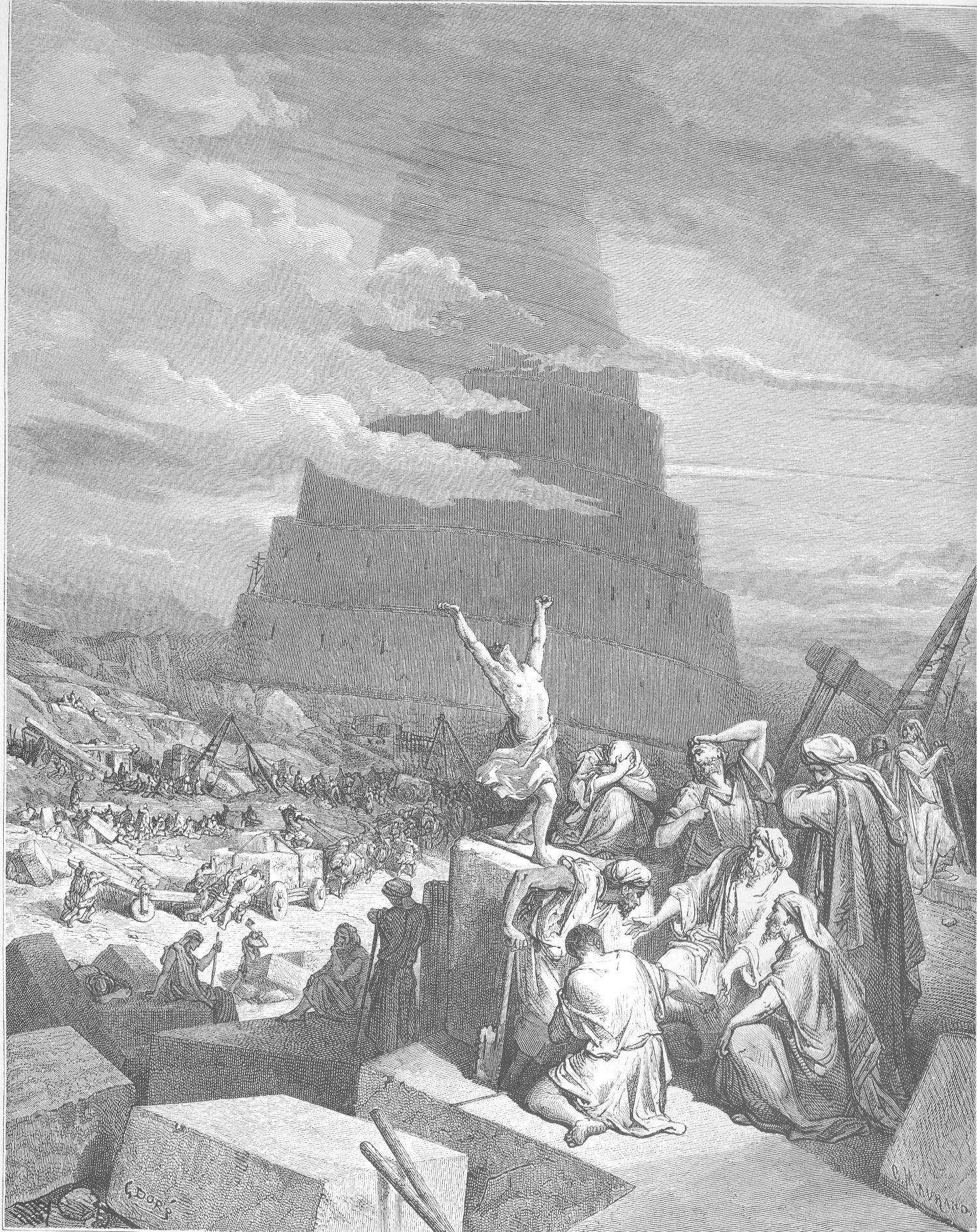
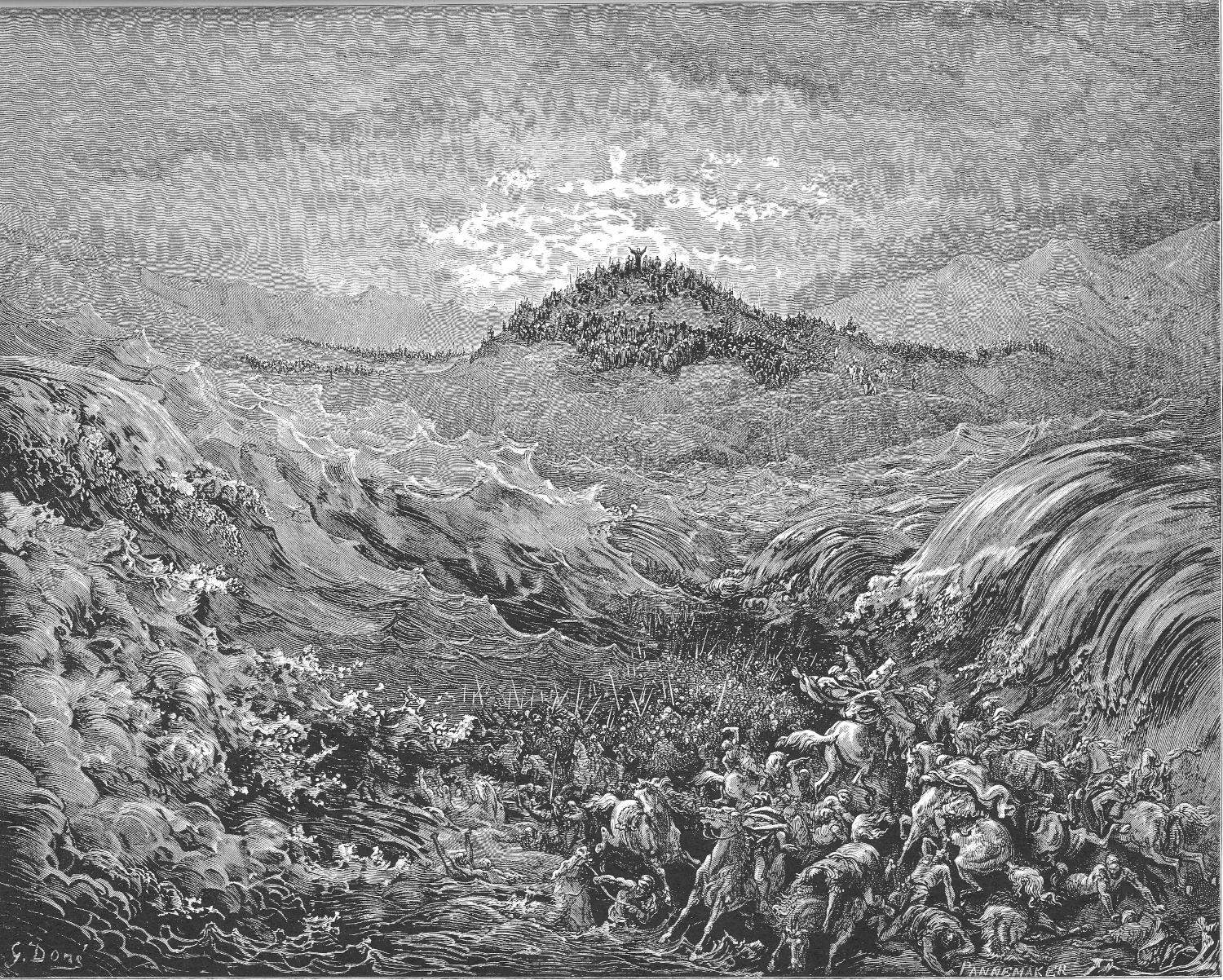
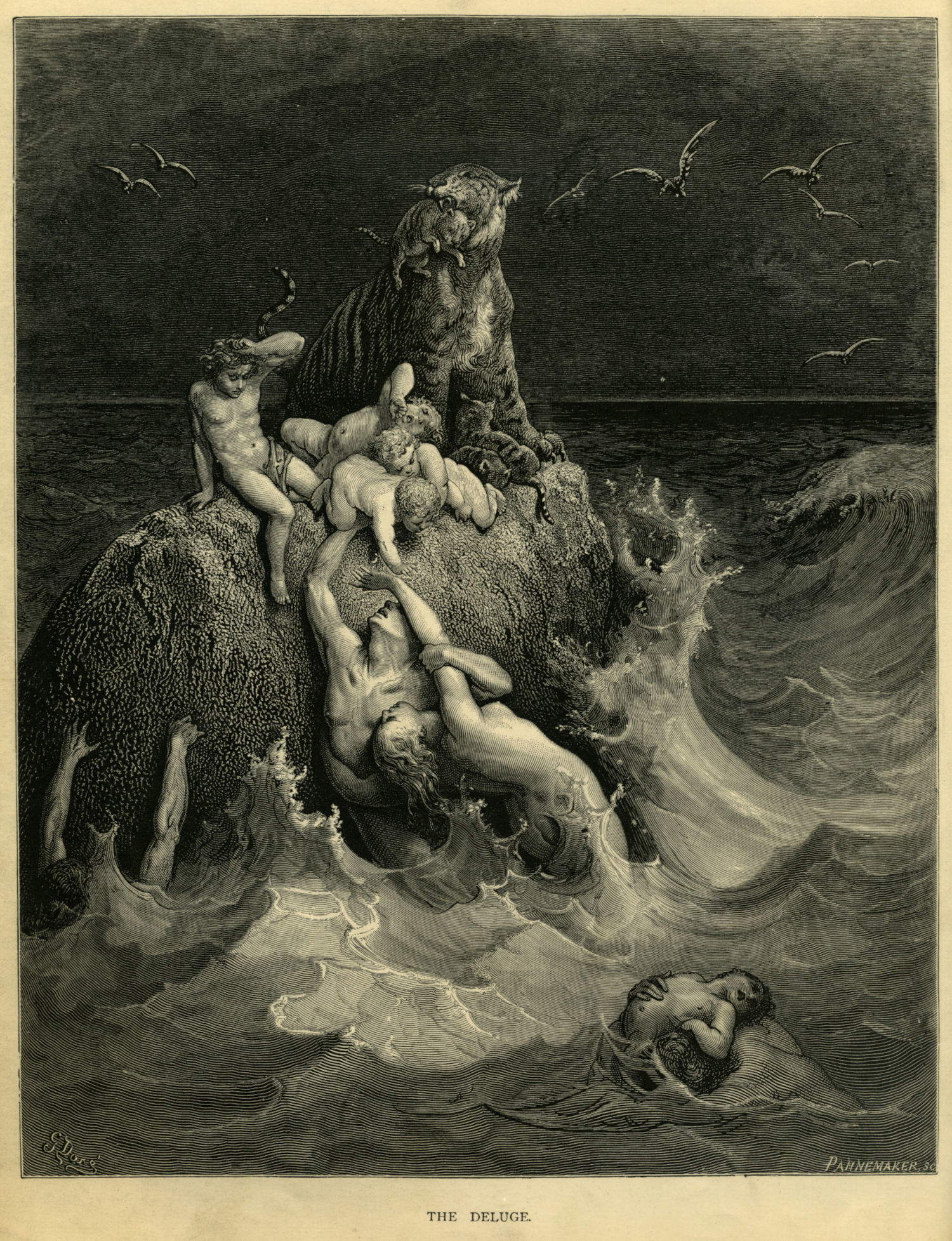
In reality, the artist’s most ambitious project was likely his illustrations for the Holy Bible, a monumental work that occupied him for years and represents a perfect synthesis of his vision of art as a means of discovering the sacred. From his youth onward, Doré harbored the ambition to illustrate the Bible: a monumental project born as much from his faith as from his artistic calling. He declared himself a devout Christian and, as early as the 1850s, explored sacred themes through drawings intended for periodicals.
In 1862, fresh from the success of his illustrations for*Inferno*, he submitted an ambitious biblical project to publisher Alfred Mame, a leading figure in religious publishing. This marked the beginning of a three-year project, during which Doré also produced hundreds of drawings and several paintings, including illustrations for the* * and Milton’s *Paradise Lost *. Figures such as Satan, the angels, and the first couple, Adam and Eve, thus became an integral part of his artistic imagination. The first edition of the Holy Bible according to the Vulgate ,illustrated by Doré with 228 plates, was released simultaneously in major European capitals on December 1, 1865, in time for the Christmas holidays, and the entire print run sold out in a very short time. The following year, in the second edition, the number of engravings rose to 230 following some revisions. The work is part of a long nineteenth-century publishing tradition in which renowned artists took on the Bible; among them were Achille Devéria, Célestin-François Nanteuil, and James Tissot. Yet Doré’s Bible stands out distinctly both artistically and commercially.
The author’s dramatic and visionary style, a departure from the conventional, restrained tones previously associated with the subject, features scenes enhanced by strong chiaroscuro, daring perspectives, and painterly references to Rembrandt and Delacroix. Critics and writers, led by Émile Zola, were deeply impressed. From the European editions—in Stuttgart, Milan, St. Petersburg, and Barcelona—the focus soon shifted to American editions, with print runs in New York and Chicago. The engravings were used in prestigious volumes, including missals and religious booklets for children, as well as in slides for magic lanterns—the precursors to the projector—ultimately leaving a lasting mark even on the imagery of epic Hollywood cinema. For Doré, his fascination with the Bible stemmed from two main factors: he was driven by a strong spiritual motivation, but also by the formal richness of the text, which deeply captivated him. The immense array of characters offered him an inexhaustible visual repertoire, where monstrous deformities and celestial beauties coexist alongside exotic garments, solemn postures, and intense expressions. The Old Testament, in particular, inspired him to create 152 engravings imbued with Eastern motifs, a direct reflection of the Egyptian and Mesopotamian collections he admired at the Louvre. He dedicated 68 plates to the New Testament.
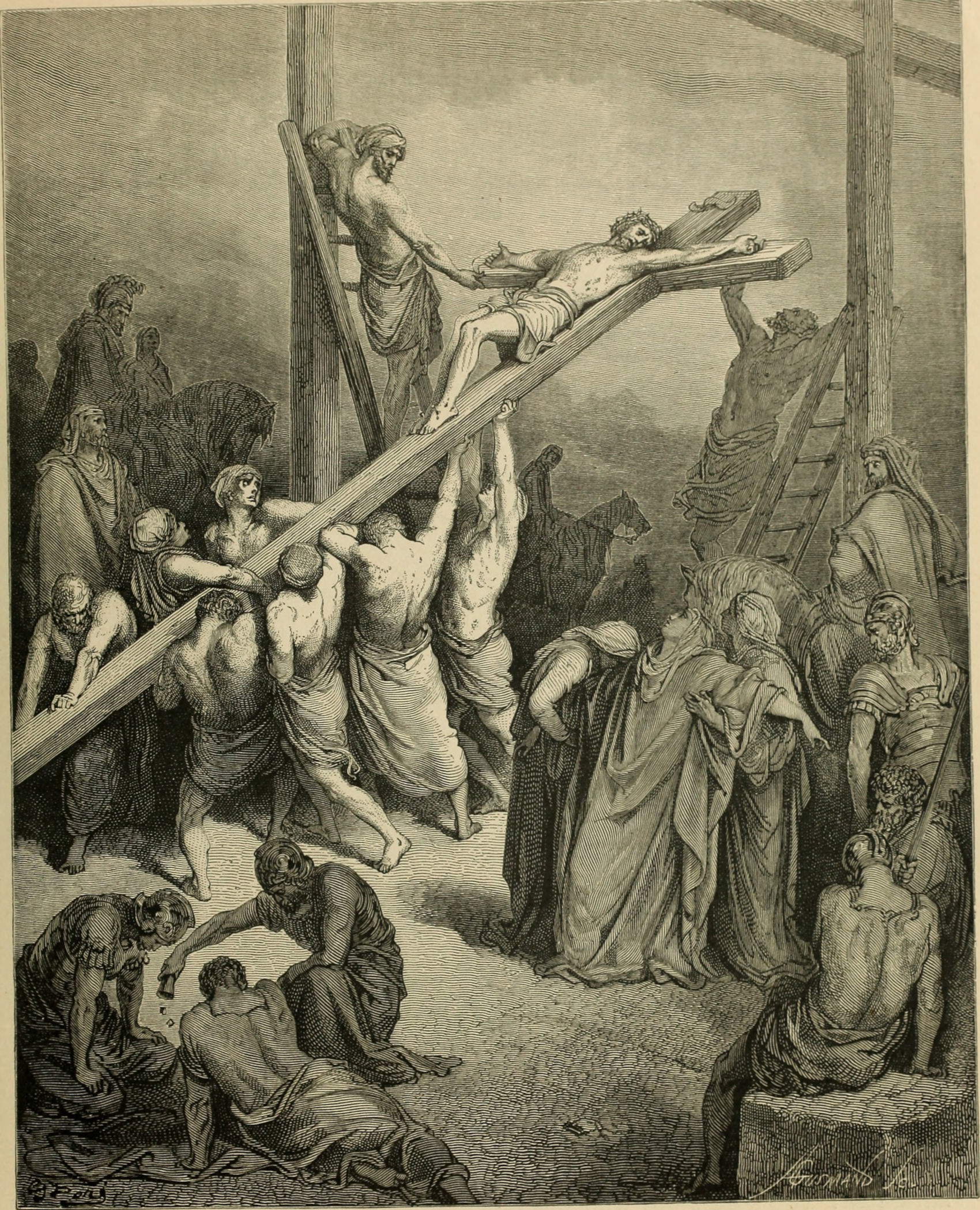
In 1855, Doré compiled a list of the great literary masterpieces he intended to illustrate: among them, he was sure to include *Paradise Lost*, a poem written in 1667 by John Milton (London, 1608–1674). The text, already widely known in France thanks to François-René de Chateaubriand’s translation—which had been reprinted several times—was illustrated by the artist for the London publisher Cassel, Petter & Galpin. Published in 1866, the volume thus cemented his reputation in the United Kingdom as well.
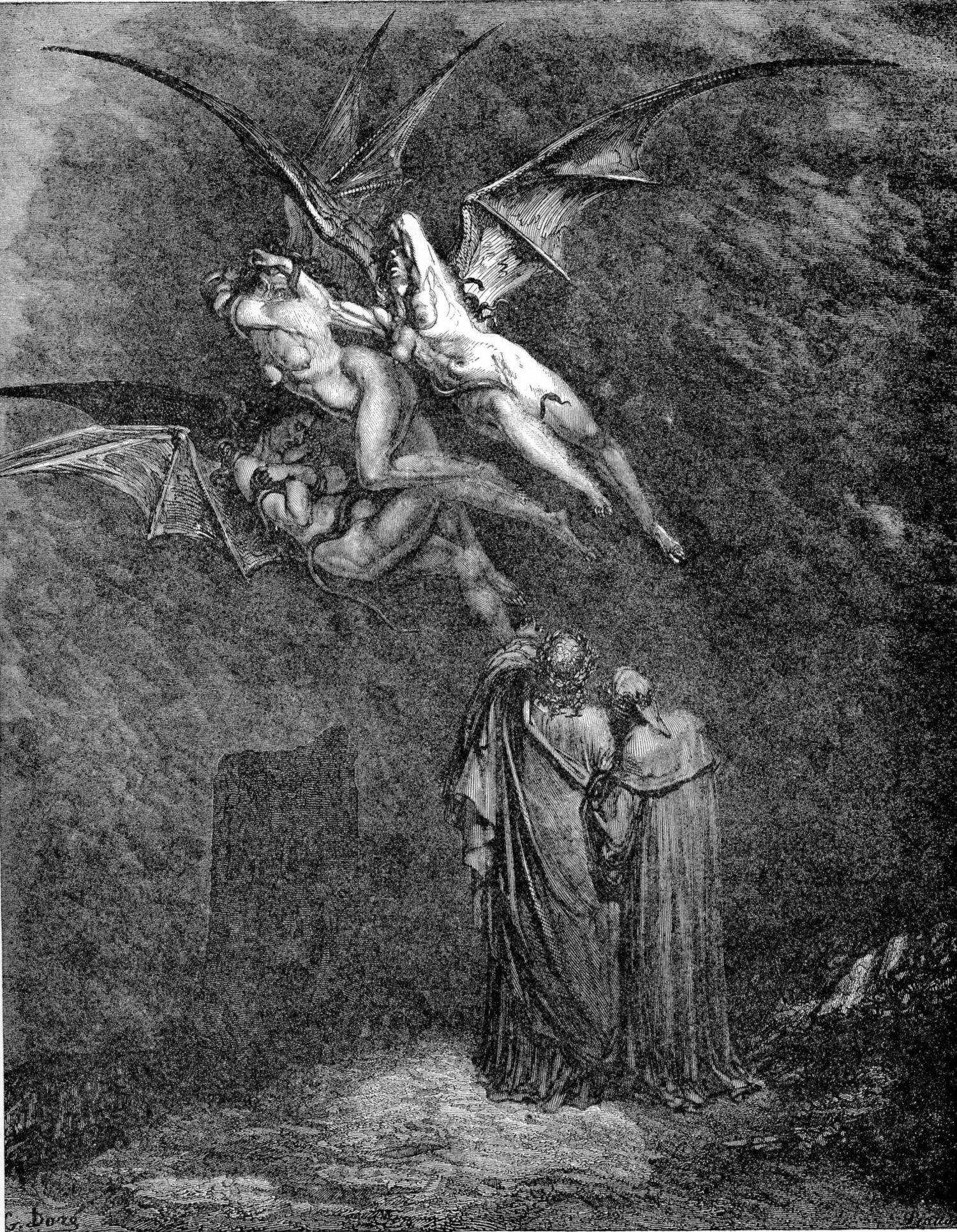
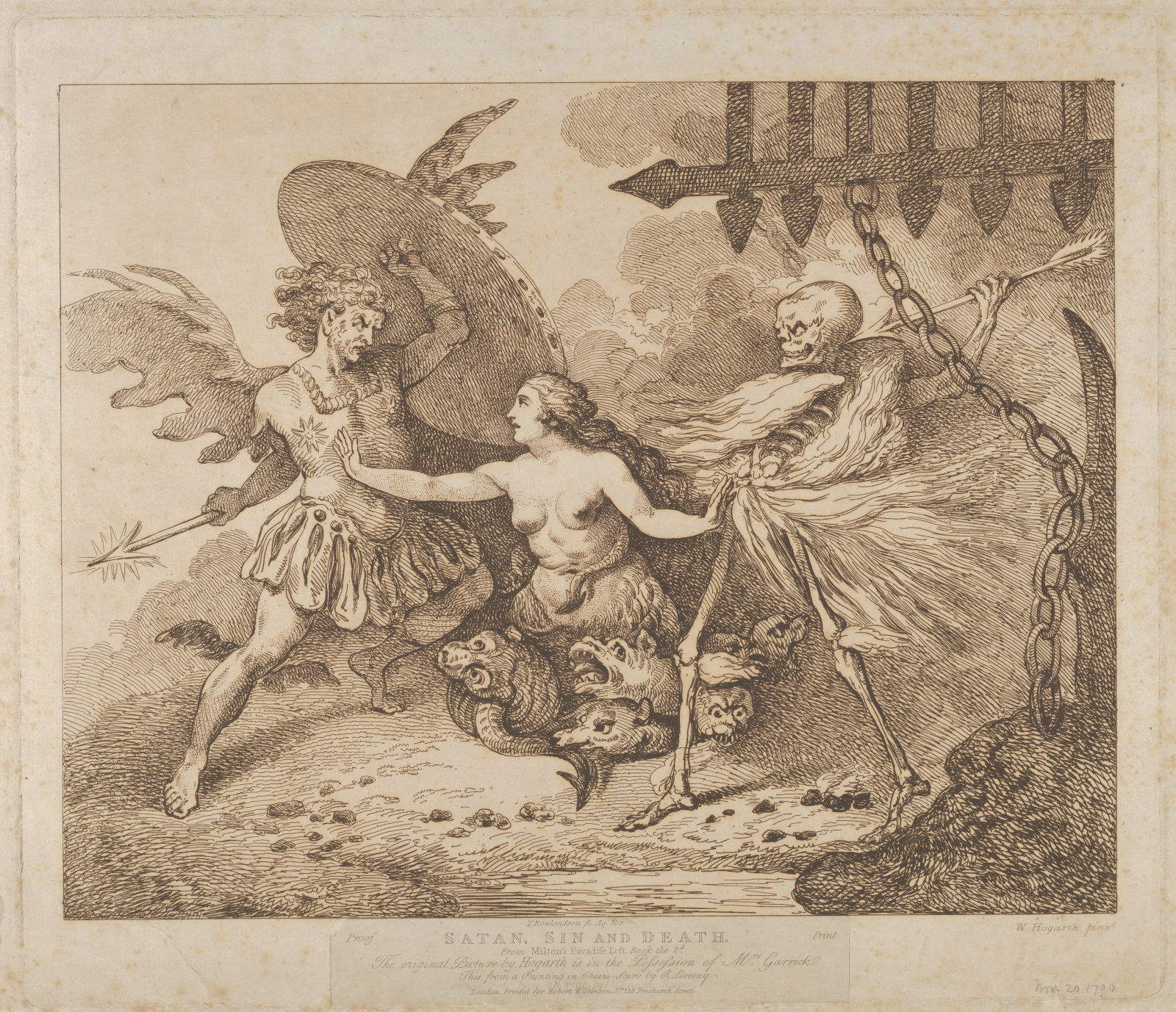
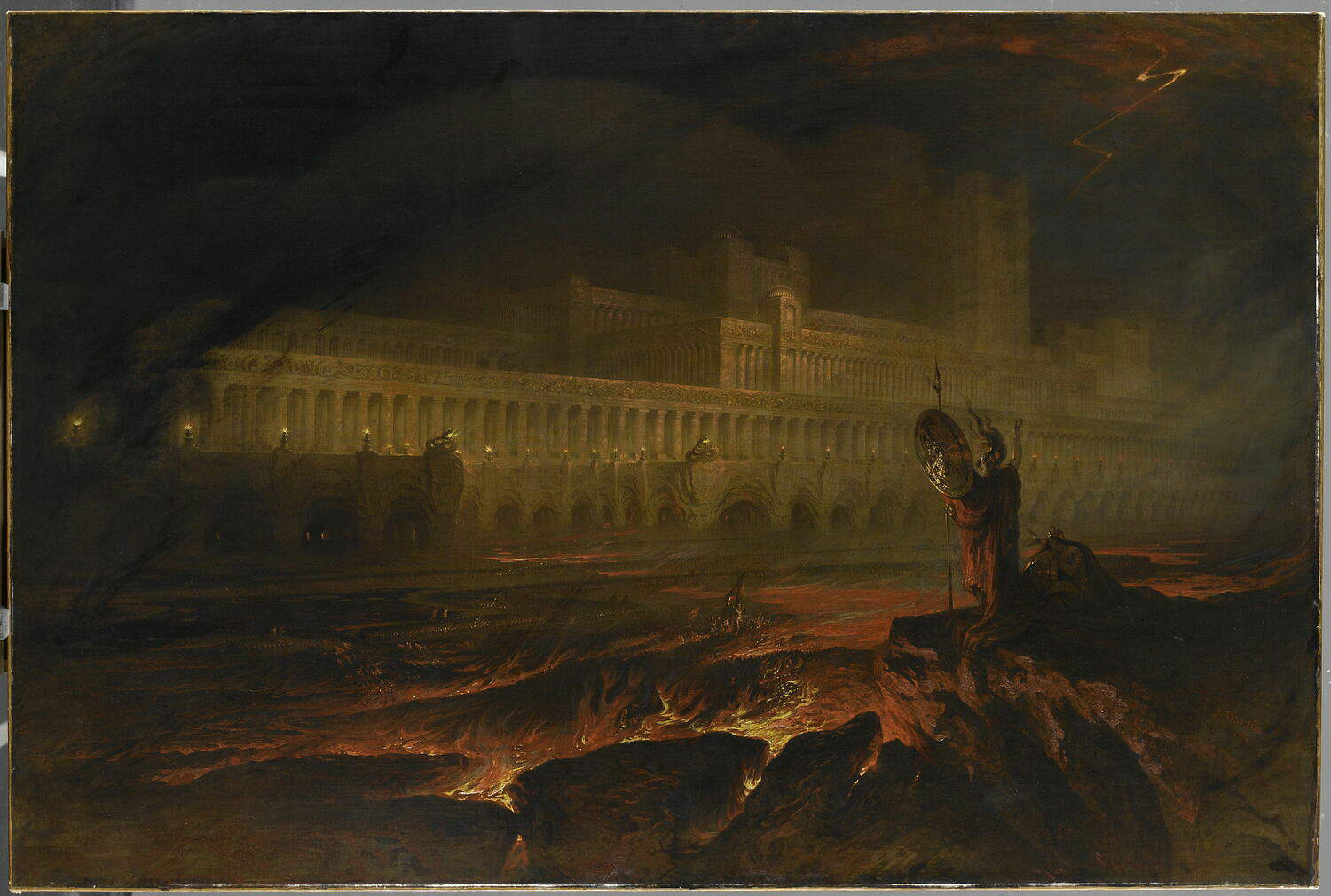
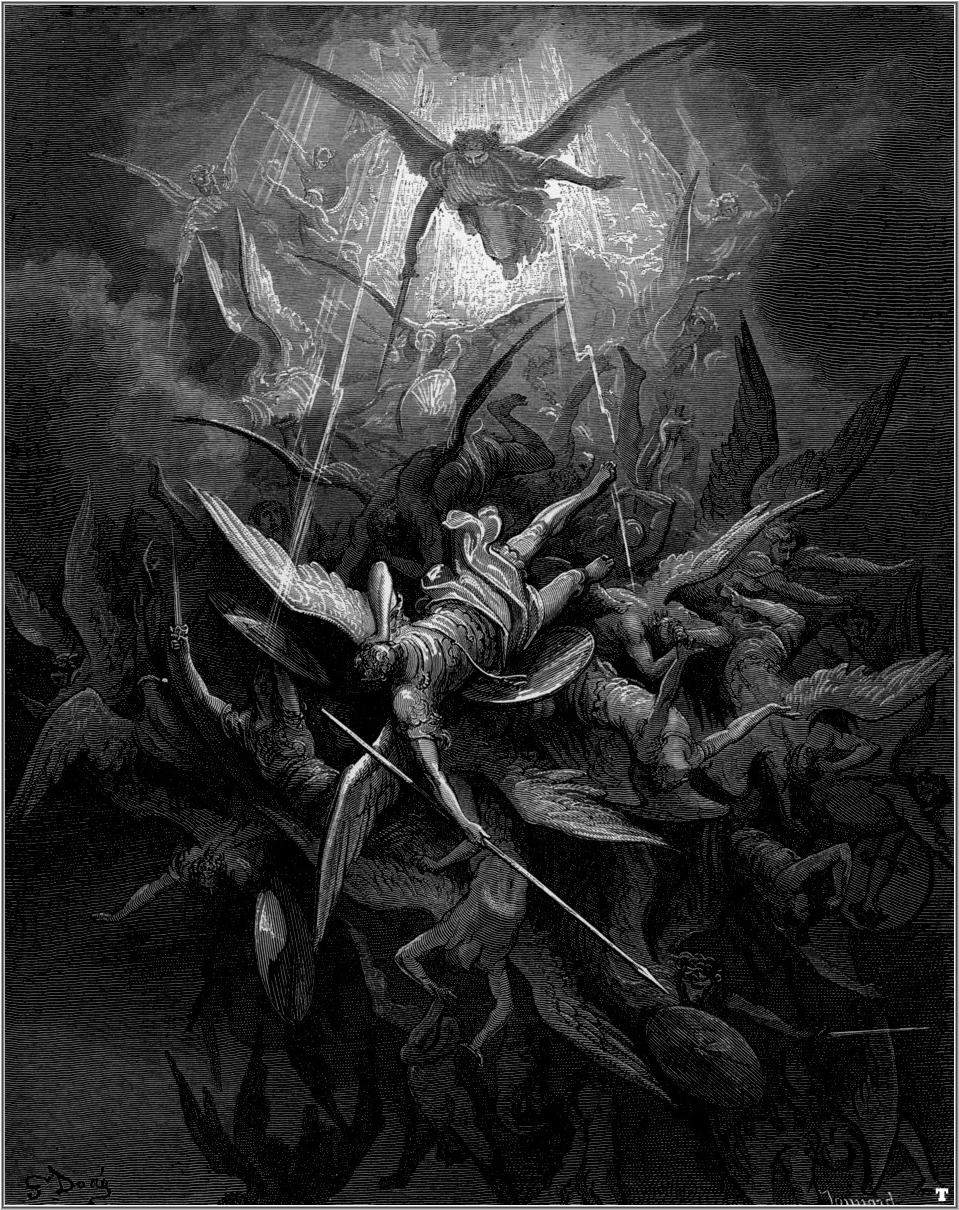
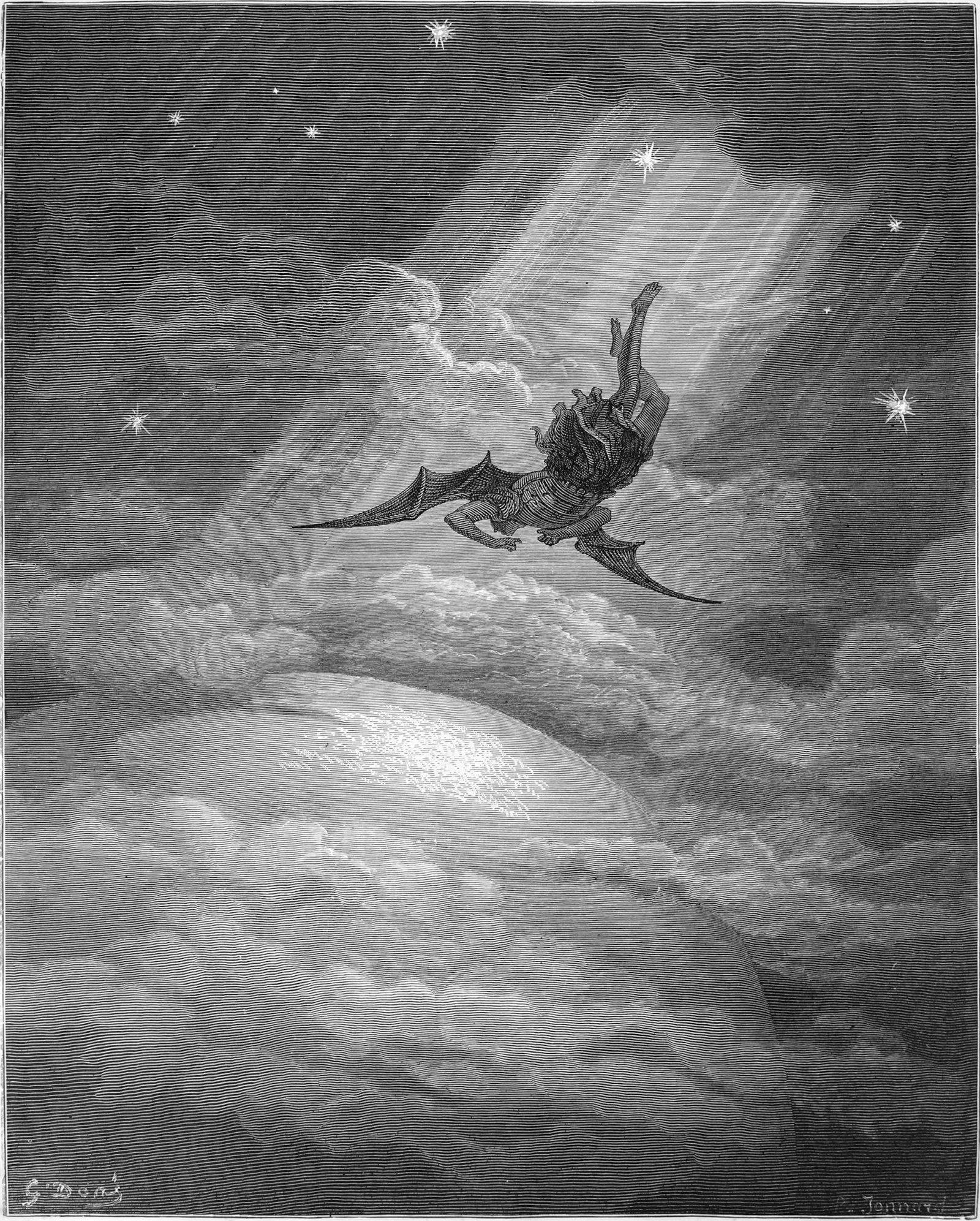
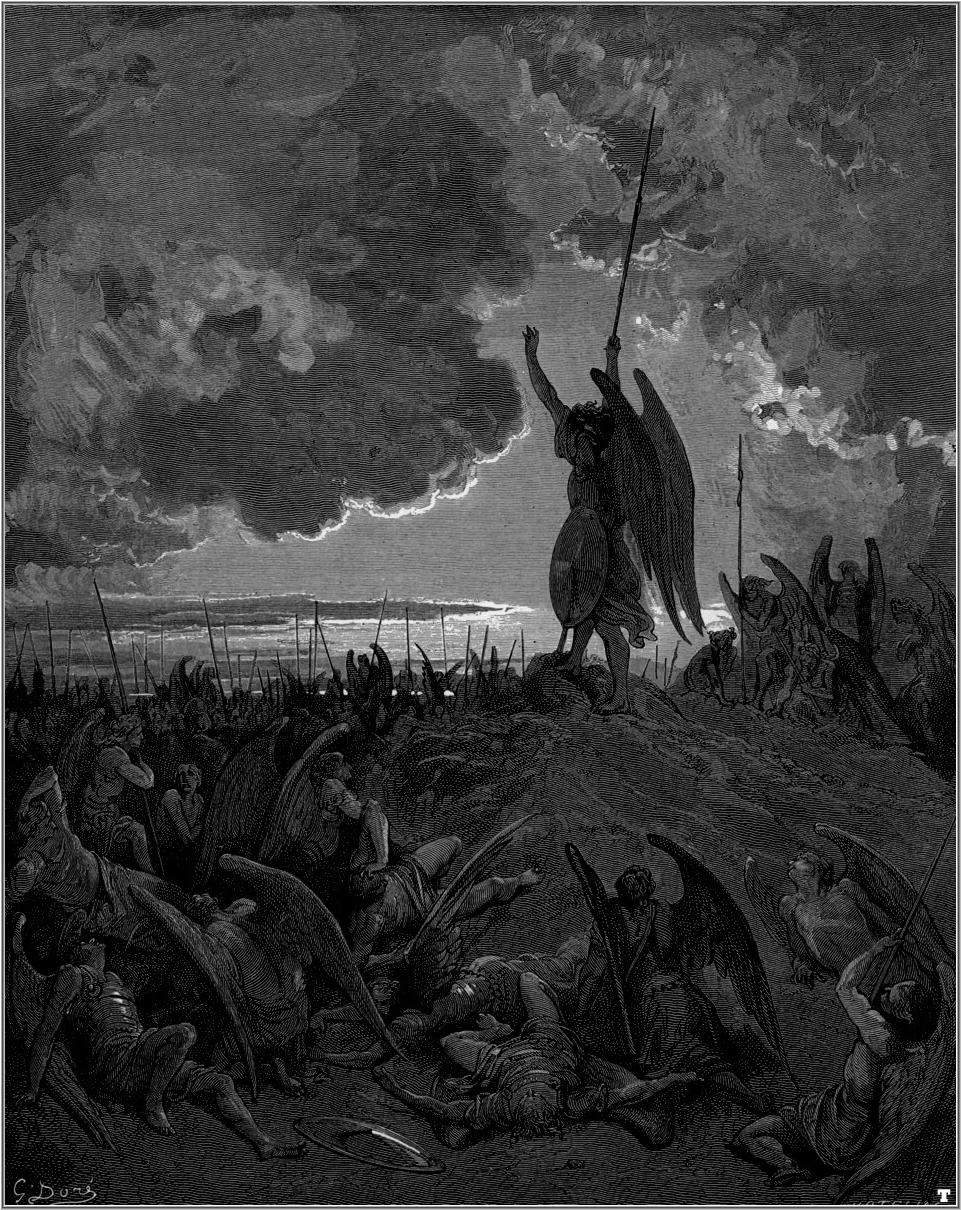
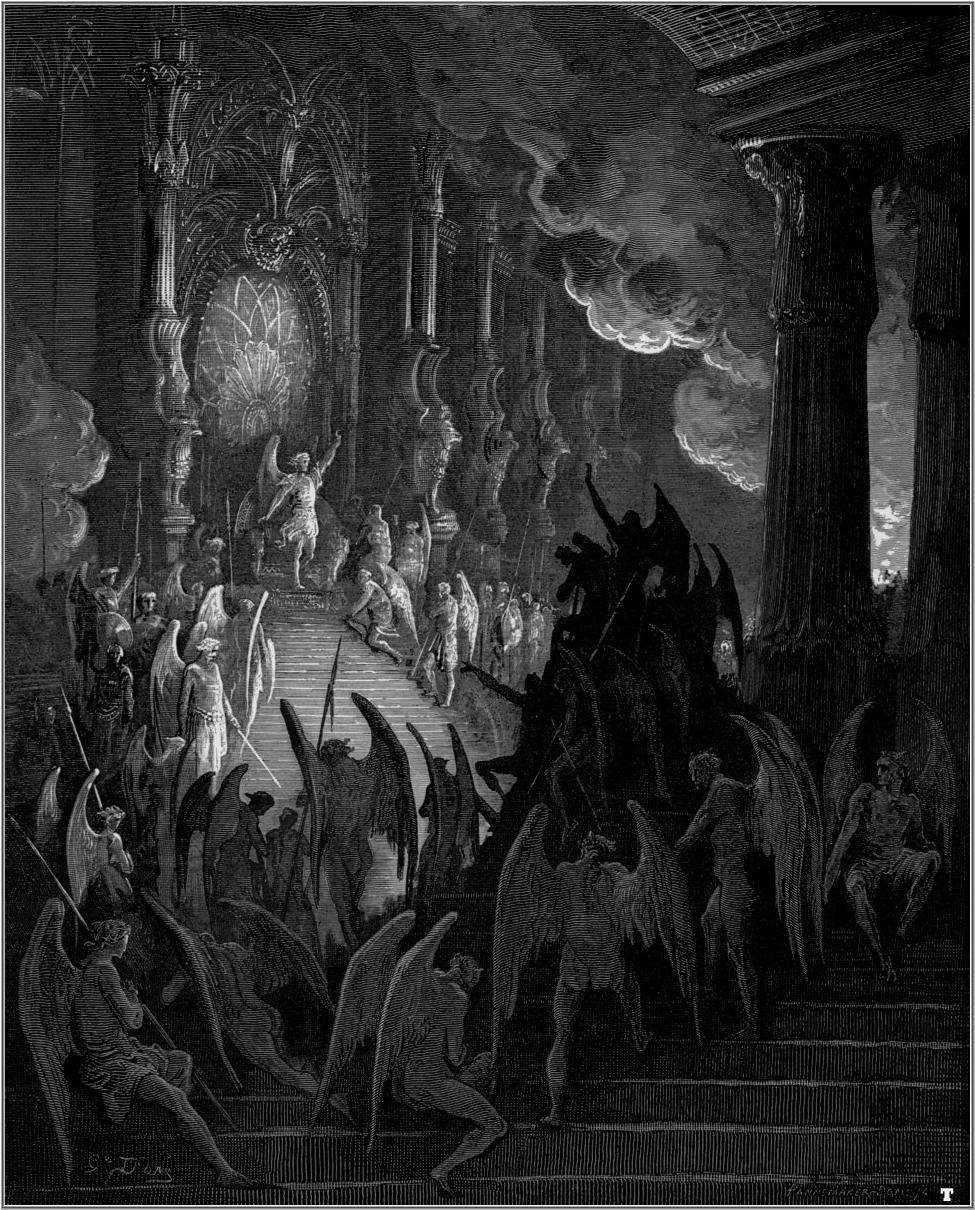
Through his illustrations, Doré succeeds in making the conflict between the angelic and demonic forces tangible. The figure of Lucifer, for example, portrayed with pride and tragedy, is exalted in his illustrations as the rebellious protagonist. In truth, Doré’s *Paradise Lost* was not the first illustration to shape the imagery associated with the poem: before him, both William Blake between 1790 and 1792 and John Martin in the first two decades of the 1800s worked on illustrations for Milton’s poem—and other works as well. I would also like to mention* : Le Pandemonium*, a magnificent painting created by Martin in 1841 and currently housed at the Musée du Louvre. Between 1735 and 1740, predating the Romantic artists, William Hogarth, an English painter and engraver, created the work *Satan, *Sin and Death* (A Scene from Milton’s *Paradise Lost*), followed in turn by Thomas Rowlandson, who in 1792 reworked Hogarth’s oil painting, creating a new etching version printed in brown ink and titled *Satan,* Sin and Death (Paradise Lost, Book 2).
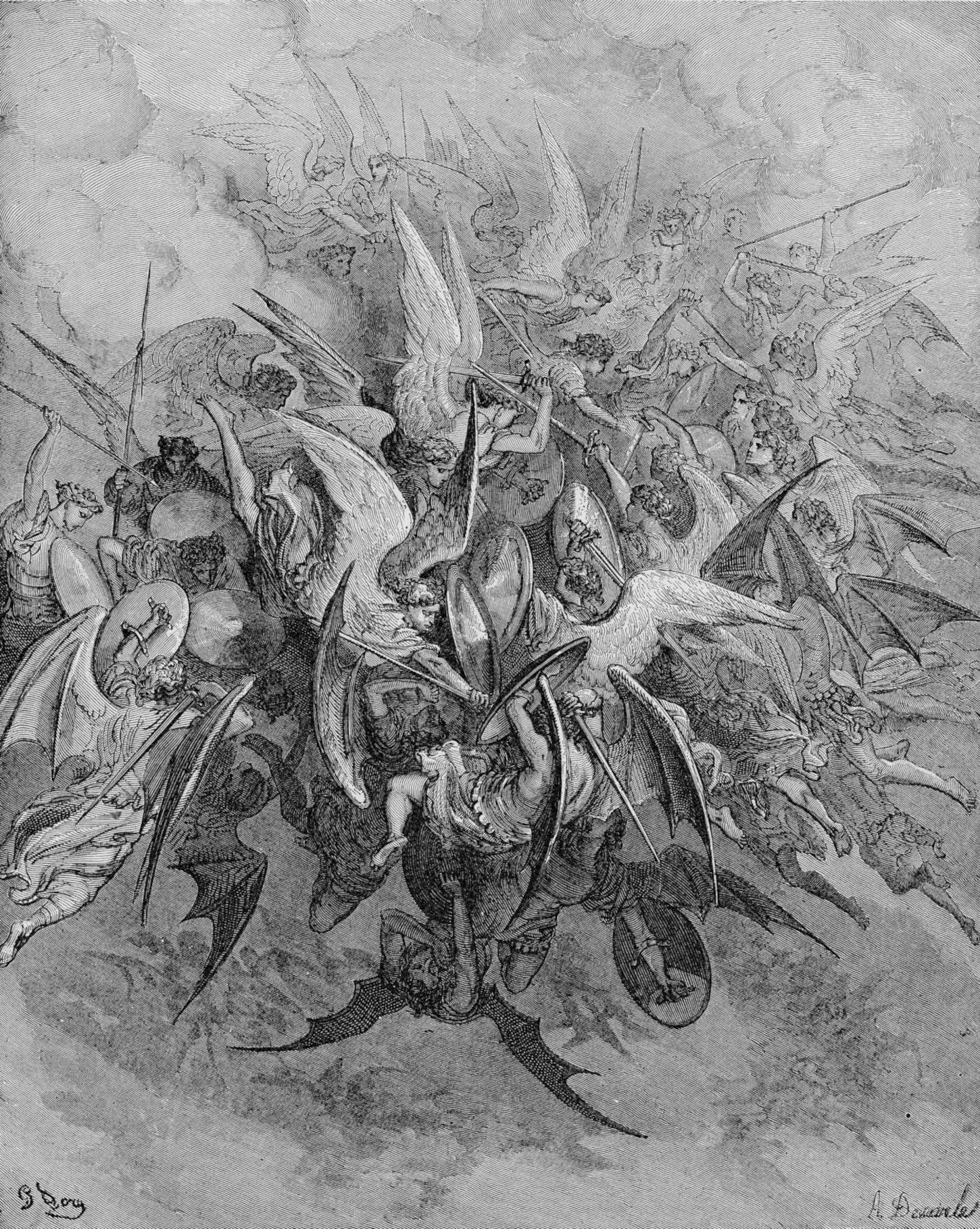
Let’s return to Doré: his illustrations of Milton’s poem explore the potential of darkness and pay meticulous attention to every single detail of the characters. Where does his greatness lie in this case? In his abilityto capturethe figures’ metamorphosis, making the transformation visually real. Consider, for example, the wings of the angels and those of the demons: they resemble swans when they remain bound to the heavens, but transform into bat wings once they plummet to earth. In any case, the landscapes in *Paradise Lost* are majestic, with fiery abysses and otherworldly visions that convey the solemnity of Milton’s text. These are theatrical and dramatic illustrations that have the ability to expand the poem’s spatial scope.
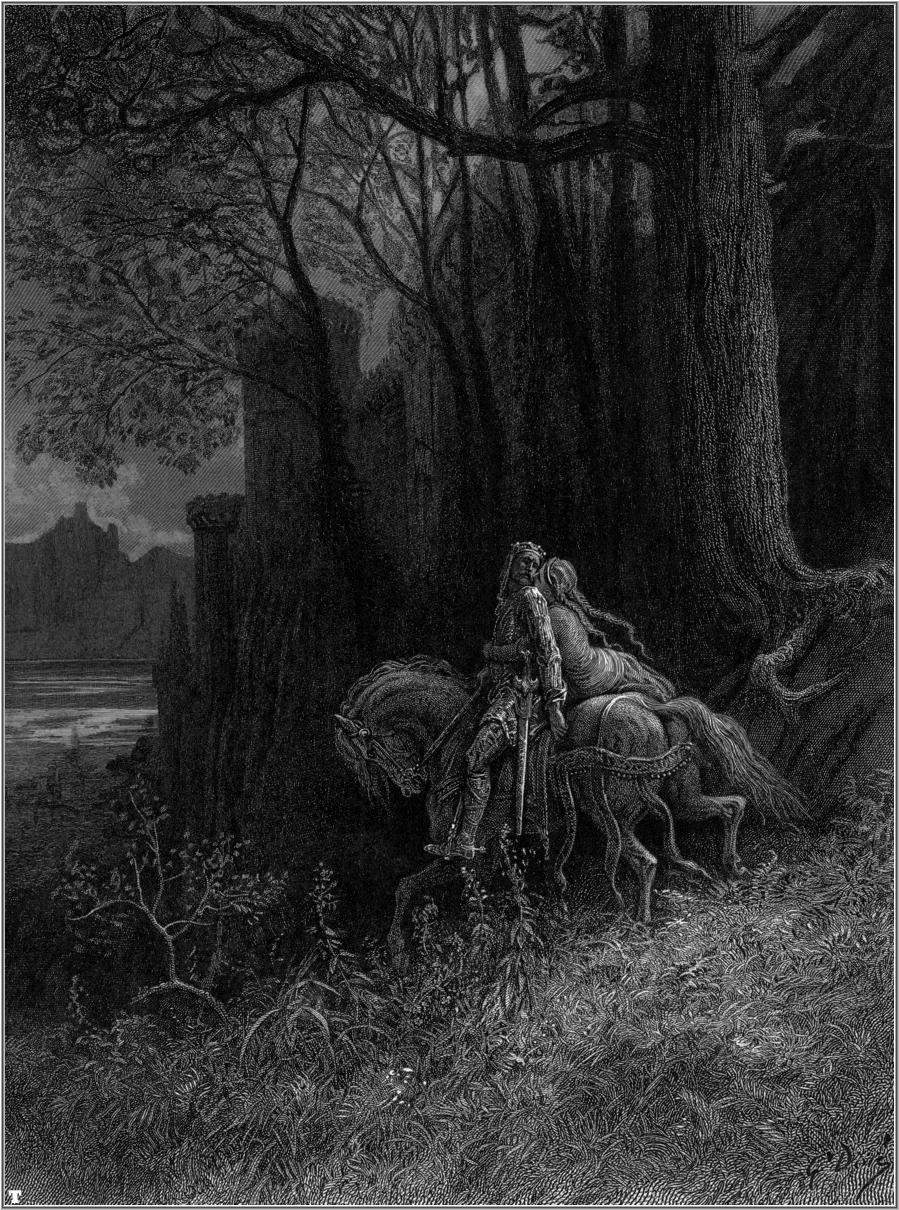
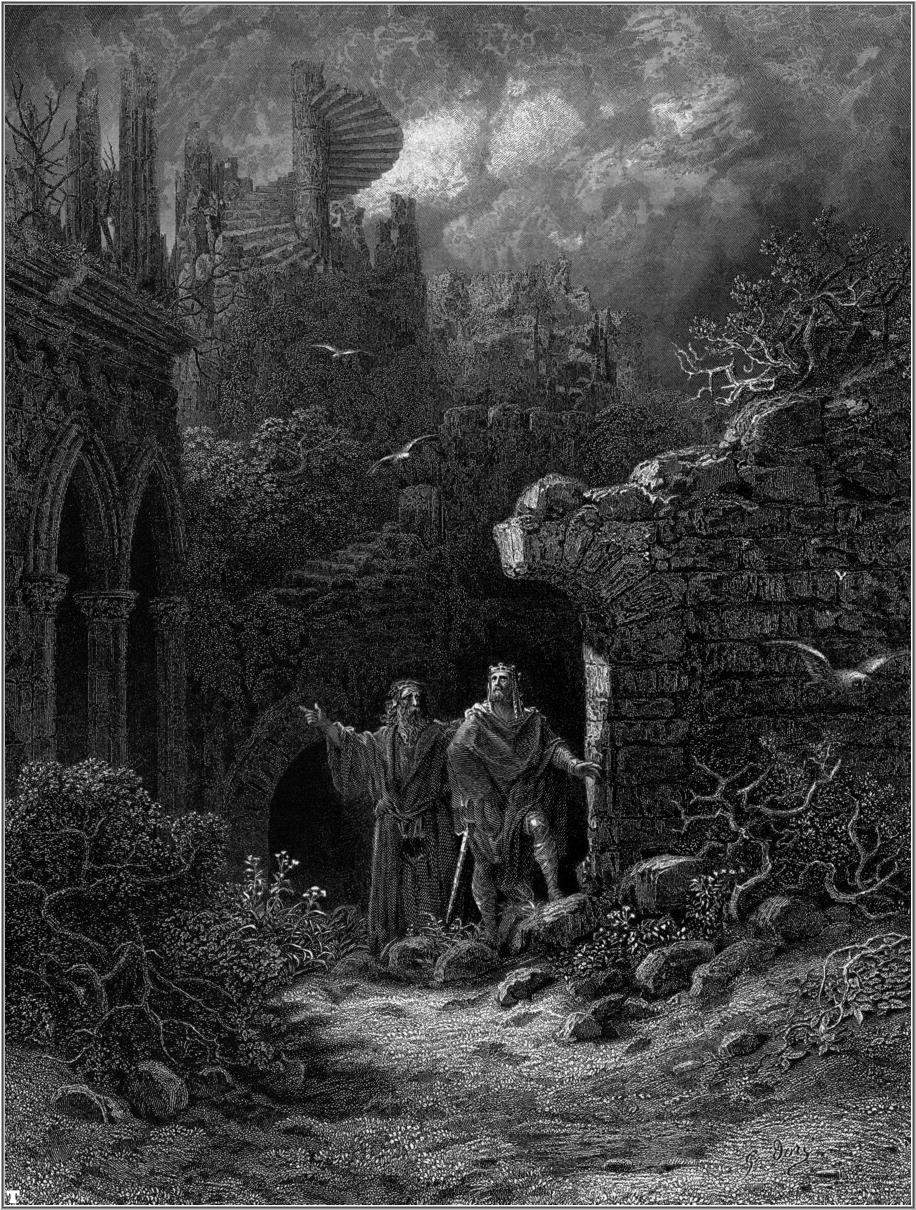
In *The Idylls of the King*, written in 1859 by Sir Alfred Tennyson (Somersby, 1809 – Aldworth, 1892), one of the most famous figures of the Victorian era, Doré instead explores the world of poems inspired by the Arthurian cycle. These works feature the figure of the Lady of Shalott, identified as Elaine, alongside Viviana, Guinevere, and Enid. While a student at Cambridge, Tennyson published his first collection, *Poems, Chiefly Lyrical*, in 1830.
The work has a sentimental tone and was immediately appreciated by the public. Three years later, his second collection was published, which included the poem “The Lady of Shalott.” Loosely inspired by the medieval world, the poem tells the story of a princess from King Arthur’s kingdom condemned to view reality only through a mirror. Tennyson’s poems profoundly influenced painters of the Arts and Crafts movement and the Pre-Raphaelite Brotherhood, among whom John William Waterhouse stands out. Doré’s illustrations for the four poems were initially published separately in 1867 and later collected in the volume* :Idyls of the King*, printed in London by Edward Moxon. That same year in France, publisher Louis Hachette released four separate volumes: *Énide*, *Élaine*, *Viviane* , and *Genièvre*, each accompanied by nine steel engravings. The illustrations, imbued with lyricism, give shape to figures enveloped in an aura of romanticism, set against backdrops of Gothic ruins, forests, and imposing castles.
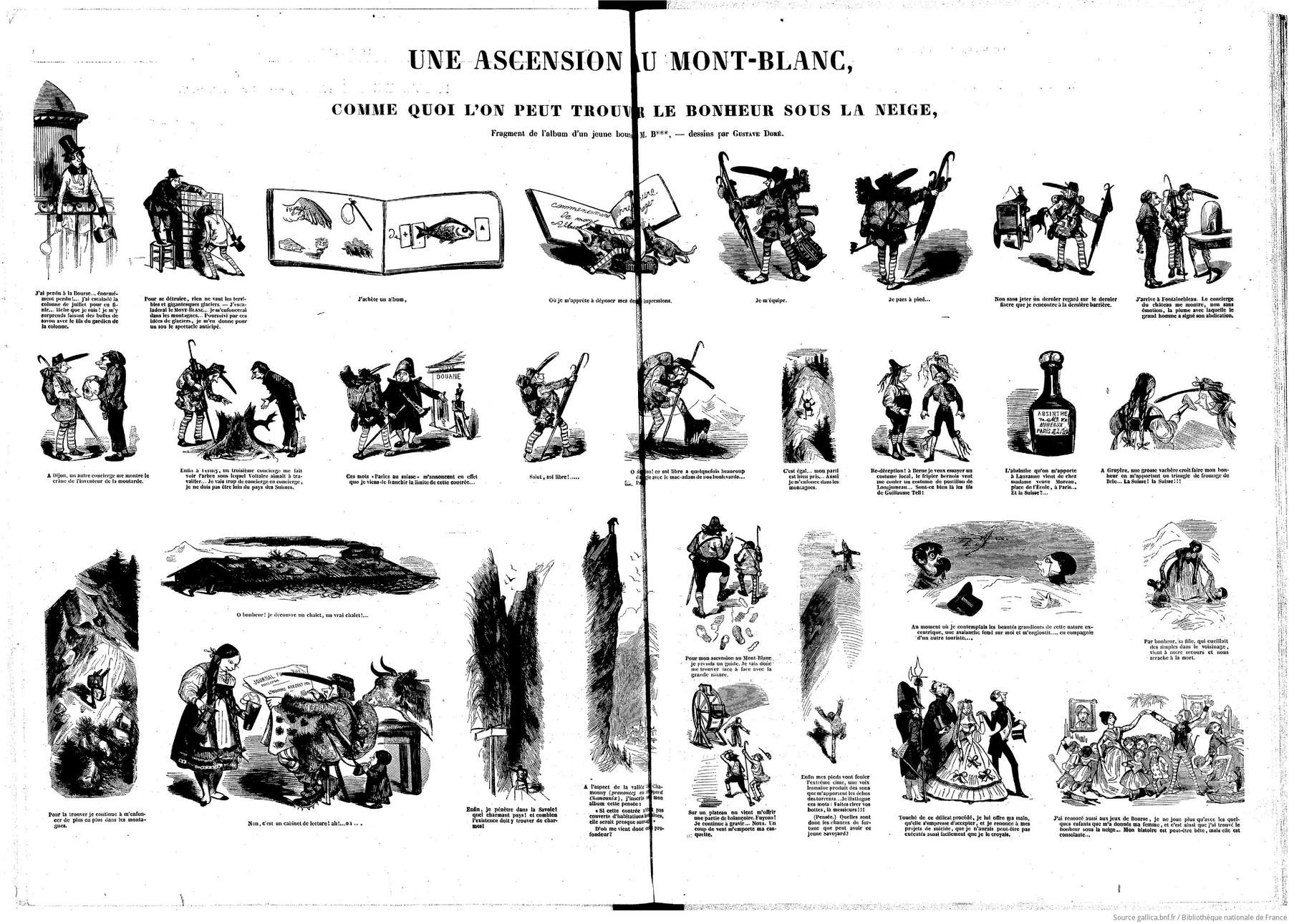
The third chapter of *Fantastico*, on the other hand, is entirely dedicated to a different aspect of Doré. The artist, who never limited himself solely to literary illustrations, also made a name for himself in his youth (at just sixteen) as a caricaturist and satirical cartoonist, collaborating with the satirical newspaper *Le Journal pour rire*, founded in 1848 by publisher Charles Philipon (the founder of the world’s first illustrated satirical daily,* * *Le Charivari*). The third part of* * *Fantastico* delves specificallyinto his work as a caricaturist and the cultural context in which these works were created.
At twenty-two, Doré had already mastered lithography with confidence, but his style still bore clear traces of the influence of earlier masters. Consequently, Philipon recognized his talent and compiled his works into various albums, commissioning him to create new series dedicated to Parisian life. Among his key influences, Cham and, above all, Daumier stand out—an artist whom Doré admired and whose motifs he sometimes incorporated into his own compositions.
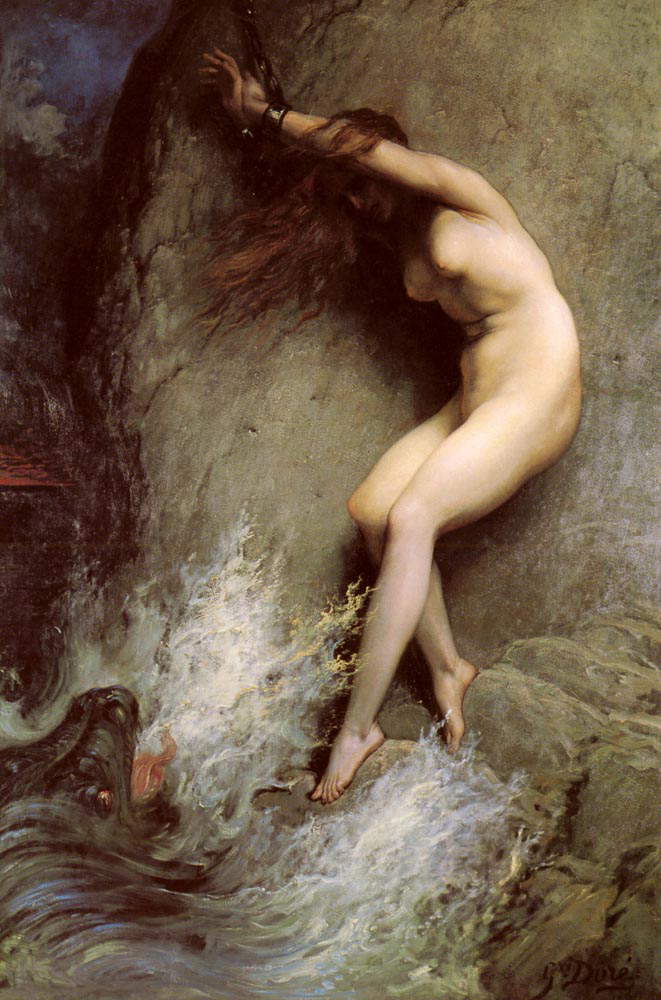
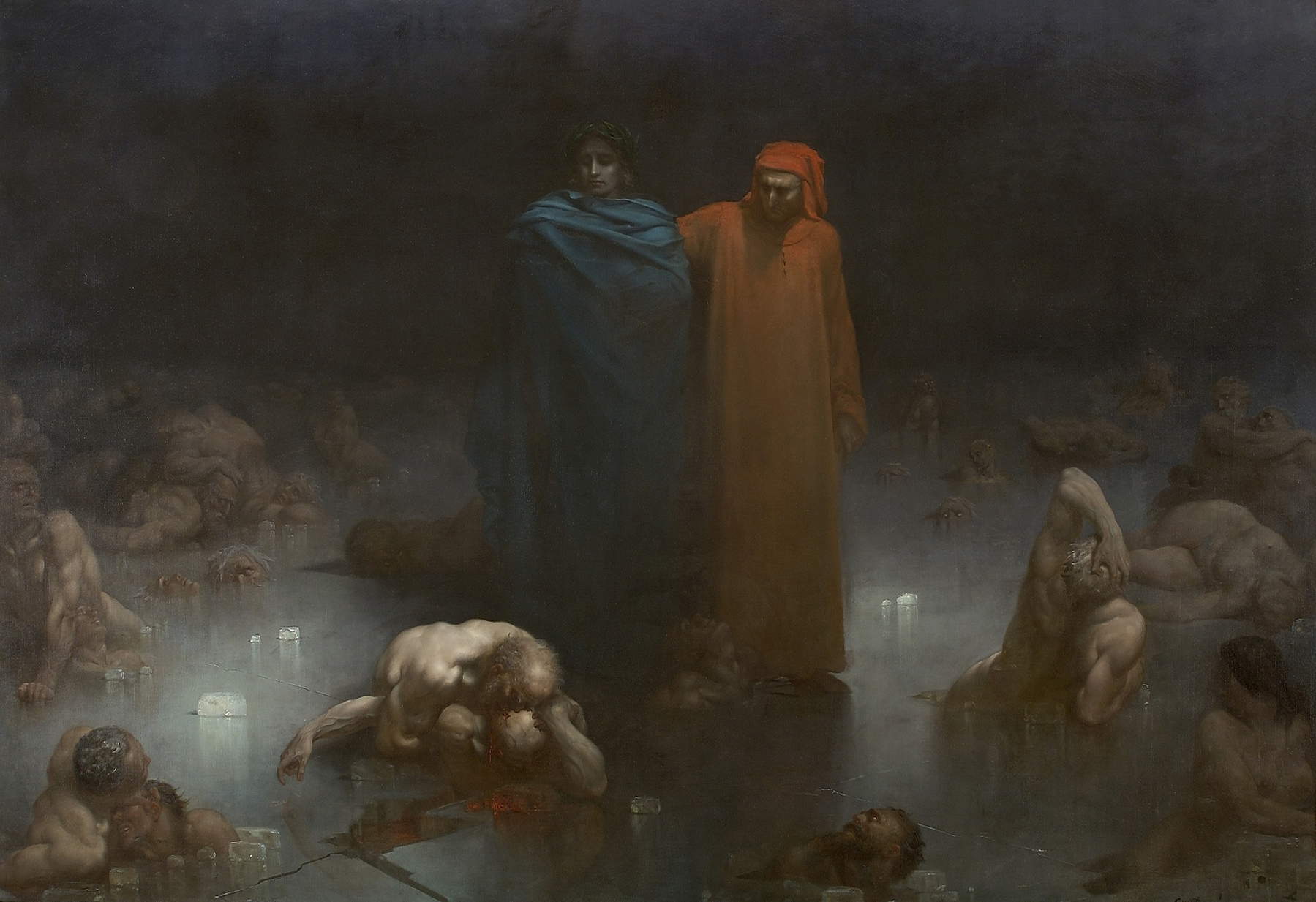
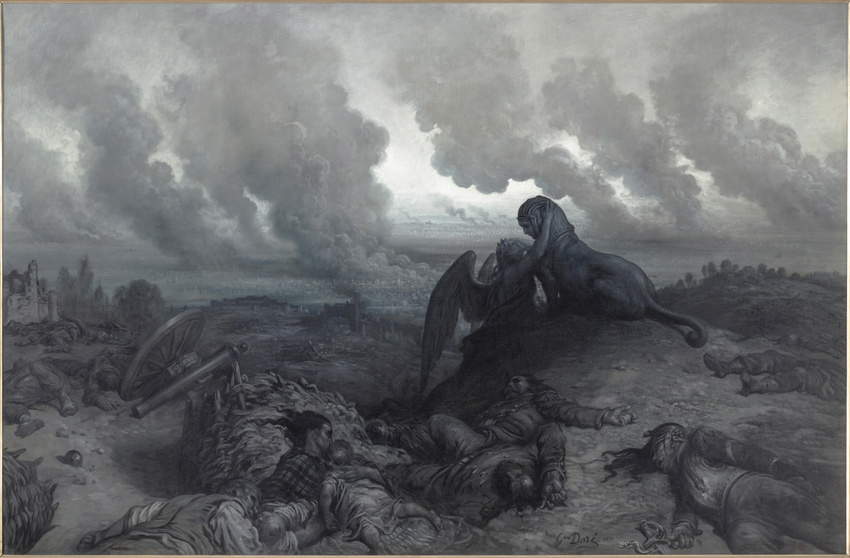
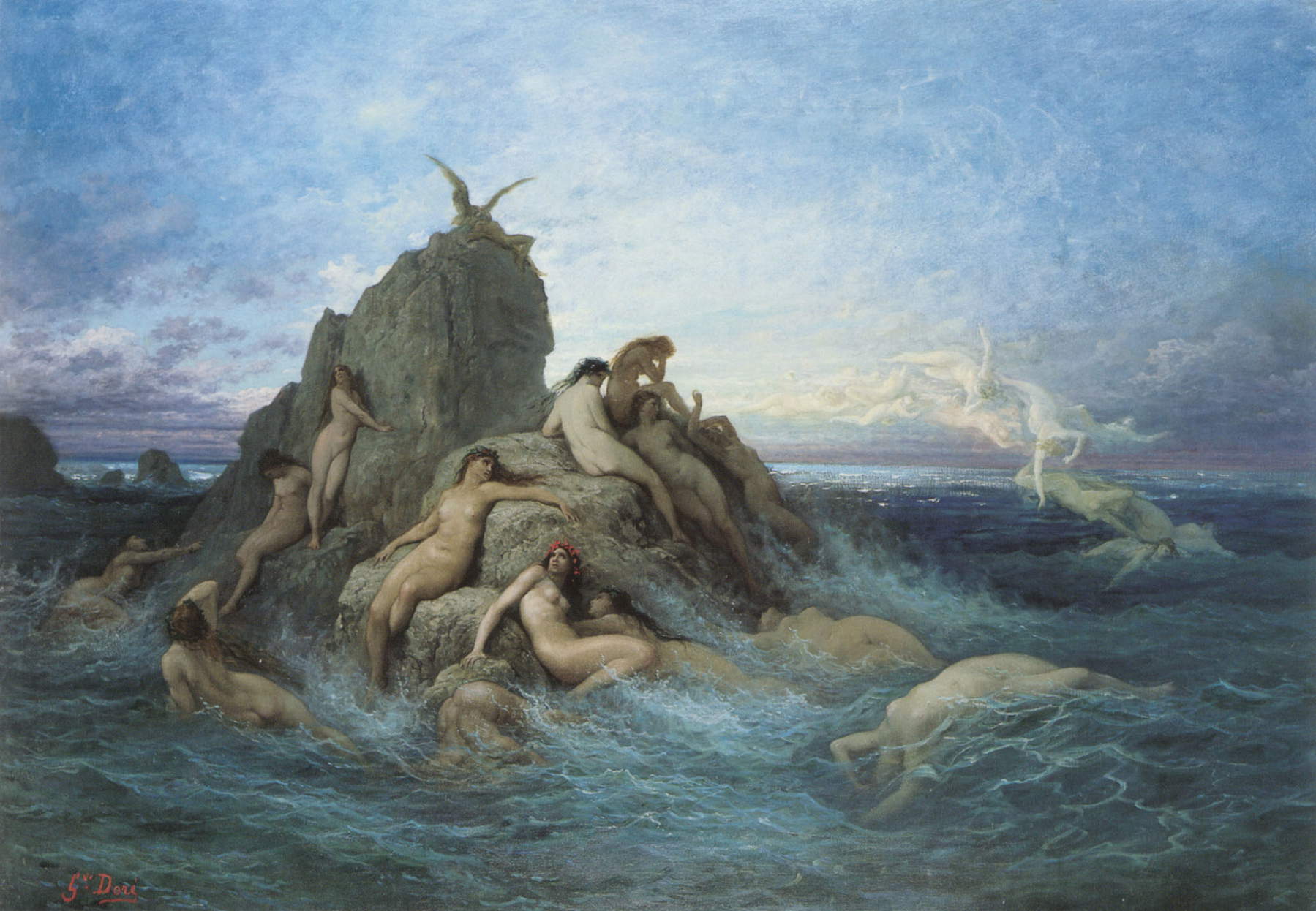
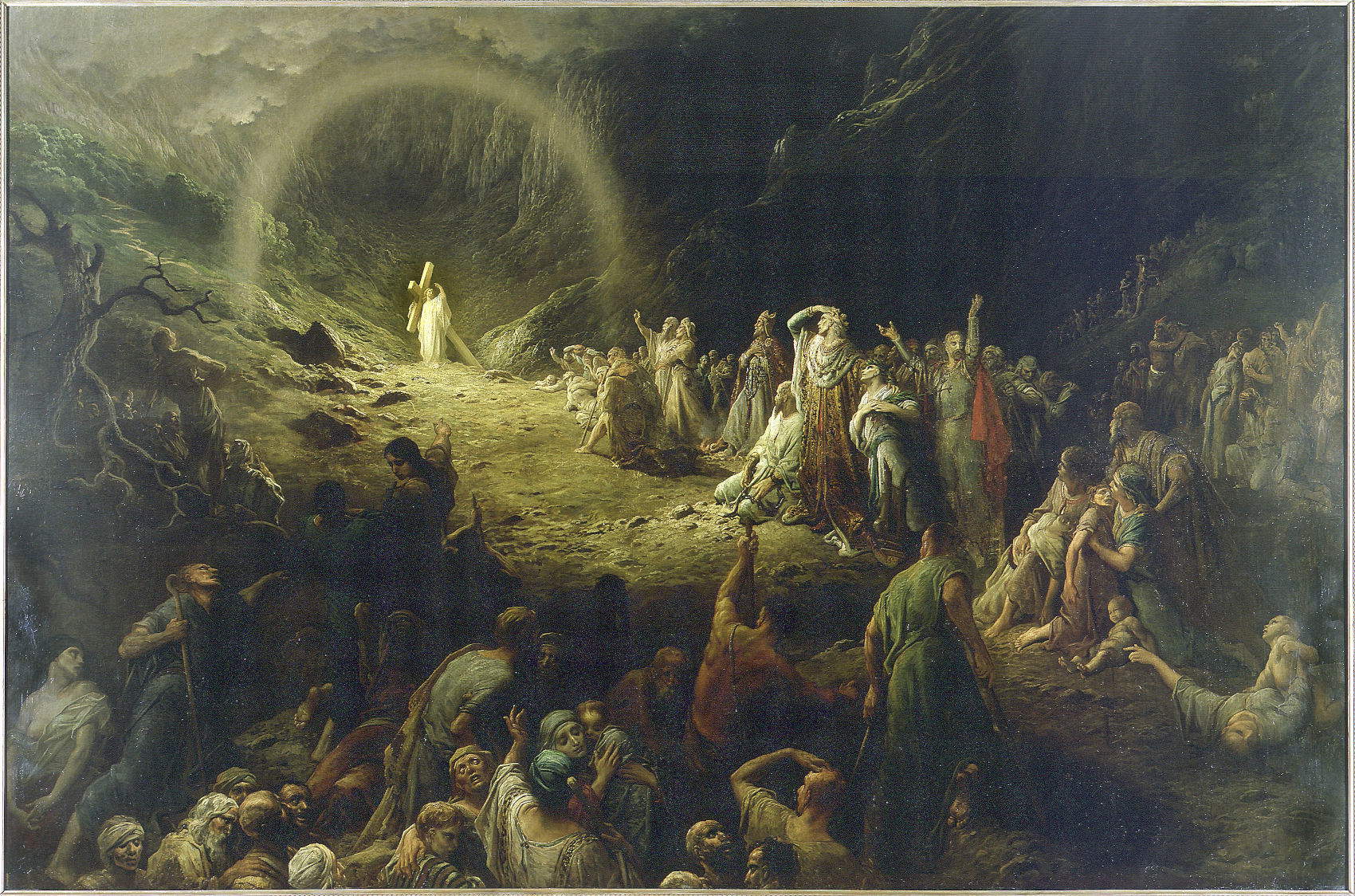
In addition to his work as an illustrator and engraver, Doré also tried his hand at painting, particularly in the landscape genre. The final chapter of *Fantastico* is dedicated precisely to his career as an illustrator and landscape painter. Although Doré’s name is most closely associated with illustration, his paintings are equally captivating. His use of light and shadow in his paintings helps create a dreamlike yet poignant atmosphere—a distinctive trait that characterizes his work as an illustrator. Among his major works are *Andromeda* (1869), *Dante and Virgil in the Ninth Circle of Hell* (1861), *The Enigma* (1871), *Oceanine* (1878), and *The Valley of Tears* ( 1883).I will examine them.
In *Andromeda*, Doré chooses to capture the moment just before a rescue: Andromeda, daughter of Cepheus and Cassiopeia, rulers of Ethiopia, is already chained to the rock, while—as described in the mythological tale—the sea monster sent by Poseidon lunges at her. Terrified, she seeks shelter by retreating on tiptoe. In this case, the artist approaches the subject with an academic style, drawing on the classical repertoire of the idealized nude, where Greek influences and Eastern inspirations coexist. Doré looks to the masters close to him, such as Delacroix or Ingres, but chooses a personal approach. The action is frozen in the moment just before liberation, when everything is still in suspense, and the setting is no accident: the rugged landscape, the cliff, and the choppy sea are recurring elements in his body of work. Bodies poised in balance and hostile environments populate his illustrations for both Dante and Milton. This visual language reappears years later, in 1878, when he painted the Oceanines. The same setting, but multiplied with female figures in various poses.
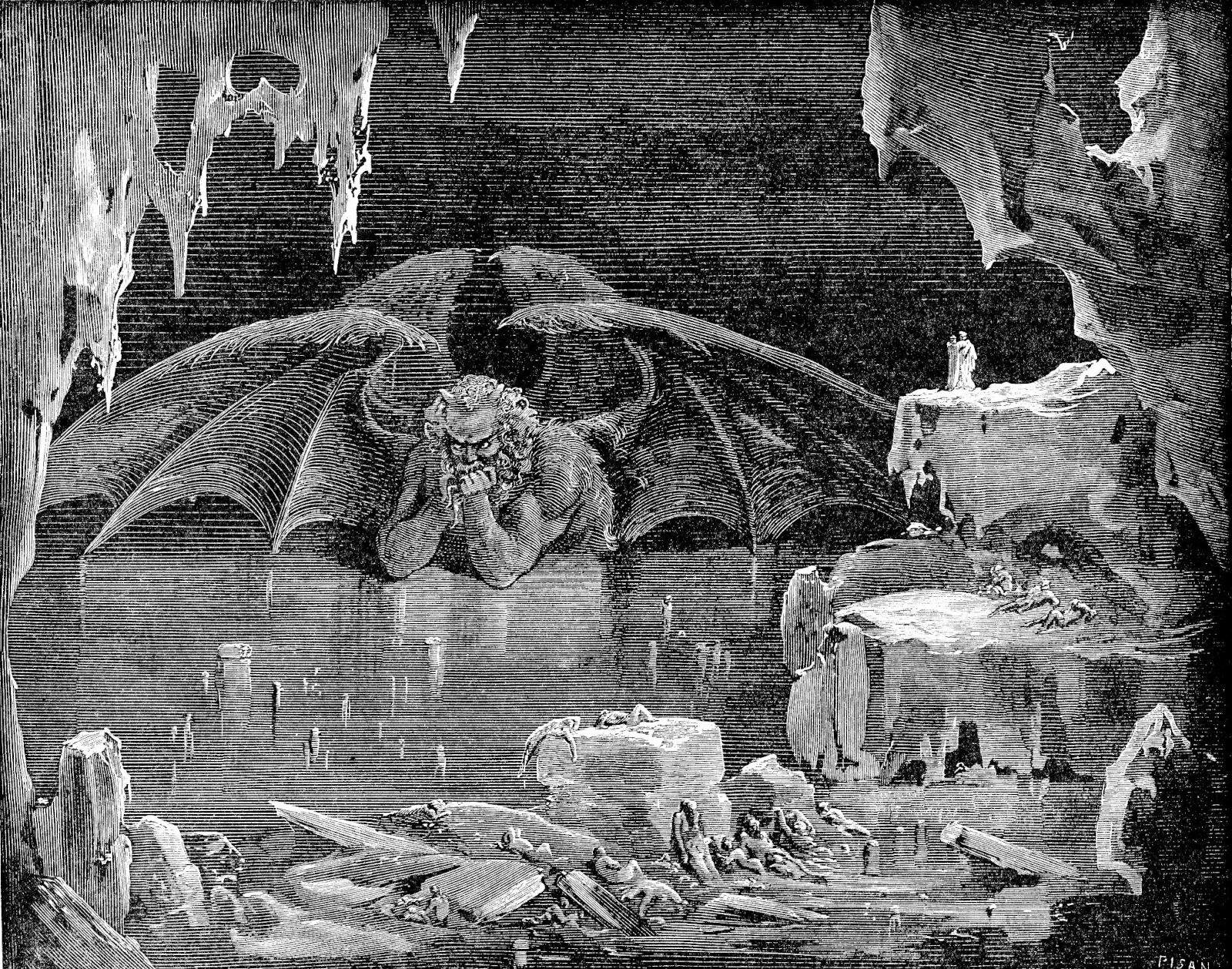
In one of the most iconic illustrations from his series for the Divine Comedy, Doré depicts Dante and Virgil in the Ninth Circle of Hell—the realm of Lucifer and the realm of traitors—where sinners are submerged in ice up to their heads. Here, Dante and Virgil advance across the frozen expanse of the Cocytus, the frozen lake described in Canto XXXII. Virgil lowers his gaze, and Dante furrows his brow as he stares at two entangled souls, one of which is furiously gnawing at the other’s skull. Around them, the souls of the damned barely emerge from the surface: some show only their heads, others a face distorted by the cold and despair, imprisoned in an eternity of frost.
The figures crowding the scene—naked, contorted, muscular—are the result of Doré’s anatomical virtuosity and evoke the tragic power of Michelangelo’s creatures, as in The Last Judgment. The painting was created in parallel with the monumental undertaking of the drawings for “Inferno,” the first stage of the monumental project to illustrate the entire Divine Comedy. In this work, Doré reinterprets and fuses into a single, imposing canvas three different compositions originally conceived for three engravings dedicated to Canto XXXII. The transition from drawing to painting allowed him to expand the scene and experiment with color: a livid, bluish, unreal light permeates the surface and accentuates the supernatural and hallucinatory atmosphere of the frozen, infernal landscape.
Among Doré’s most disturbing paintings is *L’Enigma*( ), which was created in response to the collective trauma left by the Franco-Prussian War of 1870. The scene unfolds on a barren hilltop, where the lifeless bodies of soldiers and civilians lie. Beside the remains of a cuirassier, two parents embrace their dead children. In the center of the painting stands a sphinx with the body of a lion and a human face, covered bythe traditionalEgyptian nemes , and a winged woman crowned with a laurel wreath (an allegory of defeated France), who reaches out her arm toward the creature.
In the painting, the sphinx remains silent; it is not the sphinx of Greek mythology. It could be described as a more ancient, enigmatic entity. Doré, born in Strasbourg, was deeply affected by the loss of Alsace, and in 1871 he created a triptych in grisaille (a monochromatic painting technique, in this case using only shades of gray) consisting of *L’Enigma*, The Black Eagle of Prussia, and The Defense of Paris. In each work, the same female figure reappears to represent the wounded nation. The artist thus blends romantic pathos with allegorical symbolism, drawing inspiration from Delacroix and Gros, yet distinguishing himself through his monochromatic approach and a disillusioned view of war.
In *The Oceanids*, Doré engages with the myth of the Oceanids, water nymphs who, in the mythological account, share in Prometheus’s torment. Daughters of the Titan Oceanus and the nymph Tethys, the Oceanids are depicted reclining on the rock; some surrender themselves to the waves, while others cling to their mother, recognizable by her crown of red flowers. Their bodies, sculpted in an academic style with restrained sensuality, recall the models of Ingres, particularly the figuresin his 1819 work *Ruggero libera Angelica*( ) . At the top of the cliff, a naked body writhes under the attack of an eagle with outspread wings: it is Prometheus, the Titan who dared to give mankind the fire of the gods. To punish him, Zeus condemned him to eternal torment: chained to a mountain, his liver is torn out every day by a bird of prey.
While Rubens, in his *Prometheus Bound*( ) ,painted between 1612 and 1618, sets the myth within a Baroque framework and anchors it to Hesiod’s *Theogony* , Doré looks beyond that. His inspiration comes from Aeschylus, and in particular from *Prometheus Bound*, where the Titan comes into contact with the chorus of the Oceanids, who witness his suffering. The artist thus portrays a figure dear to the Romantic artists of the 19th century, who saw in the myth an allegory of dissent and independent thought. Doré fuses Eros and Thanatos (the personification of death) into a single work: the artist contrasts the brutality of Prometheus’s punishment with the sensual abandon of the nymphs. It is a play on contrasts that runs through much of his work. Beauty—in this case represented by the seductiveness of the female figures—is often tinged with mourning, and death takes shape in the gestures of passion. This approach links Doré to other artists of his time, such as Henri Lehmann, who had already tackled the same subject as early as 1850. Doré occupies a position that bridges romantic pathos and the decadent sensuality of Symbolism, and he anticipates the ideas of Gustave Moreau, Arnold Böcklin, and Auguste Rodin, who were also fascinated by the figure of the Oceanids and the myth of Prometheus.
The Valley of Tears is Doré’s last great composition, and perhaps his most intimate. In this work, created during the final years of his life, the painter pours out the physical and moral torments that afflicted him and seems to entrust to faith the salvific role of a light that illuminates the darkness of existence. Everything is built around chiaroscuro. There is no natural light in the scene: the vast and desolate landscape is immersed in deep shadow, illuminated solely by the figure of Christ, the visual and spiritual focal point of the composition. At the top of a rocky path, Jesus walks forward with the cross on his right shoulder. His face, in truth, bears no signs of suffering. It is steadfast, radiant, and with the index finger of his right hand, he points toward heaven. At his feet, a crowd gathers along the path: men, women, children, soldiers, and rulers, all united by signs of misery, pain, and abandonment.
For this work , Doré drew inspiration from a passage in the Gospel of Matthew : “Come to me, all you who are weary and burdened, and I will give you rest” ( Matthew 11:28). The composition follows an ascending diagonal, leading the eye and the spirit from despair to hope, from shadow to light. In a letter from 1881, addressed to the owners of the Doré Gallery, he wrote of the work: “It is perhaps the most sincerely religious and Christian subject I have ever created: it is, I believe, my most personal creation.” A work that is both an artistic testament and an act of faith. The serene Christ, bathed in glorious calm, stands in contrast to the tormented faces of the crowd. The Valley of Tears is, in fact, also a sort of inner self-portrait. After his mother’s death in 1880, Doré went through a period marked by deep melancholy, made even more difficult by the asthma attacks that kept him confined to Paris.
What does the book offer us, and what can we therefore glean from *Fantastico*? The volume edited by Alix Paré and Valérie Sueur-Hermel clearly demonstrates just how central a figure Gustave Doré was to 19th-century visual culture and how profoundly he has influenced the collective imagination right up to the present day. The book reveals a previously unseen, multifaceted, and surprisingly contemporary Doré. Across its 480 pages, we come to understand how his body of work constitutes an autonomous form of visual storytelling capable of reinterpreting the classics and breathing new life into them. *Fantastico* teaches us to read the artist’s work as a language that is still vibrant and continues to inspire photography, cinema, and contemporary illustration. Doré’s legacy is thus a living one, confirming the Alsatian artist as one of the great visionaries of the nineteenth century.


The author of this article: Noemi Capoccia
Originaria di Lecce, classe 1995, ha conseguito la laurea presso l'Accademia di Belle Arti di Carrara nel 2021. Le sue passioni sono l'arte antica e l'archeologia. Dal 2024 lavora in Finestre sull'Arte.Warning: the translation into English of the original Italian article was created using automatic tools. We undertake to review all articles, but we do not guarantee the total absence of inaccuracies in the translation due to the program. You can find the original by clicking on the ITA button. If you find any mistake,please contact us.






















 IT
IT FR
FR DE
DE ES
ES CN
CN


