





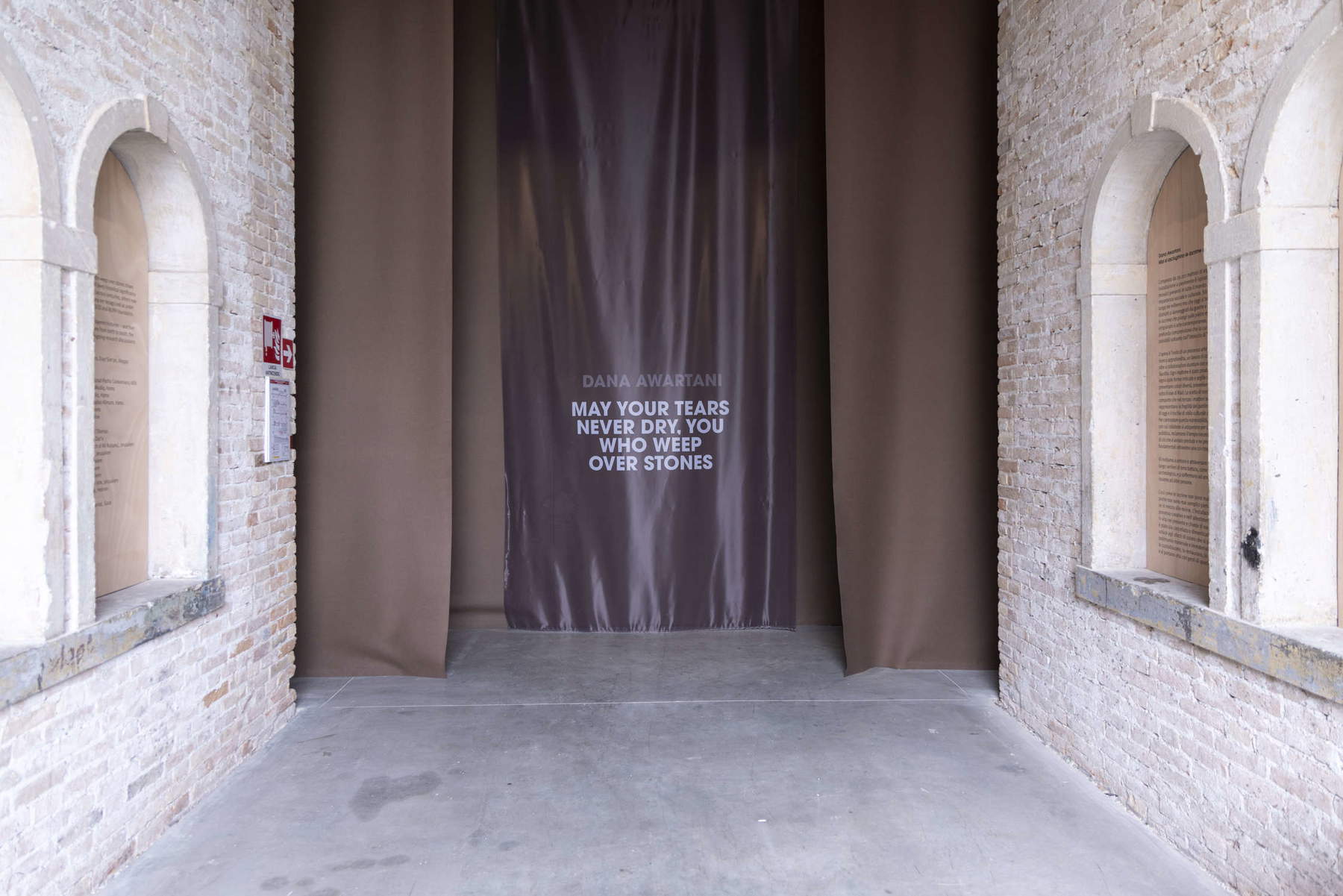
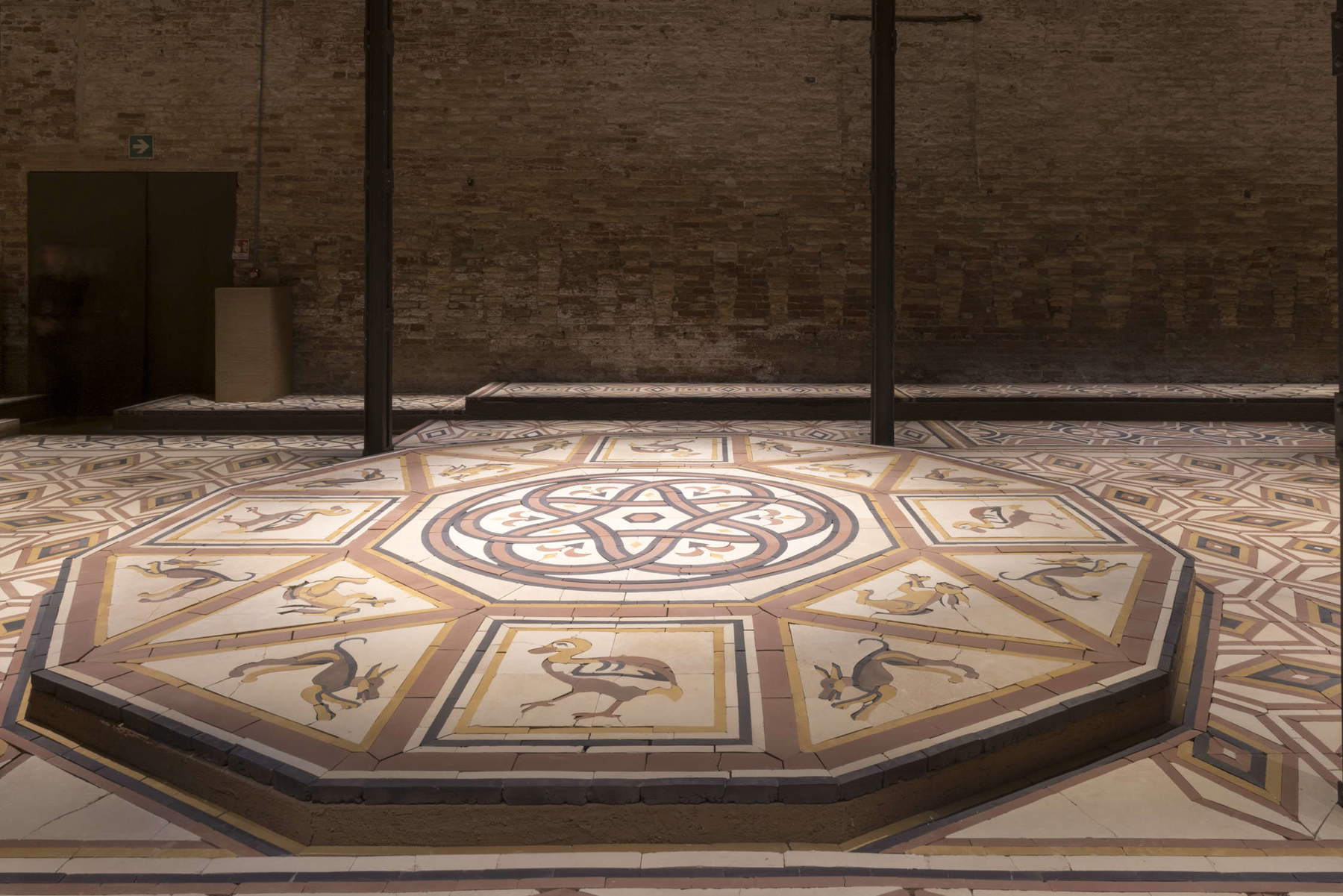
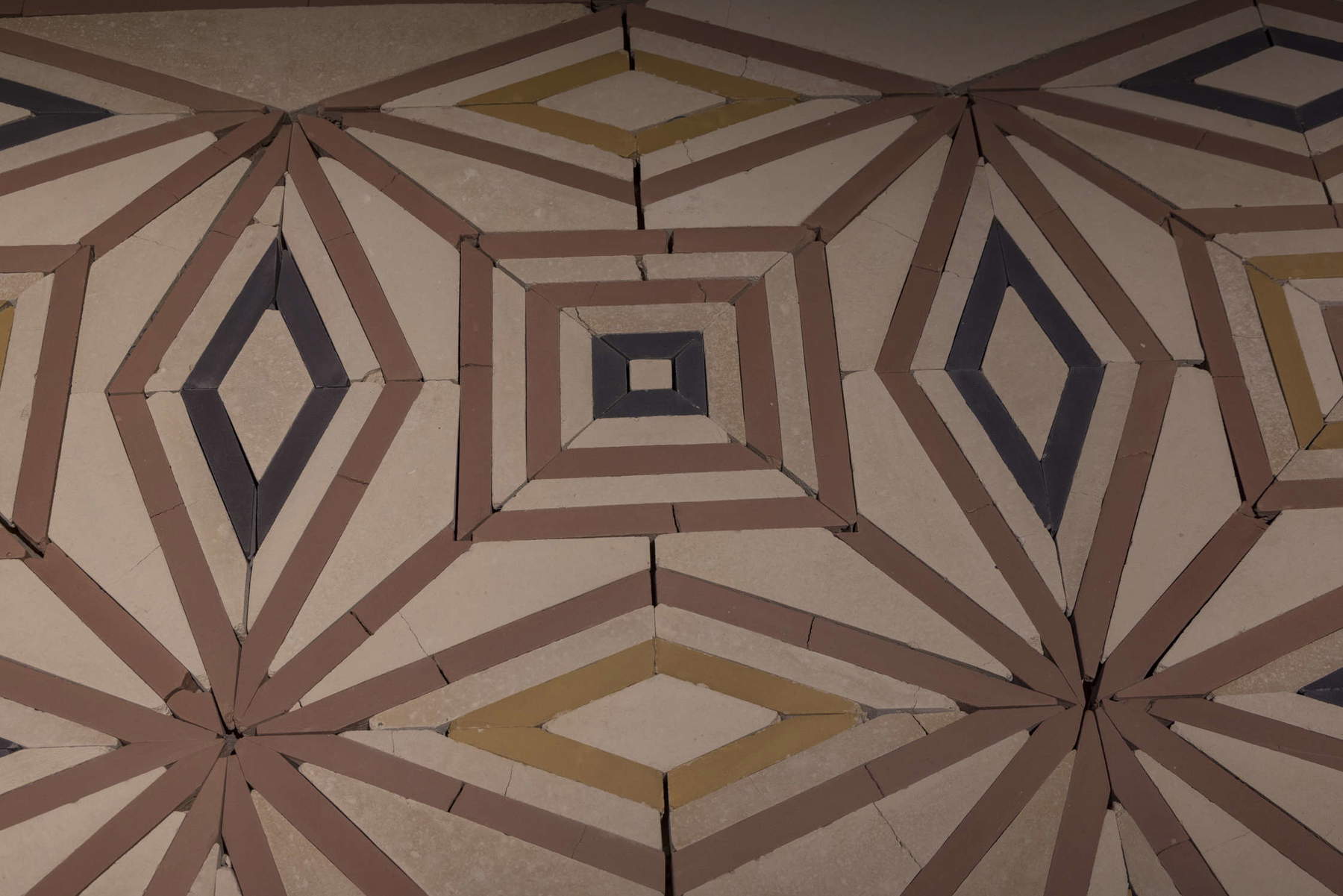
At the Venice Biennale 2026, the Saudi Arabian Pavilion, in the spaces of theArsenale arms rooms, is presented as a space for recollection, memory and reflection on cultural heritage threatened by war, destruction and oblivion. The project, titled Never Let the Tears You Cry on Stones Dry, is entrusted to artist Dana Awartani (Jeddah, 1987), curated by Antonia Carver and commissioned by the Visual Arts Commission of the Saudi Ministry of Culture. At the center of the exhibition is a monumental floor installation composed of 29,221 clay bricks, a work that weaves contemporary art, craft tradition and historical memory into a reflection on the vulnerability of symbolic places in the Arab world.
The work takes inspiration from the decorative motifs of mosaics belonging to various sites of social and cultural importance scattered throughout the Arab world. These are places that hold a thousand-year history, in some cases more than three millennia long, yet today marked by conflict, devastation or threats related to contemporary wars. The installation thus constructs a symbolic geography of loss, evoking cities, monuments and historical evidence that are in danger of disappearing or have already been irreversibly damaged. The title of the work itself, Never let the tears you weep dry on the stones, recalls classical Arabic poetry and takes the form of an invitation not to forget. For Awartani, the gesture of lingering in front of ruins represents not only a contemplative act, but an active practice of memory and awareness. The stones become repositories of histories, identities and cultural relations that cross time and transcend contemporary political boundaries.
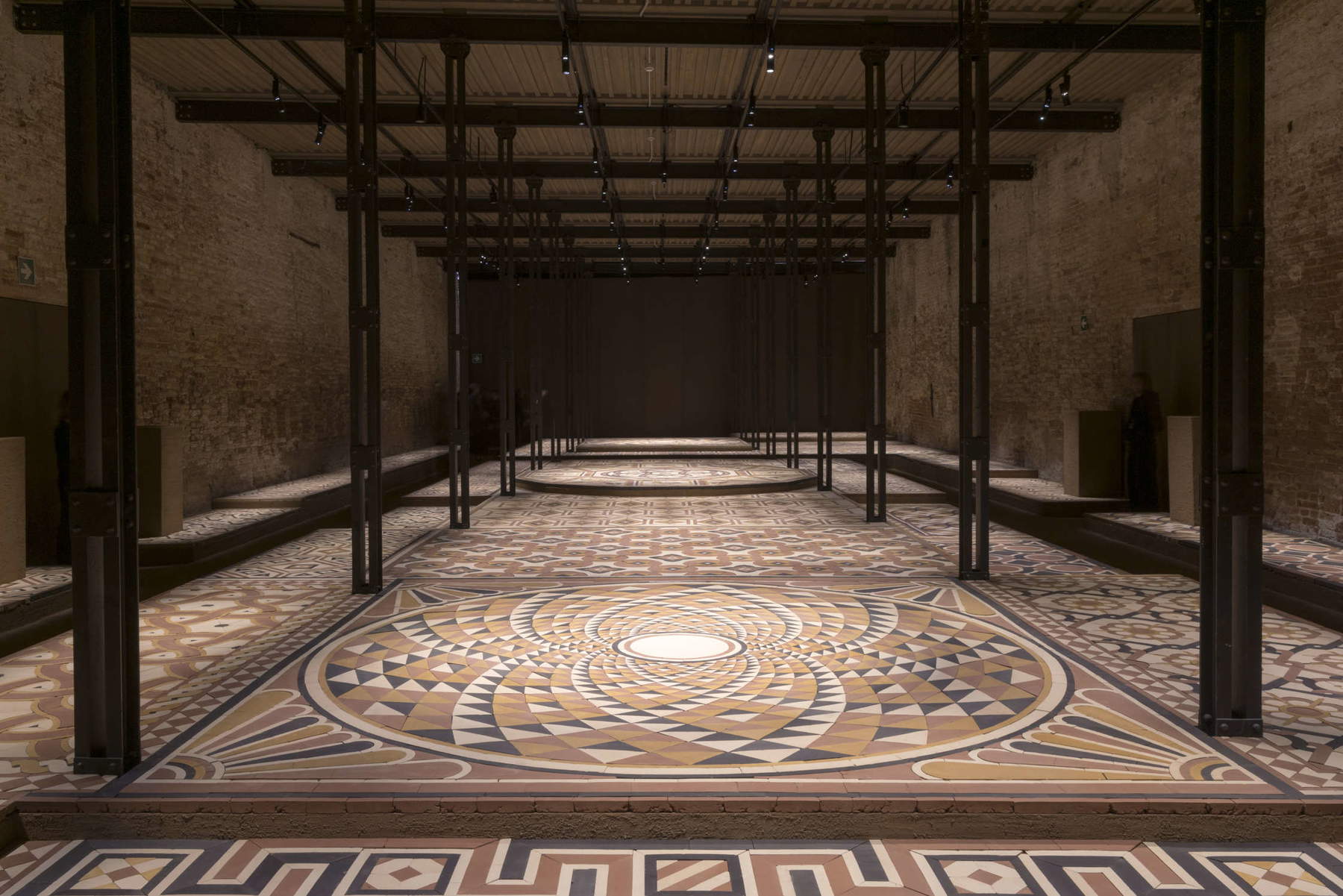
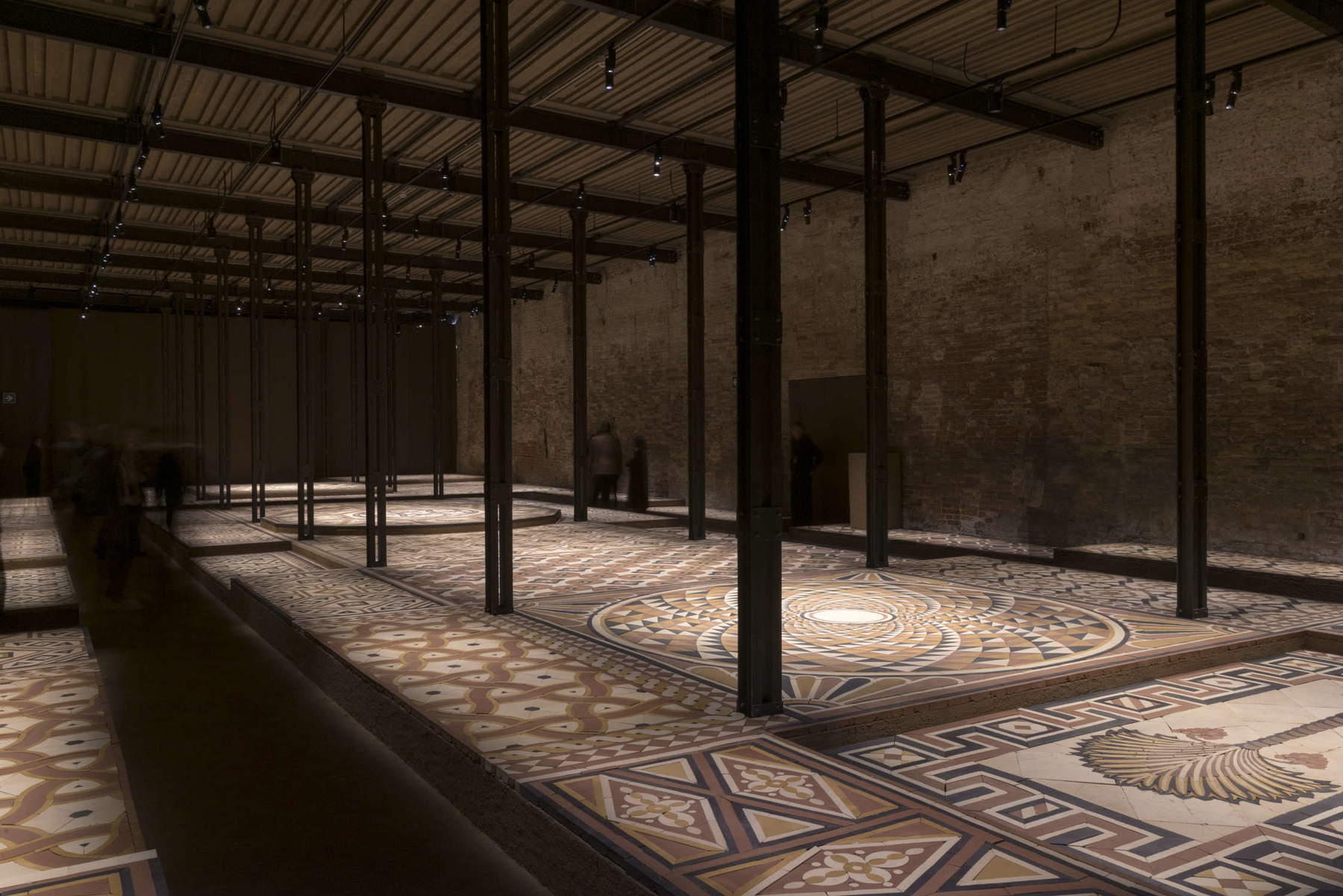
The installation unfolds as a large walkable mosaic. Visitors are invited to enter the space, walk along rammed earth paths and pause inside the work almost as if in an imaginary archaeological site. The experience proposed by the artist is not limited to aesthetic observation, but directly involves the audience in a collective reflection on the relationship between material heritage, memory and destruction. Sitting next to other people, slowly traversing paths or stopping in front of mosaic details becomes an integral part of the exhibition project.
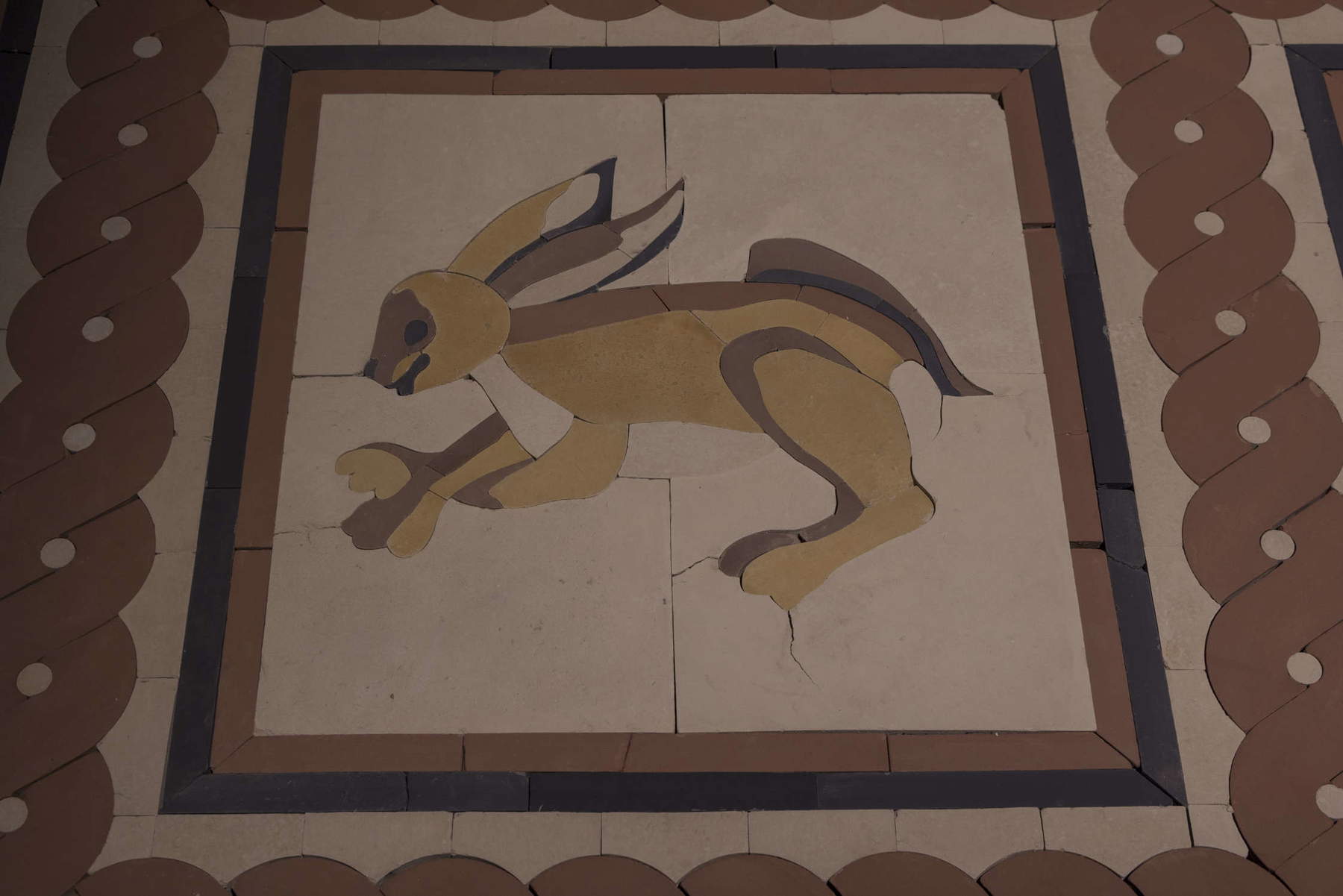
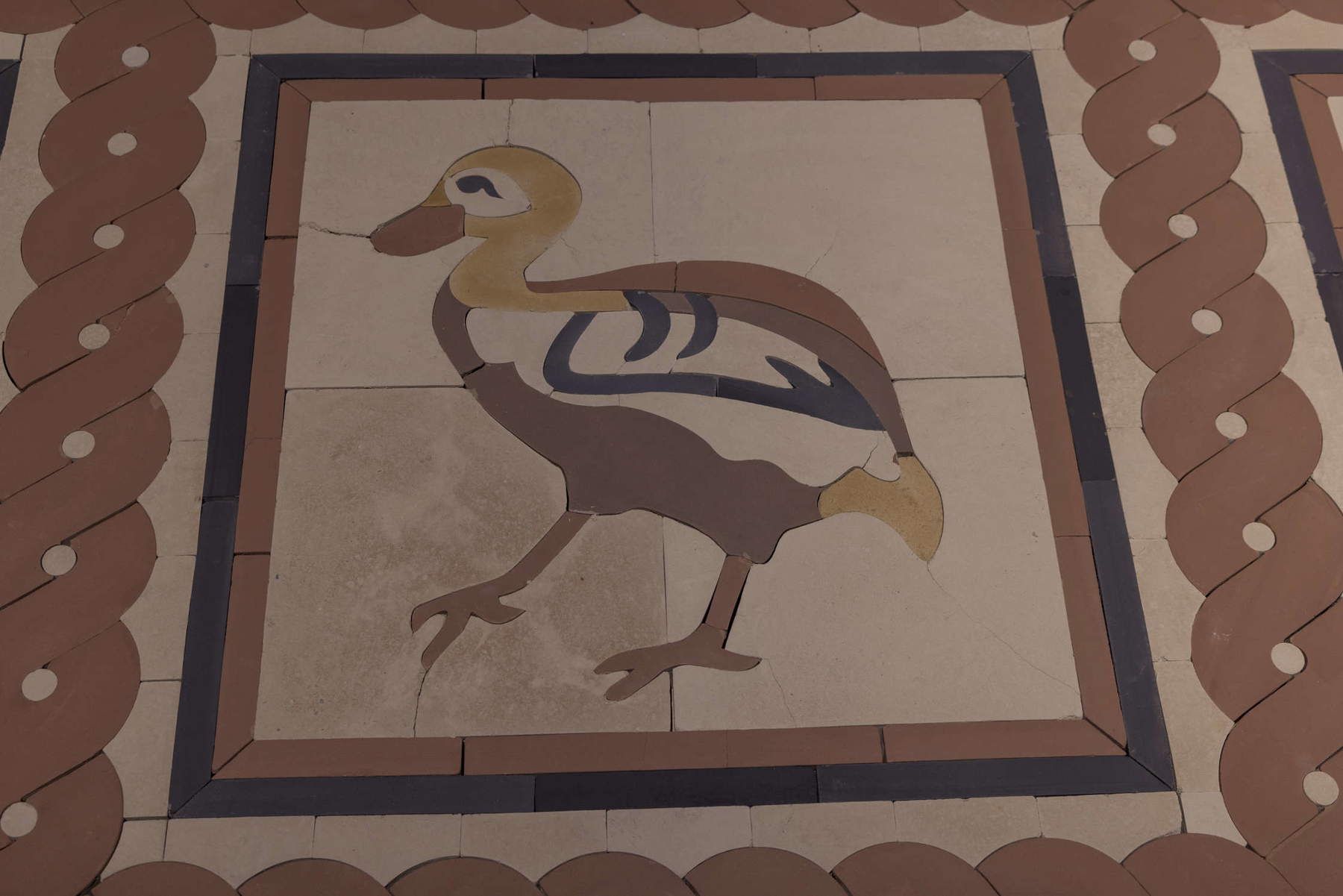
Each element of the installation stems from a long process of research, design and collaborative craftsmanship. Awartani worked together with thirty-two artisans in a studio located in the mountains near Riyadh. Four different clays from different geographical areas of Saudi Arabia were used to make the bricks. The clays, characterized by different natural hues, were shaped through intricate wooden molds and left to dry in the Riyadh sun, according to a process that recaptures traditional techniques related to working with raw earth.
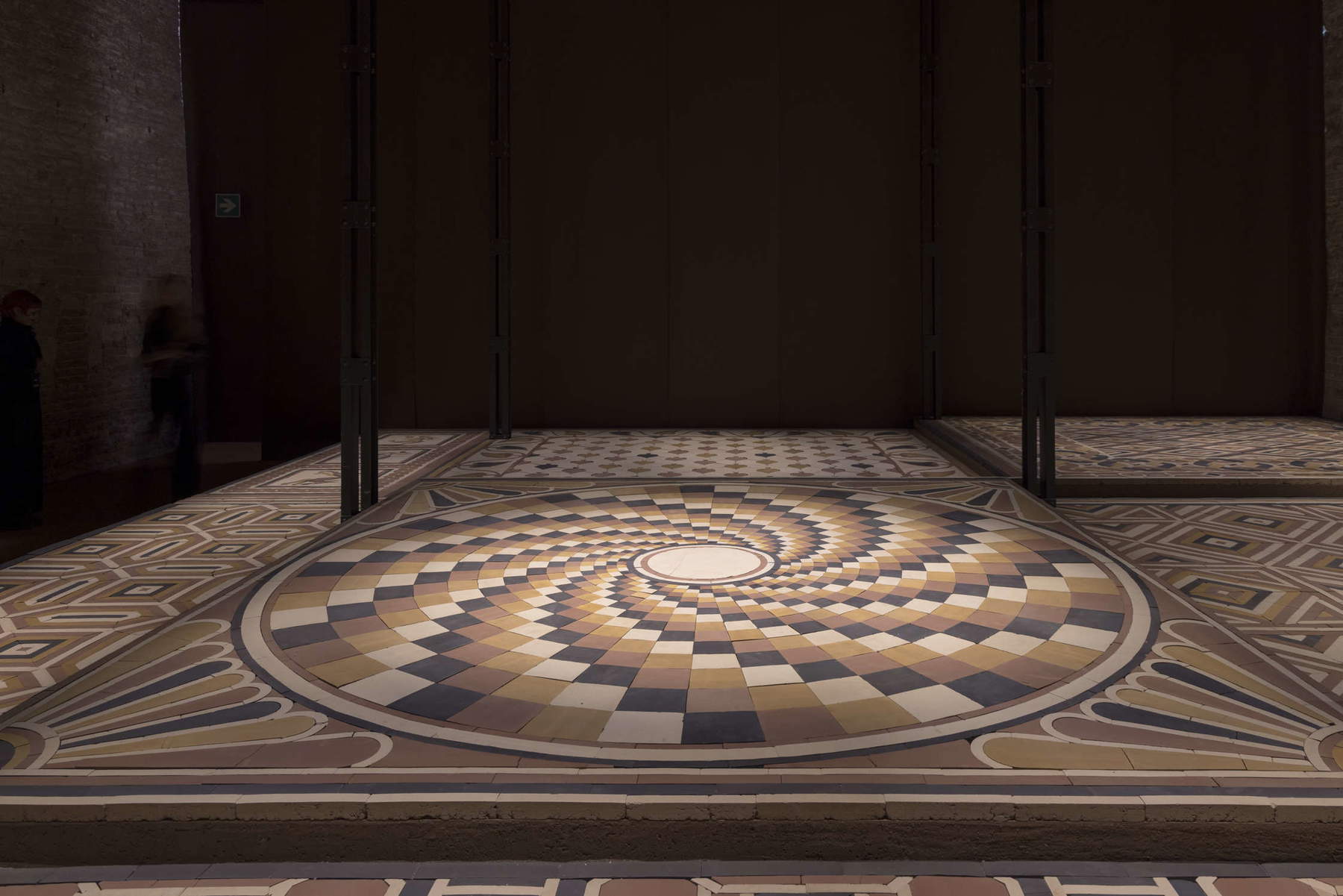
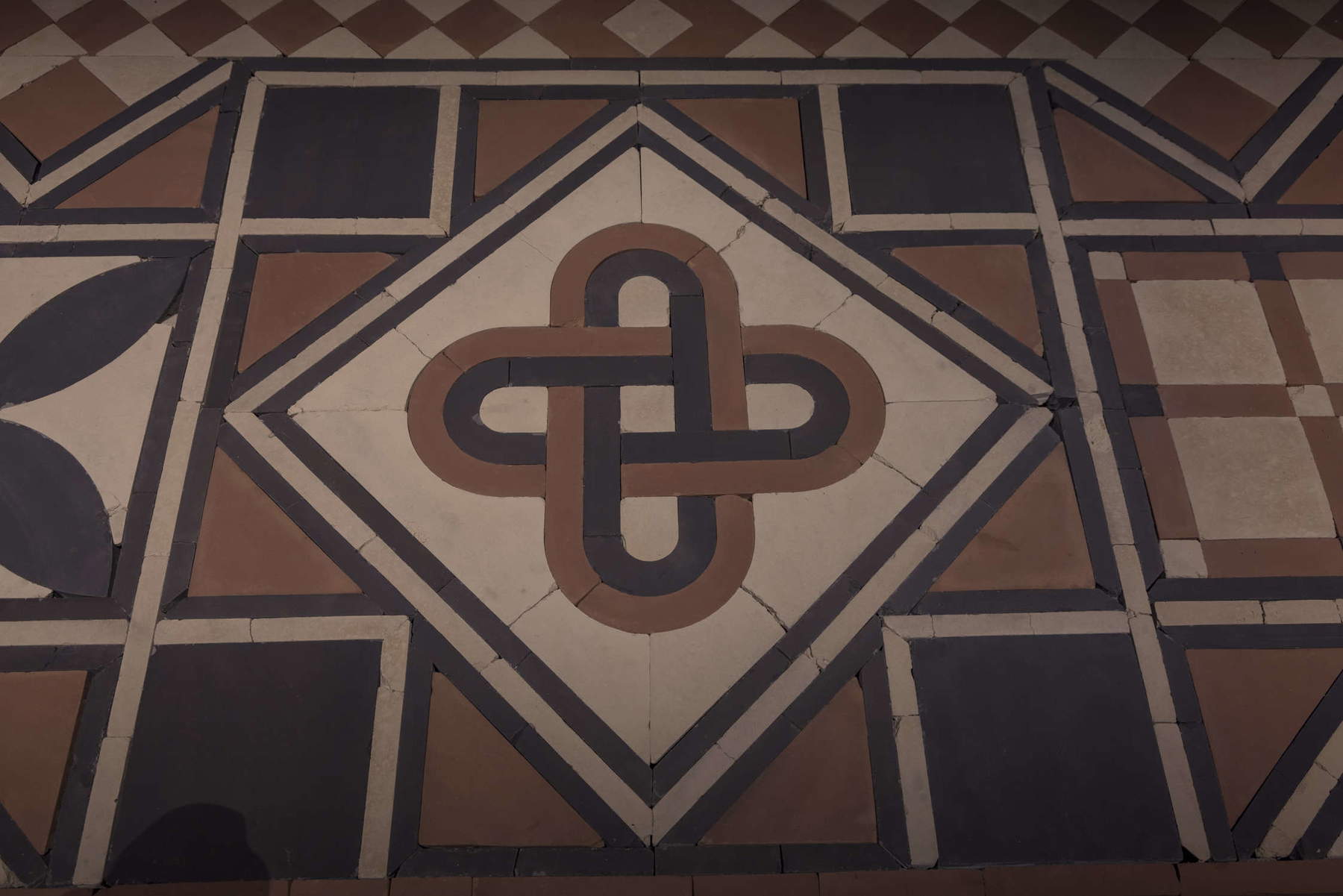
The choice not to use bonding agents plays a central role in the significance of the work. Over time, the bricks are bound to develop natural cracks and fractures, turning deterioration into an integral part of the artwork. The cracks become a metaphor for the fragility of contemporary cultural heritage and the constant risk of erasure of collective memory. In this perspective, the work does not aspire to immutable permanence, but accepts vulnerability as an inevitable condition of matter and history.
For Dana Awartani, the collaborative process is an essential element of artistic practice. The artist recognizes artisans as the custodians of ancestral knowledge passed down through the ages. The Venetian project thus stems from a multigenerational co-creation that interweaves manual knowledge, tradition and contemporaneity. Through this collaboration, the Saudi Pavilion also emphasizes the need to preserve the intangible heritage represented by craft skills, which are often threatened by standardization and the loss of traditional practices.
Awartani’s reflection also extends to the historical relationship between the cultures of the Mediterranean and the Middle East. The artist recalls how mosaic, which originated in Mesopotamia, has been adopted and reinterpreted over the centuries by numerous civilizations, including Venice. Through this shared genealogy, the project highlights the deep connections between seemingly distant histories, suggesting that cultural heritage belongs to a common and interconnected memory.
“These sites are not simply stones,” says Dana Awartani, “but containers that carry our histories and identities through time. The work is a composite of many sites that are and have been under attack and that hold important shared histories that transcend contemporary boundaries. Just as mosaics originated in Mesopotamia and have been adopted by different cultures over the centuries, including Venice, the material and cultural evidence shows that our histories are far more interconnected than many believe. I invite viewers to join me as active participants in a process of self-inquiry into how we conceive of cultural heritage, its destruction, and its preservation. It has also been an immense privilege to work with a community of so many talented master craftsmen to make this project happen. Preserving the intangible heritage they hold is fundamental to my practice, and the support of the Saudi Arabian National Pavilion, allowing me to highlight it on the international stage of the Venice Biennale, means so much. I hope this exhibition highlights the urgency of preserving and protecting cultural heritage as a common heritage.”
Curator Antonia Carver builds the exhibition around the idea of care as a collective practice. The installation symbolically joins the work of restorers, scholars, archaeologists, and communities who daily work to safeguard tangible and intangible heritage. The Saudi Pavilion is thus transformed into a space dedicated not only to the remembrance of loss, but also to the shared responsibility of cultural preservation.
|
| Biennale 2026, Saudi Arabia Pavilion brings a large mosaic as a reflection on loss |

Warning: the translation into English of the original Italian article was created using automatic tools. We undertake to review all articles, but we do not guarantee the total absence of inaccuracies in the translation due to the program. You can find the original by clicking on the ITA button. If you find any mistake,please contact us.




















 IT
IT FR
FR DE
DE ES
ES CN
CN


