





The Pinacoteca Nazionale di Bologna opens to the public on April 24, in the Sala Clementina, the dossier exhibition Albrecht Dürer, Apocalypse. Curated by Elena Rossoni with Giulia Adami of the Pinacoteca’s graphics department and open until July 31, 2026, the exhibition is dedicated to the woodcuts made by Albrecht Dürer to illustrate the text of the same name that concludes the New Testament. It features a series of 15 prints, as well as the frontispiece, that testify to the artist’s extraordinary ability to create striking images and highlight his excellence in the field of graphic design.
The exhibition initiative is part of the program to enhance the important graphic collection of the Prints and Drawings Cabinet of the Pinacoteca, among the most important in Italy. The aim is to make works normally kept in drawers for protection reasons accessible to the public through rotating temporary exhibitions. This exhibition thus represents a stage in a larger, ongoing project designed to make known and appreciate a heritage consisting of thousands of folios, most of which are still little explored.
The opening, scheduled by invitation for the afternoon of Thursday, April 23, will also mark the first official participation of the new director of the National Museums of Bologna-Regional Directorate of National Museums of Emilia-Romagna, Luigi Gallo, who commented, “I accept this appointment with a great sense of responsibility and with the aim of continuing and strengthening the path of enhancement undertaken. The exhibition on Albrecht Dürer represents a significant example of how it is possible to make visible and usable a heritage that is often not accessible, returning it to the community through projects of scientific and popular quality. We intend to continue along this line, expanding opportunities to learn about the graphic collection and developing initiatives capable of involving different audiences, in a constant dialogue between research, protection and sharing.”
The works on display belong to theApocalypsis cum figuris (Illustrated Apocalypse), a collection of 15 woodcut plates made by Dürer as an illustrative apparatus to the last book of the New Testament. This is the first example of a printed work conceived and published directly by an artist, who not only designed and drew the images, but probably also engraved the wooden plates. The work also introduces a significant editorial innovation: the illustrations occupy the entire front page, while the text appears on the back, thus creating a dual mode of reading, visual and written.
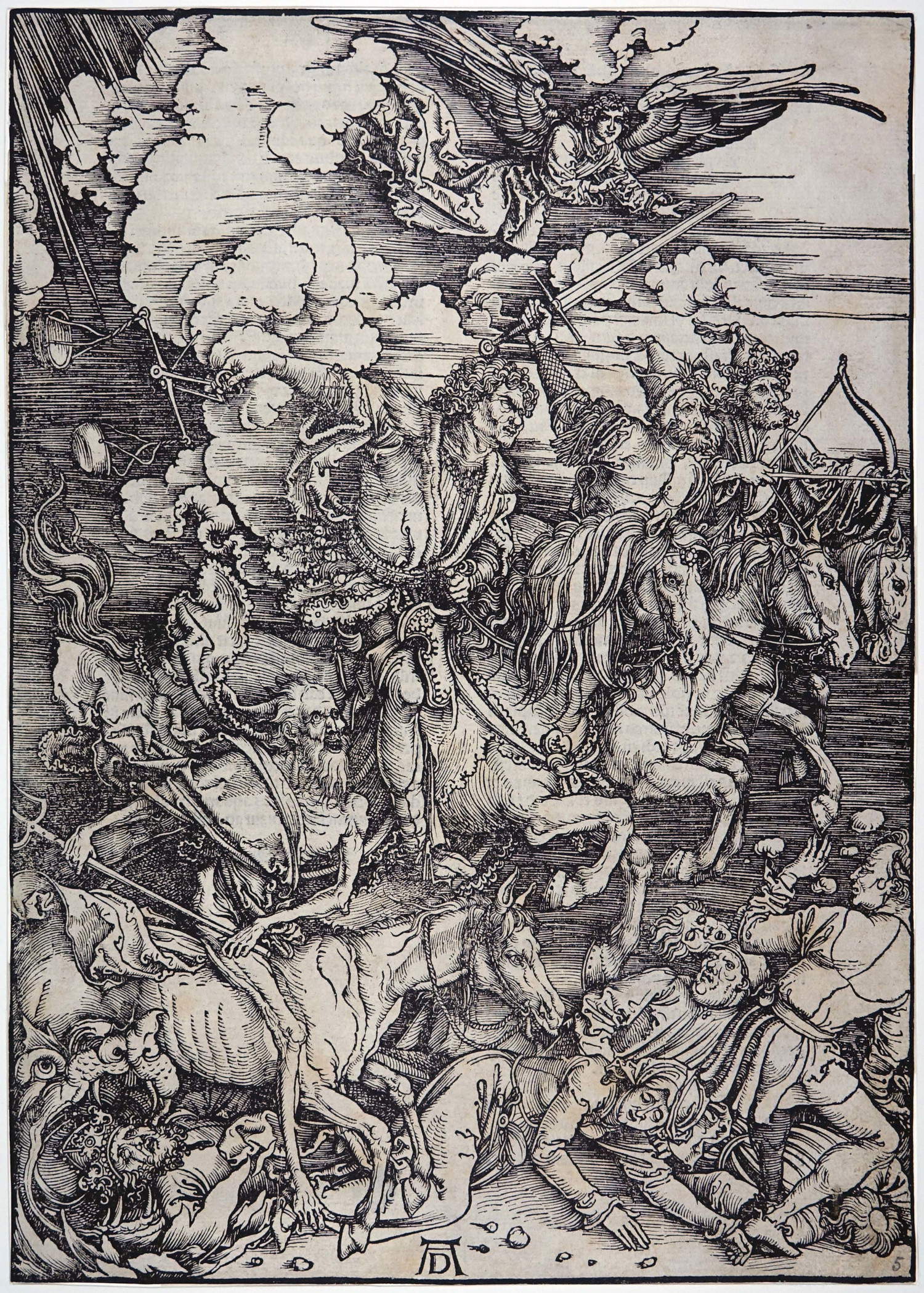
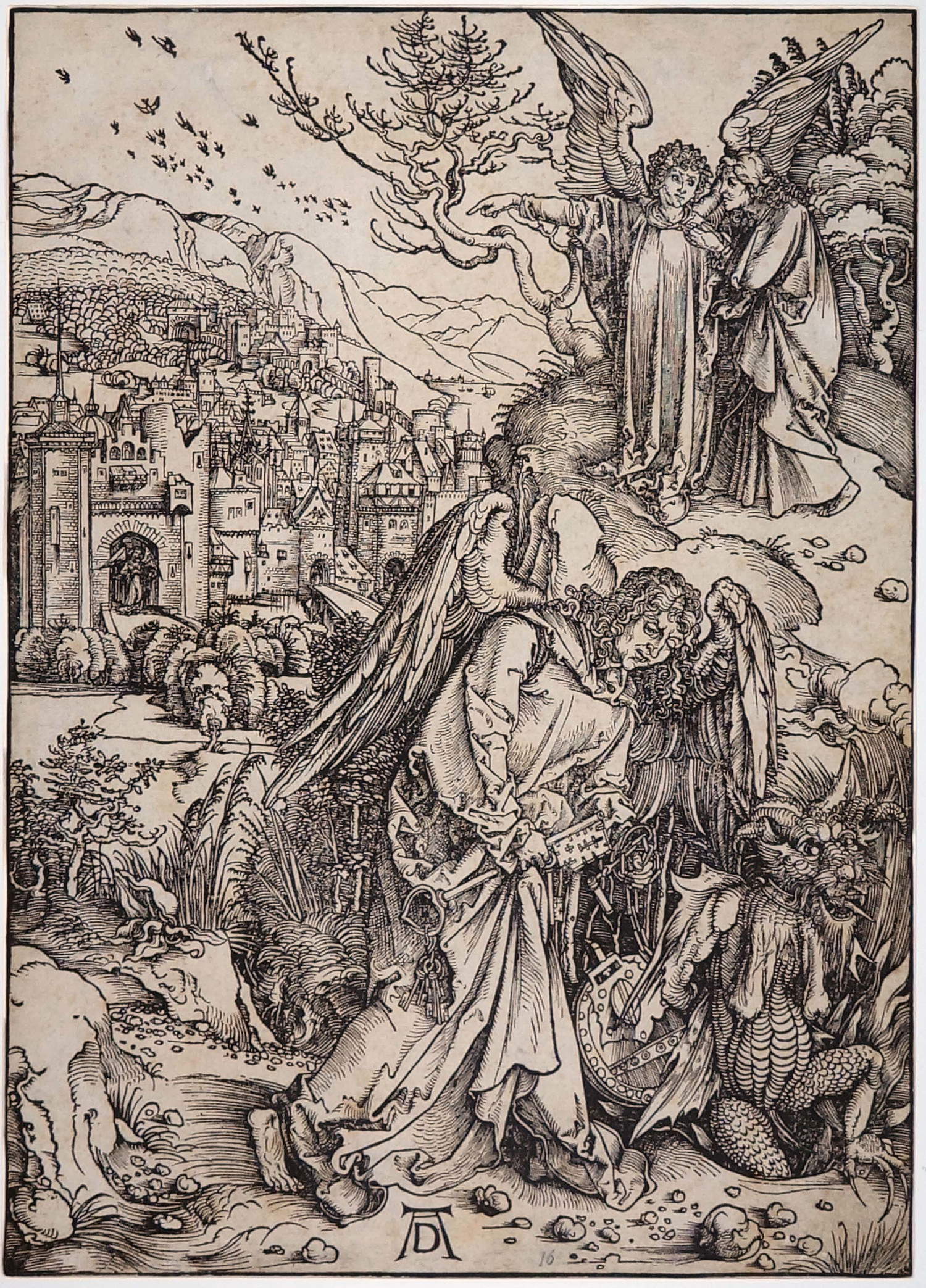
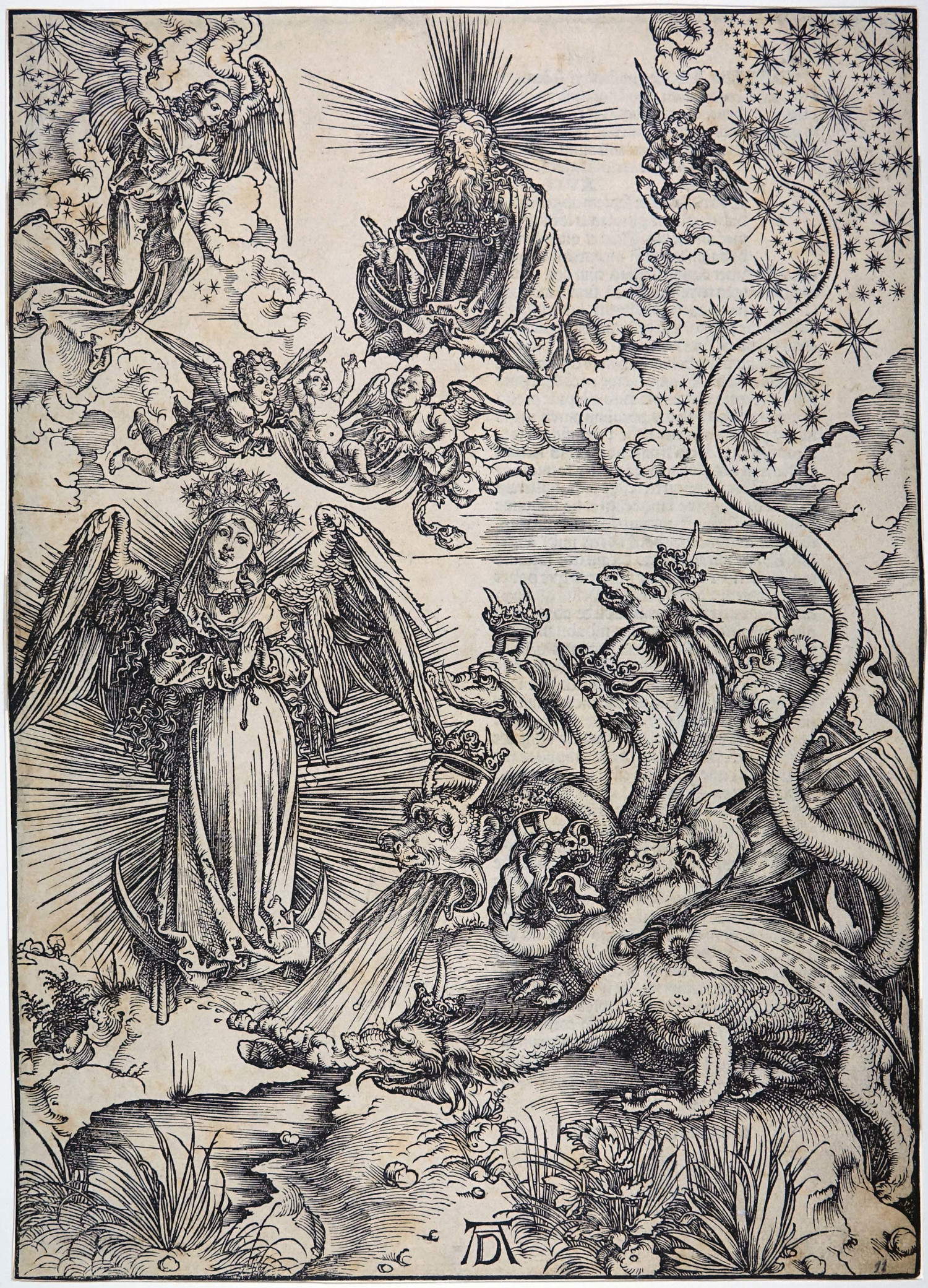
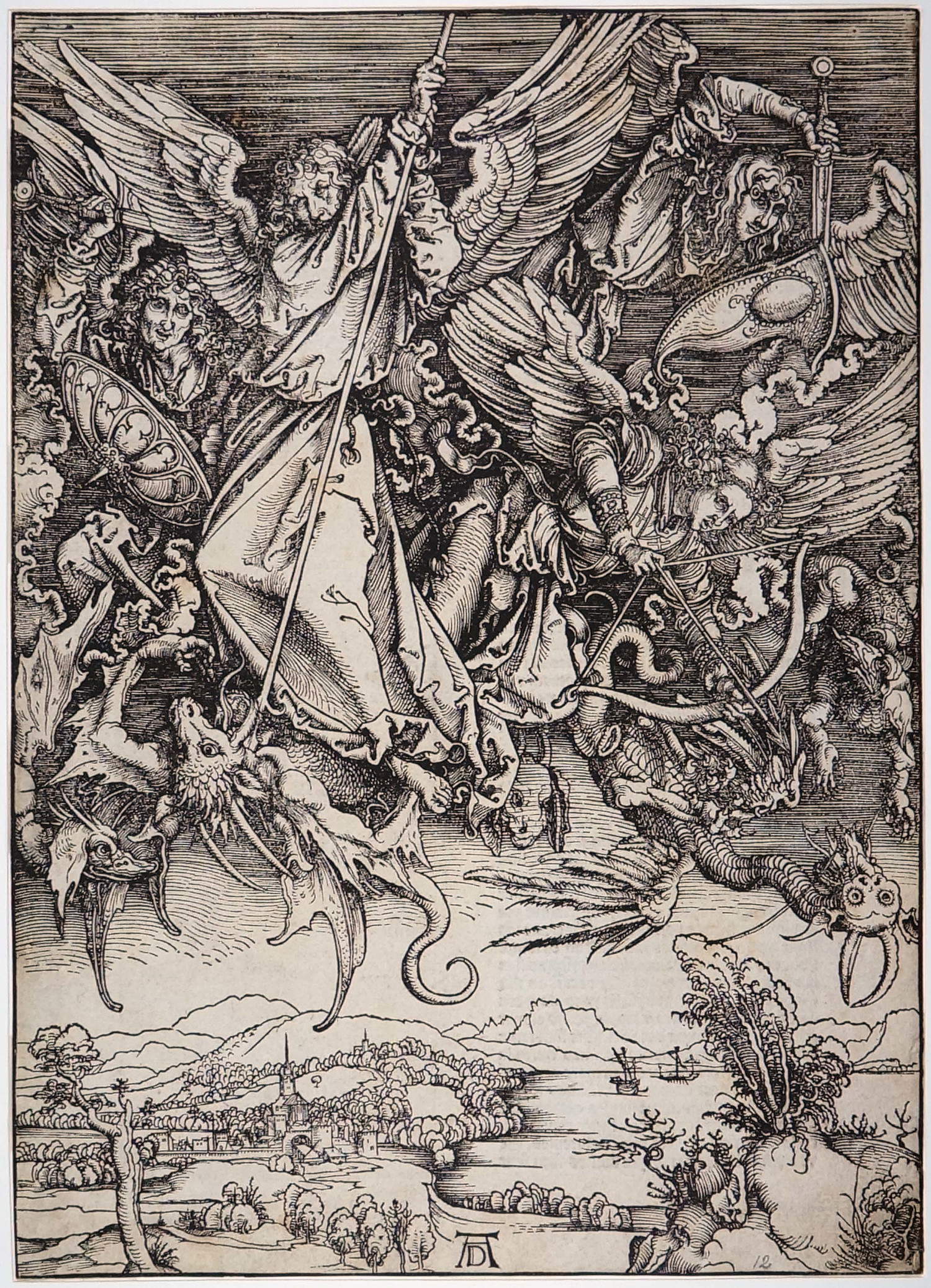
The woodcuts preserved at the Pinacoteca di Bologna belong to the1511 Latin edition, in which the artist included a new illustrated frontispiece compared to the earlier 1498 versions published in both Latin and German. With this work, Dürer set out to depict the verse text of the Book of Revelation, traditionally attributed to St. John the Evangelist, who is said to have received the revelation during his retreat on the island of Patmos. Not surprisingly, the figure of St. John already appears on the title page, intent on writing while gazing at the Virgin and Child. The first scene, the Torture of St. John, taken from Jacopo da Varagine’s Golden Legend, a fundamental text for the iconography of saints in the Middle Ages, is also dedicated to him.
Subsequent woodcuts illustrate apocalyptic visions faithfully following the sacred text, with richly detailed depictions depicting divine figures, the blessed, the damned, angels and demons, set in settings characterized by landscapes and cities with a Nordic flavor.
“There are episodes of art history that we know because they are among the most celebrated in Western art,” the curators explain, “but the possibility of being able to exhibit, present, and share with the public such significant works is always an important experience. It is particularly so for this nucleus of visionary woodcuts, in which the content of the biblical text is interpreted through images that manage to capture and render deep down the greatest human anxieties, while expressing them through one of the best sides of humanity itself, creativity.”
The exhibition will be accompanied by a lecture given by Giovanni Fara of Ca’ Foscari University of Venice, scheduled for Thursday, May 28, at 5 p.m., as well as guided tours and family activities curated by the Pinacoteca’s education department.
The nucleus of Dürer’s works preserved at the Pinacoteca di Bologna is particularly significant and includes pieces of great value. The collection has been formed over the centuries thanks to important donations and acquisitions, starting with the 1715 donation by Luigi Ferdinando Marsili to the Istituto delle Scienze, from which the current collection derives. Subsequent contributions, including those of Pope Benedict XIV, Girolamo Legnani Ferri, and Ludovico Savioli, have brought the collection to comprise 289 specimens today, including, in addition to the Apocalypse, important cycles such as The Life of the Virgin and the famous Great and Little Passion, made with techniques such as woodcut, burin, and etching.
Hours: Tuesday through Sunday and holidays from 9 a.m. to 7 p.m.
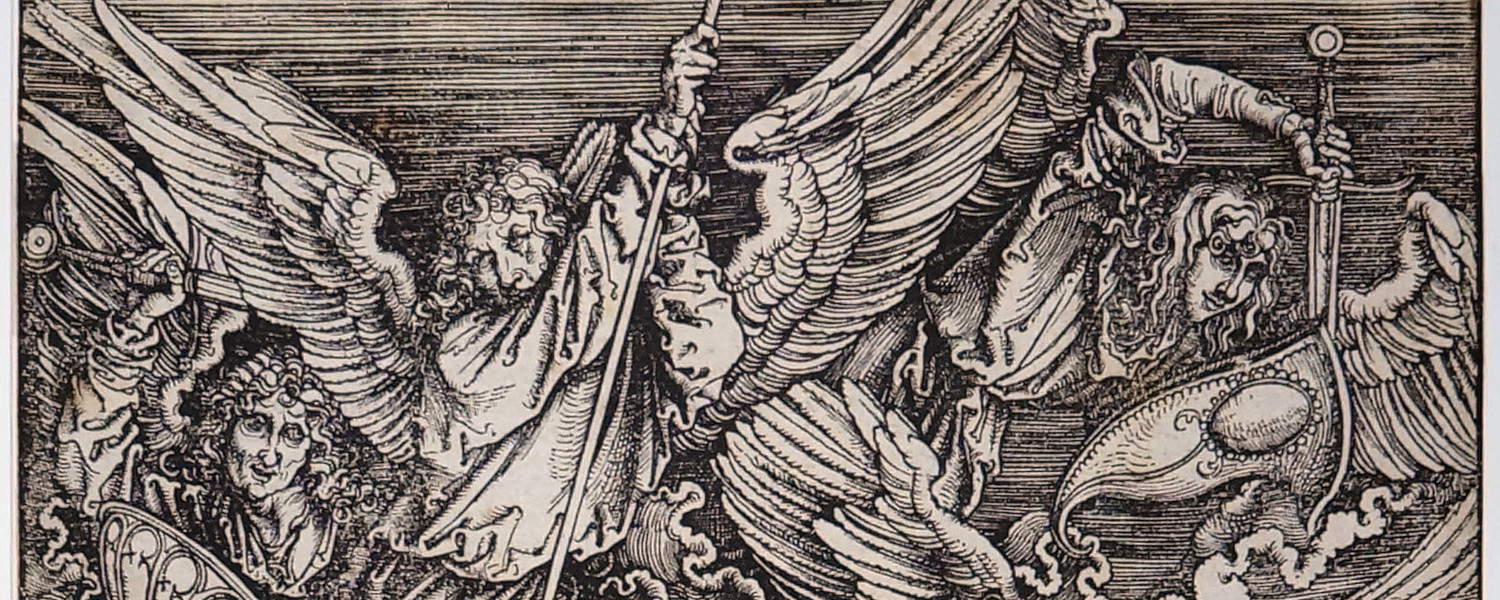 |
| A dossier exhibition on Albrecht Dürer's woodcuts of the Apocalypse at the Pinacoteca di Bologna |

Warning: the translation into English of the original Italian article was created using automatic tools. We undertake to review all articles, but we do not guarantee the total absence of inaccuracies in the translation due to the program. You can find the original by clicking on the ITA button. If you find any mistake,please contact us.


















 IT
IT FR
FR DE
DE ES
ES CN
CN


