




From June 11 to August 30 , the National Automobile Museum in Turin presents “Vespa: An Italian Icon,” an exhibition dedicated to the 80th anniversary of the patent filing for one of the most recognizable symbols of Italian design. The exhibition, organized by MAUTO and curated by Roberto Donati, historical and cultural director of the Vespa Club d’Italia, together with Rino Drogo, coordinator of the Marco Fumagalli Collection, explores the Vespa’s transformation from a simple means of transportation into a cultural and collectible object.
The exhibition begins with materials collected by Marco Fumagalli, a collector who, over the years, has built a vast archive dedicated to the many forms through which the Vespa has been represented, reinterpreted, and popularized. Historic models, gadgets, memorabilia, magazines, advertisements, posters, and movie posters convey the breadth of a phenomenon that spanned the 20th century and took root in the collective imagination. The Vespa is, in fact, one of the most recurring images in Italian visual culture. Advertising, cinema, photography, and graphic design have contributed to its widespread popularity and to the gradual construction of an identity that has transcended the vehicle’s original function. The exhibition explores precisely this transition, highlighting how the object has, over time, become an element capable of fueling practices of collecting, preserving, and cataloging.
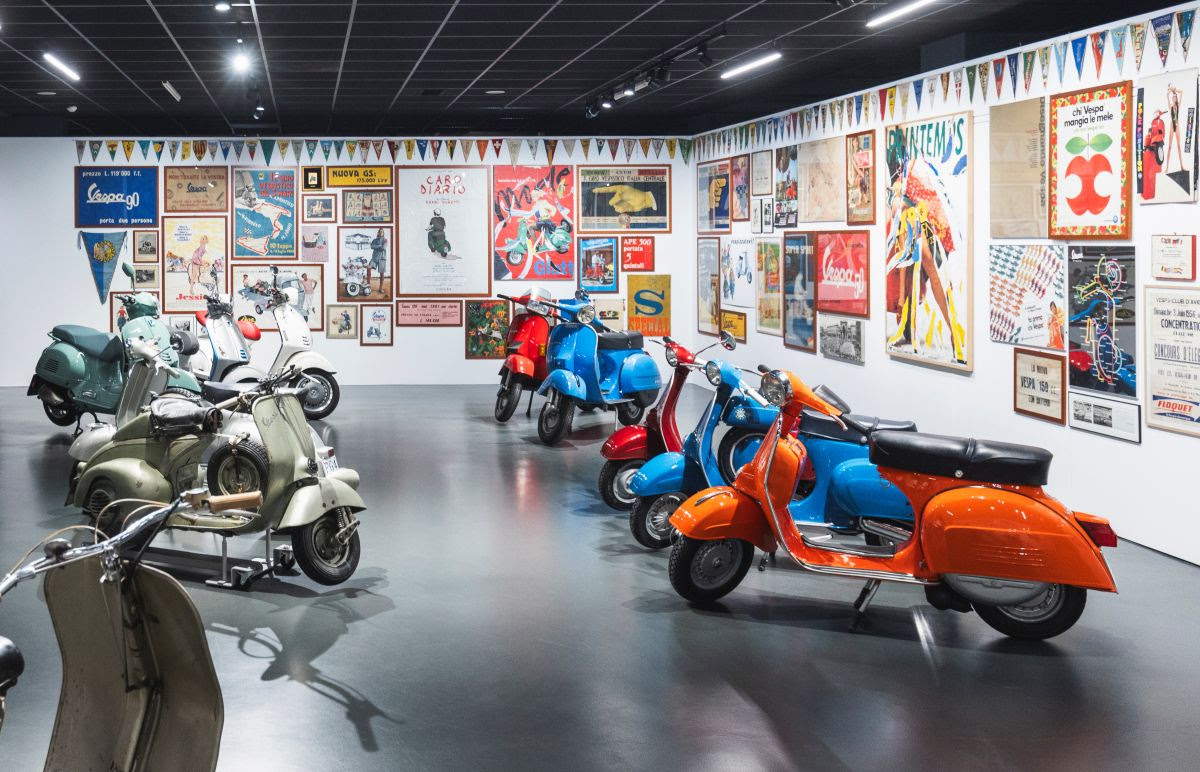
The origins of Fumagalli’s collection date back to the summer of 1991, when the future collector saw a Vespa 50 Special Revival in a supplement to the Corriere della Sera. His initial interest in the mechanical aspects gradually evolved into a systematic quest. After focusing on the vehicles themselves—and eventually bringing together all models intended for the Italian market as well as the corresponding versions produced for foreign markets—the collection expanded to include scale models, merchandise, promotional materials, magazines, advertising posters, and movie posters.
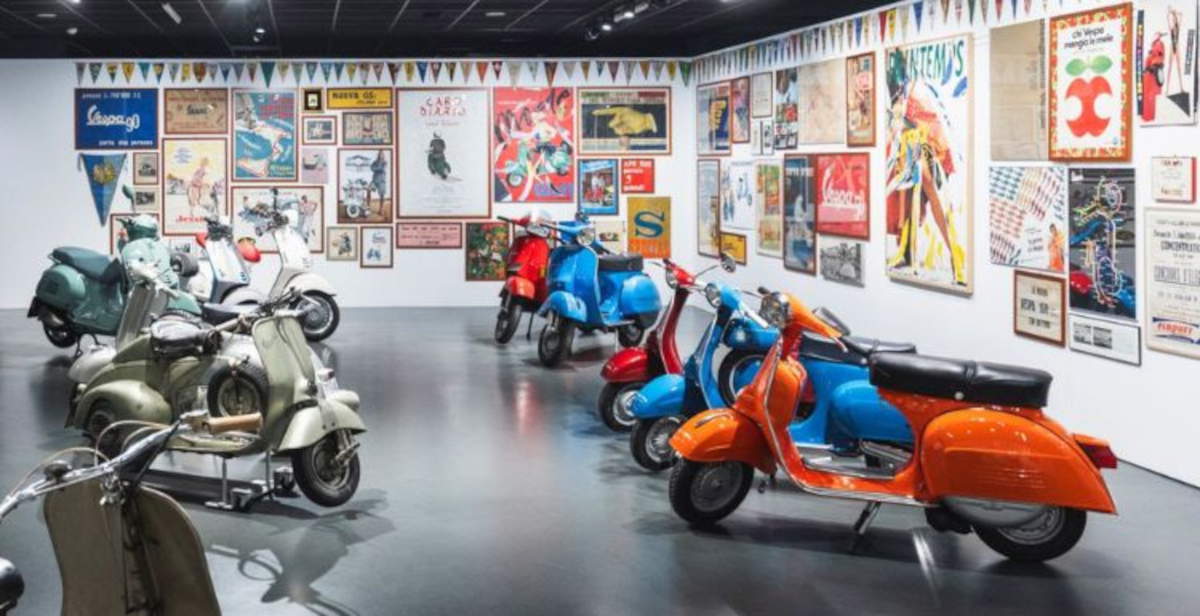
A central element of the exhibition is the display of fourteen Vespa models, organized into six thematic areas: The Beginnings, Success, The Revolution, The 1980s, A New Direction, and the Vespa Club of Italy. These sections guide visitors through the various stages of the vehicle’s evolution, in relation to the historical and cultural contexts that shaped its spread and transformation. The models on display include the Vespa 98 MP6L, Vespa V15T, Vespa 125 Sport, Vespa 125 V31T (“Roman Holiday”), Vespa 125 VN2T, Vespa 150 GS (VS3), Vespa 90 SS, Vespa 180 Rally, Vespa PX (first series), Vespa T5, Vespa 50 Revival, Vespa Elettrica, Vespa GTS 310 80th, and Vespa 946.
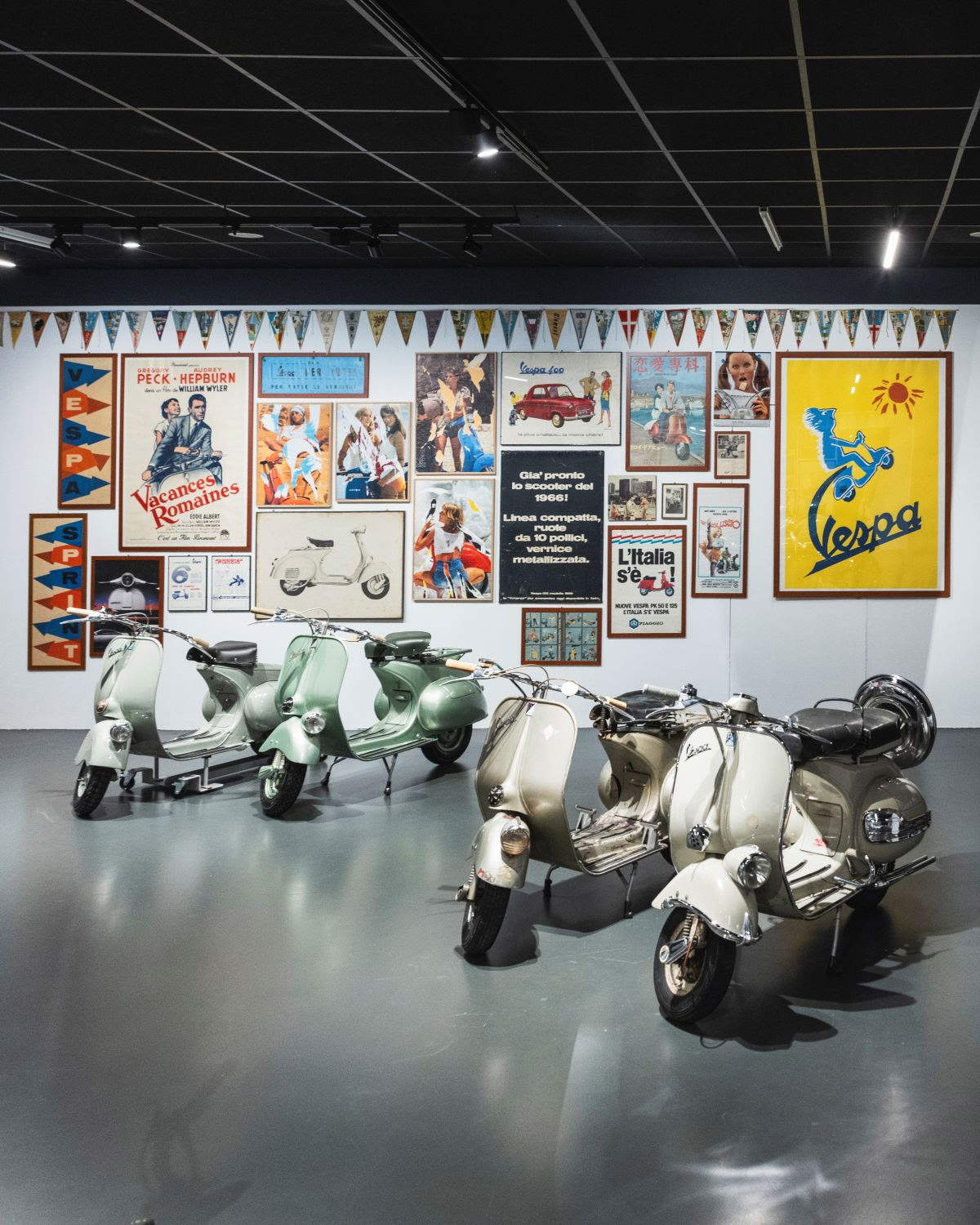
The exhibition design presents a reconstruction of a personal archive through a dense composition of images arranged on the walls. Within this context, the Vespa appears and reappears in different settings, taking the form of a visual atlas in which images, individual memory, and popular culture intertwine. The continuous reproduction of the subject highlights the desire to preserve its traces and organize them into a non-hierarchical whole, in which every element contributes to the construction of the collection. A specific section is dedicated to Mimmo Rotella, one of the leading figures in post-World War II Italian art and an artist who identified décollage as his distinctive artistic language. The exhibition features works that reinterpret the Vespa’s iconographic universe through superimpositions and references to visual memory. The artist’s works engage in a dialogue with photographs, posters, and advertising materials, offering a further perspective on the international spread of the Vespa’s image and its entry into the cultural and artistic imagination.
“For the Greeks, ‘mythos’ meant ‘to tell a story.’ What else embodies the memory of our people and is so deeply rooted in our culture, serving as a symbol of recognition and identity? A story, told through the Fumagalli Collection, spanning eighty years,” says Roberto Donati, Director of History and Culture at the Vespa Club d’Italia. “A common thread that has united at least three generations—so culturally diverse yet always in agreement on its charming practicality and its ability to set trends, win over hearts, and meet everyone’s expectations. Thank you, Vespa, for the dream you’ve given us!”
DISCOUNTED RATE for members of the Vespa Club Italia
Reduced-price ticket: 15 euros for the National Automobile Museum
Reduced-price ticket: 7 euros for the Fiat Historical Center
 |
| Eighty Years of Vespa: An Exhibition on the Birth of a Cultural Icon at MAUTO in Turin |

Warning: the translation into English of the original Italian article was created using automatic tools. We undertake to review all articles, but we do not guarantee the total absence of inaccuracies in the translation due to the program. You can find the original by clicking on the ITA button. If you find any mistake,please contact us.


























 IT
IT FR
FR DE
DE ES
ES CN
CN


