




by Redazione 25/06/2026



Categories: Exhibitions / Disclaimer
At the Capitoline Museums’ Centrale Montemartini, from June 26 to November 15, 2026, an exhibition from the Luce Cinecittà Archive explores Rome as the fashion capital between 1955 and 1975, featuring 150 photographs, film clips, garments, and documents spanning both the film industry and the fashion industry.
At the Capitoline Museums, Centrale Montemartini in Rome, from June 26 to November 15, 2026, the exhibition *Moda in Luce 1955–1975* – Rome Between Glamour and Industrial Innovation reconstructs the two-decade period during which the Italian capital played a central role in shaping the international fashion landscape. The project, curated by Fabiana Giacomotti and sponsored by Roma Capitale and the Capitoline Superintendence for Cultural Heritage, and organized by the Luce Cinecittà Archive in collaboration with the Ministry of Culture, is part of the museum programming by Zètema Progetto Cultura and represents the second chapter of a series that began with an exhibition dedicated to the origins of “Made in Italy.”
The initiative focuses on the period spanning the mid-1950s to the mid-1970s, a time when Rome became a hub for the cultural industry, film production, and the fashion world. The narrative draws on the holdingsof the Luce Historical Archive, recognized as one of the primary documentary sources of 20th-century Italian and European history and a heritage site protected at the international level. The exhibited material includes photographs, film footage, audiovisual documents, objects, and original garments.


The historical context reconstructed by the exhibition places Rome at the center of a structural transformation of postwar Italy. During the years of the economic boom, infrastructure development, the expansion of the professional sector, and rising consumer spending redefined the country’s social and productive fabric. Against this backdrop, cinema and fashion emerged as two closely interconnected sectors. Cinecittà became a hub for international productions, as the city gradually transformed into the center known as “Hollywood on the Tiber,” while Italian fashion evolved from an artisanal system into an industry recognized on global markets. This process involved tailors, ateliers, and fashion houses which, drawing on artisanal tradition and European training, gradually established themselves on the international stage. “Made in Italy” solidified its position as a distinct style, capable of competing with Parisian haute couture and redefining the relationship between clothing, image, and the cultural industry.
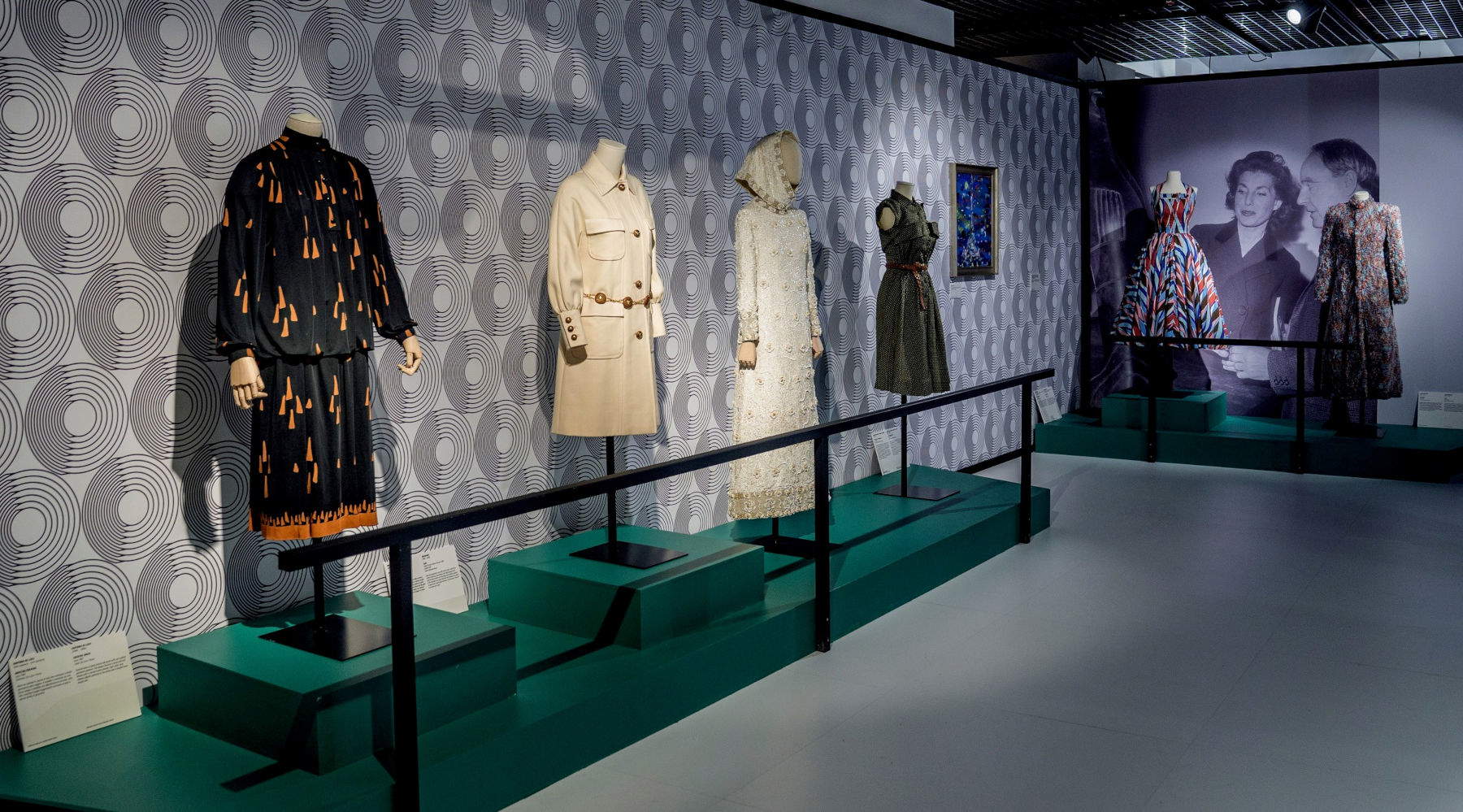
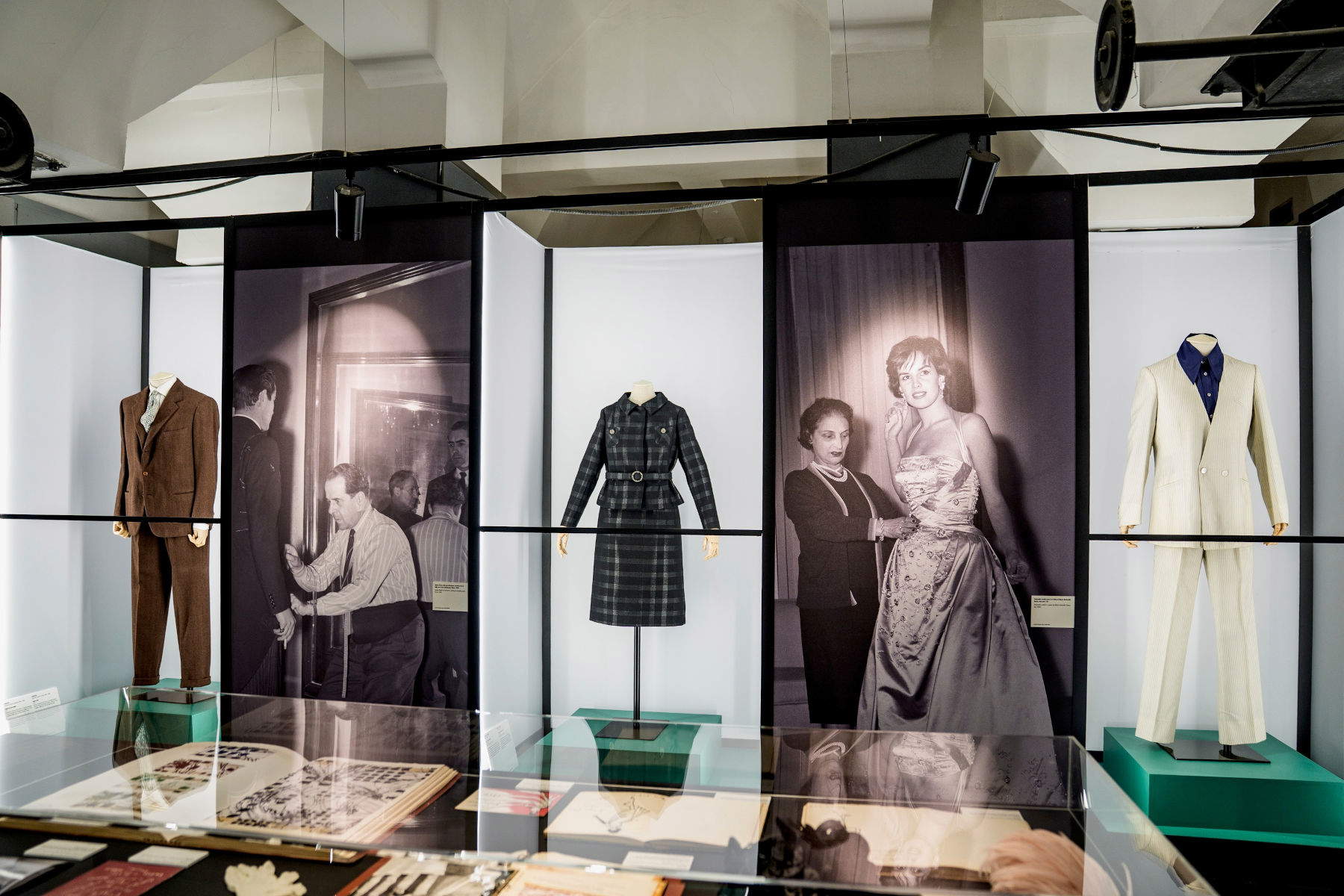
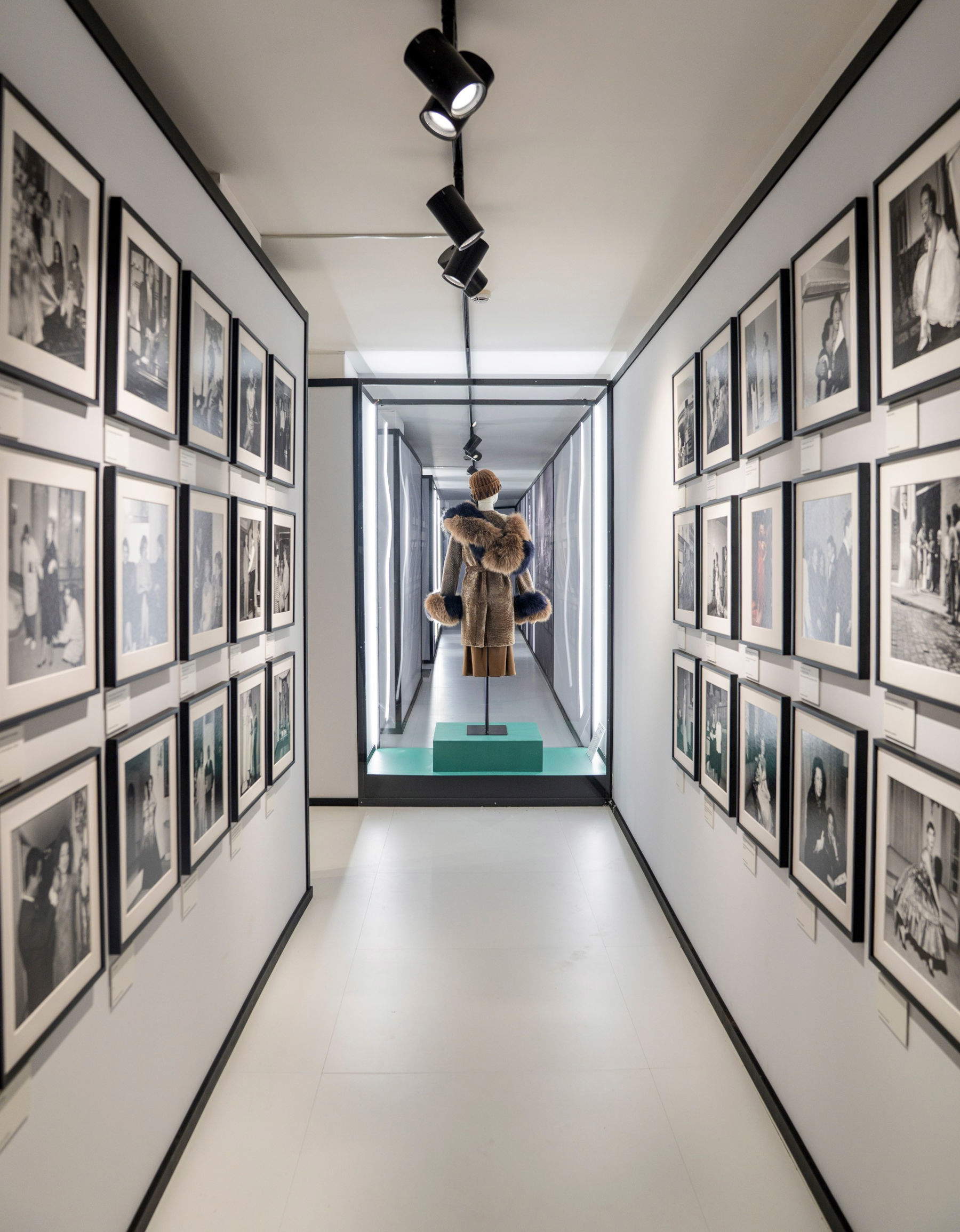
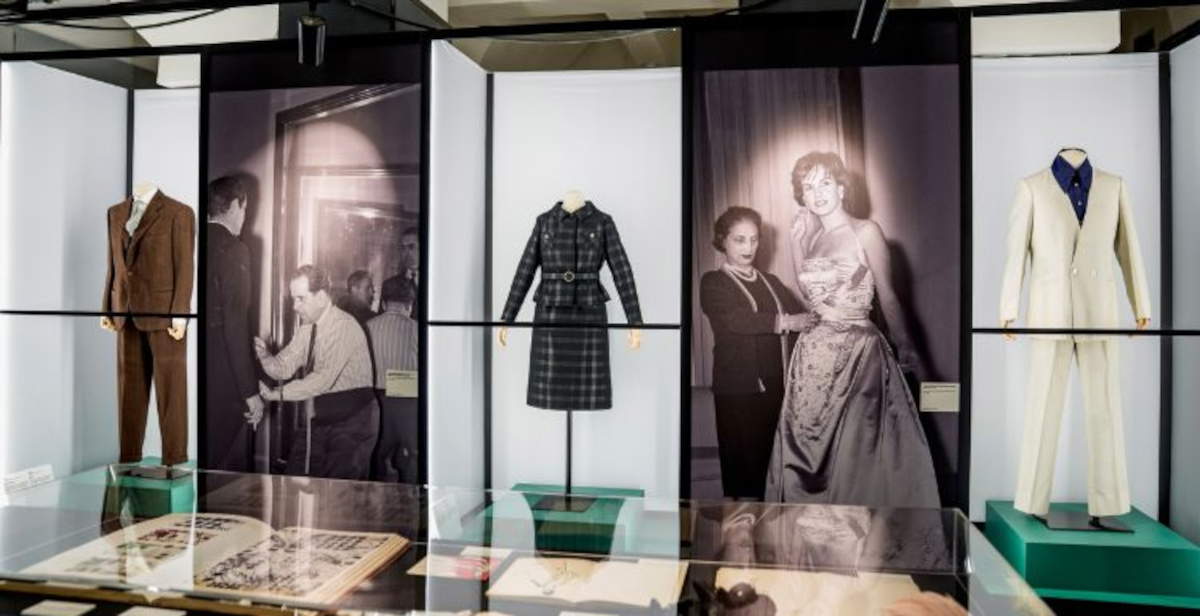
The exhibition features approximately 150 vintage photographs, five video installations with audiovisual material—some of which has never been seen before—documents, fabrics, and 27 original garments. The works come from the archives of historic fashion houses, museums, and private collections. Notable names include, among others, Valentino Garavani, Karl Lagerfeld for Fendi, Roberto Capucci, Fernanda Gattinoni, the Fontana Sisters, Irene Galitzine, Emilio Federico Schuberth, Renato Balestra, Pino Lancetti, Laura Biagiotti, Maria Antonelli, and André Laug.
A significant portion of the materials comes from archives such as Mantero Seta, Taroni, and Ermenegildo Zegna, as well as historic film costume houses like Farani and institutions such as the Boncompagni Ludovisi Museum and the CIAC—International Center for Arts and Costume in Venice. The exhibition also features items from the private collection of costume designer Massimo Cantini Parrini, which includes garments and documents related to the history of Italian and international film costumes.
The exhibition design, conceived by architect Dario Dalla Lana, recreates an atmosphere inspired by Roman costume workshops of the 1950s and 1960s. The exhibition concludes with a library room housing textile swatches, historical books and magazines, as well as archival materials and memorabilia. Among these is an album amicorum that belonged to Angelo Litrico, containing dedications and drawings by leading figures in fashion and art of the period.
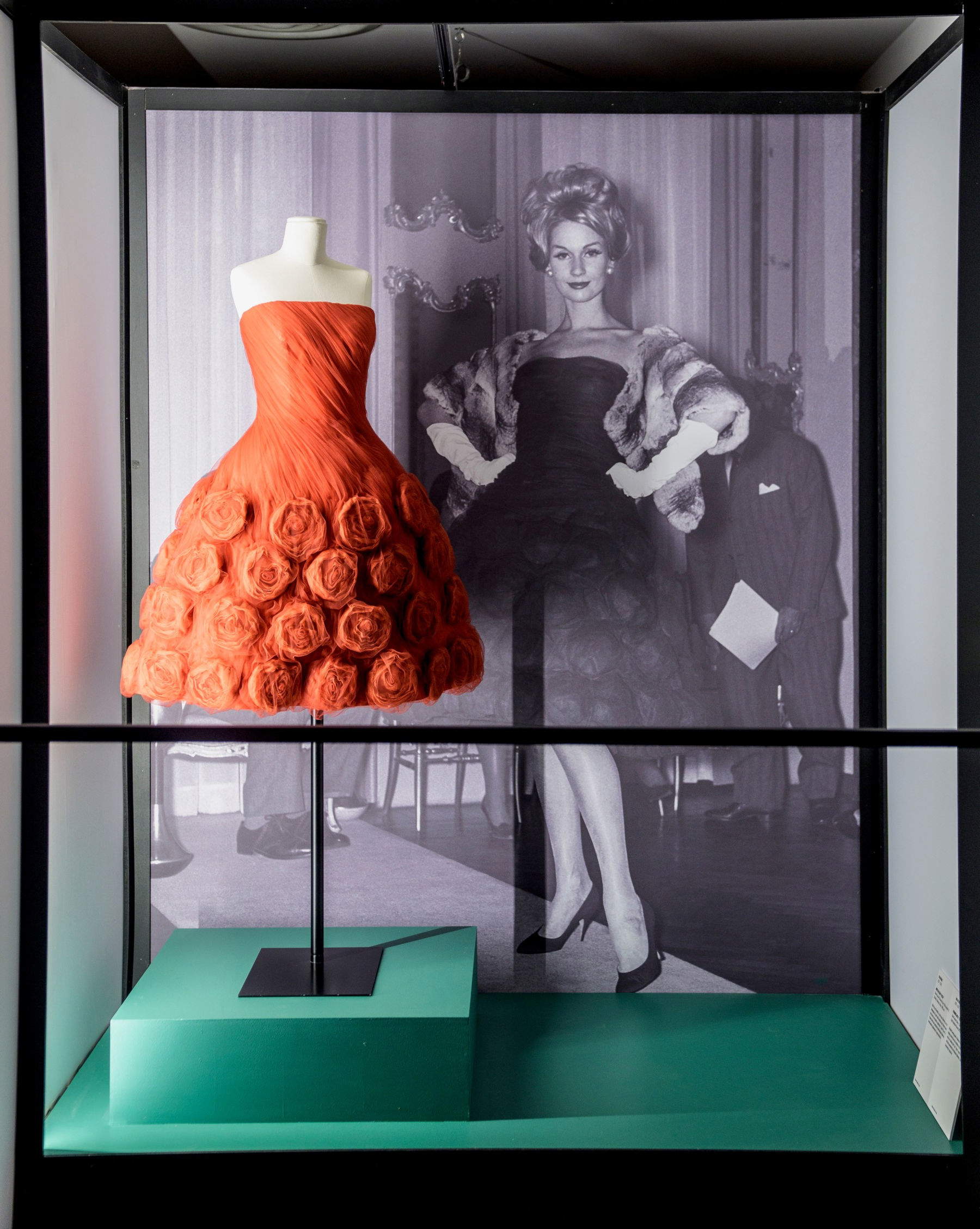
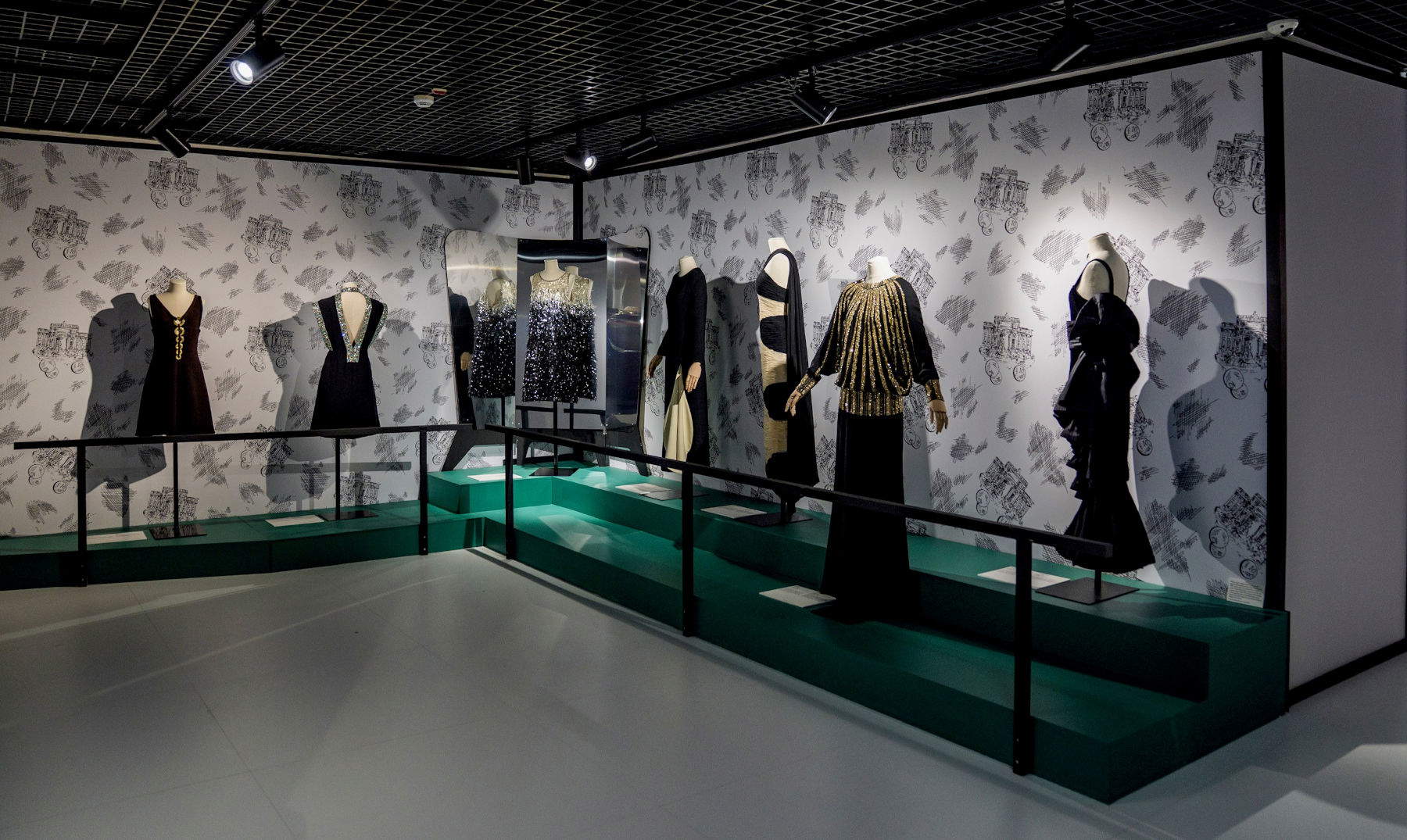
The exhibition’s narrative emphasizes the relationship between fashion and cinema as a defining element of the era’s collective imagination. Images from the Luce Archive document fashion shows, ateliers, photo reports, and social events, alongside figures from international cinema who contributed to shaping the capital’s visual myth. Among the recurring names are Sophia Loren, Audrey Hepburn, Elizabeth Taylor, Ingrid Bergman, Anna Magnani, Anita Ekberg, Kirk Douglas, Sean Connery, and other stars of the international film industry who frequented Rome and Cinecittà.
The exhibition highlights key moments in the creation of that cultural imagery, such as Valentino Garavani’s first fashion show in 1959, the wedding of Tyrone Power and Linda Christian in 1949—often cited as a symbolic moment marking the beginning of the “Dolce Vita” era—and Federico Fellini’s film *La dolce vita*, released in 1960. The film helped cement a new international perception of the city. The relationship between costume design and cinema also emerged through collaborations between costume designers and film productions. Fernanda Gattinoni designed costumes for *War and Peace*, while Irene Galitzine introduced the “pigiama palazzo,” which was later adopted by the international film industry as well. The Fontana Sisters established themselves in the Roman and international fashion scene, dressing actresses and leading figures in the entertainment industry.
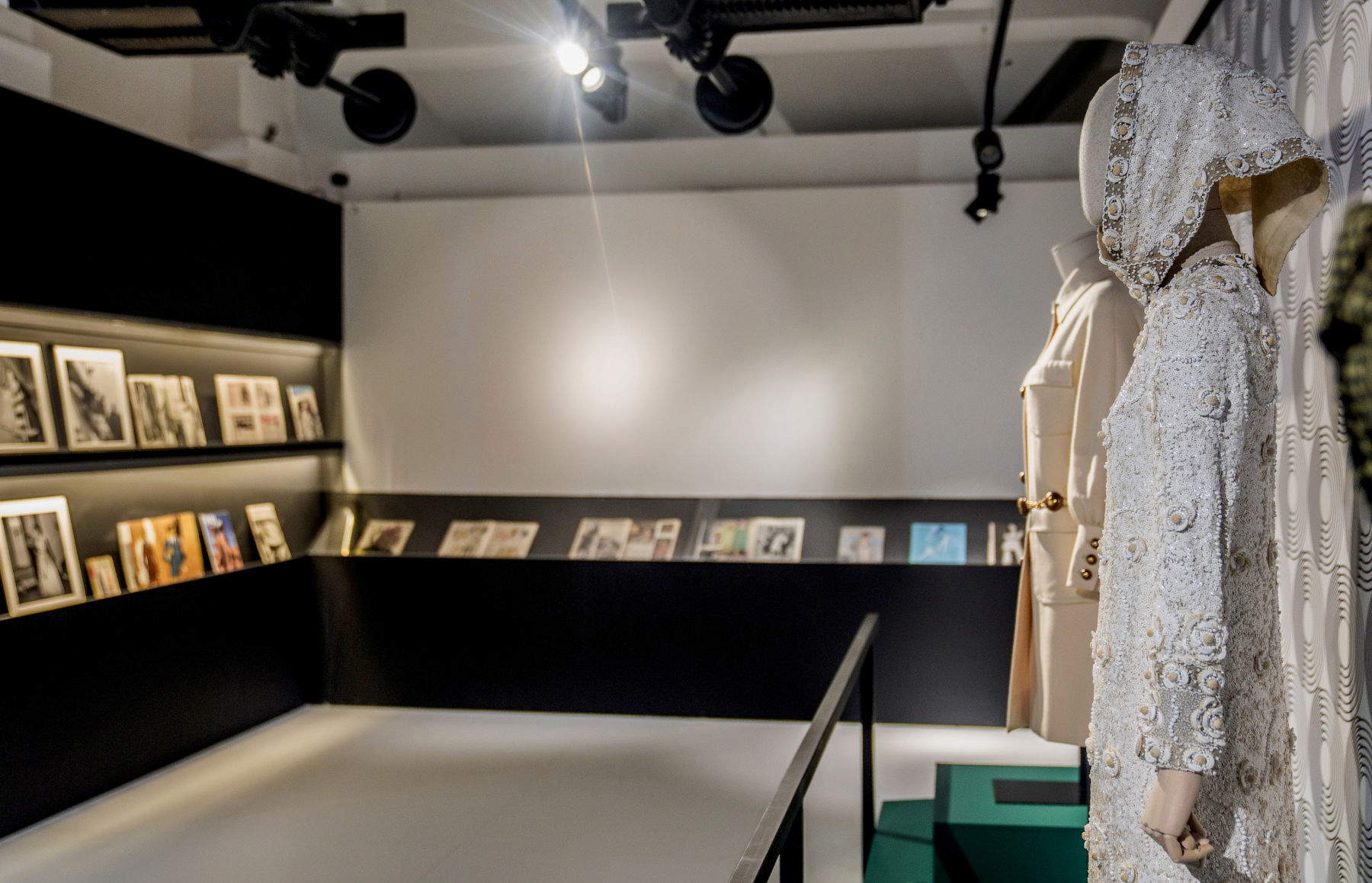
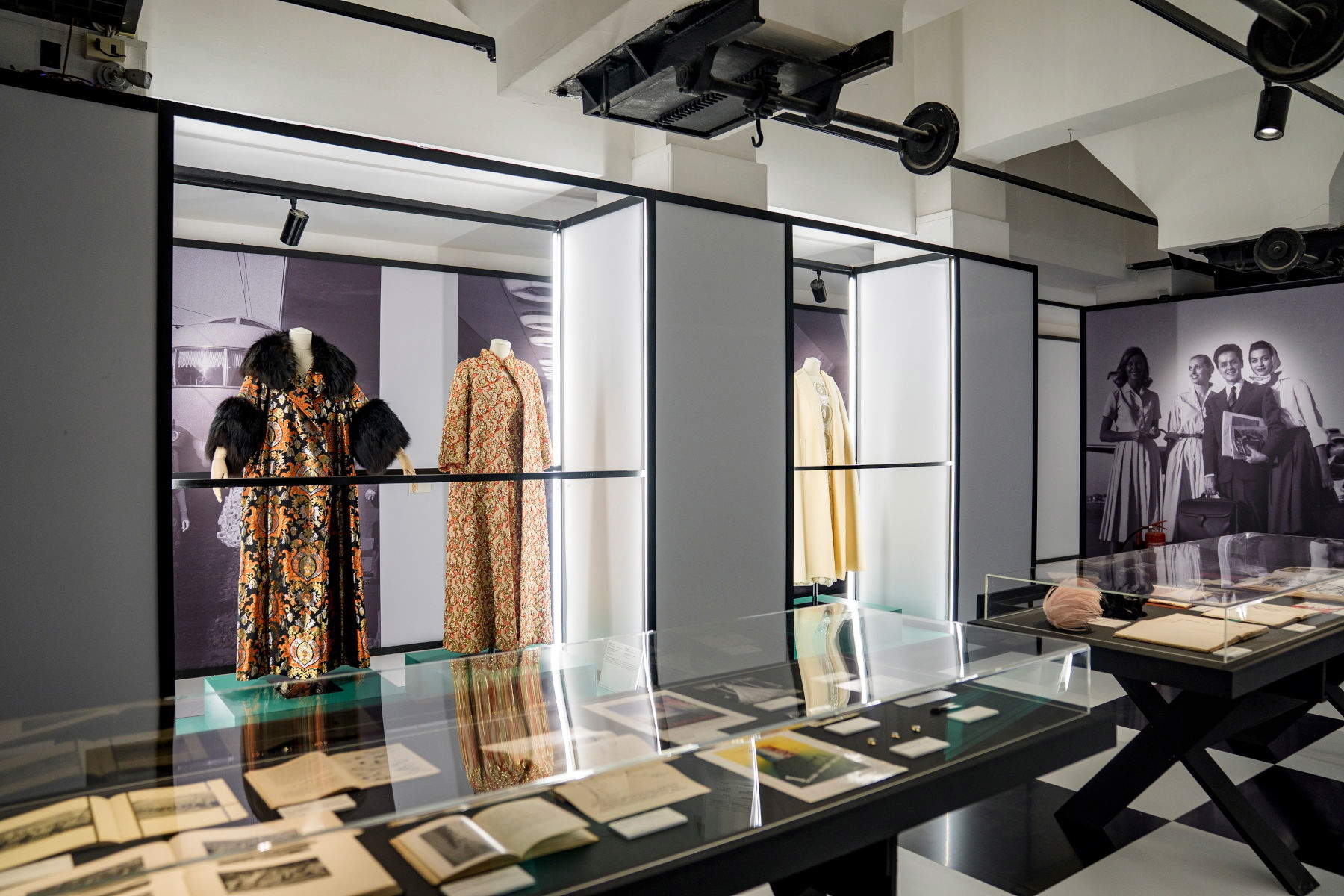
The exhibition also explores the social evolution of fashion. Italian fashion of the period, while maintaining a high-end, bespoke aesthetic, introduced elements of greater mobility and functionality. Clothing gradually transformed into a tool compatible with industrial modernity and new models of urban life. At the same time, prêt-à-porter developed, expanding the reach of fashion beyond traditional elites.
A specific section explores the industrial and social dimensions of the textile industry, with a focus on Snia-Viscosa, a manufacturing company that stands as one of the most significant examples of Italy’s industrial transformation linked to synthetic materials and new production chains. The exhibition documents aspects related to production, women’s labor, and the political dimension of the textile industry.
A second in-depth section is dedicated to Palma Bucarelli, director of the National Gallery of Modern Art, considered one of the key figures in the dialogue between the visual arts and fashion in the post-World War II era. Her role is analyzed in relation to the development of a shared aesthetic language between cultural institutions and the fashion industry. The exhibition also highlights the role of the city of Rome as a cultural infrastructure. Public spaces, streets, and architecture become backdrops integrated into the narrative of fashion and cinema. The city functions as a visual and productive mechanism, capable of absorbing and revitalizing the aesthetic and social transformations of the period.
The selection of garments includes pieces considered representative of the period’s sartorial production, such as Valentino Garavani’s 1959 “Fiesta” model, Galitzine’s 1963 palazzo pajamas, the coated-fabric jumpsuit presented in Capri in 1967, the 1953 cocktail dress by Sorelle Fontana, creations by Roberto Capucci, pieces by André Laug and Karl Lagerfeld for Fendi, as well as works by Schuberth and Lancetti. Alongside these, the men’s tailoring of Caraceni and Litrico helped define a model of masculine elegance that also gained international recognition. The exhibition is aimed at a broad audience, including both those who directly experienced the period in question and younger generations interested in the processes of transformation within the fashion system and cultural industries. The exhibition catalog is published by Silvana Editoriale and edited by Fabiana Giacomotti, who also oversaw the exhibition’s curatorial concept.
Practical Information
Single ticket including admission to the Museum and the exhibition for non-residents:
€14.50 full price
€10.00 (reduced rate).
Hours: Daily 9:00 a.m.–7:00 p.m. Last admission one hour before closing. Closed on Mondays
 |
| Fashion in the Spotlight, 1955–1975, in Rome: The “Made in Italy” Boom in Cinema and Industry |
Warning: the translation into English of the original Italian article was created using automatic tools. We undertake to review all articles, but we do not guarantee the total absence of inaccuracies in the translation due to the program. You can find the original by clicking on the ITA button. If you find any mistake,please contact us.