





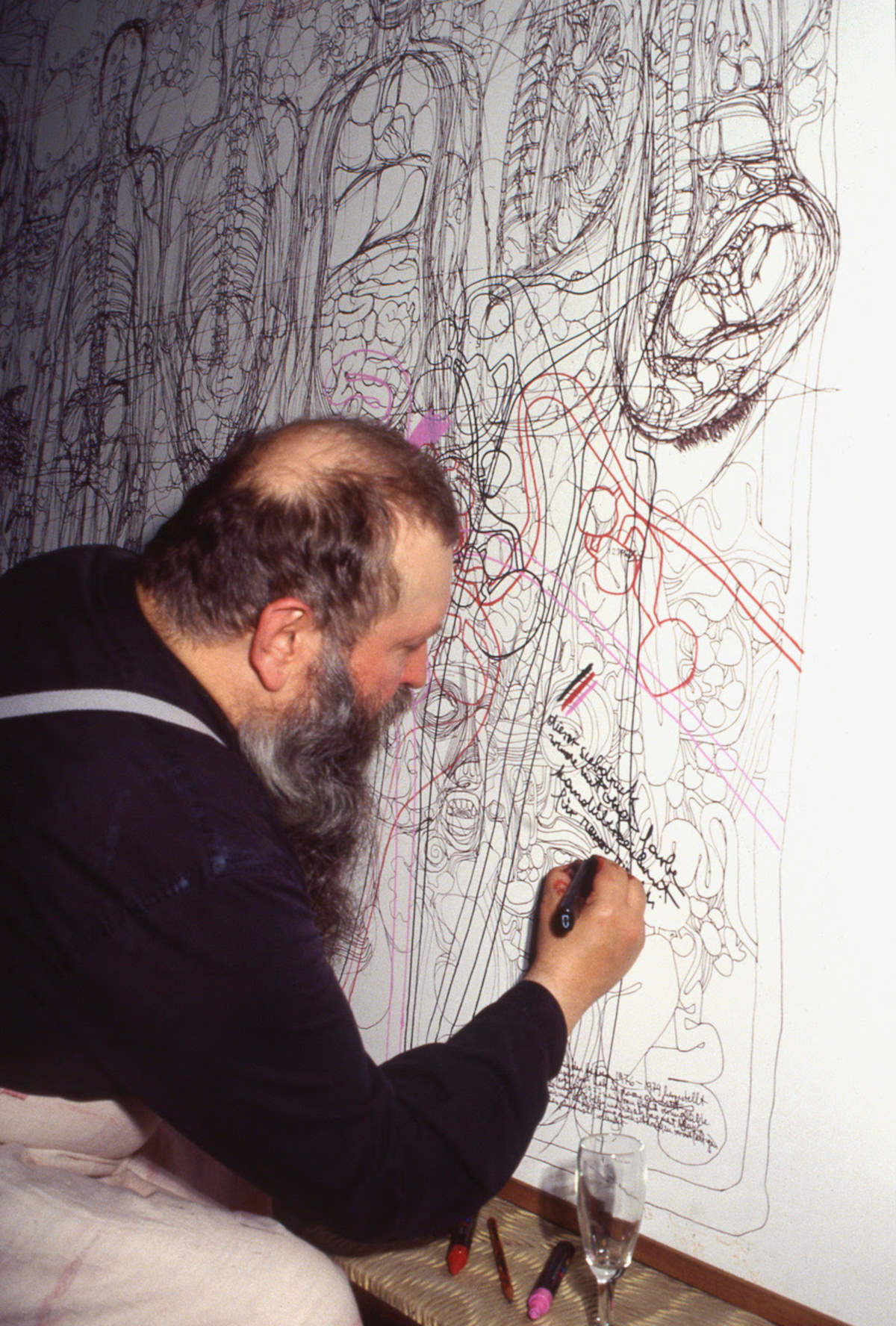
From September 27, 2026, to January 10, 2027, La Crescentina – Laboratorio per l’Arte in Fubine Monferrato, in the province of Alessandria, will host “Hermann Nitsch: Action and Thought,” an exhibition dedicated to one of the foundersof Viennese Actionism. The exhibition is curated by Marzia Capannolo, with critical commentary by Lóránd Hegyi and in collaboration with the Galleria Umberto Benappi in Turin. The opening is scheduled for Sunday, September 27, at 4 p.m.
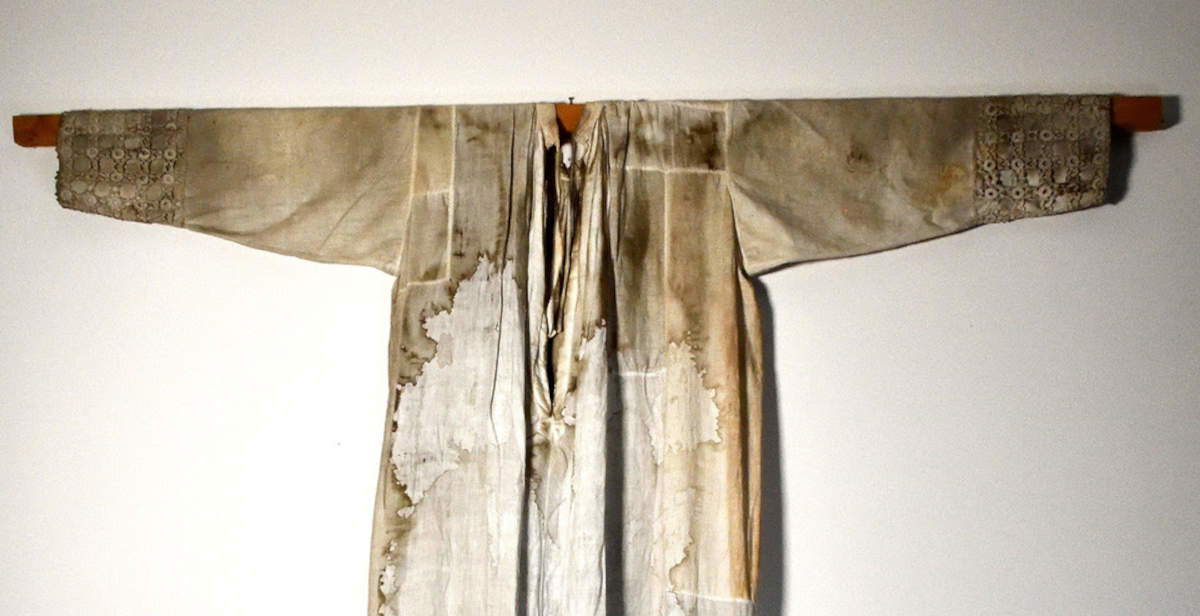
The exhibition brings together about twenty works, including large canvases, works on paper, and a ritual tunic from 1973, *Chorhemd aus der 41. Aktion, Prinzendorf*, accompanied by a selection of historical photographs taken by Fabrizio Garghetti during some of Nitsch’s famous performance actions. The project focuses in particular on the pictorial and chromatic dimensions of the Austrian artist’s work, relating his performative practice to the progressively central role assumed by color and material.
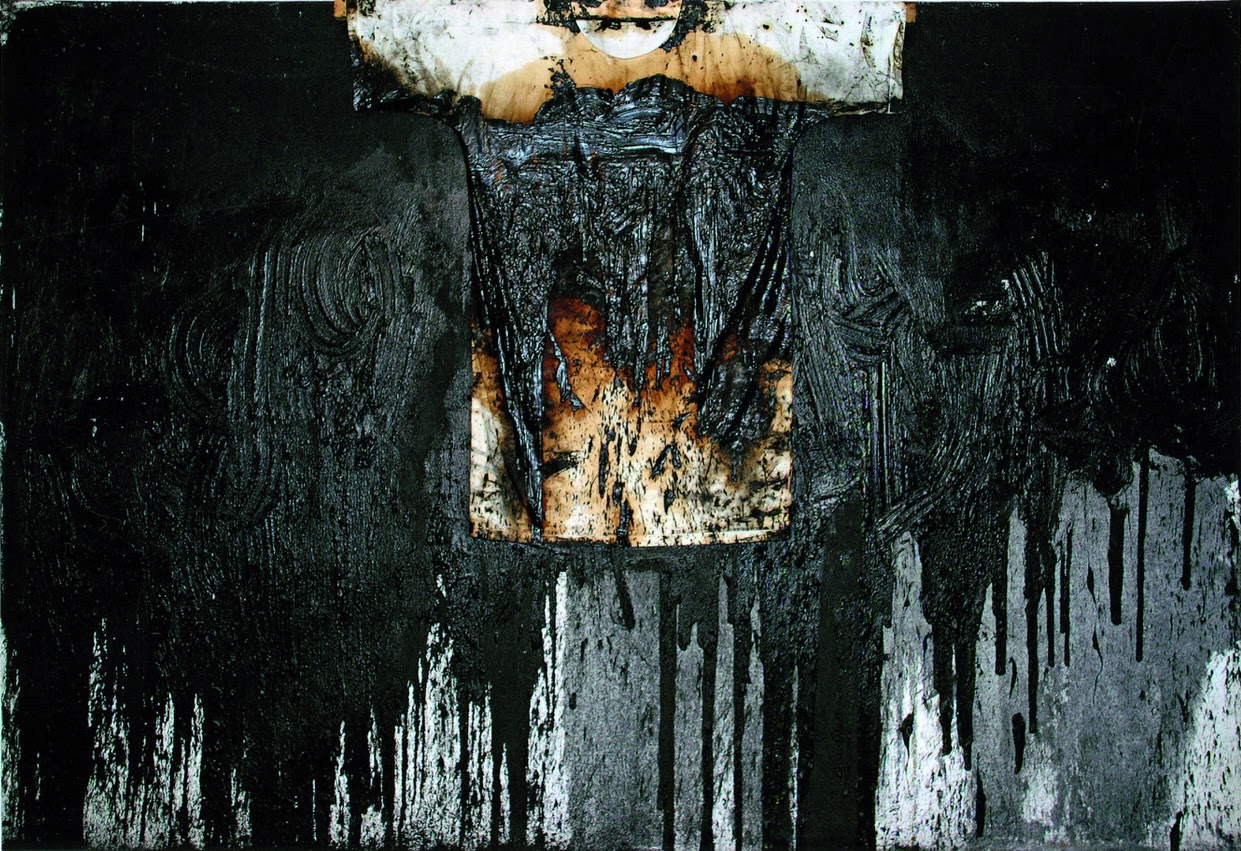
At the heart of Nitsch’s work lies the Theater of Orgies and Mysteries, conceived as a total work of art in which the audience is not merely a spectator but participates in a secular liturgy. Blood, flesh, and color are employed in a symbolic and material sense to connect the memory of Dionysian myths, Christian sacrifice, and psychoanalytic catharsis. It is within this context that the Schüttbilder are situated—paintings created by pouring and spreading red pigment onto the canvas, in which the chromatic surface retains the tangible trace of the action.
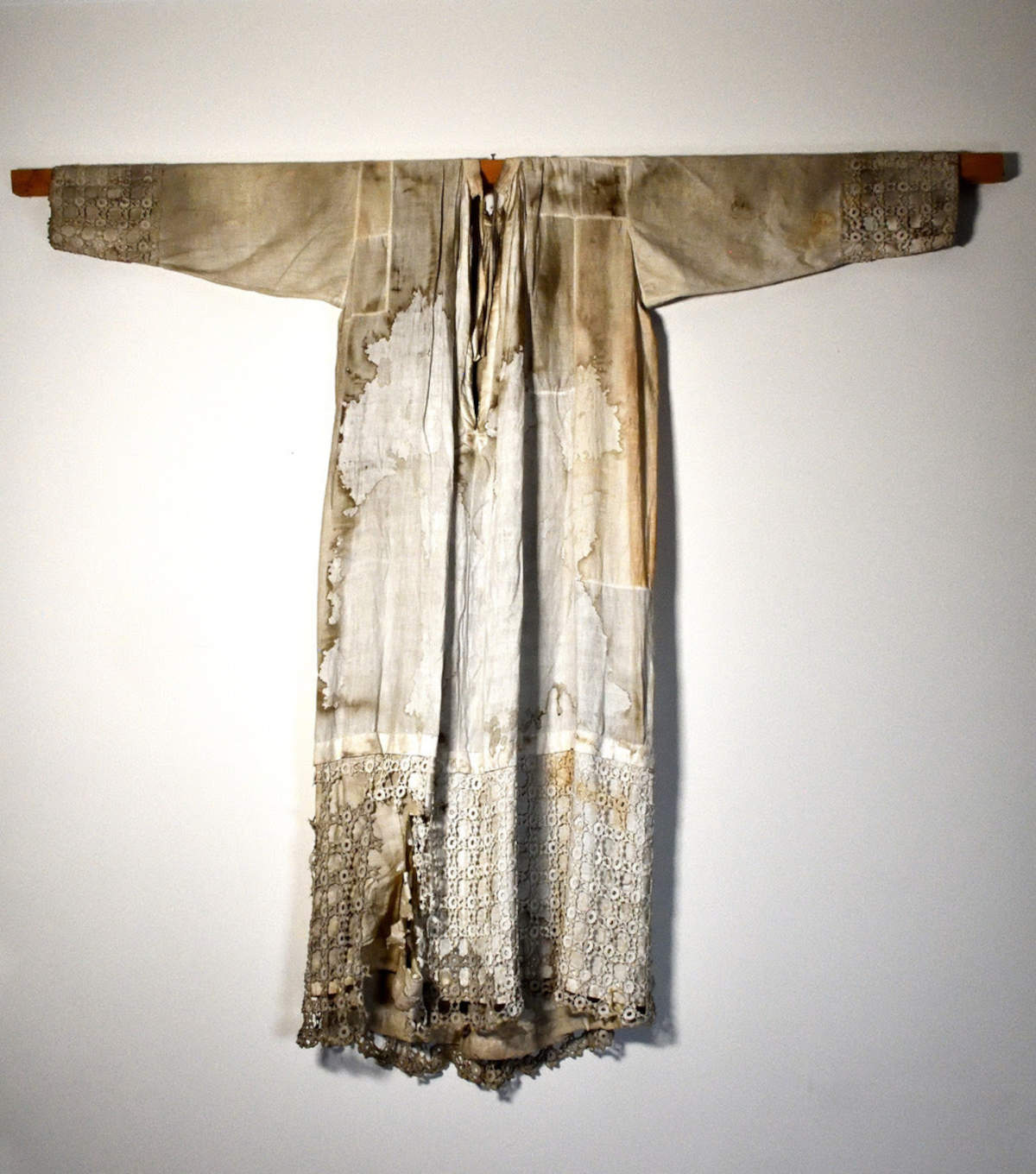
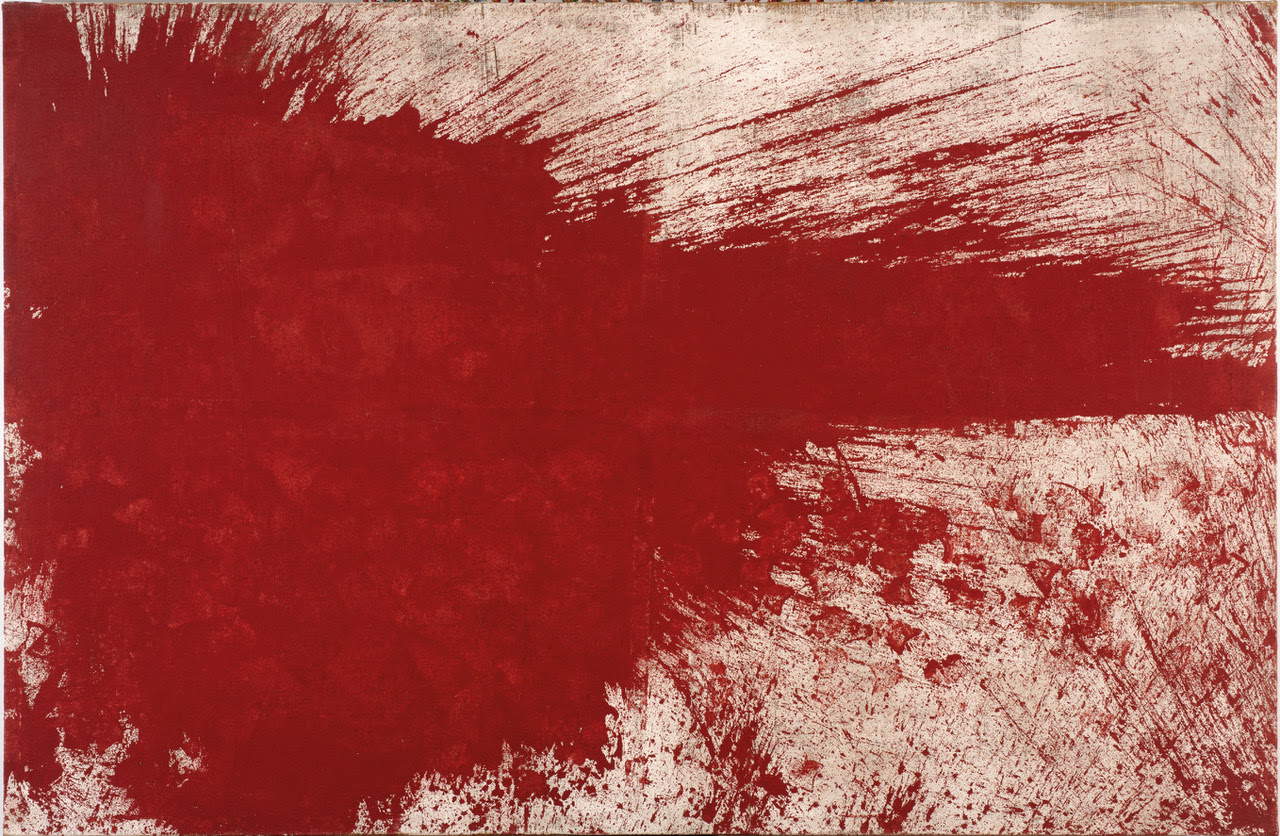
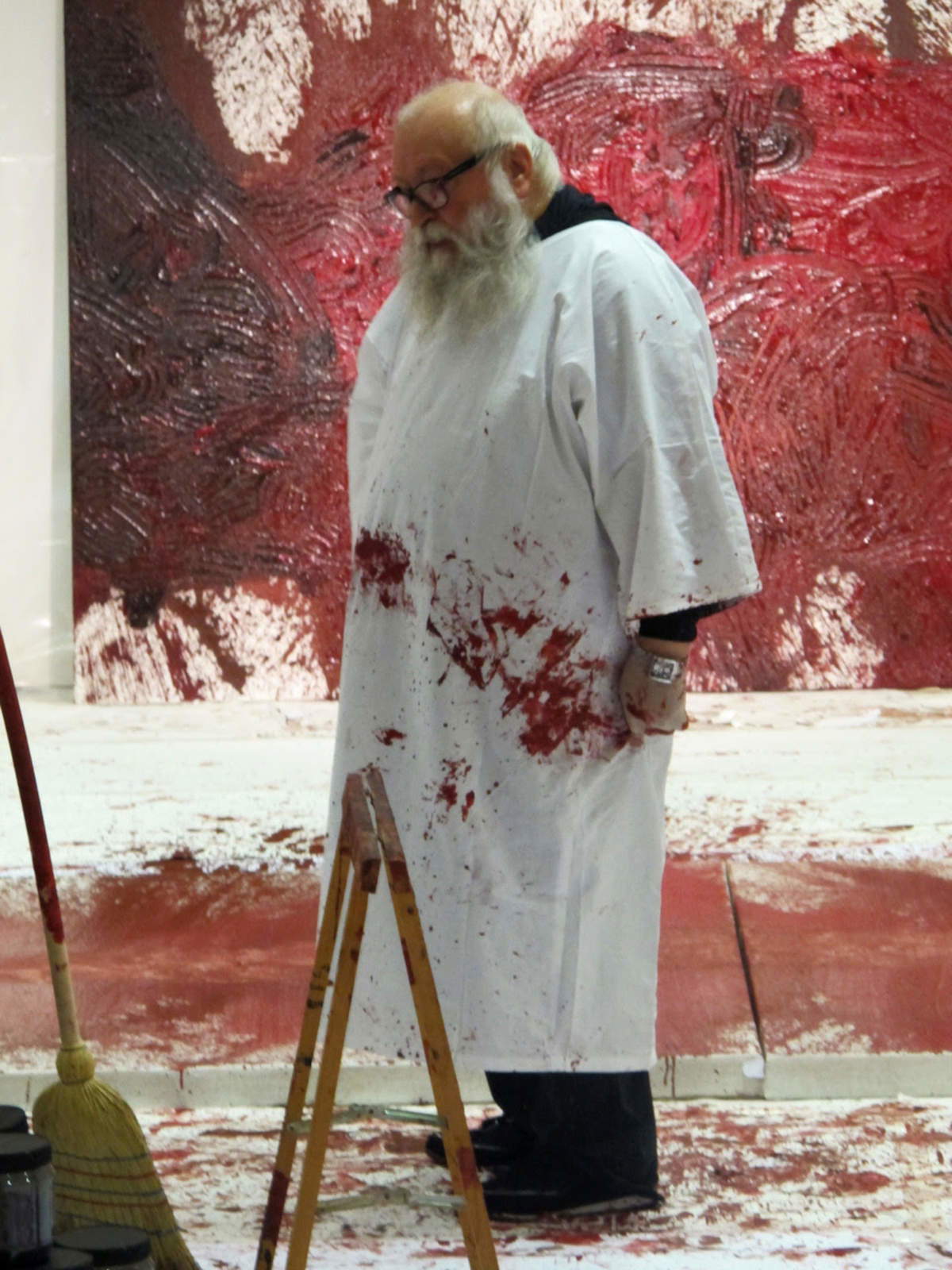
The 1973 tunic constitutes one of the central focal points of the exhibition. Considered a direct testimony and relic of the sacred action, it presents the bloodstain as a visual substance and serves, within the exhibition’s narrative, as a sort of conceptual bridge to Nitsch’s pictorial language. It is flanked by two large canvases, both three meters wide: the 1984 *Pittura dell’Orgien Mysterien Theater* and the 1997 *Schüttbild *. In these works, the performative urgency gives way to the organization of color and the monumentality of the gestural application.
Another reference to the artist’s mature painting style is the 2002 Untitled canvas, characterized by a mixture of dark green and blood-red paint applied directly to the surface. The rhythmic gesture of the action is translated here into a painterly practice with an almost sculptural dimension. The works on paper also play a significant role in the artist’s development, demonstrating with particular immediacy the methods of pouring and spreading the pigment.
Among the works on paper is *Untitled* (2007), acrylic on canvas-backed paper measuring 100 x 212 centimeters, in which blues, greens, yellows, and reds form a vast chromatic surface. Also on display is *Schüttbild auf Papier* (2002), oil on paper, 100 x 122 centimeters, in which a stream of red contrasts with the transparency of the background, highlighting the relationship between the density of the material, light, and the application of paint.
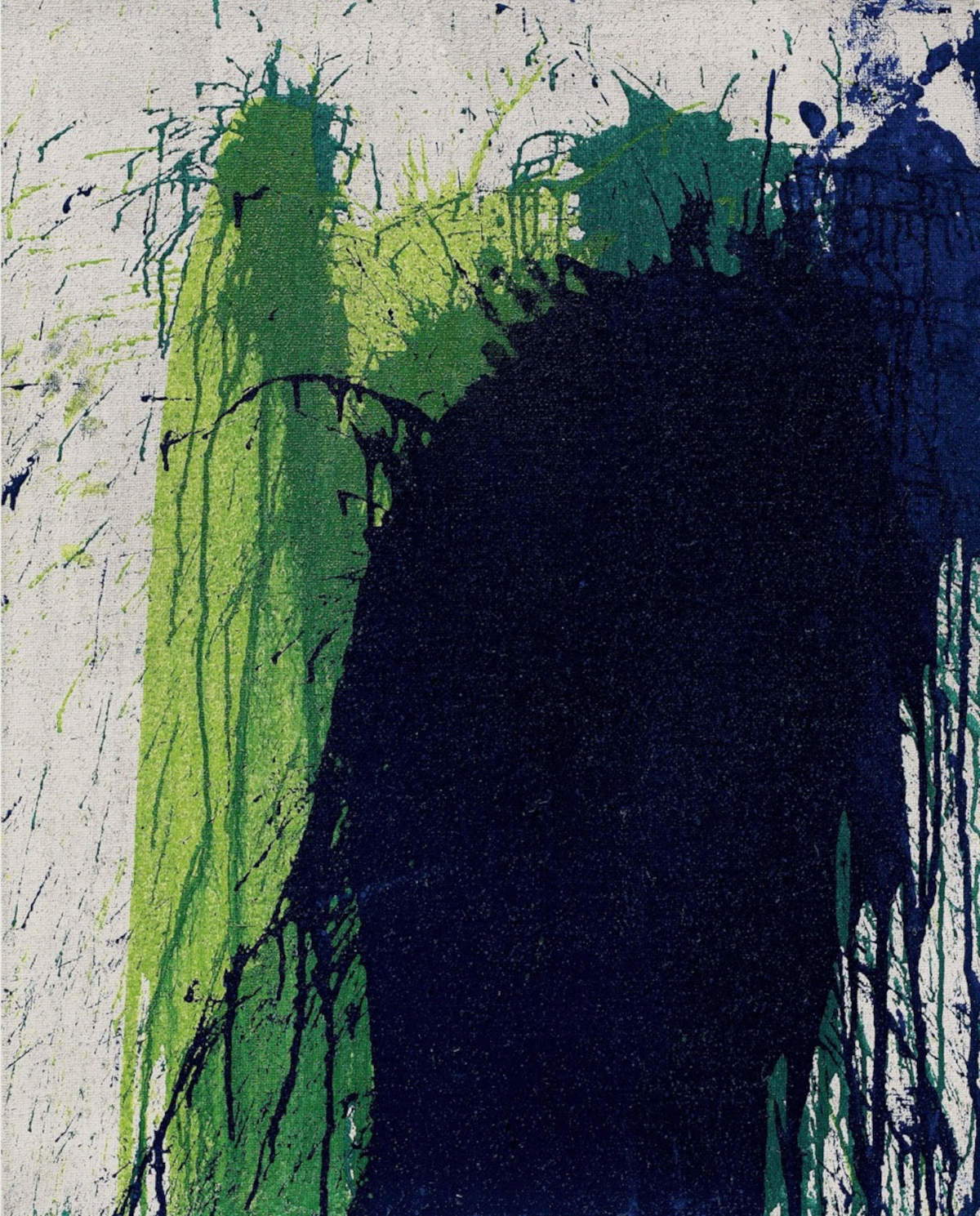
The exhibition also establishes a direct connection with the Monferrato region, linking Nitsch’s artistic exploration to the geological and chromatic characteristics of the countryside surrounding La Crescentina. The red associated with Viennese Actionism is juxtaposed with the brown hues, calcareous marls, and iron-rich sediments of the hills, whose soil and sedimentary rocks also exhibit a distinctive gray-blue color—the result of millennia of stratification of clays, silt, and limestone.
From this perspective, the Theater of Orgies and Mysteries is reimagined, shifting from an exclusively performative dimension to that of the landscape. While in Nitsch’s work the human body constitutes the site of the ritual, in Monferrato it is the land that is interpreted as a body, cyclically subjected to intervention and transformation through agricultural labor. The canvases and papers thus become surfaces on which gesture, material, and color are related to the surrounding landscape and to peasant culture. The exhibition therefore presents “earthiness” as a central element of Nitsch’s practice, establishing a connection between the materiality of the works and that of the territory hosting the exhibition. La Crescentina thus becomes the context in which the artist’s language is reinterpreted through its relationship with nature and with the material dimension of the landscape.
 |
| Hermann Nitsch: When Painting Becomes Matter—An Exhibition in Monferrato |

Warning: the translation into English of the original Italian article was created using automatic tools. We undertake to review all articles, but we do not guarantee the total absence of inaccuracies in the translation due to the program. You can find the original by clicking on the ITA button. If you find any mistake,please contact us.



















 IT
IT FR
FR DE
DE ES
ES CN
CN


