





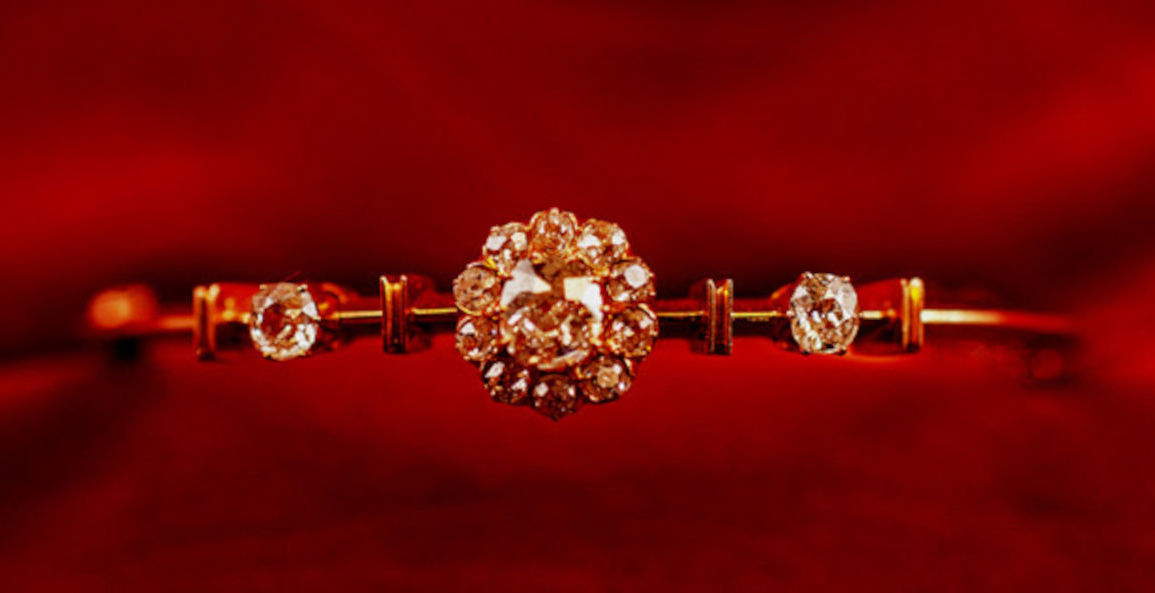
From July 19 to October 25, 2026, the “Gian Giacomo Galletti” Civic Museums in Palazzo San Francesco, Casa De Rodis in Domodossola, and the Vecchio Municipio Cultural Center in Santa Maria Maggiore (Verbano-Cusio-Ossola) will host the exhibition “Ornamenta. “Treasures of Elegance and Identity in Ossola,” a project promoted and organized by the Municipality of Domodossola to explore the region’s aesthetic sensibilities at the turn of the 19th and 20th centuries through an exhibition featuring objects, works of art, clothing, and accessories.
Curated by Federico Troletti, curator of the Domodossola Civic Museums, the exhibition is presented in partnership with the Angela Paola Ruminelli Foundation and in collaboration with the Municipality of Santa Maria Maggiore, the Poscio Collection, and the Domodossola Pro Loco. The opening is scheduled for Saturday, July 18, at 4:00 p.m. in the Mellerio Chapel in Domodossola.
The project stems from the Civic Museums’ research and efforts to promote the cultural heritage of the Ossola region, with the aim of exploring the ethnographic, commercial, and artistic ties that have contributed to the development of a distinctive local concept of elegance. The exhibition spans three locations in the region, each with its own distinct identity: Domodossola, featuring Palazzo San Francesco and Casa De Rodis; and Santa Maria Maggiore, the heart of the Vigezzo Valley, historically known as the “Valley of the Painters” due to the presence of numerous artists.
“Ornamenta” offers a comprehensive exploration through three key themes: faces, jewelry, and textiles. The exhibition brings together artifacts crafted in Ossola or by Ossolan artisans using various artistic techniques, alongside paintings, photographs, and documents, providing a snapshot of local society and, in particular, women’s fashion.
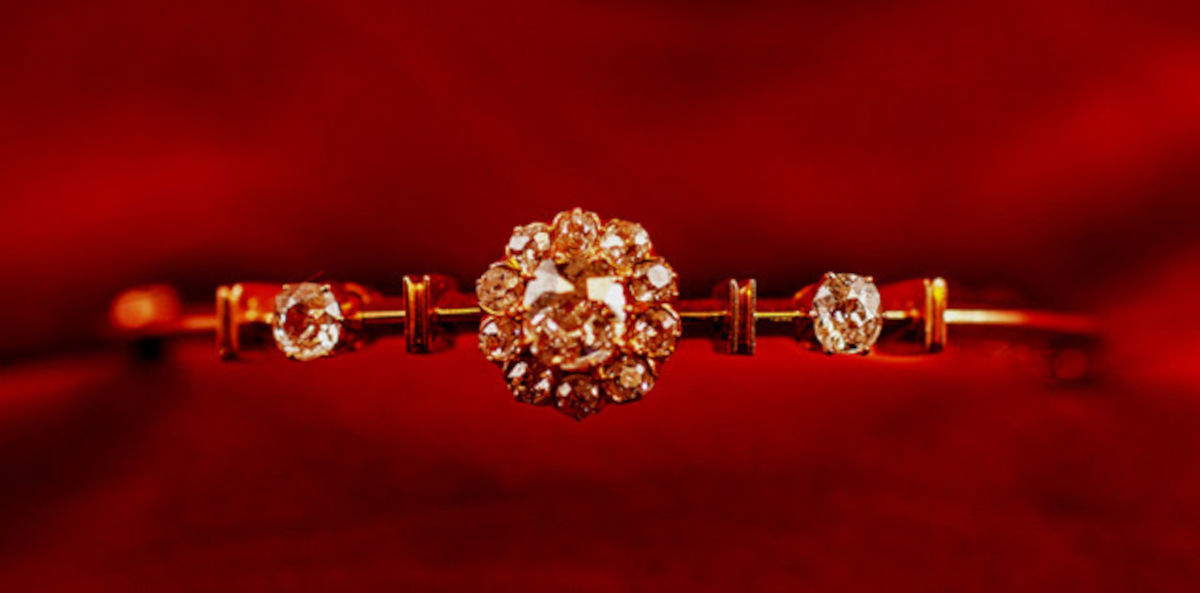
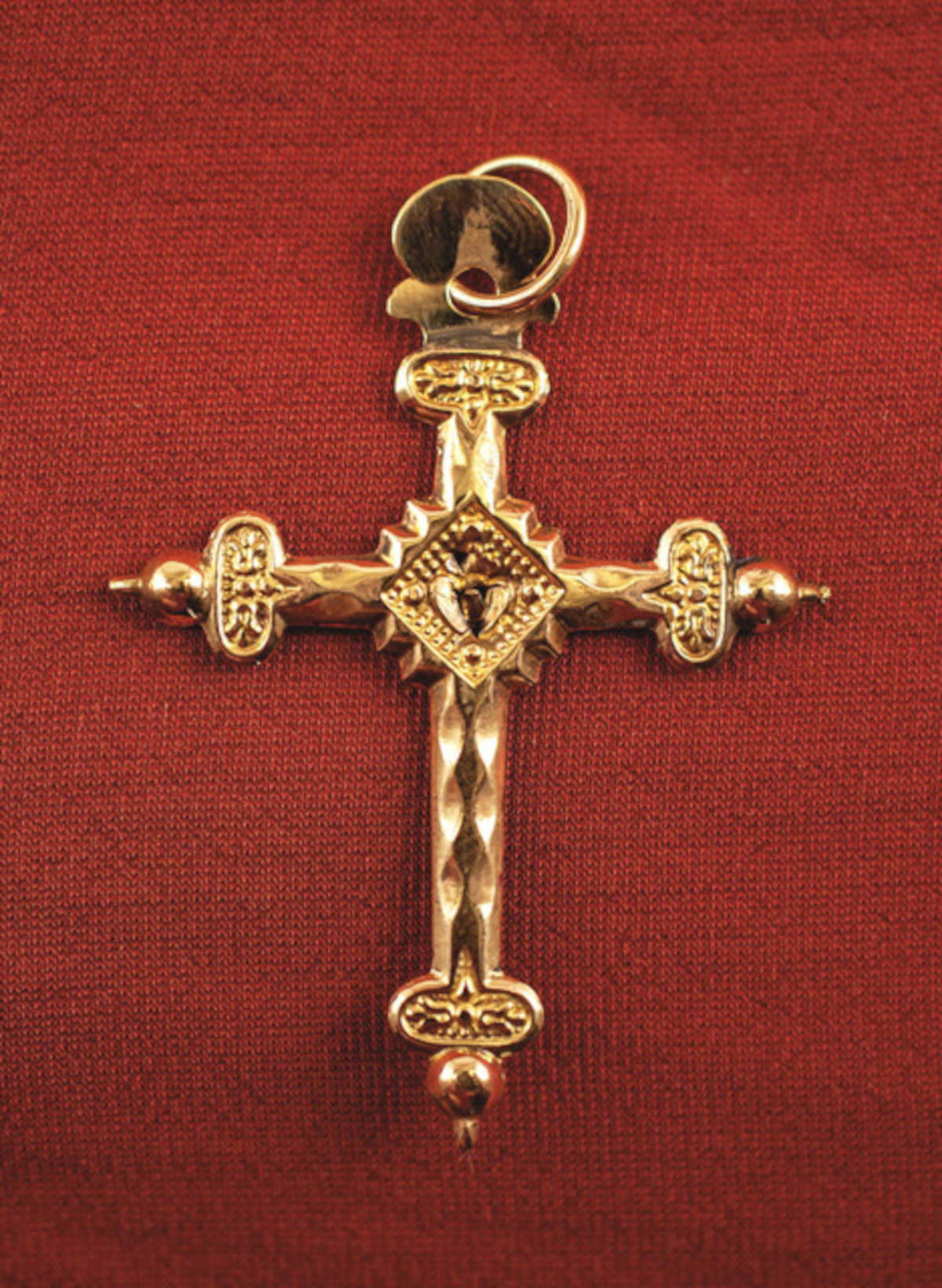
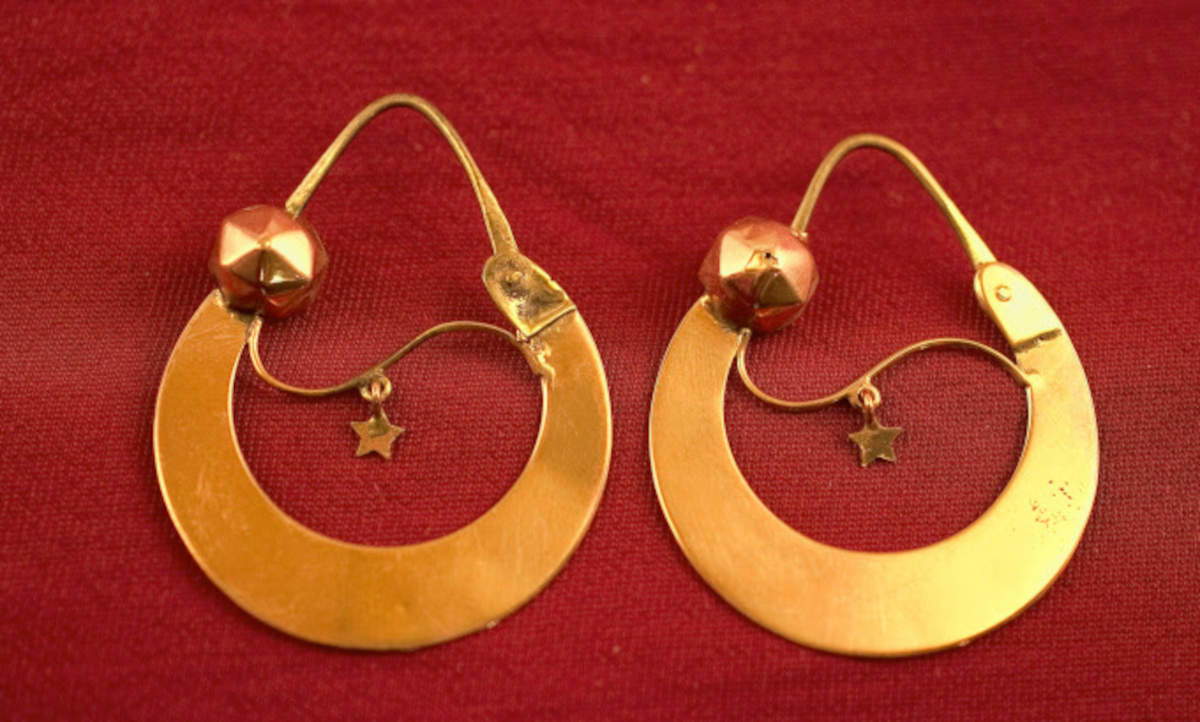
The first section, housed at Palazzo San Francesco, explores the Ossola goldsmithing tradition and its relationship with the international scene. On display are works, tools, and materials linked to several important local artisanal enterprises, including the Parisian house Mellerio dits Meller, the Ponti Gennari firm in Geneva, and the Nicolaj Factory in Masera—all of which were established in part thanks to the emigration of Ossolan jewelers across the border.
The exhibition features several items symbolic of local identity, such as garnet necklaces, “dorini,” the “croce à la Jeannette,” Ossola earrings, the “mulèta,” and the “Spilla Margherita,” which are juxtaposed, whenever possible, with contemporary paintings in which these same objects are depicted. Alongside the jewelry are plaster models, original and previously unpublished preparatory drawings, and tools used in goldsmithing. The narrative is rounded out with clothing, hats, fabrics, shoe buckles, breeches buckles, and belt buckles, fabric molds, and mannequins produced in the late 19th century.
Following this in-depth exploration of festive attire, the exhibition continues at Casa De Rodis with a section curated by the Poscio Collection dedicated toworkwear and the everyday life of women. Here, the theme of elegance gives way to a depiction of domestic and rural life, through a dialogue between painting and photography.
The core of the exhibition consists of works from the Vigezzo painting movement preserved in the Poscio Collection and other private collections. Carlo Fornara’s canvases depict farm work through light and movement; those by Enrico Cavalli portray figures engaged in daily activities; while Lorenzo Peretti’s portraits and Gheduzzi’s scenes of mountain life document a community observed in its most ordinary moments: from tending to animals to carrying a gerla, from sewing to caring for children.
Rounding out this section are several reproductions of historical images from the Rossetti Valentini School of Fine Arts Foundation in Santa Maria Maggiore, which complement the artistic vision with direct evidence of the customs and habits of life in the Vigezzo Valley.
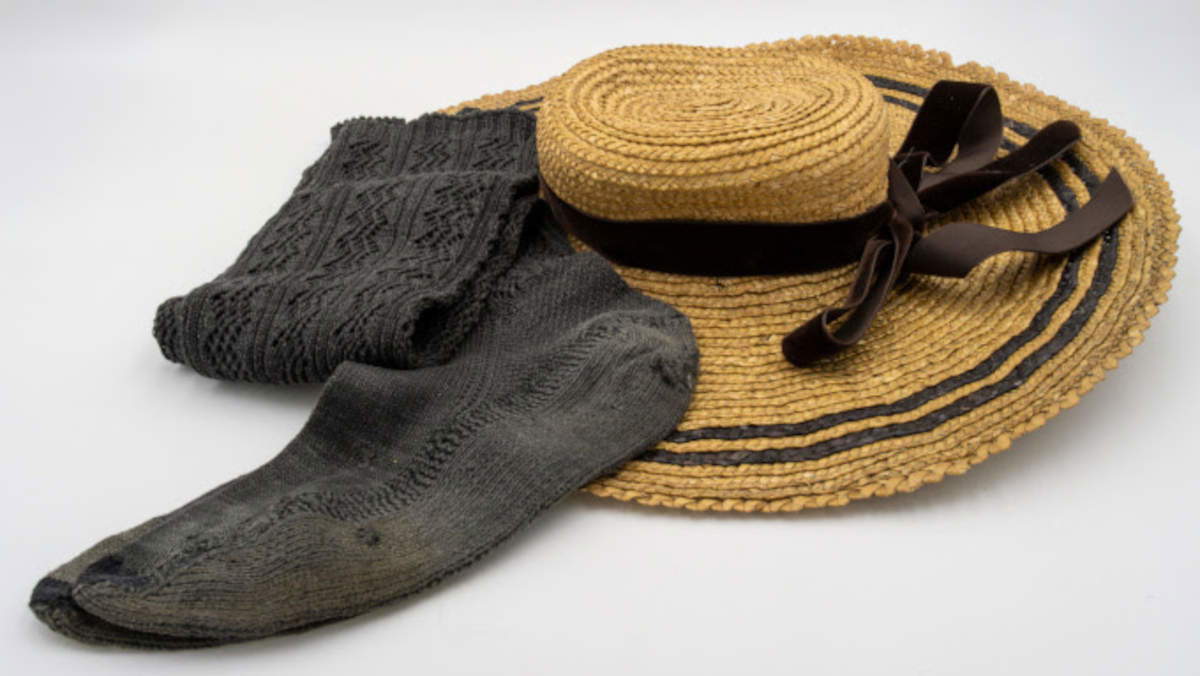
The final stop of the exhibition, hosted in Santa Maria Maggiore, explores the relationship between what is visible and what remains hidden in clothing, through the concept of “above” and “below.” Clothing is analyzed alongside undergarments and accessories that completed a person’s appearance: headwear, scarves, hairstyles, shoes, and boots. These elements served not only practical or decorative functions but could also indicate age, marital status, community affiliation, and social standing.
Some of the works on display come from the collection of textiles and embroidery presented at the 1911 Turin Exhibition. These are pieces produced by the “Ossulae Domestica Ars” embroidery school, gathered for the Turin exhibition and preserved to this day. The works constitute a compendium of traditional Ossola decorations and various textile techniques.
The exhibition is accompanied by a catalog published by Sagep Editori, the result of research conducted in parallel with the exhibition. Scholars from various disciplines contributed to the volume: Silvia Malaguzzi, an art historian specializing in jewelry, analyzes the relationship between Ossola jewelry and the French region; Cinzia Oliva and Gian Luca Bovenzi explore textiles and lace; Enrico Rizzi and Gian Vittorio Moro reconstruct, through archival documents, the region’s artistic and commercial exchanges; Paola Caretti examines goldsmith workshops and traditional costumes.
Among the contributors is Olivier Mellerio, a representative of the historic Parisian jewelry house Mellerio, who contributed to the catalog as a tribute to his family’s Vigezzo origins.
“The identity of the Val d’Ossola is defined through a close visual and material dialogue between local communities and Alpine culture,” says curator Federico Troletti. “The exhibition aims to explore the region not merely as a geographical entity, but as a living archive in which traditional goldsmithing, the history of costume, and portraiture converge through a single, compelling interpretive lens.”
 |
| Jewelry, Clothing, and Identity: An Exhibition in Domodossola Showcases Ossola’s Elegance from the Late 19th to the Early 20th Century |

Warning: the translation into English of the original Italian article was created using automatic tools. We undertake to review all articles, but we do not guarantee the total absence of inaccuracies in the translation due to the program. You can find the original by clicking on the ITA button. If you find any mistake,please contact us.
























 IT
IT FR
FR DE
DE ES
ES CN
CN


