





From September 20 to October 25 , 2026 , PALAZZOIRREALE, a contemporary art center promoted in Canelli (Asti) by the Bosca Foundation, presents *Frammenti di durata*, an exhibition by Ludovica Carbotta and Jacopo Benassi, curated by Maria Chiara Valacchi. The exhibition will open on Sunday, September 20, at 11:00 a.m. with an invitation-only opening, while the public opening is scheduled for the same day at 3:00 p.m. The press preview will take place on Thursday, September 17, at 12:00 p.m., with shuttle services organized from Milan and Turin.
PALAZZOIRREALE was founded in 2024 on the initiative of the Bosca sparkling wine house, based on an idea by Polina Bosca, and is part of the Bosca ETS Foundation’s program as a center dedicated to contemporary art. For this new exhibition, the curatorial approach brings together two artists from different generations and artistic languages, united by their interest in the artwork as an open-ended process subject to transformation over time.
Ludovica Carbotta, born in Turin in 1982 and featured in international contexts such as the Venice Biennale and the Fundació Joan Miró, develops a body of work centered on the relationships between the individual and space, analyzing the ways in which places are constructed, perceived, and inhabited. Jacopo Benassi, born in La Spezia in 1970, has exhibited at institutions such as the Tate Modern, the Palais de Tokyo, the Fondation Vincent van Gogh, and the Palazzo Reale in Genoa. His practice spans photography, performance, and music, drawing on the interplay between different forms of expression.
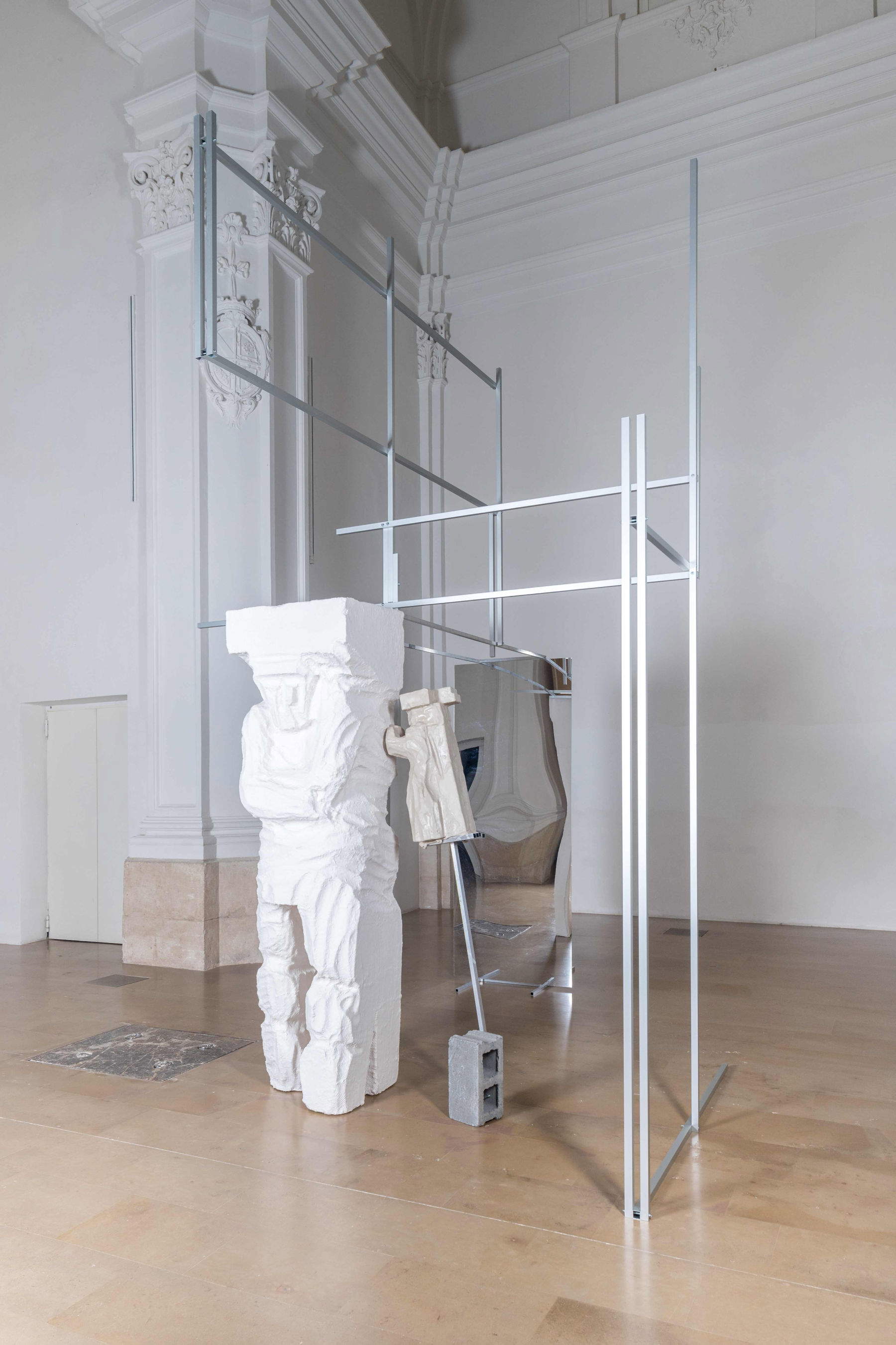
The centerpiece of the exhibition is Ludovica Carbotta’s new installation *Die Telamonen*, consisting of three sculptures conceived specifically for the spaces of PALAZZOIRREALE. The works, situated both indoors and outdoors in the historic Art Nouveau villa on Via Bosca in Canelli, draw inspiration from the Telamons of mythological and architectural tradition and establish a specific dialogue with the spaces that host them. The project is part of the artist’s exploration of the urban landscape as a space of negotiation between humans and nature—a context in which the two dimensions influence one another while maintaining their own identities.
The sculptures are made of polystyrene, resin, and aluminum and feature a deliberately primal texture. While in classical tradition the Telamons are anthropomorphic figures intended to support buildings and architectural structures, in Carbotta’s reinterpretation they take on a different function, becoming symbols of connection. The works evoke both members of the Bosca family and the grapevine, an element closely linked to the company’s history and identity.
Among the works on display is* Fausto Telamon* (2020–2026), a site-specific installation created for the villa’s historic pergola. A large white sculpture is integrated into the existing structure, transforming into a new supporting element designed to house a grapevine planted specifically for the project. The work is conceived as an evolving organism, in which the plant’s growth and the passage of time form an integral part of the artistic work, making the temporal dimension a material element of the installation.
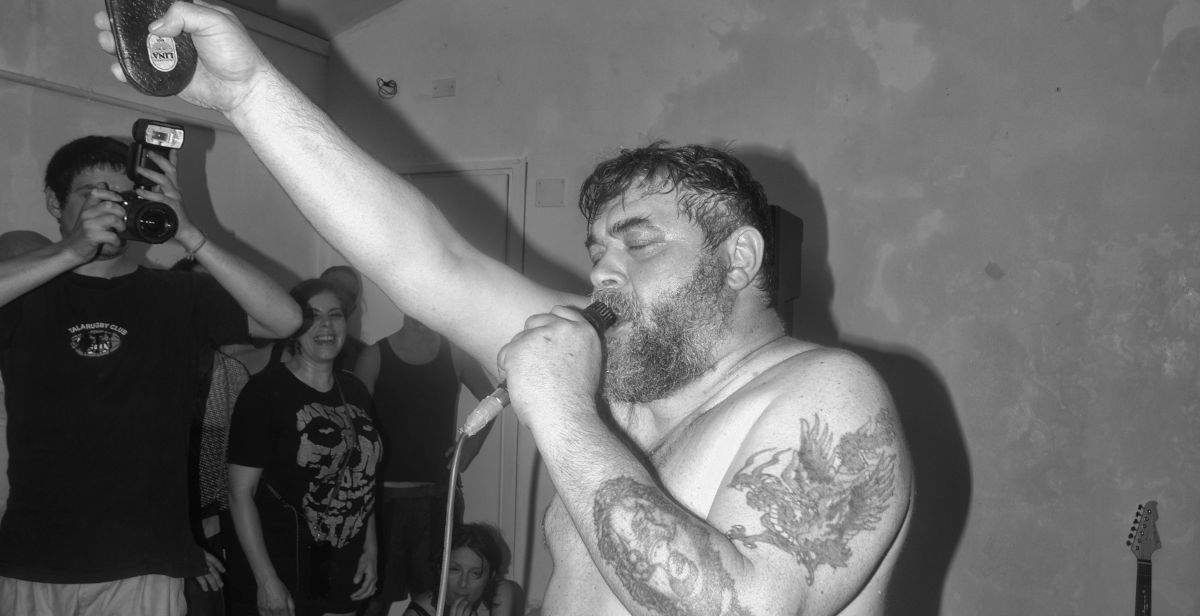
Alongside Carbotta’s project, Jacopo Benassi presents *Rivoluzione (musica analfabeta)*, a performance created in collaboration with musician Michele Lombardelli and conceived specifically for the exhibition spaces. The performance takes shape through the use of a flugelhorn and other wind instruments, whose sounds are modified in real time using electronic distortions and filters, giving rise to a constantly evolving soundscape.
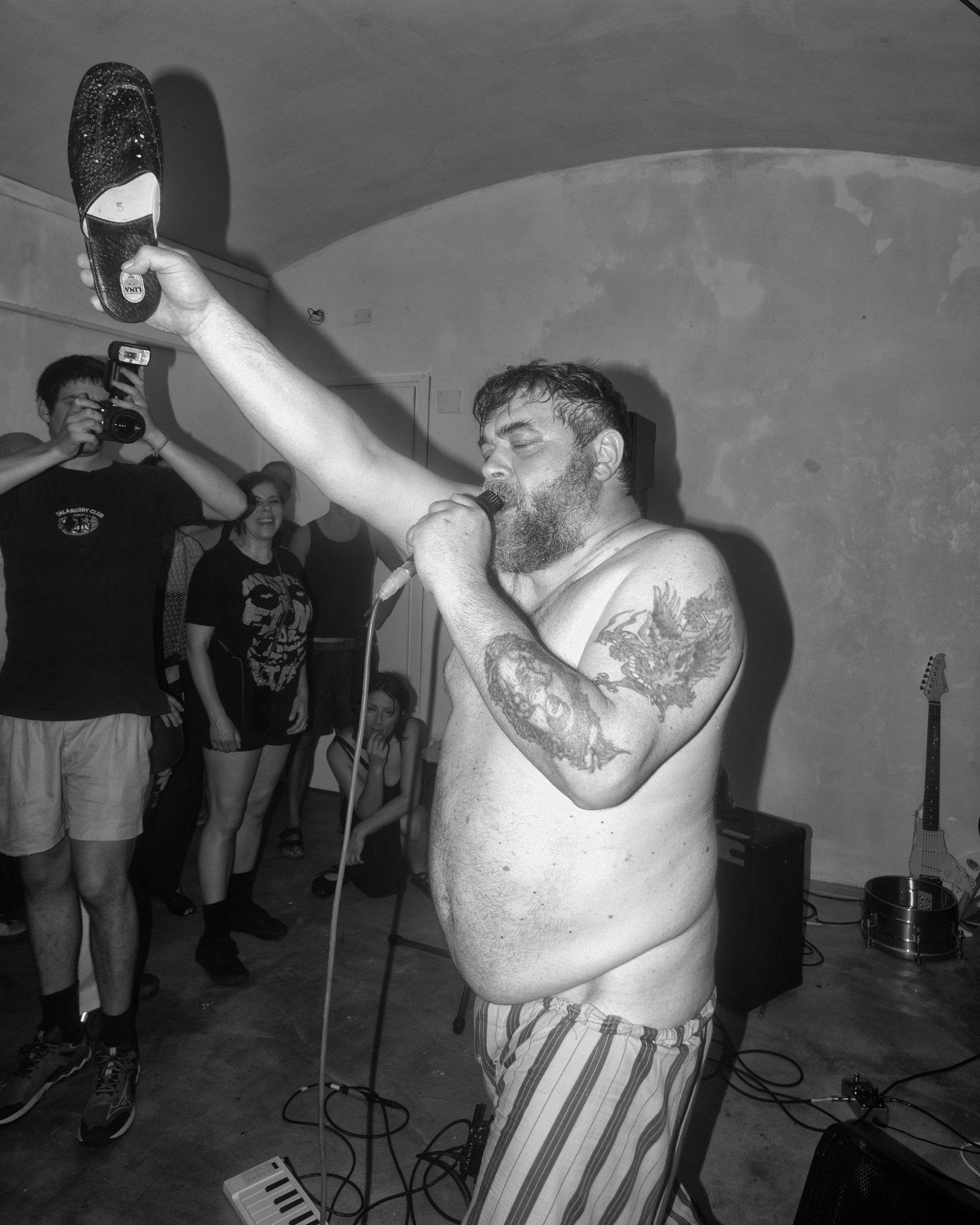
The performance is made even more dynamic by a wireless amplification system that allows Benassi to move freely throughout the space, alternating between music-making and photography—a recurring element in his artistic practice. Body, breath, and the relationship with the audience thus become components of a process in which every gesture, every image, and every sound are continuously transformed, destroyed, and reconstructed. The title of the performance evokes the original meaning of the Latin term revolvere, namely “to turn again” or “to begin anew,” suggesting an idea of continuous regeneration that finds its model in the cycles of time and nature.
PALAZZOIRREALE was launched as an initiative of the Bosca ETS Foundation, chaired by Polina Bosca, with creative direction by Diana Berti. The project is dedicated to showcasing the Art Nouveau complex and the Underground Cathedrals at Via Luigi Bosca 2 in Canelli, recognized as a UNESCO World Heritage Site. The space serves as a venue for dialogue between history, the local area, and contemporary research, with the goal of breathing new life into an architectural and cultural heritage linked to the history of the Bosca family.
PALAZZOIRREALE’s exhibition program features artists and key figures from the contemporary art scene, prioritizing experimental practices and projects that reflect on contemporary issues. The initiative is also part of an effort to establish a permanent collection intended to take root in the local area and contribute to the cultural heritage of Monferrato.
“There is a time that can be measured and one that eludes any attempt at control or quantification: an underground time, which operates below the threshold of the visible and slowly transforms things,” says curator Maria Chiara Valacchi. “From this reflection arises *Frammenti di durata*, an exhibition that explores time as a dimension capable of permeating matter, spaces, and the memories that inhabit them.”
“The works on display,” continues Polina Bosca, “are not conceived as finished, immutable entities, but as elements in dialogue with the context that hosts them. Their meaning is constructed through their relationship with the place, with the villa’s history, and with the natural processes that unfold there over time. Like a vine that grows by clinging to its support, the artwork too finds its form in this relationship: not a static object, but an organism open to change and continuity.”
 |
| Ludovica Carbotta and Jacopo Benassi in Canelli (Asti) with a project on time and transformation |

Warning: the translation into English of the original Italian article was created using automatic tools. We undertake to review all articles, but we do not guarantee the total absence of inaccuracies in the translation due to the program. You can find the original by clicking on the ITA button. If you find any mistake,please contact us.

















 IT
IT FR
FR DE
DE ES
ES CN
CN


