





From July 10 to August 30, 2026, the Royal Palace of Milan will host *Materie viventi*, an exhibition by artist Maria Cristina Carlini, one of the leading figures in contemporary Italian sculpture. The exhibition, set up in the Cortile d’Onore and the Garden, is part of the SUART 2026 program, an event dedicated to the relationship between art and sustainability that also includes an international conference on the topic. Sponsored by the City of Milan – Culture and organized by the Royal Palace, the Maria Cristina Carlini ETS Foundation, and the Ethicando Association, the exhibition is curated by Marco Eugenio Di Giandomenico, the creator of the SUART project. The opening is scheduled for Thursday, July 9, 2026, at the conclusion of the SUART 2026 conference.
For over fifty years, Maria Cristina Carlini has been developing an artistic practice rooted in a dialogue with matter, favoring natural or recycled materials, which she considers living elements and custodians of memory. In *Living Materials*, this vision takes the form of minimalist installations that establish an intense relationship with the surrounding space, transforming sustainability and regeneration into concrete principles of the creative process.
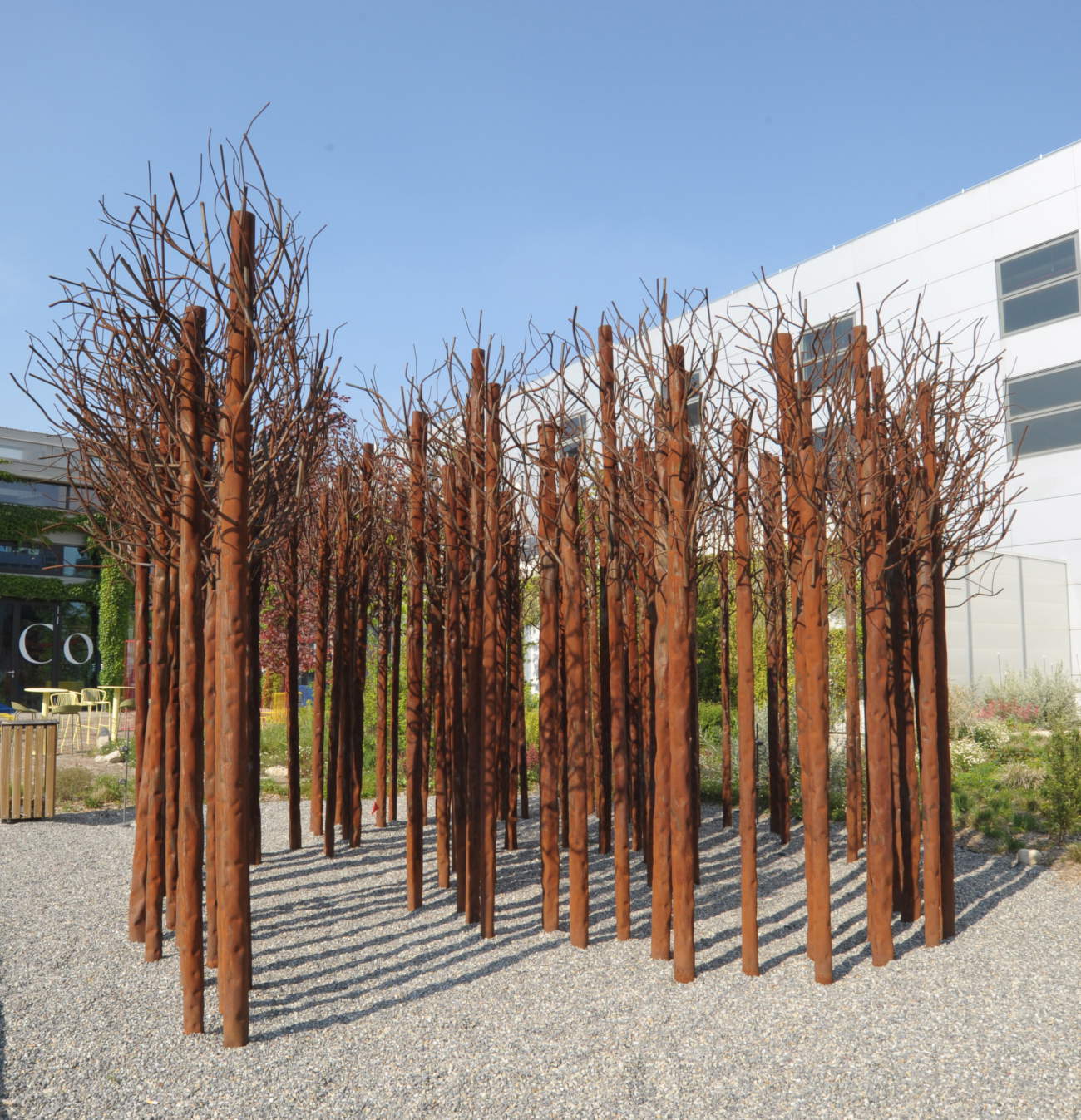
The exhibition revolves around two large-scale works, conceived to interact with the architecture and open spaces of Palazzo Reale: *Bosco* (2012), located in the Cortile d’Onore, and *Filemone e Bauci* (2021), installed in the Garden. The two sculptures are intended to establish a continuous reciprocal relationship, guiding the public through a sensory experience further enhanced by careful lighting design that highlights their symbolic meaning.
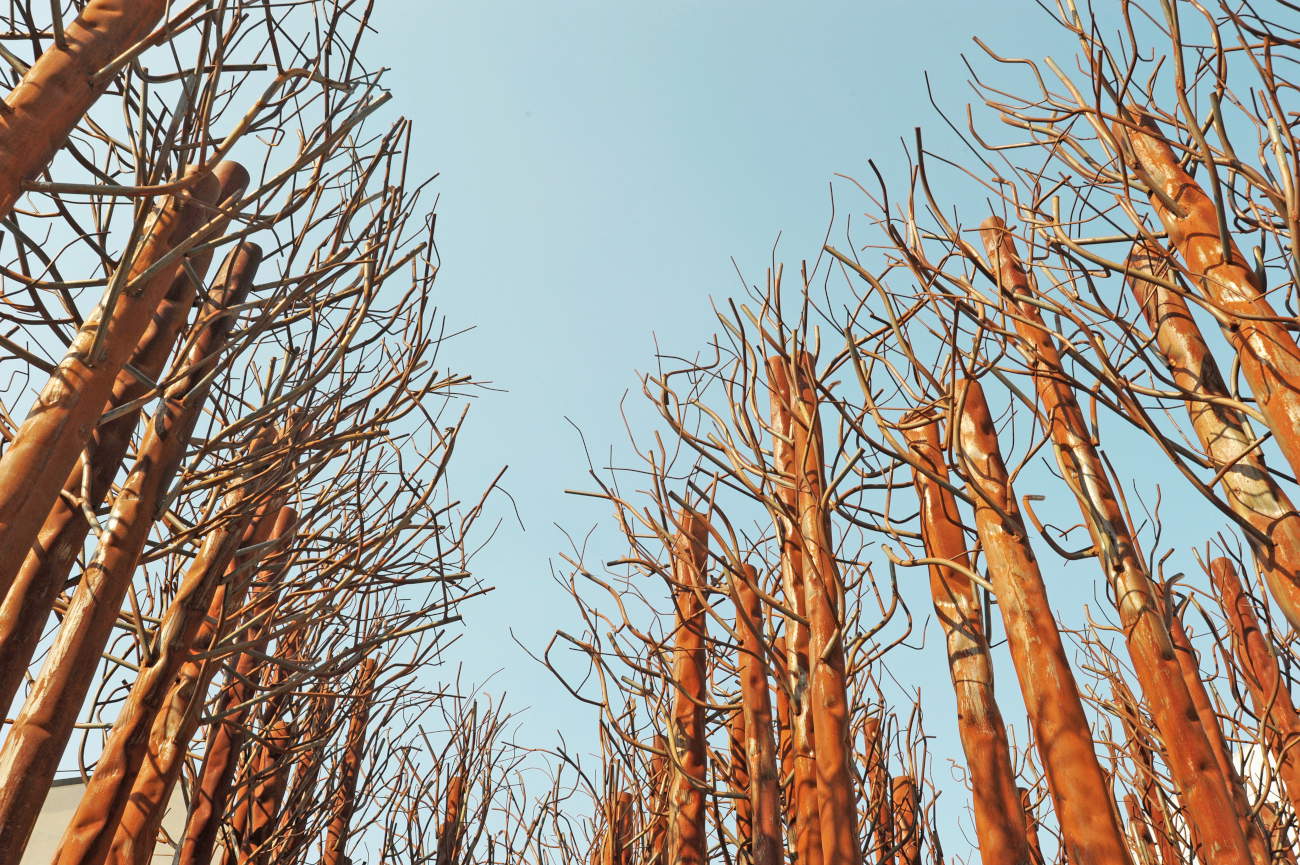
Bosco (2012) consists of nineteen iron elements arranged in a spiral pattern, suggesting the image of a constantly growing organism and inviting the viewer to direct their gaze from the outside toward the center. Iron, a sturdy material yet naturally prone to oxidation, reflects the artist’s aesthetic, characterized by essential forms that preserve time and memory. The modular sequence of the elements evokes a forest that is suggested rather than depicted, where solids and voids, verticality, and the distance between the structures create a space open to passage and contemplation. In the Garden, meanwhile, stands *Filemone and Bauci* (2021), a work that combines reclaimed wood, iron, and gilded accents, creating a balance between fragility and permanence, simplicity and preciousness. The title refers to the famous myth recounted by Ovid, a symbol of hospitality and fidelity, reinterpreted here as a metaphor for care toward others and the environment. The wooden surfaces, marked by the passage of time, intertwine with the metallic elements and with gold, used not as decoration but as a symbolic light that suggests an idea of rebirth. Set amidst the greenery of the garden and the historic architecture, the work invites reflection on the concept of transformation, understood not only as formal evolution but also as an ethical value.
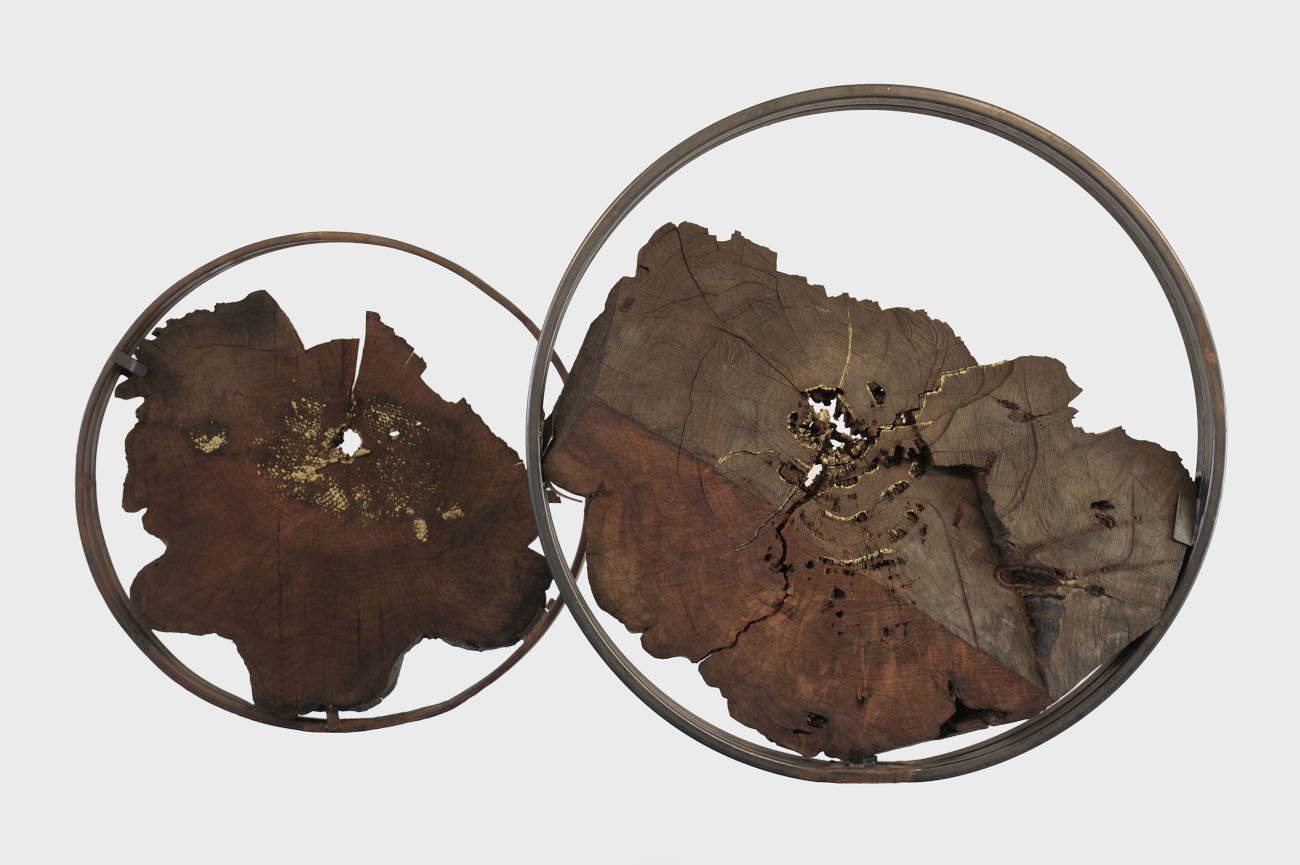
“This work stems from the need to condense the past and the present. Reclaimed wood bears witness to a previous existence, while steel is more closely associated with the idea of technology and contemporaneity,” explains artist Maria Cristina Carlini. “In my artistic expression, there is a very strong reference to the primordial, the archaic, and memory; in these elements, I seek and rediscover the essence. I feel as though I am grasping the profound, eliminating the superfluous, and reaching the heart—the primal core of things and of ourselves. In this sense, memory is a fundamental element because it represents our identity. My goal is to evoke an emotion that can spring from an archaic memory shared by many people. I seek the essence because within it lies a collective sensibility that stems from a deep ancestral source. Materials inspire me. I seek them out everywhere—especially wood—to give them new life. Their stories are reborn in the sculptures, transforming into a contemporary narrative.”
"In *Materie viventi*, sustainability is never an ideological assumption or a programmatic intention, but rather the natural outcome of a profound relationship between the artist and the material. Maria Cristina Carlini immerses herself in the materials—often salvaged—listens to their ancestral pulse, and guides them through an alchemical transformation that breathes new life into them, generating compelling reflections within the work on the fate of humankind, the natural world, and the values that define our contemporary identity,” says curator Marco Eugenio Di Giandomenico. “Carlini’s works thus become vehicles for reflection on the major existential and social issues of the present—from protecting the planet to the crisis of values—in full harmony with the leitmotif of SUART 2026, which explores the environmental, social, and economic dimensions of sustainability in contemporary art.”
 |
| Maria Cristina Carlini's Sustainable Sculpture at the Royal Palace in Milan |

Warning: the translation into English of the original Italian article was created using automatic tools. We undertake to review all articles, but we do not guarantee the total absence of inaccuracies in the translation due to the program. You can find the original by clicking on the ITA button. If you find any mistake,please contact us.























 IT
IT FR
FR DE
DE ES
ES CN
CN


