





Spoleto pays tribute to Filippo Marignoli (Perugia, 1926 – Seattle, 1995), a leading 20th-century Italian painter, on the centenary of his birth, with the exhibition *A Leap into the Void: Filippo Marignoli, 1926–1995, scheduled from June 27, 2026, to January 10, 2027, at the Gallery of Modern Art in Palazzo Collicola. The exhibition, sponsored by the Marignoli Foundation, will open on Saturday, June 27, at 11 a.m. and offers a journey through twenty-two works that trace the various creative phases of an artist whose career unfolded across Italy, the United States, Hawaii, and France, in constant dialogue with the major international artistic movements of the post-World War II era. The exhibition is curated by art historian and curator Peter Benson Miller, assisted by Michele Drascek, curator of projects for the Marignoli Foundation in Montecorona, alongside Gemma Fullone. The exhibition aims to convey to the public the complexity of an artist who, while maintaining a strong connection to his homeland, developed his artistic practice through a continuous redefinition of artistic languages, references, and cultural perspectives.
Born in Spoleto in 1926, Filippo Marignoli took his first steps as a self-taught painter within the group known as “I sei di Spoleto.” It was in this context that his early artistic experience took shape, deeply rooted in the Umbrian landscape and the evocative qualities of his homeland. However, his creative journey soon extended beyond regional and national borders. Over the course of his life, Marignoli lived and worked in Rome, New York, Honolulu, and Paris, transforming travel and engagement with different realities into an essential component of his artistic identity. According to the exhibition’s framework, the artist’s entire career can be interpreted as a continuous and conscious reflection on the possibilities and limits of painting. A practice fueled by an incessant transnational exchange and ever-shifting cultural horizons, which make Marignoli an exemplary figure of the cosmopolitanism that characterized many of the most innovative experiences in postwar art.
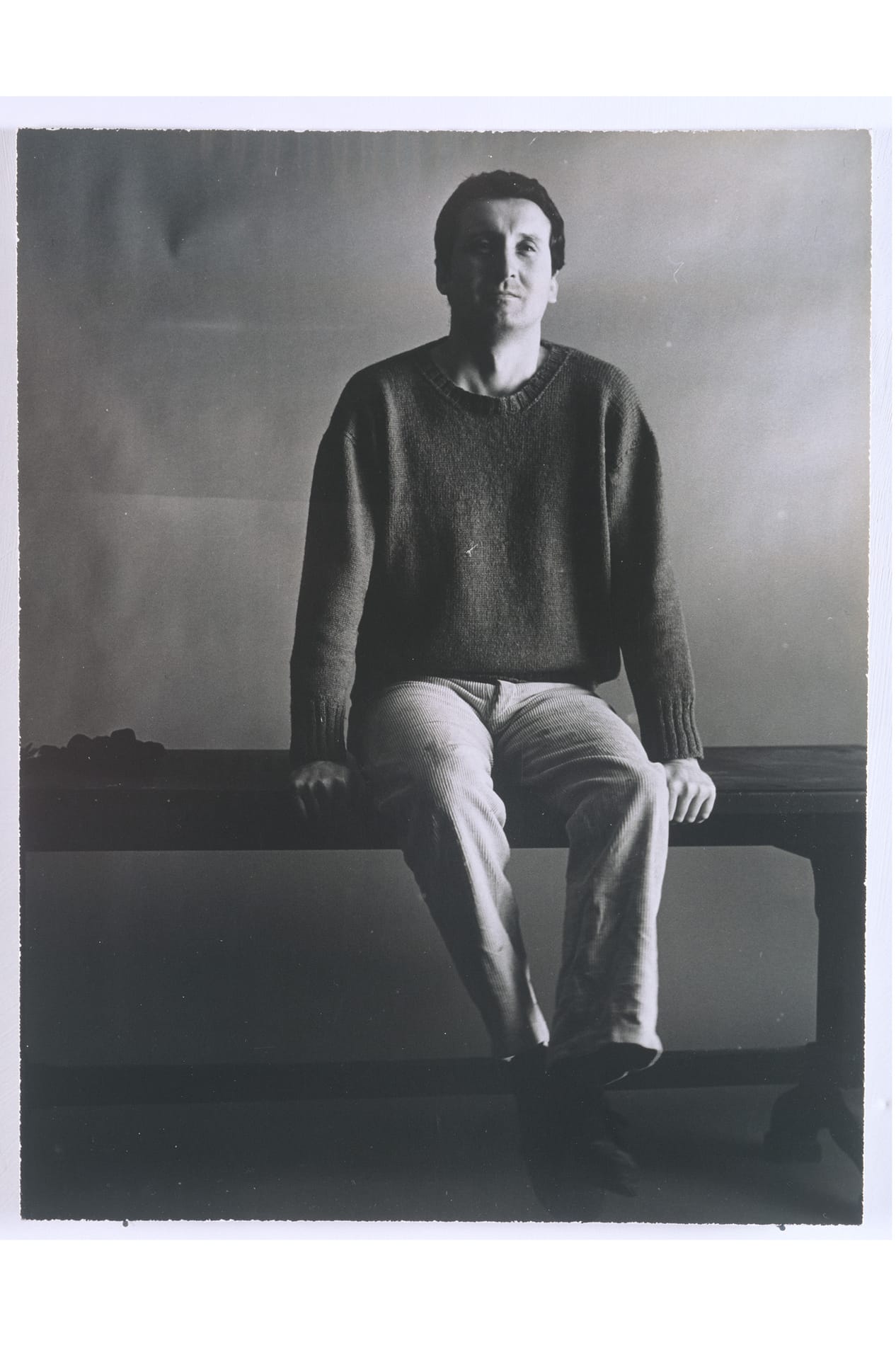
The exhibition aims to highlight how the artist’s language, initially situated within the Informal movement, has progressively taken on different forms in relation to the encounters, contexts, and influences he encountered during his stays abroad. The works from his early years and those of his mature period may seem very distant from one another, but the exhibition emphasizes the continuities that run through the artist’s entire body of work.
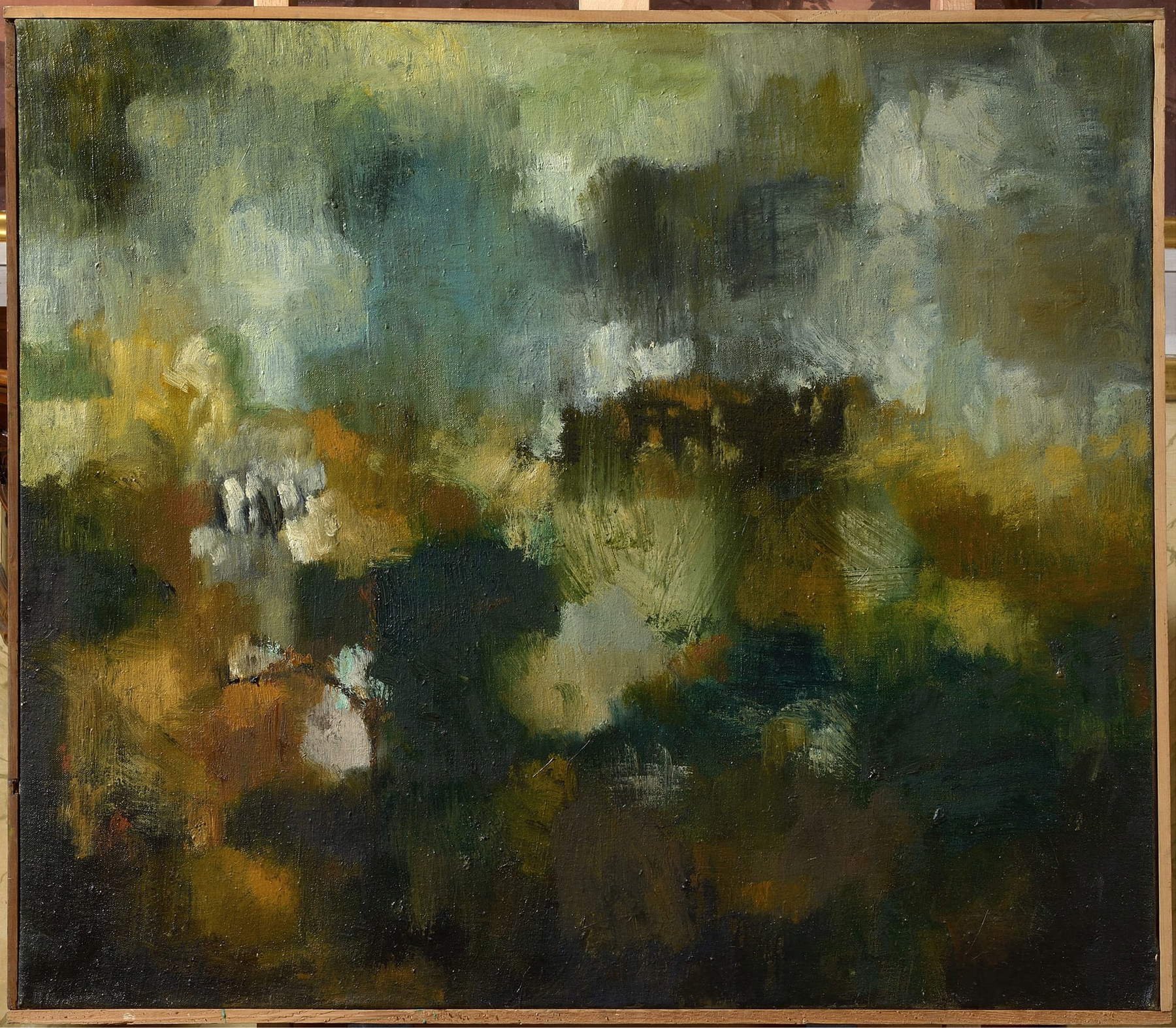
Particular attention is devoted to the 1950s, when Marignoli developed an Informal style of painting strongly marked by a material and experimental dimension. It was during this period that the landscape, a central element of his artistic formation, was progressively transformed from a site of expressive invention into a field of observation and analysis. His artistic exploration shifts toward an increasingly complex reflection on the structure of the image and the processes of constructing meaning. A pivotal development in this phase is the introduction, beginning in 1958, of strips of gauze applied to the surface of the canvases. These elements became the basis of a style of painting characterized by cracks, sedimentations, and material tensions that attest to Marignoli’s interest in the work of Alberto Burri and in the physical properties of materials. The works from those years indeed reveal a sensibility closely aligned with the experiments that were redefining the very concept of the pictorial surface.
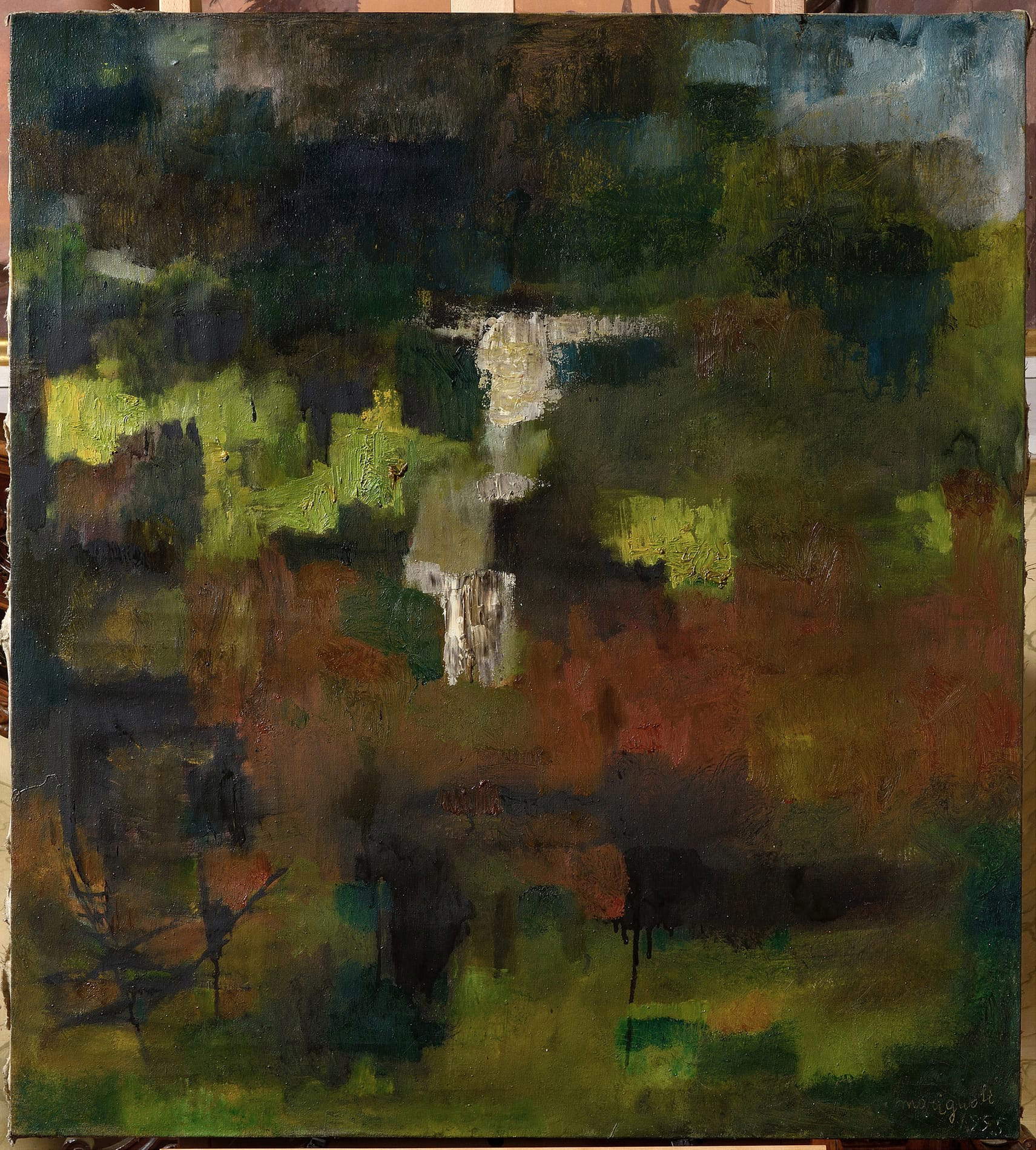
Also in the 1950s, another element emerged that would prove significant in his artistic journey: a deep vertical fracture running through some of his compositions. This dramatic opening splits the surface like a bolt of lightning and evokes, on the one hand, the abysses and tensions of Leoncillo’s abstract sculptures, presented in Rome in 1957, and on the other, the famous cuts of Lucio Fontana’s Concetti Spaziali. Through these approaches, Marignoli seems to challenge the integrity of traditional painting and open the canvas to new perceptual and conceptual possibilities.
During the same period, the New York School exerted a strong attraction on him. The experiences of American abstract art represented for the artist a sort of gravitational force capable of directing his research toward what is defined as the “leap into the void.” The expression indicates not only an adherence to American abstraction and the abandonment of external references, but also the acceptance of a condition of uncertainty and risk that entails renouncing established traditions and immersing oneself in urban, individualistic, and chaotic modernity.
A pivotal moment of this period was the 1960 exhibition at Bruno Sargentini’s L’Attico gallery in Rome. The works presented on that occasion bear witness to a close dialogue with two key figures in 20th-century Italian art, both linked to Umbria: the aforementioned Leoncillo Leonardi, a friend and supporter of the Sei di Spoleto, and Alberto Burri. The exhibition at Palazzo Collicola includes several works dating from the period of his collaboration with Sargentini, offering direct evidence of Marignoli’s deep immersion in the vibrant artistic scene of those years.
The year 1960 also coincided with an important stay in New York. The American experience proved particularly fruitful and led to the creation of a series of large abstract paintings characterized by hazy atmospheres and a dominant pink color scheme. These works are interpreted as a nod to the palette adopted by Philip Guston in some of his lyrical paintings from a few years earlier—works that some critics had classified as “Abstract Impressionism .” After New York, the artist’s international journey continued with a move to Honolulu and subsequently to Paris. These diverse geographical and cultural experiences further fueled a creative exploration that continually examined the relationship between belonging and uprooting, memory and transformation, roots and openness to the world.
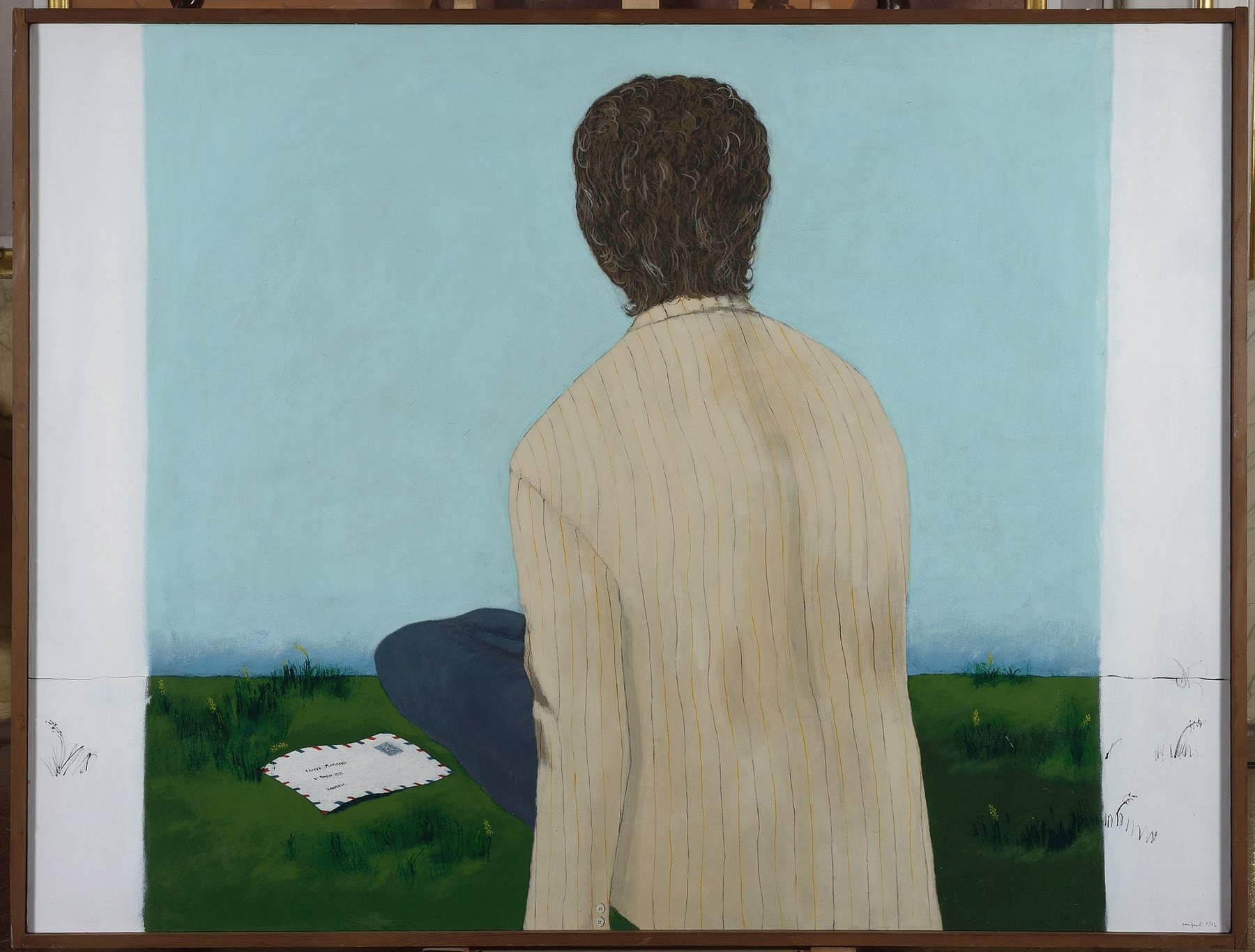
The 1970s marked a particularly significant transitional phase. The exhibition documents this moment through the inclusion of *Homesick*, a melancholic self-portrait in which Marignoli depicts himself from behind. The image conveys the existential dimension of a life spent in constant movement and suggests the psychological weight of an itinerant career. The slightly hunched shoulders and withdrawn posture seem to convey a state of nostalgia and reflection. Even the details of the work take on symbolic value: the loose-fitting jacket worn by the artist is crisscrossed by a series of parallel vertical lines that foreshadow one of the central motifs of his later work, the Vertical Landscapes. At the same time, the image hints at an ideal dialogue with Domenico Gnoli, a friend of the artist and a prominent figure in the Italian cultural scene, who died prematurely in 1970.
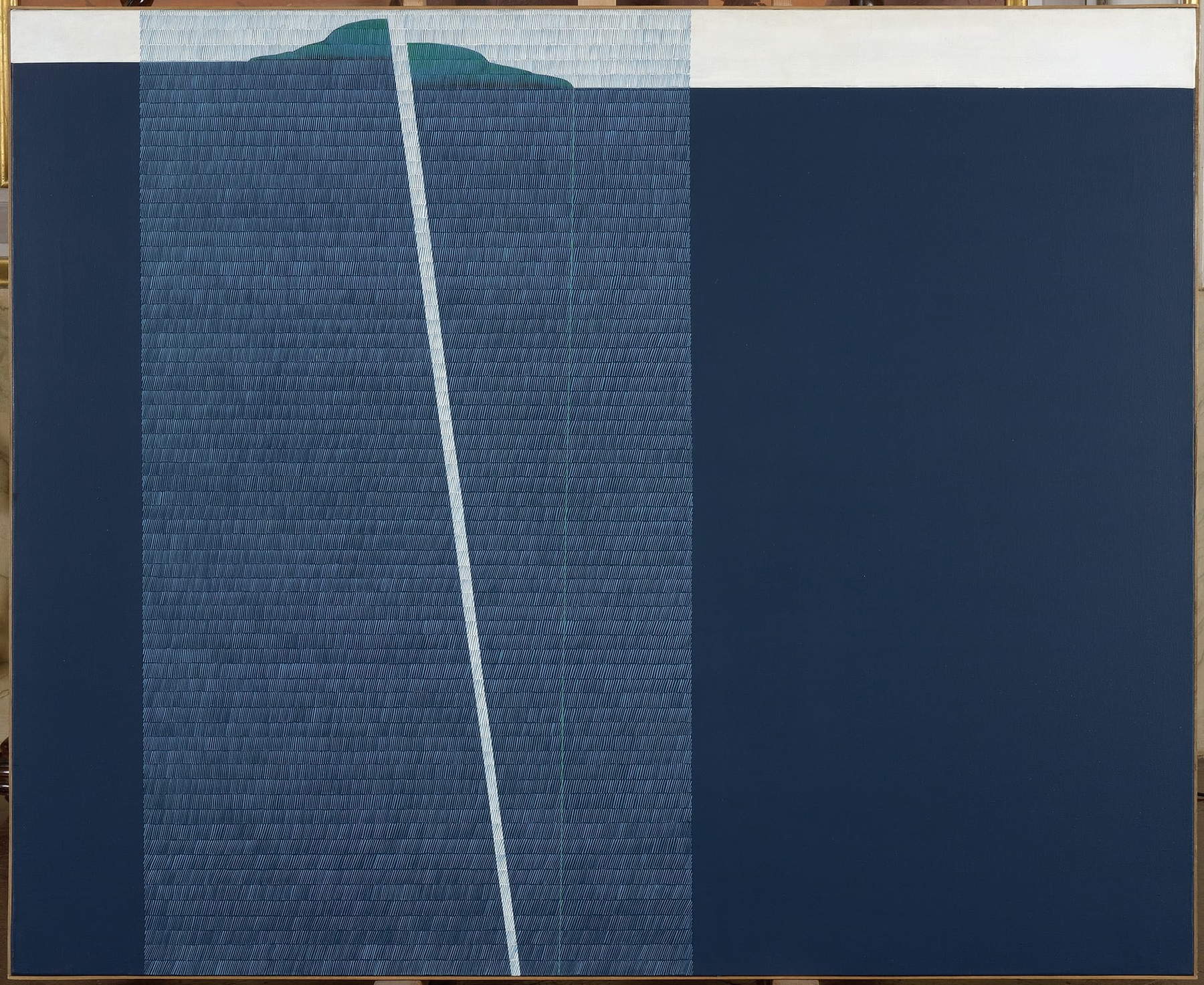
It was precisely during the 1970s that Marignoli made a decisive shift, definitively abandoning the language of Informalism to arrive at a new series of landscapes characterized by an almost analytical precision. Thus were born the aforementioned Vertical Landscapes, works that represent one of the most original and recognizable outcomes of his artistic exploration. These works, presented in 1977 at Denis René’s gallery, are traversed by taut vertical lines that dissect the space and transform the landscape into a complex construction, suspended between observation and interpretation: in the exhibition’s interpretation, these works constitute the most accomplished visual expression of the concept of “leap into the void.” The Vertical Landscapes, in fact, embody the tensions generated by the condition of those who constantly live between different places. The experience of dislocation becomes here a creative tool capable of producing new aesthetic configurations. The works destabilize customary spatial reference points, blend different perspectives, and construct a continuous dialogue between descriptive geometry and semiotic inquiry. Through these paintings, Marignoli gives shape to an unconventional artistic trajectory that spans continents, cultures, and traditions. The vertical landscapes appear as the result of a complex synthesis, in which a strong connection to Umbria coexists with a sense of alienation developed during the long years spent abroad. One of the most original aspects of his work is concentrated in this apparent contradiction.
Accompanying the exhibition is a catalog published by ViaIndustrie in Foligno. The volume includes a critical essay by Peter Benson Miller and contributions by Davide Ferri and Saverio Verini in dialogue with Fabio Sargentini and Gemma Fullone. The publication is completed by images of the exhibited works photographed by Marcello Fedeli.
|
| Spoleto is honoring Francesco Marignoli on the 100th anniversary of his birth with an exhibition at Palazzo Collicola |

Warning: the translation into English of the original Italian article was created using automatic tools. We undertake to review all articles, but we do not guarantee the total absence of inaccuracies in the translation due to the program. You can find the original by clicking on the ITA button. If you find any mistake,please contact us.

















 IT
IT FR
FR DE
DE ES
ES CN
CN


