





The recent acquisition of Fratelli Navarra by Opera Laboratori and the resulting creation of Opera Navarra represent a significant development in the Italian cultural heritage sector, particularly in the field of restoration. The merger, presented yesterday in Milan at the Pinacoteca di Brera in the presence of Director Angelo Crespi, has thus given rise to an entity that expands the scope of the Opera Laboratori group and strengthens its role in the preservation of historical and artistic heritage. The goal is to bring together areas of expertise that until now operated along separate tracks: management of cultural sites, promotion, conservation, and monumental restoration. For Opera Laboratori, this means being able to oversee a project throughout its entire life cycle, from preventive maintenance to public access. For Fratelli Navarra, on the other hand, it represents entry into a broader industrial project, without sacrificing the wealth of expertise built up over nearly thirty years of restoration work. At the heart of the Opera Navarra initiative is a vision that emphasizes planned conservation as an alternative to the “emergency-driven” approach, which remains all too prevalent in the management of Italy’s cultural heritage. This issue affects not only the future of restoration projects but also the future of professional expertise and investment in the sector. In this interview, Beppe Costa, president and CEO of Opera Laboratori, and Attilio Maria Navarra, CEO of Opera Navarra, explain the reasons behind the acquisition, the new company’s objectives, and their approach to restoration: a model based on continuity, integrated expertise, and preventive maintenance. They look ahead to the major restoration projects already underway and the challenges facing Italy’s cultural heritage. The interview is conducted by Federico Giannini, editor-in-chief of *Finestre sull’Arte*.
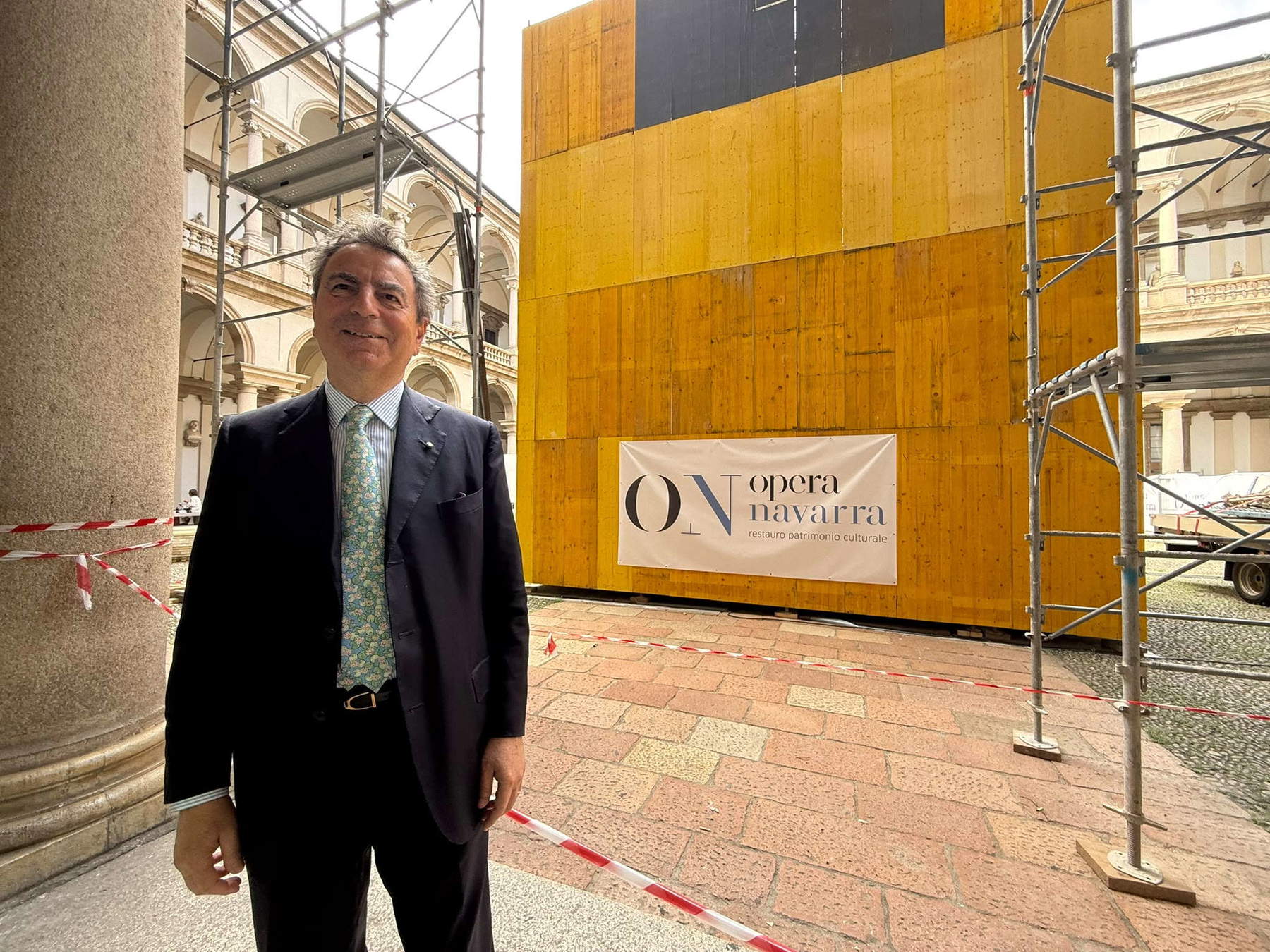
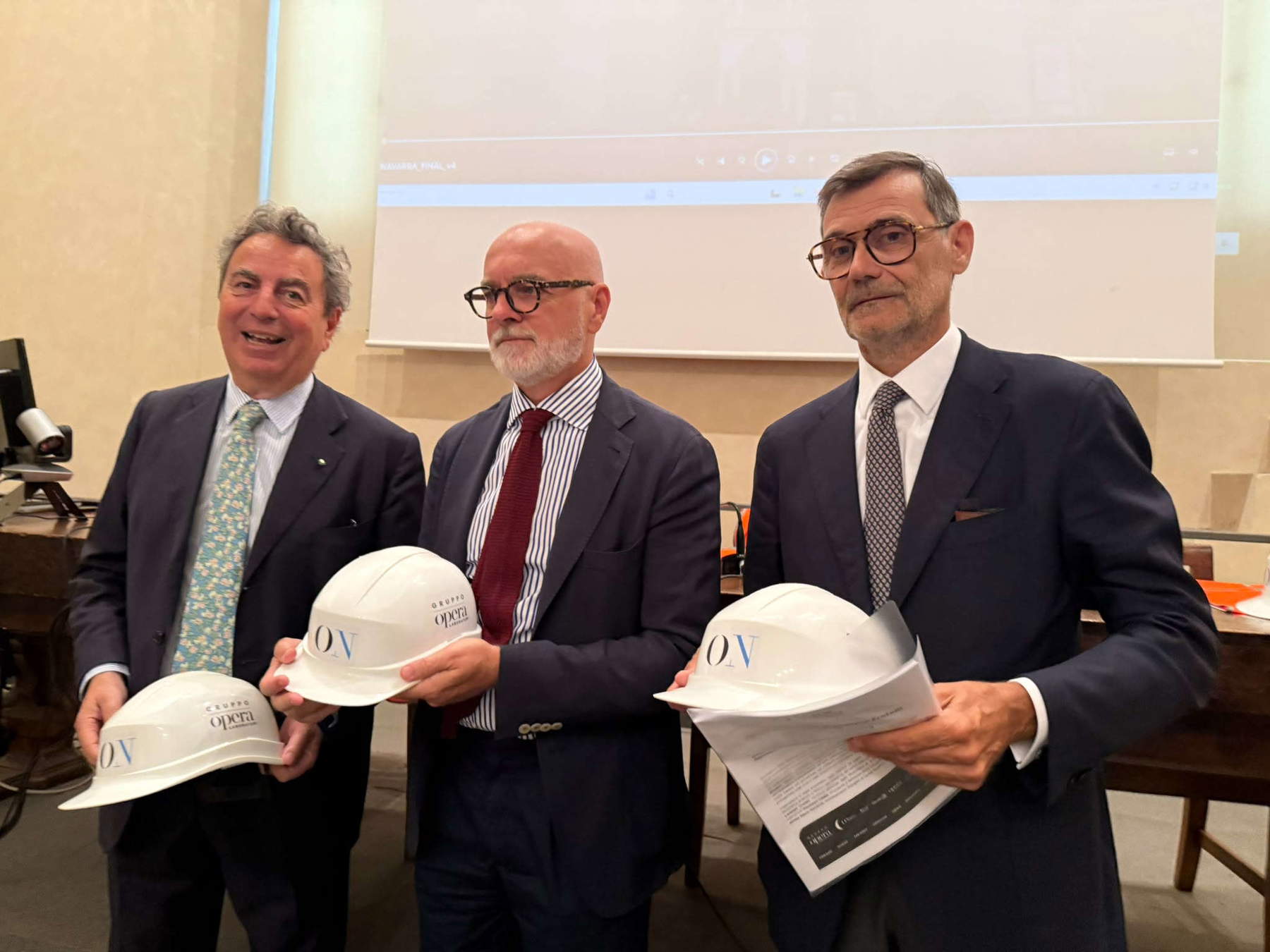
FG. With the acquisition of Fratelli Navarra and the founding of Opera Navarra, what has changed in Opera Laboratori’s vision?
BC. What’s changing is the scope of what we’re able to offer, not the vision that has guided us thus far. Opera Laboratori began by providing museum services, then expanded into the enhancement and management of complex sites throughout Italy: a coherent path, one step at a time. However, one capability I considered essential was missing: the ability to intervene on the physical material of the artwork itself, to preserve it, prevent its deterioration, and pass it on intact to future generations. With Opera Navarra, we’re completing the full spectrum of services: from management, conservation, and enhancement, we’ve now reached the stage of physically restoring the works. This step entails more responsibility than it does simplification, because every phase of the process—from preventive conservation to the visitor experience—becomes something for which we are personally accountable.
FG. The Navarra family, which has been active in the construction sector for nearly 150 years and in restoration for nearly 30, remains involved in management. With Opera Navarra, you’re entering a sector where value lies in people and accumulated knowledge. How do you preserve such a long history without distorting it?
AN. Through synergy rooted in continuity and excellence. This acquisition by Opera Laboratori combines a centuries-old technical legacy with an integrated managerial vision. The integration is proceeding naturally, without fear of change and while preserving the valuable know-how acquired over the years by the Navarra family. As CEO on the new Board of Directors, with the support of Chairman Beppe Costa (Chairman of the Board) and the other Board members, I will continue to lead our team of over 150 administrative staff, technicians, restorers, and workers. The acquisition of Fratelli Navarra and its transformation into Opera Navarra S.p.A. enhances our tradition of craftsmanship through a solid industrial synergy.
FG. Opera Laboratori specializes in museum services and heritage enhancement, and with the addition of restoration, the business portfolio is further enriched: what new opportunities are opening up? And what led you to acquire such a major player in the restoration sector?
BC. The reasons stem from our day-to-day work at the construction sites and museums we manage. We have often had to entrust restoration work on cultural assets under our management to third parties, with the complications regarding timelines and coordination that this entails: delays and responsibilities fragmented among too many parties. Bringing Fratelli Navarra’s technical expertise in-house opens up new possibilities for us. Today, a public institution or private organization finds in us a partner that oversees the cultural asset from the initial conservation work right through to its opening to the public—a unique offering in Italy. I am thinking, above all, of a model of scheduled maintenance: interventions spread out over time, carefully planned, far removed from the emergency mindset that kicks in only when damage is already visible. And I’m equally interested in the possibility of making the restoration site itself visible—opening it up, as safety permits, to visitors at our sites: restoration has an educational value that is rarely highlighted.
FG. What are the main projects you’ll be working on?
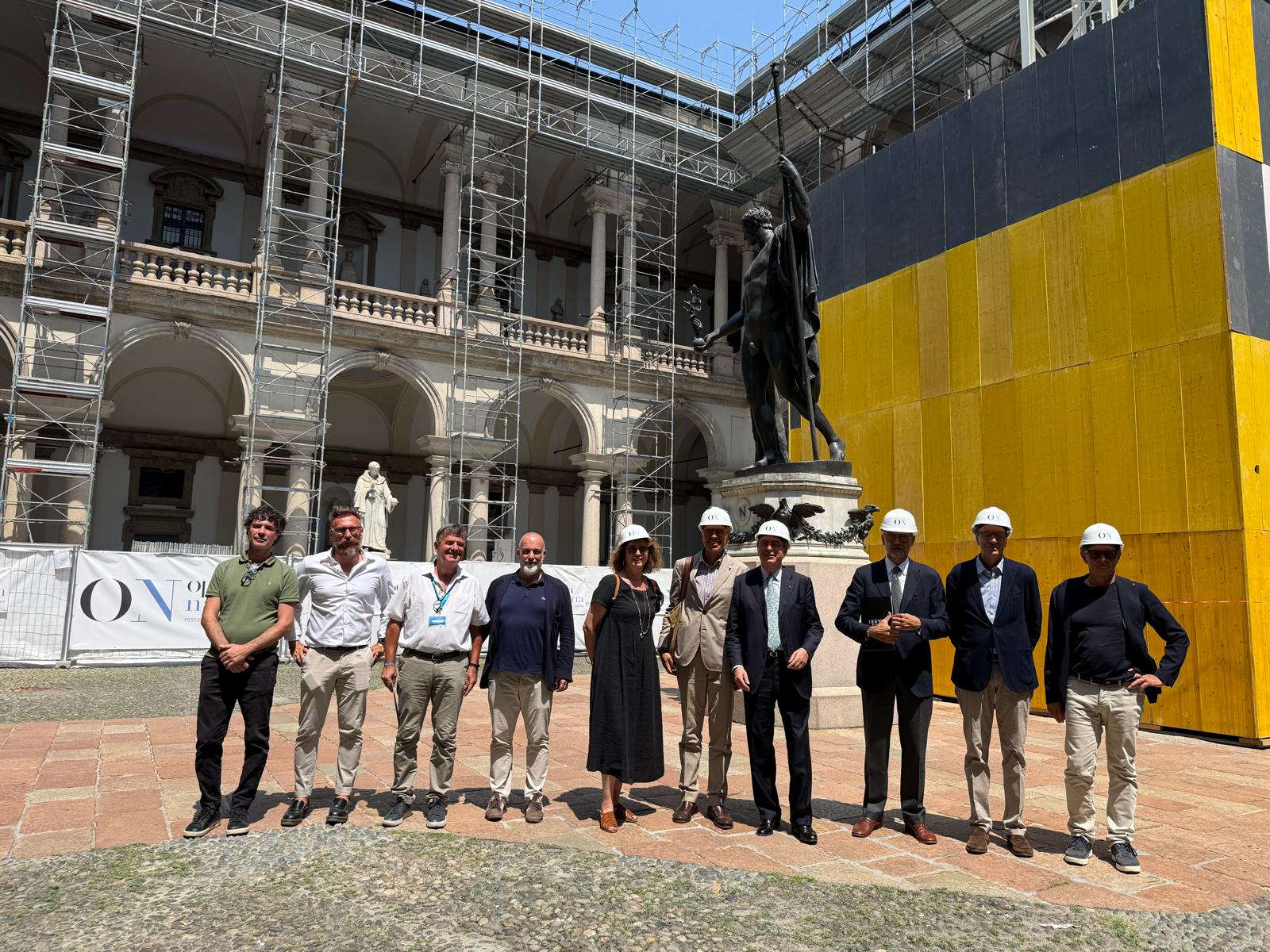
AN. The National Gallery of Modern and Contemporary Art (GNAMC), Casa Olivetti in Ivrea, the National Archaeological Museum of Naples, the Poligrafico headquarters on Via Principe Umberto in Rome, the Brera Academy, the Milan Triennale, the Royal Palace of Caserta, the former Mondino Psychiatric Institute in Pavia—and these are just a few of the most important projects currently underway.
FG. On the other hand, what is the project you dream of realizing thanks to this new venture—one that, until yesterday, would have been harder to imagine?
AN. The projects I dream of working on are undoubtedly places of worship, with a particular focus on churches. Museums are the new cathedrals of the twenty-first century, and this must be taken very seriously. In Italy, there is certainly no shortage of either places of worship or museums!
FG. In recent years, restoration has often been the focus of public attention, and not always for encouraging reasons: just think of the recent case of Tor de’ Conti in Rome, described by a leading figure in restoration, Bruno Zanardi, as the result of political and cultural choices that have neglected planned conservation. Conservation, therefore, as prevention—as a way to slow down the processes of deterioration. The problem is that there is far too little discussion of planned conservation: in your opinion, is it time to bring this issue back to the center of the debate?
AN. It is crucial to bring preventive and planned conservation back to the center of the technical and political debate. We must focus more on planned prevention and less on extraordinary maintenance work; from my perspective, this would represent the most important investment in our heritage. Funding preventive and planned maintenance would provide extraordinary added value: it would allow us not only to protect monuments by preserving their memory in the least invasive way possible, but it would also help us train new generations of technicians and conservators capable of constantly monitoring the condition of the monuments themselves.
FG. Italy’s cultural heritage is immense but also fragile, as many recent cases have shown. What do you believe are the most urgent priorities for its protection today?
AN. The absolute and most urgent priority is the implementation of systematic and periodic preventive inspections of architectural and artistic works. We can no longer afford to intervene only in response to emergencies or when damage is already visible. We must transition to a model of continuous and widespread monitoring that utilizes both the most modern predictive diagnostic technologies and the constant presence of qualified technicians in the field. Protecting the fragility of our immense heritage by anticipating deterioration means understanding and being able to monitor its condition in real time: only in this way does preservation become a daily, scientific, and truly effective practice.
FG. Italian restoration often faces a lack of resources and planning. Could the entry of a new player like Opera Navarra into the sector shift this balance? If so, how?
AN. I hope so, and I strongly hope it will. Our country has always been among the world’s leaders in terms of professionalism and technical expertise. Opera Laboratori is an extraordinary platform for “cultural production,” and I am certain that their investment strategy in Opera Navarra will yield significant results by leveraging important synergies between restoration, management, and promotion activities. All the conditions are now in place to work synergistically and to make a tangible impact on a more sustainable approach to restoration and the concept of enhancement—sustainability that is not only economic but also social and cultural. By combining the centuries-old technical and artisanal expertise of our tradition with the industrial, managerial, and financial strength of Opera Laboratori, we can offer a new model. This approach, centered on the concept of sustainability, will allow us to overcome the fragmentation of resources and the “emergency-driven” mindset, by proposing structured solutions capable of ensuring continuity on construction sites, job stability, and long-term planning for preservation.
FG. Finally, in your opinion, will the future of Italian restoration consist of large operators capable of integrating diverse skills, or will it remain a world of highly specialized but small and fragmented centers of excellence?
AN. The future of Italian restoration, from my perspective, will need to actively defend the concept of high specialization, but at the same time inevitably open up to large firms or consortia of firms capable of integrating diverse skills while maintaining and protecting artisanal excellence. The model of fragmented, micro-scale artisanal businesses ensures the preservation of specialization but today struggles to handle the complexity of large-scale restoration projects. This is due to a lack of resources and the need for investment in research and new technologies. The real challenge—which is, in fact, the philosophy underlying Opera Navarra—is to demonstrate that an industrial scale does not standardize the work if we clearly understand that we are simply conveyors of knowledge and skills; rather, it helps to enhance its value. A large, well-structured organization that values the knowledge and skills of its workforce (restorers and laborers) provides the financial and managerial stability necessary to ensure the sector’s stability—sustainability that is not only economic but also social and cultural—while always striving, as much as possible, for excellence.

The author of this article: Federico Giannini
Nato a Massa nel 1986, si è laureato nel 2010 in Informatica Umanistica all’Università di Pisa. Nel 2009 ha iniziato a lavorare nel settore della comunicazione su web, con particolare riferimento alla comunicazione per i beni culturali. Nel 2017 ha fondato con Ilaria Baratta la rivista Finestre sull’Arte. Dalla fondazione è direttore responsabile della rivista. Nel 2025 ha scritto il libro Vero, Falso, Fake. Credenze, errori e falsità nel mondo dell'arte (Giunti editore). Collabora e ha collaborato con diverse riviste, tra cui Art e Dossier e Left, e per la televisione è stato autore del documentario Le mani dell’arte (Rai 5) ed è stato tra i presentatori del programma Dorian – L’arte non invecchia (Rai 5). Al suo attivo anche docenze in materia di giornalismo culturale all'Università di Genova e all'Ordine dei Giornalisti, inoltre partecipa regolarmente come relatore e moderatore su temi di arte e cultura a numerosi convegni (tra gli altri: Lu.Bec. Lucca Beni Culturali, Ro.Me Exhibition, Con-Vivere Festival, TTG Travel Experience).
Warning: the translation into English of the original Italian article was created using automatic tools. We undertake to review all articles, but we do not guarantee the total absence of inaccuracies in the translation due to the program. You can find the original by clicking on the ITA button. If you find any mistake,please contact us.














 IT
IT FR
FR DE
DE ES
ES CN
CN


