





The international art market kicked off 2026 with results that marked a sharp reversal from the previous year: in the first half of the year, the leading international auction houses recorded total sales of approximately $6.7 billion, up 71% from the same period in 2025, while the number of auctions grew at a much more modest rate of 10.3%. This figure highlights how the market’s expansion was driven primarily by the increase in the value of sold works and the presence of particularly prestigious collections. This is the picture outlined by Deloitte Private Art&Finance during the conference “The Art and Collectibles Market,” held at the Deloitte Auditorium in Rome, where the results of an analysis of the sector—focusing on the major international auction houses Christie’s, Sotheby’s, and Phillips—were presented.
Live auctions were the main driver of this growth, with the average hammer price per lot nearly doubling compared to the first half of 2025, recording a 96.5% increase to reach approximately one million dollars per lot. At the same time, the digital channel continues to strengthen, with online auctions generating 8.2% of total revenue—equivalent to $562 million—up 54.9% compared to the first six months of last year.
According to Ernesto Lanzillo, Deloitte Private Leader, the results confirm the signs of recovery that began to emerge in the second half of 2025: “This positive trend, which appears to confirm the signs of recovery in the secondary market that had already emerged in the second half of 2025, is also attributable to the renewed confidence the market had instilled in collectors, particularly among sellers. The months of October, November, and December are, in fact, crucial for compiling the auction catalogs for the first months of the following year, and the excellent results achieved by single-owner collections in the fall auctions may have encouraged the introduction of high-quality works onto the market.”
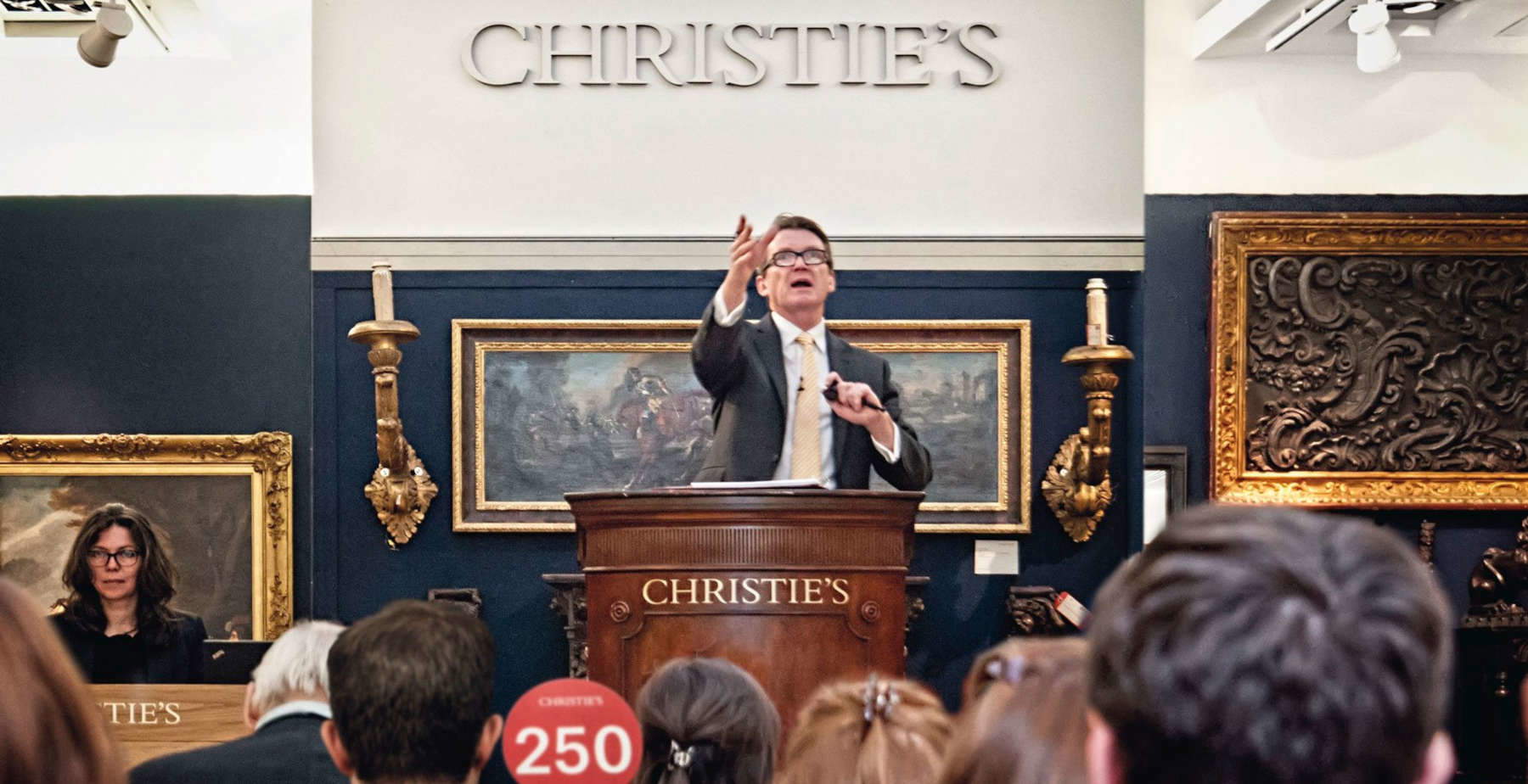
It is not only the Fine Art sector that confirms the market’s vitality. The Passion Assets sector, too, continues to see sustained demand, driven primarily by younger collectors and those new to collecting. “Even in the first half of 2026,” notes Roberta Ghilardi, Senior Manager at Deloitte Private Art & Finance, “the Passion Assets market continues to reflect strong interest from collectors, particularly young people and first-time buyers. Design (+44.3% compared to the first half of 2025), antiques (+39.9%) and Watches and Jewelry (+33.4%) are driving growth, but interest in extraordinary lots—such as the Golden Ticket from Willy Wonka’s factory, which sold for over $200,000 among other items from a single-owner collection—remains strong as well.”
The presentation of the study was followed by a roundtable discussion on the sector’s prospects, featuring Davide De Blasio, founder of the Made in Cloister Foundation, Marcello Minuti, general coordinator of the National School of Heritage and Cultural Activities; Antonio Mirabelli, art advisor and journalist; Emilio Pennacchio, founder of Casa Aemilia; and Clara Tosi Pamphili, board member of the La Quadriennale di Roma Foundation.
The data presented by Deloitte shows that the secondary market exceeded $6.68 billion in revenue during the first half of the year. The average value of lots sold at live auctions reached $1.03 million per lot, an increase of 96.5%, while the number of auctions included in the analysis grew by only 10.3%. Even more significant is the figure for the top five lots of the entire half-year, which recorded an average hammer price of over $105.2 million.
The Fine Art segment continues to represent the core of the market, accounting for 71.6% of total revenue and growing by 85.3% compared to the first half of 2025. In the first six months of the year, the sector has already generated 76.2% of the total revenue recorded for the entire year of 2025. Within Fine Art, the Post-War segment accounts for 72.5% of the category’s revenue, with growth of 79.3%, while the Pre-War segment accounts for 22.8% and posted even more pronounced growth of 157.4%. Growth in the Old Masters segment was more modest, accounting for 4.7% of the category’s revenue with a 5.7% increase, though it recorded an unsold rate of 26%.
The analysis highlights how demand continues to shift toward high-end works, confirming the strength of the Old Masters segment and the growth of modern and contemporary art. At the same time, there has been a scaling back of the market’s more speculative component, as the younger contemporary segment was virtually absent from the top ten sales of the half-year.
Live auctions continue to be the primary venue for the sale of major masterpieces and the most important single-owner collections. In the most prestigious catalogs, the average value of lots ranges from $2.8 million to $39.4 million. At the same time, the online channel is consolidating its role, recording an average value of approximately $21,500 per lot and showing particular strength in the design and antiques segments.
Passion Assets, which encompass all categories other than Fine Art, reached a total of $1.67 billion in hammer prices, representing a 34.8% increase compared to the first half of 2025. Leading the expansion are primarily design, which grew by 44.3%; antiques, up 39.9%; and watches and jewelry, which recorded a 33.4% increase. The situation was more challenging for photography, which declined by 9.5%, and for the wine sector, down 13.1%, following a particularly strong 2025.
The role of digital is particularly prominent in these categories. Online auctions dedicated to Passion Assets grew by 93.6% compared to the same period the previous year, driven mainly by design, while live auctions in the same sector declined by 4.8%.
According to Deloitte, this trend reflects a gradual specialization of the two channels. Traditional auctions are consolidating their role in the sale of masterpieces and the most prestigious collectibles, while online auctions are expanding the pool of potential buyers in the mid-range and lower-mid-range segments, promoting greater accessibility to the market.
In terms of geographic distribution, New York reaffirmed its undisputed leadership with 51.4% of the global market and $3.49 billion in sales in the first half of 2026. London , on the other hand, posted one of the year’s most significant performances, with 150.4% growth bringing revenue to $1.41 billion, accounting for 20.8% of the global market. In the United States, the market grew by 71.3% overall, reaching nearly $3.5 billion. Fine Art accounted for 82% of the U.S. market with $2.88 billion and a 79.2% increase. Christie’s New York saw its revenue from live Fine Art auctions double, with a 106% increase, while Sotheby’s grew by 55%. The Post-War segment rose by 76.5%, confirming strong demand for modern and contemporary art.
The European market also shows signs of consolidation, reaching $635 million, accounting for 9% of the global market. Growth is driven by Paris, which totaled $358 million with a 54.7% increase, Geneva, with $261 million and 19.8% growth, and Milan, which reached $15.8 million, up 22.8%, thanks primarily to strong results in the Post-War and Antiques segments.
In Asia, Hong Kong maintains its position as the leading regional market with $654 million in sales and 30% growth. Next came Riyadh with $19.6 million and Singapore, which recorded a 35.9% increase, reaching $13.1 million.
Meanwhile, the online channel is becoming increasingly independent, to the point that the study describes it as a true “geographic hub” of the market. Digital sales now account for 8.2% of total revenue, with $562 million in sales and a 54.9% increase compared to the first half of 2025.
The market’s strength is also evidentin the trend of unsold lots. Seven of the top ten sales of the half-year recorded unsold rates ranging from 0% to 4%, confirming both the auction houses’ ability to carefully select the works they offer and the presence of particularly robust demand for high-quality items.
According to Deloitte, in a context where digital content is increasingly easy to replicate, value continues to be concentrated in unique and irreproducible works. At the same time, there is renewed vitality in the mid-range segments of the market, driven by a new generation of collectors who exhibit different preferences and increasingly diversified purchasing patterns.
Overall, the first half of 2026 paints a picture of a global art market that is more selective but also structurally more robust, capable of absorbing fluctuations linked to economic cycles and geopolitical factors more effectively.
The strategies adopted by the major auction houses confirm this approach. Over the course of the half-year, Sotheby’s, Christie’s, and Phillips reinforced a policy focused on promoting major private collections and masterpieces, accompanied by a further consolidation of their online platforms targeting the lower-end segments. This strategy supported revenue growth for all three major auction houses: Sotheby’s recorded a 73.1% increase, Christie’s a 72.7% increase, and Phillips a 50.5% increase.
The curation of catalogs in the fall of 2025—further bolstered by the interest generated by the previous season’s major sales—made it possible to bring high-quality works and significant collections to the market. The result was a particularly low number of unsold lots and numerous significant sales, confirming a trend that now appears well-established: the market continues to reward the quality of the works, their provenance, and the strength of the collections from which they originate.
|
| Art Market, Deloitte: Auctions Up 71% in the First Half of 2026 |

Warning: the translation into English of the original Italian article was created using automatic tools. We undertake to review all articles, but we do not guarantee the total absence of inaccuracies in the translation due to the program. You can find the original by clicking on the ITA button. If you find any mistake,please contact us.





























 IT
IT FR
FR DE
DE ES
ES CN
CN


