




by Redazione 01/07/2026


Categories: Museums / Disclaimer
In the United Kingdom, a report by a cross-party parliamentary committee criticizes the Ministry of Culture for its lack of leadership in managing England’s 15 major public museums. The financial situation is dire: officials are even considering ending free admission for all and introducing an admission fee for international visitors.


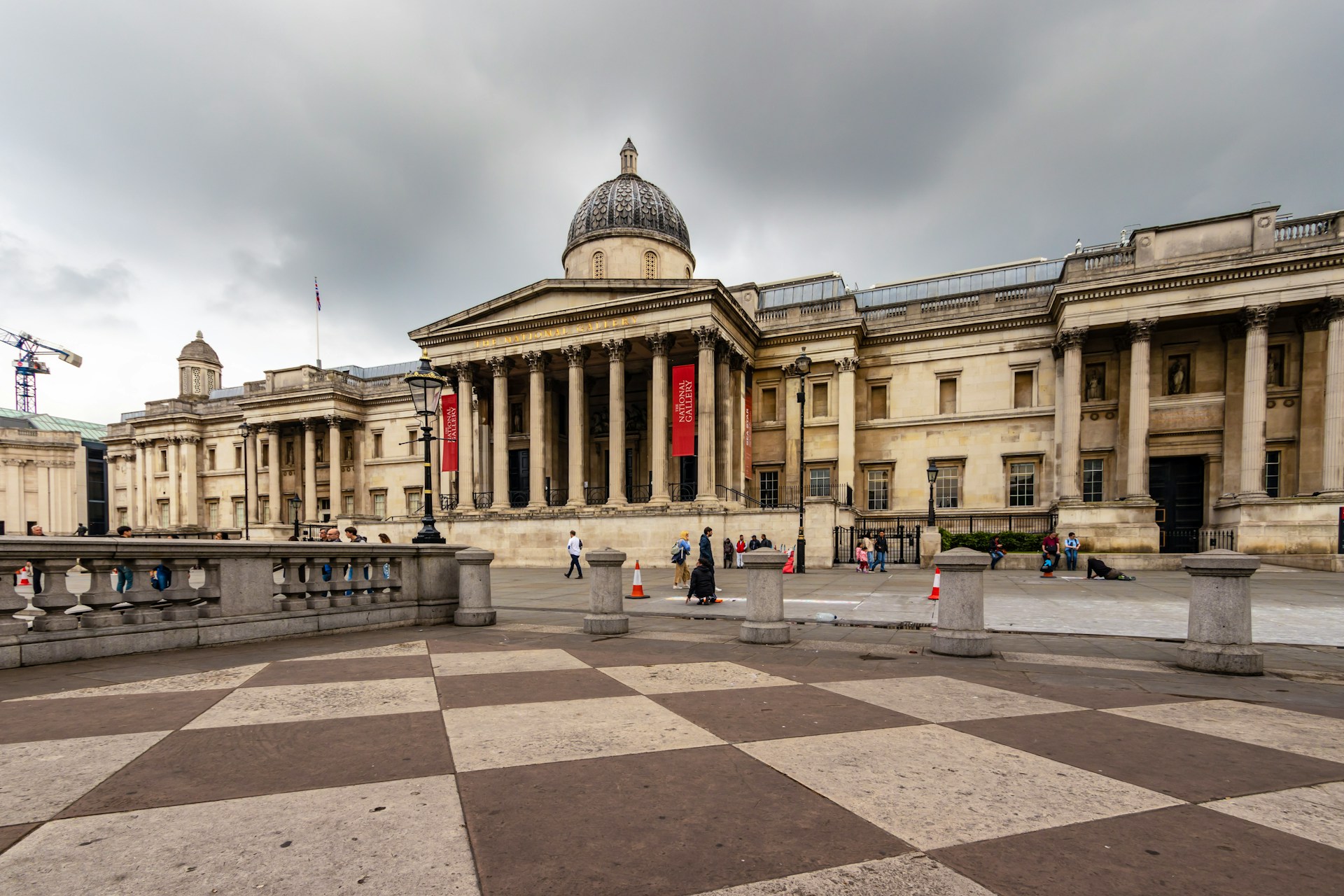
Alarm bells are ringing for museums in the United Kingdom, where institutions are facing a period of profound uncertainty and therefore require drastic measures: this, in a nutshell, is the summary of the report drafted by a cross-party parliamentary committee, the Public Accounts Committee (PAC), a body tasked with monitoring the effectiveness of public spending, which has expressed serious concerns about the management of the 15 government-funded national museums and galleries, and has therefore leveled strong criticism at the UK’s Department for Culture, Media and Sport (DCMS). According to committee members, the ministry has left the museums exposed to vulnerabilities ranging from cybersecurity to the physical protection of their precious collections. The government’s approach is described as predominantly reactive, lacking the strategic vision necessary to navigate contemporary economic and technological challenges.
At the heart of the controversy is the ministry’s—currently led by Culture Secretary Lisa Nandy—lack of a clear vision regarding the actual value these museums provide to taxpayers in return for the funding they receive. The commission is scathing on this point: “The Department,” the report states, “does not have a clear picture of the actual value that museums and galleries are providing to taxpayers with the public funds it disburses annually.” Although the Department disbursed approximately 484 million pounds in direct grants during the 2024–25 biennium (a figure representing a quarter of the DCMS’s total spending and nearly half of museums’ total revenue), there do not appear to be adequate measurement tools to assess their impact. Hence the recommendation: “Within six months, the Department should establish clear metrics to assess how effectively museums and galleries are contributing to the achievement of its priority objectives and what consequences will be imposed on those that fail to comply.”


The financial environment in which cultural institutions operate has become significantly more challenging in recent years. Since the 2021–22 period, museums have had to cope with a 16% reduction in government funding in real terms, coinciding with the end of emergency funds allocated during the COVID-19 pandemic. At the same time, total operating costs have risen by 18%, driven primarily by higher personnel expenses and soaring energy and maintenance costs. Despite these challenges, museum leadership has demonstrated remarkable adaptability, managing to increase self-generated revenue by 53% in real terms compared to 2021–22 levels. Examples of this commercial dynamism include innovative initiatives such as the Pink Ball organized by the British Museum in October 2025, which helped bring the total volume of private revenue to 563 million pounds. However, the commission emphasizes that these revenue sources remain inherently fragile, as they are influenced by the performance of the global economy and by visitor numbers that have not yet returned to pre-pandemic levels in the country.

A particularly sensitive issue concerns the so-called priority outcomes set by the Ministry in July 2024. Although museums have been asked to contribute to ambitious goals such as local economic growth, social inclusion, and the creation of a shared national narrative, the Department has reportedly failed to provide precise guidance on how to translate these directives into concrete actions. The vagueness of the Ministry’s expectations makes it impossible to determine whether public funds are being used efficiently. The commission found that even basic operational metrics are lacking, such as standards regarding opening hours or the frequency of gallery closures—elements that could serve as early warning signs of a potential deterioration in an institution’s financial health.
Security represents another critical area where the lack of central coordination has been felt. Recent events, such as the cyberattack suffered by the British Library in October 2023 and the thefts reported by the British Museum that same year, have highlighted the sector’s vulnerability. Although the Ministry has facilitated the exchange of experiences among various institutions, the commission notes a lack of concrete actions taken to protect systems and collections on a systemic level. In fact, the government tends to delegate responsibility for physical and cybersecurity exclusively to the boards of directors of individual museums, often intervening only after an incident has occurred. Among the report’s recommendations is the need to make greater use of digital technology to improve the cataloging and traceability of objects, thereby reducing the risk that valuable artifacts could disappear unnoticed for long periods of time.
The internal governance of these institutions appears equally weakened. The British management model relies heavily onthe autonomy of museums and the expertise of their boards of trustees, but the report highlights how these bodies are often incomplete or formed with excessive delays. In October 2025, the vacancy rate on the boards of trustees of the 15 national museums was 15%. The average time taken to appoint a new trustee was approximately 219 days during the 2024–25 biennium, far exceeding the government’s target of 90 days. These bureaucratic delays prevent timely filling of gaps in crucial expertise—particularly in the financial sector—at a time when many institutions are experiencing instability at the top. The Department attributed these delays to external factors, including the unpaid nature of the positions and the impact of the 2024 general election, while assuring that reviews are underway to expedite the procedures. Furthermore, the commission recommends that the Ministry report within six months on the measures taken to ensure that appointments to museum boards of directors possess the right mix of skills necessary for the boards to perform their functions effectively.
In terms of strategic support, the report suggests that the Ministry is missing valuable opportunities to help museums share services and address common challenges such as the digitization of collections and the use of artificial intelligence. Currently, institutions operate as autonomous entities and are not required to participate in shared systems for human resources or accounting management, which prevents the creation of comparative cost data and the achievement of economies of scale. Storage management is also identified as an area where central coordination could lead to significant savings, although this would require initial investments that the Department seems reluctant to allocate.
Finally, the debate turns to the sustainability of the current model of free admission. Although the introduction of free admission in 2001 fostered strong public engagement, the Ministry has acknowledged that it wishes to explore, together with museum directors, the possibility of introducing admission fees for international visitors. This is a sensitive issue that requires careful evaluation to avoid compromising the educational and social mission of these institutions. On this deeply felt issue, the commission is unequivocal: “The Department’s current funding system risks failing to provide museums and galleries with sufficient incentives to sustain themselves financially. The Department recognizes the importance of providing museums and galleries with incentives to maximize opportunities to generate their own revenue, while continuing to receive grants, in order to improve their financial stability. It considers museums and galleries to be highly motivated to increase their revenue and believes that their financial stability is now less at risk than in the past, although it remains classified as ‘high risk’. However, the Department’s usual approach—which involves flat-rate annual increases in funding for museums and galleries at the beginning of the year, with additional top-ups later in the year for those facing financial difficulties, may not provide museums and galleries with sufficient incentives to maximize their self-generated revenue or operate efficiently. One potential source of additional revenue could be the introduction of an admission fee for international visitors. The Department will evaluate this option with museums and galleries, but cautions that introducing such a measure would require great care.”
The Department is also working on a new strategic indicators tool, expected by the end of the year, which should provide a more integrated and timely view of each individual museum’s financial resilience, aiming to move from anecdotal information gathering to systematic monitoring. The challenge for the near future will be to balance the operational autonomy of prestigious national institutions with government guidance capable of providing the resources and safeguards necessary to preserve Britain’s cultural heritage for future generations.
|
| British museums: Parliament levels harsh criticism at the government. And the end of free admission for everyone is being considered |
Warning: the translation into English of the original Italian article was created using automatic tools. We undertake to review all articles, but we do not guarantee the total absence of inaccuracies in the translation due to the program. You can find the original by clicking on the ITA button. If you find any mistake,please contact us.