





In Paris, the Louvre Museum begins a new phase in its architectural and urban history with the selection of the project signed by Studios Architecture Paris and Selldorf Architects for the Louvre Nouvelle Renaissance transformation plan. The announcement was made today by Culture Minister Catherine Pégard, who presented the winning team of the international competition dedicated to the re-functionalization of the Grande Colonnade and the redefinition of the eastern access of the world’s most visited museum. The project represents one of the most significant steps for the Louvre since the 1980s, when the Grand Louvre and Ieoh Ming Pei ’s pyramid radically altered the relationship between the museum, the city, and the public. Nearly four decades after that intervention, the new plan aims to address contemporary needs for sustainability, accessibility, and technical modernization, while addressing the need to preserve the historical heritage and improve visiting conditions.
Louvre Nouvelle Renaissance, launched in early 2025 by French President Emmanuel Macron, was created with a twofold goal: to repair and to transform. On the one hand, the program includes technical and conservation upgrades that are essential for the protection of the monumental complex; on the other, it aims to redefine the museum’s relationship with the urban fabric, visitor flows, and contemporary modes of cultural enjoyment. Within this overall framework, the “Grande Colonnade” competition constitutes the strategic focus of the intervention. In fact, the project concerns the enhancement of the Louvre’s Colonnade, a masterpiece of classical French architecture, and the creation of a new system of access and routes starting from the eastern side of the complex. The goal is to relieve pressure on the existing entrances, improve the distribution of flows, and make the visitor experience more legible and accessible.
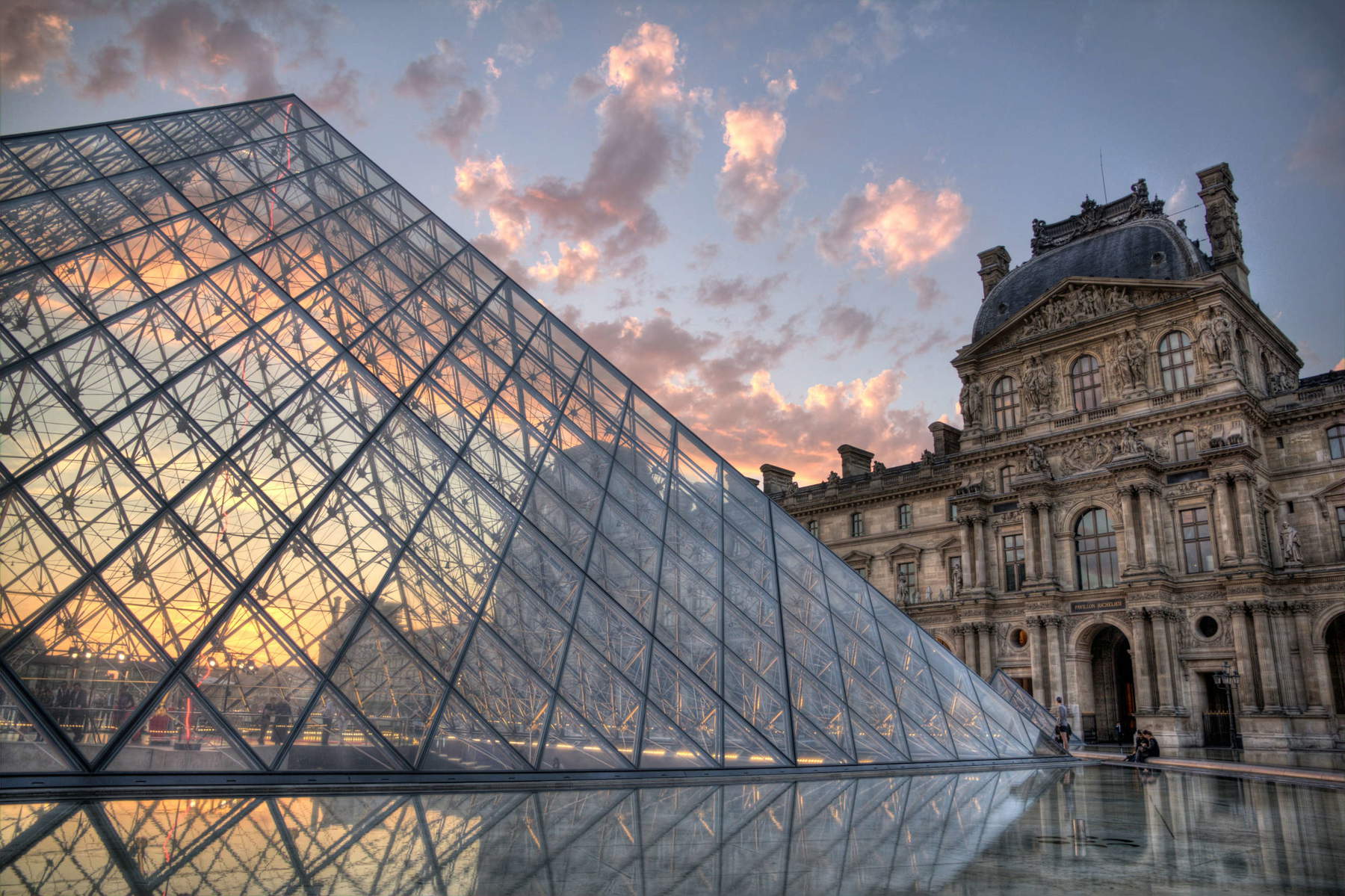
The shortlisted proposal was chosen by a jury chaired by Marc Guillaume, prefect of the Île-de-France region and prefect of Paris, with Christophe Leribault, president-director of the Louvre, in the role of vice president. The May 13 meeting was also attended by Paris Mayor Emmanuel Grégoire. After reviewing the proposals of the five finalist groups, the committee awarded the project by Studios Architecture Paris and Selldorf Architects for the quality of the architectural solution and its ability to integrate with the historical, urban and landscape context. According to the jury, the project stands out for the clarity of the pathways, the quality of public reception, the balance between mineral and plant elements, the attention to safety and the ability to build a harmonious relationship between the city, museum and public space. Indeed, the intervention proposes a contemporary reinterpretation of the Grande Colonnade without altering its monumental value, introducing new crossing and contemplation devices.
Studios Architecture Paris, leader of the winning group and led by James Cowey, represents the French office of the international collective founded in 1985 and present in New York, Washington, San Francisco, Los Angeles and Toronto. The firm has already worked on major international cultural projects, including the Fondation Louis Vuitton and the Fondation LUMA built with Gehry Partners.
Alongside Studios Architecture Paris, Selldorf Architects will play a central role in architectural, museographic and scenic design. The New York-based firm founded in 1988 by Annabelle Selldorf is known for its restrained, rigorous approach and numerous interventions on cultural institutions of international significance. Recent projects include the renovation of the Frick Collection in New York and the Sainsbury Wing of the National Gallery in London, works that have cemented the firm’s reputation for dialogue between contemporary architecture and historic heritage.
The winning project proposes a new configuration of the Louvre’s east-west axis, re-establishing the historical perspective continuity linking the Cour Carrée and Pyramid with the arches of the Carrousel and Étoile to the Arche de la Défense. The intervention reactivates the relationship between the museum and the urban context through major landscaping and a redefinition of the eastern esplanade.
From the bell tower located in front of the Louvre, the access path will accompany visitors along a public space conceived as a pacified and harmonious environment, linking the Saint-Germain-l’Auxerrois church, located east of the museum, to the esplanade to arrive at the new entrance located in front of the Colonnade. The architectural composition is based on a strong symmetry around the historic axis, with clear and legible pathways that intuitively organize flows.
One of the most significant elements of the project concerns the transformation of the Louvre’s moats, which will be reconfigured as green and climatically equipped spaces. The new vegetated areas will serve as islands of urban coolness, contributing to environmental improvement and the quality of the public experience. A belvedere will also provide views of the museum’s historic façade and new landscaping. Access to the moats will be via two large, symmetrical, gently sloping ramps set into the wall thickness of the counterscarp. The paths will be partly covered and designed to gradually accompany visitors to the new underground spaces. Under the ramps will be refreshment areas and bookstore-boutiques accessible even from outside the museum, transforming the intervention into a new urban polarity open to the city.
The two new underground entrances, located on either side of the moats between the Seine and rue de Rivoli, will lead to reception spaces designed to better distribute flows and connect the new exhibition system to the rest of the museum. A key part of the project involves the creation of a path dedicated to the Mona Lisa, designed to allow the public to view the painting in more appropriate conditions than the current overcrowded situation.
The plan also calls for the creation of a new modular space for high-tech temporary exhibitions and the introduction of additional services for the public, with rest and reception areas designed to make the museum more hospitable both inside and out.
The transformation of the Louvre is thus presented not only as an architectural intervention, but as an overall redefinition of the relationship between heritage, the city and visitors. Catherine Pégard called the appointment of the winning group a “founding stage” for the launch of the project. Indeed, a phase of consultation involving the museum, its employees, the city of Paris, relevant state bodies, and the public will begin in the coming months, with the aim of further refining the project before its operational launch.
|
| Louvre, two architectural firms chosen to design museum renovation |

Warning: the translation into English of the original Italian article was created using automatic tools. We undertake to review all articles, but we do not guarantee the total absence of inaccuracies in the translation due to the program. You can find the original by clicking on the ITA button. If you find any mistake,please contact us.

























 IT
IT FR
FR DE
DE ES
ES CN
CN


