





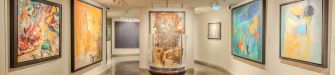
“It’s impossible. The mounting system of the panels in the San Gregorio Polyptych does not allow them to be removed in the two or three minutes during which, according to press reports, the theft took place.” The response from Gianfranco Anastasio, a now-retired architect, is unequivocal. He was the one who completed the installation of the Regional Museum of Messina at its new location, which opened in 2017. The design of the wooden display case —which carved out a separate exhibition space for Antonello da Messina’s Polyptych, distinct from the rest of the museum’s layout—bore the signature of architect Antonio Virgilio, his predecessor. But the display system for the work itself is Anastasio’s creation. The white base on which the three panels of the lower register rested ( Saints Gregory the Great, on the left, and Benedict, on the right—the only two recovered on the night of the theft—and, in the center, the Enthroned Madonna of the Rosary) was designed to restore a unified appearance to the five panels, which had been compromised by the loss of the original monumental wooden frame. The upper register, on the other hand, featuredthe Announcing Angel and the Virgin Receiving the Annunciation. In other words, the panels were secured in such a way as to simulate their original positioning within the polyptych.
It is precisely this system of securing the panels to the wall—designed specifically to meet both conservation and security needs—that constitutes one of the elements most difficult to reconcile with the dynamics of the theft. It should be noted that the system designed by the Central Institute for Restoration in Rome between the 1940s and 1950s—when the work underwent restoration in the capital—was primarily focused on mechanical and conservation-related security. The main challenge was to control the hygroscopic movements to which panel paintings are notoriously sensitive, while avoiding rigid immobilization or a fixed “parquet-like” mounting on the back of the panels. More generally, regarding wall-mounting systems, we consulted one of the leading experts in structural and exhibition supports, Roberto Ciabattoni, head of the ICR’s Laboratory of Diagnostics and Environmental Controls. He is responsible, among other things, for the display systems of some of Sicily’s most important works, from the Dancing Satyr in Mazara del Vallo to the Burial of Saint Lucy and Antonello’s Annunciation, both in Syracuse.
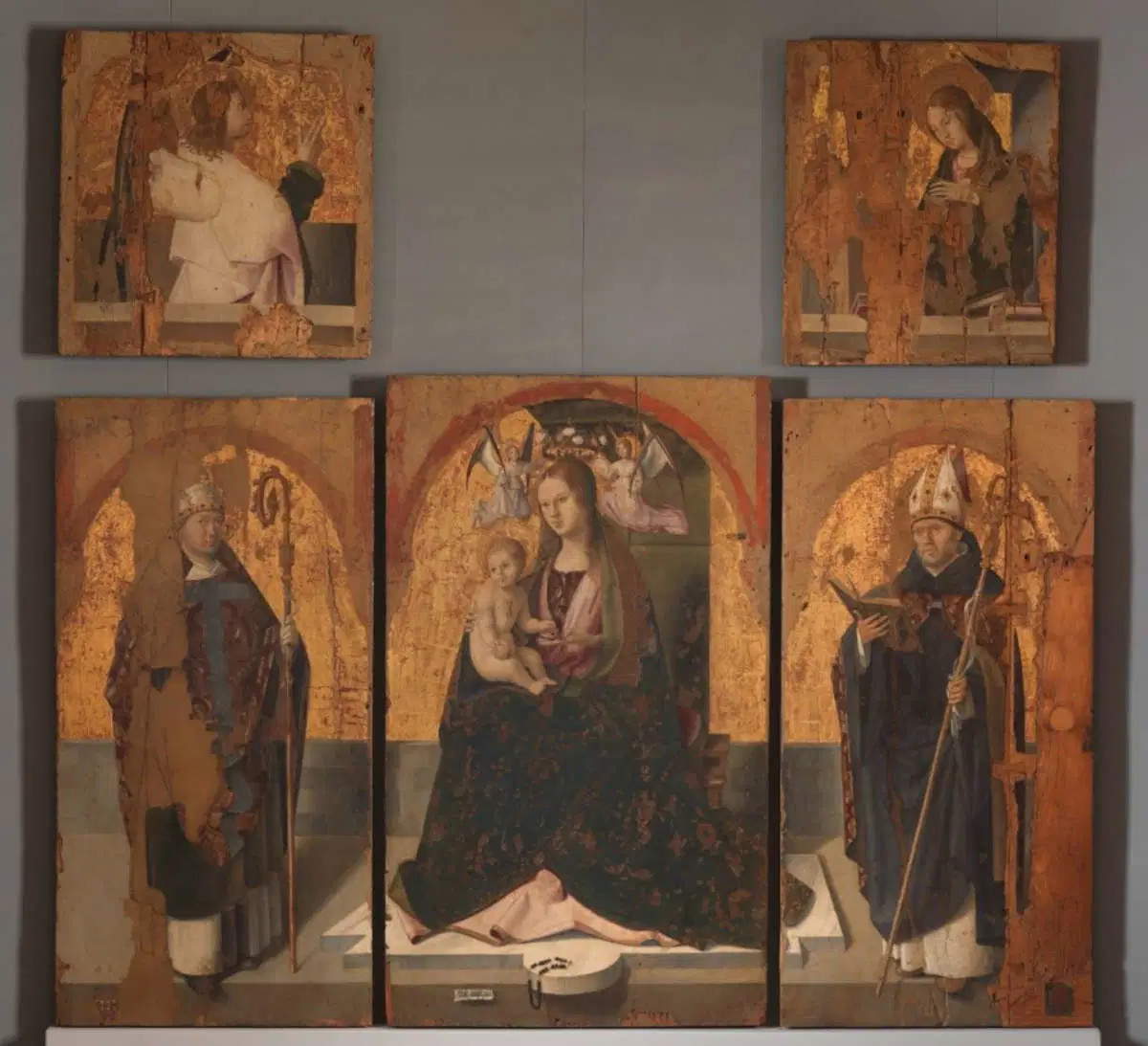
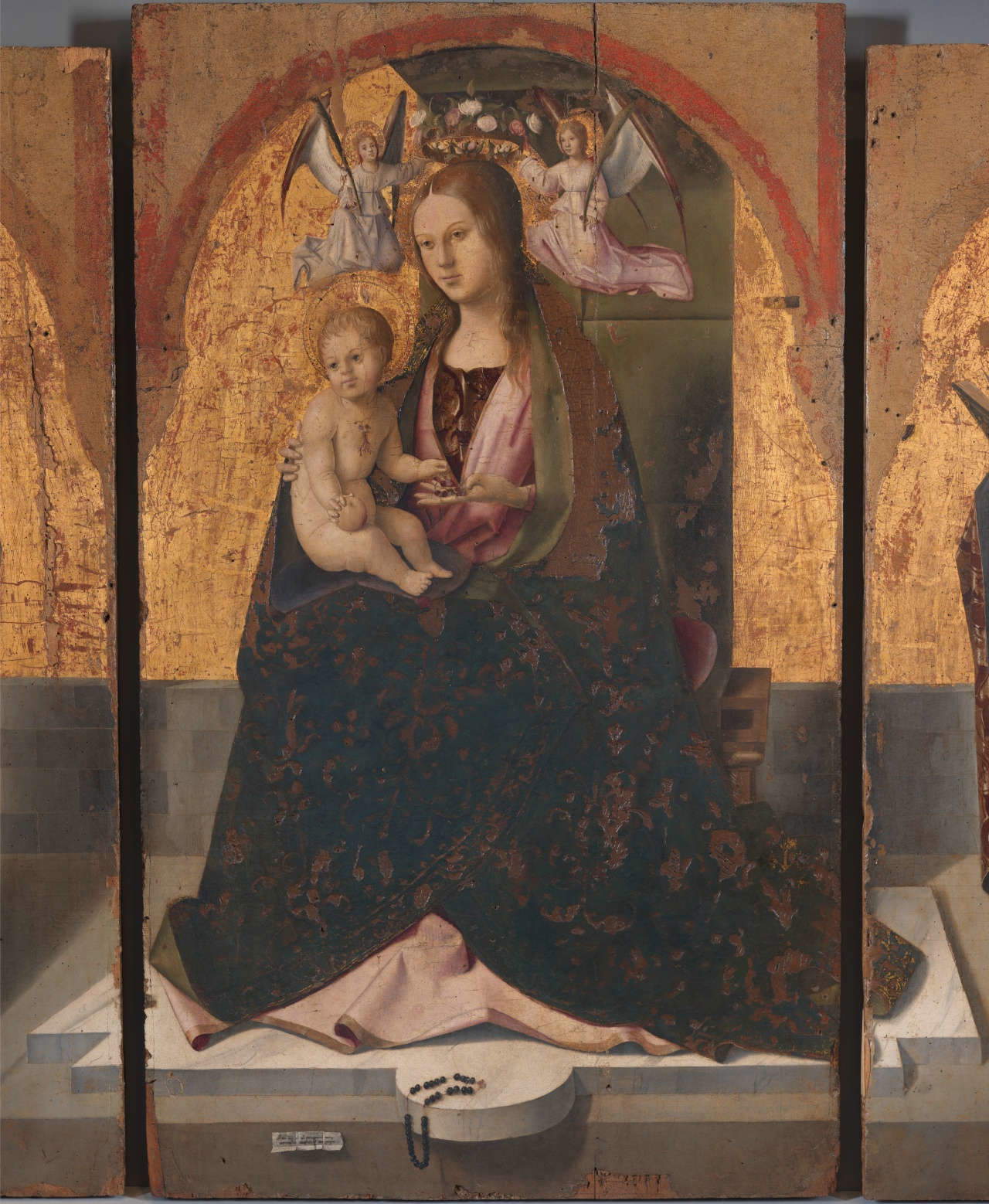
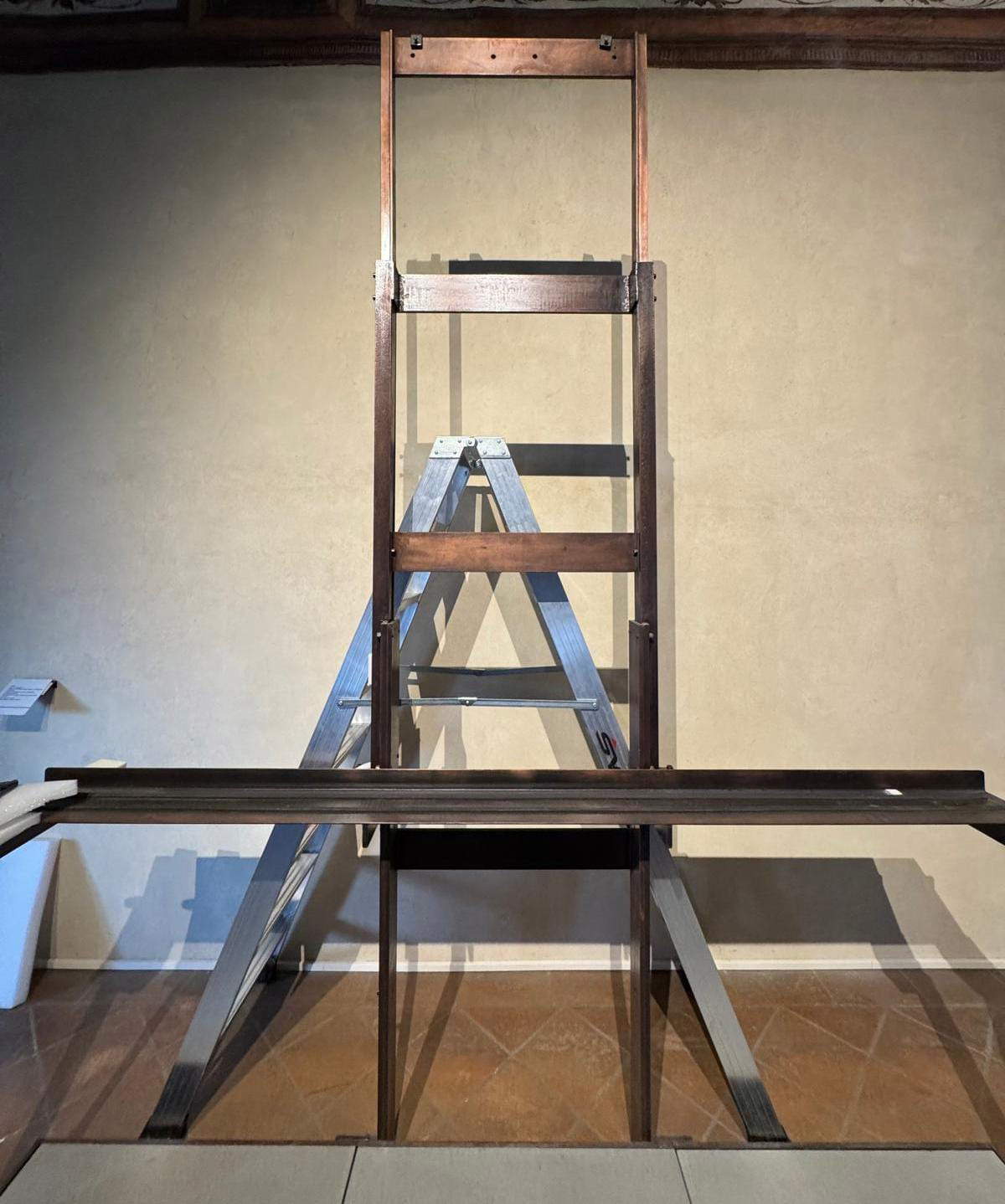
“We must distinguish,” he explains, “between paintings on canvas and paintings on panel. Another distinction concerns whether or not the work is set in a frame—a situation that allows for the more traditional method of hanging the painting on a nail, so to speak. The principle is that the works must be supported, not secured. If a frame is present, mounting brackets can be installed on the back; if there is no frame—for both canvases and panels—elastic fasteners are used to allow for micro-movements caused by changes in temperature and humidity, without creating rigid constraints.”
At the museum in Messina, in addition to conservation needs, there was also an essential safety requirement. The mounting system was designed to allow the wood to “move,” that is, to react to the slightest variations in humidity and temperature without generating internal stresses capable of deforming the fibers or causing the paint film to lift; at the same time, the system was complemented by a wall-mounting mechanism designed to ensure the artwork’s safety, as Anastasio explained to us.
This was by no means a minor consideration. Unlike, for example, Antonello’s Altarpiece of San Cassiano, housed at the Kunsthistorisches Museum in Vienna, the Polyptych was not separated from visitors by a physical barrier. And there was certainly no room for the possibility that—regardless of whether the alarm sensors were functioning—the panels might fall due to an impact, even an accidental one, from a visitor who had approached clumsily. Instead, five panels—not just one—were removed in the blink of an eye, within those two or three minutes during which, according to initial accounts, the theft took place. That was also enough time to smash, with sledgehammer blows, the display case housing the double-sided panel—that is, painted on both sides: on the front, the Madonna and Child blessing a devout Franciscan; on the back, an *Ecce Homo*. How was this possible?
“Impossible,” Anastasio tells us. And for a specific reason. Without getting into technical details, it suffices to know that “the system is designed for the sequential removal of the individual panels,” he explains. “These cannot be removed individually, except in a predetermined order.” If this is the case, the dynamics of the theft point to a specific scenario: whoever carried it out may have been aware of the securing system, or there may have been a preliminary phase in which the works were prepared to be quickly dismantled.
This is an element that could take on particular significance in the investigation. One of the four security guards on duty the night of the August 15 theft will have to be interviewed again by investigators, since his account does not seem convincing. However, the possible involvement of an inside accomplice may not be limited to a single person and could imply technical knowledge that goes far beyond that of a simple security guard.
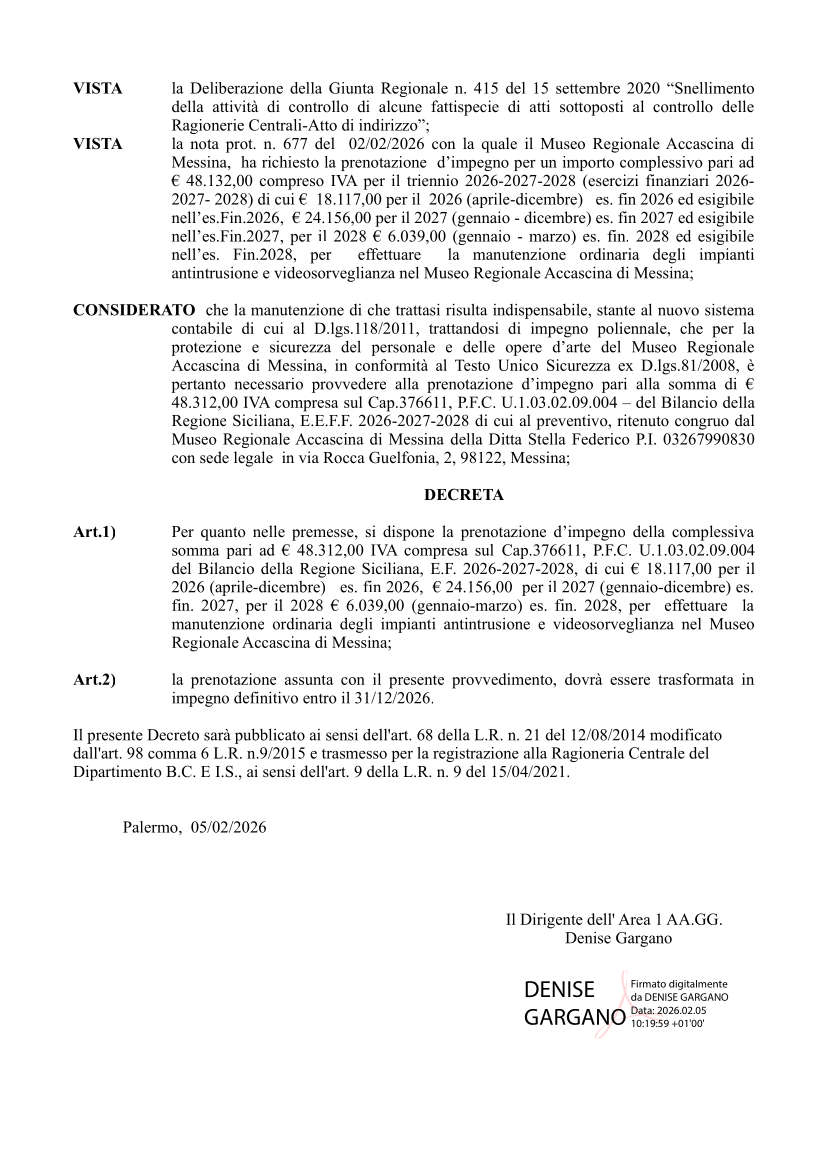
“A few years ago, I was visiting the museum in Messina and, out of professional habit, I took a look at the outdoor cameras: they were still the type with aluminum housings—models that haven’t been made for about ten years. The indoor sensors were inadequate, and there was no perimeter alarm.” This account comes from Nicola La Fauci of NLS Service, a Messina-based company specializing in anti-theft systems. “But even the most state-of-the-art system requires periodic maintenance and updates,” he adds. Now, with all the limitations of the case, one of the few details that has emerged from the investigation is that the system—though obsolete (and lacking an alarm on the side door through which the thieves reportedly entered the building)—nevertheless provided investigators with the footage recorded by the cameras. And it was precisely regarding the maintenance of that same system that the museum director, Marisa Mercurio, had written to the Department of Cultural Heritage on February 2, requesting a commitment to allocate funds totaling 48,312 euros over the three-year period 2026–2028.
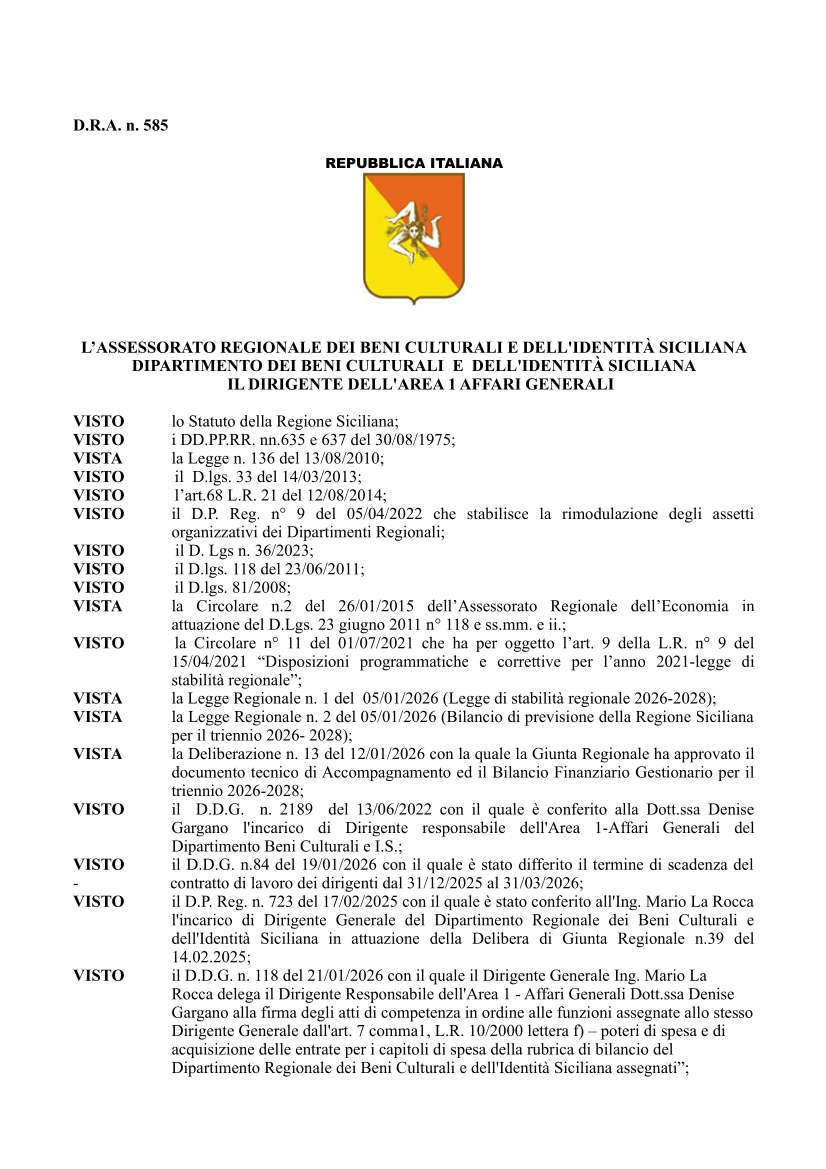
“Finestre sull’Arte” is able to present the document. To “carry out routine maintenance on the intrusion detection and video surveillance systems at the Accascina Regional Museum in Messina,” the museum had specifically requested 18,117 euros for 2026, covering the period from April to December; 24,156 euros for 2027, covering the entire year; and 6,039 euros for 2028. Shortly thereafter, the Department’s central offices responded to the director by “authorizing the budget commitment,” considering that “the maintenance in question is essential.”
In 2020, the Musumeci administration had approved an allocation of 22 million euros to launch a “Regional Plan for the Redevelopment of the Sicilian Museum Network.” Nothing came of it. Yet, between 2018 and 2020, Helga Marsala—an art critic and journalist—served as cultural heritage advisor to President Musumeci himself (and, during those same years, as curator of exhibitions in regional museums). Today, she writes that “the scandal at the Messina Museum has become not only a bitter metaphor but also the most serious symptom of a deep-seated malaise that requires robust, radical treatment—even if that means a bold return to the state.” Today, then. But not a few years ago, when the urgency of taking action on the network of regional museums was already evident.
The fact is that the intensive development project that has involved the museum overlooking the Strait in recent years does not stem from that Plan, but from a different path. Beginning in 2023, with work initiated under the direction of Orazio Micali—now the superintendent of Messina—and continued under the current director, Mercurio, the building has undergone two major renovation projects, aimed at improving the conservation of the works and enhancing accessibility.
The first project, completed in 2024, focused on the interior and exterior facades, the renovation and expansion of the displayed collections, and the enlargement of the exhibition spaces, which made it possible to incorporate approximately 50 works from storage into the exhibition itinerary. The work, totaling 752,087 euros, was funded by the 2014–2020 ERDF Operational Program.
The main objective was to ensure greater conservation safety for the artworks. Starting with the building’s problematic facades, where 16 new display cases were installed replacing the large glass windows on the ground floor, and the large, full-height vertical skylights—which had previously caused rainwater infiltration and created thermo-hygrometric conditions harmful to the artworks—were sealed with masonry panels.
Closing the skylights also reduced exposure to natural light, which is harmful to the artworks; in any case, dedicated—and therefore artificial—lighting was needed to ensure optimal viewing conditions. The project made it possible to address at the root some causes of deterioration and, consequently, to reduce the maintenance costs required to maintain an adequate level of safety, both for the artworks and for visitors. The aspect that most distinguishes the project at first glance is undoubtedly the color scheme of the new matte facades. The red evokes one of the colors most commonly used in the temples of Magna Graecia. The vibrant original polychromy was not, in fact, merely a decorative element, but served a specific technical and functional purpose: to integrate the architecture into the natural environment, making it a powerful visual landmark that would not fade in the intense southern sunlight.
Nothing could be further from an aesthetic whim for the new MuMe, as Micali himself clarified: “The choice of red acknowledges the Museum’s role as a beacon of culture, precisely because of the site’s strategic location facing the Strait.”
The second construction project, funded by the PNRR and also completed in 2024, was part of the “Removal of Physical and Cognitive Barriers in Museums, Libraries, and Archives” initiative, with a budget of 1,190,000 euros. The project made the museum structurally accessible to a diverse range of visitors. Today, the museum displays more than 350 works and offers a visitor route covering approximately 3,000 square meters.
Also in 2024, the permanent exhibition “1908 City-Museum-City” was inaugurated, made possible by Regional Law 9/2022, sponsored by Regional Deputy Antonio De Luca (M5S). This project served as a form of redress for a previous exhibition layout that, up until that point, had made the Stretto Museum indistinguishable from many other museums, finally restoring its unique identity as a museum born from the rubble of the devastating 1908 earthquake.
But the work did not end with these two projects, which were carried out simultaneously without ever closing the museum to the public. In addition to the creation of an immersive exhibition space dedicated to the city’s urban center prior to 1908, two other projects were in the works—also funded by PO FESR—aimed at renovating the exhibition route from Antonello to Caravaggio. And this, too, is a remarkable coincidence: the theft on August 15 took place just before work was set to begin on the room dedicated to Antonello. What exhibition strategies—and, above all, what new security measures—will be implemented? It is a question that, after what has happened, can no longer be avoided.

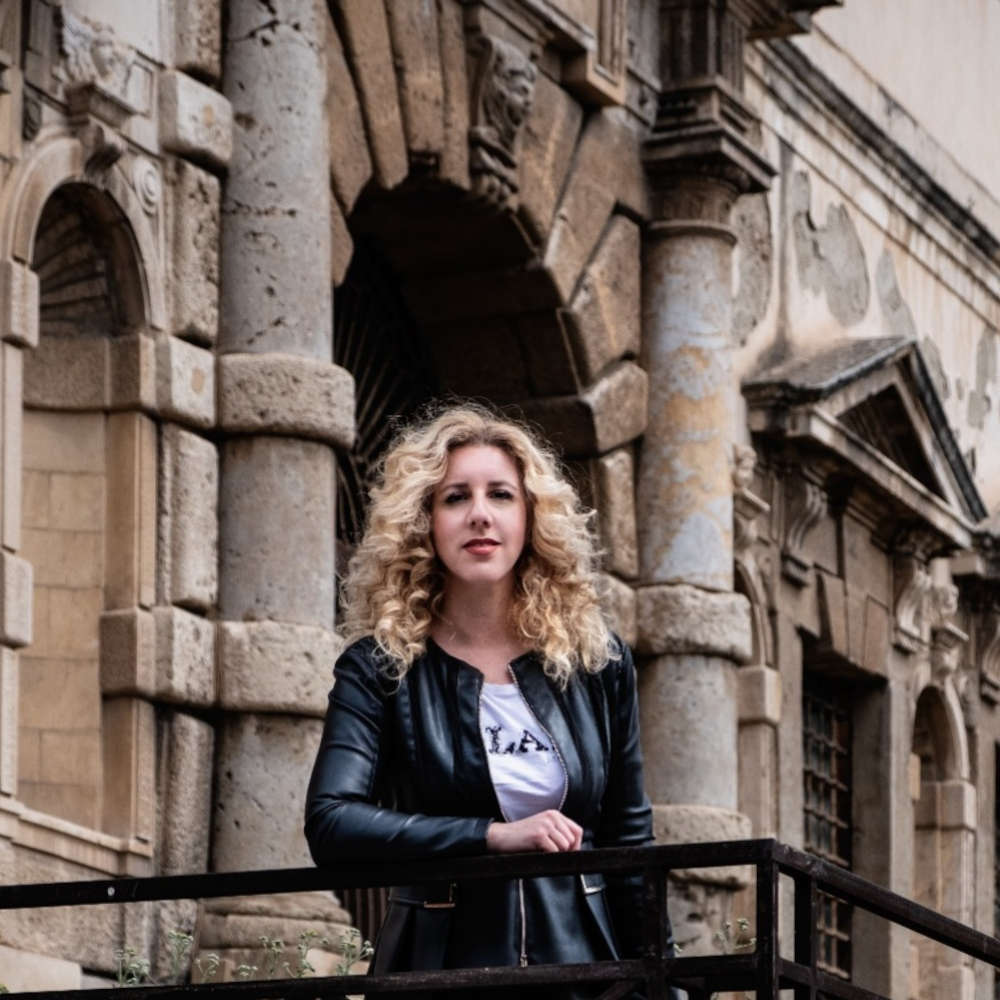
The author of this article: Silvia Mazza
Storica dell’arte e giornalista, scrive su “Il Giornale dell’Arte”, “Il Giornale dell’Architettura” e “The Art Newspaper”. Le sue inchieste sono state citate dal “Corriere della Sera” e dal compianto Folco Quilici nel suo ultimo libro Tutt'attorno la Sicilia: Un'avventura di mare (Utet, Torino 2017). Come opinionista specializzata interviene spesso sulla stampa siciliana (“Gazzetta del Sud”, “Il Giornale di Sicilia”, “La Sicilia”, etc.). Dal 2006 al 2012 è stata corrispondente per il quotidiano “America Oggi” (New Jersey), titolare della rubrica di “Arte e Cultura” del magazine domenicale “Oggi 7”. Con un diploma di Specializzazione in Storia dell’Arte Medievale e Moderna, ha una formazione specifica nel campo della conservazione del patrimonio culturale (Carta del Rischio).Warning: the translation into English of the original Italian article was created using automatic tools. We undertake to review all articles, but we do not guarantee the total absence of inaccuracies in the translation due to the program. You can find the original by clicking on the ITA button. If you find any mistake,please contact us.























 IT
IT FR
FR DE
DE ES
ES CN
CN


