




The project to study and restore the thirteen illuminated choir books of the Certosa di Pavia has come to an end. Launched in 2025 and sponsored by the Lombardy Regional Directorate of National Museums, the project was entrusted to the La Venaria Reale Conservation and Restoration Center. Starting October 3, 2026, these large volumes will be placed in the library of the Carthusian complex and included in the tour covered by the admission ticket.
The display will take into account the fragility of the artifacts, which will therefore be exhibited on a rotating basis and opened to different pages, with appropriate lighting conditions and constant monitoring of environmental and climatic conditions. The thirteen chant books are the only volumes from the original library still preserved at the Certosa. They are books of exceptional size, approximately 90 centimeters tall and over 60 centimeters wide, intended to contain the chants for the Mass throughout the entire liturgical year.
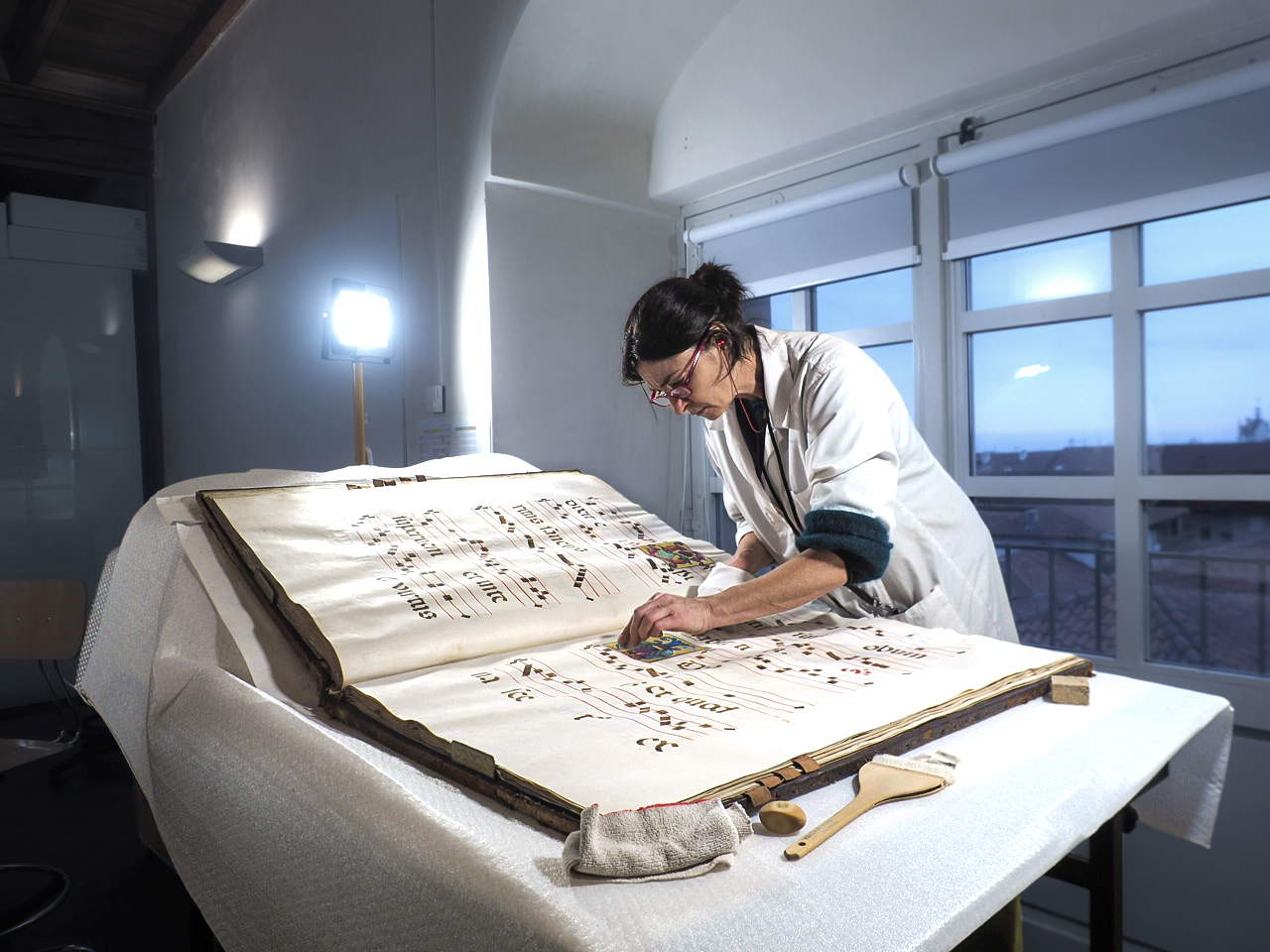
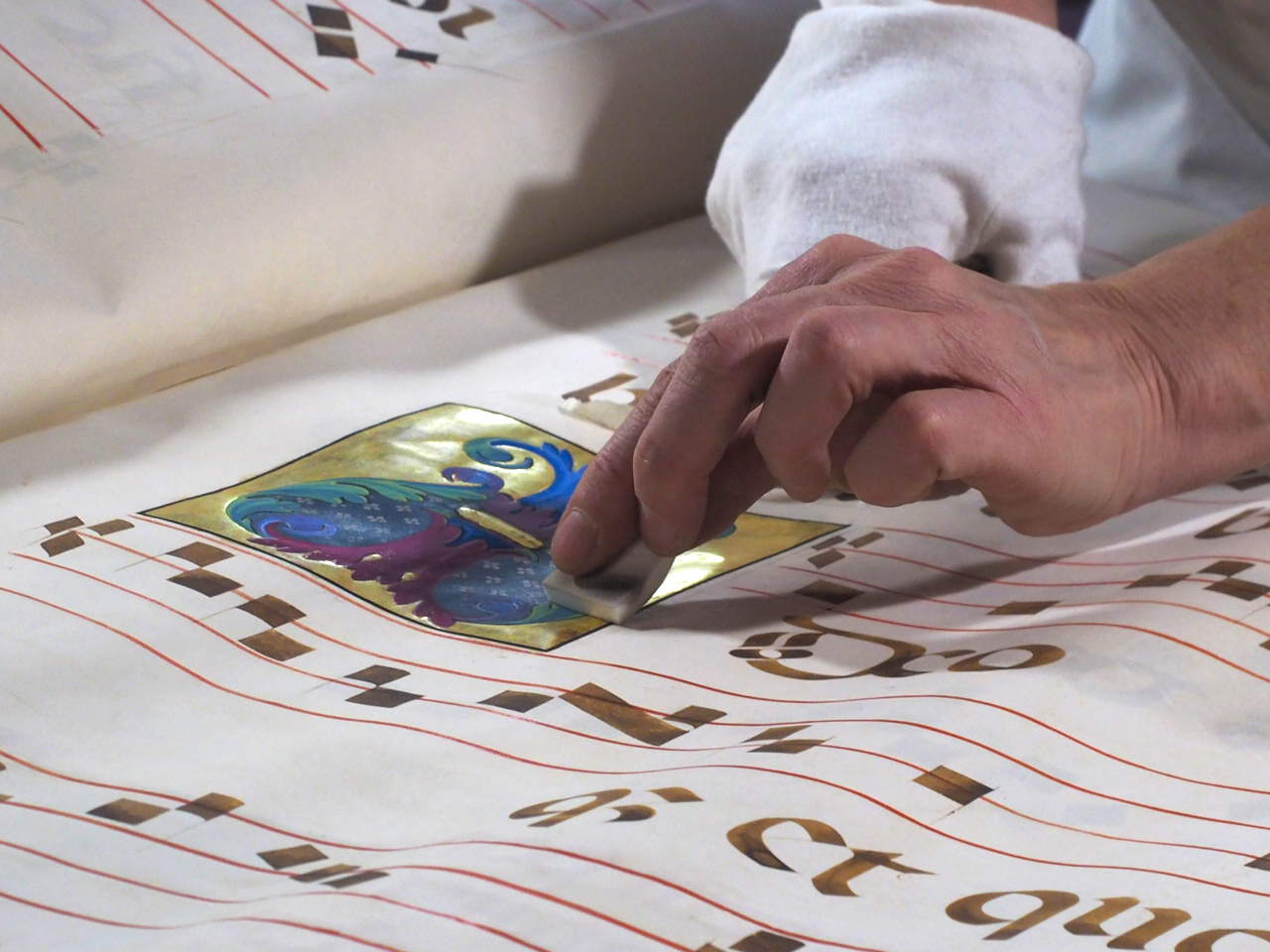
Their creation took place in two phases, from the late 15th century to the 1570s. The miniatures were executed between 1549 and 1578 by Evangelista della Croce, Guarnerio Berretta da Pavia, and the Vallombrosan monk Benedetto da Bergamo. After the monastery was dissolved, the choir books were transferred to the Braidense Library and taken to Paris in 1786. Following Napoleon’s defeat, they returned to Milan and were brought back to the Certosa in 1883 on the initiative of the historian Carlo Magenta.
The conclusion of the project will be presented on Saturday, October 3, at 10 a.m. in the Sala Cartusiana of the monumental complex, during the conference “Sign, Sound, and Matter: The Illuminated Choral Manuscripts of the Certosa di Pavia—A Project for the Study, Conservation, and Restitution of the Corpus.” Admission is free, but registration is required via the form available on the Certosa complex’s website.
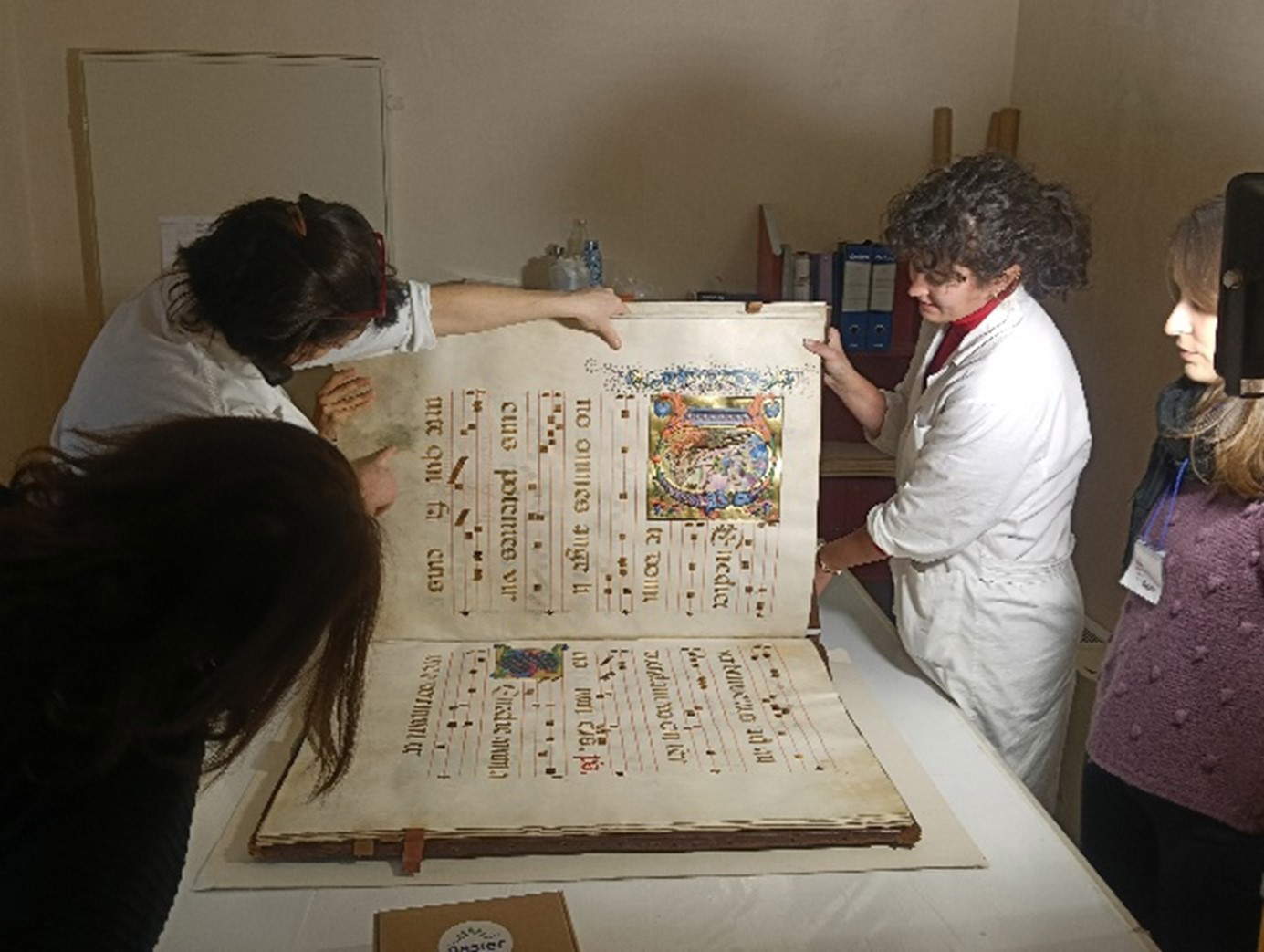
The presence of the choir books is part of the long history of the Certosa’s library. Ever since the monastery’s founding in 1396, the monks have dedicated themselves to collecting books. An early library was built in 1426–27 on the eastern side of the small cloister, above the chapter house, in a room featuring six tall windows, traces of which remain above the vault of the New Sacristy. By the 17th century, the library was already housed in its current location, the former infirmary situated between the two cloisters. The collections consisted primarily of liturgical books and texts on asceticism, mysticism, and spirituality, while secular works were almost entirely absent. With the new exhibition layout, the thirteen choir books are once again accessible to the public, in a manner consistent with the conservation requirements of the artifacts.
“The restoration of this extraordinary collection,” says Rosario Maria Anzalone, director of the Lombardy State Museums, “was carried out to the highest quality standards, involving one of Italy’s most qualified institutions, which brought an interdisciplinary approach and exceptional professionalism to the project. We are very pleased to share the outcome of this project with the public, who will find the exhibition experience further enriched.”
“Once the physical integrity of these exceptional works was ensured,” continues Stefano Aiello, director of the Certosa di Pavia, “we wanted to return them to the public—to the extent that their conservation condition allows—in their most suitable setting: the Certosa’s historic library. We are thus offering visitors yet another reason to visit our monumental complex, demonstrating how preservation and promotion are two sides of the same coin.”
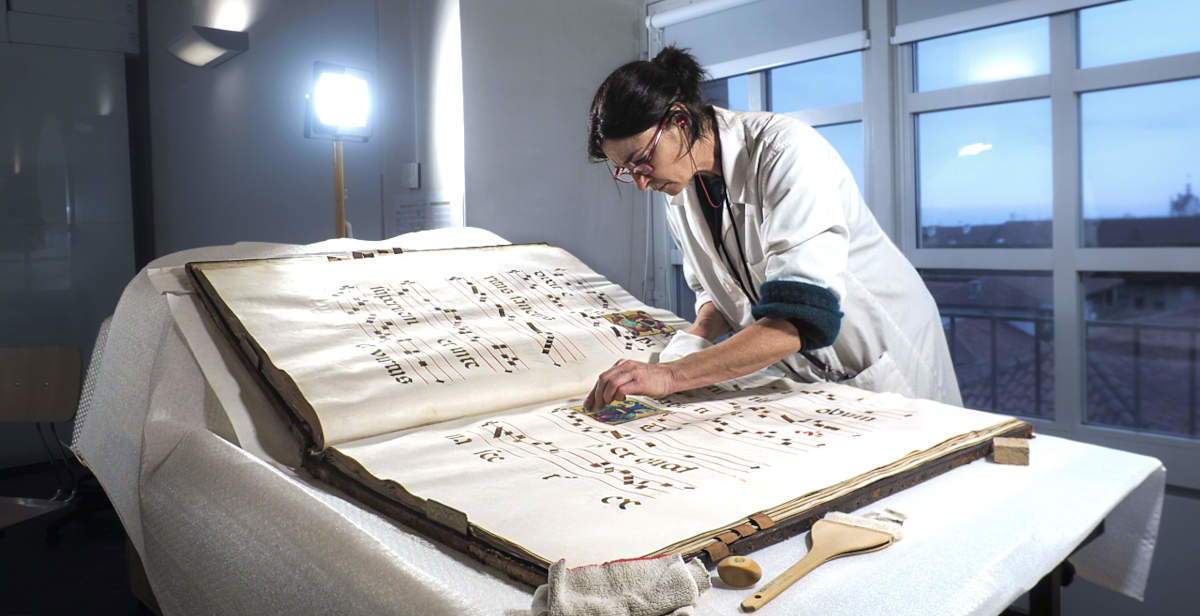 |
| Certosa di Pavia: Restoration of the Thirteen Illuminated Choral Books Completed |

Warning: the translation into English of the original Italian article was created using automatic tools. We undertake to review all articles, but we do not guarantee the total absence of inaccuracies in the translation due to the program. You can find the original by clicking on the ITA button. If you find any mistake,please contact us.























 IT
IT FR
FR DE
DE ES
ES CN
CN


