




by Redazione 02/07/2026



Categories: News / Disclaimer
A study conducted by Francesco Vizza has identified a manuscript from 813 in the Laurentian Library of the Medici that precisely quantifies the three-day discrepancy between the Julian calendar and the solar year, pushing back the known history of this phenomenon by more than seven centuries.


Research conducted by Francesco Vizza, associate researcher emeritus at the National Research Council and former director of the Institute of Organometallic Chemistry (CNR-ICCOM), has led to the identification of a calendar created in 813 that documents an awareness of the discrepancy between the Julian calendar and the solar year —more than seven centuries before the Gregorian Reform of 1582. The study was carried out with the support of Giuseppe Giari, archivist of the Opera di Santa Maria del Fiore. The manuscript is housed in the Biblioteca Medicea Laurenziana in Florence.


According to the study, the compilers of the calendar had recognized that the chronological system in use at the time did not precisely follow the apparent motion of the Sun and that the dates of major astronomical events were approximately three days earlier than those reported by the official calendar. The Julian calendar, introduced by Julius Caesar in 46 B.C., assigned an average length of 365 and a quarter days to the year, with an additional day every four years. As early as the 8th century, Bede the Venerable had intuited the existence of this discrepancy, though he underestimated its magnitude, while a more accurate estimate would only be formulated later by the Arab astronomer Al-Battani.


The study also highlights that the manuscript predates the Prüm calendar in Germany—dated to 840—by about thirty years. The similarities between the two documents could indicate a common source, identified as the Reichskalender (Imperial Calendar) reconstructed by historian Arno Borst, or attest to the existence of a network of exchanges among the Empire’s major computational centers.


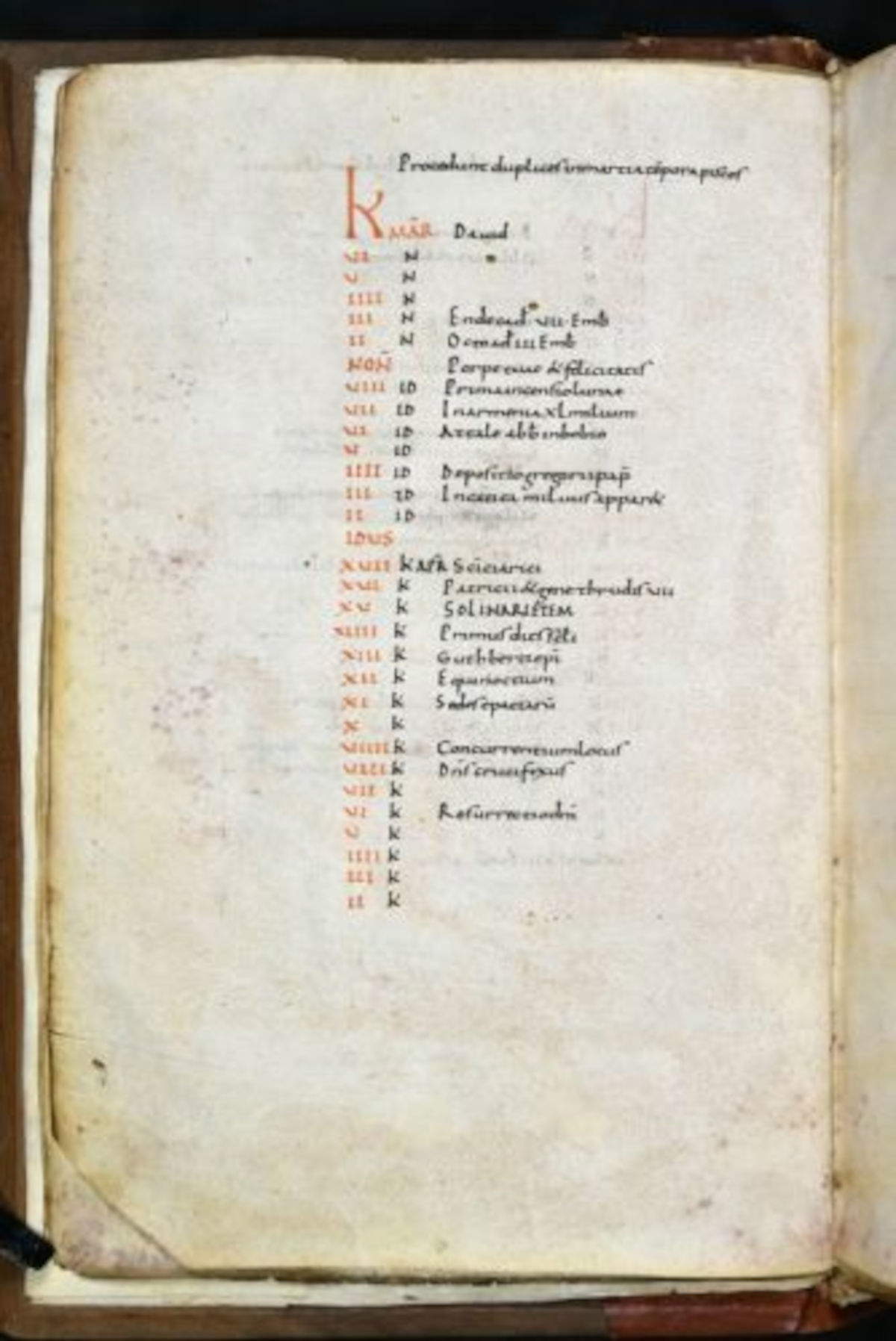
“The calendar was found in a Sacramentary from the Opera del Duomo, and although it had already been noted in 1757 by the Jesuit astronomer Leonardo Ximenes, its significance for the history of astronomy and the measurement of time had never been adequately recognized,” explains Francesco Vizza. “Historiography has traditionally held that it was not until the 13th century that a full awareness of the discrepancy between the Julian calendar and the solar year developed. Although it was an extraordinarily effective reform, the Julian calendar was slightly longer than the actual year and thus accumulated an error that, over the centuries, caused the equinoxes and solstices to occur progressively earlier. This discrepancy was not corrected until 1582 with the Gregorian reform devised by Louis Lilio, the calendar now used by nearly the entire world. In fact, it incorporates both the traditional dates of the Julian calendar’s ecclesiastical reckoning and those corresponding to actual celestial phenomena. The vernal equinox is maintained on March 21 according to the tradition established by the Council of Nicaea in 325, while the Sun’s entry into Aries is recorded on March 18. The same three-day advance also applies to the other equinoxes and solstices of the year. These entries demonstrate that the compilers had identified and quantified with remarkable precision the error accumulated by the Julian calendar. The dates recorded correspond, in fact, to a discrepancy of about three days, which is substantially in agreement with what modern astronomy has reconstructed for the early ninth century.”
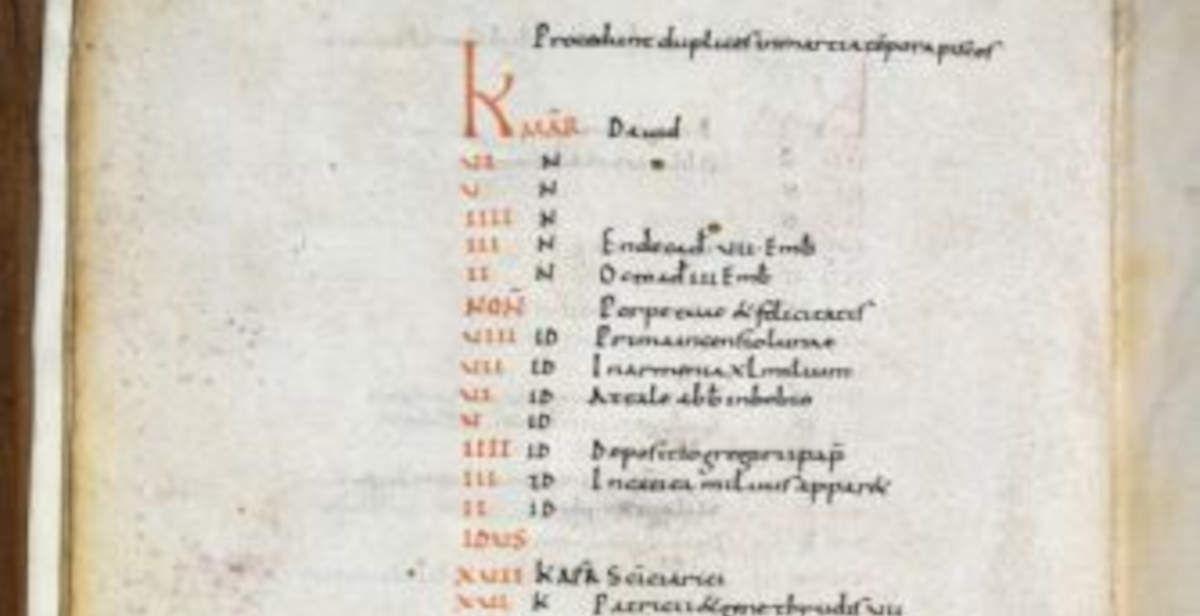 |
| Florence: A calendar discovered that predates the Gregorian Reform by seven centuries |
Warning: the translation into English of the original Italian article was created using automatic tools. We undertake to review all articles, but we do not guarantee the total absence of inaccuracies in the translation due to the program. You can find the original by clicking on the ITA button. If you find any mistake,please contact us.